
REVIEW · NARA DAY TRIPS
Nara World Heritage PRIVATE TOUR
The best part of this Nara tour is the mix of sacred deer and major temples in one carefully paced walk. You begin at Todai-ji, home of Japan’s enormous Great Buddha, then move through Nara Park to feed a deer before finishing at Ukimido Pavilion and Kofuku-ji.
I like two things here: you get a private guide, so the route can feel more personal than a large group outing, and the entrance fees plus a packet of deer crackers are included. The main caution is the guide. George, Kimu, and Kim have earned warm praise for their local insight and patience, but one poor experience described a guide who stuck too closely to a script and did not engage much.
In This Review
- Key points at a glance
- Why this private Nara walk works so well
- Starting at Todai-ji Museum
- Passing through the Great South Gate
- Todai-ji and Japan’s Great Buddha
- Meeting Nara’s deer in the park
- The quiet view at Ukimido Pavilion
- Finishing at Kofuku-ji
- How the guide changes the experience
- Timing, walking, and the three-hour limit
- Who should book this private Nara tour?
- Should you book it?
- FAQ
- How long does the Nara World Heritage private tour last?
- What sights are included?
- Is deer feeding included?
- Are temple and shrine admission fees included?
- Where does the tour start and finish?
- Can I cancel for a full refund?
Key points at a glance

- A private walk for your group only: You do not share the guide with strangers, which helps families and first-time visitors ask questions freely.
- Todai-ji is the centerpiece: Spend about 65 minutes around the temple and its grounds, including the Great South Gate and the famous Great Buddha.
- Deer feeding is built in: One packet of crackers is included, giving you a simple, memorable way to meet Nara’s revered animals.
- The route covers more than the headline sight: You also visit the calm Ukimido Pavilion and Kofuku-ji’s celebrated Five-Story Pagoda.
- About three hours, with plenty of walking: It is a useful orientation tour, not a slow, all-day study of every temple.
- Best in cooler weather or early in the day: Nara can be intensely hot in summer, with August temperatures often above 35 degrees Celsius.
Why this private Nara walk works so well
Nara can look easy on a map. The main sights sit close together, deer wander across the park, and Kintetsu-Nara Station is near the center. But the area is spread out enough that a first visit can become a stop-and-start search for gates, paths, tickets, and the right temple entrance.
This private tour gives you a plan. You meet at the Todai-ji Museum, walk through some of the city’s most important sights, and end near Kintetsu-Nara Station. That layout is useful if you are making a half-day visit from Kyoto or Osaka and want to finish close to onward transport.
The experience is priced at $96.67 per person, which is not the cheapest way to see Nara. Its value depends on your group size and your appetite for planning. For a solo visitor or couple, the price buys personal guiding, admission fees for the temples and shrines visited, and an efficient route. For a family or small group, the private format can make more financial sense because everyone shares the guide rather than paying for separate tours.
You should think of the tour as a strong introduction. It covers the famous sights, gives you context for what you are seeing, and leaves you near the station with time to continue exploring. It does not allow long, unhurried visits inside every building.
More day trips to Nara:
- World Heritage Kyoto & Nara Uji Authentic Matcha Experience
★ 5.0 · 1,573 reviews - Nara Half Day Trip Walking Tour (Private Option Available)
★ 5.0 · 937 reviews - Nara Early Morning Tour (Kyoto or Osaka Departure Available)
★ 5.0 · 676 reviews
Starting at Todai-ji Museum
The meeting point is at the Todai-ji Museum, inside the Todai-ji General Cultural Center at 100 Suimoncho. This is a practical start because you are already at the temple complex rather than spending tour time walking in from the station.
The first stop is listed as about 10 minutes. That is enough for an opening orientation and a sense of the historical setting, but not a full museum visit. If you want to study museum displays at length, you may need to return after the tour or arrange separate time.
Your guide sets the stage here before taking you toward Todai-ji’s main approach. This is where the private format helps. You can ask basic questions about Buddhist temples, Nara’s role in Japanese history, or the order of the visit without worrying about holding up a large group.
Guide quality matters most at this point. A strong guide such as George or Kimu can turn the opening minutes into useful context rather than a list of dates. You should also feel free to say if you want more explanation, fewer details, or a slower pace.
Passing through the Great South Gate
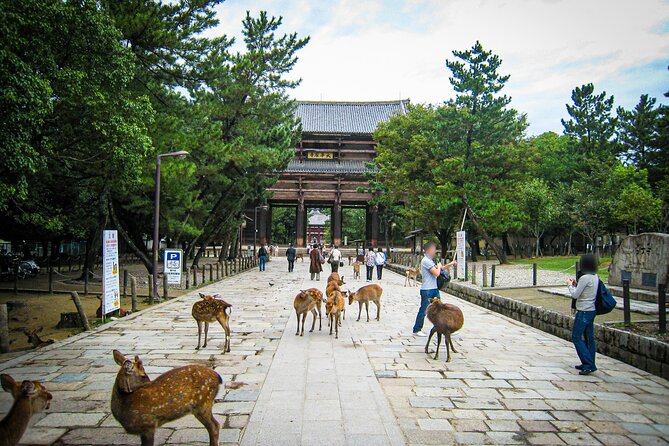
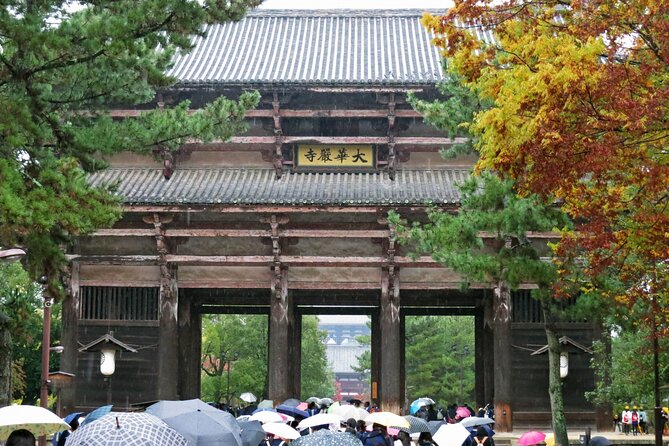
The Todai-ji Namdaimon, or Great South Gate, receives about 10 minutes on the route. It is a massive wooden gateway rebuilt in the 13th century, and its size gives you an immediate sense of the scale of Todai-ji.
This is a quick stop, but it is not filler. The gate is one of the clearest examples of how Japanese temple architecture uses huge timber structures, strong vertical lines, and guardian figures to mark the transition into a sacred compound.
Your guide can help you notice details that are easy to miss when you simply walk through. Look up at the construction, take in the depth of the gate, and allow space for photographs. The area can be busy, so you may not get a quiet moment right in the center.
The short visit also reveals the tour’s overall style. You move steadily from major point to major point. If you enjoy seeing a lot in a limited window, this is efficient. If you prefer to sit, sketch, or examine architecture for 20 minutes, you may find the pace brisk.
Todai-ji and Japan’s Great Buddha
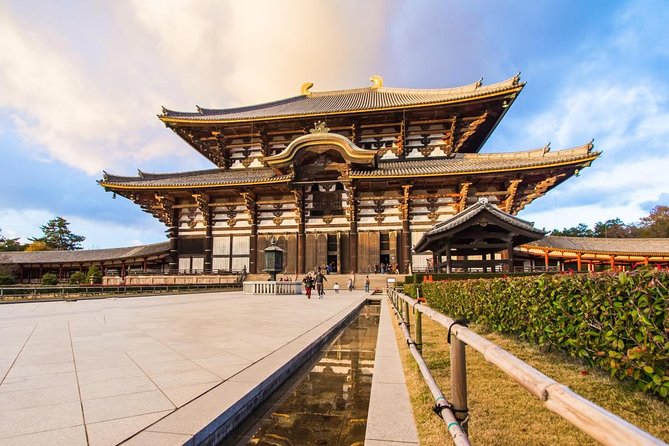
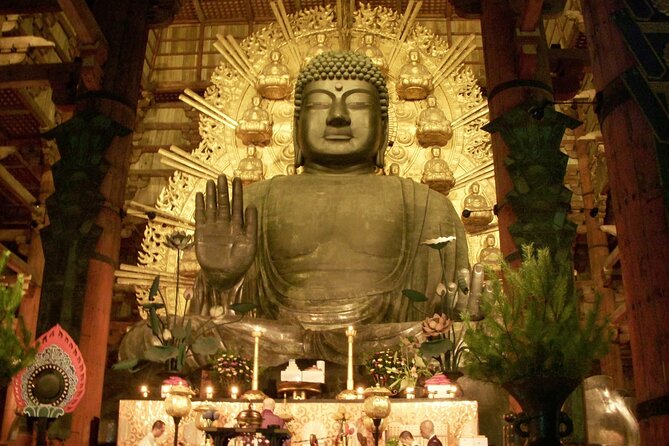
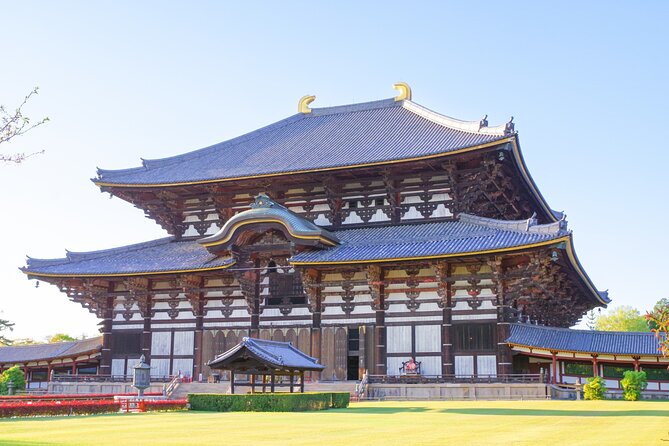
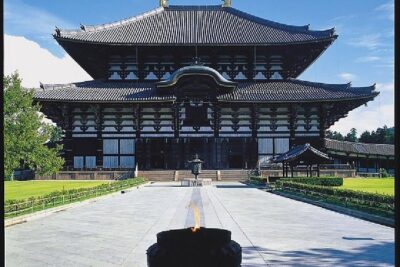
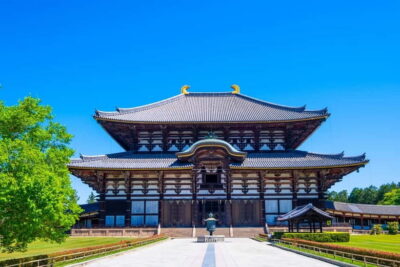
Todai-ji receives the longest stop, about one hour and five minutes, and rightly so. This World Cultural Heritage site is famous for its Great Buddha, one of Nara’s defining sights and the largest Buddha statue in Japan.
The temple grounds combine grand buildings with open natural space. That combination is part of the appeal. You are not looking at a single monument in isolation. You walk through a broad complex where the scale of the structures, the trees, and the surrounding park work together.
Admission is included for the temples and shrines visited on the tour. That makes the price easier to judge because you are not repeatedly stopping to handle entry fees during the walk.
Allow yourself to look beyond the main statue. The Great Buddha naturally takes over the room, but the building itself deserves attention. Notice the height of the hall, the timber framework, and the way the interior is arranged to make the statue feel even larger.
Todai-ji has been rebuilt several times, a useful reminder that historic Japan is not always about untouched original buildings. Your guide can explain how preservation, rebuilding, and religious use have shaped the site over time. This sort of explanation is one of the clearest reasons to book a guide rather than simply arrive with a map.
You should expect other people here. Todai-ji is one of Nara’s essential sights, and the temple can feel crowded, especially later in the day. An early start is wise if you want calmer paths and a better chance to hear your guide without background noise.
More history walks in Nara:
- Nara: Bike Tour in Ancient Capital UNESCO World Heritage
★ 5.0 · 43 reviews - Nara: UNESCO Heritage Sites & Deer Park Tour with Pro guide
★ 4.5 · 10 reviews - Nara Heritage Walkabout from Nara Park to Todaji-ji temple
★ 5.0 · 5 reviews - Nara: Cultural Heritage Tour by Rickshaw
★ 5.0 · 5 reviews
Meeting Nara’s deer in the park
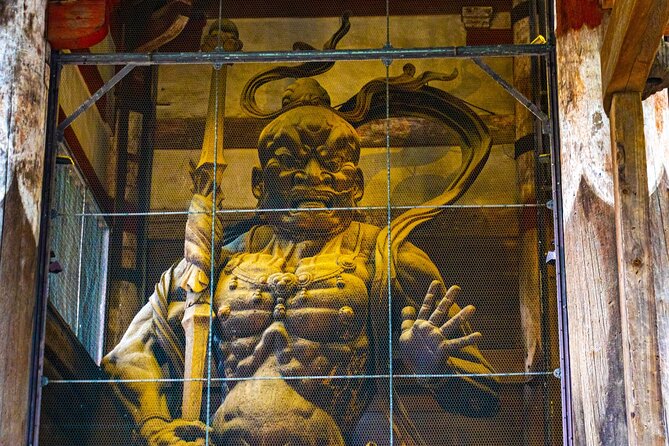
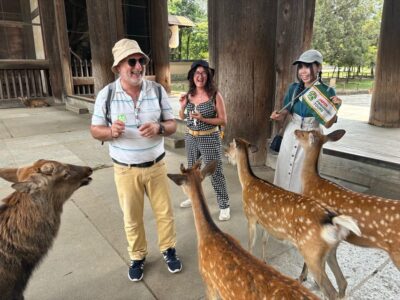
Nara Park receives about 35 minutes, including the deer feeding experience. One packet of crackers is included, so you can take part without first finding a vendor.
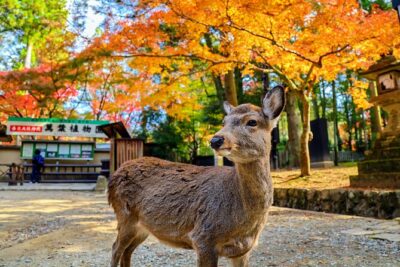
The deer are not a decorative extra. In Nara, they are revered as messengers of the gods, and their free movement through the park is one of the city’s most unusual sights. You may see them near temple paths, under trees, or gathered around people carrying crackers.
The feeding is simple, but it becomes a memorable moment because the animals are part of the place rather than kept behind a fence. Hold the crackers where the deer can see them, follow your guide’s instructions, and expect the feeding to be over quickly once the packet is gone.
Keep your attention on the deer and your belongings. The tour information does not spell out detailed feeding rules, so follow local guidance and use ordinary care around any animal. The park is also large, covering about 660 hectares, so 35 minutes gives you a taste of it rather than a full walk across the grounds.
This section works well for families. Children often connect with the deer faster than they connect with temple dates and architectural terms. One family found that George was patient with two young boys during weather around 39 degrees Celsius, which is a useful sign for parents considering the tour.
Still, heat can change the experience quickly. The walk takes place outdoors, and summer in Japan can be severe. Carry water, use sun protection, and consider a parasol. In August, temperatures often exceed 35 degrees Celsius, so an early booking time is the practical choice.
The quiet view at Ukimido Pavilion
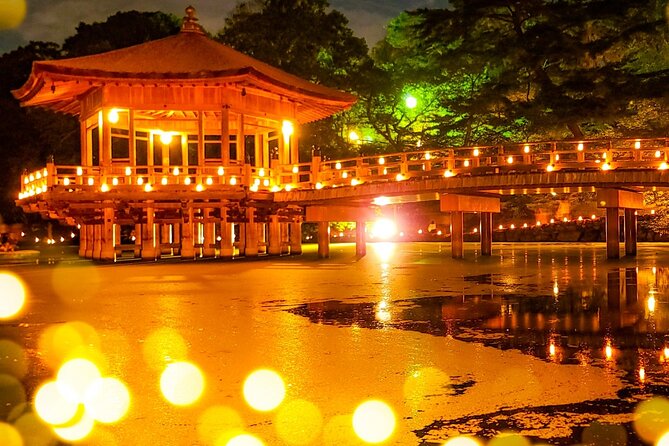
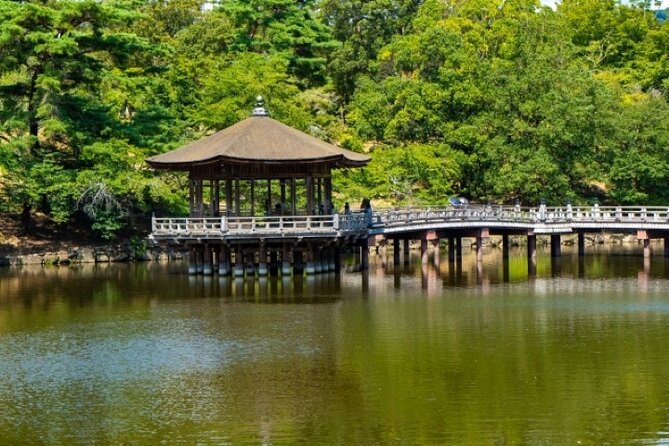
Ukimido Pavilion is a welcome change of mood after Todai-ji and the deer. The tour allows about 30 minutes at this hexagonal hall, which appears to float on Sagiike pond.
On a clear day, you can see the pavilion reflected in the water with the sky and surrounding greenery behind it. This is a good place to slow down and take photographs. It also gives your guide room to share local background without the same pressure you feel at the main temple entrance.
The pavilion is less about a single grand object and more about proportion, water, trees, and reflection. That makes it a useful counterpoint to Todai-ji’s sheer scale.
Weather affects this stop. The reflection is most appealing on a clear, calm day, while gray skies or wind may reduce the visual effect. Since the tour requires good weather and may be canceled in poor conditions, keep an eye on the forecast and retain some flexibility.
Finishing at Kofuku-ji
The final major stop is Kofuku-ji, with about 30 minutes devoted to the temple area. Its Five-Story Pagoda is a striking example of traditional Japanese construction and rises about 50 meters, making it one of Japan’s tallest wooden pagodas.
Kofuku-ji adds another layer to the route. Todai-ji gives you a huge Buddha and a vast temple hall. Kofuku-ji gives you a tall, elegant pagoda and a different sense of balance. Seeing both in one walk helps you compare the way Japanese religious sites use height, timber, open courtyards, and surrounding nature.
The stop is short enough that you will need to focus. Ask your guide which details matter most, and take photographs before moving on. The private setting makes it easier to tailor this part of the tour to your interests. If the pagoda is your priority, say so early.
From here, the tour usually finishes at Kintetsu-Nara Station, at 29 Nishimikadocho. Because this is a private activity, you may be able to disperse at another location that fits your destination. Treat the station as the standard ending point, then confirm any alternate arrangement in advance.
How the guide changes the experience
The route itself is easy to understand. The guide is the variable that can make it useful or merely functional.
The strongest guiding style reported for this experience combines local information with practical care. George has been praised for explaining Nara from a local point of view, keeping families comfortable, and helping a group see many sights without feeling worn out. Kimu and Kim have also been described as attentive, polite, and full of useful information.
That matters because Nara’s temples are not self-explanatory. A guide can explain why deer are revered, point out the importance of a gate, and connect Todai-ji’s rebuilding with the wider story of Japanese religious architecture. You leave with a clearer sense of how the sites fit together.
There is also a warning worth taking seriously. One poor experience involved a guide who followed a prepared script and did not interact much. Another complaint described a guide as disinterested and impatient. Those accounts do not erase the many strong guide experiences, but they show why you should speak up during the tour.
Ask questions. Tell the guide if children need a break. Say if you want more background at Todai-ji or more time for photos at Ukimido. A private tour works best when you treat it as a conversation, not a lecture.
Timing, walking, and the three-hour limit
The listed stops add up to roughly three hours, although the overall duration is given as about three to four hours. Allow extra time for walking between sites, crowd delays, photographs, and questions.
You should be ready for a walking tour over temple grounds and park paths. The information does not provide a precise distance or detailed accessibility plan, but most travelers can participate, and the meeting point is near public transportation.
The route is well suited to a first visit because it gives you a map in your head. Afterward, you can decide if you want to return to Todai-ji, spend longer with the deer, or explore another part of Nara on your own.
Do not book it expecting a leisurely full-day temple study. The time is designed to cover key sights efficiently. That is a strength for a short visit and a limitation for anyone who wants extended time at each site.
Who should book this private Nara tour?
I would choose this tour if you are visiting Nara for the first time and want help with the main sights without joining a large group. It is especially useful for families, small groups, and anyone arriving from Kyoto with only part of a day.
The tour also suits people who enjoy history but do not want to spend hours researching temple layouts, admission details, and walking routes. The guide gives you a starting point, while the private format lets you ask for the level of explanation you prefer.
You may want a different plan if you have already seen Todai-ji and Kofuku-ji, or if your main goal is a slow photographic walk through the park. Independent visitors can cover the area, and the tour’s quick transitions may feel restrictive if you want to linger.
The $96.67 price is easiest to justify when the included admissions, private guide, and deer feeding are all useful to you. Compare it with the cost of arranging separate visits and the value of saving planning time. For a larger private group, the personal format becomes more attractive.
Booking is flexible, with free cancellation up to 24 hours before the start time. Changes or cancellations inside that window are not refunded, and poor weather may lead to a new date or a full refund.
Should you book it?
Book this tour if you want a well-planned first look at Nara with a private guide, included temple admissions, and a guaranteed deer-feeding stop. The route covers the city’s essential sights without turning the day into an exhausting march.
Before booking, request an early start if possible, prepare for heat, and make your guiding preferences clear. If George, Kimu, or Kim is available, their reported strengths suggest a good fit for families and first-time visitors, but the experience still depends on the individual guide assigned.
Skip it if you prefer to explore entirely alone or want to spend a long time inside each temple. For most short visits, though, this is a practical way to understand Nara quickly and leave with enough time to follow your own interests.
FAQ
How long does the Nara World Heritage private tour last?
The experience takes about three to four hours, with the advertised walking portion lasting about three hours.
What sights are included?
The route includes Todai-ji Museum, Todai-ji’s Great South Gate, Todai-ji Temple, Nara Park, Ukimido Pavilion, and Kofuku-ji.
Is deer feeding included?
Yes. The tour includes one packet of crackers for feeding the deer in Nara Park.
Are temple and shrine admission fees included?
Yes. Entrance fees for the temples and shrines visited during the tour are included.
Where does the tour start and finish?
You meet at Todai-ji Museum in Nara. The standard end point is Kintetsu-Nara Station, although a private group may be able to finish elsewhere according to its destination.
Can I cancel for a full refund?
Yes, if you cancel at least 24 hours before the experience start time. Cancellations or changes made less than 24 hours in advance are not refunded, and poor weather may result in a different date or a full refund.
Recently added around Nara
- Nara Private Customizable Half Day Tour★ 5.0 · 3 reviews
- Nara: Essential Private Tour with Deer Park and Temples★ 5.0 · 3 reviews
- Full Day Nara Deer, Temple, Shrine, Activities & Tea Ceremony★ 5.0 · 3 reviews
- Discover the Essence of Nara Ink Through Your Senses★ 5.0 · 3 reviews
- Private Journey in Nara’s Historical Wonder★ 5.0 · 3 reviews
- Nara:Private Tea Ceremony(Max 5 ppl) -Master Matcha Making-★ 5.0 · 3 reviews
- Nara Takayama Tea Whisk Craft and Tea Culture Experience★ 5.0 · 3 reviews
- Nara: Half-Day Private Tour of 4 Must-See Spots & Deer Park★ 5.0 · 3 reviews
Nara Day Trips, compared.
World Heritage Kyoto & Nara Uji Authentic Matcha Experience
Read our review →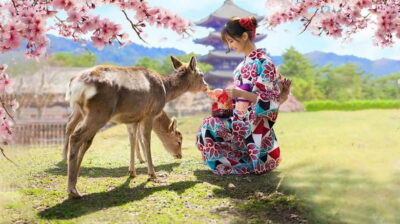
Kyoto/Osaka: Nara, Fushimi Inari Taisha, Arashiyama Bus Tour
Read our review →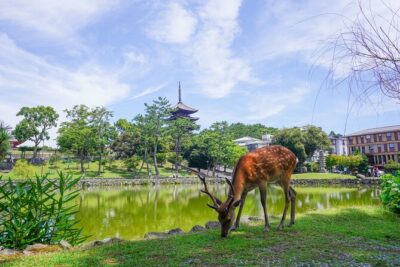
Nara Half Day Trip Walking Tour (Private Option Available)
Read our review →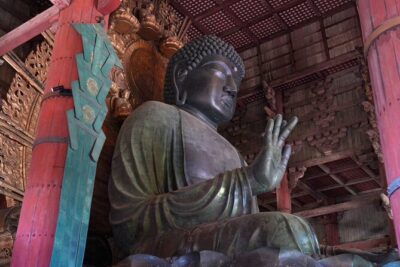
Nara Early Morning Tour (Kyoto or Osaka Departure Available)
Read our review →
Kyoto/Osaka: Kinkakuji, Bamboo Forest, and Nara Deer Park
Read our review →Browse the lists this tour appears in