
REVIEW · GION GEISHA DISTRICT TOURS
Kyoto: Private Rickshaw Tour of Gion and Higashiyama Area
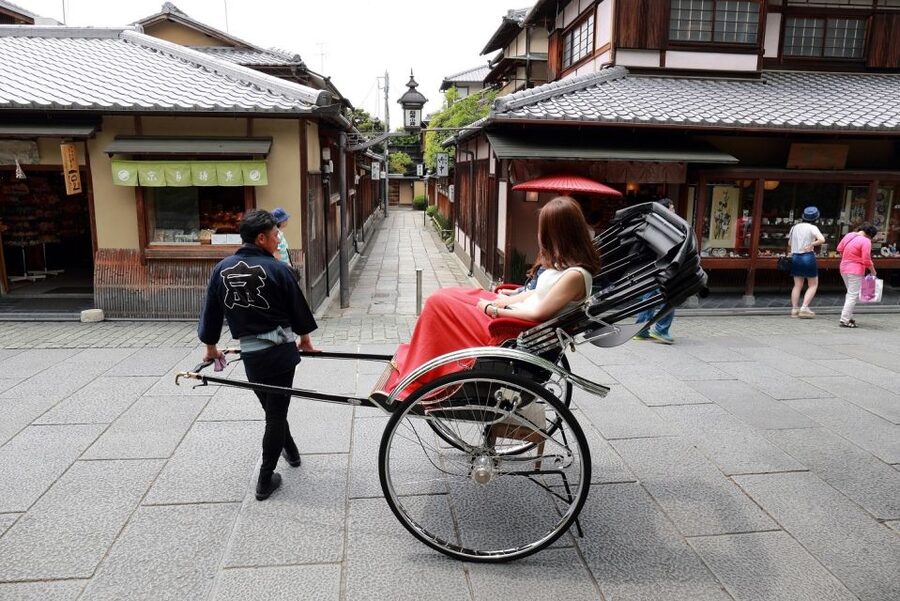
Kyoto’s old streets are at their best when you can look up instead of watching your feet. This private rickshaw tour carries you through Higashiyama and Gion while your guide handles the narrow lanes, steep stretches, stories, and photos. It is a pleasant way to see a lot without the usual stop-start shuffle of a walking tour.
I like the excellent guides, including Moto, Fumi, Shiro, Daichi, and others praised for clear English, humor, and local insight. I also like the custom route and photo stops, which let you focus on temples, old houses, geisha districts, or simply the prettiest streets. The main drawback is space: each rickshaw is only 21.1 inches, or 74 centimeters, wide, and some riders will be more comfortable booking one rickshaw per person.
In This Review
- Key points at a glance
- Why a rickshaw works so well in Higashiyama
- Meeting Kodaiji Temple and entering old Kyoto
- Wooden townhouses, temples, and the feel of Higashiyama
- From Higashiyama into Gion
- Willow-lined rivers and the longer route
- The photo stops are more useful than they sound
- How the private format changes the day
- Is $51 good value?
- Comfort, weather, and who should skip it
- Planning the best time in your Kyoto schedule
- Should you book the Higashiyama and Gion rickshaw ride?
- FAQ
- Where does the Kyoto rickshaw tour meet?
- How long is the tour?
- Is the tour private?
- Which languages are available?
- Can children ride in the rickshaw?
- Is the rickshaw comfortable for two adults?
- Are temple entry fees, food, or hotel transfers included?
Key points at a glance
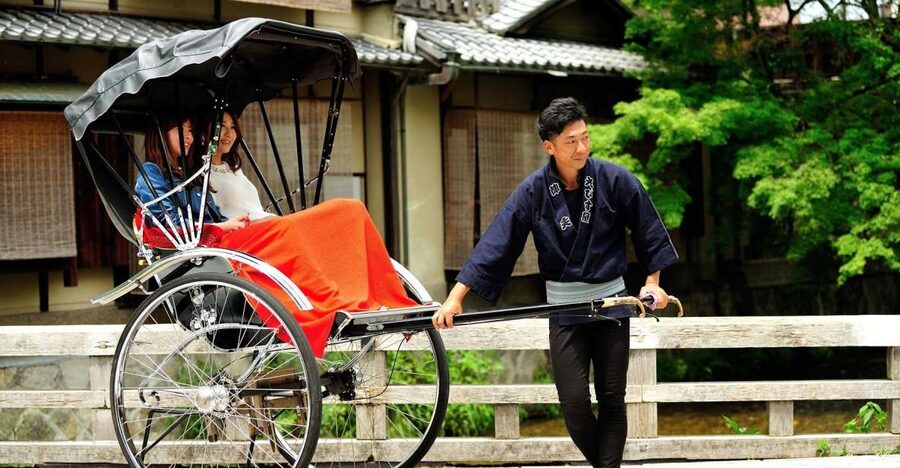
- Begin beside Kodaiji Temple: The meeting point puts you directly in historic Higashiyama, near Nene Street and Ichinenzaka Street.
- Choose your pace: Options begin with a 45-minute introduction and extend to longer rides, with the supplied details also describing a 3-hour, 10-minute choice.
- Hear more than street names: Guides explain Kyoto customs, wooden townhouses, temples, Gion, and the city’s traditional entertainment districts.
- Private means flexible: You can discuss interests and adjust the route to suit your group.
- Photos are part of the service: Your guide stops at scenic spots and can take pictures with your phone.
- Families can ride: Two children aged five or under may sit on two adults’ laps, while children aged six and over pay the adult rate.
Why a rickshaw works so well in Higashiyama
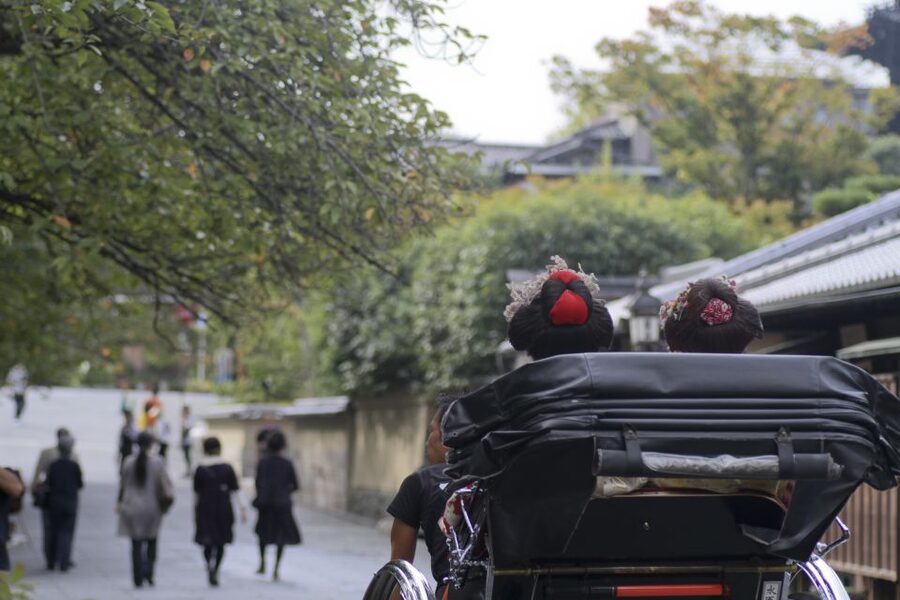
Higashiyama is a rewarding but demanding area to walk. Its famous lanes are cobbled, often crowded, and sometimes inclined. A rickshaw gives you a raised seat, a clear view over some of the street traffic, and a guide who can keep the outing moving.
The ride is not just transportation. Your guide points out details you could easily miss from street level, then pauses so you can look around and take pictures. The guides are also the main reason this experience feels personal rather than mechanical. Moto has been praised for fluent English and an easy manner, while Fumi is noted for creative photography and a gentle sense of humor. Shiro, Daichi, Takuto, Kai, and Yoshito are among the other guides singled out for strong explanations and friendly service.
You are not joining a large group. This is a private booking, so your guide can adjust the tone and pace for a couple, a family, or older relatives. Ask questions. The best part of this kind of tour is the conversation between the main stops.
More evenings in Gion:
- Kyoto Geisha Walking Tour: Gion District & Hidden Gems
★ 4.7 · 3,273 reviews - Kyoto: Gion Magical Night Walking Tour with Geisha Trivia
★ 4.9 · 2,393 reviews - Kyoto: Gion Geisha District Walking Tour – Stories of Geisha
★ 4.7 · 2,187 reviews
Meeting Kodaiji Temple and entering old Kyoto
You meet on the corner of Nene Street and Ichinenzaka Street, by Kodaiji Temple. This is an important practical detail: the voucher is for the Kyoto Higashiyama and Gion branch, not the company’s Arashiyama branch. Check the location carefully before setting out.
Kodaiji sits in a nationally designated historic area, and the streets around it quickly show why. Traditional wooden townhouses, small shops, tiled roofs, and carefully maintained facades give this part of Kyoto a strong sense of place. Ichinenzaka and the nearby lanes are among the most photogenic streets in the city, though they can also be busy.
From the rickshaw, you can take in the details without stopping every few steps. Your guide may explain how the wooden buildings fit into Kyoto’s older urban pattern, or point out customs connected with temples and local neighborhoods. The exact route can change with your interests, so ask to linger in areas that catch your eye.
This first section is especially useful if you have just arrived in Kyoto. It gives you a quick orientation to Higashiyama and helps you identify places to revisit on foot later.
Wooden townhouses, temples, and the feel of Higashiyama
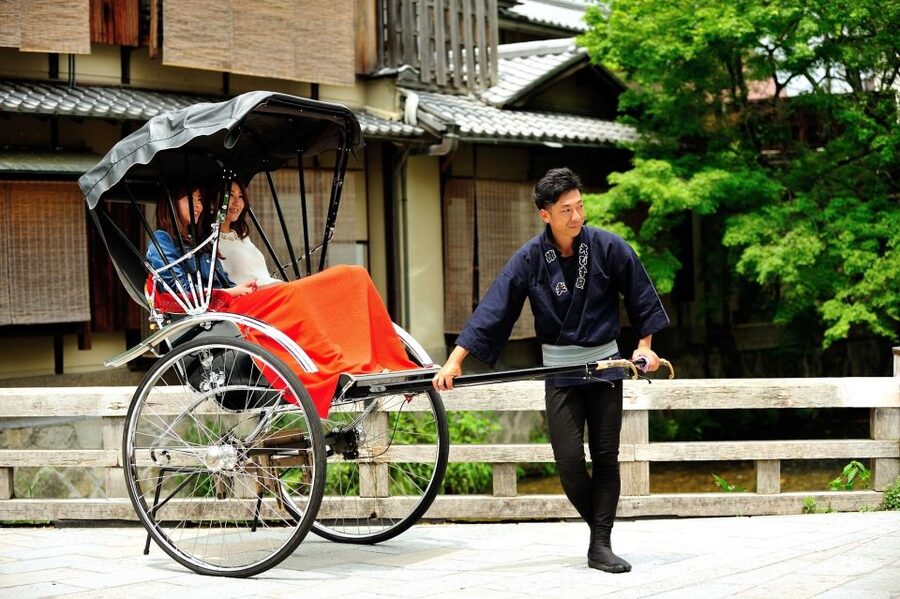
The central attraction here is not one single monument. It is the combination of old buildings, temple approaches, shopfronts, and narrow lanes. The wooden townhouses are often the most memorable part because they show Kyoto as a lived-in historic city rather than a collection of isolated sights.
The tour passes some of Kyoto’s best-known temples, but entry fees are not included. That means you should think of the ride as an outside overview and neighborhood tour, not a substitute for visiting temple grounds. If a temple is high on your list, you can return afterward and pay the admission separately.
That arrangement is useful in a short visit. You get context and a sense of the area first, then choose which temple deserves your limited sightseeing time. The longer rides allow more time among Higashiyama’s sights and can include ancient temples and quieter stretches.
The guide’s commentary adds value here. A good explanation can help you understand why a shrine entrance, a temple gate, a traditional shop, or a particular street matters. Yoshito, for example, has been praised for handling several languages and answering many questions about Gion and Kyoto. English ability can vary by guide, but English and Japanese are the stated tour languages.
From Higashiyama into Gion
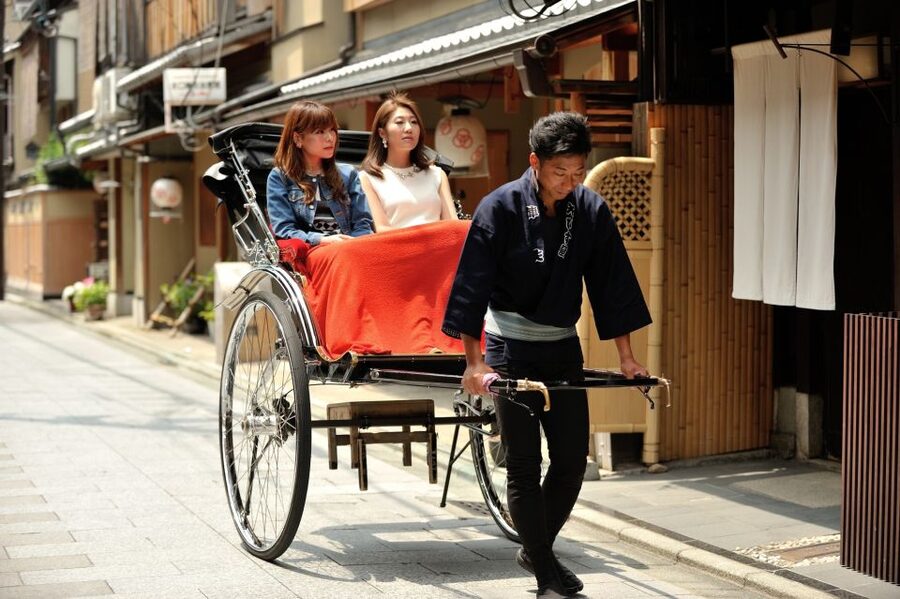
Longer routes continue toward northern Gion, Kyoto’s famous entertainment district. Gion is known for its traditional establishments, wooden facades, narrow streets, and links to geisha culture. It is also a working neighborhood, not a theme park.
Your guide can explain the difference between geisha and maiko, the customs associated with the district, and why respectful behavior matters. You might see maiko or geisha, but there is no promise of an encounter. You will also see people wearing kimono for photographs, which is not the same thing as being a professional entertainer.
This distinction matters. Gion is more enjoyable when you treat it as a real cultural district rather than a stage set. Avoid blocking doorways, taking intrusive close-up pictures, or using selfie sticks. Selfie sticks are specifically not allowed on the tour, and a smaller phone held carefully is better for narrow streets anyway.
The rickshaw also gives you a discreet way to pass through the area. You are seated and moving with purpose rather than stopping in the middle of a lane. Your guide can identify points of interest while helping you avoid the worst of the foot traffic.
More walks through Higashiyama:
- Kyoto: Historic Higashiyama Walking Tour
★ 5.0 · 31 reviews - Kyoto: Kiyomizudera, Higashiyama and Yasaka Discovery Tour
★ 4.8 · 17 reviews - Private Walking Tour in Gion and Higashiyama
★ 5.0 · 15 reviews - Kyoto Early Bird English Tour: Gion & Higashiyama(Private opt)
★ 5.0 · 13 reviews
Willow-lined rivers and the longer route
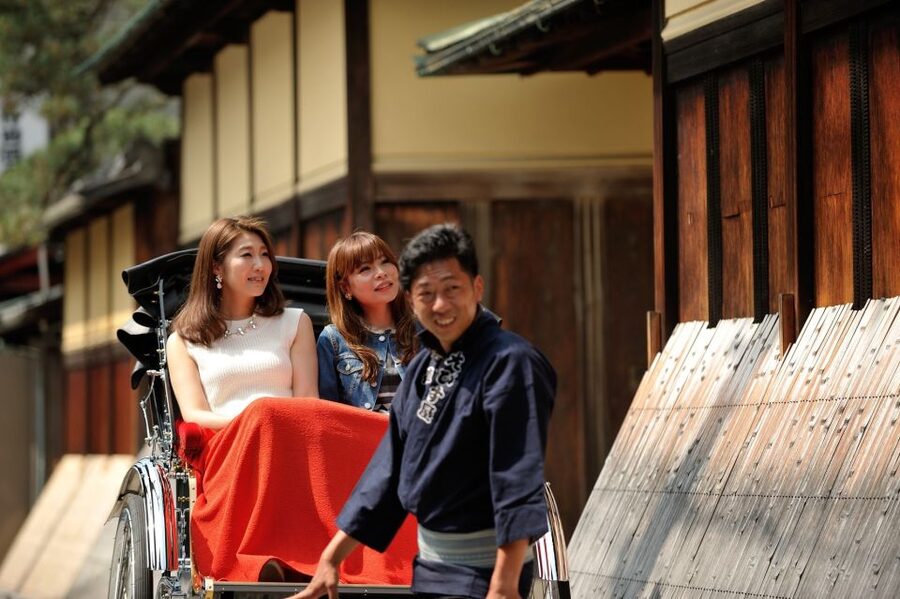
The longer outings continue beyond the basic Higashiyama circuit. The description includes a picturesque river lined with weeping willows, more temples, and the northern part of Gion. These additions matter because they change the tour from a quick introduction into a broader look at Kyoto’s older neighborhoods.
The river section offers a different mood from the shop-lined lanes. The willows and water provide open views, while the temple areas bring a quieter, more reflective setting. It is a good choice if you want variety rather than several versions of the same traditional street.
You should choose the duration based on your larger Kyoto plan. The 45-minute ride works as a lively orientation or a final activity before dinner. A 70-minute ride has been described as enough time to see several major sights without taking over the day. The longest option is better if you want the guide to cover more ground and have time for questions and repeated photo stops.
The supplied information gives several duration figures, including 45 to 130 minutes and a longer option described as 3 hours and 10 minutes. Availability and exact route depend on the booking choice, so check the selected duration carefully before paying.
The photo stops are more useful than they sound
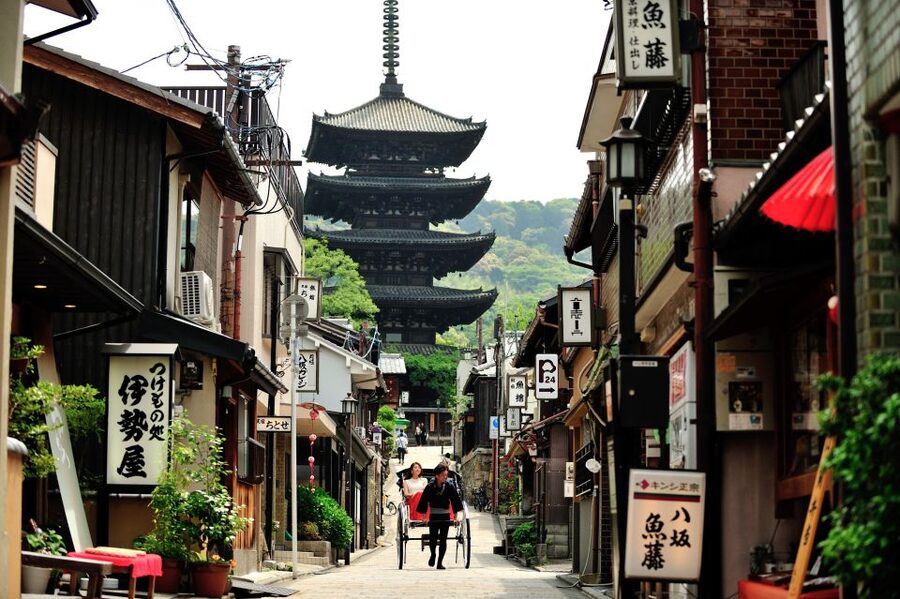
Photo stops are built into the experience, and they are one of its strongest practical features. Kyoto’s best scenes often involve a narrow angle, a traditional doorway, a temple approach, or a line of wooden buildings. You may see the scene clearly but struggle to photograph your whole group.
Guides can take pictures with your phone, and several outings included creative photos or even a short video. Fumi was praised for taking a large set of memorable pictures, while Takumi used a guest’s phone to make a short keepsake video. Those touches turn the ride into more than a sightseeing loop.
Tell your guide what sort of pictures you want. You might prefer a formal portrait, a candid image in the rickshaw, a family picture, or a scene showing the street around you. Since this is a private ride, you have a better chance of getting the composition you want than on a fixed group outing.
Do not expect a professional photography session with lighting or edited files. The value is convenience. Your guide knows where to stop, can frame the shot, and understands how to fit people and the setting into one picture.
How the private format changes the day
A private group is useful for more than avoiding strangers. It lets you set the rhythm. If you have children, older relatives, or someone who tires easily, you can ask for a gentler pace. If you are fascinated by temple architecture or local customs, you can spend more time asking questions.
The tour is also customizable according to your interests. That does not mean every sight is guaranteed, since the route depends on time and conditions, but it gives you a say in how the ride feels. Mention your priorities at the start: Gion, temples, old houses, photo locations, or a broad overview.
Families have found the setup practical. A family of four used two rickshaws, with children aged 14 and 11 enjoying the ride. Up to two children aged five or under can ride with two adults, one child on each adult’s lap. A child using one of the two rickshaw seats must be booked as an adult and pay the full fare.
The narrow seats deserve attention. At 74 centimeters wide, a rickshaw may feel snug for two average-size adults. One guest specifically recommended one rickshaw per average-size person unless both riders are small. For a family or group, budget for additional rickshaws if comfort matters.
Is $51 good value?
At about $51 per person, the tour costs more than simply walking through Gion and Higashiyama. You are paying for the vehicle, a private guide, route planning, local explanations, photo stops, and the novelty of being pulled through the old streets.
I think the value is strongest for a first visit, a special occasion, or a group with different walking abilities. An older parent can see a great deal without covering every slope. A couple can enjoy a relaxed introduction to the city. A family can keep children interested while still learning about Kyoto.
The value is weaker if you only want cheap transportation or plan to spend several hours inside temple grounds. Food, drinks, hotel pickup, drop-off, and entry fees are not included. You will still need to pay for temple admissions and arrange your own way to the meeting point.
The free postcard and sticker are pleasant small souvenirs, but they should not influence your decision. The real purchase is time with a guide in a private rickshaw, plus the chance to see the districts with less physical effort.
Comfort, weather, and who should skip it
The rickshaw is wheelchair and stroller-friendly, which can make the historic district more accessible than it first appears. Still, the seat width and street conditions matter. If you have back problems, this activity is not recommended, and it is not suitable for pregnant women. The information also advises against participation during the first 16 weeks of pregnancy.
Rain does not automatically ruin the ride. One outing took place on a rainy day and still worked well because the guide kept the experience enjoyable and offered useful suggestions. Even so, your comfort depends on clothing and weather protection, and you should not expect a fully enclosed vehicle.
The physical effort is mainly on the driver, not you, but the ride may include uneven streets and inclines. If you are unsure about comfort, choose a shorter option first or book individual rickshaws rather than sharing a tight seat.
Planning the best time in your Kyoto schedule
This makes a good first-day activity because it helps you get oriented. You can return later to the lanes, temples, and shops that interested you most. It also works near the end of a Kyoto stay, when your feet may appreciate a sightseeing option that does not require another long walk.
The 45-minute route is a sensible choice if your day already includes Kiyomizu-dera, a tea ceremony, or other major plans. The longer choices deserve a clearer block of time, especially if you want conversation and repeated photo stops rather than a quick circuit.
Build in time around the meeting point. The tour does not include hotel pickup or drop-off, and the streets around Kodaiji can be busy. Arrive ready to walk a short distance to the corner of Nene Street and Ichinenzaka Street.
The tour operates with English and Japanese-speaking guides. Specific guides vary, but names such as Moto, Shiro, Daichi, Fumi, Takuto, Kai, and Yoshito have been associated with strong explanations, good humor, safe driving, and thoughtful service. You cannot select a particular guide from the supplied information, so book for the format and route rather than a guaranteed personality.
Should you book the Higashiyama and Gion rickshaw ride?
Book it if you want a personal introduction to Kyoto’s old neighborhoods, especially if you value stories and photos as much as sightseeing. It is also a smart choice for families, couples, older adults, and anyone who finds steep or crowded streets tiring.
Choose the longer option if Gion, temples, river views, and traditional streets are central to your Kyoto plans. Choose 45 or 70 minutes if you mainly want orientation and a memorable ride.
Skip it if you dislike close seating, have back problems, are pregnant, or want an activity focused on temple interiors and admission-based sightseeing. For most other visitors, the private format, strong guide service, and easy photo opportunities make the $51 price reasonable, provided you confirm the duration and book enough rickshaws for comfortable seating.
FAQ
Where does the Kyoto rickshaw tour meet?
Meet your guide at the corner of Nene Street and Ichinenzaka Street, by Kodaiji Temple in Higashiyama.
How long is the tour?
The available choices begin at 45 minutes. The supplied details also describe longer options, including durations up to 130 minutes and one option described as 3 hours and 10 minutes. Check the available start times and selected duration when booking.
Is the tour private?
Yes. It is offered for a private group, and the route can be adjusted to suit your interests.
Which languages are available?
The live guides speak English or Japanese.
Can children ride in the rickshaw?
Children aged six and over are charged the adult price. Up to two children aged five and under can ride with two adults, with one child on each adult’s lap. A child using one of the two rickshaw seats must be booked as a full-fare adult.
Is the rickshaw comfortable for two adults?
Each rickshaw is 21.1 inches, or 74 centimeters, wide. Some people may be more comfortable booking an individual rickshaw per passenger, especially if they are average or larger in size.
Are temple entry fees, food, or hotel transfers included?
No. Food, drinks, hotel pickup and drop-off, and entry fees are not included.
More Kyoto Rickshaw Tours in Kyoto
- Kyoto: Arashiyama Customized Rickshaw Tour & Bamboo Forest
★ 5.0 · 432 reviews - Kyoto Arashiyama Rickshaw Tour with Bamboo Forest
★ 5.0 · 354 reviews - Kyoto Rickshaw Tour
★ 5.0 · 210 reviews - Kyoto Sagano Insider: Rickshaw and Walking Tour
★ 5.0 · 15 reviews
Recently added around Kyoto
- Higashiyama | Kyoto: Sakura Season Private Rickshaw Tour★ 5.0 · 3 reviews
- Kyoto Kimono Rental CHAMATSU|Kimono/Yukata Rental FamilyPlan★ 5.0 · 3 reviews
- Kyoto: Half-Day Private Guided Tour to the Old Town of Gion★ 4.4 · 3 reviews
- Nara Private Customizable Half Day Tour★ 5.0 · 3 reviews
- Kansai Region Hiking Adventure in Nara Kobe Kyoto and More★ 5.0 · 3 reviews
- Full Day Nara Deer, Temple, Shrine, Activities & Tea Ceremony★ 5.0 · 3 reviews
- Nara: Essential Private Tour with Deer Park and Temples★ 5.0 · 3 reviews
- Hiking Tour for Sacred Sites in Kyoto with a Guide★ 5.0 · 3 reviews
Gion Geisha District Tours, compared.

Kyoto Geisha Walking Tour: Gion District & Hidden Gems
Read our review →
Gion Magical Night Walking Tour with Geisha Trivia
Read our review →
Gion Geisha District Walking Tour – Stories of Geisha
Read our review →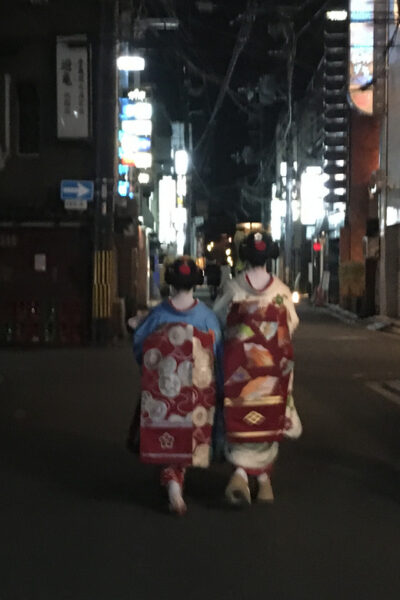
Best of Kyoto: Gion, Geisha, Pagodas & Cobblestones
Read our review →

Kyoto Night Foodie Tour in Gion (9+ dishes + 6 Sake tastings)
Read our review →
Kyoto Gion Geisha District Walking Tour – The Stories of Geisha
Read our review →
Kyoto Gion: 2-Hour Geisha Culture & History Walking Tour
Read our review →Browse the lists this tour appears in