
REVIEW · NARA DAY TRIPS
Nara: Bike Tour in Ancient Capital UNESCO World Heritage
Nara’s Heijo Palace site is a world away from the deer and crowds around Todai-ji. On this gentle bike tour, you pedal across the broad former palace grounds, stopping at grand gates, reconstructed halls, ancient tombs, museums, and a quiet pond where ducks and turtles drift by. Guide Kay leads the tour in English or Japanese and adds the historical context that turns open fields and foundations into the capital of eighth-century Japan.
I especially like the easy two-hour pace and the chance to cover a large site without wearing out your feet. The traditional Tenpyo costume session is another fine touch, giving you a playful souvenir photo rather than just another picture of a temple roof.
The main drawback is the site itself. Much of Heijo Palace is open space, reconstructed buildings, or archaeological remains, so visitors looking for a dense cluster of intact temples may find it underwhelming. August heat can also make cycling uncomfortable, and the tour is not suitable if you cannot ride a bike.
In This Review
- Key points to know before you book
- Why Heijo Palace feels different from central Nara
- Suzaku Gate gives the palace a proper entrance
- Toin Garden shows the refined side of palace life
- The excavation museum keeps archaeology in place
- A quiet ride beside Mizukami Pond
- Hishiage Ancient Tomb adds a much older layer
- The First Imperial Audience Hall puts the capital in perspective
- The South Gate completes the ceremonial sequence
- The palace museum fills in the missing details
- Tenpyo clothing makes the ending lighter
- What Kay adds to the ride
- Is $22 good value for two hours?
- Timing, weather, and getting there
- Who should book this bike tour?
- FAQ
- How long does the bike tour last?
- What language is the tour offered in?
- Where is the meeting point?
- How early should I arrive?
- What does the price include?
- Are food and drinks included?
- Is bike insurance included?
- Can children join the tour?
- What happens if the weather is bad?
- Can I cancel for a refund?
- Is the tour suitable for wheelchair users?
Key points to know before you book
- A peaceful side of Nara: Cycle away from the busy Nara Park area and spend time around the former imperial palace grounds.
- Kay’s personal touch: She is praised for clear English, patience with children, helpful photo stops, and a friendly approach to questions.
- More ground covered: Biking makes it possible to see several far-flung parts of this large UNESCO site in two hours.
- Archaeology you can see: The excavation museum preserves remains in the same condition in which they were found.
- A gentle family option: The relaxed pace has worked well for families with six-year-old children, though every child must be comfortable on a bike.
- Cost-effective inclusions: At $22 per person, the fee includes the bicycle, helmet, guide, admissions, and traditional costume experience.
Why Heijo Palace feels different from central Nara
Most first-time visits to Nara focus on deer, Todai-ji, Kasuga Taisha, and the lanes around Nara Park. Heijo Palace tells another part of the city’s story: Nara as Japan’s imperial capital during the Nara period.
The palace site is broad and open. That is both its pleasure and its challenge. You get long views, fresh air, and the sense of an enormous planned capital, but you do not find ancient buildings at every turn. The bike is a smart choice because the main points are spread across the grounds.
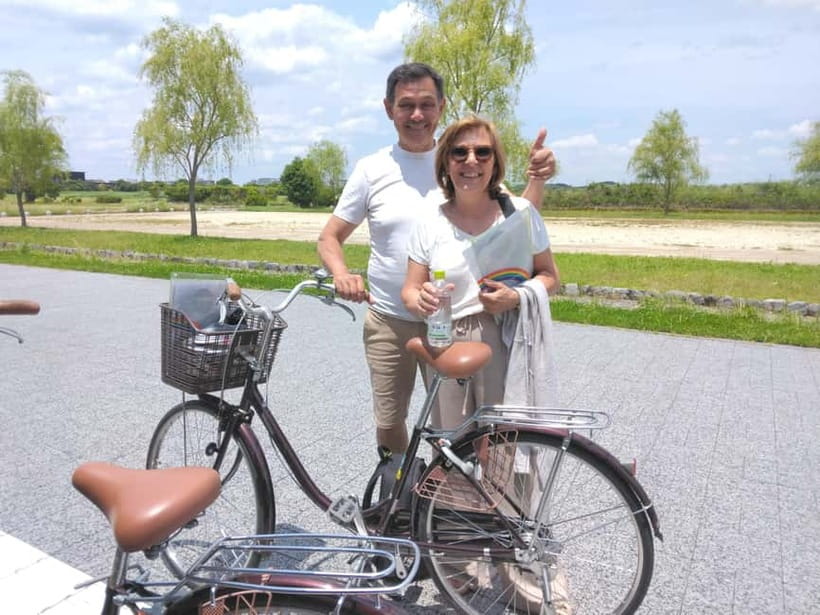
You meet at the rental bike reception counter inside Miharashi-Kan in Suzaku-mon Square. Arrive 10 minutes early for the 2-hour ride. The small group is limited to eight people, which matters here because the guide can keep the pace relaxed and answer questions without turning the tour into a moving lecture.
More day trips to Nara:
- World Heritage Kyoto & Nara Uji Authentic Matcha Experience
★ 5.0 · 1,573 reviews - Nara Half Day Trip Walking Tour (Private Option Available)
★ 5.0 · 937 reviews - Nara Early Morning Tour (Kyoto or Osaka Departure Available)
★ 5.0 · 676 reviews
Suzaku Gate gives the palace a proper entrance
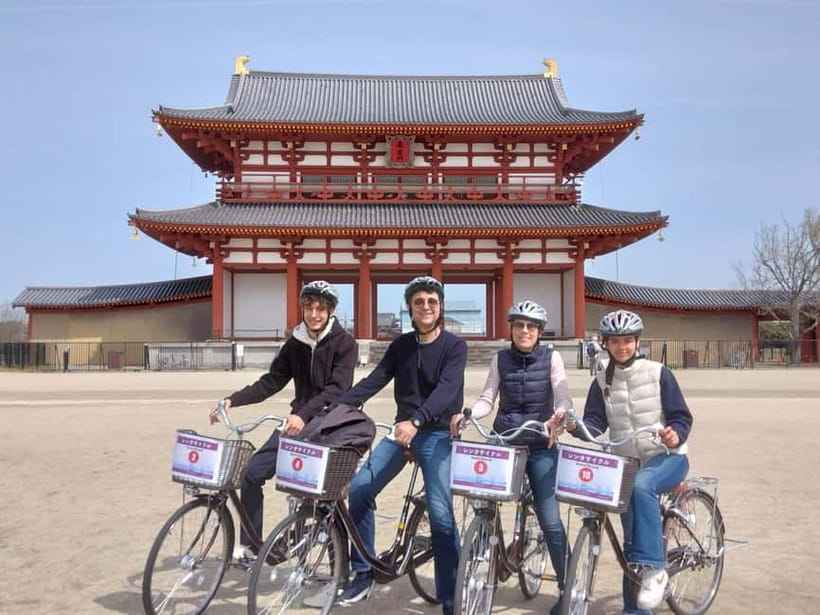
The ride begins at Suzaku Gate, the main southern entrance to Heijo Palace. Its scale helps you picture the ceremonial approach to the old capital, even though the structure is a reconstruction.
This is a good first photo stop and an effective place for Kay to explain how Nara functioned as a capital. The wide setting around the gate also gives you attractive views of the surrounding greenery. Take a moment here to look beyond the building itself. The open space is part of the experience, showing how carefully the palace complex was arranged.
If you want a tour that delivers one perfectly preserved ancient building after another, this first stop sets a different expectation. Heijo Palace is about planning, archaeology, reconstruction, and historical scale.
Toin Garden shows the refined side of palace life
Toin Garden, also called the East Palace Garden, is a smaller and more intimate stop. It reflects the early development of Japanese garden design, with bridges, buildings, rocks, and water arranged to create a formal setting for the imperial court.
Kay explains the garden’s role as a state guest house. That detail helps you read the site as more than a pleasant pond with attractive landscaping. This was a place connected to ceremony, reception, and political life.
The stop lasts about 10 minutes, so you will not have unlimited time for photography. Still, it offers a useful change of mood after the large Suzaku Gate. You move from the authority of the main entrance into a quieter courtly setting.
The excavation museum keeps archaeology in place
The Excavation Site Exhibition Hall is one of the tour’s most unusual stops. Instead of displaying only cleaned-up objects in glass cases, it preserves and presents archaeological remains in the same condition in which they were uncovered.
That makes the museum especially useful for anyone who wants to understand how historians reconstruct the past. You can see the physical traces left behind at the palace site, then connect them to the buildings and layouts explained by Kay.
The visit is short, around 10 minutes, but the subject is dense. Ask questions if you are interested in building methods, palace planning, or how excavated material helps explain Nara’s former capital. The tour is designed as an overview, not a specialist archaeology class, but this stop gives the history solid ground.
More bike days around Nara:
- E-Bike Nara Highlights – Todaiji, Knives, Deer, Shrine
★ 4.8 · 186 reviews - Nara – Highlights Bike Tour
★ 4.5 · 89 reviews - E-Bike Nara Highlights – Todaiji, Knives, Deer, Shrine, and Gems
★ 4.5 · 34 reviews - Nara: City Highlights Shared Group or Private Bike Tour
★ 4.9 · 34 reviews
A quiet ride beside Mizukami Pond
The route around Minakami Pond, also called Mizukami Pond, is where the bike tour feels most relaxed. You ride beside the water, feel the breeze, and listen for birds. Ducks and turtles may appear along the way, adding a little natural life to a day focused on palaces and archaeology.
This is one of the strongest reasons to choose a bicycle instead of walking between the sites. The movement connects the formal points of interest, while the pond gives you a calm pause between museums and reconstructed buildings.
The ride is not described as strenuous, and the schedule allows for sightseeing stops rather than a fast workout. That said, you still need to be confident on a bike. The activity is not suitable for people who cannot ride, wheelchair users, visually impaired people, or pregnant women.
Hishiage Ancient Tomb adds a much older layer
At Hishiage Kofun, you see an ancient tomb and its grave goods. This stop broadens the story beyond the palace and the Nara period. It reminds you that the region had important communities and burial traditions long before Heijo-kyo became the capital.
The tomb is not presented as a grand interior monument. Think of it as an archaeological site that gains meaning through explanation. Kay’s guidance is useful here because the physical remains alone may not tell you why the tomb matters.
The stop is scheduled for roughly 10 minutes. That is enough for a short visit and photographs, but not a long museum-style examination. If ancient Japanese culture is your main interest, this part of the tour will likely appeal to you.
The First Imperial Audience Hall puts the capital in perspective
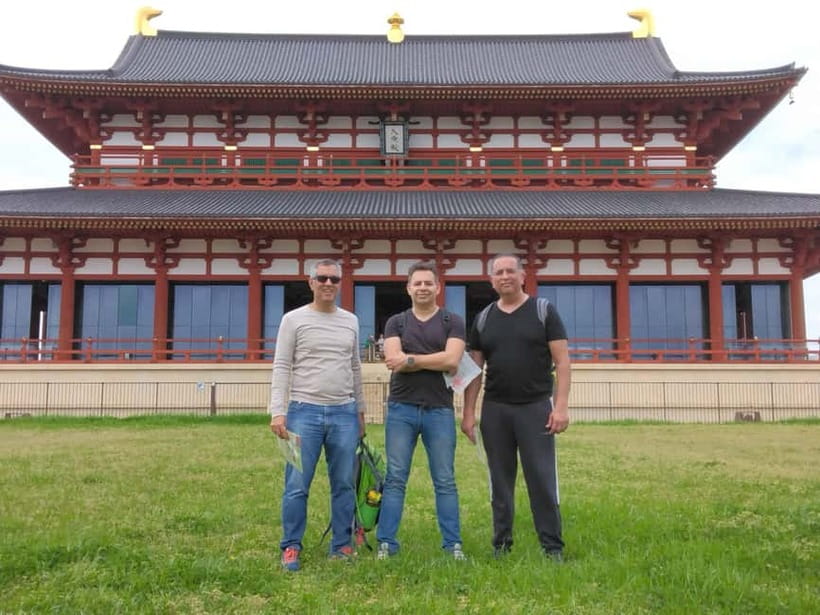
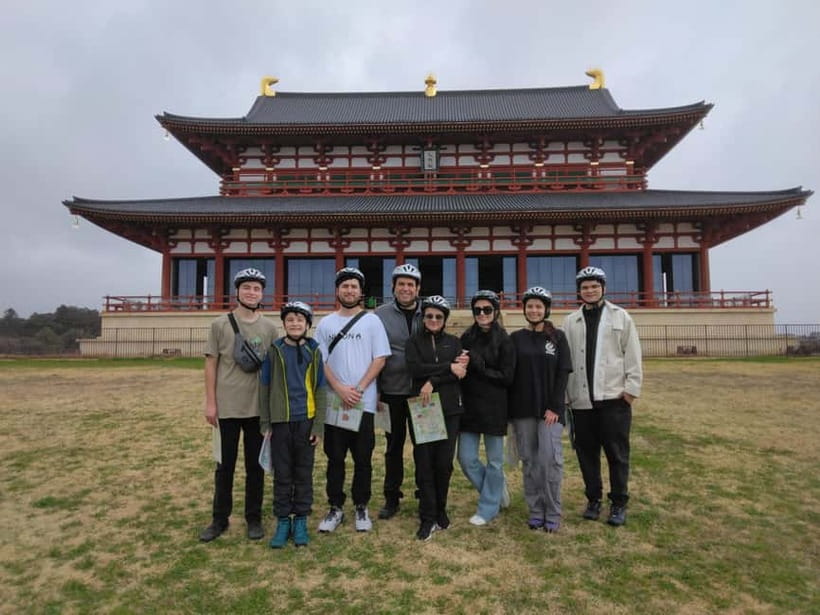
Daiichiji Daigokuden, the First Imperial Audience Hall, is the visual centerpiece of the palace site. This reconstructed building was used for major ceremonies, giving you a sense of the formal power attached to the old capital.
Inside, you can see paintings, ornaments, and other displays connected with the hall. The building also provides a fine view across the palace grounds. From here, the wide open site makes more sense: the emptiness is not accidental, but part of the reconstruction of a huge court complex.
The visit lasts about 15 minutes. Kay keeps the explanation focused, with enough detail to build an outline of Nara-period government without stopping for every possible historical footnote. Past participants have particularly valued her willingness to answer questions and allow time for photographs.
The South Gate completes the ceremonial sequence
The tour also stops at Daiichiji Daigokudenin Daigokumon, the southern gate associated with the First Imperial Audience Hall. The visit is brief, about five minutes, but it helps you see how the gates, courtyards, and halls worked together.
This is a useful stop for photographs and for understanding the palace as a planned sequence of spaces. The experience is less about entering one famous monument and more about reading the relationship between several buildings.
That approach suits you if you enjoy history, architecture, and archaeology. If you need constant interior access or dramatic objects, the short gate stop may feel less important.
The palace museum fills in the missing details
The Heijo Palace Site Museum is the oldest museum at the palace grounds. Its displays include ancient roof tiles, wooden tablets, and models that help explain how the site looked and operated.
I find museums like this valuable after seeing the open grounds. They give you the small physical clues that large reconstructed buildings cannot provide. A roof tile or wooden tablet can make the past feel more concrete, especially when the surrounding site has wide stretches of grass and archaeological foundations.
The museum stop is about 10 minutes. That is enough for a guided introduction, but you may want to return independently later if your schedule allows. The bicycle tour gives you a broad first look rather than hours with every display.
Tenpyo clothing makes the ending lighter
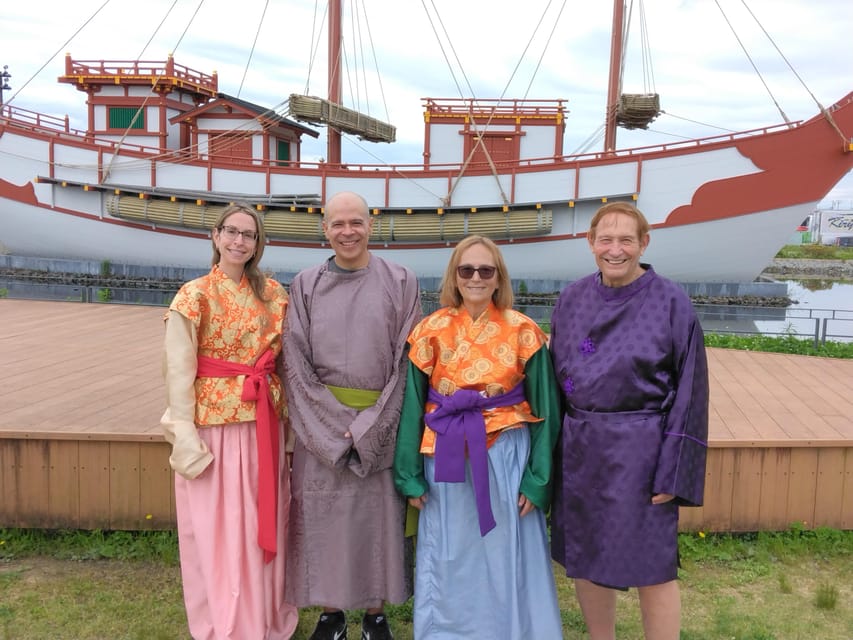
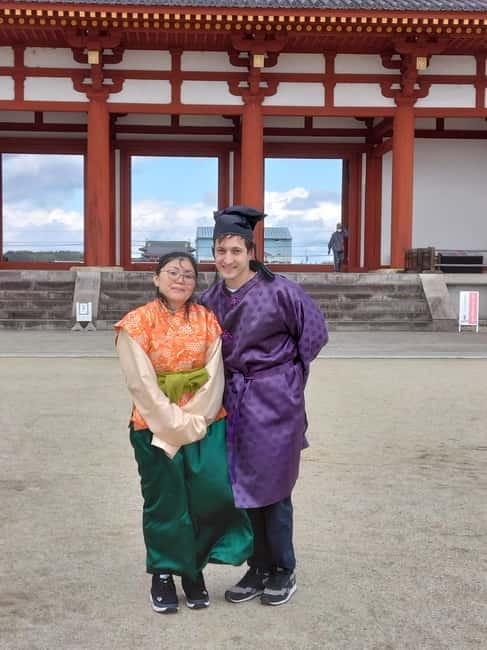
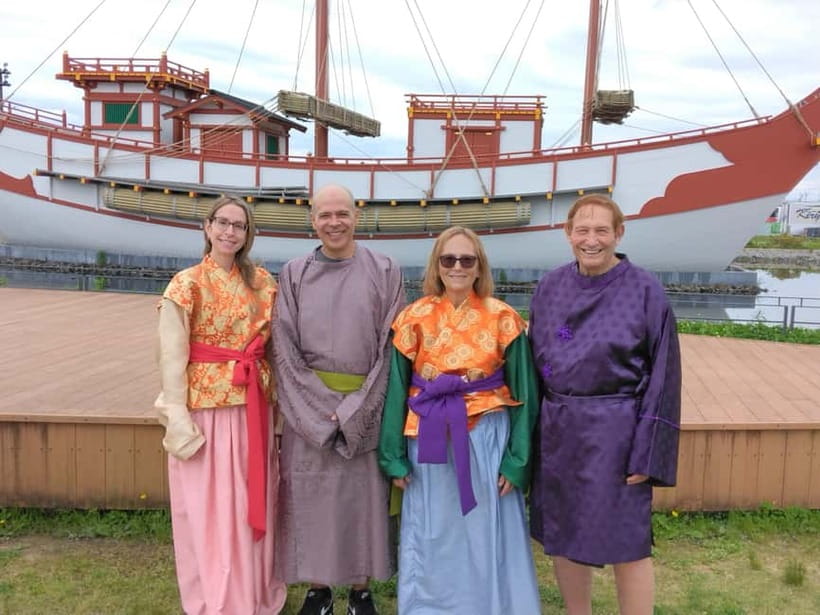
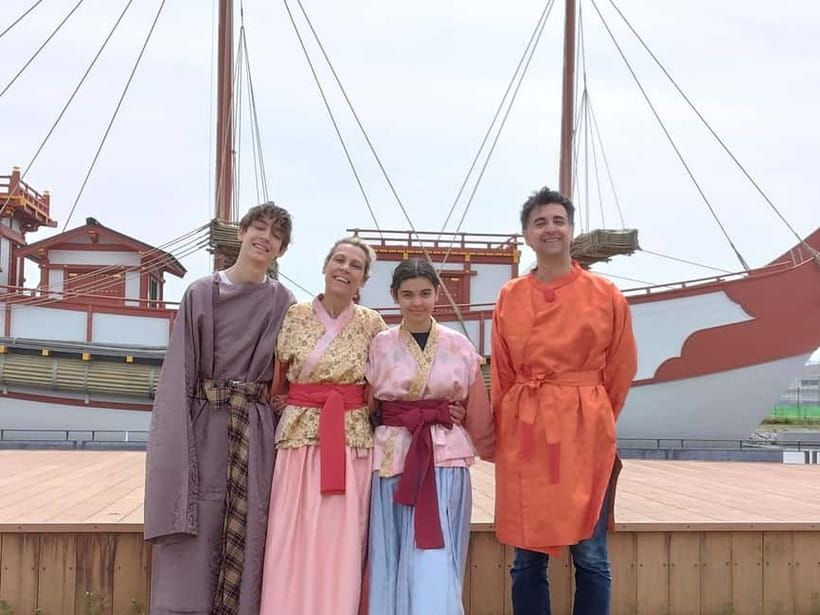
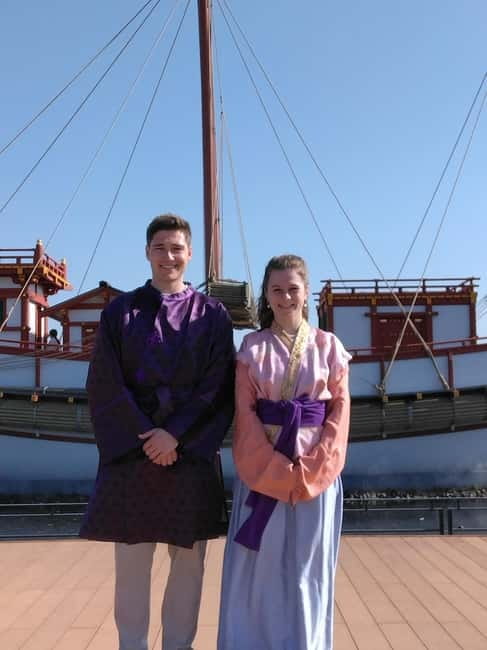
The traditional costume experience adds a welcome bit of fun at the end. You can wear Tenpyo-period clothing and take memorable photos, linking your visit to the era you have just been learning about.
This is not a full historical reenactment, and the supplied details do not specify how long the costume session lasts or how many outfit choices are available. Treat it as a photo opportunity included with the tour, not as a separate workshop.
For families, couples, and first-time visitors, it gives the tour a personal finish. You leave with something more distinctive than a standard palace photograph. Families have also found that children enjoy collecting stamps at the site, though the stamp activity is not listed as a formal included feature.
What Kay adds to the ride
Guide Kay is a major part of the experience. She leads in English or Japanese and has been praised for explaining Nara’s role in Japanese history clearly, answering questions patiently, and adjusting the ride to the group.
Her style appears particularly well suited to families. She has been patient with six-year-olds, kept the pace comfortable, and helped with practical matters such as calling a taxi after the tour. That kind of assistance is useful when you are trying to connect the palace site with lunch or another part of Nara.
The tour also works well for adults who want a clear introduction rather than an academic lecture. Kay covers history, culture, buildings, and archaeology, while leaving room for pictures and quiet riding. If you want a guide who talks nonstop while you pedal, this may feel too gentle. If you want context without being rushed, it fits better.
Is $22 good value for two hours?
At $22 per person, the price is attractive because it includes several costs that can add up elsewhere: bicycle rental, helmet, guide, admissions, and the traditional costume experience. You are also paying to move efficiently around a very large site.
The value is strongest if you are new to Heijo Palace or have only a short amount of time in Nara. A guide gives the scattered remains a clear thread, and cycling lets you reach more than you likely would on foot in two hours.
The value is weaker if you have little interest in ancient Japanese history or prefer intact temples and busy streets. One honest assessment of the site is that it can feel like recreated buildings and holes where old pillars once stood. The tour cannot change that character. It can explain it and make the scale easier to appreciate.
Timing, weather, and getting there
The meeting point is the rental bike reception counter at Miharashi-Kan in Suzaku-mon Square. You can reach it by Nara Kotsu bus to the Suzakumon Hiroba Mae stop, followed by a five-minute walk north.
From Kintetsu Nara Station, the bus ride takes about 16 minutes. From Kintetsu Yamato-Saidaiji Station’s South Exit, it takes about 10 minutes. From JR Nara Station’s West Exit, it also takes about 10 minutes. The site is about a 20-minute walk from Kintetsu Yamato-Saidaiji Station’s South Exit and about 20 minutes from Shin-Omiya Station.
Use the bus directions and arrive early. Missing the start time is non-refundable, so do not cut the connection close. Food and drinks are not included, and neither is bike insurance.
Weather deserves attention. The supplier may cancel in heavy rain, storms, or other bad conditions, with a full refund. You can cancel up to 24 hours ahead for a full refund, and the reserve-now, pay-later option keeps your plans flexible.
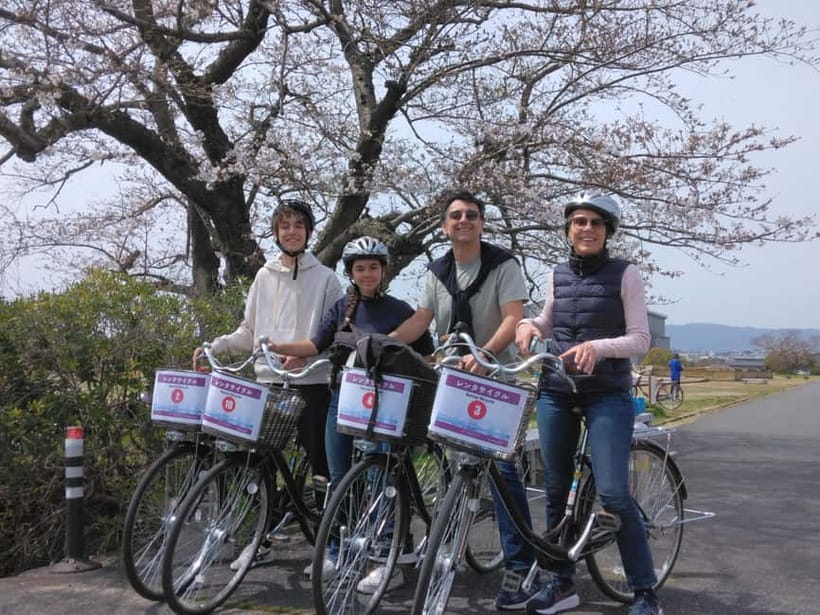
Summer heat is the most obvious comfort issue. A past August outing was described as very hot, so spring, autumn, and cooler mornings are sensible choices when available. In spring, the palace grounds can feel especially peaceful as locals enjoy hanami and ordinary weekend life.
Who should book this bike tour?
Choose this tour if you want to see a quieter, less visited part of Nara and understand why the city mattered as Japan’s ancient capital. It is a good fit for history fans, first-time visitors, families with bike-confident children, and anyone who likes mixing museums with fresh air.
It also works well as an introduction on your first day in Nara. After two hours, you will have a map of the palace site in your head and can decide if you want to return for a slower museum visit.
Skip it if you cannot ride comfortably, need wheelchair access, or are pregnant. You may also prefer another Nara activity if your main goal is deer, major temple interiors, or preserved ancient buildings. For everyone else, $22 buys a friendly guide, practical transport around a huge site, a calm ride, and a useful look at the capital behind modern Nara.
FAQ
How long does the bike tour last?
The tour lasts two hours, including the guided rides, sightseeing stops, museum visits, and traditional costume experience.
What language is the tour offered in?
The tour is available in English and Japanese. Guide Kay leads the English-language experience.
Where is the meeting point?
Meet at the rental bike reception counter at Miharashi-Kan in Suzaku-mon Square. The listed coordinates are 34.68628944048124, 135.7926401146025.
How early should I arrive?
Arrive at the rental bike reception 10 minutes before the scheduled starting time.
What does the price include?
The $22 price includes the bike tour, guide, rental bicycle, helmet, admission fees, and the traditional Tenpyo costume experience.
Are food and drinks included?
No. Food and drinks are not included.
Is bike insurance included?
No. Bike insurance is not included in the tour price.
Can children join the tour?
Children can join if they can ride a bike. The relaxed pace has suited families with six-year-old children, but the activity is not suitable for anyone who cannot ride.
What happens if the weather is bad?
The supplier may cancel the tour because of heavy rain, storms, or other inclement weather. A supplier cancellation receives a full refund.
Can I cancel for a refund?
You can cancel up to 24 hours before the tour for a full refund. No-shows and missed tours are non-refundable.
Is the tour suitable for wheelchair users?
No. The experience is not suitable for wheelchair users, visually impaired people, pregnant women, or people who cannot ride a bike.
More History Walks in Nara
- Nara World Heritage PRIVATE TOUR
★ 4.5 · 15 reviews - Nara: UNESCO Heritage Sites & Deer Park Tour with Pro guide
★ 4.5 · 10 reviews - Nara Heritage Walkabout from Nara Park to Todaji-ji temple
★ 5.0 · 5 reviews - Nara: Cultural Heritage Tour by Rickshaw
★ 5.0 · 5 reviews
Recently added around Nara
- Nara Private Customizable Half Day Tour★ 5.0 · 3 reviews
- Full Day Nara Deer, Temple, Shrine, Activities & Tea Ceremony★ 5.0 · 3 reviews
- Nara: Essential Private Tour with Deer Park and Temples★ 5.0 · 3 reviews
- Discover the Essence of Nara Ink Through Your Senses★ 5.0 · 3 reviews
- Private Journey in Nara’s Historical Wonder★ 5.0 · 3 reviews
- Nara:Private Tea Ceremony(Max 5 ppl) -Master Matcha Making-★ 5.0 · 3 reviews
- Nara Takayama Tea Whisk Craft and Tea Culture Experience★ 5.0 · 3 reviews
- Nara: Half-Day Private Tour of 4 Must-See Spots & Deer Park★ 5.0 · 3 reviews
Nara Day Trips, compared.
World Heritage Kyoto & Nara Uji Authentic Matcha Experience
Read our review →
Kyoto/Osaka: Nara, Fushimi Inari Taisha, Arashiyama Bus Tour
Read our review →
Nara Half Day Trip Walking Tour (Private Option Available)
Read our review →
Nara Early Morning Tour (Kyoto or Osaka Departure Available)
Read our review →
Kyoto/Osaka: Kinkakuji, Bamboo Forest, and Nara Deer Park
Read our review →Browse the lists this tour appears in