
REVIEW · NARA DAY TRIPS
Nara: UNESCO Heritage Sites & Deer Park Tour with Pro guide
Nara’s deer are the easy hook, but Todai-ji’s enormous bronze Buddha and the quiet forest around Kasuga Taisha give this three-hour walk its real weight. I like the way the route links animals, Shinto worship, Buddhist art, and Japanese history instead of treating each sight as a separate photo stop. I also like the small-group size, capped at 10, which gives your guide room to answer questions.
The tour is especially strong when led by Goku, whose warm, well-informed explanations have helped many people get far more from Nara than they would alone. A possible drawback is the walking: this is not a good fit if you have serious back trouble, use a wheelchair, or want a slow, seated sightseeing outing.
In This Review
- Key points at a glance
- Why this short Nara tour works
- Meeting the deer in Nara Park
- Walking through Kasuga Taisha’s ancient forest
- Entering Todai-ji and meeting the Great Buddha
- What the guide adds to the visit
- Small group, private wording, and the pace
- What the $83 price really buys
- Who should book it
- Final decision: is this Nara tour worth booking?
- FAQ
- Where does the tour meet?
- How long does the tour last?
- What sites are included?
- Can I feed the deer?
- Are entrance fees included?
- Is hotel pickup provided?
- Are meals included?
- What languages are available?
- Is the tour suitable for wheelchair users?
Key points at a glance
- Sacred deer in Nara Park: Learn how the deer connect with Shinto beliefs and feed them the supplied shika-senbei crackers.
- Kasuga Taisha’s old forest: Walk among an ancient wooded setting filled with religious meaning and stone and bronze lanterns.
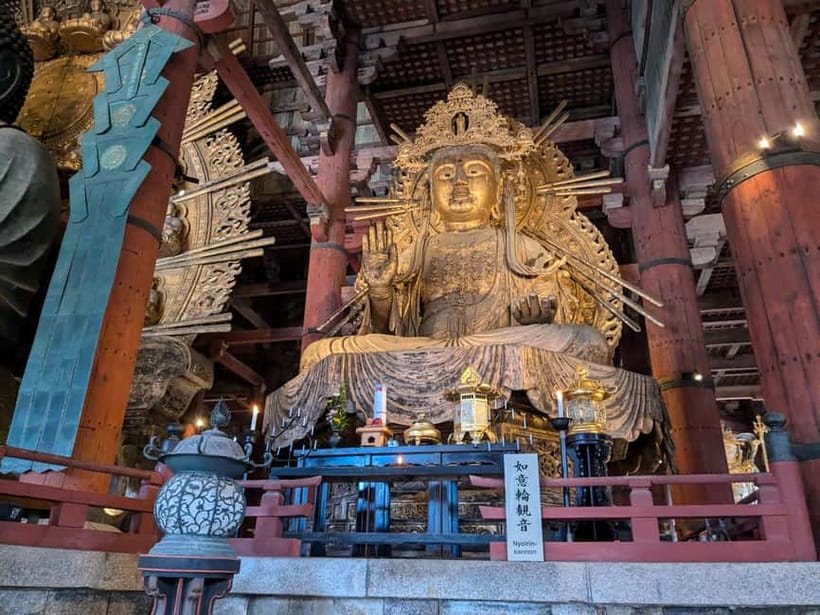
- Todai-ji’s giant Buddha: See the world’s largest bronze Buddha inside one of the world’s largest wooden buildings.
- Local cultural guidance: Goku is praised for his clear explanations, patience, and willingness to help with practical plans after the tour.
- Small-group format: The group is limited to 10 people, with guides available in Japanese, English, Russian, Spanish, French, and Portuguese.
- Three-hour value: Entrance fees and deer crackers are included, making the price easier to judge against a self-guided visit.
Why this short Nara tour works
Nara can look simple on a map. There is a park, a famous shrine, and a huge temple. In practice, the meaning of these places is easy to miss. The deer are not just cute animals, the lanterns are not just decoration, and Todai-ji is more than a large wooden building with a statue inside.
This tour gives you a clear story to follow. You begin with the deer and Shinto tradition, move into the forest and Kasuga Taisha, then finish with Todai-ji and Japanese Buddhism. That order makes sense geographically and culturally.
I like the length. Three hours is enough to see the major sights without turning a Nara visit into an all-day march. It also works well for a day trip from another Kansai base, though you need to plan your arrival and departure around the fixed starting time you select.
The listed price is $83 per person. That is not the cheapest way to see Nara, since the park itself is free and you can walk around much of the area without a guide. But the cost includes a local guide, entrance fees, and deer crackers. The main value is the explanation: a good guide helps you understand what you are seeing, how to behave at sacred places, and why Nara matters.
More day trips to Nara:
- World Heritage Kyoto & Nara Uji Authentic Matcha Experience
★ 5.0 · 1,573 reviews - Nara Half Day Trip Walking Tour (Private Option Available)
★ 5.0 · 937 reviews - Nara Early Morning Tour (Kyoto or Osaka Departure Available)
★ 5.0 · 676 reviews
Meeting the deer in Nara Park
The tour begins at the red torii gate of Himuro Shrine. This is an important detail, since Nara Park has many paths and entrances. Look for the red gate rather than simply heading toward the general park area.
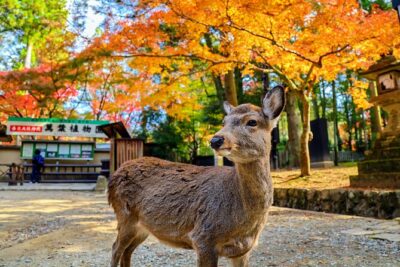
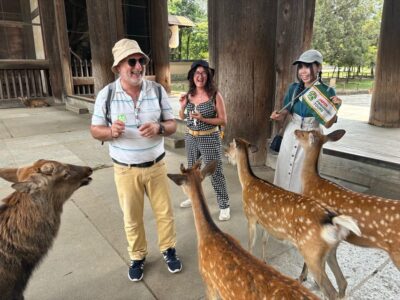
Nara Park is famous for deer that roam freely around the grounds. Here, you receive shika-senbei, the special crackers intended for feeding them. Your guide shows you how to offer the food and how to act around the animals.
The deer are accustomed to people, but they are still animals. Hold the crackers carefully, follow your guide’s instructions, and avoid teasing them with food. Once the crackers are gone, showing empty hands can help make it clear that the snack supply has ended.
This is one of the most enjoyable parts of the tour, but it can also be the most lively. Deer may approach quickly when they see food. Children and anyone uneasy around animals should stay close to the guide. The experience is best when you treat the deer with respect rather than turning them into props for photographs.
Your guide also explains the link between the deer and Shinto beliefs. That context changes the mood of the encounter. You are not simply feeding animals in a city park. You are learning why they have a special place in Nara’s religious identity.
Bring a camera, but keep it ready for more than close-up deer shots. The park connects open paths, wooded areas, shrine buildings, and temple grounds, so the setting changes as you walk.
Walking through Kasuga Taisha’s ancient forest
From the park, the route continues toward Kasuga Taisha Shrine. The shrine is surrounded by an old forest that has been protected for centuries. Even if you are not deeply interested in religion, this part of the walk gives you a welcome change from the open park and crowded temple approach.
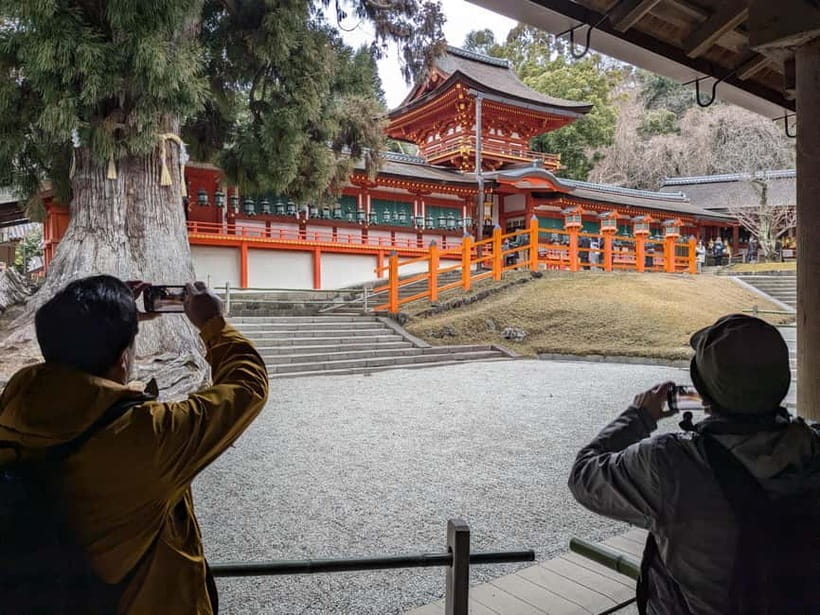
Kasuga Taisha is known for its lanterns. Stone lanterns line the approaches, while bronze lanterns appear around the shrine buildings. Your guide explains their purpose and the shrine’s place in Shinto practice, helping you see the difference between a decorative object and a religious offering.
The forest is important because it forms part of the shrine’s sacred setting. The trees, pathways, lanterns, and buildings work together. You get a better sense of this relationship when someone points it out, especially if this is your first visit to a Japanese shrine.
The route involves walking on uneven surfaces and spending time outdoors. Comfortable shoes are essential. Sunscreen and water are sensible additions, particularly in warm weather. Check the forecast before you go, since rain or heat can affect your comfort.
Kasuga Taisha rewards attention rather than speed. Look at the small details around the approach, listen to the guide’s explanation of Shinto customs, and allow yourself a moment to appreciate the forest. You will get more from the stop if you resist rushing straight toward the next major photograph.
Entering Todai-ji and meeting the Great Buddha
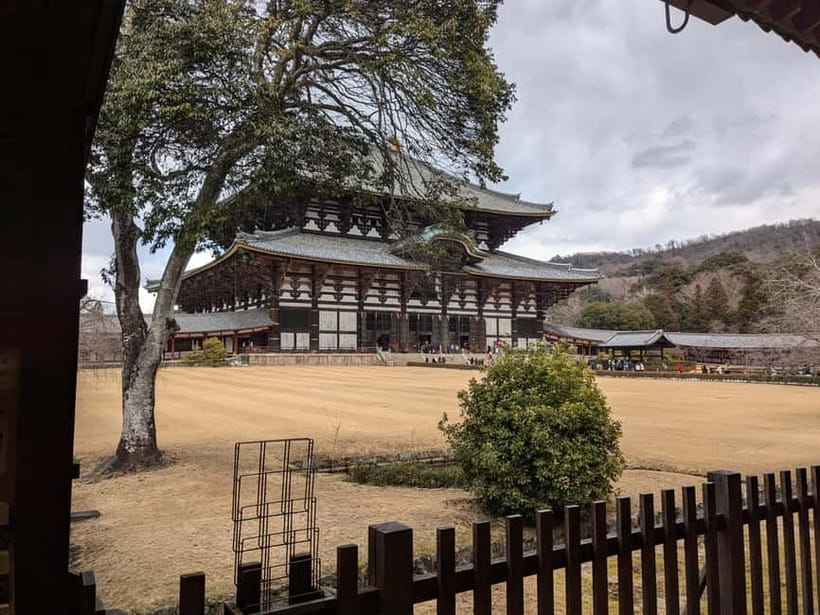
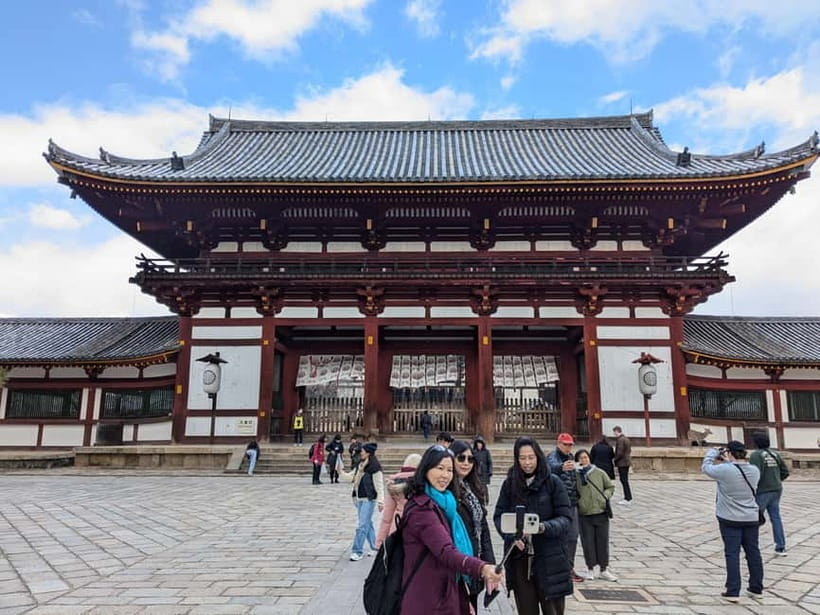
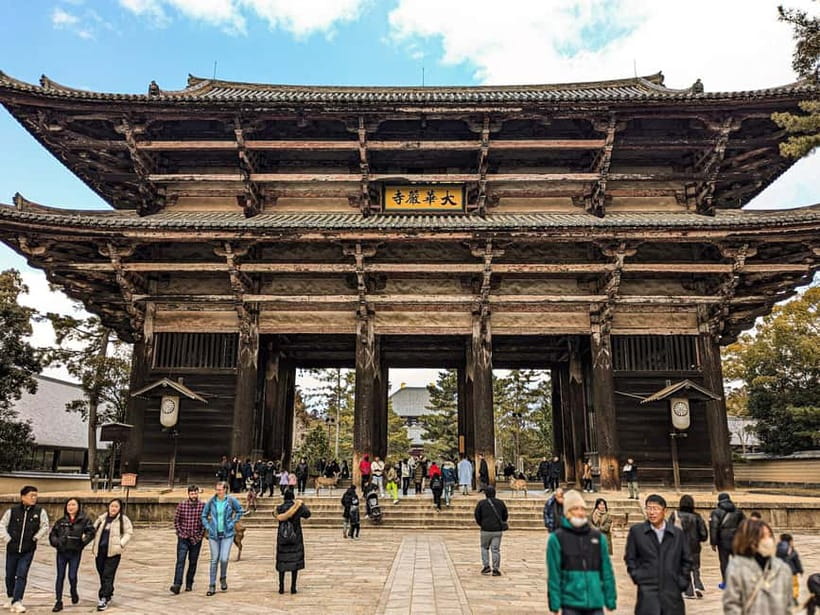
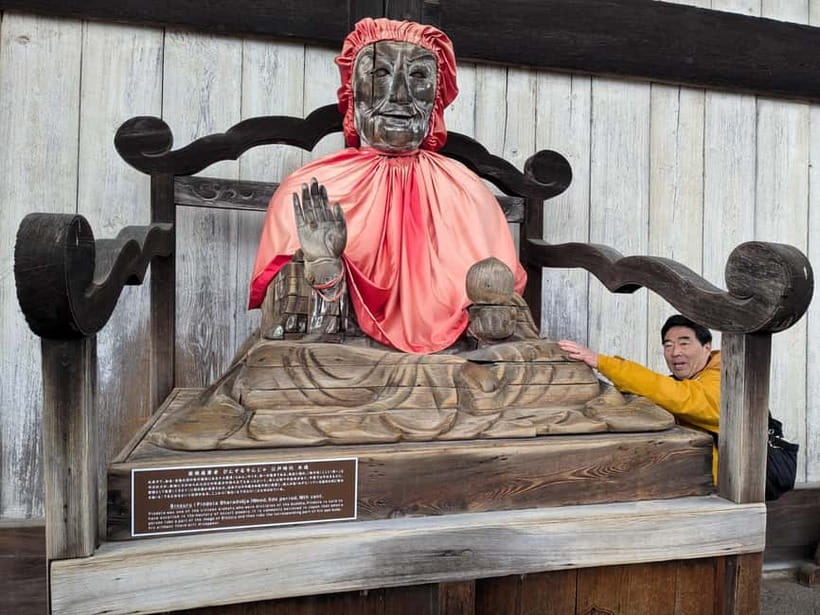
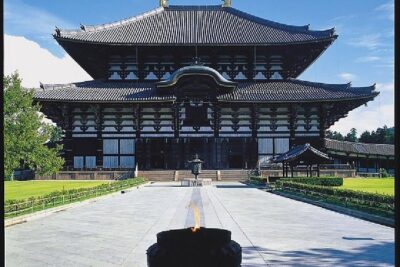
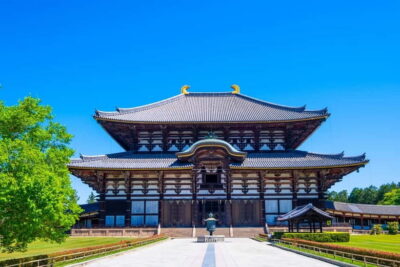
The final major stop is Todai-ji Temple, one of Japan’s most important Buddhist sites. Its main hall houses the Daibutsu, a huge bronze Buddha statue. The building itself is also remarkable, described as one of the world’s largest wooden structures.
The scale is the point, but scale alone does not explain why the temple matters. Your guide connects the statue and temple to Japanese Buddhism, giving you a way to understand the building as a religious center rather than simply an architectural wonder.
This is where Goku’s guiding style appears to make the greatest difference. He is praised for explaining the site’s history and meaning clearly, and for helping people move through the visit efficiently. One person also found that he helped the group avoid a long wait at the Buddhist temple. Queue conditions can change, so do not treat that as a guaranteed benefit, but a local guide can often make a major sight easier to manage.
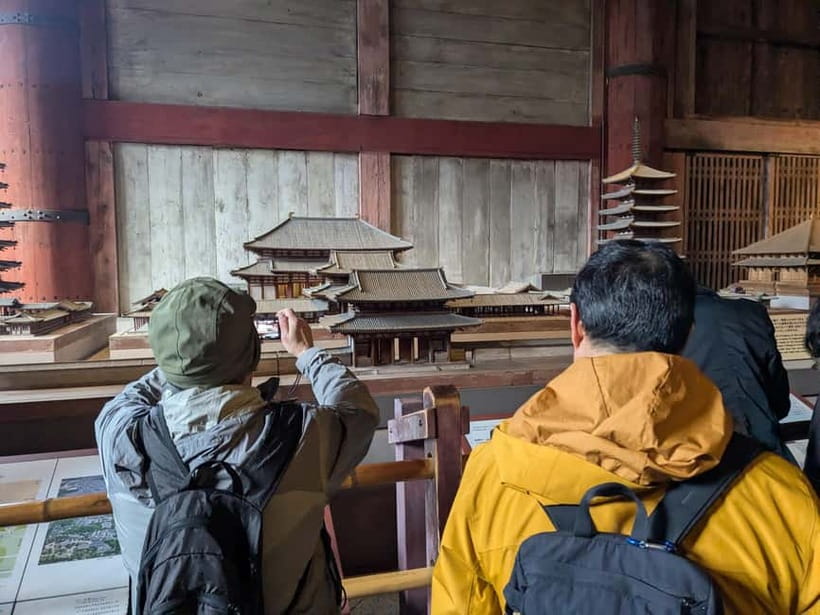
Todai-ji can feel busy, especially around the main hall. A guide helps you focus on the details that might otherwise disappear beneath the crowds: the Buddha’s posture, the hall’s wooden construction, and the role of the temple in Japanese religious life.
Flash photography is not allowed. Follow posted rules and your guide’s directions, particularly inside sacred buildings. A camera is welcome, but the best souvenir may be a clearer understanding of why this place has mattered for so long.
More history walks in Nara:
- Nara: Bike Tour in Ancient Capital UNESCO World Heritage
★ 5.0 · 43 reviews - Nara World Heritage PRIVATE TOUR
★ 4.5 · 15 reviews - Nara Heritage Walkabout from Nara Park to Todaji-ji temple
★ 5.0 · 5 reviews - Nara: Cultural Heritage Tour by Rickshaw
★ 5.0 · 5 reviews
What the guide adds to the visit
The guide is the main reason to choose this tour instead of walking through Nara on your own. The route itself is easy to identify. The interpretation is harder to replace.
Goku is the guide most closely associated with this experience. He brings knowledge of the Kansai region, Japanese culture, music, and subcultures, and he is described as generous with explanations. He also appears comfortable talking with people from different countries and answering questions beyond the basic sightseeing script.
That personal approach can make a three-hour tour feel more useful. You can ask about Shinto and Buddhism, the deer, Japanese customs, or local culture rather than simply listening to memorized facts. The guide’s job is not only to point out buildings, but to help you connect them.
His practical help is another plus. After one tour, Goku helped a group find its next destination, recommended a ramen restaurant, and assisted with ordering while taking dietary needs into account. That kind of help is not listed as a formal part of the tour, so you should not book expecting a restaurant escort. Still, it suggests that asking for sensible local advice may be worthwhile.
Airi is also named as a guide for the experience, and the tour can be conducted in several languages. Available languages are Japanese, English, Russian, Spanish, French, and Portuguese. When booking, check the language and guide availability for your chosen time.
Small group, private wording, and the pace
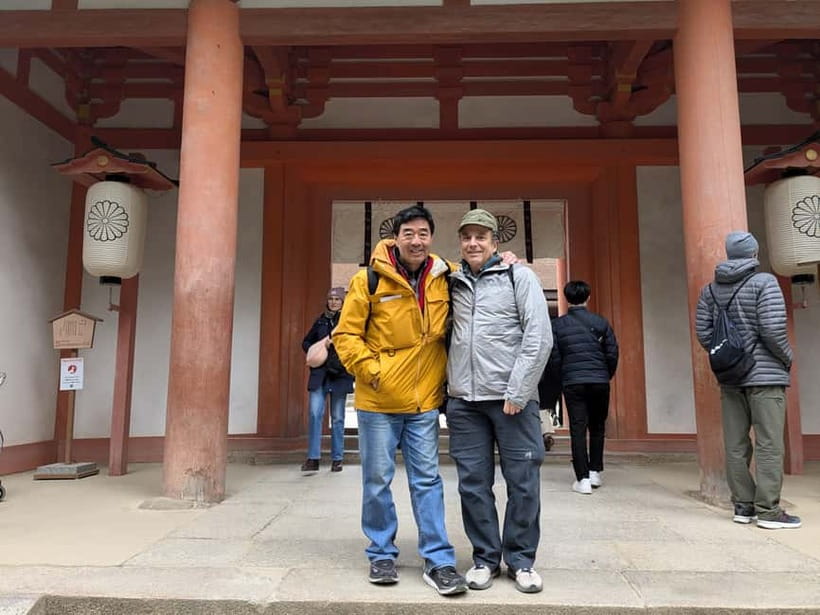
The experience is described as a private, immersive tour, while the activity details also identify it as a small group limited to 10 participants. In practical terms, you should expect a more personal format than a large coach excursion, but confirm the exact group arrangement when booking if exclusivity matters to you.
A maximum of 10 people is a useful limit for this route. You can usually hear explanations more easily, ask questions, and stay connected while moving through the park and forest. The group is still large enough that the guide’s attention will be shared, so people seeking a fully personal itinerary may want to clarify what private means for their date.
The three-hour length calls for a steady walking pace. You will not have unlimited time at every stop. The route focuses on the park, Kasuga Taisha, and Todai-ji, rather than trying to cover every corner of Nara.
I would choose a morning or cooler time if available, especially during hot weather. The supplied advice is simple and sound: wear comfortable shoes, bring water, use sunscreen, check the weather, and carry a camera without using flash indoors.
What the $83 price really buys
At $83 per person, this is a guide-led cultural walk rather than a cheap park visit. You are paying for three things: access to the selected sites, the deer crackers, and an expert who can explain the connections between them.
The entrance fees matter because Todai-ji and Kasuga Taisha are not simply open public roads. Including them keeps the cost clear and means you do not need to manage each admission separately. The crackers are a small expense, but having them supplied also makes the deer encounter straightforward.
Meals are not included, and neither is hotel pickup or drop-off. You need to reach the red torii gate at Himuro Shrine yourself and arrange your own food afterward. Build in extra time to find the meeting point, since the park contains many paths and the meeting place is more specific than Nara Park alone.
For a first visit to Nara, I think the price is reasonable if you value explanation and efficient sightseeing. If you are happy to read signs, navigate independently, and spend a full day wandering, a self-guided visit will cost less. The tour earns its price through the guide’s cultural context and personal help.
Who should book it
I recommend this tour for first-time visitors to Nara who want the main sights explained in plain language. It also suits people who enjoy asking questions, families who want help handling the deer, and anyone trying to fit Nara into a limited Japan itinerary.
It is a good match if you want both Shinto and Buddhist sites in one outing. Kasuga Taisha gives you a forest shrine setting, while Todai-ji offers a grand Buddhist monument. The deer connect the two with a distinctly Nara experience.
The tour is less suitable if you have back problems, use a wheelchair, or cannot manage outdoor walking on uneven ground. It is also not ideal if you want a relaxed, unstructured afternoon with long pauses. This is a focused route with several major stops in three hours.
The experience has earned a 4.5 rating from 10 ratings, with repeated praise for Goku’s enthusiasm, cultural explanations, kindness, and practical help. Those qualities matter here because Nara’s sights are visually impressive but layered with customs that are easy to miss.
Final decision: is this Nara tour worth booking?
Book it if you want Nara’s famous sights to make sense, not just appear in your camera roll. The deer, the old forest, and the Great Buddha provide plenty of visual appeal, but the guide’s explanations tie them into a larger picture of Japanese religion and culture.
I would choose this tour over a self-guided visit when time is short or when Goku is available in your preferred language. Skip it if you prefer complete independence, need accessible transport, or want to avoid a walking-heavy route. For most first visits, the combination of three major sights, included admissions, and a small group makes $83 a fair price.
FAQ
Where does the tour meet?
The meeting point is the red torii gate of Himuro Shrine.
How long does the tour last?
The tour lasts three hours.
What sites are included?
The route includes Nara Park, Kasuga Taisha Shrine, and Todai-ji Temple.
Can I feed the deer?
Yes. Special shika-senbei crackers for feeding the deer are included.
Are entrance fees included?
Yes. Entrance fees to all sites on the tour are included.
Is hotel pickup provided?
No. Hotel pickup and drop-off are not included.
Are meals included?
No. Meals are not included.
What languages are available?
Guiding is available in Japanese, English, Russian, Spanish, French, and Portuguese.
Is the tour suitable for wheelchair users?
No. The experience is not suitable for wheelchair users or people with back problems. Comfortable walking shoes are recommended.
Recently added around Nara
- Nara Private Customizable Half Day Tour★ 5.0 · 3 reviews
- Full Day Nara Deer, Temple, Shrine, Activities & Tea Ceremony★ 5.0 · 3 reviews
- Nara: Essential Private Tour with Deer Park and Temples★ 5.0 · 3 reviews
- Discover the Essence of Nara Ink Through Your Senses★ 5.0 · 3 reviews
- Private Journey in Nara’s Historical Wonder★ 5.0 · 3 reviews
- Nara:Private Tea Ceremony(Max 5 ppl) -Master Matcha Making-★ 5.0 · 3 reviews
- Nara Takayama Tea Whisk Craft and Tea Culture Experience★ 5.0 · 3 reviews
- Nara: Half-Day Private Tour of 4 Must-See Spots & Deer Park★ 5.0 · 3 reviews
Nara Day Trips, compared.
World Heritage Kyoto & Nara Uji Authentic Matcha Experience
Read our review →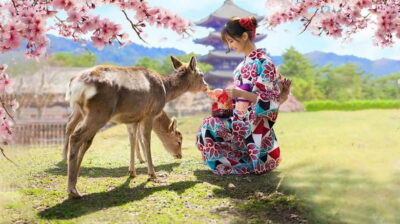
Kyoto/Osaka: Nara, Fushimi Inari Taisha, Arashiyama Bus Tour
Read our review →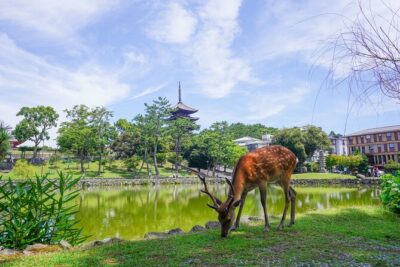
Nara Half Day Trip Walking Tour (Private Option Available)
Read our review →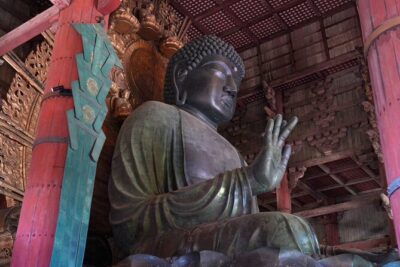
Nara Early Morning Tour (Kyoto or Osaka Departure Available)
Read our review →
Kyoto/Osaka: Kinkakuji, Bamboo Forest, and Nara Deer Park
Read our review →Browse the lists this tour appears in