
REVIEW · NARA DAY TRIPS
Nara: City Highlights Shared Group or Private Bike Tour
Nara’s best sights are spread across quiet lanes, wooded parkland, and temple grounds, so a bicycle is a smart way to cover them without spending the day following bus schedules. I like the chance to see the deer and major temples while also reaching quieter corners that many visitors miss. I also like the useful mix of Buddhism, Shinto, local history, and Japanese cutlery.
The main drawback is the meeting point. The bike base near the Toichi Shougakko bus stop is outside the easiest tourist zone, and you’ll need a bus or taxi from the main stations. The route also includes a few climbs, so this is a working sightseeing tour, not a completely effortless ride.
In This Review
- Key points at a glance
- Why a bicycle works so well in Nara
- Starting at the Japan Tour Adventure bike base
- Ukimido and the first 30 minutes on two wheels
- Nara Park, deer, and a quieter side of the city
- Nandaimon Gate, a grand approach to Todai-ji
- Todai-ji and the 15-meter Buddha
- Kikuichi and the craft of Japanese kitchen knives
- Kasuga Taisha and its thousand lanterns
- The ride back and what 210 minutes really means
- Is $70 a good value?
- Who should book this Nara bike tour?
- My verdict: book it for coverage, not lingering
- FAQ
- How long does the Nara bike tour last?
- What sights are included?
- Is Todai-ji admission included?
- Will I see the giant Buddha?
- Does the tour include Nara’s deer?
- What languages are available?
- Where do I meet the guide?
- What is included in the price?
- Can the tour be canceled because of rain?
Key points at a glance
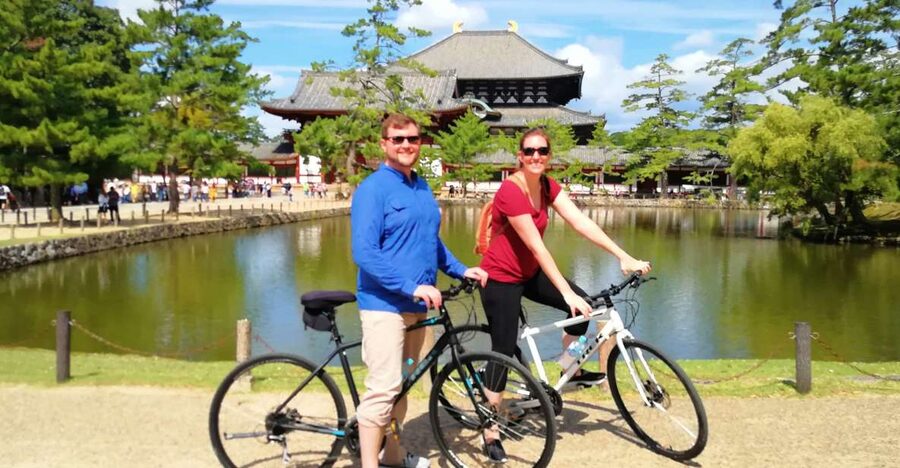
- Ride beyond the main tourist paths: The route uses Nara’s quieter areas as well as its headline sights.
- See the 15-meter Buddha at Todai-ji: Entrance fees are included, and you have time to walk through the temple grounds.
- Meet Nara’s free-roaming deer: Nara Park is part of the ride, with time for scenery and wildlife viewing.
- Visit Kasuga Taisha’s thousand lanterns: The shrine adds a distinctly Shinto setting to the day.
- Finish with Japanese craftsmanship: Kikuichi is a high-end cooking knife retailer with an original shop and arts-and-crafts focus.
- Choose your pace carefully: The tour lasts 210 minutes, includes some climbs, and is not suitable for wheelchair users or people with mobility impairments.
Why a bicycle works so well in Nara
Nara’s famous sights are close enough to connect, but not always close enough to make walking between them pleasant in a short visit. A bike lets you move from the calm waterside setting of Ukimido to Nara Park, then onward to Todai-ji and Kasuga Taisha without repeatedly finding a bus or backtracking.
The pace is described as relaxed, but the ride is still active. You’ll put on a helmet, receive a short safety briefing, and follow your guide through the city. The route includes sightseeing stops and walking time, so you are not in the saddle for the full 210 minutes.
I see this as a good middle ground between a standard walking tour and a private taxi outing. You cover more ground than on foot, but you still stop often enough to look around and hear explanations. The smaller group or private format should also make it easier to ask questions about Japanese history, Buddhism, Shinto, or the local cutlery trade.
The tour has a 4.9 rating from 34 bookings, and the most consistent praise is easy to understand: the guides are friendly, the bikes are good, and the route packs a lot into one morning or afternoon. Robert is specifically praised for providing plenty of information and leading the group to places it might not have found alone.
More day trips to Nara:
- World Heritage Kyoto & Nara Uji Authentic Matcha Experience
★ 5.0 · 1,573 reviews - Nara Half Day Trip Walking Tour (Private Option Available)
★ 5.0 · 937 reviews - Nara Early Morning Tour (Kyoto or Osaka Departure Available)
★ 5.0 · 676 reviews
Starting at the Japan Tour Adventure bike base
The tour begins at the Japan Tour Adventure bike base near the Toichi Shougakko bus stop, written in Japanese as 東市小学校. Search for Japan Tour Adventure in Nara on Google Maps rather than relying only on a general Nara map.
This is the one part of the day that needs planning. The base is not positioned right beside JR Nara Station or Kintetsu Nara Station. You’ll need to use a bus or taxi, and the operator provides a YouTube route guide for reaching the base from both stations.
I would allow extra time for this connection. Arriving rushed is not ideal when you still need to meet the guide, adjust to the bike, and listen to the safety briefing. The location helps the tour reach quieter streets, but it is less convenient than a central station meeting point.
Bikes, helmets, and bottled water are supplied. Wear comfortable clothes and shoes that work for both cycling and walking. Bring your passport, camera, food, and water, even though a bottle of water is included. You may not need every item on every departure, but the tour information specifically recommends them.
Ukimido and the first 30 minutes on two wheels
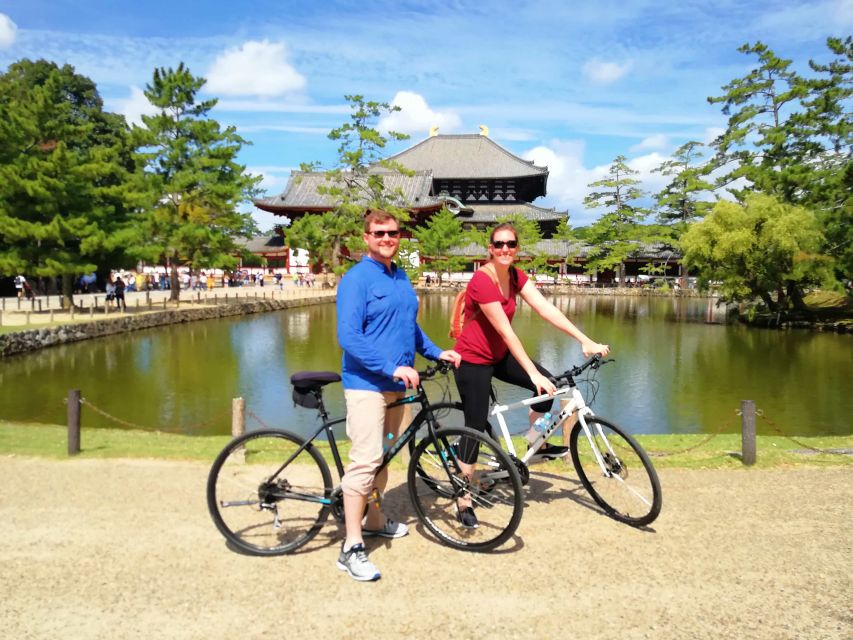
The opening section takes you toward Ukimido, with about 30 minutes of cycling. This gives you time to settle into the bike before the biggest temple stops.
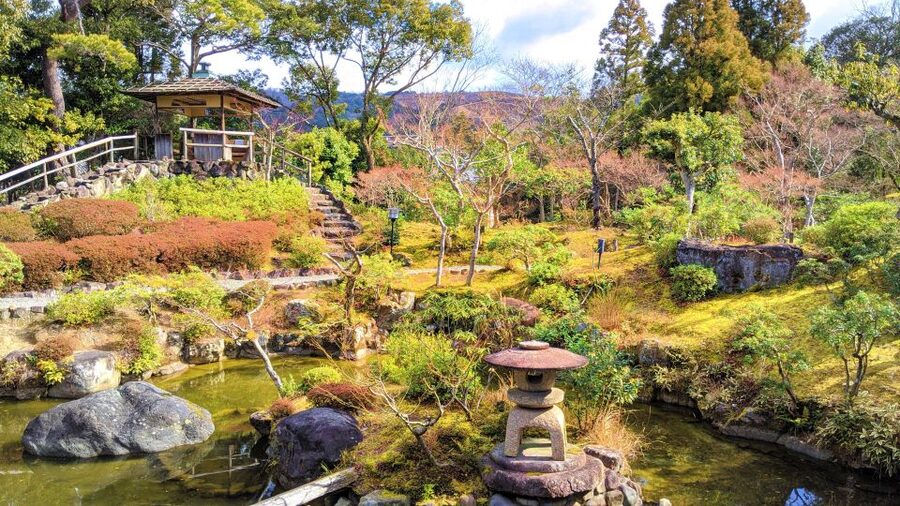
Ukimido is a scenic place to begin because it shifts your attention away from traffic and toward Nara’s quieter side. The route is not simply a fast transfer between attractions. You’ll have a chance to look around as you ride, hear early explanations from your guide, and get a sense of how Nara’s built-up areas meet its parkland.
The tour is offered in English, French, and Japanese. If you have questions, ask early. This is the useful part of a guided ride: you can connect what you are seeing with the guide’s explanation instead of trying to piece it together from signs later.
The cycling itself is not presented as a serious athletic challenge, but it is not entirely flat or passive. One booking described the outing as manageable and fun, while another specifically noted a few climbs. I would book confidently if you are comfortable riding for several hours with stops, but I would choose a walking or vehicle-based tour if hills or balance are a concern.
Nara Park, deer, and a quieter side of the city
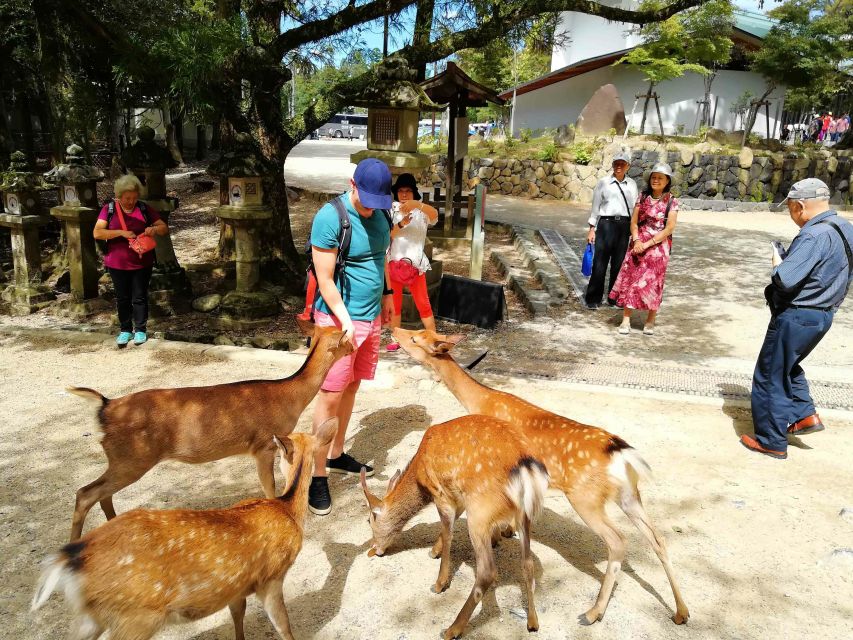
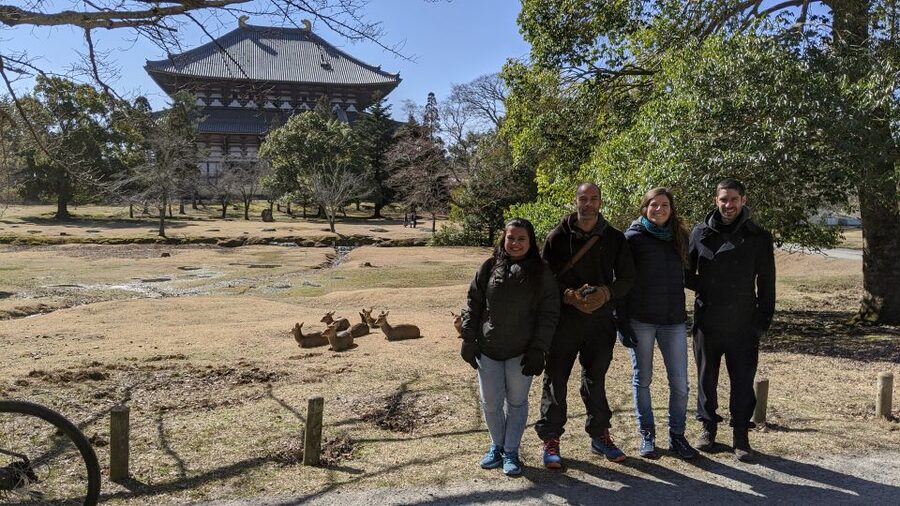
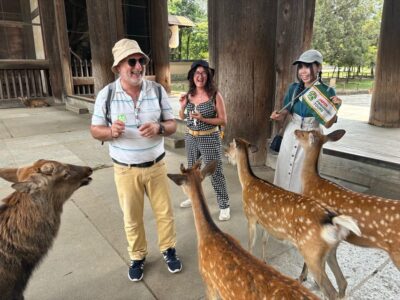
The next section gives you roughly 30 minutes around Nara Park. You’ll ride through the maintained park surroundings, pass areas where deer roam freely, and stop to take in the scenery.
The deer are an obvious highlight, but the bicycle adds something beyond a quick photo stop. You can move through different parts of the park at a relaxed pace and see how the open green spaces connect the major religious sites. Keep your camera ready, but also pay attention to your guide’s instructions around the animals and other park users.
This is one of the tour’s strongest features for a first visit. Nara Park can feel crowded around its most famous entrances, yet the route is designed to include quieter areas where possible. That does not mean you will have the park to yourself. It means you have a better chance of seeing more than the standard station-to-deer walk.
The park portion also helps explain why a bike is practical here. You’ll cover more distance than most short walking tours, while still getting off the bike for the main temple visits. If you want a slow photography session at every deer-filled corner, the fixed route and timetable may feel brisk. If you want a broad view of Nara in one outing, the timing works well.
More bike days around Nara:
- E-Bike Nara Highlights – Todaiji, Knives, Deer, Shrine
★ 4.8 · 186 reviews - Nara – Highlights Bike Tour
★ 4.5 · 89 reviews - Nara: Bike Tour in Ancient Capital UNESCO World Heritage
★ 5.0 · 43 reviews - E-Bike Nara Highlights – Todaiji, Knives, Deer, Shrine, and Gems
★ 4.5 · 34 reviews
Nandaimon Gate, a grand approach to Todai-ji
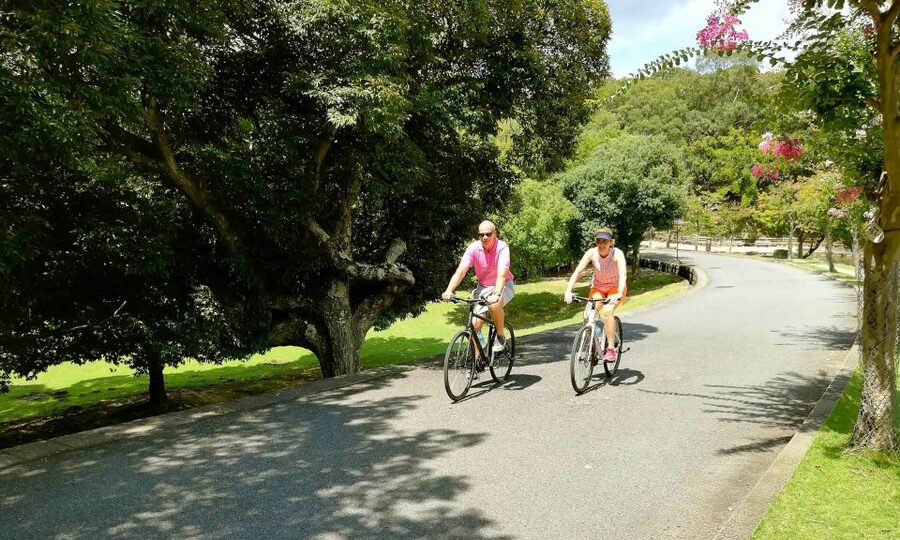
The route then reaches Nandaimon Gate of Todai-ji for about 20 minutes of photography, walking, and sightseeing. This is the approach to one of Nara’s major Buddhist sites, and it gives you a clear transition from open park to monumental temple grounds.
Your guide can place the gate and temple within the wider discussion of Buddhism and Japanese culture. The value here is not just a photo. You have someone with you who can explain what you are seeing and answer questions before you enter the main temple area.
You should expect to leave the bikes and walk around the gate. Comfortable shoes matter, especially because the tour shifts between riding and temple sightseeing several times. The route does not keep you seated all afternoon.
Todai-ji and the 15-meter Buddha
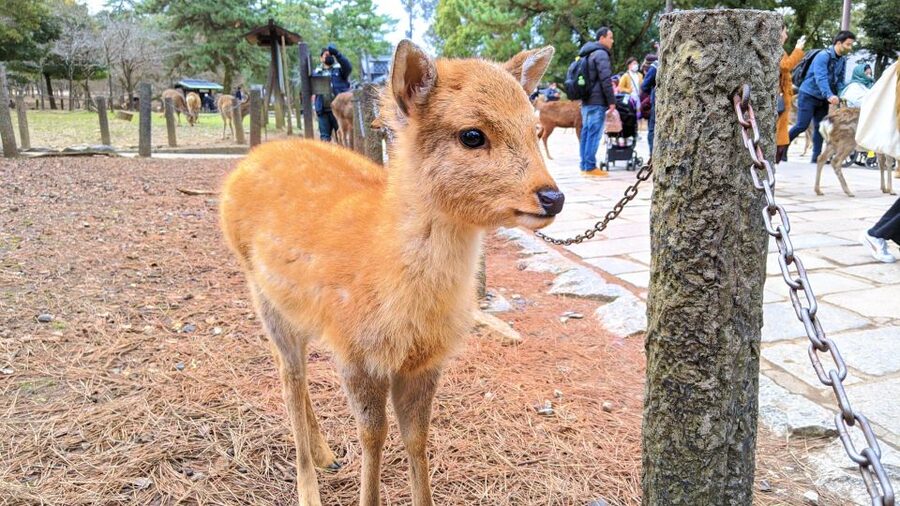
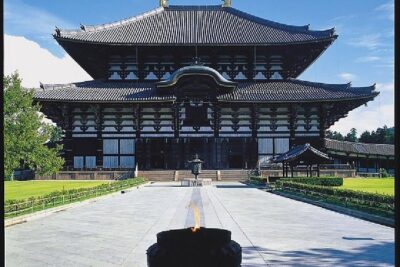
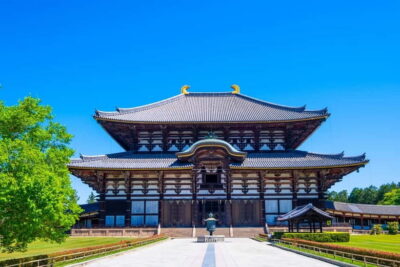
Todai-ji receives about 45 minutes, making it the longest stop on the route. That is sensible. The temple is one of Nara’s essential sights, and the giant Buddha statue inside is about 15 meters tall.
The sheer size of the Buddha is the main visual moment of the tour. Your guide also discusses Buddhism and Shinto, giving you a framework for understanding the religious sites rather than treating them as impressive buildings with no explanation.
Entrance fees are included, which makes this stop easier and gives the tour a clearer value than a ride that only passes the temple from outside. You’ll have time for a photo stop, a visit, sightseeing, and a walk through the grounds.
Forty-five minutes is enough for a focused visit, but not for an unhurried study of every corner. That is worth keeping in mind if Todai-ji is your main reason for coming to Nara. You may want to return independently for a longer visit, especially if you enjoy architecture, sculpture, or quiet temple time.
For a first look, though, the timing is useful. You see the largest draw, hear the cultural context, and still have time for the shrine and knife shop later in the ride. That balance is one reason this tour works better as an introduction than as a specialist temple visit.
Kikuichi and the craft of Japanese kitchen knives
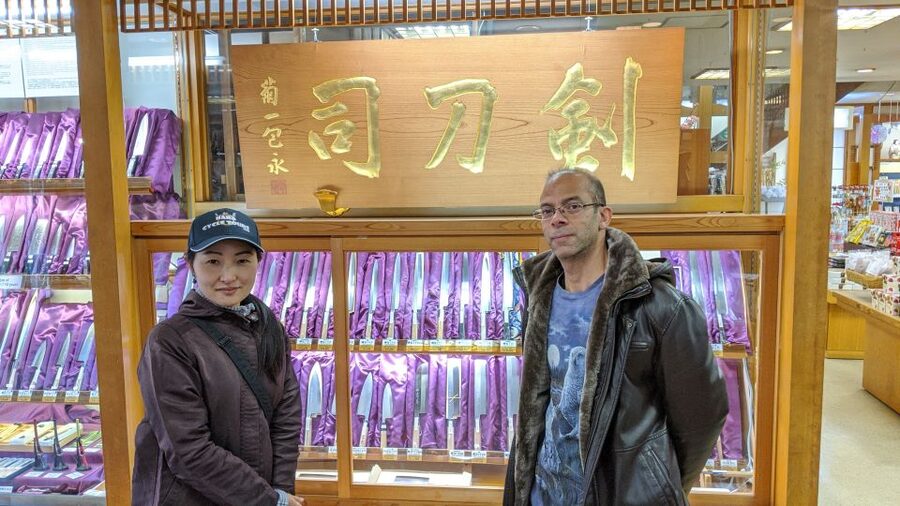
After Todai-ji, the tour visits Kikuichimonjushirokanenaga honten, also known as Kikuichi, for about 30 minutes. This is a high-end Japanese cooking knife retailer and original shop, with an arts-and-crafts market element.
The stop broadens the tour beyond temples and deer. You’ll learn about Japanese cutlery and see a modern expression of local craftsmanship. It is a useful pause in the sightseeing rhythm, especially if you like cooking, design, or practical souvenirs rather than mass-produced merchandise.
Do not assume you must buy a knife. The visit is also about learning what makes Japanese cutlery important and seeing the products in a specialist setting. If you are considering a purchase, ask your guide about the shop and allow time to compare what is available, but remember that the tour’s schedule continues after 30 minutes.
This stop may be less interesting if your only goal is religious architecture. For many people, though, it is exactly the sort of detail that makes a city tour feel connected to everyday culture. Nara is not only a collection of old monuments. It also has working traditions and specialist shops.
Kasuga Taisha and its thousand lanterns
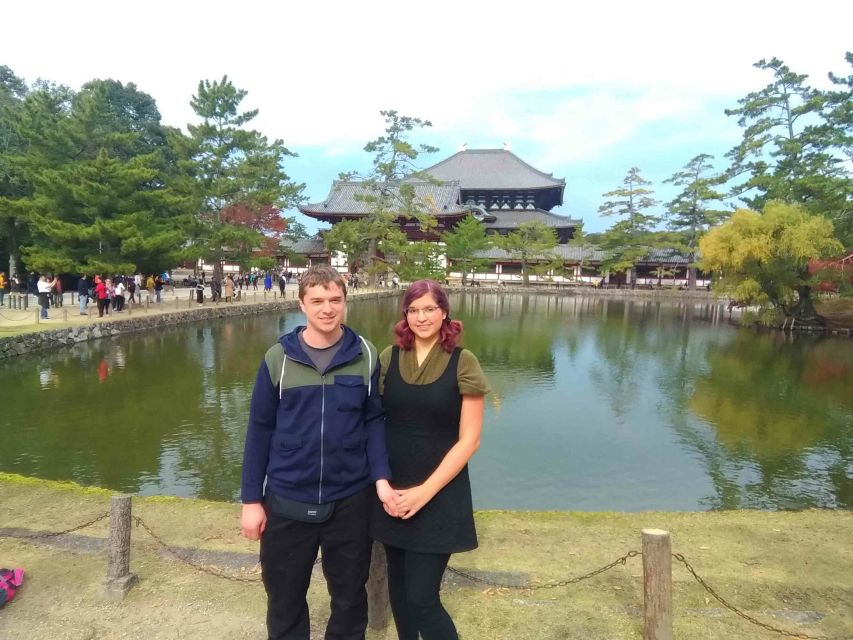
The final major sightseeing stop is Kasuga Taisha, with around 30 minutes for a visit, photos, free time, and views along the way. The shrine is known here for its thousand lanterns, which give the stop a different mood from Todai-ji.
Todai-ji introduces Buddhist culture through its huge statue and temple setting. Kasuga Taisha gives you a Shinto counterpart, so the two visits work well together. You’ll hear about both traditions during the tour and see how the city’s major sacred places differ in character.
The route includes walking at the shrine, so again, shoes and comfortable clothing are more useful than stylish but stiff travel clothes. Thirty minutes gives you a clear look and some free time, but it is not a full afternoon at the complex. If you want to linger over every detail, you will need to return on your own.
I like the order of the day. After the open park, imposing gate, giant Buddha, and craft shop, the lanterns at Kasuga Taisha provide a quieter final landmark before you cycle back.
The ride back and what 210 minutes really means
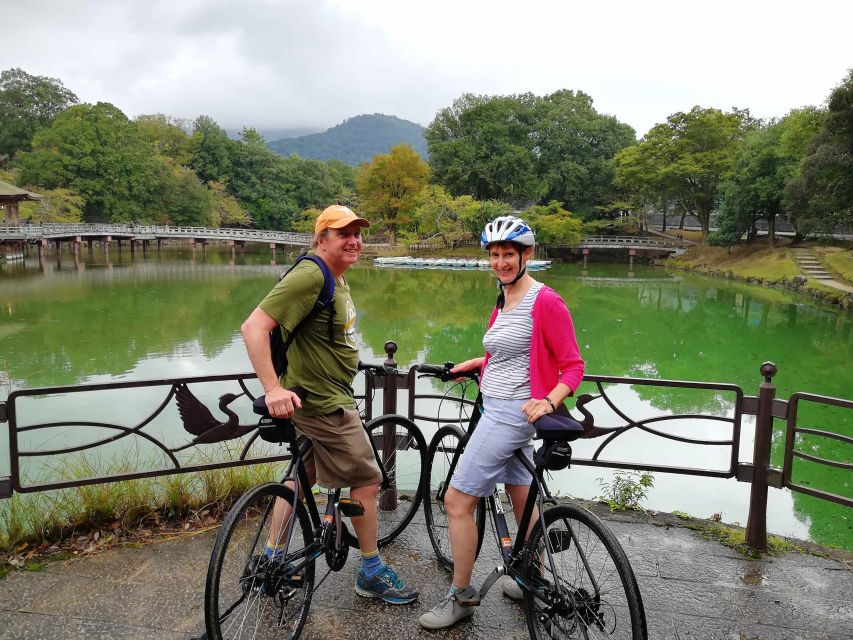
The return through Nara Park takes about 20 minutes and includes more scenic views. This final stretch is not just transport to the bike base. It lets you see the park from another direction and gives you a last chance to take photos before returning the equipment.
The total duration is listed as three hours and 210 minutes. Since 210 minutes equals three and a half hours, I would plan for the longer figure when arranging the rest of your day. The schedule includes cycling, walking, temple visits, a shop stop, and explanations, so you should not expect to finish in exactly three hours.
The pace has earned praise for covering a lot without becoming a hard endurance ride, but you can still feel the work by the end. One booking described the outing as tiring yet well worth the effort. That sounds like the right expectation: active sightseeing, not a gentle sightseeing vehicle.
Is $70 a good value?
At $70 per person, the tour is priced above a simple bicycle rental, but it includes much more than a bike. You receive the guide, bike, helmet, bottled water, and all entrance fees. The guide also helps you connect four very different parts of Nara: park wildlife, Buddhist art, Shinto worship, and Japanese knife craftsmanship.
The value is strongest if you have limited time in Nara. In 210 minutes, you can see Nara Park, Nandaimon Gate, Todai-ji, Kikuichi, and Kasuga Taisha without building the route yourself. You also avoid spending the whole visit checking maps and transport connections.
The value is weaker if you already plan to spend a full day at Todai-ji and Kasuga Taisha separately. You may prefer setting your own pace and staying longer at each site. The tour is designed for coverage and context, not for deep, unhurried time at one temple.
Private and small-group options are available. A private departure may be worth considering if you want more questions answered or need a slower rhythm, but the supplied price is stated per person and does not specify a separate private-tour surcharge. Check the exact option before booking.
Who should book this Nara bike tour?
I would recommend it to first-time Nara visitors who want a broad introduction and are comfortable on a bicycle. It suits people who like a guide’s explanations but do not want to spend the whole day in a large coach group.
It is also a good fit for anyone curious about more than the headline monuments. The Kikuichi stop, quieter routes, and two different religious traditions give the outing more range than a basic park-and-temple ride.
I would think twice if you have limited mobility, use a wheelchair, dislike cycling, or want a very slow temple visit. The tour is specifically not suitable for people with mobility impairments or wheelchair users, and the climbs make it more active than the relaxed wording might first suggest.
Weather can also affect the plan. If the Japan Meteorological Agency forecast gives a greater than 60 percent chance of rain, the tour may be canceled. You should check your email the evening before, since notification comes then. Free cancellation is available up to 24 hours before departure, and reserve-now, pay-later booking keeps the initial payment flexible.
My verdict: book it for coverage, not lingering
Book this tour if you want to see a lot of Nara in one well-organized ride, especially if you value local explanation and a route that reaches beyond the most obvious tourist paths. The strongest points are the excellent guide feedback, good bikes, included entrance fees, and the unusual combination of deer, Todai-ji, Kasuga Taisha, and Kikuichi.
Skip it if the inconvenient meeting point or moderate physical effort will cause stress. Also skip it if you want to spend hours inside one temple. For an active first look at Nara, though, $70 is a fair price for the amount of ground covered and the cultural context added along the way.
FAQ
How long does the Nara bike tour last?
The tour duration is listed as 210 minutes, or three and a half hours. Some information also describes it as three hours, so plan your schedule around the 210-minute duration.
What sights are included?
The route includes Ukimido, Nara Park, Nandaimon Gate of Todai-ji, Todai-ji, Kikuichi knife shop, and Kasuga Taisha. It returns through Nara Park before finishing at the bike base.
Is Todai-ji admission included?
Yes. All entrance fees are included in the tour price.
Will I see the giant Buddha?
Yes. The Todai-ji visit includes the famous Buddha statue, described as approximately 15 meters tall.
Does the tour include Nara’s deer?
Yes. You’ll ride through Nara Park, where deer roam freely, with time for wildlife viewing and scenic views.
What languages are available?
Live guiding is available in English, French, and Japanese.
Where do I meet the guide?
Meet at the Japan Tour Adventure bike base near the Toichi Shougakko bus stop, written as 東市小学校. Search for Japan Tour Adventure in Nara on Google Maps.
What is included in the price?
The price includes the bike, helmet, guide, all entrance fees, and a bottle of water. Food and other drinks are not included.
Can the tour be canceled because of rain?
Yes. The tour may be canceled if the Japan Meteorological Agency forecast gives more than a 60 percent chance of rain. You should check your email the evening before for notification.
Recently added around Nara
- Nara Private Customizable Half Day Tour★ 5.0 · 3 reviews
- Full Day Nara Deer, Temple, Shrine, Activities & Tea Ceremony★ 5.0 · 3 reviews
- Nara: Essential Private Tour with Deer Park and Temples★ 5.0 · 3 reviews
- Discover the Essence of Nara Ink Through Your Senses★ 5.0 · 3 reviews
- Private Journey in Nara’s Historical Wonder★ 5.0 · 3 reviews
- Nara:Private Tea Ceremony(Max 5 ppl) -Master Matcha Making-★ 5.0 · 3 reviews
- Nara Takayama Tea Whisk Craft and Tea Culture Experience★ 5.0 · 3 reviews
- Nara: Half-Day Private Tour of 4 Must-See Spots & Deer Park★ 5.0 · 3 reviews
Nara Day Trips, compared.
World Heritage Kyoto & Nara Uji Authentic Matcha Experience
Read our review →
Kyoto/Osaka: Nara, Fushimi Inari Taisha, Arashiyama Bus Tour
Read our review →
Nara Half Day Trip Walking Tour (Private Option Available)
Read our review →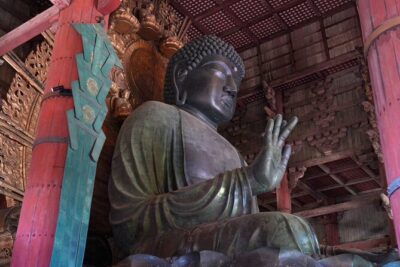
Nara Early Morning Tour (Kyoto or Osaka Departure Available)
Read our review →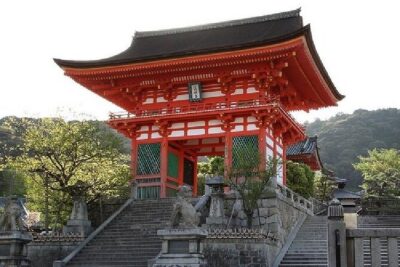
Kyoto/Osaka: Kinkakuji, Bamboo Forest, and Nara Deer Park
Read our review →Browse the lists this tour appears in