
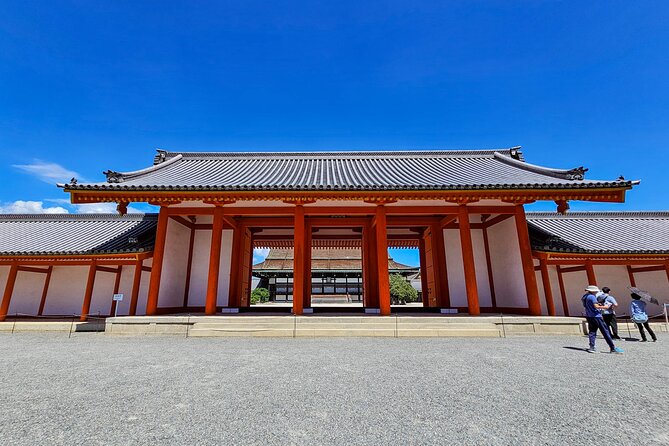
REVIEW · NIJO CASTLE TOURS
Kyoto Imperial Palace & Nijo Castle Guided Walking Tour – 3 Hours
Kyoto’s past comes into focus when you visit Nijo Castle and Kyoto Imperial Palace together. One site tells the story of military rule and the shoguns. The other recalls the imperial court that made Kyoto Japan’s capital for more than a thousand years. In three hours, you get two major sights and a useful historical link between them.
I like the small group of no more than nine, which gives you a better chance to ask questions and hear the guide clearly. I also like that admission fees are included and that guides such as Jasmine, Taku, Atsushi, and Vincent have been praised for clear English, lively explanations, and patience with families.
The main catch is the transfer between the sites. They are not next door, and the tour does not include hotel pickup, drop-off, or stated transportation between Nijo Castle and the palace. You may spend part of the three hours walking or arranging a taxi, so plan that leg carefully.
In This Review
- Key points to know before booking
- Why these two sites belong together
- Entering Nijo Castle and the shogun’s world
- The transfer is the tour’s weak link
- Walking through Kyoto Imperial Palace
- What the guide adds to the visit
- Is $55 a fair price?
- Timing, comfort, and what to bring
- Who should book this Kyoto walk?
- FAQ
- How long does the tour last?
- Where does the tour begin?
- Where does the tour end?
- Are entrance fees included?
- Is transportation between the two sites included?
- How large is the group?
- Is the tour conducted in English?
- What is not included in the price?
- Should you book it?
Key points to know before booking
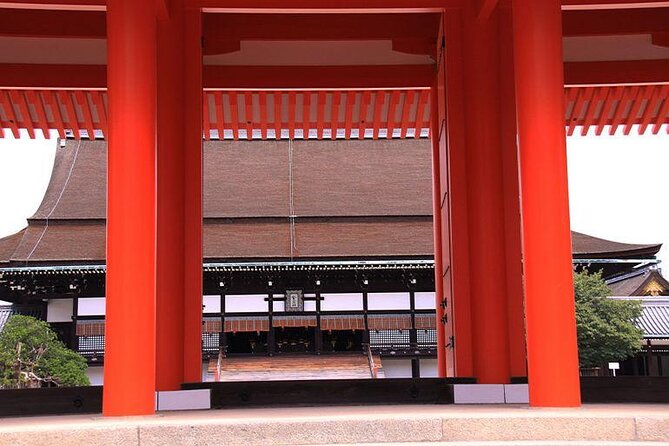
- Two major Kyoto landmarks in three hours: Visit Nijo Castle and Kyoto Imperial Palace in one compact outing.
- Small group, maximum nine people: The format is personal enough for questions, photos, and a more relaxed pace.
- Admission fees are included: You do not need to buy separate entrance tickets for the two stops.
- The guide makes the difference: Jasmine, Taku, Atsushi, Cecilia, Raphael, and others have been praised for history, architecture, and cultural explanations.
- Transport between sites is your responsibility: The tour starts at Nijojo-mae Station and ends at Imadegawa Station, but the transfer itself needs planning.
- Good value at $55: The price is fair if you want context and organization, though less so if you only need basic orientation.
Why these two sites belong together
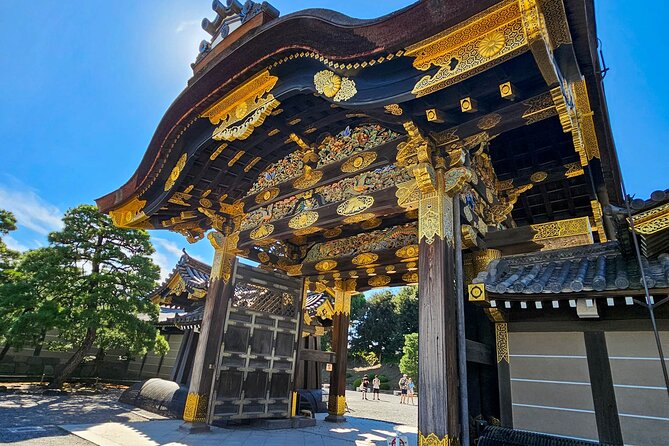
Kyoto can feel like a book with several chapters open at once. Temples, gardens, wooden streets, and palace grounds all point to different parts of Japan’s past. Nijo Castle and the Imperial Palace help you sort those chapters into a clear story.
Nijo Castle represents the power of the shogun, Japan’s military ruler. Kyoto Imperial Palace represents the emperor and the court. Seeing both in the same morning or afternoon lets you compare two centers of authority that shaped the country in very different ways.
That comparison is the real value of the tour. You are not simply checking off two famous locations. You are learning why Kyoto mattered, how political power was displayed, and how architecture communicated rank and control.
The tour lasts about three hours, with roughly 90 minutes at each site. That is enough time for a guided look without turning the day into an exhausting march through every corner. You should still expect a fair amount of walking, including outdoor paths and garden areas.
More of Nijo Castle:
- Kyoto: Nijo-jo Castle and Ninomaru Palace Guided Tour
★ 4.7 · 1,020 reviews - Kyoto: Nijo Castle, Kiyomizu & Fushimi Inari Guided Tour
★ 4.7 · 700 reviews - Kyoto: Nijo, Kinkaku-ji, Arashiyama, Kiyomizu & Fushimi Inari
★ 5.0 · 699 reviews
Entering Nijo Castle and the shogun’s world
The tour begins at Nijojo-mae Station, beside Nijo Castle. This is a sensible meeting point because the castle is the first stop and public transportation is nearby. Arrive with a little extra time so you are not searching for the group at the last moment.
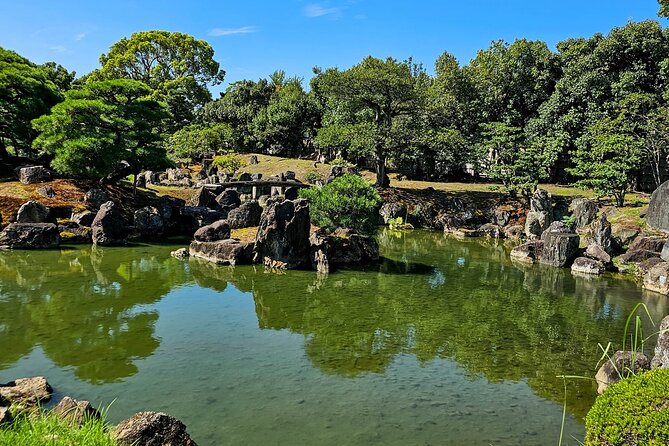
Nijo Castle offers a strong opening because it is visually impressive and easy to connect to the political story. You can expect to see grand architecture, gardens, and detailed interiors linked to the shogun era. The guide’s role is especially useful inside the castle, where symbols and design choices may not be obvious if you walk through alone.
Pay attention to the cultural details. The interiors are not just decoration. Paintings, room layouts, and other features helped express status and authority. A guide can point out the meaning behind those choices and explain how the castle functioned as a place of power.
Jasmine has received especially strong praise for explaining the castle’s architecture, art, and cultural symbolism in clear, conversational English. She has also been singled out for answering questions beyond a set script, helping with family photos, and keeping a group moving on hot days. That combination matters here. Nijo Castle rewards close attention, but it is easy to lose the thread if you only admire the surfaces.
Other guides have made a similar impression. Atsushi is praised for adding special historical stories, while Taku is described as a local certified guide with extensive experience at both sites. You are not guaranteed a particular guide, but the range of positive comments suggests that the quality can be strong when your assigned guide is engaged and prepared.
The 90-minute time block is well judged for most people. You can see the main rooms and grounds, hear the larger story, and pause for photographs without spending half a day on one complex. If you are a serious architecture enthusiast, you may wish for more time. For a first visit, the pace should feel manageable.
The transfer is the tour’s weak link
Nijo Castle and Kyoto Imperial Palace are separate sites. The tour description does not include a vehicle, and the meeting information only gives the start and end points. This creates the most important practical issue in the whole experience.
One account describes the walk between the sites as taking about 30 minutes, which used a sizeable portion of the three-hour schedule. Another describes confusion involving taxis, including a wrong gate and a long wait. These problems are not presented as normal features of every tour, but they show why you should understand the transfer before booking.
Ask the guide at the beginning how the group will move from one site to the other. If you plan to walk, wear comfortable shoes and keep an eye on the clock. If you plan to use a taxi or public transportation, allow for traffic, crowds, and possible confusion around large palace grounds.
This is also where the small-group format helps, but it does not remove the need for clear instructions. A group of nine is easier to move than a large bus party, yet everyone still needs to know the correct meeting point and timing.
For a smooth day, save the guide’s contact details and keep your phone available. The tour ends at Imadegawa Station, not at your hotel or a central drop-off point. Once you know that, the ending is straightforward.
Walking through Kyoto Imperial Palace
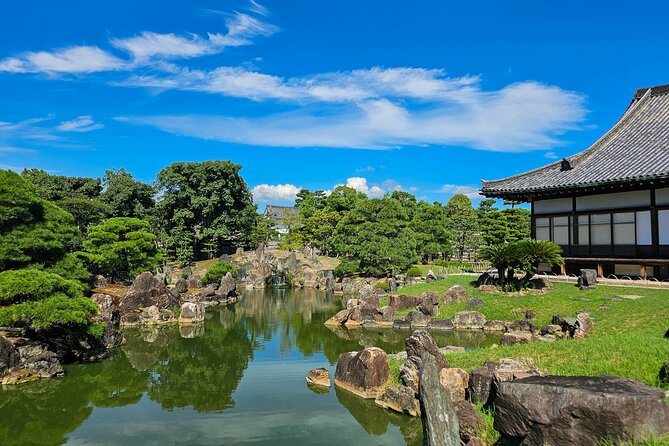
The second 90-minute stop is Kyoto Imperial Palace. This was the residence of Japan’s imperial family and the center of court life during Kyoto’s long period as the capital.
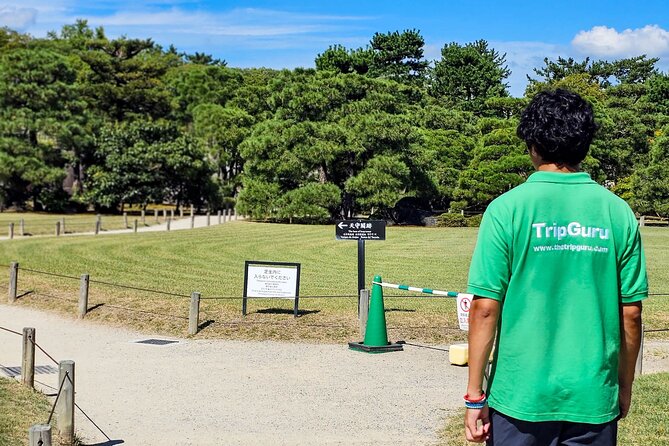
The palace grounds give you a different mood from Nijo Castle. Expect impressive structures, gardens, and broad paths rather than the same concentrated military atmosphere. The guide helps connect the buildings to the role of the emperor, the court, and Kyoto’s place in Japanese history.
This is the point where a guided visit can add real value. Palace architecture may look beautiful but still leave you wondering what you are seeing and why it mattered. A good guide explains the purpose of the spaces, the people associated with them, and the contrast between imperial tradition and shogun authority.
Cecilia has been praised for making the subtleties of the palace and grounds easier to understand. Other guides have added present-day cultural comparisons, which can help keep the visit from becoming a string of dates and names. The best version of this tour gives you a sense of how old customs still connect with Japan today.
You will have time for photographs at both locations. Several accounts highlight the good picture opportunities and the guides’ willingness to take group photos. Still, this is a guided walk, not a dedicated photography tour. If you want long quiet stops with a tripod or careful compositions, the schedule may feel brisk.
The palace is also affected by weather. Kyoto can be very hot, and outdoor grounds offer limited relief at times. A guide has reportedly adjusted the pace, added water stops, and used air-conditioned breaks when possible. Bring water anyway, especially in summer, since meals and drinks are not included.
More around the Imperial Palace:
- Kyoto: Imperial Palace & Nijo Castle Guided Walking Tour
★ 4.7 · 453 reviews - Kyoto: Nijo Castle and Kyoto Imperial Palace Guided Tour
★ 4.6 · 98 reviews - Nijo Castle and Imperial Palace Visit with Guide
★ 5.0 · 53 reviews - Kyoto: Discover Every Bit of Kyoto Imperial Palace
★ 4.4 · 21 reviews
What the guide adds to the visit
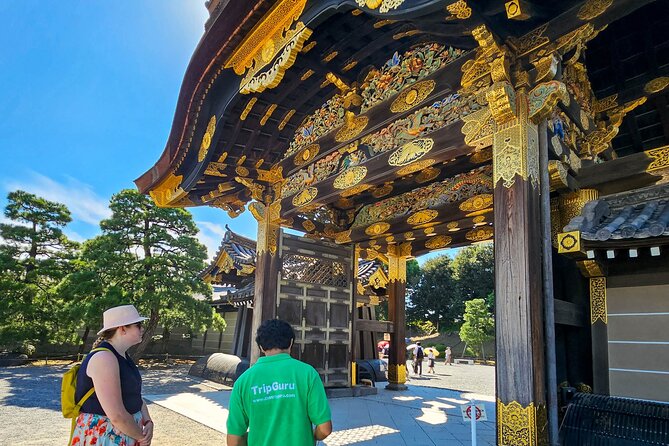
The best reason to pay for this tour is not simply getting through the gates. It is getting an explanation while the buildings and gardens are in front of you.
A guide can point out details you would otherwise pass. At Nijo Castle, that may mean explaining shogun-era customs, artwork, or the way rooms communicated rank. At the palace, it may mean showing how imperial life differed from military government.
The strongest guide comments focus on four traits:
- Clear English and an easy speaking style
- Historical explanations that connect both sites
- Patience with questions and families
- A good sense of pace, especially in hot weather
Jasmine is mentioned often for her friendly manner, strong English, photo help, and ability to keep the group together. Taku is praised for his local background and repeated experience at both landmarks. Atsushi is valued for memorable stories, while Raphael is described as patient with many questions. These are useful names to know, but you cannot assume one of them will lead your departure.
There is one important qualification. At least one experience was viewed as too focused on finishing on time, with little extra cultural insight. That is a reminder that a guided tour is only as good as the person leading it. The product offers a good setting for learning, but the depth of the explanation may vary.
An audio guide could cover basic facts, but it would not help with questions, timing, group photos, or the transfer between sites. If you want a human explanation and the chance to ask why something matters, the $55 price makes more sense.
Is $55 a fair price?
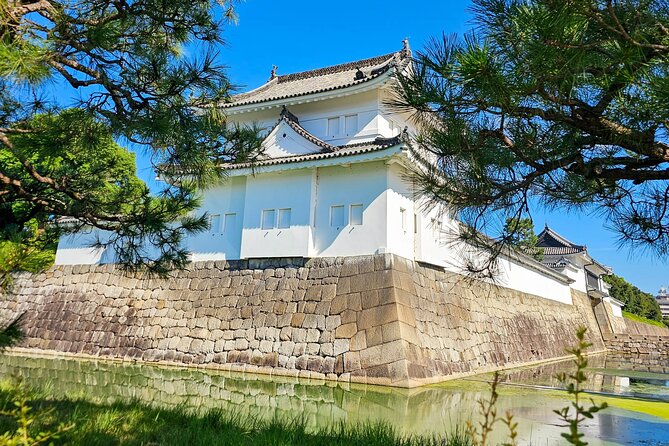
At $55 per person, this is not the cheapest way to see the two sites. You are paying for an English-speaking guide, entrance fees, and a three-hour organized visit. Meals, drinks, personal expenses, and hotel transportation are not included.
I consider the price reasonable if you value context. The entrance fees are already covered, and the group is capped at nine rather than being a large crowd. A good guide can save you research time and help you understand details that would otherwise pass unnoticed.
The value is weaker if you only want access to the grounds. You could visit independently and set your own pace, especially if you are comfortable reading about Kyoto’s history beforehand. Independent sightseeing also avoids the transfer problem caused by a group schedule.
The tour is most worthwhile for a first visit, a short stay, or anyone who wants the two locations explained together. It is also useful for families. Jasmine, in particular, has been praised for answering children’s questions and helping parents manage the day.
Timing, comfort, and what to bring
You can select a departure time, which helps fit the tour around other Kyoto plans. The exact schedule matters because you need time before or after the tour to reach your next stop from Imadegawa Station.
Wear shoes suitable for three hours of walking. The route includes castle and palace grounds, and you will likely spend time outdoors. In warm weather, bring water, sun protection, and a small towel or similar comfort item.
Carry a phone with the meeting point details. The start is at Nijojo-mae Station, and the end is at Imadegawa Station. The tour does not provide hotel pickup or drop-off, so you need to manage both the journey to the start and the trip onward.
Most people can take part, and the activity is near public transportation. The group maximum is nine, which keeps the walk easier to manage than a standard large-group sightseeing tour.
Cancellation is free if you cancel at least 24 hours before the start time. Changes or cancellations inside that window are not accepted for a refund, and cut-off times use local Kyoto time.
Who should book this Kyoto walk?
I would choose this tour if you want a clear introduction to Kyoto’s political and imperial past without spending an entire day at museums and historic compounds. The route has enough structure to keep you moving, but the small group leaves room for questions.
It suits first-time visitors, families, history fans, and anyone who prefers a guide to reading signs on their own. It is also a good choice if you want help noticing architectural and cultural details, rather than only taking photographs.
You may want to skip it if you dislike fixed timing or want to linger at one location. Independent visitors will have more control, and the lack of included transportation between the sites is a real inconvenience for anyone who expects door-to-door service.
FAQ
How long does the tour last?
The tour lasts approximately three hours, with about 90 minutes at Nijo Castle and 90 minutes at Kyoto Imperial Palace.
Where does the tour begin?
It begins at Nijojo-mae Station, near Nijo Castle, at Nijojocho in Kyoto’s Nakagyo Ward.
Where does the tour end?
The tour ends at Imadegawa Station in Kyoto’s Kamigyo Ward.
Are entrance fees included?
Yes. Entrance fees for Nijo Castle and Kyoto Imperial Palace are included in the tour price.
Is transportation between the two sites included?
No transportation service is listed as included. You should confirm with the guide how the group will move between Nijo Castle and the Imperial Palace.
How large is the group?
The tour has a maximum of nine participants.
Is the tour conducted in English?
Yes. An English-speaking guide is included.
What is not included in the price?
Hotel pickup and drop-off, meals, drinks, and personal expenses are not included.
Should you book it?
Book this tour if you want two major Kyoto landmarks explained as one connected story, and if the $55 price fits your plans. The included admission, small group, and strong record of clear guides make it a sensible choice for a first visit.
Before paying, make sure you are comfortable arranging the transfer between sites. If you confirm that detail, wear good shoes, and choose a time that leaves room for your next activity, this can be an efficient and worthwhile introduction to Kyoto’s imperial and shogun-era past.
More 3-Hour Experiences in Kyoto
- 3-Hour Kyoto Insider Sake Brewery Tour with Tastings & Pairings
★ 5.0 · 917 reviews - Kyoto: 3-Hour Fushimi Inari Shrine Hidden Hiking Tour
★ 4.9 · 270 reviews - All must-sees in 3 hours – Nara Park Classic Tour! From JR Nara!
★ 5.0 · 108 reviews - 3 Hours Kyoto Insider Sake Experience | Tasting Konteki
★ 5.0 · 24 reviews
More Walking Tours in Kyoto
- Kyoto Geisha Walking Tour: Gion District & Hidden Gems
★ 4.7 · 3,273 reviews - Kyoto: Gion Magical Night Walking Tour with Geisha Trivia
★ 4.9 · 2,393 reviews - Kyoto: Gion Geisha District Walking Tour – Stories of Geisha
★ 4.7 · 2,187 reviews - Night Walk in Gion: Kyoto’s Geisha District
★ 4.5 · 2,003 reviews
Recently added around Kyoto
- Higashiyama | Kyoto: Sakura Season Private Rickshaw Tour★ 5.0 · 3 reviews
- Kyoto Kimono Rental CHAMATSU|Kimono/Yukata Rental FamilyPlan★ 5.0 · 3 reviews
- Kyoto: Half-Day Private Guided Tour to the Old Town of Gion★ 4.4 · 3 reviews
- Nara Private Customizable Half Day Tour★ 5.0 · 3 reviews
- Kansai Region Hiking Adventure in Nara Kobe Kyoto and More★ 5.0 · 3 reviews
- Full Day Nara Deer, Temple, Shrine, Activities & Tea Ceremony★ 5.0 · 3 reviews
- Nara: Essential Private Tour with Deer Park and Temples★ 5.0 · 3 reviews
- Hiking Tour for Sacred Sites in Kyoto with a Guide★ 5.0 · 3 reviews
Nijo Castle Tours, compared.
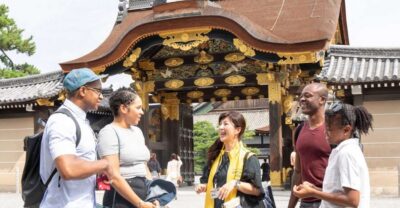
Nijo-jo Castle and Ninomaru Palace Guided Tour
Read our review →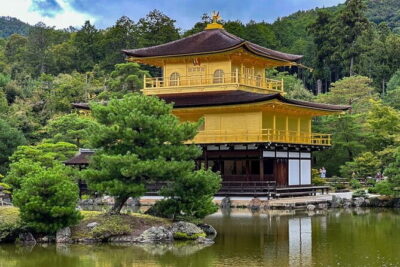
Nijo, Kinkaku-ji, Arashiyama, Kiyomizu & Fushimi Inari
Read our review →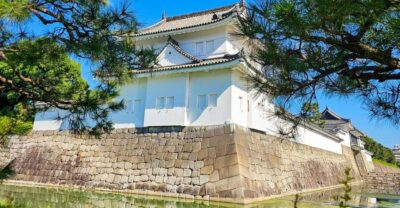
Imperial Palace & Nijo Castle Guided Walking Tour
Read our review →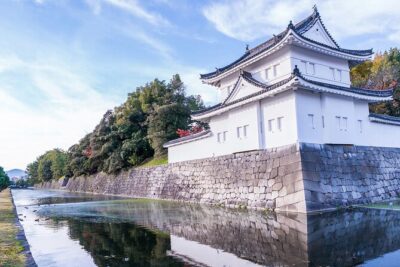
Nijo Castle World Heritage Guided Tour with Admission
Read our review →
Nijo Castle and Kyoto Imperial Palace Guided Tour
Read our review →
Nijo Castle and Imperial Palace Visit with Guide
Read our review →
Golden Pavilion, Nijo Castle, & Nishiki Market Half day tour
Read our review →
Nijo Castle Samurai Inside Story — Top-Rated Guide (Max 8)
Read our review →Browse the lists this tour appears in