
REVIEW · NIJO CASTLE TOURS
Nijo Castle and Imperial Palace Visit with Guide
Nijo Castle is where the shogun’s power becomes easy to picture, while Kyoto Imperial Palace shows the older world of emperors, court ceremony, and royal tradition. This tour links both places in one compact outing, with a guide to explain the people, symbols, and power shifts behind the buildings. Mia, Mie, and Choko are among the guides named by guests, and each is praised for clear English, humor, and strong command of Japanese history.
I like two things right away. First, your admission and public transport between the sites are included, so you can focus on the visit rather than sorting out tickets and directions. Second, the guide can point out details you would likely walk past, from the workings of the Tokugawa shogunate to the transfer of power to Emperor Meiji.
The main consideration is pace. You get roughly one hour at each major site, plus the transfer, so this is a focused introduction rather than a slow, all-day look at Kyoto’s royal and military past. You will also do plenty of walking, and comfortable shoes matter.
In This Review
- Key points at a glance
- Why these two Kyoto sites belong together
- Meeting at Nijo Castle’s great white gate
- What makes Nijo Castle worth your first hour
- The transfer by public transport
- Kyoto Imperial Palace and the return of the emperor
- How the guides shape the experience
- Is $79.18 a fair price?
- Who should book this Kyoto history tour?
- Should you book it?
- FAQ
- How long does the tour last?
- Where does the tour begin?
- Where does the tour end?
- Are entrance fees included?
- Is public transportation included?
- Is hotel pickup provided?
- Can I choose a morning or afternoon departure?
- How large is the group?
- What happens if I need to cancel?
Key points at a glance
- Nijo Castle interiors: Enter the castle buildings and learn how shogun meetings and political ceremony worked.
- Imperial Palace grounds: See a different side of Kyoto, centered on the emperor and court tradition.
- Guides who add context: Mia, Mie, and Choko are praised for clear English, humor, visual aids, and thoughtful answers.
- Public transport included: The guide leads the move from Nijo Castle to the palace, with the transit cost covered.
- Morning or afternoon choice: You can fit the visit around other Kyoto plans.
- Small-scale format: The tour is described as private for your party, while the operating information also gives a maximum of 11 people.
Why these two Kyoto sites belong together
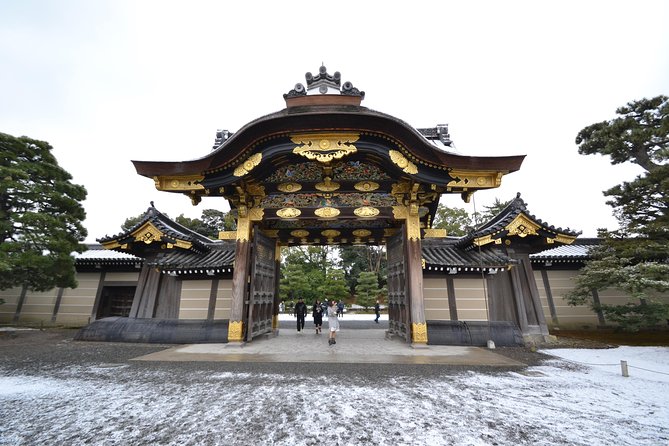
Nijo Castle and Kyoto Imperial Palace tell two connected but different stories. Nijo Castle is tied to the Tokugawa shoguns, the military rulers who controlled Japan during the Edo period. The Imperial Palace represents the emperor and the older court tradition centered in Kyoto.
That contrast gives the tour its shape. At the castle, you look at power from the side of the military government. At the palace, you see the setting linked to the imperial family and the transfer of authority that came with the Meiji period.
I find this pairing more useful than visiting either site alone with no explanation. Kyoto can give you beautiful gates, halls, gardens, and empty courtyards, but the political meaning is not always obvious. A guide can explain why a room mattered, who used it, and what a change in government meant for Japan.
The experience lasts about two and a half hours. The stated guided time is one hour at Nijo Castle and one hour at the Imperial Palace, with the remaining time used for meeting, moving between the sites, and keeping the group together. It is enough time to build a clear picture without taking your entire day.
More of Nijo Castle:
- Kyoto: Nijo-jo Castle and Ninomaru Palace Guided Tour
★ 4.7 · 1,020 reviews - Kyoto: Nijo Castle, Kiyomizu & Fushimi Inari Guided Tour
★ 4.7 · 700 reviews - Kyoto: Nijo, Kinkaku-ji, Arashiyama, Kiyomizu & Fushimi Inari
★ 5.0 · 699 reviews
Meeting at Nijo Castle’s great white gate
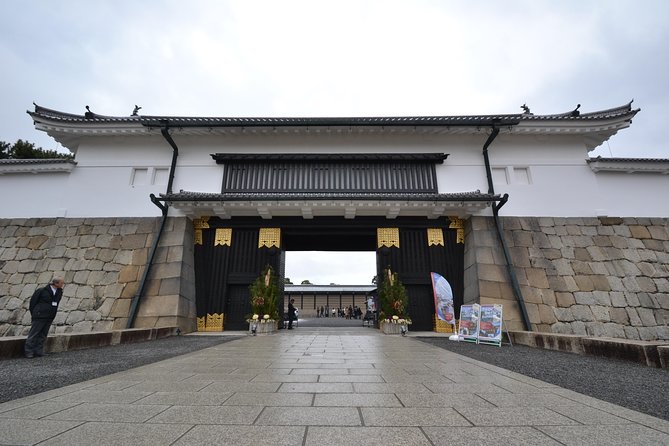
You begin in front of the huge white main gate of Nijo Castle at 541 Nijojocho, Nakagyo Ward. This is a sensible meeting point because it is easy to identify, and the tour information describes it as a simple place to find the guide.
I would arrive early. The meeting point is outside the castle, so you need to locate the guide before the group enters. The experience does not include hotel pickup, and you are responsible for getting to Nijo Castle at the start.
The opening hour focuses on the castle and its grounds. The site is not just a pretty collection of buildings. It was built to display authority, and the guide’s job is to make that authority readable.
This is where the strongest part of the tour begins for anyone interested in the shogun period. Guides explain the Tokugawa shogunate, the meetings held inside the castle, and the way the buildings were arranged for political and ceremonial use. You are not simply told dates. The better payoff is understanding how a visitor moved through a place designed to show rank and control.
The tour includes entry into the castle interior. That matters because the inside gives you a closer look at the setting where official encounters took place. Some of the most useful explanations concern symbolism and the way power was presented through space, decoration, and behavior.
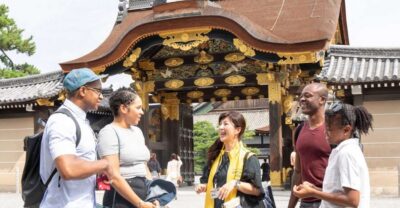
Several guides also use visual aids. That can be especially helpful when family connections, political changes, or unfamiliar Japanese terms become difficult to follow. Mia is repeatedly described as mixing serious historical detail with a light touch, while Mie and Choko are also praised for answering questions in clear English.
What makes Nijo Castle worth your first hour
Nijo Castle works best with a guide because its meaning is not always visible at a glance. You can admire the architecture on your own, but a guide can connect a room or passage to the shogun’s role and to the wider structure of Edo-period government.
I especially like the chance to ask questions as the story develops. If you already know something about the Tokugawa family, Japanese politics, or the world shown in the television series Shogun, you can ask for more detail. If the subject is new to you, the guide can keep the explanation at a manageable level.
The praised guides seem to get that balance right. Mia is described as offering enough historical information without burying the group in facts, then expanding when someone asks a specific question. That is a good fit for a mixed-age family or a group where one person loves history and another mainly wants to understand what they are seeing.
The castle portion also gives you a sense of how political theater worked. The shogun was not only a military figure. Meetings, entrances, seating, and visual symbols all helped establish authority. A good explanation turns these quiet rooms into places with a clear purpose.
Allow about an hour for the guided visit, but expect walking across the grounds and through the buildings. The experience requires no special level of fitness according to the supplied information, and most people can take part, but comfortable footwear is still a smart choice.
The transfer by public transport
After Nijo Castle, you travel to Kyoto Imperial Palace by public transportation with the guide. The fare is included, which makes this more convenient than arranging the move yourself.
This transfer is short in tour terms, but it adds value beyond saving a few yen. Kyoto’s public transport can be simple once you know the system, yet a first visit may involve uncertainty about which route to take, where to enter, or where to meet again. The guide keeps the transition organized.
The experience ends in front of the Imperial Palace in Kyoto Gyoen National Garden, not back at Nijo Castle. That detail matters when you plan the rest of your day. You can continue from the palace area, but you should not arrange a pickup or reservation near the castle immediately afterward.
The exact travel time is not stated, so I would avoid booking a tight appointment right after the scheduled finish. The tour is approximately two and a half hours, and public transport can take longer than expected if the group needs to gather or navigate stations.
More around the Imperial Palace:
- Kyoto: Imperial Palace & Nijo Castle Guided Walking Tour
★ 4.7 · 453 reviews - Kyoto Imperial Palace & Nijo Castle Guided Walking Tour – 3 Hours
★ 4.5 · 106 reviews - Kyoto: Nijo Castle and Kyoto Imperial Palace Guided Tour
★ 4.6 · 98 reviews - Kyoto: Discover Every Bit of Kyoto Imperial Palace
★ 4.4 · 21 reviews
Kyoto Imperial Palace and the return of the emperor
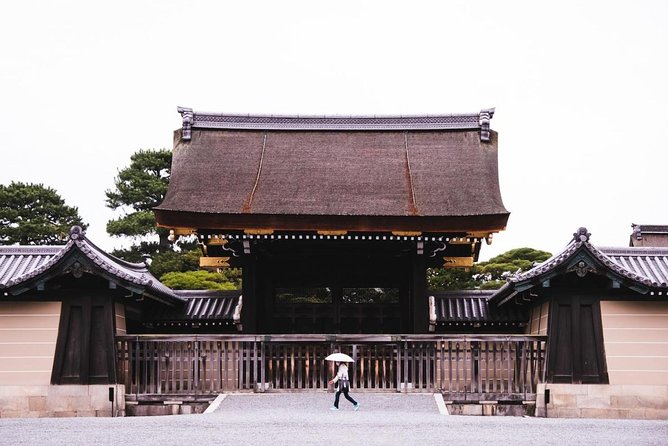
The second guided hour takes place at Kyoto Imperial Palace. Here the emphasis shifts from military government to the emperor, the imperial family, and Kyoto’s role as Japan’s ancient capital.
The palace grounds offer a useful counterpoint to Nijo Castle. Instead of focusing mainly on the shogun’s official world, you learn about imperial history, family lines, court tradition, and the transfer of power to Emperor Meiji. Guides have also explained the connection between the Tokugawa period and the political change that followed.
This part may appeal most to you if you want the bridge between two eras. The tour can show that the end of shogun rule was not an isolated event. It was part of a wider shift in how Japan was governed and how the emperor’s role changed.
You should expect beautiful historic buildings and gardens, but the value lies in the explanation. The palace can feel spacious and formal, and a guide helps you understand what you are seeing rather than treating it as a sequence of courtyards.
At the same time, this is a shorter visit than a full palace exploration. You will not have unlimited time to linger, take photographs, or study every building. The tour favors a clear narrative over a free-form visit.
There is also a practical risk. One tour participant found the Imperial Palace closed because of an event, although the Nijo Castle portion still went ahead. The supplied information does not explain how often this happens or what the exact replacement plan would be, so I would confirm the operating status if the palace is the main reason you are booking.
How the guides shape the experience
The guide is the central reason to choose this tour instead of visiting both places alone. The strongest praise centers on clear English, warmth, humor, historical depth, and the ability to answer questions without losing the group.
Mia is the name that appears most often in the supplied feedback. She is described as animated, funny, personable, and very good at explaining the Tokugawa shogunate and the imperial family. One family also received a restaurant recommendation from her, which shows how a good guide can add practical local help beyond the formal route.
Mie is also praised for perfect or very strong English, visual aids, and a good balance between historical facts and direct answers. Choko is described as friendly, well prepared, and able to explain the sites and Japanese history clearly. Another guide named Mike is praised for explaining both shogun and imperial history.
You should not assume you will receive a particular guide. Names vary by date and availability. Still, the pattern is useful: this is a guide-led experience where the human explanation is a major part of what you are paying for.
The format is described in two ways. It is presented as a private tour for you and your party, while the detailed operating information says the castle portion is a small group of fewer than eight and gives a maximum of 11 people for the activity. If a truly private booking is essential, confirm the group arrangement before paying.
Is $79.18 a fair price?
At $79.18 per person, this is not the cheapest way to see Nijo Castle and the Imperial Palace. The price makes more sense if you value interpretation, help with public transport, and the ease of having both admission fees handled for you.
Your fee includes an English-speaking professional guide, entrance fees, and public transport during the tour. Food, drinks, and hotel transportation are not included. Since the tour visits two major historic sites and provides about two hours of guided explanation, I consider it reasonable for visitors who want context rather than a quick photo stop.
The value rises for families and small groups. A private or very small format lets you ask questions that would be difficult in a large tour. Several people found the personal attention worth the money, especially when learning about the shogun period or the emperor’s role.
The value is lower if you prefer to move slowly, read every sign, or spend a long time taking photographs. You are paying for a structured lesson and an efficient route, not a full-day historical study.
Who should book this Kyoto history tour?
I would recommend it to first-time visitors who want a firm grasp of Kyoto’s political past. It is also a strong choice if you enjoyed Shogun and want to place the military world shown on screen in real buildings and historical context.
Families can benefit from the guide’s humor and the ability to adjust answers to different interests. People who are unsure about Japanese history may appreciate having the shogun and imperial stories explained together rather than trying to connect them later.
This is less suitable for you if you want a relaxed garden stroll with no schedule. It is also not ideal if you need hotel pickup, want to end back at Nijo Castle, or have limited tolerance for walking.
Choose the morning or afternoon time that fits your Kyoto plans. Since the tour ends at the Imperial Palace, it works well as a starting point for more time in the surrounding garden area, but the supplied details do not promise any additional guided time after the scheduled finish.
Should you book it?
Book this tour if you want the story behind two of Kyoto’s most important historic sites, especially if you value a friendly English-speaking guide and a small group. The included admission and public transport remove some everyday friction, and the short format leaves room for other sightseeing.
I would skip it if you mainly want to wander at your own speed or if the palace must be guaranteed open on your exact date. For most first-time visitors interested in the shogun era, the imperial family, and the change from military rule to imperial government, this is a well-focused use of two and a half hours.
Free cancellation is available up to 24 hours before the start time. The experience requires good weather, and a weather cancellation offers either another date or a full refund.
FAQ
How long does the tour last?
The experience lasts approximately two hours and 30 minutes. It includes about one hour at Nijo Castle, about one hour at Kyoto Imperial Palace, and the transfer between them.
Where does the tour begin?
The tour begins in front of Nijo Castle’s main gate at 541 Nijojocho, Nakagyo Ward, Kyoto, 604-8301, Japan.
Where does the tour end?
The tour ends in front of Kyoto Imperial Palace in Kyoto Gyoen National Garden at 3 Kyotogyoen, Kamigyo Ward, Kyoto, 602-0881, Japan.
Are entrance fees included?
Yes. Entrance fees for Nijo Castle and Kyoto Imperial Palace are included in the tour price.
Is public transportation included?
Yes. Public transportation used to move between Nijo Castle and Kyoto Imperial Palace is included.
Is hotel pickup provided?
No. Hotel pickup and drop-off are not included, so you need to reach Nijo Castle for the start and arrange your own plans after the tour ends.
Can I choose a morning or afternoon departure?
Yes. The experience offers a choice of morning or afternoon tour times.
How large is the group?
The experience is presented as private for you and your party. The detailed information also describes a small group of fewer than eight for the guided castle visit and gives a maximum of 11 participants for the activity. Confirm the exact arrangement when booking if group size matters to you.
What happens if I need to cancel?
You can cancel at least 24 hours before the local start time for a full refund. Cancellations or changes made less than 24 hours before the start time are not accepted for a refund.
Recently added around Kyoto
- Higashiyama | Kyoto: Sakura Season Private Rickshaw Tour★ 5.0 · 3 reviews
- Kyoto Kimono Rental CHAMATSU|Kimono/Yukata Rental FamilyPlan★ 5.0 · 3 reviews
- Kyoto: Half-Day Private Guided Tour to the Old Town of Gion★ 4.4 · 3 reviews
- Nara Private Customizable Half Day Tour★ 5.0 · 3 reviews
- Kansai Region Hiking Adventure in Nara Kobe Kyoto and More★ 5.0 · 3 reviews
- Full Day Nara Deer, Temple, Shrine, Activities & Tea Ceremony★ 5.0 · 3 reviews
- Nara: Essential Private Tour with Deer Park and Temples★ 5.0 · 3 reviews
- Hiking Tour for Sacred Sites in Kyoto with a Guide★ 5.0 · 3 reviews
Nijo Castle Tours, compared.
Nijo-jo Castle and Ninomaru Palace Guided Tour
Read our review →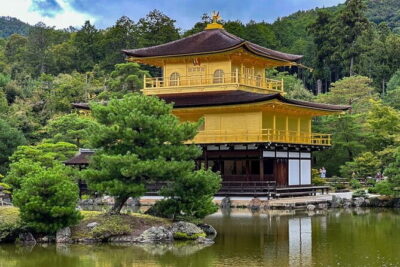
Nijo, Kinkaku-ji, Arashiyama, Kiyomizu & Fushimi Inari
Read our review →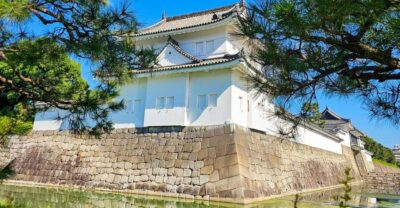
Imperial Palace & Nijo Castle Guided Walking Tour
Read our review →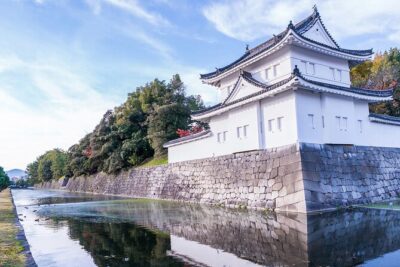
Nijo Castle World Heritage Guided Tour with Admission
Read our review →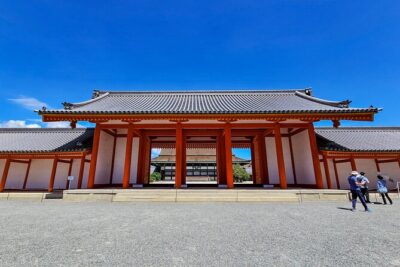
Kyoto Imperial Palace & Nijo Castle Guided Walking Tour – 3 Hours
Read our review →
Nijo Castle and Kyoto Imperial Palace Guided Tour
Read our review →
Golden Pavilion, Nijo Castle, & Nishiki Market Half day tour
Read our review →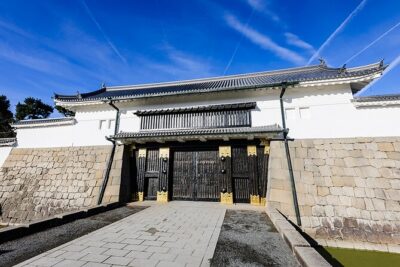
Nijo Castle Samurai Inside Story — Top-Rated Guide (Max 8)
Read our review →Browse the lists this tour appears in