
REVIEW · NIJO CASTLE TOURS
Kyoto: Nijo-jo Castle and Ninomaru Palace Guided Tour
Nijo-jo Castle is not just a pretty old fortress. It was Tokugawa Ieyasu’s Kyoto residence, a place where military power, court politics, ceremony, and daily life met under one roof. This one-hour tour gives you the story behind the gates, palace rooms, paintings, and famous nightingale floors instead of leaving you to guess what you are seeing.
I like two things here. First, the English-speaking guides, including Ai, Miki, Kaoru, and Don, explain how the castle worked as a political center, not simply as a military stronghold. Second, the tour may take you into restricted areas that independent visitors cannot enter. The main drawback is clear: the $16 tour price does not include castle admission, which must be paid separately in cash.
In This Review
- Key details at a glance
- Why Nijo-jo Castle matters
- Meeting the guide at the East Main Gate
- Kara-mon Gate: the right first lesson in status
- Ninomaru Palace: rooms built for power
- The restricted rooms: the tour’s special advantage
- Ninomaru Garden: a quieter finish
- What the $16 price really buys you
- Timing, heat, crowds, and comfort
- Families and solo visitors
- What to know before you book
- Should you book the Nijo-jo guided tour?
- FAQ
- How long is the Nijo-jo Castle guided tour?
- What language is the tour conducted in?
- Is Nijo-jo Castle admission included?
- Where do I meet the guide?
- What parts of Nijo-jo Castle does the tour include?
- Can the tour enter areas closed to the public?
- Can children join for free?
- Are earphones provided for children?
- When is Ninomaru Palace closed?
Key details at a glance
- A shogun’s Kyoto home: See the palace used by Tokugawa rulers during visits to the imperial capital.
- A focused 60-minute route: Visit Higashi Ote-mon Gate, Kara-mon Gate, Ninomaru Palace, and Ninomaru Garden.
- Restricted-area access: The guided route can include two additional spaces normally closed to general visitors.
- English explanations: Guides explain political history, room functions, artwork, symbolism, and samurai customs.
- Free child place: Each paying adult may bring one child aged 0 to 12 at no charge, though children do not receive an earphone unless an adult ticket is purchased.
- Extra cost to plan for: Castle admission is separate and must be paid in cash on site.
Why Nijo-jo Castle matters
Nijo-jo Castle was built in 1603 as the Kyoto residence of Tokugawa Ieyasu, the first shogun of the Edo Period. That date matters. The castle was not built as a remote mountain fortress. It was placed in Kyoto, the imperial capital, where the shogun needed a formal base close to the emperor and the old court.
The Tokugawa Shogunate ruled Japan for more than two and a half centuries. Nijo-jo Castle reflects that system in its layout and decoration. You see defenses, but you also see grand entrances, carefully arranged rooms, painted panels, and spaces designed to control movement and display rank.
After the shogunate ended in 1867, the castle became an imperial palace. Later, it was given to Kyoto City and opened as a historic site. It became a UNESCO World Heritage site in 1994.
I find that sequence especially useful because it keeps the visit from becoming a string of dates. The same buildings passed from shogun’s residence to imperial property and then to public monument. The castle is really a record of Japan’s changing political order.
The grounds have three main parts. The Honmaru, or main defensive circle, forms the central area. The Ninomaru, or secondary defensive circle, contains the palace that most people come to see. Gardens surround both sections and soften what could otherwise feel like a purely defensive complex.
More of Nijo Castle:
- Kyoto: Nijo Castle, Kiyomizu & Fushimi Inari Guided Tour
★ 4.7 · 700 reviews - Kyoto: Nijo, Kinkaku-ji, Arashiyama, Kiyomizu & Fushimi Inari
★ 5.0 · 699 reviews - Kyoto: Imperial Palace & Nijo Castle Guided Walking Tour
★ 4.7 · 453 reviews
Meeting the guide at the East Main Gate
You enter through the East Main Gate, called Higashi Ote-mon. Do not head straight into the castle grounds and hope to find the group later. After entering, go to the reception area beside the General Reception, on the left, and tell the staff you have arrived for the tour.
Your booking confirmation provides the precise meeting details. The listed meeting coordinates are 35.012586265298516, 135.75085333862305.
Arrive early. If you are not present when the tour begins, you cannot join it. That rule matters more here than it might at a casual walking tour because the route moves through controlled areas and the group cannot wait for late arrivals.
The tour is conducted only in English. The strongest part of the experience, based on the guide feedback, is the clarity and personality of the explanations. Ai has been praised for making the material lively even in difficult summer heat. Miki is known for answering questions and pointing out details that are easy to miss. Kaoru has a particularly expressive style, while Don has been praised for combining history with humor.
Guide quality can vary from person to person, as it does on any guided visit. Still, the repeated pattern is useful: you should expect a friendly guide who explains rather than simply leads you from door to door.
Kara-mon Gate: the right first lesson in status
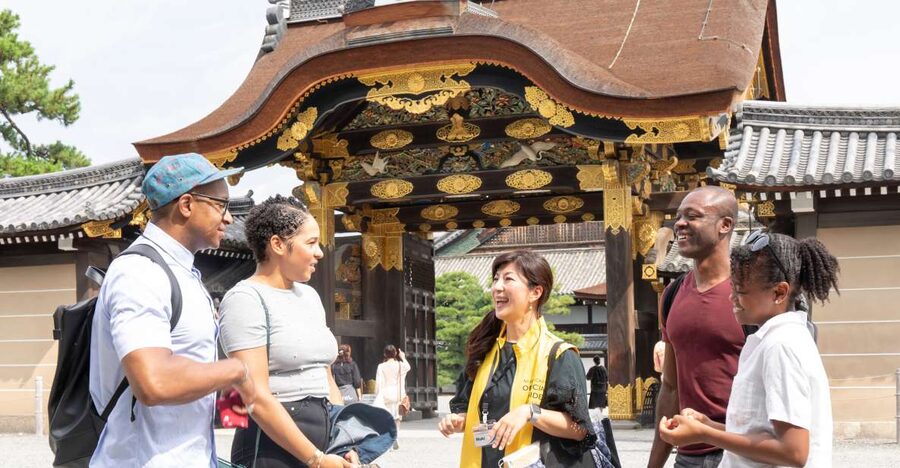
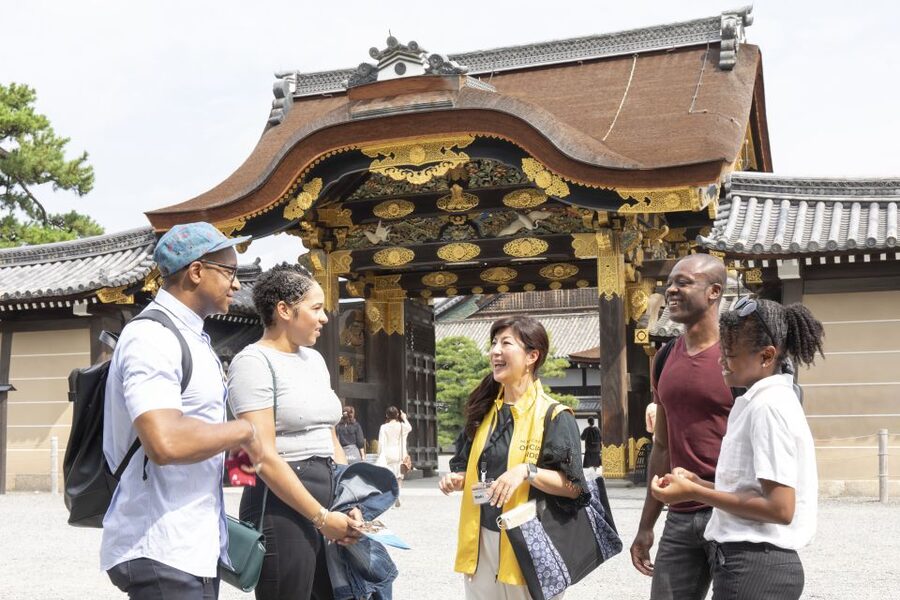
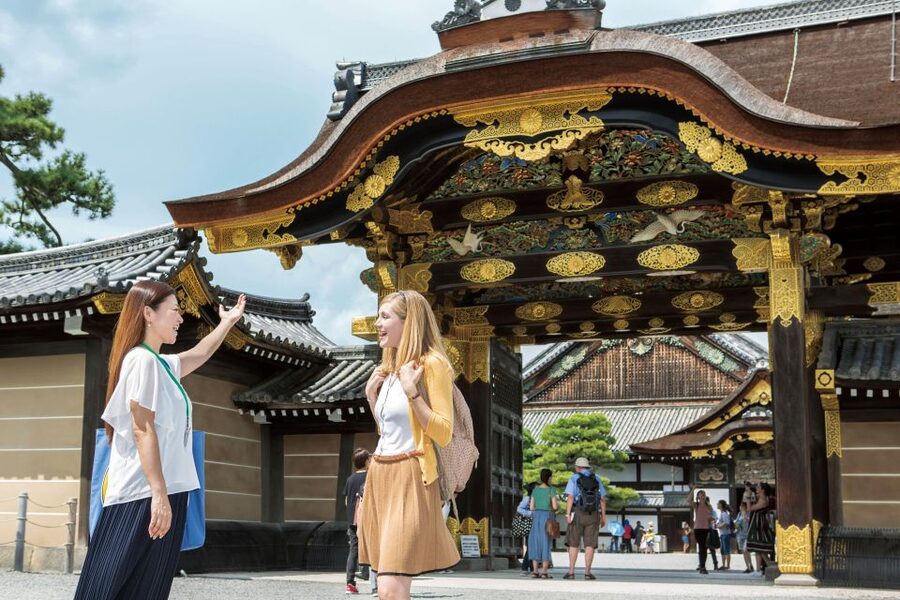
The Kara-mon Gate is the grand entrance to the Ninomaru section. It is richly decorated, and it gives you an early lesson in how the castle communicated rank.
Your guide can point out the carved details and explain why the entrance looks more ceremonial than practical. At Nijo-jo, architecture is part of the political language. The route into the palace was designed to make an impression before anyone entered the shogun’s rooms.
This is where a guide earns the $16. You can admire the gate alone, but you may miss the meaning behind the carvings and the way the approach prepares you for the palace. One guide has even connected some of the animal imagery to familiar modern characters, including dragon-themed designs associated with popular Japanese entertainment.
Do not expect a long stop at every architectural feature. The tour lasts one hour, so the guide has to keep the group moving. That is a benefit if your Kyoto schedule is tight, but it also means you may want extra time afterward to look closely at details that caught your eye.
Ninomaru Palace: rooms built for power
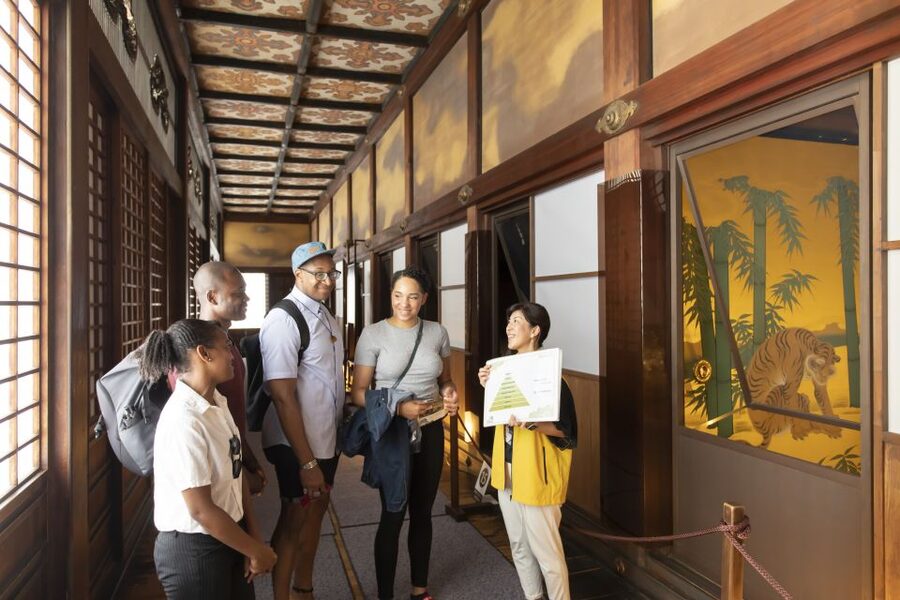
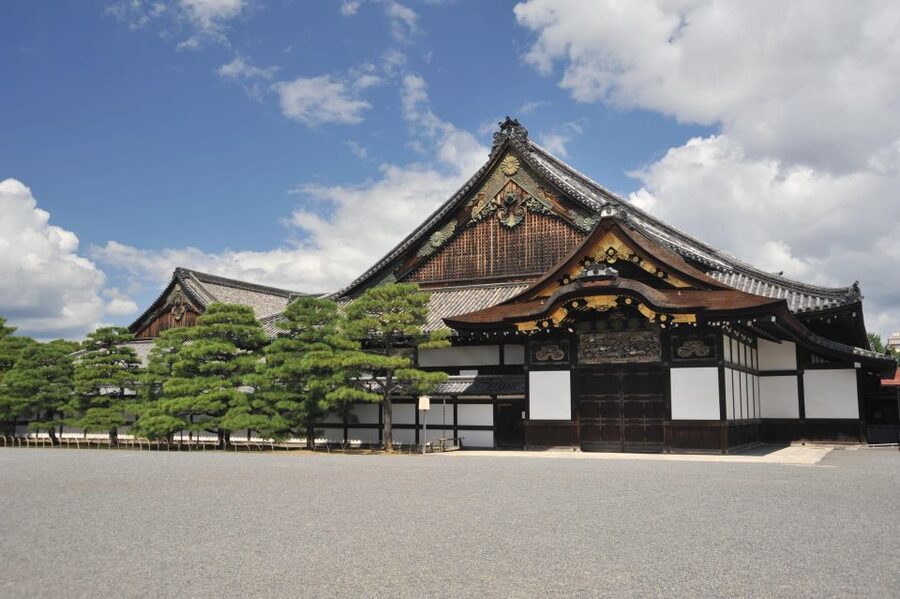
Ninomaru Palace is the center of the visit. It served as the shogun’s residence and office in Kyoto, and the building remains intact.
You move through a sequence of rooms with different functions and levels of formality. The arrangement helped manage access to the shogun. A visitor’s position, the room they entered, and how close they came to the ruler all reflected status.
The guide explains what each room was used for and helps you read the painted screens and wall panels. The artwork is not random decoration. Pine trees, animals, flowers, and other images helped create a formal setting while also carrying symbolic meaning.
One useful theme is the difference between public authority and private life. The palace was a working political center, not just a residence. Meetings, ceremonies, introductions, and official business took place here. The decoration gave those events the proper tone, while the layout helped maintain control.
You also hear about the daily routines and risks surrounding the shogun. One particularly memorable subject is meal preparation and the fear of poisoning. That detail makes the palace feel less like a museum display and more like a place where political danger could enter through an ordinary dinner.
The famous nightingale floors are another reason to pay attention. Their gentle squeak was designed to alert occupants to movement. Even without inventing dramatic spy stories, the feature gives you a clear sense of how security shaped palace life.
Photography is not allowed inside the palace, and there is no air conditioning or water available inside. In summer, the interior can feel very warm. Bring water for the outdoor portions and plan around the weather, especially in July and August.
A few more Kyoto experiences worth comparing
- Kyoto Early Morning Tour with English-Speaking Guide
★ 5.0 · 1,427 reviews - Kyoto 6hr Private Tour with Government-Licensed Guide
★ 5.0 · 1,369 reviews - Kyoto: Early Morning Tour with English-Speaking Guide
★ 4.9 · 1,128 reviews - Kyoto: Izakaya Bars Guided Walking Tour
★ 4.9 · 815 reviews
The restricted rooms: the tour’s special advantage
The strongest practical reason to book this tour is the possibility of entering areas normally unavailable to the public. Several people have described access to two additional spaces connected with the shogun’s private quarters.
The exact restricted access can depend on palace operations, so I would not treat it as a guaranteed private viewing of every closed room. Still, the tour specifically includes access beyond the ordinary public route when conditions allow. That is a real advantage over walking through the castle alone.
These extra areas matter because they show the palace from a more personal angle. The main rooms present ceremony and authority. The additional spaces can help you understand where the shogun’s private life fitted into that formal system.
Ask questions when you reach these areas. The guides are used to explaining room purpose, court customs, artwork, and political relationships. If you are interested in how a ruler actually lived, rather than only how the building looks, this is the part to make the most of.
Ninomaru Garden: a quieter finish
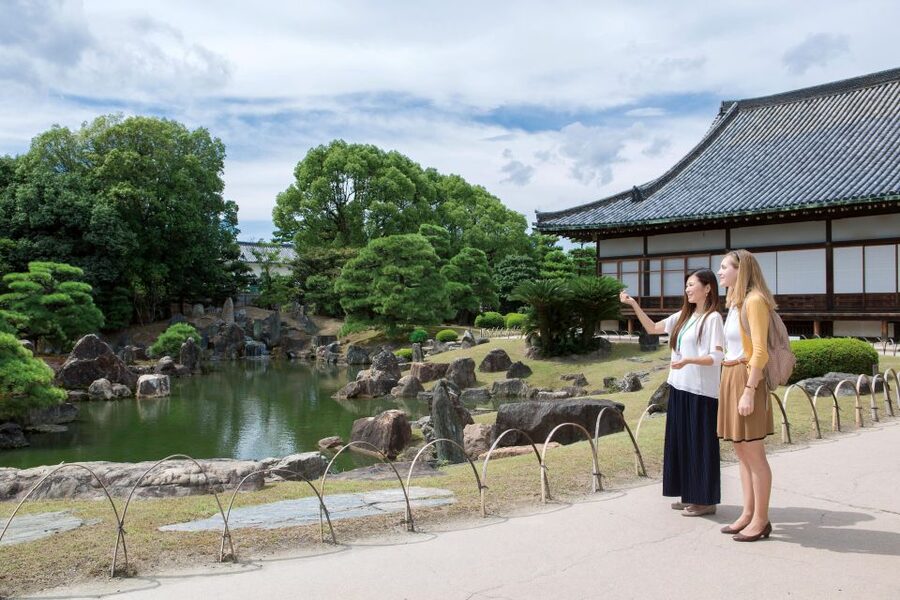
The tour also includes Ninomaru Garden, which surrounds the palace and gives you a change of pace after the interior rooms.
The garden is not just a pleasant walk between buildings. Its placement helps explain how the castle balanced defense with ceremony and beauty. After the controlled sequence of palace rooms, the open garden gives you space to think about what you have seen.
The guide keeps the group together and explains the grounds as part of the larger castle plan. On busy days, that matters. Nijo-jo can draw a large crowd, and one guide has been praised for keeping everyone together while moving through a packed palace.
The route is not a full-day study of every corner of the grounds. After the guided hour, you can continue wandering on your own, which is a good arrangement. You get the essential historical framework first, then you can explore the gardens at your own speed.
If you visit during light rain, the experience can still work well, but outdoor comfort will depend on your clothing and willingness to walk. The guide continues to explain the site, yet the garden portion is naturally less enjoyable when the weather turns poor.
What the $16 price really buys you
The advertised tour price is $16 per person, but it is not the total cost of entering Nijo-jo Castle. You must pay the separate admission fee in cash at the castle. One recent estimate put that extra admission at 1,300 yen, though you should confirm the current amount before visiting.
That separation is the main value issue. At first glance, the tour looks inexpensive. Once you add admission, the total is higher, but I still think the guided portion earns its place for first-time visitors who want context.
You are paying for more than directions. The guide explains why the palace rooms differ, how the shogunate and emperor fit into the story, what the artwork means, and how the building managed rank and security. You may also enter areas that independent visitors cannot access.
The value is weaker if you already know Edo-period political history or prefer to read signs at your own pace. The hour is short, and you will still pay admission separately. For most people, though, the price is reasonable because Nijo-jo’s details are easy to admire without understanding.
Timing, heat, crowds, and comfort
One hour is enough to cover the main sights without making the visit feel like a lecture. Guides generally keep a steady pace, stop for questions, and explain the most important rooms rather than trying to cover every detail.
Small groups are possible, and one group had only four people. That size makes it easier to hear the guide and ask questions. Group size can change, so I would not book on the assumption that every departure will be private or nearly private.
Summer is the main comfort concern. Several visits took place during very hot weather, including temperatures above 95 degrees Fahrenheit. The guides made efforts to keep people comfortable, but you should still carry water, use sun protection outdoors, and avoid arriving overheated.
Inside Ninomaru Palace, you cannot bring water into the rooms, and there is no air conditioning. The palace is beautiful, but August visitors should be ready for heat. A cold drink afterward is a sensible plan.
The castle is also busy at times. A clear English-speaking guide helps because you do not have to stand in every room trying to decode written information while groups pass around you. You can focus on the building and listen for the details that make the rooms meaningful.
Families and solo visitors
This tour works well for adults who want a clear explanation without committing to a long walking program. It also suits solo visitors because the guide can help with photographs and make it easier to join a group.
Families should note the child policy carefully. Each paid participant may bring one child aged 0 to 12 for free. The child must stay with an adult throughout the tour.
Earphones are provided only to paid participants. If a child needs an earphone, you must purchase an adult ticket for that child. If you bring more than one child, each additional child needs an adult ticket.
The one-hour length is helpful for families, but the palace rules and quiet interior require children to stay close and follow the guide. For older children interested in samurai, castles, or palace life, the stories can make the building much easier to understand.
What to know before you book
Keep these practical points in mind:
- The tour is English only.
- Castle admission is not included.
- The admission fee must be paid in cash on site.
- Enter through the East Main Gate.
- Meet beside General Reception at the designated reception area.
- Arrive well before the start time.
- Ninomaru Palace is closed every Tuesday in July, August, December, and January.
- The palace is also closed from December 26 through January 3.
- The tour includes no transportation.
- Free cancellation is available up to 24 hours before the start time.
The closure dates are particularly important because the castle grounds may not offer the experience you booked if Ninomaru Palace is shut. Check availability and operating dates before building your Kyoto day around this visit.
Should you book the Nijo-jo guided tour?
I would book it if you want to understand what you are seeing rather than simply walk through an impressive old building. The guide adds the political story, explains the room system, points out artwork and symbolism, and may take you into restricted spaces. Those details turn the palace from a series of decorated rooms into a place where power was performed and protected.
I would skip it only if you are determined to explore alone, already know the history, or want a longer visit with no fixed pace. Remember to budget for the separate cash admission and prepare for heat inside the palace during summer.
For most first-time visitors to Kyoto, this is a smart one-hour addition to the castle visit. Take the tour for the palace and the explanation, then stay afterward to enjoy Ninomaru Garden and the wider grounds on your own.
FAQ
How long is the Nijo-jo Castle guided tour?
The guided tour lasts 60 minutes.
What language is the tour conducted in?
The tour is conducted only in English.
Is Nijo-jo Castle admission included?
No. Castle admission is separate and must be paid in cash on site.
Where do I meet the guide?
Enter through the East Main Gate. After entering, go to the reception area beside the General Reception, on the left side, and notify the staff that you have arrived for the tour.
What parts of Nijo-jo Castle does the tour include?
The route includes Higashi Ote-mon Gate, Kara-mon Gate, Ninomaru Palace, and Ninomaru Garden.
Can the tour enter areas closed to the public?
The experience includes access to a part of the castle normally unavailable to the public. The tour may also include two additional areas connected with the shogun’s private quarters.
Can children join for free?
Each paid participant can bring one child aged 0 to 12 for free. The child must be accompanied by an adult.
Are earphones provided for children?
Earphones are provided only to paid participants. If a child needs an earphone, an adult ticket must be purchased for that child.
When is Ninomaru Palace closed?
Ninomaru Palace is closed every Tuesday in July, August, December, and January. It is also closed from December 26 through January 3.
Recently added around Kyoto
- Higashiyama | Kyoto: Sakura Season Private Rickshaw Tour★ 5.0 · 3 reviews
- Kyoto Kimono Rental CHAMATSU|Kimono/Yukata Rental FamilyPlan★ 5.0 · 3 reviews
- Kyoto: Half-Day Private Guided Tour to the Old Town of Gion★ 4.4 · 3 reviews
- Nara Private Customizable Half Day Tour★ 5.0 · 3 reviews
- Kansai Region Hiking Adventure in Nara Kobe Kyoto and More★ 5.0 · 3 reviews
- Full Day Nara Deer, Temple, Shrine, Activities & Tea Ceremony★ 5.0 · 3 reviews
- Nara: Essential Private Tour with Deer Park and Temples★ 5.0 · 3 reviews
- Hiking Tour for Sacred Sites in Kyoto with a Guide★ 5.0 · 3 reviews
Nijo Castle Tours, compared.
Nijo, Kinkaku-ji, Arashiyama, Kiyomizu & Fushimi Inari
Read our review →
Imperial Palace & Nijo Castle Guided Walking Tour
Read our review →
Nijo Castle World Heritage Guided Tour with Admission
Read our review →
Kyoto Imperial Palace & Nijo Castle Guided Walking Tour – 3 Hours
Read our review →
Nijo Castle and Kyoto Imperial Palace Guided Tour
Read our review →
Nijo Castle and Imperial Palace Visit with Guide
Read our review →
Golden Pavilion, Nijo Castle, & Nishiki Market Half day tour
Read our review →
Nijo Castle Samurai Inside Story — Top-Rated Guide (Max 8)
Read our review →Browse the lists this tour appears in