
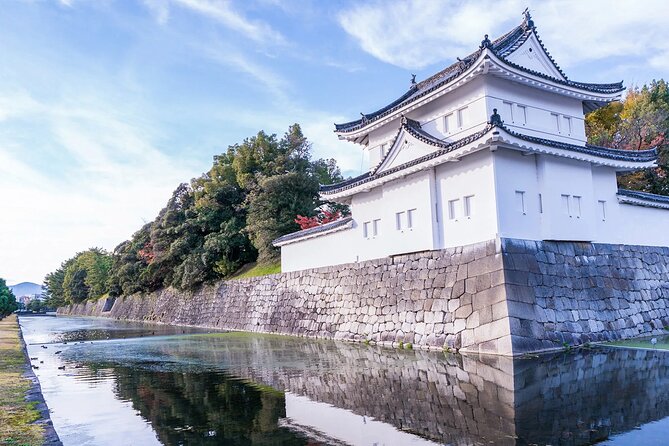
REVIEW · NIJO CASTLE TOURS
Kyoto: Nijo Castle World Heritage Guided Tour with Admission
Nijo Castle is where Japan’s samurai government made a grand entrance into Kyoto. This 90-minute tour takes you through the castle grounds and palace area while a guide explains the rivalry between the shogun and emperor, the Tokugawa family, and the long samurai era.
I like the included admission, which saves you the trouble of arranging a separate ticket. I also like the small group of no more than 10 people, since guides such as Alex, Nao, Naoya, and Benjamin have been praised for answering questions and adjusting the talk to the group.
The main drawback is the short running time. Nijo Castle has enough history, gardens, gates, and palace details to fill much longer, so you will get the key sights rather than a leisurely, all-day visit. In winter, bring thick socks because you remove your shoes inside the palace.
In This Review
- Key points to know before booking
- Why Nijo Castle matters in Kyoto
- Meeting at Nijojo-mae Station
- Entering the castle grounds with admission included
- The palace and the Tokugawa story
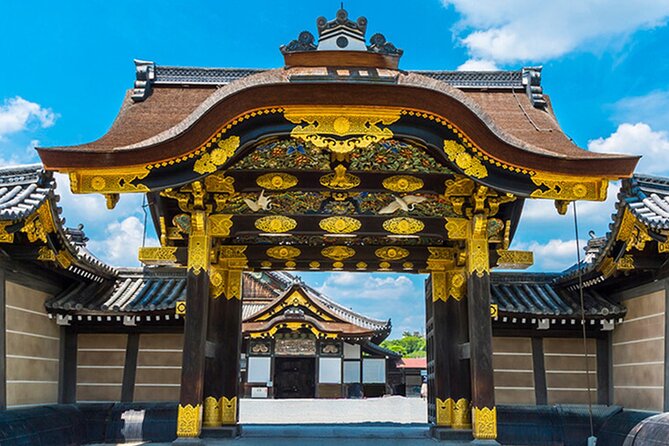
- Gates, gardens, and the best photo stops
- What a 10-person group changes
- Is $39.24 a fair price?
- Who will get the most from this tour
- Practical tips for a smoother visit
- Should you book the Nijo Castle guided tour?
- FAQ
- Where does the Nijo Castle tour begin?
- Where does the tour finish?
- How long does the experience last?
- Is admission to Nijo Castle included?
- How large is the tour group?
- Do I need to remove my shoes?
- Can I cancel for a full refund?
Key points to know before booking
- Meet at Nijojo-mae Station: The starting point is directly by Nijo Castle and close to public transportation.
- Admission is included: You do not need to arrange a separate castle ticket.
- A 90-minute visit: The route covers the castle highlights, palace history, and Japanese gardens at a steady pace.
- Small-group format: The maximum group size is 10 people, allowing time for questions.
- Guides with strong English skills: Alex, Nao, Naoya, Benjamin, and Noe are among the guides praised for clear explanations and a good sense of humor.
- Shoes come off inside the palace: Wear comfortable socks, especially during colder months.
Why Nijo Castle matters in Kyoto
Many Kyoto sights are tied to emperors, temples, and court culture. Nijo Castle gives you a different view of the city: this is the setting of military power, political ceremony, and the Tokugawa shoguns who controlled Japan for roughly 260 years.
Tokugawa Ieyasu built the castle after establishing the samurai government. It was not simply a fortress for defense. It was also a statement. The shogun could enter Kyoto, the emperor’s city, and occupy a grand residence close to the imperial court.
That contrast gives the visit its bite. You are not only looking at old walls and gardens. You are seeing a place where two kinds of authority met: the shogun’s military rule and the emperor’s traditional royal position.
I find that this context makes the castle easier to read. The large gates, carefully ordered grounds, and polished palace rooms begin to feel like parts of a political stage. A guide can point out those connections as you walk, instead of leaving you to piece them together from signs.
More of Nijo Castle:
- Kyoto: Nijo-jo Castle and Ninomaru Palace Guided Tour
★ 4.7 · 1,020 reviews - Kyoto: Nijo Castle, Kiyomizu & Fushimi Inari Guided Tour
★ 4.7 · 700 reviews - Kyoto: Nijo, Kinkaku-ji, Arashiyama, Kiyomizu & Fushimi Inari
★ 5.0 · 699 reviews
Meeting at Nijojo-mae Station
The tour begins at Nijojo-mae Station, listed at Nijojocho in Kyoto’s Nakagyo Ward. That is a practical meeting point because it puts you right beside the castle rather than asking you to search for a guide somewhere in a large neighborhood.
Plan to arrive with enough time to find the meeting point before the start. The experience ends back at the same meeting point, so you will not be left guessing where the tour finishes or how to reconnect with the rest of your day.
The mobile ticket is useful here. You can keep the booking details on your phone rather than handling paper documents, though you should make sure your phone is charged and that you can open the ticket before you arrive.
The tour is near public transportation, and most people can take part. No special fitness requirement is stated, but this is a walking visit through castle grounds and gardens. Choose shoes that are easy to remove and put back on, since the palace interior requires you to go barefoot or wear socks.
Entering the castle grounds with admission included
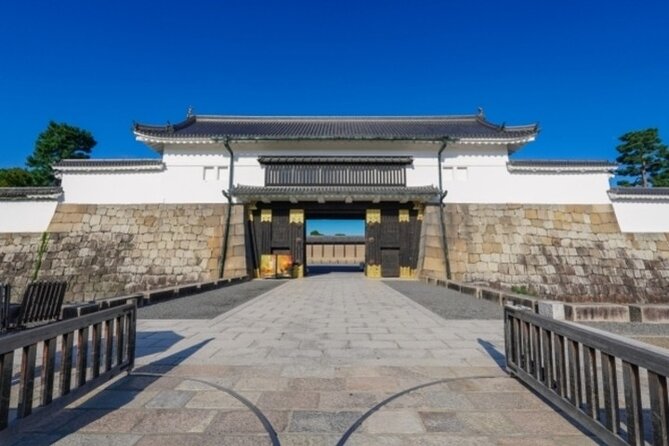
Once inside, your guide takes the lead through Nijo Castle. The included admission is one of the clearest benefits of booking this experience. You do not have to buy a separate ticket or sort out the admission process yourself on the day.
That does not mean the tour turns the castle into a private visit. Nijo Castle is a major Kyoto attraction, and the grounds can have other people in them. The advantage is simpler: your group has a planned entry and a guide who knows where the main sights are.
Without a guide, you can certainly walk around the castle on your own. But the meaning of Nijo Castle is not always obvious from its buildings. The guide supplies the political and family story that ties the gates, palace, gardens, and ceremonies together.
This is especially helpful if your Kyoto schedule is tight. The tour lasts about an hour and a half, so you can place it into a morning or afternoon without giving up an entire day.
The palace and the Tokugawa story
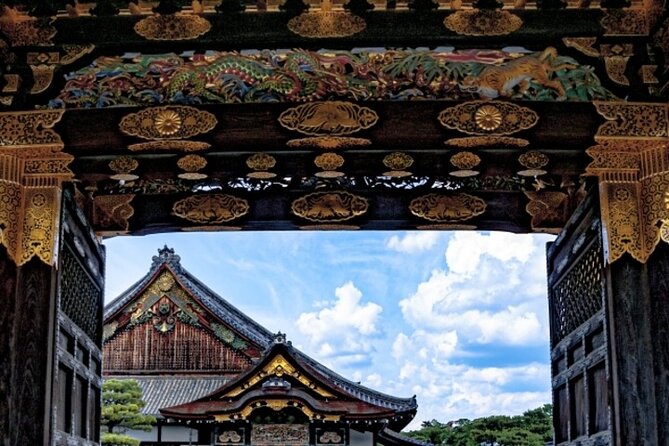
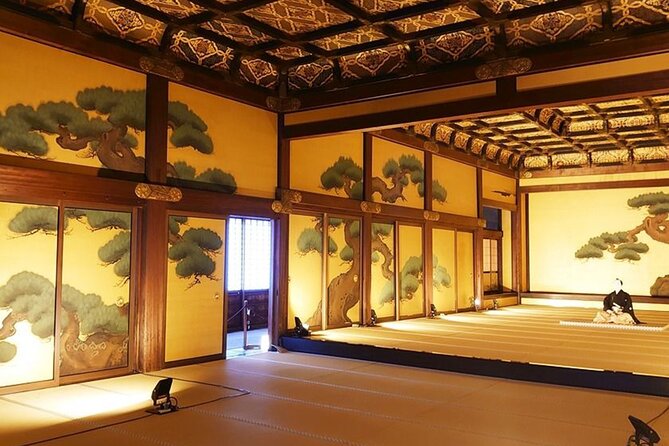
The palace section is the heart of the visit. Here, the guide explains the Tokugawa family, the samurai government, and the relationship between shogun and emperor.
The experience is strongest when the history is connected to the rooms in front of you. A palace is more interesting when you understand who used it, what political purpose it served, and why a military ruler needed such a formal presence in Kyoto.
The guides praised in the supplied material include Alex, Nao, Naoya, Benjamin, and Noe. Alex is described as easygoing, humorous, and able to handle a steady stream of questions. Naoya is praised for clear English, personal attention, and explanations that added more than the signs alone could provide. Benjamin is noted for being informative and accommodating, while Nao is described as funny and well prepared.
Those details matter because a history tour can become dry if it is delivered as a list of dates. The strongest part of this experience appears to be the chance to ask questions and hear anecdotes. If you are curious about the Tokugawa family or want the political story explained in plain terms, a live guide adds real value.
Remember the palace rule about shoes. You remove them before entering, so thick socks are a smart winter choice. The floor can feel cold, and you may spend enough time inside to notice it.
More history walks in Kyoto:
- World Heritage Kyoto & Nara Uji Authentic Matcha Experience
★ 5.0 · 1,573 reviews - Kyoto Gion: 2-Hour Geisha Culture & History Walking Tour
★ 5.0 · 1,186 reviews - Kyoto Gion Historical Walking Tour
★ 5.0 · 188 reviews - Historical Kyoto E-Bike Tour
★ 5.0 · 181 reviews
Gates, gardens, and the best photo stops
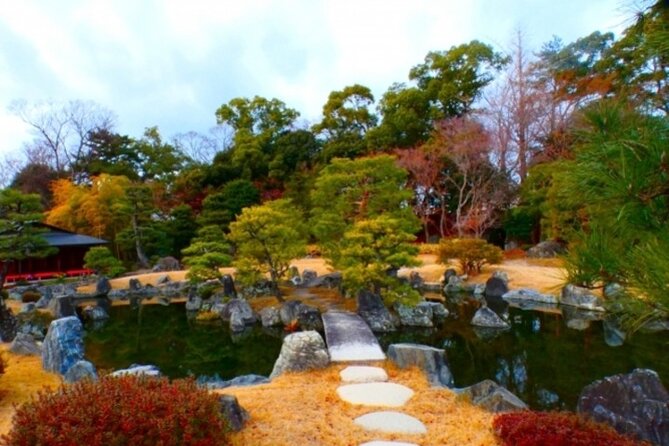
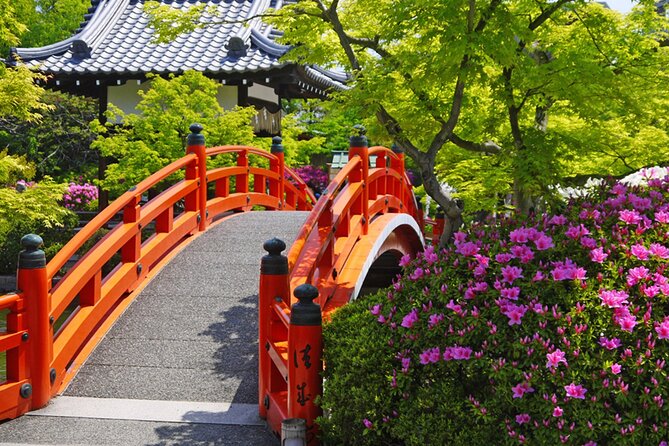
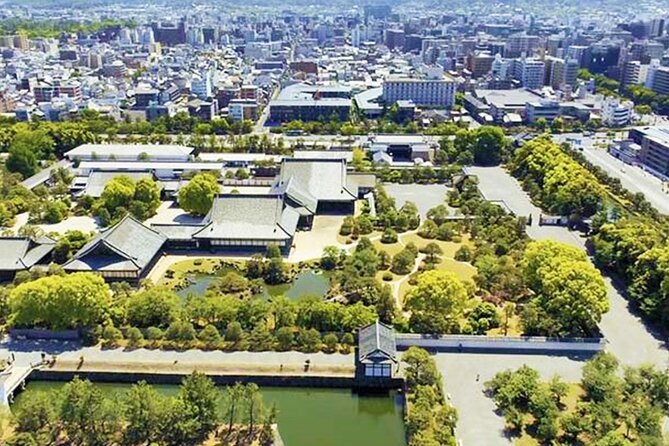
Nijo Castle is not only an indoor history visit. The walk through the grounds includes Japanese gardens, gates, and outdoor areas that give the tour a change of pace.
The gardens are an important part of the experience because they show how carefully the castle was designed. The setting was made to impress as well as protect. Your guide can help you notice the relationship between open paths, formal entrances, and the buildings beyond them.
The gates are among the most photogenic parts of the visit. They offer strong architectural details and a sense of arrival, while the gardens provide a quieter contrast to the more formal palace spaces.
The tour is not described as a photography tour, so you should not expect long stops at every viewpoint. If you want many carefully composed photographs, you may need extra time after the guided portion. The activity ends where it began, making it easy to remain at the castle afterward if your admission arrangement permits, though the supplied details do not specify an extension policy.
The guide’s role here is less about rushing you from one object to the next and more about showing why the grounds look the way they do. You will likely get more from the gardens if you know their place within the castle’s wider political design.
What a 10-person group changes
The maximum group size is 10. That is small enough to feel more personal than a large coach tour, while still keeping the price relatively moderate at $39.24 per person.
A small group gives you a better chance to hear the guide clearly and ask a question without interrupting a crowded presentation. It also lets the guide adjust the discussion. One group may want more about samurai rule, while another may focus on the palace, gardens, or the Tokugawa family.
The size is not a guarantee that every departure will feel identical. Guide style can vary, and a group of 10 will naturally move more slowly than a couple. Still, the format is well suited to a site where details matter and where a guide needs to keep everyone together through indoor and outdoor areas.
The personal element seems to be a major strength. The best comments about the experience focus not just on facts, but on guides answering questions, using humor, and shaping the visit around the group’s interests.
Is $39.24 a fair price?
At $39.24, this is not the cheapest way to enter Nijo Castle. If you are comfortable exploring on your own and reading signs, you could prefer a basic admission visit.
The price becomes easier to justify if you value three things: prebooked admission, a guide, and a small group. You are paying for more than access to the grounds. You are paying for someone to organize the visit, explain the political story, and point out details you might pass without understanding.
The 90-minute length also helps with value. You are not committing to a full-day group excursion, transport outside central Kyoto, or a large package with stops you did not choose. This is a focused castle visit that can fit neatly into a wider Kyoto itinerary.
I would book it if Nijo Castle is important to you but you do not want to spend time researching the Tokugawa period before arriving. I would skip it if you already know the history well, prefer wandering at your own speed, or want extensive time for photography.
The included admission and free cancellation up to 24 hours before the start make the booking less risky. If you cancel later than that, the payment is not refunded, and changes made within 24 hours are not accepted. The cut-off follows Kyoto local time.
Who will get the most from this tour
This experience suits first-time visitors who want a clear introduction to Nijo Castle. It also works well for anyone who has limited time in Kyoto and wants the main story without reading a guidebook beforehand.
History fans should appreciate the focus on Tokugawa Ieyasu, samurai rule, and the tension between shogun and emperor. You do not need specialist knowledge. The guides are there to explain the setting and answer questions in accessible English.
Families and mixed-age groups may also find the format useful because the guide can add anecdotes and respond to different interests. The small group is more flexible than a large party, though the 90-minute pace means you should be ready to keep moving.
This is less suitable for visitors who need a fully private tour, a slow garden stroll, or guaranteed time at every room and gate. The information provided does not promise private guiding, wheelchair details, audio equipment, or a photography-focused route, so you should not book expecting those features.
Practical tips for a smoother visit
Wear shoes that are easy to remove. The palace interior requires shoes to come off, and thick socks are especially useful in winter.
Keep your mobile ticket ready and arrive at Nijojo-mae Station with time to spare. The meeting point is convenient, but a last-minute station arrival can make any guided tour stressful.
Bring questions. The guides have been praised for handling questions and tailoring explanations, so this is not a visit where you need to remain silent and simply follow the group.
Allow extra time around the 90-minute tour if you want to linger over the gardens or shop afterward. A small shop is mentioned near the exit area, along with a recommendation for red bean mochi soup. That is a pleasant way to extend the visit, though the food stop is not part of the tour itself.
Finally, keep your expectations focused. This is a concise guided introduction, not an exhaustive study of every corner of Nijo Castle. Its strength is the combination of access, orientation, and storytelling.
Should you book the Nijo Castle guided tour?
I would book this tour if you want Nijo Castle to make sense, not just appear attractive. The included admission, convenient station meeting point, small group, and strong guide feedback make it a sensible choice for a first visit.
The most useful names to keep in mind are Alex, Nao, Naoya, Benjamin, and Noe, all praised for history knowledge, clear English, humor, and personal attention. You cannot necessarily choose your guide, but the pattern points to a well-supported experience.
Skip it if you want to roam alone, already understand the Tokugawa period, or plan to spend several hours taking photographs. For everyone else, $39.24 buys a compact, practical way to see one of Kyoto’s most important political and architectural sites with the story in place.
FAQ
Where does the Nijo Castle tour begin?
It begins at Nijojo-mae Station, beside Nijo Castle in Nakagyo Ward, Kyoto.
Where does the tour finish?
The activity ends back at the meeting point.
How long does the experience last?
The tour lasts approximately 1 hour and 30 minutes.
Is admission to Nijo Castle included?
Yes. The admission fee is included in the tour price.
How large is the tour group?
The activity has a maximum of 10 participants.
Do I need to remove my shoes?
Yes. Shoes must be removed when entering the palace interior. Thick socks are recommended during winter.
Can I cancel for a full refund?
Yes, if you cancel at least 24 hours before the experience start time. Cancellations or changes made less than 24 hours before the start are not refunded or accepted.
Recently added around Kyoto
- Higashiyama | Kyoto: Sakura Season Private Rickshaw Tour★ 5.0 · 3 reviews
- Kyoto Kimono Rental CHAMATSU|Kimono/Yukata Rental FamilyPlan★ 5.0 · 3 reviews
- Kyoto: Half-Day Private Guided Tour to the Old Town of Gion★ 4.4 · 3 reviews
- Nara Private Customizable Half Day Tour★ 5.0 · 3 reviews
- Kansai Region Hiking Adventure in Nara Kobe Kyoto and More★ 5.0 · 3 reviews
- Full Day Nara Deer, Temple, Shrine, Activities & Tea Ceremony★ 5.0 · 3 reviews
- Nara: Essential Private Tour with Deer Park and Temples★ 5.0 · 3 reviews
- Hiking Tour for Sacred Sites in Kyoto with a Guide★ 5.0 · 3 reviews
Nijo Castle Tours, compared.
Nijo-jo Castle and Ninomaru Palace Guided Tour
Read our review →
Nijo, Kinkaku-ji, Arashiyama, Kiyomizu & Fushimi Inari
Read our review →
Imperial Palace & Nijo Castle Guided Walking Tour
Read our review →
Kyoto Imperial Palace & Nijo Castle Guided Walking Tour – 3 Hours
Read our review →
Nijo Castle and Kyoto Imperial Palace Guided Tour
Read our review →
Nijo Castle and Imperial Palace Visit with Guide
Read our review →
Golden Pavilion, Nijo Castle, & Nishiki Market Half day tour
Read our review →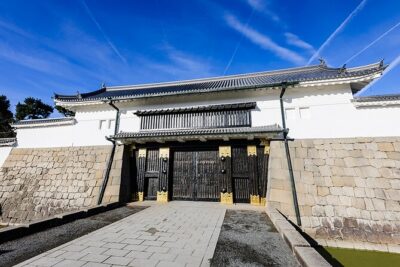
Nijo Castle Samurai Inside Story — Top-Rated Guide (Max 8)
Read our review →Browse the lists this tour appears in