
REVIEW · KINKAKU-JI GOLDEN PAVILION TOURS
Golden Pavilion, Nijo Castle, & Nishiki Market Half day tour
The best part of this four-hour Kyoto tour is the way it links three very different places: a gold-covered Zen temple, a shogun’s castle, and a food market. You get famous sights, but also the political story behind them, from samurai power to Japan’s move toward modernization.
I like the guide’s use of an iPad with his own explanations, especially when a building or historical figure needs more context than a plaque can give. I also like the private-group format and the chance to ask Roberto for ideas for the rest of your Kyoto stay. The main drawback is the pace: you must walk comfortably, use public transport, and keep an eye on the clock.
In This Review
- Key points to know before booking
- Why this half-day route works in Kyoto
- Meeting Roberto at Kyoto Station
- Kinkaku-ji and the famous golden reflection
- Nijo Castle and the end of samurai rule
- Nishiki Market, Kyoto’s Kitchen
- What the $90 price really covers
- Walking, transport, and the morning pace
- English, Spanish, and the private-group advantage
- Who should book this Kyoto morning tour?
- Should you book it?
- FAQ
- How long does the tour last?
- Where does the tour begin?
- Where does the tour finish?
- Are entrance fees included?
- Is transportation included?
- What languages are available?
- Is this a private tour?
- What should I bring?
Key points to know before booking
- Kinkaku-ji first: Arriving early puts the Golden Pavilion at the start of your morning, before the tour continues across Kyoto.
- Roberto’s visual teaching: An iPad with custom images helps explain the shogun, samurai, feudal lords, and major historical changes.
- Nijo Castle’s chirping floors: The castle’s famous nightingale floors turn a simple walk through the palace into a lesson in security and power.
- A practical Nishiki Market finish: The tour ends at Kyoto’s Kitchen, where you can choose your own lunch from many food stalls and shops.
- Private and multilingual: The experience is offered in English or Spanish for a private group, with Roberto serving as a Kyoto City Certified Tourist Guide.
- Budget for extras: The $90 price does not include public transport, the 500-yen Golden Pavilion ticket, or the 1,300-yen Nijo Castle ticket.
Why this half-day route works in Kyoto
Kyoto can feel scattered on a map. Kinkaku-ji sits in the northwest, Nijo Castle is closer to the center, and Nishiki Market lies farther east near the shopping streets. Seeing all three independently takes planning, route checking, and time spent figuring out buses and trains.
This tour handles that framework for you. The listed schedule runs from 8:30 a.m. to 12:30 p.m., beginning at Kyoto Station and ending at Nishiki Market. That timing is useful if you want your afternoon free for another neighborhood, a museum, or a second temple.
I especially like the order. Kinkaku-ji gives you Kyoto’s polished postcard image. Nijo Castle then changes the mood from religious beauty to military rule and court politics. Nishiki Market finishes with everyday food and shopping, a more casual way to experience the city after two formal heritage sites.
You should not expect a slow, lingering day at each stop. The tour gives Kinkaku-ji about 90 minutes and Nijo Castle about 95 minutes, with transport and a short walk to Nishiki Market included. That is enough for a guided introduction, but not enough to inspect every corner at leisure.
More trips to the Golden Pavilion:
- Kyoto: Nijo, Kinkaku-ji, Arashiyama, Kiyomizu & Fushimi Inari
★ 5.0 · 699 reviews - Kyoto: Kinkakuji, Golden Pavilion Guided Tour
★ 4.7 · 71 reviews - Kyoto top must-see Golden pavilion and Bamboo forest half-day Private tour
★ 5.0 · 52 reviews
Meeting Roberto at Kyoto Station
The meeting point is in front of the 7-Eleven at the central entrance of the JR Kyoto Station Building on the Kyoto Tower side. Look for an iPad and a red card marked RBRT, which is intended to make the meeting easier in one of Japan’s busiest transport hubs.
You begin at 8:30 a.m. From there, the group takes a public bus for about 35 minutes to Kinkaku-ji. Transport is not included in the $90 price, so carry some yen or use the payment method that works for your wider Kyoto transport plans.
A private group can be a real advantage here. You can ask questions as they come up, request photo help, and get personal suggestions for later in your trip. The supplied comments repeatedly single out Roberto’s friendly, attentive manner. One guest also appreciated a short video he made after the visit, while another praised the one-to-one attention. A video is not stated as a guaranteed part of every tour, so treat it as a possible extra rather than a promised feature.
Kinkaku-ji and the famous golden reflection
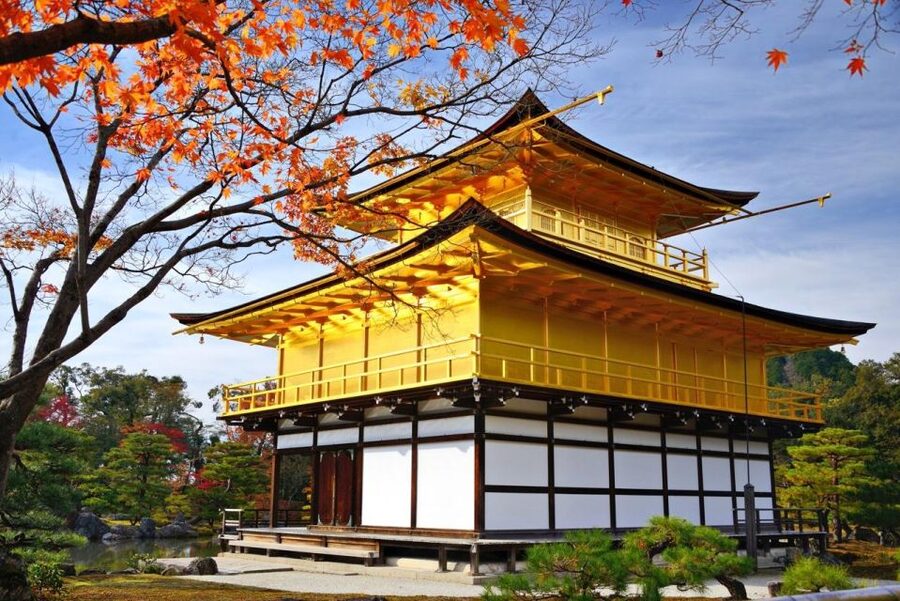
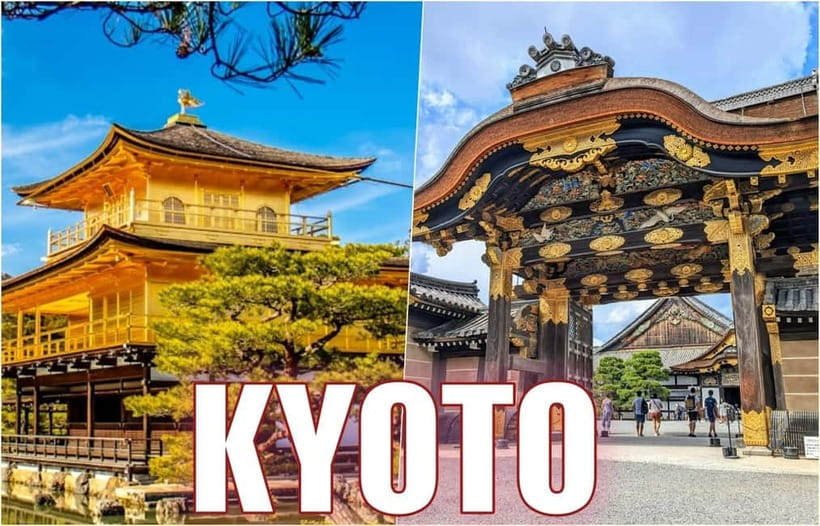
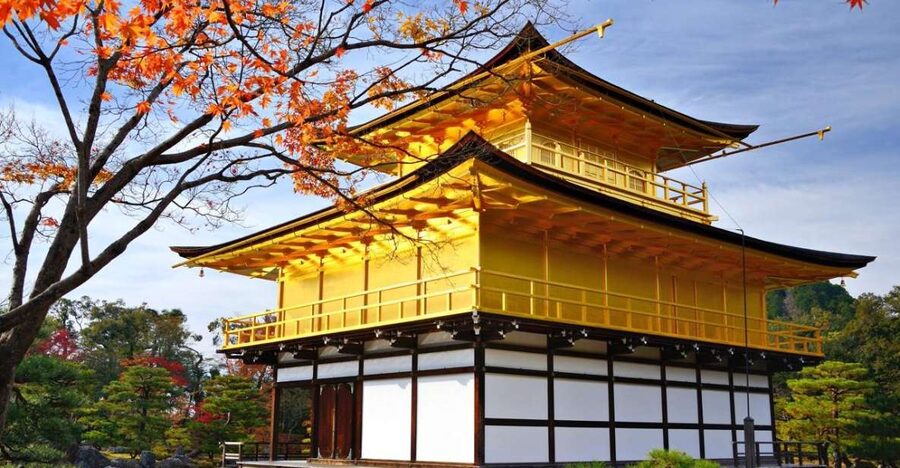
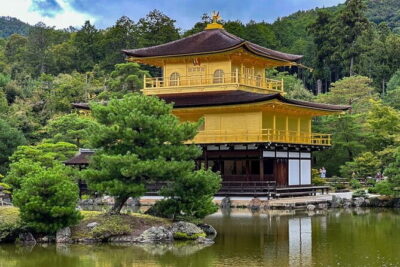
Kinkaku-ji, better known as the Golden Pavilion, is one of Kyoto’s most recognizable sights. The top two floors are covered in real gold leaf, and the pavilion reflects in the pond in front of it. The effect is designed for a quick visual impact, but the building also gives Roberto a good opening for explaining how religion, wealth, authority, and taste came together in medieval Japan.
The pavilion began as a villa for Ashikaga Yoshimitsu, a 14th-century shogun. It later became a Zen Buddhist temple. That change from private elite residence to religious site helps explain why Kinkaku-ji is more than a pretty building. It shows how powerful figures used architecture to express status and devotion.
The visit is guided for about 1.5 hours. That allows time for the main view, the grounds, and historical explanation. Roberto’s iPad should be particularly helpful here because the temple’s present appearance is only part of the story. Images can make people and past versions of buildings easier to understand than written signs alone.
The Golden Pavilion ticket costs 500 yen, approximately $3.10, and is not included. Photography rules apply inside certain temple areas, so listen carefully before taking pictures. You can expect to photograph the main exterior view, but not every interior or sacred space will be open to cameras.
Kinkaku-ji is a popular stop, and its fame is part of the appeal as well as part of the limitation. You are coming for one of Japan’s classic views, not for a quiet, overlooked temple. The early start helps, but the tour does not promise an empty site.
Nijo Castle and the end of samurai rule
After Kinkaku-ji, the route continues by subway for about 20 minutes to Nijo Castle. This change of setting is one of the tour’s strongest features. Instead of looking at a single elegant pavilion, you begin to see how power worked inside Japan’s feudal system.
Nijo Castle is connected with the shogun, the military ruler who held practical authority over Japan. Roberto explains the struggles among samurai, feudal lords, and the shogun, then connects that political system to the end of the samurai era and the beginnings of modernization.
That context matters. Without it, the castle can look like a series of decorated rooms and handsome gates. With it, the architecture becomes evidence of control. The castle was not simply a residence. It expressed the reach of the shogun and the complicated relationship between military leaders and the imperial court.
The castle is known for its Edo-period architecture, detailed woodwork, and intricate designs. One of the most memorable features is the nightingale floor. As you walk, the floorboards chirp. The sound worked as an early warning system, making it difficult for an intruder to move silently through the building.
Nijo Castle receives about 95 minutes on this route. That is a sensible amount of time for a first visit because there is a lot to absorb, from the palace interiors to the grounds and historical setting. Still, the tour remains time-conscious. If you like to study every carving or pause for long photographs, you may want a separate visit.
The entrance fee is 1,300 yen, approximately $8.15, and is paid separately. Some interior areas prohibit photography, so your attention should stay on the rooms and explanations rather than only on taking pictures.
More of Nijo Castle:
- Kyoto: Nijo-jo Castle and Ninomaru Palace Guided Tour
★ 4.7 · 1,020 reviews - Kyoto: Nijo Castle, Kiyomizu & Fushimi Inari Guided Tour
★ 4.7 · 700 reviews - Kyoto: Imperial Palace & Nijo Castle Guided Walking Tour
★ 4.7 · 453 reviews - Kyoto: Nijo Castle World Heritage Guided Tour with Admission
★ 5.0 · 128 reviews
Nishiki Market, Kyoto’s Kitchen
From Nijo Castle, you take another subway ride of about 15 minutes, then walk roughly 10 minutes to Nishiki Market. The tour ends at the market entrance at approximately 12:30 p.m.
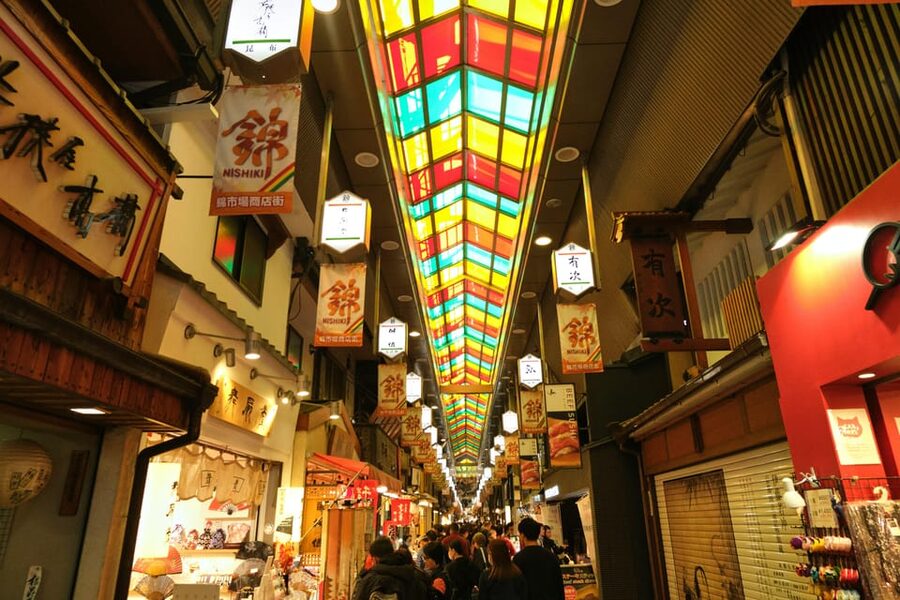
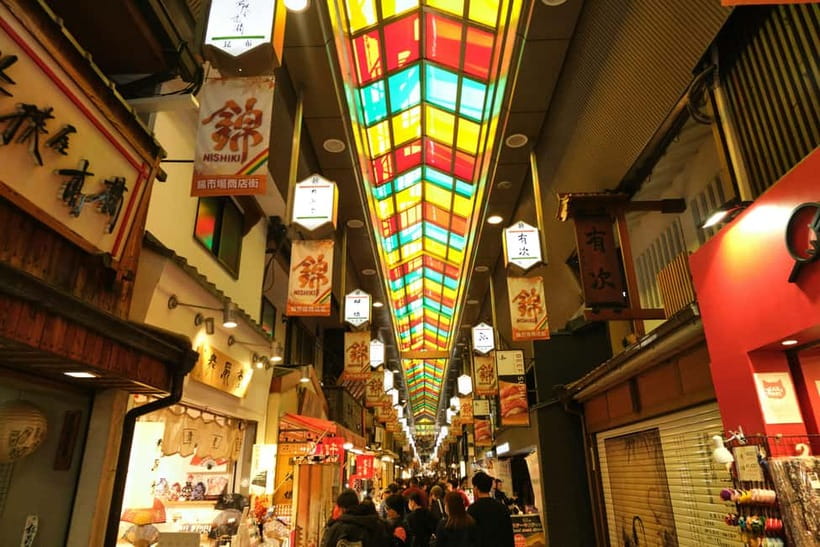
Nishiki Market occupies a narrow, five-block shopping street lined with more than 100 shops and restaurants. It is known as Kyoto’s Kitchen, and the name makes sense once you see the concentration of food stalls, seafood, produce, knives, cookware, and other items connected with Japanese cooking.
This is not a formal tasting tour. Food and drinks are not included, and you choose what to buy after Roberto explains the market’s origins. I consider that a good arrangement for a short morning tour because it leaves your lunch flexible. You might want a full meal, a small snack, or time to browse kitchen goods. The choice is yours.
The market can feel lively and hectic, particularly because it is a popular stop for international visitors. Keep your belongings close and avoid blocking the narrow walkway while deciding what to eat. The advantage is variety. You are not tied to one restaurant or a fixed menu, and the tour ends in a place where you can continue exploring on your own.
Ending here also gives the morning a useful local rhythm. Kinkaku-ji and Nijo Castle explain major chapters of Kyoto’s past. Nishiki Market shows how food, shopping, and daily commerce still shape the city.
What the $90 price really covers
The advertised price is $90 per person. For a private four-hour tour with a Kyoto City official certified guide, that can be fair value, especially if you want historical explanation rather than simple transport between sights.
But the price is not your complete cost. You must also pay for public bus and subway rides, the 500-yen Kinkaku-ji ticket, and the 1,300-yen Nijo Castle ticket. Food and drinks at Nishiki Market are also extra.
The guide’s own entrance fees and transportation do not need to be covered, but your expenses remain separate. I would budget for the two admission fees plus local transport before booking. The exact transport cost is not specified, so check your route and payment options in Kyoto.
The strongest value comes from the structure and personal attention. You get three major stops, historical explanations supported by images, help with photographs, and the chance to ask for recommendations for later days. If you already know Kyoto well and prefer to explore alone, the added cost may be less appealing. If this is your first visit, the guide can help you understand what you are seeing instead of simply collecting photographs.
Walking, transport, and the morning pace
The tour uses a public bus, subway rides, and walking. The listed travel times add up to about 70 minutes, before counting time inside stations and the 10-minute walk to Nishiki Market. Comfortable shoes are essential.
You do not climb mountains or face very long stairways, but this is still not a seated sightseeing experience. You need to be in reasonable walking condition and able to manage ordinary movement through city streets, transport stations, temple grounds, and castle areas.
Large bags and luggage are not allowed, and baby strollers are not suitable. The experience is also not suitable for wheelchair users, pregnant women, people with back problems, people prone to seasickness, or people with a low level of fitness, according to the supplied restrictions.
The tour operates rain or shine. Bring weather protection and shoes that can handle a full morning outdoors. Certain temple and castle areas restrict photography, so be ready to put the camera away when asked.
English, Spanish, and the private-group advantage
Roberto offers the tour in English or Spanish. That choice can make a major difference when discussing names, political titles, and the changes between the Edo period and modern Japan.
The iPad is more than a decorative extra. Historical explanations can involve unfamiliar figures and shifting alliances. Seeing an image while Roberto explains the subject may help you keep the people and events straight, particularly at Nijo Castle.
The private-group setup also allows the tour to respond to your interests. You can ask more about samurai life, architecture, food, or what to see next in Kyoto. Several supplied comments praise Roberto’s warmth, professionalism, humor, and personal attention. The overall rating is 5 out of 5 from 29 ratings, with especially strong praise for the historical insight, accommodating approach, and value.
That does not mean every minute will suit every person. A private tour still follows a fixed four-hour schedule, and the three-stop plan leaves little room for long detours.
Who should book this Kyoto morning tour?
I would choose this tour if you want a clear first look at Kyoto’s major sights and prefer a guide to explain the politics behind the buildings. It suits first-time visitors, couples, families able to walk comfortably, and anyone who wants a private format in English or Spanish.
It is also useful early in a Kyoto stay. Roberto can suggest places to visit in the following days, and the route introduces several themes that can help you understand other temples, castles, and historic districts.
I would think twice if you want a relaxed photography morning, a food-focused tour, or a deep visit to only one site. Nishiki Market is a self-directed finish rather than a guided tasting experience, and the schedule does not leave much time for wandering.
Should you book it?
Book this tour if you value clear historical storytelling, private attention, and a tightly planned morning. The combination of Kinkaku-ji, Nijo Castle, and Nishiki Market gives you beauty, politics, architecture, and food in one compact route.
Skip it if you dislike public transport, cannot walk for several hours, or want all entrance fees, food, and transport included in the advertised price. For the right visitor, the $90 fee buys more than directions. It gives you a framework for understanding Kyoto, plus a practical introduction to what you can do next.
FAQ
How long does the tour last?
The tour lasts about four hours, from 8:30 a.m. to 12:30 p.m.
Where does the tour begin?
It begins in front of the 7-Eleven at the central entrance of the JR Kyoto Station Building on the Kyoto Tower side. The guide holds an iPad and a red card marked RBRT.
Where does the tour finish?
The tour finishes at the entrance of Nishiki Market at approximately 12:30 p.m.
Are entrance fees included?
No. Kinkaku-ji costs 500 yen and Nijo Castle costs 1,300 yen. These fees are paid separately.
Is transportation included?
No. You use public buses and subways, but your transportation costs are not included.
What languages are available?
The tour is available in English and Spanish.
Is this a private tour?
Yes. The group type is private.
What should I bring?
Bring comfortable shoes. The tour includes walking, public transport, temple and castle grounds, and a walk to Nishiki Market. Large bags, luggage, and baby strollers are not allowed.
More Markets in Kyoto
- Kyoto: Nishiki Market Brunch Walking Tour-7 Tastings+Brunch
★ 4.8 · 197 reviews - Kyoto: Local Food Tasting Tour at the Nishiki Market
★ 4.7 · 135 reviews - Kyoto: Nishiki Market and Depachika Food Tour with a Local
★ 4.7 · 76 reviews - Kyoto: Nishiki Market Tour with a Local Foodie & Tastings
★ 4.5 · 67 reviews
More Food Walks Through Nishiki Market
- Nishiki Market Brunch Walking Tour (7 Tastings + Brunch)
★ 5.0 · 1,355 reviews - Kimono Tea Ceremony at Kyoto Maikoya, NISHIKI
★ 5.0 · 911 reviews - Kyoto Nishiki Market Food and Culture Walking Tour
★ 5.0 · 412 reviews - Kyoto: Nishiki Market Tea Ceremony with Koto Performance
★ 4.8 · 294 reviews
Recently added around Kyoto
- Higashiyama | Kyoto: Sakura Season Private Rickshaw Tour★ 5.0 · 3 reviews
- Kyoto Kimono Rental CHAMATSU|Kimono/Yukata Rental FamilyPlan★ 5.0 · 3 reviews
- Kyoto: Half-Day Private Guided Tour to the Old Town of Gion★ 4.4 · 3 reviews
- Nara Private Customizable Half Day Tour★ 5.0 · 3 reviews
- Kansai Region Hiking Adventure in Nara Kobe Kyoto and More★ 5.0 · 3 reviews
- Full Day Nara Deer, Temple, Shrine, Activities & Tea Ceremony★ 5.0 · 3 reviews
- Nara: Essential Private Tour with Deer Park and Temples★ 5.0 · 3 reviews
- Hiking Tour for Sacred Sites in Kyoto with a Guide★ 5.0 · 3 reviews
Kinkaku-ji Golden Pavilion Tours, compared.
Nijo, Kinkaku-ji, Arashiyama, Kiyomizu & Fushimi Inari
Read our review →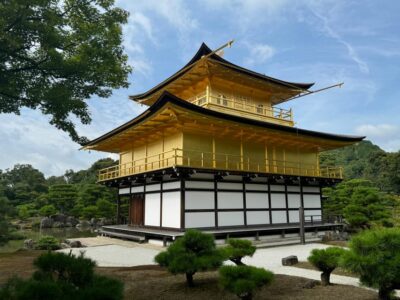
Kyoto top must-see Golden pavilion and Bamboo forest half-day Private tour
Read our review →
Kyoto Bamboo Forest & Golden Pavilion E-Bike Tour
Read our review →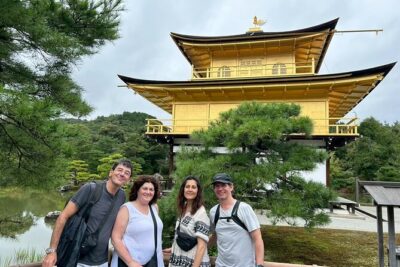
Crowd-Free Kyoto: Fushimi Inari, Nijo Castle & Kinkaku-ji
Read our review →
Kyoto & Nara Day Tour: Golden Pavilion, Fushimi Inari & Deer Park
Read our review →
Kinkaku-ji Temple & Serene Garden Guided Tour with Tickets
Read our review →
Kyoto Arashiyama & Golden Pavilion One-Day Walking Tour
Read our review →Browse the lists this tour appears in