
REVIEW · COOKING CLASSES
Experience Authentic Japanese Home Cooking in Kyoto
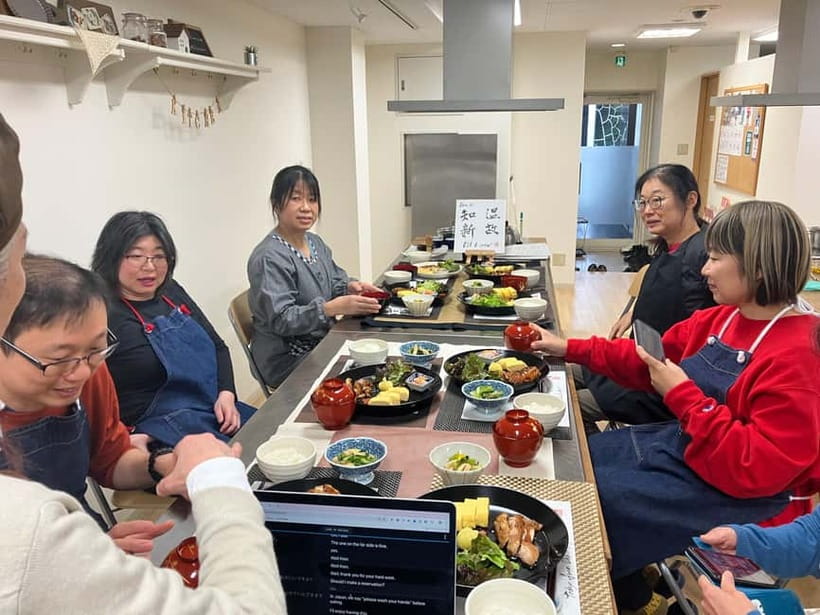
Kyoto has plenty of fine restaurants, but this class takes you into the quieter world of ordinary Japanese home cooking. In a more than 100-year-old townhouse, you make dashi from real bonito flakes and kelp, then use it in dishes Japanese families eat every day.
I like the hands-on format and the focus on additive-free seasonings. I also like that instructor Kayo teaches useful techniques rather than simply putting on a cooking show. The main consideration is the unusual participation rule: men-only groups cannot take the class at this home location, though another kitchen may be available by request.
In This Review
- Key points
- Starting with Kyoto’s most important cooking lesson
- A traditional townhouse instead of a standard cooking studio
- Learning to make dashi-maki tamago
- Practicing Japanese knife work
- Simmered vegetables and the taste of the seasons
- Making chicken teriyaki with traditional flavors
- Finishing with miso soup and a shared meal
- What the 122 dollar price buys you
- Fitting the class into a day in central Kyoto
- The English instruction and private-group format
- What the strongest praise tells you
- Who should book this Kyoto cooking class
- Should you book it?
- FAQ
- How long does the cooking class last?
- Where does the class meet?
- What dishes will I prepare?
- Is the class taught in English?
- Is the cooking class private?
- Can children participate?
- Can a men-only group book this location?
Key points
- Real dashi from scratch: Make soup stock with katsuobushi, or bonito flakes, and kombu, rather than relying on instant powder.
- A 100-year-old Kyoto townhouse: Cook in a traditional home setting, not a restaurant classroom.
- Four practical dishes: Prepare dashi-maki tamago, chicken teriyaki, simmered seasonal vegetables, and miso soup.
- Useful knife practice: Learn how Japanese ingredients are cut and prepared for different dishes.
- Private English-language teaching: The class is designed for a private group, with step-by-step instruction from Kayo and her team.
- Easy sightseeing connection: Heian Shrine, Gion, Yasaka Shrine, and Kyoto Imperial Palace are all within about a 15 to 20 minute walk.
Starting with Kyoto’s most important cooking lesson
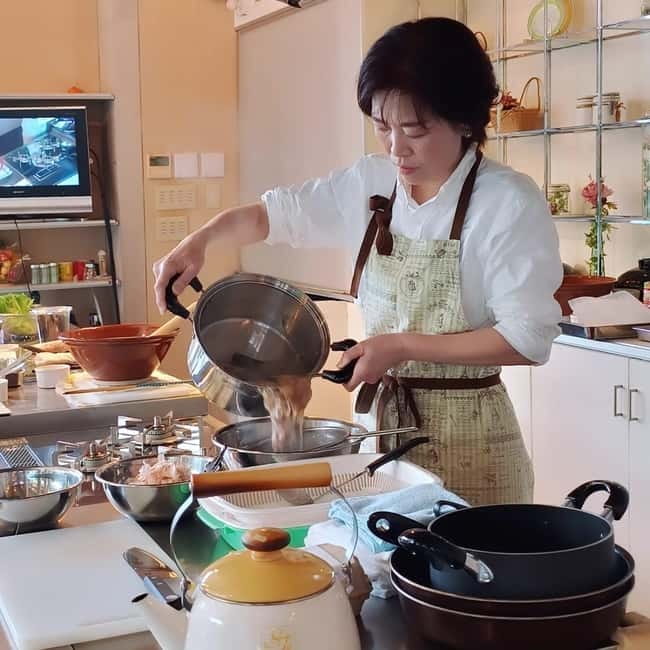
The first task is making dashi, the basic stock behind much Japanese food. You use kombu, or kelp, and katsuobushi, thin shavings of dried bonito. It is a simple process, but it teaches you why Japanese cooking can taste full without being heavy.
This is not a class built around restaurant tricks or fancy plating alone. Its goal is food you can repeat at home. That makes the lesson especially useful after your trip, when you want to recreate a Kyoto meal without specialist equipment or a long list of hard-to-find ingredients.
As the stock is prepared, the instructor explains how the ingredients work and how to handle them. The class follows the home-cooking approach associated with Katsuo Doi, a well-known Japanese authority on everyday cuisine. The emphasis is on food that is balanced, nourishing, and suited to family meals.
More cooking classes in Uji:
- Kyoto: Ramen Cooking Class at a Ramen Factory with Souvenir
★ 4.9 · 532 reviews - Kyoto: Ramen, Gyoza, and Onigiri Cooking Class
★ 5.0 · 445 reviews - Kyoto: Japanese Washoku Bento Small Group Cooking Class
★ 5.0 · 380 reviews
A traditional townhouse instead of a standard cooking studio
The class takes place in a traditional Kyoto townhouse more than a century old. That setting matters. You are not just learning recipes in a modern room with a cooking station lined up for each participant. You are entering a type of home linked to Kyoto’s older residential character.
The townhouse also gives the lesson a personal scale. This is a private-group experience, so you can ask questions and get help with each stage of the cooking. The class is conducted in English, and the instructor’s team can also use translation support when needed.
The exact meeting information deserves attention before you book. The class details mention a pickup near Sanjo Keihan or Subway Sanjo Station, about a 10-minute walk from the teaching location. The stated meeting point is also Subway Shijo Station, with a walk of about 10 minutes. Since both stations appear in the information, confirm the exact pickup point after booking rather than choosing your route based on one station alone.
Learning to make dashi-maki tamago
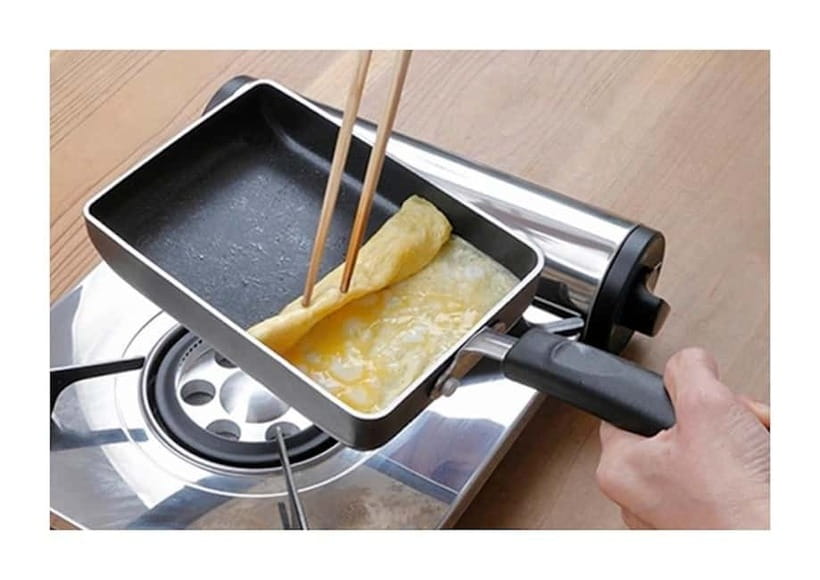
Fresh dashi goes into dashi-maki tamago, the softly rolled Japanese omelet. This is one of the most useful parts of the menu because the dish looks easy, yet the rolling technique takes care.
You will learn how to combine egg with the fresh stock and cook it in layers. The aim is not merely to produce a neat omelet for a photograph. You are practicing heat control, timing, and the gentle handling of a delicate mixture.
For a first-time cook, this is a friendly challenge. The instructor guides you through the process, and the class is designed for people with little or no cooking background. If you already cook often, there is still room to learn a different way of working with stock, seasoning, and texture. One participant with extensive kitchen experience found new techniques in the class, which suggests that the lesson is not limited to complete beginners.
Practicing Japanese knife work
Japanese home cooking often depends on careful preparation before the pan or pot is turned on. The way a vegetable is cut affects how quickly it cooks, how it absorbs flavor, and how it looks on the plate.
This class includes instruction in the use of delicate Japanese knives and the cutting methods suited to each ingredient. You will handle seasonal vegetables and prepare them for simmering. The information does not promise a formal knife-skills course, so expect practical guidance tied to the recipes rather than a long technical seminar.
That is a good fit for most people. You learn the knife work in context, then immediately see why the cut matters when the vegetables cook. You should still follow the instructor’s pace carefully, especially if you are unfamiliar with Japanese-style knives.
A completely different side of Uji:
- World Heritage Kyoto & Nara Uji Authentic Matcha Experience
★ 5.0 · 1,573 reviews - Uji: Green Tea Tour with Byodoin and Koshoji Temple Visits
★ 4.8 · 72 reviews - Uji: UNESCO Heritage & Tea Ceremony Walking Tour
★ 4.6 · 54 reviews - Matcha Grinding Experience and Walking Tour in Uji Kyoto
★ 5.0 · 26 reviews
Simmered vegetables and the taste of the seasons
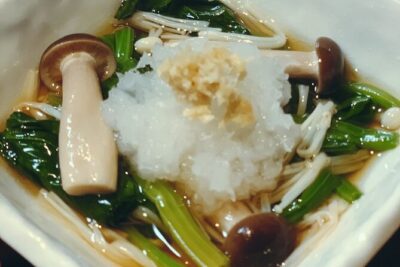
Simmered vegetables show the quieter side of Japanese food. The dish uses seasonal ingredients, so the exact vegetables and flavors can change during the year. That seasonal approach is central to Japanese cooking, where the point is not to force the same menu in every month.
The fresh dashi provides a base, while the vegetables bring their own texture and flavor. You will learn how ingredients are prepared and seasoned so they remain distinct rather than turning into one soft mixture.
This part of the class also connects food with Kyoto’s calendar. You may not receive a long lecture on seasonal customs, but the changing produce gives you a clear example of how Japanese home meals reflect the time of year. It is a more useful lesson than simply tasting a dish and being told that it is seasonal.
Making chicken teriyaki with traditional flavors
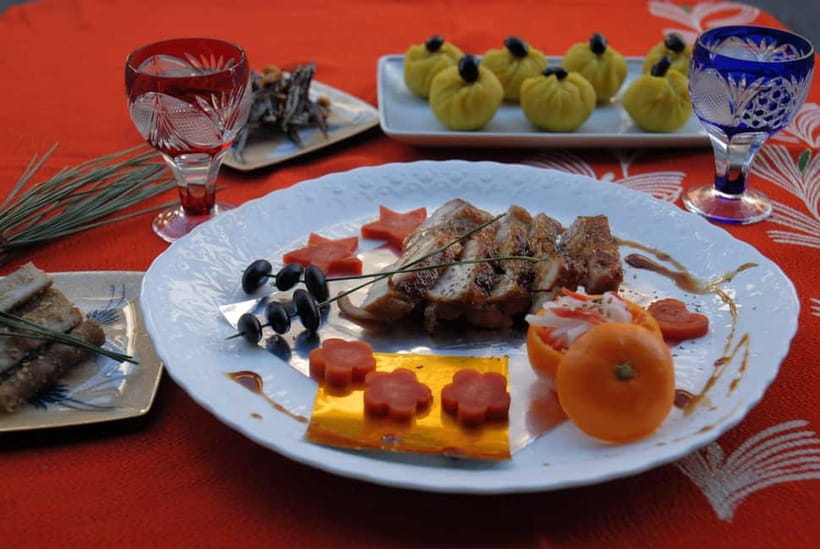
Chicken teriyaki adds a familiar dish to the menu. Many people outside Japan already know teriyaki, but preparing it in a home-cooking class gives you a chance to examine the balance of sweet and savory seasoning rather than treating it as a bottled sauce.
The class uses additive-free seasonings and traditional flavors. That does not mean the food will be austere or difficult. The stated aim is delicious, healthy food that Japanese families can prepare regularly.
You make the dish as part of the larger meal, alongside the vegetables, omelet, and miso soup. This combination helps you understand how a Japanese table is put together. Instead of one large main course, you get several modest dishes with different textures and flavors.
Finishing with miso soup and a shared meal
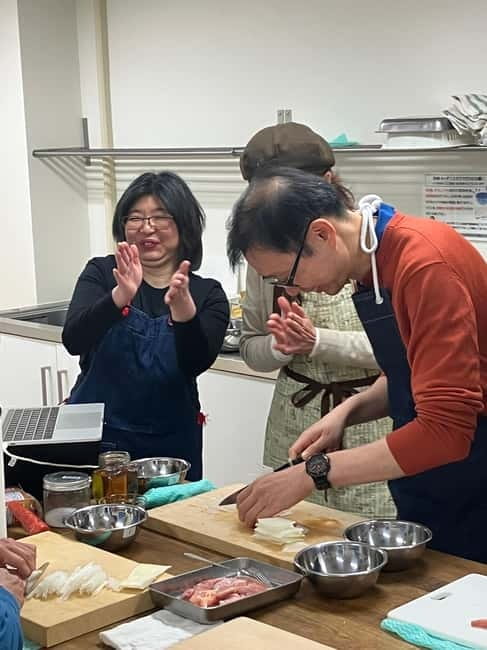
Miso soup completes the cooking sequence. By this point, you have already made dashi, so the soup becomes another lesson in using the stock as a foundation. The class also includes setting the table and plating the dishes attractively.
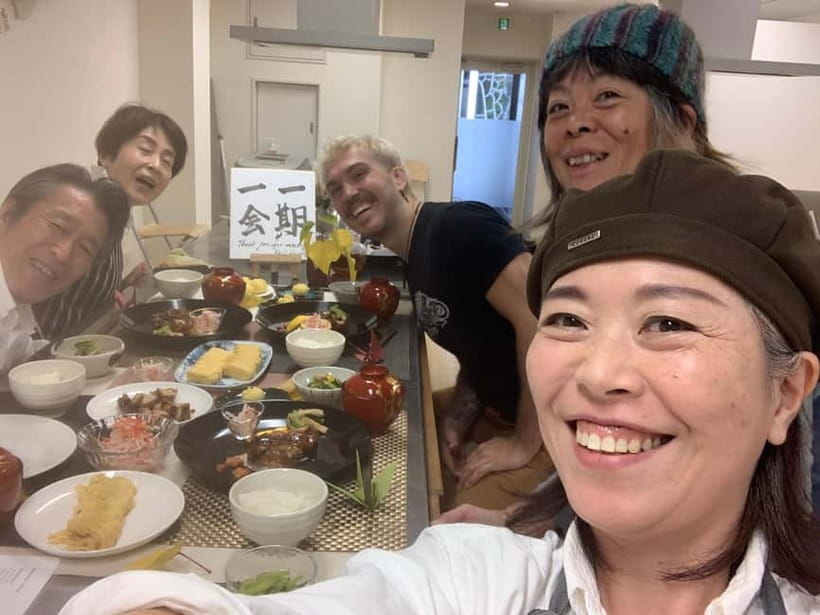
I like that the meal is part of the class rather than an afterthought. You eat what you have prepared, which lets you judge the seasoning and texture while the process is still fresh. It also turns the session into a social experience in a local home, not just a recipe demonstration.
The included meal covers all the dishes made during the class. Aprons and cloths are supplied, and the ingredients are included. A dashi soup set is not included, so you should not assume that the tools or ingredients for making stock at home are part of the package. Merchandise is also separate.
What the 122 dollar price buys you
At 122 dollars per person, this is not a cheap meal. You can find less expensive food in Kyoto, and a restaurant dinner will usually take less time and require no cooking.
The value comes from the instruction and the private format. You are paying for a 2.5-hour lesson, the food, ingredients, apron and cloth rental, English-language teaching, and the chance to cook in a traditional townhouse. You also leave with methods that can be repeated at home, especially the dashi, omelet, simmered vegetables, and teriyaki.
The price makes the most sense if you care about Japanese food beyond the meal in front of you. If you only want to eat local dishes, spend the money at a restaurant. If you want to understand how those flavors are built, the class offers more lasting value.
The activity information describes the duration as one day, while the class schedule says two hours and 30 minutes. Plan around the 2.5-hour session, but confirm the start time and meeting details when you reserve.
Fitting the class into a day in central Kyoto
The location works well with a sightseeing plan. Heian Shrine, Gion, Yasaka Shrine, and Kyoto Imperial Palace are all described as roughly a 15 to 20 minute walk away. That gives you several ways to shape the day.
You could visit a shrine or palace area first, attend the cooking class, and then continue toward Gion. Or you could schedule the class between sightseeing stops and treat the meal as your main lunch or early dinner. Since the activity itself takes about 2.5 hours, avoid placing it between attractions with tight timed entry.
The station access is manageable, but allow time for the pickup. The instructor will come to the station after your reservation is confirmed, so watch for the exact instructions. Because Sanjo and Shijo are both named in the supplied details, get the final meeting point in writing before the day of the class.
The English instruction and private-group format
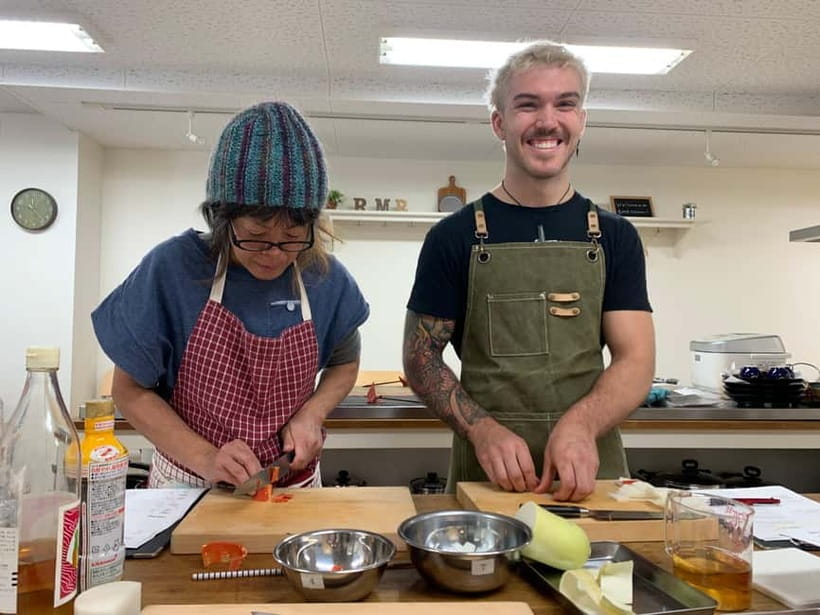
The class is offered in English. Kayo is identified as the main instructor, and the teaching team can provide translation assistance if needed. The class has received especially strong praise for clear demonstrations, friendly teaching, and the ability to communicate across language differences.
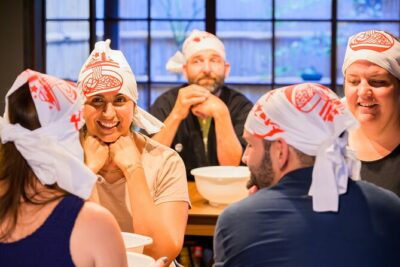
A private group can be a major advantage in a cooking lesson. You can ask about ingredient substitutions, knife handling, or how to repeat a technique at home without feeling that you are holding up a large class. The format also suits couples, families with older children, and friends who want a shared activity.
Children under six cannot participate. The material does not give a maximum age or a specific upper age limit, but the class does involve cooking and knife handling, so each group should consider its own comfort and ability.
There is one important group restriction. Men-only groups cannot participate at this home location. If your party consists only of men, contact the provider about renting another kitchen. Do this before booking rather than assuming the alternative location is automatic.
What the strongest praise tells you
The most consistent strengths are the hands-on teaching and the usefulness of the recipes. The dishes are described as simple enough to make at home, and the advice about good ingredient brands is a practical bonus.
The teaching style also earns attention. Kayo is praised for making traditional Japanese gastronomy accessible to people with different levels of kitchen experience. The language barrier was handled with English, basic Japanese, and a translator, so you should feel comfortable asking questions even if your Japanese is limited.
The food itself is another strong point. The menu is not built around rare ingredients or restaurant decoration. It is warm home cooking, made from a few carefully handled components. That simplicity is part of the appeal, but it also means the class may feel less exciting if you want elaborate sushi, wagashi, or a chef-level tasting menu.
Who should book this Kyoto cooking class
I would choose this experience if you want a quiet, personal activity that adds daily life to a Kyoto itinerary. It suits people who enjoy food, want recipes they can use at home, or prefer meeting a local teacher to watching another cultural performance.
It is also a good choice for experienced cooks. The class is accessible to beginners, but the attention to dashi, cutting methods, and omelet technique gives confident home cooks something to work on.
I would think twice if you have only a short time in Kyoto and want to spend every hour at major sights. Two and a half hours, plus station access, is a real block of the day. I would also skip it if your group wants a large social class, a restaurant-style menu, or an open-ended cooking session with no participation restrictions.
Cancellation is free up to 24 hours before the activity for a full refund, and you can reserve now and pay later. Those policies help if your Kyoto schedule is still changing, but they do not remove the need to confirm the station and group requirements.
Should you book it?
Book this class if you want to learn the foundations of Japanese home food, not just taste it. The strongest reasons are the real bonito-and-kelp dashi, the small-group instruction, the historic townhouse, and recipes you can reasonably repeat at home.
Skip it if cooking is not part of your idea of a holiday or if you want a formal restaurant experience. For everyone else, the class offers a useful balance of food, culture, and practical skill, with enough personal instruction to make the 122 dollar price defensible.
FAQ
How long does the cooking class last?
The class information gives the cooking time as two hours and 30 minutes. The activity is also labeled as lasting one day, so confirm the exact start time when booking.
Where does the class meet?
The information names Subway Shijo Station as the meeting point, about a 10-minute walk away. It also refers to Sanjo Keihan or Subway Sanjo Station and says the instructor will pick you up after the reservation is confirmed. Confirm the final meeting point directly after booking.
What dishes will I prepare?
You will make dashi, dashi-maki tamago, chicken teriyaki, simmered vegetables, and miso soup. You will also plate the dishes and set the table.
Is the class taught in English?
Yes. English is the listed teaching language. Translation support may also be used when needed.
Is the cooking class private?
Yes. The activity is offered for a private group.
Can children participate?
Children under six cannot participate.
Can a men-only group book this location?
No. Men-only groups cannot participate at this home location. You can contact the provider to ask about renting another kitchen.
Recently added around Uji
- Uji Walking Tour – Byodo-in temple and Tea Ceremony from Kyoto★ 3.5 · 3 reviews
- Kyoto: Uji Matcha Tea Museum Entry Ticket★ 5.0 · 5 reviews
- Utilising upcycled Matcha! Creating matcha incense (Uji, Kyoto)★ 5.0 · 6 reviews
- Kyoto Hidden Riverside Zen Mediation and Uji Matcha Experience★ 5.0 · 9 reviews
- Cycling Tour at Uji’s Matcha Green Tea Fields and Heritage★ 5.0 · 10 reviews
- Uji: Private immersion into Kyoto’s tea and reglious culture★ 5.0 · 17 reviews
- Kyoto Early Bird Tour in Uji and Fushimi Inari★ 5.0 · 18 reviews
- Uji Tea Ceremony and UNESCO Heritage Walking Tour★ 5.0 · 20 reviews
Cooking Classes, compared.
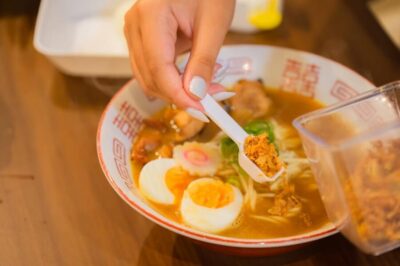
Ramen Cooking Class at a Ramen Factory with Souvenir
Read our review →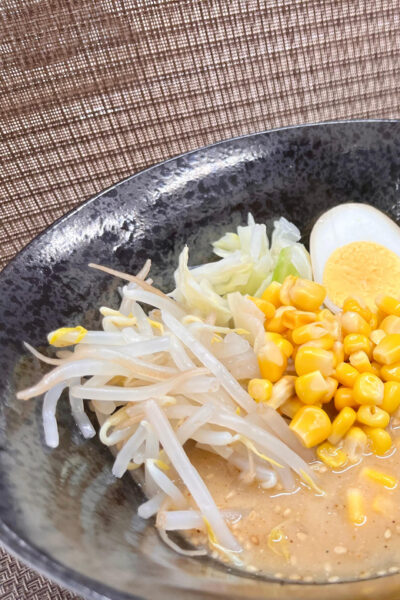
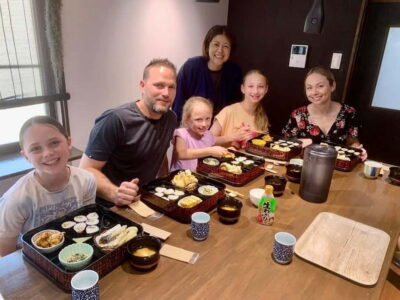
Japanese Washoku Bento Small Group Cooking Class
Read our review →
Kyoto Ramen and Gyoza Cooking Class with Professional Chefs
Read our review →
Gyoza Cooking Class in Kyoto: Traditional Japanese Dumplings
Read our review →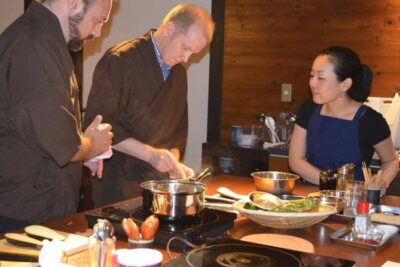
Browse the lists this tour appears in