
REVIEW · KYOTO SUSHI EXPERIENCES
Private Art Sushi Roll Class in Kyoto
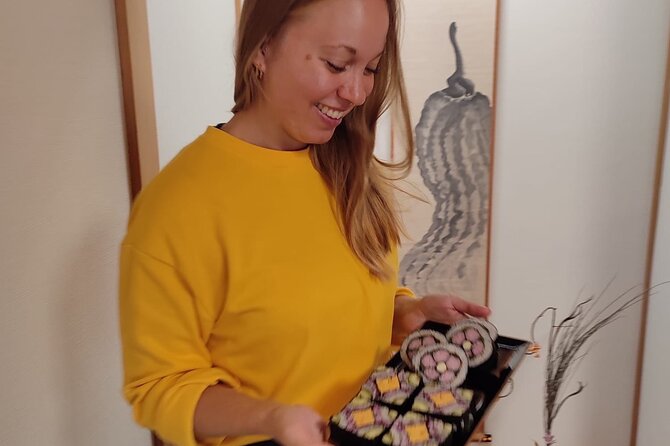
The clever part of this Kyoto cooking class is that the picture is hidden inside the sushi. In about an hour, you will build a peach-flower design from rice, nori, and colored ingredients, then slice the finished roll to reveal the pattern. It is part cooking lesson, part edible craft project.
I like the private format, since your group can work at its own pace and ask questions without a roomful of strangers. I also like the home setting, traditional clothing, tatami room, and the chance to learn from Aya, with help from her husband Manabu. The main caution is time: sixty minutes goes quickly, and one past participant felt the class may suit people with some sushi-making experience better than complete beginners.
In This Review
- Key Points Before You Book
- Building Edible Pictures in a Kyoto Home
- What Happens at 4:30 pm
- Aya’s Clear, Hands-On Teaching
- From Colored Ingredients to Peach Flower
- A Traditional Setting Without a Formal Show
- Is $93.32 a Fair Price?
- Who Will Get the Most From This Class?
- Planning Around Your Kyoto Day
- What Makes the Experience Memorable
- Should You Book the Private Art Sushi Roll Class?
- FAQ
- How long does the sushi class last?
- Where does the class meet?
- Is the class private?
- Do I need to bring socks?
- Are vegetarian or vegan ingredients available?
- What happens if I arrive late?
Key Points Before You Book
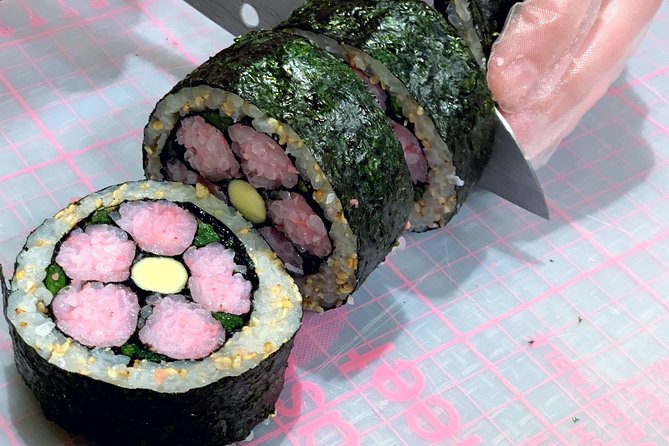
- A picture inside the roll: You create a peach-flower pattern called kazarimaki, rather than a standard plain sushi roll.
- A genuinely private class: Only your own group takes part, making this a good fit for families or friends.
- Aya leads the lesson: The class operates in English, with clear instruction and practical help from Aya and, at times, Manabu.
- Traditional Kyoto setting: You wear a kimono if you are a woman, or another traditional garment if you are a man or child, and work in a tatami room.
- Vegetarian options are available: The class uses natural food colors and offers vegan and vegetarian ingredients.
- Bring socks and arrive early: Socks are required in the tatami room, and arriving more than 15 minutes late means you cannot join.
Building Edible Pictures in a Kyoto Home
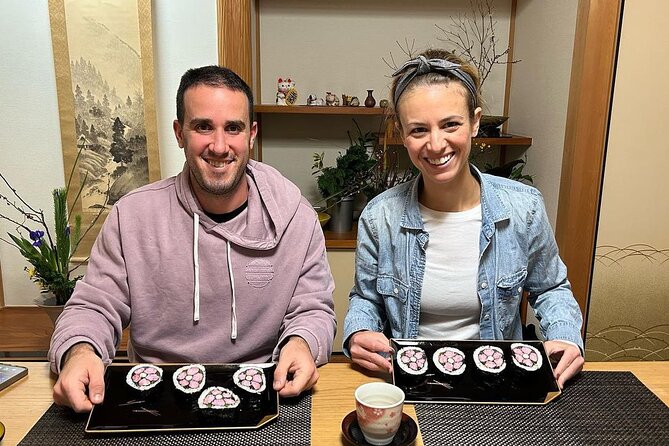
Kazarimaki means making a design inside a sushi roll. It is more demanding than rolling a simple makizushi, because each piece of rice and filling must help form the final image. The surprise comes when you cut the roll. A long, plain cylinder becomes a flower or another pattern.
This class focuses on a peach-flower design. You are not simply watching someone prepare sushi and then eating it. You will shape the components, arrange them, roll the bundle, and see how your decisions affect the cut pieces.
That makes the class a good change from sightseeing. Kyoto has plenty of temples and gardens that ask you to look quietly. Here, you use your hands and make something that you can show to family and friends later.
The ingredients include traditional sushi components and edible colors made from plants. That detail matters. The colors are not presented as artificial craft supplies, but as part of the food itself. Vegan and vegetarian choices are also available, which makes the class easier to plan for mixed groups.
Still, keep your expectations sensible. You are learning one attractive design in roughly sixty minutes, not becoming a trained sushi chef. The goal is a successful first roll, a better understanding of the technique, and the confidence to try it again at home.
More sushi counters and classes:
- Sushi Making in Kyoto! Same-day bookings welcome!
★ 5.0 · 713 reviews - The Original Small-Group Sushi Making Class in Kyoto
★ 5.0 · 436 reviews - Kyoto: Small-Group Authentic Sushi Making Workshop
★ 5.0 · 137 reviews
What Happens at 4:30 pm
The meeting point is SAKURA Experience Japanese Culture Nijo Home, at 660 Izumicho in Nakagyo Ward. The class begins at 4:30 pm and finishes back at the same place. It is near public transportation, but the supplied details do not identify a specific station, so give yourself extra time to find the address.
Punctuality matters here. If you arrive more than 15 minutes late, you will not be able to take part. That is a strict cutoff, and it makes sense for a short private lesson in which the instructor has prepared ingredients and a timed sequence.
Once you arrive, the traditional dress helps set the tone. Women receive a kimono, while men and children receive other traditional garments. The activity takes place in a tatami room, so you must bring socks. Bare feet are not allowed in the room as a matter of Japanese custom.
This is a small but important packing tip. Keep a clean pair of socks in your day bag, especially if you are wearing sandals during a warm Kyoto afternoon.
Aya’s Clear, Hands-On Teaching
Aya is the main instructor, and the class operates in English. The strongest practical feature is the step-by-step approach. One participant who had already taken a sushi-art class elsewhere preferred this lesson because the instructions were easier to follow.
That is useful context. Kazarimaki can look simple in a finished photograph, but the construction is not obvious when you first see it. Clear guidance makes the difference between a roll that reveals a recognizable flower and one that becomes a colorful spiral with no clear shape.
Aya’s husband, Manabu Ito, may also help during the class. He has taken photographs for participants and handled cleanup and dishes, allowing Aya to focus on teaching. His presence adds a friendly home-host element rather than making the session feel like a large cooking school.
The class is private, so you can ask about the ingredients, rolling method, or how to repeat the process at home. That personal attention is especially useful for families with different skill levels. A confident cook can move ahead, while a beginner can ask for help without holding up a larger group.
One point to note is that the experience is not described as a fully slow-paced lesson. The sixty-minute schedule is compact. A participant found Aya patient and welcoming but suggested that some previous sushi experience might help. I would read that as a warning to focus closely, not as a reason for beginners to avoid the class.
From Colored Ingredients to Peach Flower
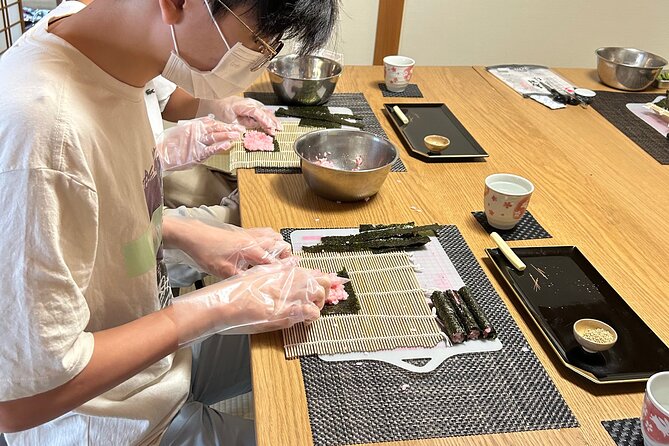
The class begins with the materials needed to make the design. You receive the sushi ingredients, natural food colors, and the tools needed for the roll. Bottled water, tea, or coffee are included, so you do not need to arrange a drink during the lesson.
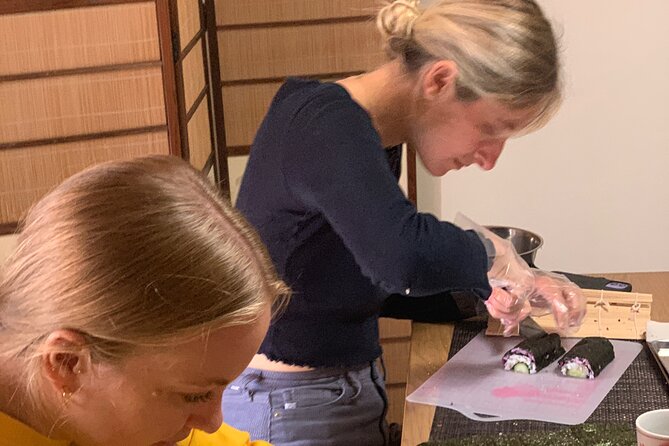
The heart of the activity is the construction. Different pieces of rice and filling must be positioned so they create parts of the flower. The colored ingredients give you visual clues, but the design still depends on careful shaping and placement.
Your instructor provides commentary as you work. The value here is not just getting a recipe. You learn why a picture can appear inside a roll, how the parts are held together, and why cutting technique affects the final result.
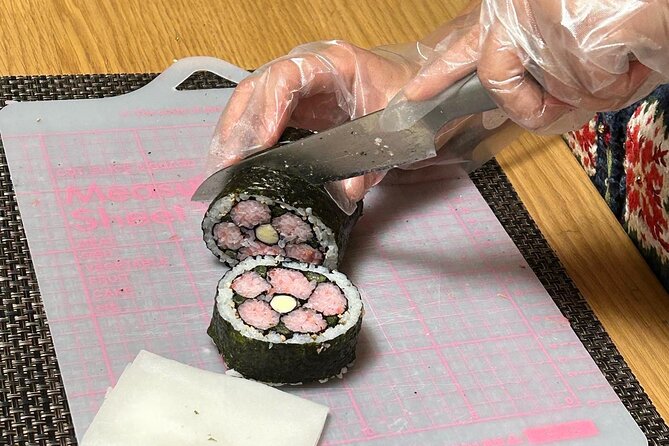
The roll is then sliced to show the pattern. That moment gives the class its payoff. Even if your flower is not perfectly symmetrical, you have made an edible image rather than a common sushi cylinder.
You also receive a booklet and certification at the end. The booklet gives you something practical to keep, while the certificate marks the activity as a finished cultural experience. It is a small touch, but it helps turn a one-hour class into something you can remember and repeat.
More workshops and classes in Kyoto:
- Kyoto: 45-Minute Tea Ceremony Lesson Experience
★ 4.3 · 2,378 reviews - Kyoto : Chopsticks Making Workshop in Gion with Engraving Option
★ 5.0 · 958 reviews - Kyoto: Samurai Sword Class by Experts in Traditional Arts
★ 4.9 · 657 reviews - Kyoto: Ramen Cooking Class at a Ramen Factory with Souvenir
★ 4.9 · 532 reviews
A Traditional Setting Without a Formal Show
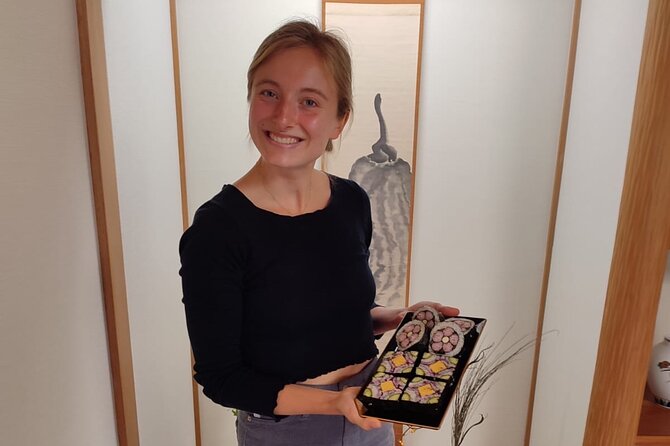
The home setting is one of the more distinctive parts of this activity. You are not seated in a generic demonstration kitchen. You enter a traditional Japanese home and work on tatami, wearing Japanese clothing for the class.
That setting gives the sushi lesson a cultural layer. The clothing and tatami are not essential to learning how to roll sushi, but they make the hour feel connected to Japan rather than like a cooking lesson you could take anywhere.
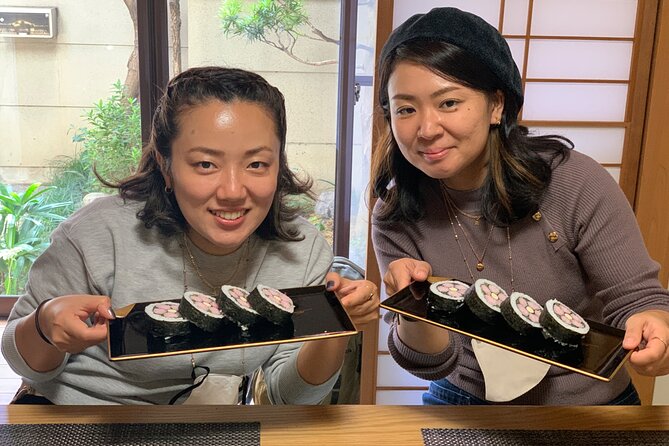
The home atmosphere also appears to be welcoming and personal. One family group, including two teenage girls and grandparents, found the chance to cook together in a traditional home especially meaningful. That combination makes the activity work well for a multigenerational group, since everyone can take part at the table.
There is a practical tradeoff. Traditional rooms have customs, and you need to follow them. Bring socks, respect the tatami area, and expect to sit in the setting provided. Babies and toddlers may sit or sleep on the tatami mat, but the activity is still a hands-on class with a short, fixed schedule.
If you are looking for a polished restaurant meal, this is not that. You are making the food yourself in a home environment. If you want a personal cultural encounter with a finished dish to eat, that difference is a benefit.
Is $93.32 a Fair Price?
At $93.32 per person, this is not the cheapest way to eat sushi in Kyoto. You could buy a meal for much less. The price makes more sense when you count what is included: private instruction, all sushi ingredients, natural food colors, traditional clothing, drinks, a booklet, a certificate, and a full hour with an English-speaking instructor.
The private setup is the key value. You are paying for an activity reserved for your own group, not simply a seat in a large class. That can be worthwhile for a family, a couple, or friends who want to learn together and have the instructor’s attention.
Group discounts are available, which may improve the price for larger parties. Since the class has a fixed one-hour format, you are also not paying for a long half-day program filled with unrelated demonstrations. You arrive, make one design, and finish with the result.
I would book it for the experience rather than the meal. The sushi you make is part of the reward, but the bigger value is learning a skill in a traditional setting and taking home a method you can try again.
For a solo visitor, the price may feel harder to justify unless you especially want a private lesson. For a family or group of friends, the shared activity and group discount make the cost easier to defend.
Who Will Get the Most From This Class?
This class suits you best if you enjoy food, crafts, and cultural activities that produce something tangible. It is also a strong choice for a family trip because children and teenagers can take part, and the finished sushi gives everyone a common project.
It is a good match for:
- Families with children or teens
- Friends who want a private Kyoto activity
- Couples looking for a short hands-on class
- Vegetarian or vegan participants, since those options are available
- People who enjoy taking food skills home and repeating them
- Visitors who want traditional clothing and a home setting
It may be less suitable if you want a long culinary course, a large menu, or a relaxed meal with no time pressure. You make a peach-flower roll in about an hour, so the class has a clear focus.
The lesson is also not ideal for anyone who dislikes sitting on tatami or cannot follow the sock requirement. The information provided does not describe special seating arrangements beyond noting that babies and toddlers may sit or sleep on the mat.
Planning Around Your Kyoto Day
The 4:30 pm start gives you a useful late-afternoon option. You can spend the morning and early afternoon sightseeing, then head to the class. Since the activity ends where it begins, you can plan your next stop after the lesson without needing to arrange a return transfer.
Do not cut your sightseeing too close. Kyoto addresses can take time to locate, and the more-than-15-minute late rule is firm. I would aim to reach the area early, then arrive at the home with time to spare.
The activity is booked about six days ahead on average, which suggests that you should not wait until the last day if your Kyoto schedule is tight. The private format can be especially important for families, since you need a time that works for everyone.
Confirmation is provided at booking, and a mobile ticket is accepted. Free cancellation is available if you cancel at least 24 hours before the local start time. Cancellations or changes made later are not accepted for a refund.
What Makes the Experience Memorable
The best part is the reveal. You spend the lesson looking at separate pieces of rice and filling, then the knife shows you the flower you have built. That simple moment gives the activity a strong sense of progress.
I also like that the class has a clear take-home purpose. With the booklet and the skills learned from Aya, you can try making artistic rolls for friends or family. It is not just a photograph from Kyoto. You leave with a process you can practice.
The social side matters, too. Cooking together gives a family something to do as a group, while Manabu’s help with photographs and cleanup lets the experience stay relaxed. The hosts’ friendly approach is part of the appeal, but the activity still depends on your willingness to participate.
The certificate is not a formal culinary qualification. Treat it as a souvenir of completing the class, not proof of professional sushi training. The real achievement is learning enough to make a patterned roll and understanding how the pieces fit together.
Should You Book the Private Art Sushi Roll Class?
Book this class if you want a personal, creative Kyoto activity and like the idea of making your own edible souvenir. The private setting, English instruction from Aya, traditional clothing, and peach-flower design give it more character than a standard sushi meal.
I would especially recommend it to families, friends, and mixed-age groups. The class gives everyone a shared task, and group discounts may make the $93.32 price easier to manage.
Think twice if you want an advanced cooking course or a long, unhurried session. One hour is enough for one design, but it leaves little room for wandering off topic. Arrive early, bring socks, and pay close attention during the construction steps.
For the right person, this is a smart way to spend one hour in Kyoto: hands-on, personal, and practical, with a flower waiting inside your finished roll.
FAQ
How long does the sushi class last?
The class lasts approximately one hour, with a scheduled start time of 4:30 pm.
Where does the class meet?
It meets at SAKURA Experience Japanese Culture Nijo Home, 660 Izumicho, Nakagyo Ward, Kyoto, 604-0015, Japan. The activity ends back at the same meeting point.
Is the class private?
Yes. Only your group participates in the activity.
Do I need to bring socks?
Yes. Socks are required to enter the tatami room. Bring them even if you plan to wear sandals.
Are vegetarian or vegan ingredients available?
Yes. The class includes vegan and vegetarian options, along with traditional ingredients and natural food colors.
What happens if I arrive late?
If you arrive more than 15 minutes after the start time, you will not be able to join the class.
Recently added around Kyoto
- Higashiyama | Kyoto: Sakura Season Private Rickshaw Tour★ 5.0 · 3 reviews
- Kyoto Kimono Rental CHAMATSU|Kimono/Yukata Rental FamilyPlan★ 5.0 · 3 reviews
- Kyoto: Half-Day Private Guided Tour to the Old Town of Gion★ 4.4 · 3 reviews
- Nara Private Customizable Half Day Tour★ 5.0 · 3 reviews
- Kansai Region Hiking Adventure in Nara Kobe Kyoto and More★ 5.0 · 3 reviews
- Full Day Nara Deer, Temple, Shrine, Activities & Tea Ceremony★ 5.0 · 3 reviews
- Nara: Essential Private Tour with Deer Park and Temples★ 5.0 · 3 reviews
- Hiking Tour for Sacred Sites in Kyoto with a Guide★ 5.0 · 3 reviews
Kyoto Sushi Experiences, compared.
The Original Small-Group Sushi Making Class in Kyoto
Read our review →
Sushi – Authentic Japanese Cooking Class – the best souvenir from Kyoto!
Read our review →
Private Kyoto Sushi Cooking Class & Tea Ceremony with Emika
Read our review →
Enjoy Sushi & Market Tour! Best for Family & Couple!
Read our review →
Sushi or Traditional Japanese Cuisine in a Kyoto Home with Emika
Read our review →Browse the lists this tour appears in