
REVIEW · COOKING CLASSES
Kyoto Udon & Tempura Cooking Class with Professional Chefs
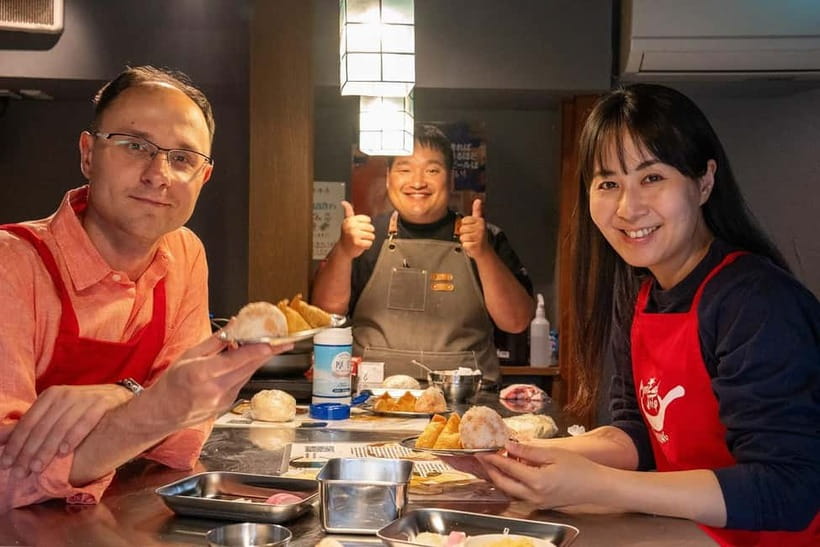
Turning plain flour and water into chewy udon is the heart of this Kyoto cooking class. You knead and roll the dough by hand with a local udon master and an English-speaking guide, then sit down to eat what you have made.
I like the small group of eight, which should give you more time at the work surface, and I like the practical recipe set you take home. The $83 price also covers the meal, two drinks, instruction, and tour photos, not just a demonstration.
The main caution is that the hands-on menu and timing may vary. One recent session lasted about 1 hour and 20 minutes rather than the advertised two hours, and included udon dough work and frying but not sushi preparation, udon cooking, or broth making.
In This Review
- Key points to know before booking
- What the Kyoto cooking class is really about
- Finding the meeting point near Kawaramachi
- Making udon from flour and water
- Rice dishes, inari sushi, and onigiri
- Frying tempura in a short class
- Eating what you prepared with a sake tasting
- How much instruction will you receive?
- Price and value at $83 per person
- Timing, menu changes, and what to clarify
- Who will enjoy this Kyoto food experience?
- Booking details that matter
- Should you book this class?
- FAQ
- Where does the Kyoto cooking class meet?
- How far is the meeting point from Kyoto-Kawaramachi Station?
- How far is it from Gion-Shijo Station?
- How long is the activity?
- Is the class taught in English?
- Is previous cooking experience required?
- What food is included?
- Are drinks included?
- What can I take home after the class?
- Can I cancel for a full refund?
Key points to know before booking
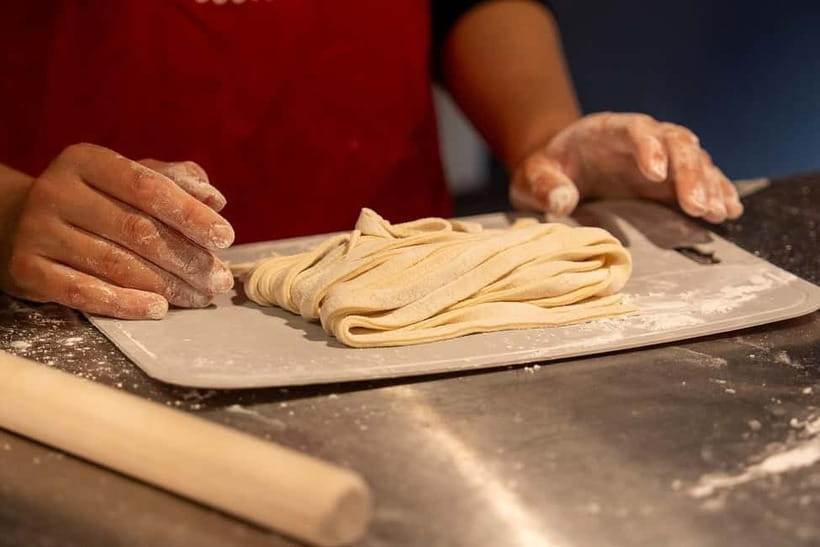
- Knead udon by hand: You start with flour and water, then mix, knead, and roll the dough yourself.
- Small English-led class: The group is limited to eight, with a local master and English guide helping at each stage.
- Several Japanese dishes: The planned menu includes udon, inari sushi, onigiri, and tempura.
- A meal with drinks: You eat the food you prepare and receive two drinks, including a mini sake tasting experience.
- Recipes for home cooking: The English recipe set uses ingredients intended to be available outside Japan.
- Check your timing expectations: A recent class finished sooner than scheduled and offered fewer cooking steps than expected.
What the Kyoto cooking class is really about
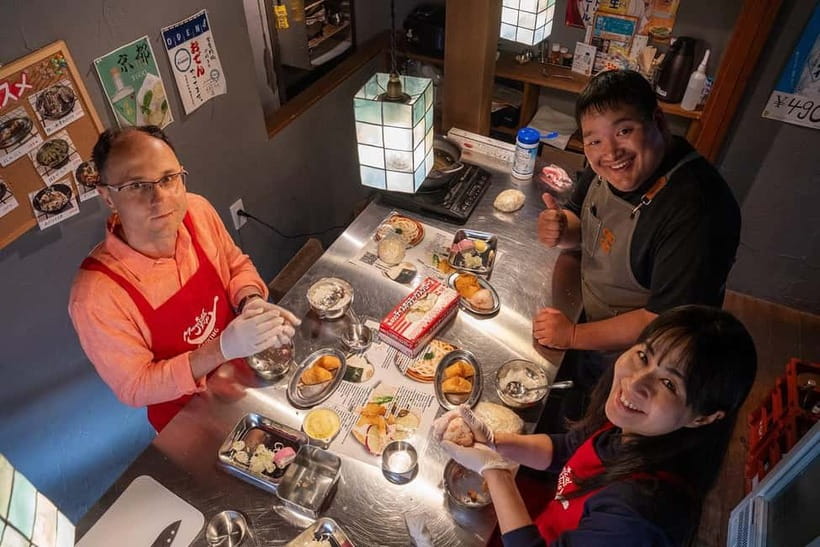
This is less a restaurant meal with a quick cooking trick and more a short lesson in Japanese home-style food preparation. The class centers on udon dough, with rice dishes and tempura adding variety to the meal.
You work with the ingredients rather than simply watching a chef. That matters because udon has a physical quality you cannot understand from a recipe alone. The dough begins as a rough mixture, then becomes smooth and elastic as you knead it.
The experience is designed for beginners. No prior cooking experience is required, and ingredients are supplied, so you do not need to shop for unusual items before arriving.
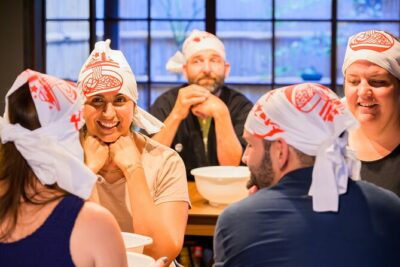
The group size is limited to eight people. That is useful in a class where everyone needs a chance to touch the dough, shape food, and work near the fryer. It also tends to make the meal more social without putting you in a large classroom.
More cooking classes in Kyoto:
- Kyoto: Ramen Cooking Class at a Ramen Factory with Souvenir
★ 4.9 · 532 reviews - Kyoto: Ramen, Gyoza, and Onigiri Cooking Class
★ 5.0 · 445 reviews - Kyoto: Japanese Washoku Bento Small Group Cooking Class
★ 5.0 · 380 reviews
Finding the meeting point near Kawaramachi
You meet at the 7-Eleven at Kyoto Kawaramachi-Takoyakushi. From Exit B3 of Kyoto-Kawaramachi Station on the Keihan Kyoto Line, the walk takes about three minutes.
From Exit 3 of Gion-Shijo Station on the Keihan Main Line, allow about nine minutes. I would build in a little extra time, especially if you are unfamiliar with Kyoto’s station exits. Large stations can be confusing, and arriving late to a small cooking class may be awkward.
The location puts you in central Kyoto, close to the Kawaramachi and Gion-Shijo areas. That makes the class easy to pair with other sightseeing, though the activity itself is focused on cooking rather than neighborhood touring.
The meeting point is a convenience store, not the cooking venue itself. Pay attention to the exact instructions you receive after booking so you know where to meet the guide and how the group will continue from there.
Making udon from flour and water
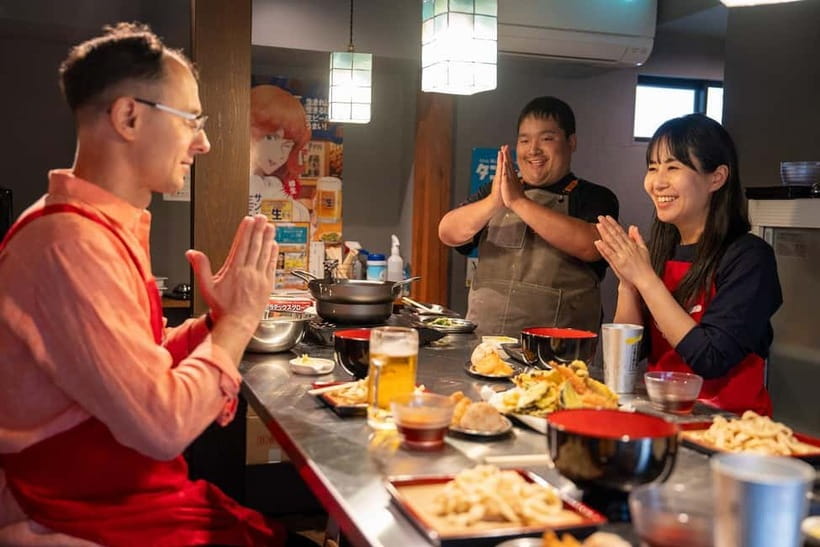
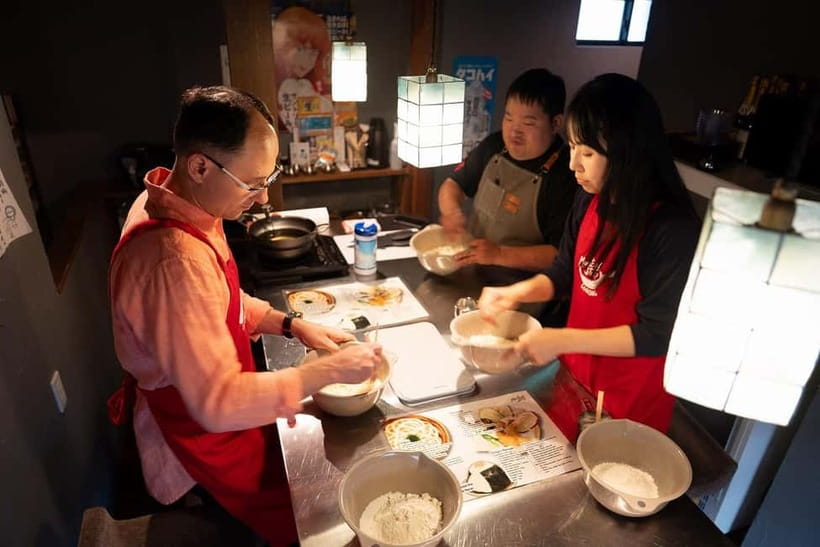
The class begins with the most memorable part: making udon dough from scratch. You mix flour and water, knead the dough by hand, and roll it until it takes on the thick, chewy shape associated with udon.
This is the part I would value most if you enjoy learning through your hands. Kneading shows you how a simple mixture changes with pressure and time. It also gives you a better sense of why fresh udon has a different texture from dried noodles bought at a supermarket.
The local udon master leads this section, while the English-speaking guide helps explain the process. You do not need to arrive with cooking skills. The point is to follow the steps, feel the dough change, and enjoy the slightly messy work.
One important detail: the advertised experience suggests making udon and enjoying it as part of the meal, but at least one recent session focused on preparing and kneading the dough rather than cooking the noodles or making the broth. If cooking the noodles yourself is essential to your decision, confirm the current format before paying.
That distinction affects the value. Making dough from scratch is a genuine skill, but it is not the same as completing a bowl of udon from flour to finished soup. You may still learn a lot, but you should not assume every step will be handled by participants.
Rice dishes, inari sushi, and onigiri
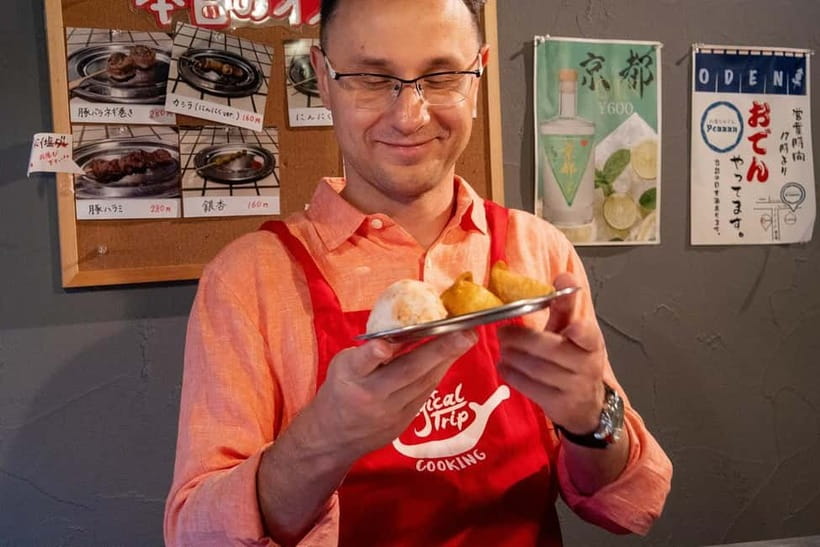
The planned class also includes Japanese rice preparation. With freshly steamed rice, you learn how it is seasoned and shaped for dishes such as inari sushi and onigiri.
Inari sushi usually involves rice tucked into a sweet-savory fried tofu pouch. Onigiri is shaped rice, often made into a portable snack or simple meal. These dishes are useful to learn because they rely more on technique and seasoning than on hard-to-find equipment.
The rice section should give the class a welcome change of pace after the physical work of kneading. You move from dough texture to rice handling, learning how a few basic ingredients can become different foods through shaping and seasoning.
The menu needs one clear warning. In one recent booking, sushi was not made, despite being part of the expected food list. That means the class may adjust the rice portion, perhaps because of time, preparation, or the format on that particular day.
If inari sushi is the main reason you want to book, ask the operator whether it will definitely be prepared during your session. The class still includes plenty of food, but the exact hands-on menu should not be treated as fixed without confirmation.
More workshops and classes in Kyoto:
- Kyoto: 45-Minute Tea Ceremony Lesson Experience
★ 4.3 · 2,378 reviews - Kyoto : Chopsticks Making Workshop in Gion with Engraving Option
★ 5.0 · 958 reviews - Kyoto: Samurai Sword Class by Experts in Traditional Arts
★ 4.9 · 657 reviews - Ninja 1-hour Hands-on Lesson by Japanese master in Kyoto -Entry
★ 5.0 · 489 reviews
Frying tempura in a short class
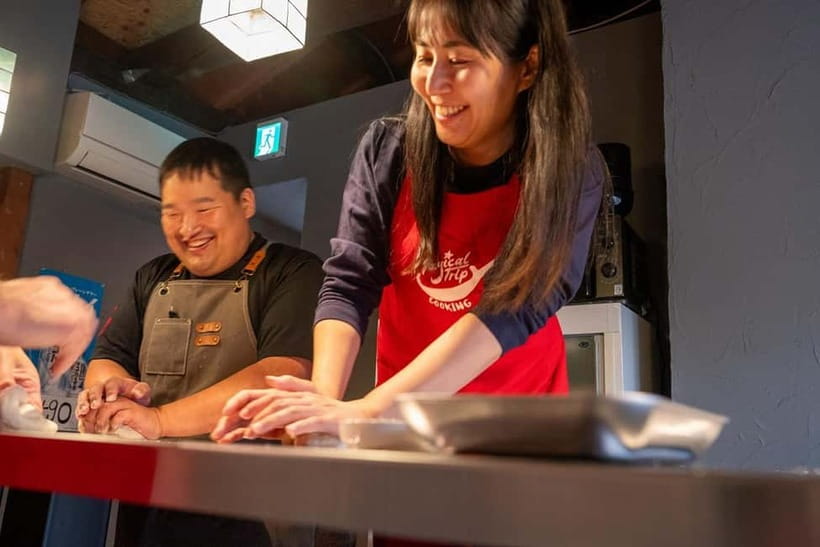
Tempura adds the most theatrical cooking step. You prepare ingredients for frying, coat them in batter, and place them into hot oil under the direction of the guide and master chef.
You can expect clear instructions, but the amount of preparation you do yourself may be limited. One recent session used premade tempura batter, with participants dipping the ingredients before frying them. That offers a taste of the process, but it is different from mixing the batter from scratch.
This is a useful point for anyone comparing Japanese cooking classes. If you want to learn the full science of tempura batter, including how to mix it and control its texture, this class may feel brief. If you mainly want to fry your own golden pieces and eat them fresh, it should still be enjoyable.
The class format appears to favor accessibility over technical depth. That makes sense for a two-hour activity with several dishes, an English guide, and a meal. The tradeoff is that each dish may receive only a short lesson.
Eating what you prepared with a sake tasting
At the end, you eat the udon, rice dishes, and tempura prepared during the class. Two drinks are included, with a mini sake tasting listed as part of the meal.
The meal is not an afterthought. Sitting down to eat gives you a chance to notice the texture of the udon and compare the dishes you shaped and fried. It also turns the class into a complete afternoon or evening activity rather than a lesson that ends at the stove.
The sake tasting adds a small piece of Japanese food culture without making the experience about drinking. You can think of it as a pairing with the meal, not a separate tasting tour.
The supplied information does not specify the sake brands, pours, or other drink choices. If you do not drink alcohol, check what the two-drink arrangement means for your booking before you arrive.
One participant described the class as taking place in a real restaurant and found the amount of food generous. That is helpful context: you should arrive ready to eat, not expecting a tiny sample after doing all the work.
How much instruction will you receive?
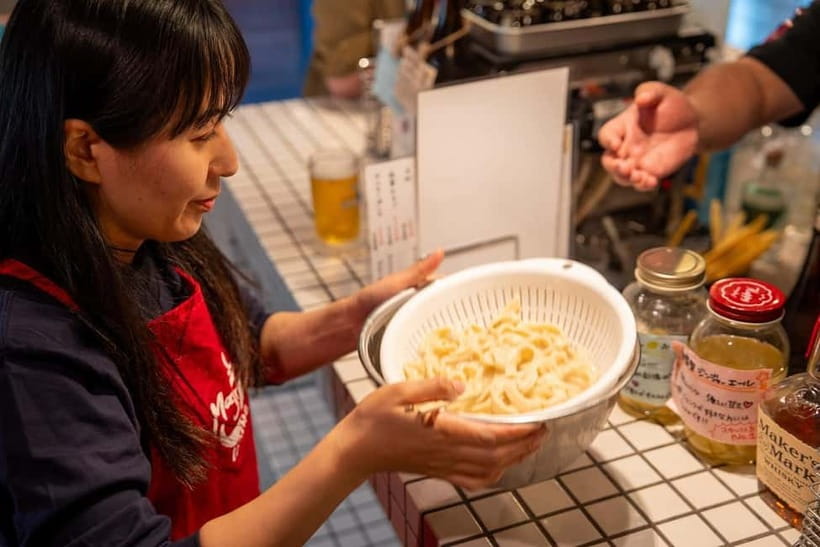
The strongest feature reported from the actual class format is the attentive guidance. The guide stays involved while you work, and the udon master provides the specialist instruction.
That is important in a hands-on class. Dough can be hard to judge from written directions, and frying requires careful timing. Having someone nearby to demonstrate and correct the process is more useful than receiving a long explanation before you begin.
The English instruction is another practical advantage. You can ask questions and follow the steps without relying on translation apps or guesswork.
Still, attentive help does not guarantee a long or technically advanced lesson. The class is built for mixed ability levels and a short schedule, so the pace may be brisk. You will likely get the most from it if you focus on the basic movements and ask questions as you go.
Because the class is limited to eight people, each participant should have a reasonable chance to take part. The supplied details do not promise individual private instruction, so expect a shared lesson rather than a one-to-one chef session.
Price and value at $83 per person
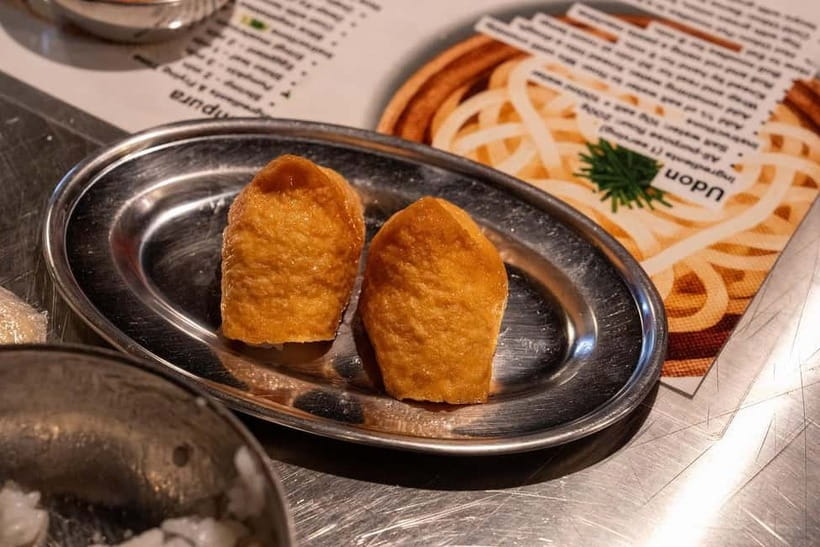
At $83, this is not the cheapest way to eat udon in Kyoto. A restaurant meal costs far less, and you can buy prepared tempura and sushi without spending two hours in a kitchen.
The price makes more sense if you value the activity as a meal plus a lesson. You receive instruction from a local udon master, English guidance, ingredients, the dishes you prepare, two drinks, recipes, and tour photos.
The take-home recipes improve the long-term value. They are written in English and intended for ingredients you can find at home, so the class does not have to end when you leave Kyoto. You can repeat the udon, rice dishes, or tempura as a reminder of the trip.
The value drops if you book mainly for a full technical course. A recent session did not include making sushi, cooking the udon, preparing broth, or mixing tempura batter. Those omissions mean you may learn the foundations without receiving a complete start-to-finish lesson for every dish.
I would consider $83 fair for a friendly small-group food activity with a meal and drinks. I would not consider it a bargain if your goal is an intensive chef-level class or a guaranteed full menu.
Timing, menu changes, and what to clarify
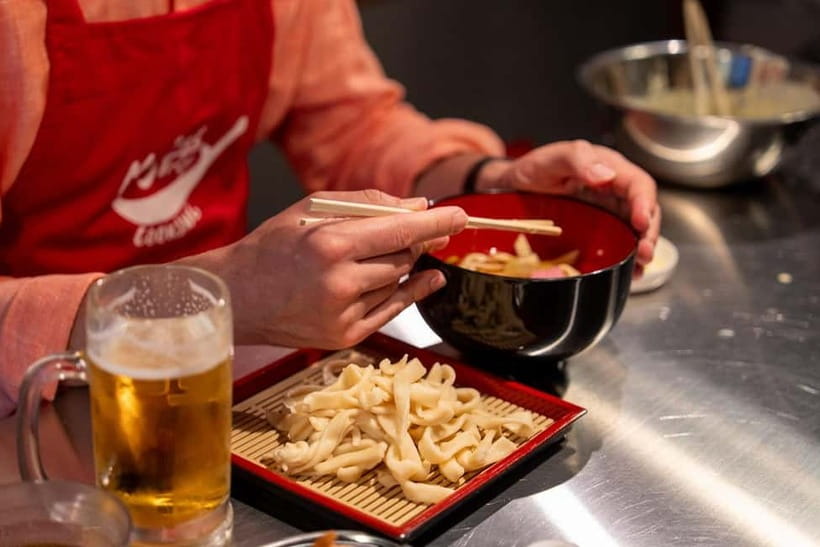
The stated duration is two hours, with starting times based on availability. One recent booking lasted around 1 hour and 20 minutes including the meal. Another activity description connected with the experience referred to a longer 2.5-hour expectation, so timing has not been consistent.
That is the clearest practical weakness. If you have a train, dinner reservation, or evening show afterward, leave a generous buffer. Do not plan another appointment immediately after the scheduled finish.
The menu may also be adjusted. The planned food includes udon, inari sushi, onigiri, and tempura, but the exact hands-on steps can differ. You might shape rice without making inari sushi, or fry prepared ingredients without mixing the batter.
Before booking, ask two direct questions:
- Will I cook the udon and make the broth, or only prepare the dough?
- Will I make inari sushi and mix the tempura batter from scratch?
These questions do not take away from the fun. They simply help match your expectations to the session you will actually attend.
Who will enjoy this Kyoto food experience?
I would recommend it most to first-time visitors who want a friendly introduction to Japanese cooking. You get several familiar food categories in one sitting, and the hands-on format makes the lesson easy to remember.
Families can also consider it because the activity is suitable for all ages and requires no prior cooking experience. Adults may need to help younger children with certain tasks, but the small group and guided format should make participation manageable.
It suits people who enjoy eating what they make, even if they are not serious cooks. The pleasure here comes from the process: kneading dough, shaping rice, frying ingredients, and sitting down together afterward.
It may not suit you if you want a quiet meal, a private class, or a detailed professional course. It is also a weaker choice if the exact inclusion of inari sushi, homemade tempura batter, cooked udon, and broth is non-negotiable.
Booking details that matter
Free cancellation is available up to 24 hours before the activity for a full refund. You can also reserve now and pay later, which helps if your Kyoto schedule is still changing.
The class is conducted in English. Ingredients are provided, and the listed inclusions cover udon, tempura, and inari sushi, two drinks, the udon master and local guide, recipes, and tour photos.
The activity is in Honshu, Japan, and the meeting point is central Kyoto. Since the group is capped at eight, book ahead if you want a specific starting time, though the supplied information does not give a fixed daily schedule.
Should you book this class?
Book it if you want a short, social introduction to Japanese cooking with a real meal at the end. The attentive guide, local udon master, English recipes, and small group are the strongest reasons to choose it.
Go in expecting a practical taste of several dishes, not a complete culinary course. The most dependable hands-on feature appears to be the udon dough, while the rice, tempura, broth, and cooking steps may vary.
At $83, I think the class is worthwhile for people who place a premium on doing something rather than simply eating. Just confirm the current duration and menu if you have a tight schedule or a particular dish in mind.
FAQ
Where does the Kyoto cooking class meet?
The meeting point is the 7-Eleven at Kyoto Kawaramachi-Takoyakushi.
How far is the meeting point from Kyoto-Kawaramachi Station?
It is about a three-minute walk from Exit B3 of Kyoto-Kawaramachi Station on the Keihan Kyoto Line.
How far is it from Gion-Shijo Station?
The meeting point is about a nine-minute walk from Exit 3 of Gion-Shijo Station on the Keihan Main Line.
How long is the activity?
The stated duration is two hours. One recent booking lasted about 1 hour and 20 minutes including the meal, so the actual timing may vary.
Is the class taught in English?
Yes. The activity includes an English-speaking local guide and an udon master.
Is previous cooking experience required?
No. The class is designed for people without prior cooking experience.
What food is included?
The listed food includes udon, tempura, and inari sushi. The class description also includes rice preparation for onigiri and inari sushi.
Are drinks included?
Yes. Two drinks are included, along with a mini sake tasting experience.
What can I take home after the class?
You receive an English recipe set designed around ingredients that can be found at home.
Can I cancel for a full refund?
Yes. You can cancel up to 24 hours in advance for a full refund.
Recently added around Kyoto
- Higashiyama | Kyoto: Sakura Season Private Rickshaw Tour★ 5.0 · 3 reviews
- Kyoto Kimono Rental CHAMATSU|Kimono/Yukata Rental FamilyPlan★ 5.0 · 3 reviews
- Kyoto: Half-Day Private Guided Tour to the Old Town of Gion★ 4.4 · 3 reviews
- Nara Private Customizable Half Day Tour★ 5.0 · 3 reviews
- Kansai Region Hiking Adventure in Nara Kobe Kyoto and More★ 5.0 · 3 reviews
- Full Day Nara Deer, Temple, Shrine, Activities & Tea Ceremony★ 5.0 · 3 reviews
- Nara: Essential Private Tour with Deer Park and Temples★ 5.0 · 3 reviews
- Hiking Tour for Sacred Sites in Kyoto with a Guide★ 5.0 · 3 reviews
Cooking Classes, compared.
Ramen Cooking Class at a Ramen Factory with Souvenir
Read our review →
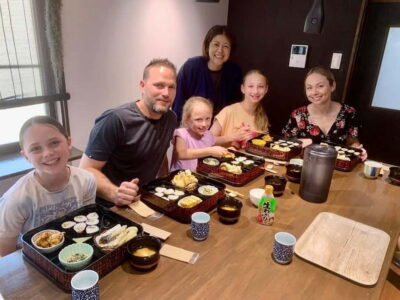
Japanese Washoku Bento Small Group Cooking Class
Read our review →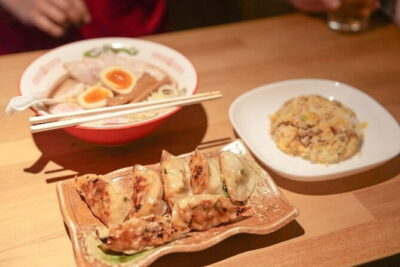
Kyoto Ramen and Gyoza Cooking Class with Professional Chefs
Read our review →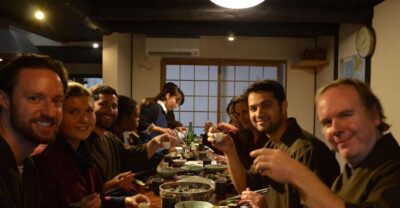
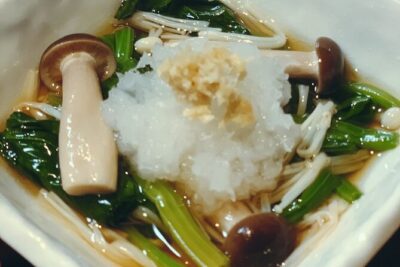
Gyoza Cooking Class in Kyoto: Traditional Japanese Dumplings
Read our review →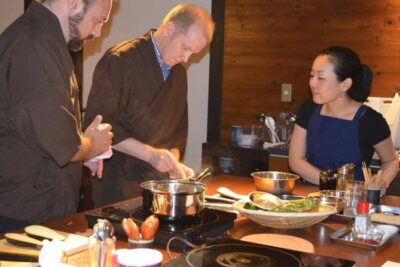
Browse the lists this tour appears in