
REVIEW · KYOTO CALLIGRAPHY CLASSES
Kyoto Ninenzaka : Japanese Calligraphy Class in Townhouse
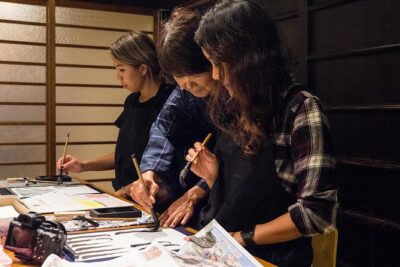
The best part of this 50-minute shodō class is its setting. You leave the busy Ninenzaka street and work with brush, ink, paper, and quiet concentration in a Kyoto townhouse near Kiyomizu Temple. The master and assistant give careful, patient guidance, so you do not need Japanese language skills or any art background.
I like the small-class feel and the useful location. You can pair the lesson with Kiyomizu Temple and the Ninenzaka lanes without spending half a day getting across Kyoto. The main consideration is time: 50 minutes is enough for a satisfying introduction, but not enough to become comfortable with more complex kanji.
In This Review
- Key Points
- Why This Kyoto Calligraphy Class Works
- Finding the Townhouse Near Ninenzaka
- The First Lesson: Tools, Ink, and Etiquette
- Learning to Hold the Brush
- Basic Strokes Before Basic Kanji
- Writing Your Own Kanji
- What the $49 Price Buys You
- Clothes, Socks, and Things to Leave Behind
- Who Will Enjoy This Experience Most
- Timing and Booking Advice
- Is This Kyoto Calligraphy Class Worth Booking?
- FAQ
- Where is the Japanese calligraphy class located?
- How long does the calligraphy experience last?
- How much does the class cost?
- Do I need Japanese or art experience?
- Is the class taught in English?
- What should I bring?
- Can I take my calligraphy home?
Key Points
- Brush, ink, and paper basics: Learn how the traditional tools work before writing.
- Patient instruction: The master and assistant demonstrate brush pressure, balance, and stroke direction.
- Near Kiyomizu Temple: Find the townhouse at the end of the alley beside the Starbucks on Ninenzaka.
- A personal souvenir: Keep the kanji you create, along with an original calligraphy booklet.
- Beginner-friendly format: No Japanese or artistic experience is required.
- Practical preparation: Wear socks and clothes that can get dirty, and leave large bags behind.
Why This Kyoto Calligraphy Class Works
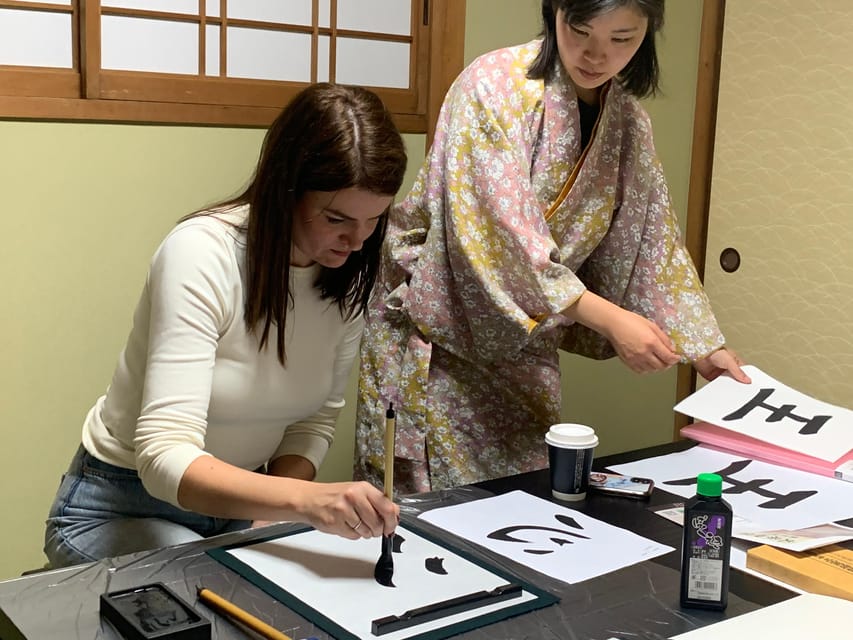
Japanese calligraphy, or shodō, is more than writing attractive characters. It asks you to control speed, pressure, spacing, and posture with one brush. A simple line can look heavy, thin, hesitant, or confident depending on how you move.
That makes this experience a good change of pace from Kyoto sightseeing. At temples and shrines, you look, listen, and take photographs. Here, you slow down and make something with your hands. The activity gives you a small window into a traditional practice without asking you to commit to a long workshop.
The class begins with an introduction to calligraphy and its place in Japanese culture. You learn the basic ideas behind the craft, along with its connection to Japanese customs and seasonal expressions. This context matters because the characters are not just decorative symbols. Their shape, meaning, and presentation all carry weight.
You should arrive ready to pay attention. Calligraphy rewards a calm approach, and the class includes a meditative preparation period before the main writing begins. That quiet setup is part of the lesson, not wasted time.
More calligraphy classes:
- Kyoto: Calligraphy class at Buddhist temple in city center
★ 5.0 · 167 reviews - Kyoto: Japanese Calligraphy Class
★ 4.8 · 89 reviews - Kyoto: Japanese Calligraphy Workshop
★ 4.7 · 84 reviews
Finding the Townhouse Near Ninenzaka
The meeting point is near Kiyomizu Temple, at the end of the alley beside the Starbucks on Ninenzaka. This is a convenient place to add to a day in eastern Kyoto, though Ninenzaka can be crowded and easy to navigate slowly.
Do not treat the address as a place to rush through. Give yourself enough time to locate the alley, especially if you are coming from the temple or moving through the sloping lanes. Transportation to the venue is not included, so you arrange your own way there.
The location is one of the class’s strongest practical features. You can schedule it before or after Kiyomizu Temple, then continue through Ninenzaka and nearby Higashiyama streets. The class itself offers a quiet pause in a district known for traditional buildings, shops, and foot traffic.
The townhouse setting also fits the subject better than a generic activity room would. You are learning a Japanese art in a place that feels connected to the old city around you. The supplied details do not promise a particular architectural feature or view, so I would book it for the atmosphere and location rather than for sightseeing from the room.
The First Lesson: Tools, Ink, and Etiquette
The instructor introduces the main tools: the brush, ink stick, inkstone, paper, and paperweight. You learn what each item does and how to handle and care for it.
For a first-time student, this is useful preparation. A brush does not behave like a pencil, and Japanese calligraphy is not simply a matter of tracing printed letters. The ink, paper, and pressure from your hand all affect the result.
You also learn how to prepare the paper and use the paperweight. This stage gives the class a deliberate rhythm. Instead of sitting down and immediately copying a character, you first arrange the materials and prepare your working space.
That preparation may appeal to you if you enjoy crafts, quiet cultural activities, or traditional processes. If you want constant action, it might feel slow. I think the slower start is worthwhile because it helps you understand why the practice has a calm, focused character.
The instructors speak English, and the class is designed for beginners. You do not need to read Japanese before arriving. You also do not need to draw well. The important skills are listening, watching the demonstration, and controlling the brush as best you can.
Learning to Hold the Brush
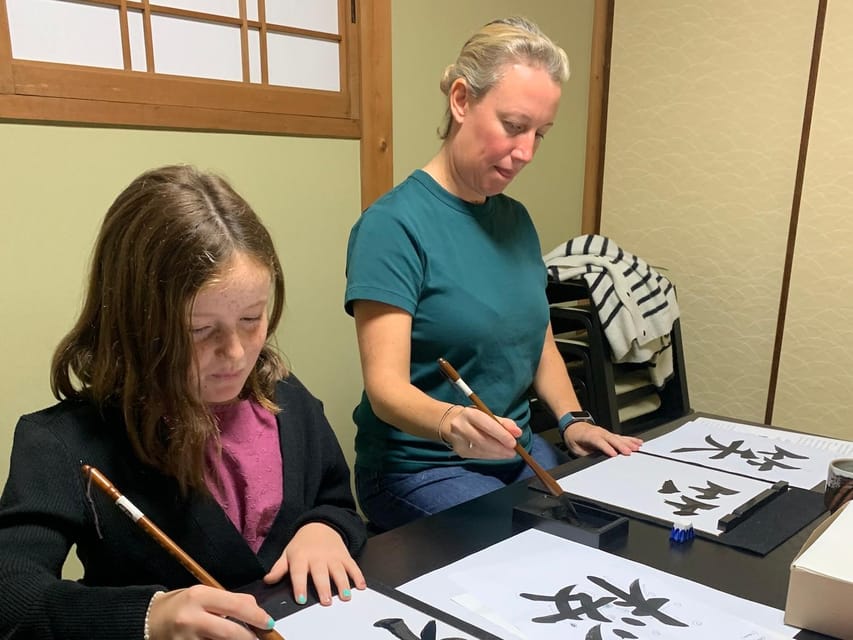
Brush handling is the practical heart of the lesson. The instructor shows you how to hold the brush and how to adjust pressure as you move across the paper.
This sounds simple, but it is where the experience becomes more than a souvenir activity. A brushstroke changes when you press harder, lift sooner, slow down, or change direction. You begin to see why a character needs both structure and movement.
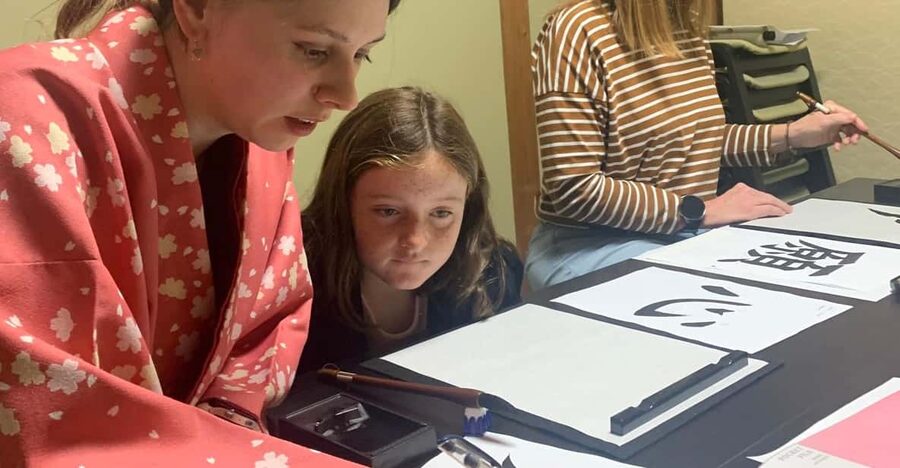
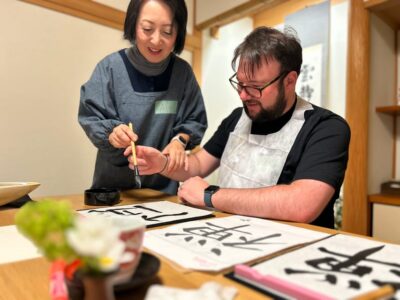
The master and assistant guide you through the process rather than leaving you to guess. That support is especially valuable in a small class, where you have room to ask questions and receive corrections. A previous participant specifically appreciated the patient teaching and the chance to ask questions during a small-group session.
Expect to make imperfect strokes. That is normal, and it is part of understanding the technique. The goal is not to produce a museum piece in under an hour. The goal is to feel how the brush responds and to recognize the basic rules behind a balanced character.
More workshops and classes in Kyoto:
- Kyoto: 45-Minute Tea Ceremony Lesson Experience
★ 4.3 · 2,378 reviews - Kyoto : Chopsticks Making Workshop in Gion with Engraving Option
★ 5.0 · 958 reviews - Kyoto: Samurai Sword Class by Experts in Traditional Arts
★ 4.9 · 657 reviews - Kyoto: Ramen Cooking Class at a Ramen Factory with Souvenir
★ 4.9 · 532 reviews
Basic Strokes Before Basic Kanji
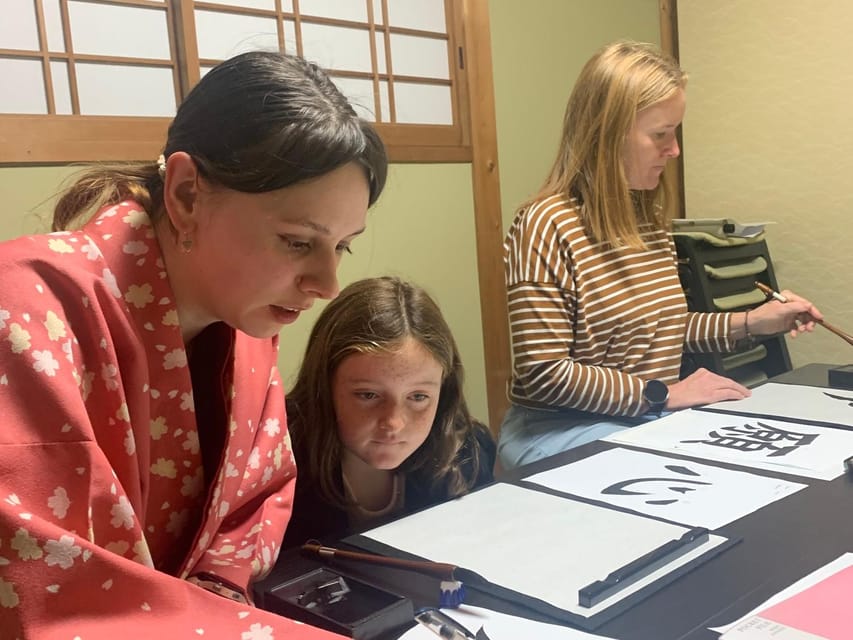
Before writing complete kanji, you practice lines, strokes, dots, and sweeps. This sequence makes sense. You learn the building blocks first, then use them to form a character.
The instructor pays attention to vertical and horizontal balance, letter placement, and the relationship between empty space and ink. These details help you understand why a character can look neat even when it contains only a few marks.
This is also where the 50-minute length becomes a clear limit. You can learn the foundations, but you will not cover a large range of characters or advanced styles. The class is best viewed as a focused introduction rather than a full course in Japanese calligraphy.
I like that the lesson gives you time to repeat the movements before asking you to create the final work. You get a chance to adjust your grip and pressure. That small practice period can make the final kanji feel like something you produced, not something the instructor made while you watched.
Writing Your Own Kanji
The class moves from individual techniques to simple kanji characters. You focus on balance, placement, and the order and quality of the strokes.
The supplied information does not specify which character you will write. That may depend on the lesson, the season, or the instructor’s choice. You can expect a basic character suitable for a beginner, with guidance from the master and assistant as you work.
Seasonal themes and expressions add cultural context. Japanese writing often connects language with the time of year, nature, celebrations, and personal qualities. A seasonal approach gives the final piece more meaning than an arbitrary symbol selected only because it looks attractive.
You should not expect to walk away with fluent Japanese. Calligraphy teaches form and concentration, not conversational language. Still, writing one character by hand can help you remember that kanji are made of purposeful strokes, not mysterious shapes on a sign.
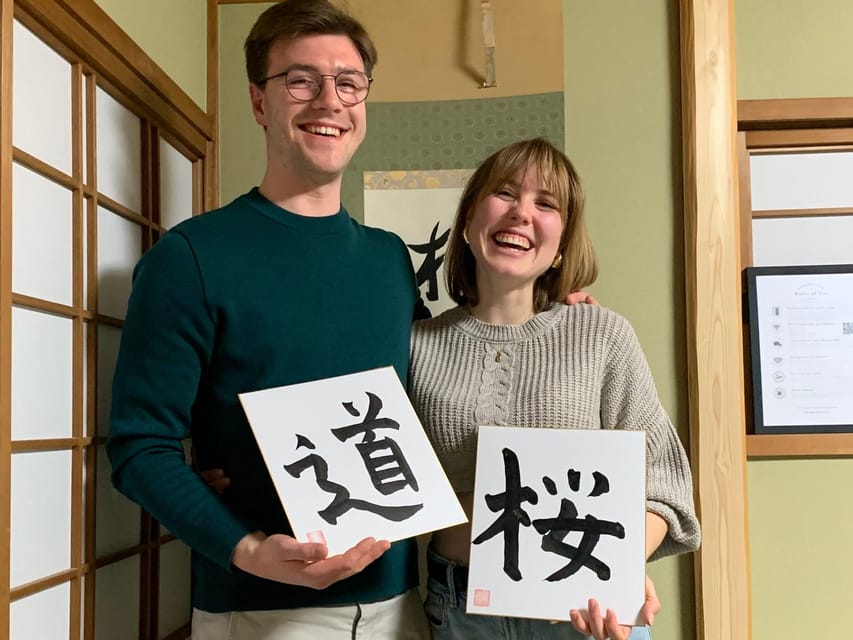
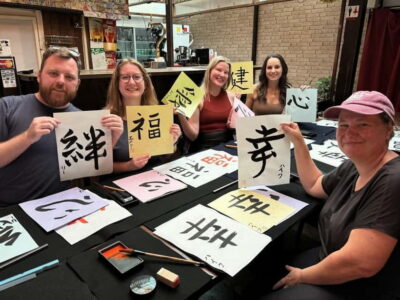
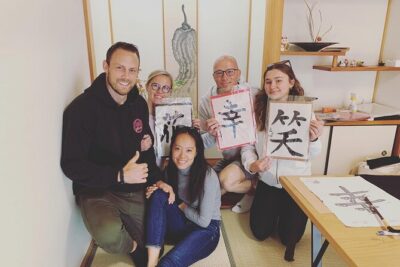
The result becomes your take-home souvenir. One participant described leaving with a handmade kanji symbol, which captures the appeal of the class. You are not merely buying a printed keepsake. You are taking home a piece of paper shaped by your own effort, with all the small irregularities that make it personal.
What the $49 Price Buys You
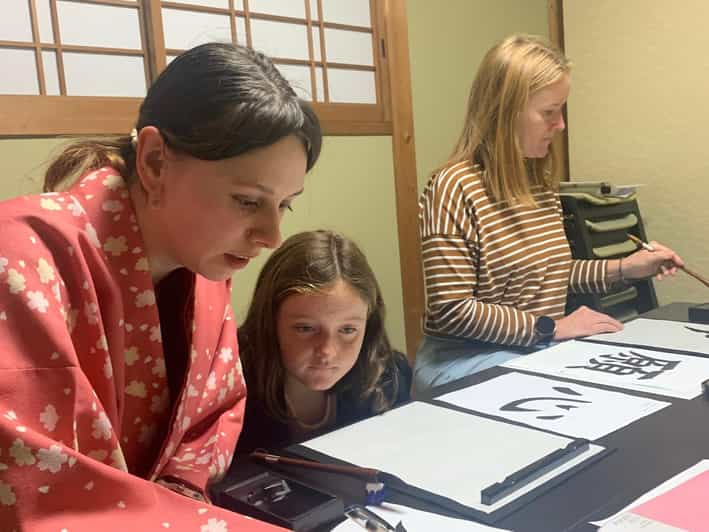
At $49 per person, this is not a cheap filler activity, but the price covers more than access to a room. You receive instruction from experienced teachers, hands-on practice with traditional tools, careful guidance, an original booklet, and your own calligraphy to keep.
The value depends on what you want from Kyoto. If you are looking for a long, technical workshop, 50 minutes may feel brief for the cost. If you want a compact cultural activity in a prime sightseeing area, the price is easier to justify.
The location saves you from making a separate trip across town. You can fit the class into a Kiyomizu Temple and Higashiyama day, which gives the experience practical value as well as cultural value.
The booklet is a useful extra. Your finished character may remind you of the session, but the booklet gives you something to look back over later. The information provided does not specify its exact contents, so do not expect a complete textbook. Think of it as a guide to help you remember the tools and ideas introduced in class.
A two-piece kimono is available for an additional fee. That may appeal to you if you want a more traditional appearance for photographs or the activity itself. It is optional, not part of the $49 price, so budget accordingly.
Clothes, Socks, and Things to Leave Behind
Bring socks. The class specifically requires them, and socks can be provided for a fee if you arrive without them.
Wear clothes that can get dirty. Ink is part of the activity, and even careful students should not wear an outfit they would be afraid to mark. This is a small detail, but it can prevent an uncomfortable hour spent worrying about your sleeves or trousers.
Leave large bags and luggage behind. Selfie sticks, pets, smoking, alcohol, drugs, and noisy behavior are not allowed. Baby strollers and non-folding wheelchairs are also not permitted, including electric wheelchairs.
The class is not suitable for children under 10. For older children, the quiet setting and controlled brushwork may work well, but the supplied information does not give a recommended age beyond the minimum. An adult should judge whether a child can manage a calm, 50-minute lesson.
Who Will Enjoy This Experience Most
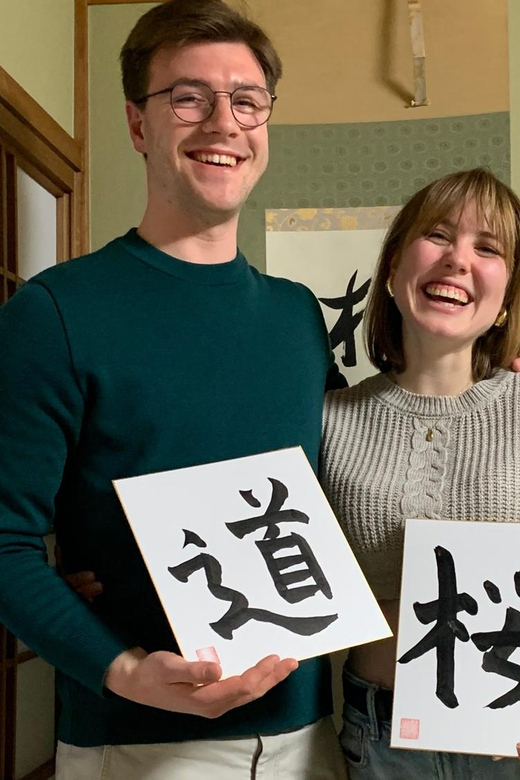
I would recommend this class to you if you want a hands-on cultural activity with a clear beginning and end. It suits first-time visitors who want to do more than photograph Kyoto, as well as repeat visitors looking for a quieter experience near Kiyomizu Temple.
It is particularly good for:
- Couples who want a shared souvenir
- Families with children aged 10 or older
- Solo visitors who enjoy crafts and focused activities
- People curious about Japanese culture but unable to read Japanese
- Anyone needing a calm break from Higashiyama sightseeing
The class also suits people who like instruction. The master and assistant demonstrate techniques and guide you through the stages. You are not expected to work out the process alone.
I would be cautious about booking it if you dislike seated, quiet activities or want a long lesson with advanced artistic training. You may also find the time short if your main aim is to study several writing styles or produce many finished characters.
Timing and Booking Advice
The class lasts 50 minutes, with starting times depending on availability. Build in extra time to find the townhouse at the Ninenzaka meeting point. The area is close to Kiyomizu Temple, but the narrow lanes and crowds can slow your walk.
You can cancel up to 24 hours in advance for a full refund. The reserve-now, pay-later option also helps if your Kyoto schedule may change. Same-day and day-before bookings may not always be accommodated, so book earlier if this activity is important to your plans.
English is available. For last-minute reservations, the class may be conducted in English if the original request cannot be accommodated. That makes the activity workable for English speakers, but last-minute booking may give you less flexibility.
Do not plan to bring luggage or a large day bag into the class. Arrange storage before you arrive, and come with socks already packed. These simple preparations will make the short session much more relaxed.
Is This Kyoto Calligraphy Class Worth Booking?
Yes, if you want a compact and genuine cultural activity near Kiyomizu Temple. The strongest reasons are the patient master and assistant, the small-class attention, the traditional tools, and the chance to take home your own kanji rather than a mass-produced souvenir.
The main limit is the 50-minute duration. You will learn the basics, not master shodō. At $49, I see the best value for someone who wants guided practice, cultural context, and a memorable object in one convenient Higashiyama stop.
Book it if you can spare an hour, do not mind a quiet lesson, and like the idea of making something imperfect but personal. Skip it if you want a longer art course, dislike getting ink on your clothes, or need an activity for children under 10.
FAQ
Where is the Japanese calligraphy class located?
The class is near Kiyomizu Temple, at the end of the alley beside the Starbucks on Ninenzaka in Kyoto.
How long does the calligraphy experience last?
The class lasts 50 minutes.
How much does the class cost?
The listed price is $49 per person.
Do I need Japanese or art experience?
No. The class is beginner friendly, and you do not need Japanese language or artistic experience.
Is the class taught in English?
Yes. English is available. For reservations made the day before or on the same day, the class may be conducted in English if the requested arrangement cannot be accommodated.
What should I bring?
Bring socks and clothes that can get dirty. Socks can be provided for a fee if you do not have them.
Can I take my calligraphy home?
Yes. You can keep the calligraphy you create as a souvenir, and an original calligraphy booklet is included.
Recently added around Kyoto
- Higashiyama | Kyoto: Sakura Season Private Rickshaw Tour★ 5.0 · 3 reviews
- Kyoto Kimono Rental CHAMATSU|Kimono/Yukata Rental FamilyPlan★ 5.0 · 3 reviews
- Nara Private Customizable Half Day Tour★ 5.0 · 3 reviews
- Kyoto: Half-Day Private Guided Tour to the Old Town of Gion★ 4.4 · 3 reviews
- Kansai Region Hiking Adventure in Nara Kobe Kyoto and More★ 5.0 · 3 reviews
- Full Day Nara Deer, Temple, Shrine, Activities & Tea Ceremony★ 5.0 · 3 reviews
- Nara: Essential Private Tour with Deer Park and Temples★ 5.0 · 3 reviews
- Hiking Tour for Sacred Sites in Kyoto with a Guide★ 5.0 · 3 reviews
Kyoto Calligraphy Classes, compared.
Calligraphy class at Buddhist temple in city center
Read our review →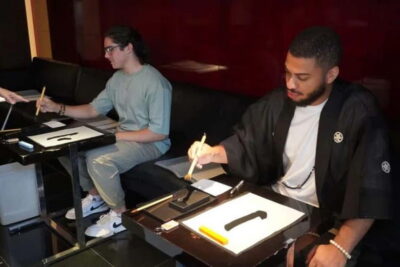
Private Japanese Calligraphy in Kyoto – Learn Shodō with a Master
Read our review →
Japanese Calligraphy – Shodo – Lesson (near Kyoto Station)
Read our review →
Browse the lists this tour appears in