
REVIEW · KYOTO CALLIGRAPHY CLASSES
Calligraphy Experience in Kyoto Townhouse
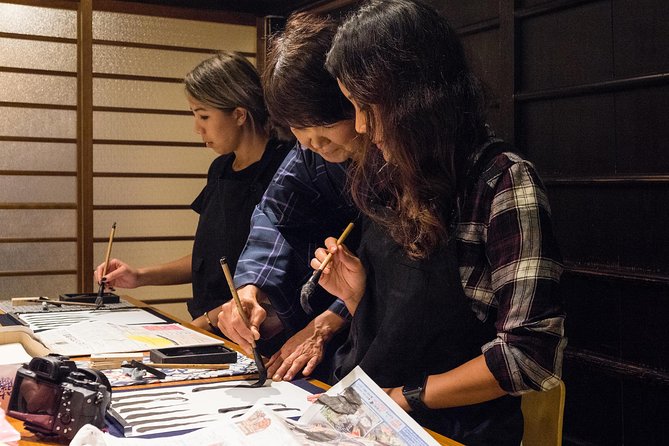
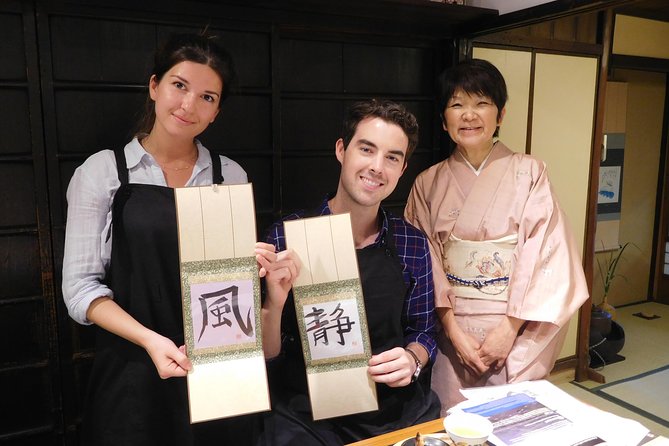
An 80-year-old wooden townhouse gives this Kyoto calligraphy lesson its special setting. You are not simply seated in a modern classroom copying characters. You learn inside a traditional home that most visitors would never enter, then use brush, ink, and paper to make your own kanji artwork.
I like the small class size, which allows instructor Toshiko to give close, calm guidance. I also like that the lesson explains the art’s Zen roots instead of treating calligraphy as a quick souvenir craft. The main thing to consider is the price: at $58.64 per person, it is not the cheapest one-hour activity in Kyoto, though the private-feeling setting and included materials add real value.
I also like the clear structure. You receive an introduction, watch a demonstration, and then practice your own work. A 17-year-old can join with an adult, and even a nervous beginner can approach kanji as pictures rather than as mysterious symbols.
In This Review
- Key points to know before booking
- Why the Kyoto townhouse matters
- The 90-minute lesson, step by step
- Introduction: calligraphy beyond black ink
- Demonstration: watch before you try
- Hands-on practice: make your own kanji art
- What makes the teaching effective for beginners
- The quiet, meditative side of the activity
- The value of $58.64 per person
- Getting to Ami Kyoto and planning your time
- Who should book this calligraphy class
- Booking, age rules, and cancellation
- Should you book Ami Kyoto’s calligraphy experience?
- FAQ
- How long does the calligraphy experience last?
- Where does the class meet?
- Are calligraphy materials included?
- How many people can join the class?
- Can children or teenagers participate?
- Can I cancel for a refund?
Key points to know before booking
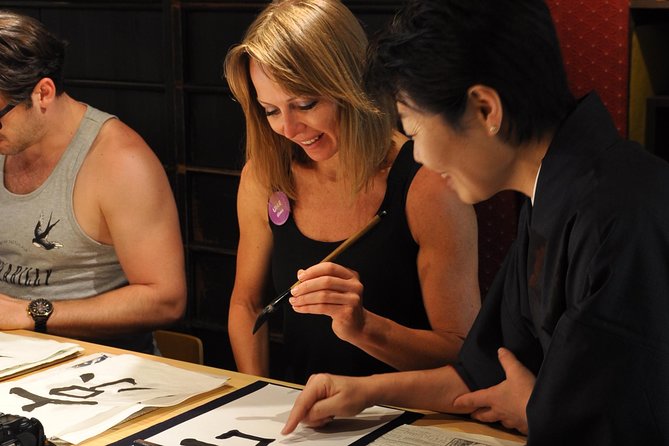
- The class takes place in a traditional Kyoto townhouse: You get access to an 80-year-old wooden home as part of the experience.
- Toshiko teaches the practical basics: Her patient, encouraging approach suits first-time students.
- The group is capped at five people: This keeps the lesson personal and gives you room to ask questions.
- All calligraphy supplies are included: Ink, paper, brushes, and other utensils are covered in the booking price.
- You take your artwork home: Your finished kanji piece becomes a useful, lightweight Kyoto souvenir.
- The activity lasts about 90 minutes: It fits well into a morning or afternoon without consuming half your day.
Why the Kyoto townhouse matters
Kyoto is full of temples, gardens, and grand wooden gates. Yet the city’s older domestic architecture is harder to see from the street. Many traditional townhouses are private homes or businesses, so you cannot simply walk inside and look around.
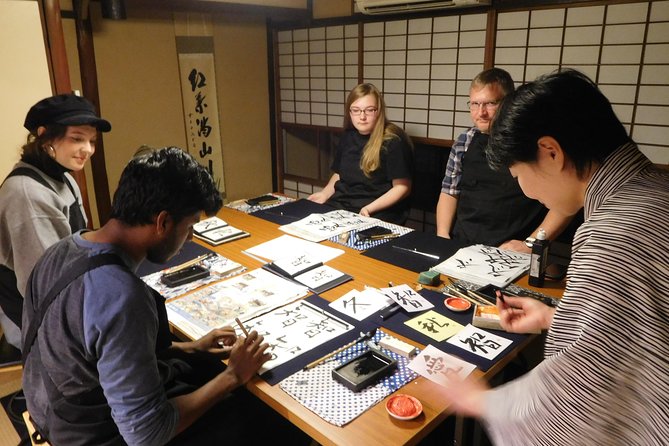
This activity gives you a reason to cross the threshold of one. The lesson is held at Ami Kyoto, at 605 Nishidacho in Shimogyo Ward. The setting is not a backdrop added after the fact. You sit in the townhouse for the full class, working with the same restrained materials that suit the room: black ink, white paper, brushes, and a quiet focus on form.
I find that useful because the surroundings help explain why calligraphy has lasted. You are not trying to rush through a list of characters. The room, the tools, and the measured pace all encourage you to slow down.
The townhouse is renovated, but the experience remains small and home-like. One especially appealing setup described by a participant involved only one other student and the instructor. The maximum is five, so your exact group may be larger, but this is still far more personal than a large cultural demonstration.
More calligraphy classes:
- Kyoto: Calligraphy class at Buddhist temple in city center
★ 5.0 · 167 reviews - Kyoto: Japanese Calligraphy Class
★ 4.8 · 89 reviews - Kyoto: Japanese Calligraphy Workshop
★ 4.7 · 84 reviews
The 90-minute lesson, step by step
The class follows three main stages: introduction, demonstration, and hands-on practice. That simple order works well. You first learn what you are looking at, then watch the movements, and only after that take control of the brush.
Introduction: calligraphy beyond black ink
At first glance, Japanese calligraphy can seem simple. The materials are spare: black ink on white paper. But the form of each character changes with the person who writes it. Pressure, speed, brush angle, spacing, and the confidence of each stroke all affect the finished piece.
The opening talk gives you the essential background and history of the art form. You also learn about its connection to Zen traditions and its meditative qualities. This context matters because it changes your goal. You are not expected to produce perfect printed characters. You are learning to pay attention to movement and balance.
The lesson also addresses a common worry: kanji can look difficult before you understand how they developed. The characters began as pictographs, so you can approach them as drawings or images rather than as a pile of unfamiliar symbols.
That is a smart way to teach beginners. You do not need to read Japanese to take part. The lesson focuses on making a visual form with care, not on testing your language skills.
Demonstration: watch before you try
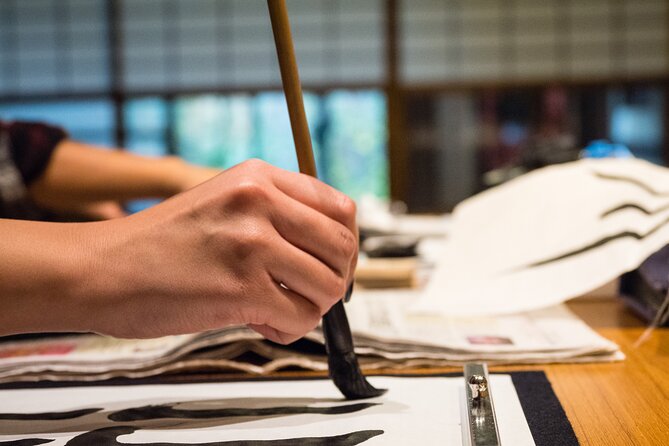
Next, Toshiko demonstrates basic calligraphy techniques. This is the part where brush control becomes easier to understand. You see how the tool moves across the paper, how much ink is used, and how each stroke contributes to the final character.
The demonstration is important because a brush does not behave like a ballpoint pen. A line can widen or narrow. A stroke can begin softly and end with force. Small changes create a very different result.
Toshiko’s role is central here. She has been described as entertaining, skilled, and encouraging, with a teaching style that helps students keep going when the first attempts look uneven. That matters in a craft where your early work may not match the neat example in front of you.
Expect to watch closely, ask questions, and then copy the basic movements. The class is designed for beginners, so you do not arrive needing previous experience.
A completely different side of Kyoto:
- PERFECT KYOTO 1-Day Bus Tour
★ 5.0 · 13,518 reviews - Kyoto: Fushimi Inari, Kinkakuji, Bamboo Grove 1 Day Bus Tour
★ 4.8 · 4,316 reviews - Kyoto: Tea Ceremony in a Traditional Tea House in Kiyomizu
★ 4.9 · 3,519 reviews - Kyoto Geisha Walking Tour: Gion District & Hidden Gems
★ 4.7 · 3,273 reviews
Hands-on practice: make your own kanji art
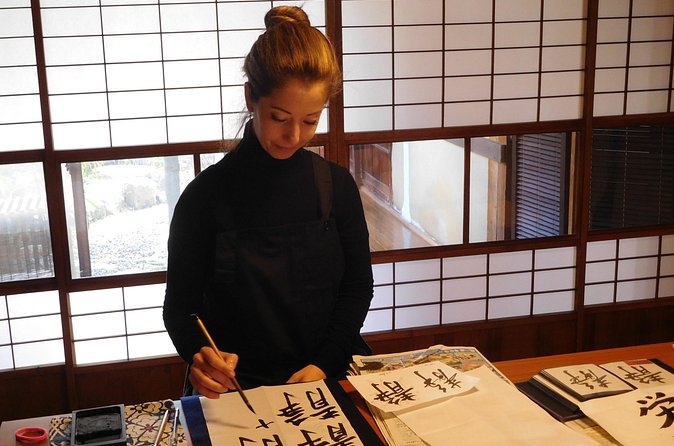
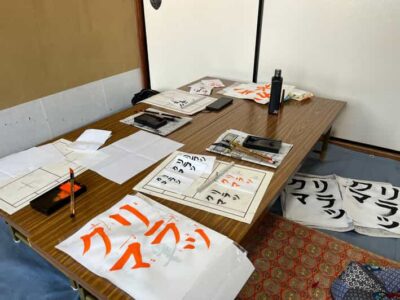
The final stage is your chance to work with the brush. You create your own calligraphy artwork under instruction, using the materials provided as part of the class.
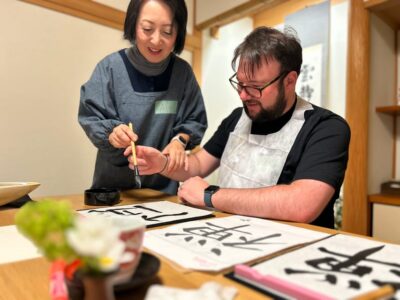
The practical value of a small group becomes clear here. With no more than five participants, Toshiko can look at your strokes and offer feedback. You are not left to guess why a line looks heavy or why a character feels unbalanced.
You may need a little patience at first. Calligraphy asks you to control both your hand and your pace. It is tempting to treat the brush like a pencil, but the activity works better when you follow the slower rhythm shown in the demonstration.
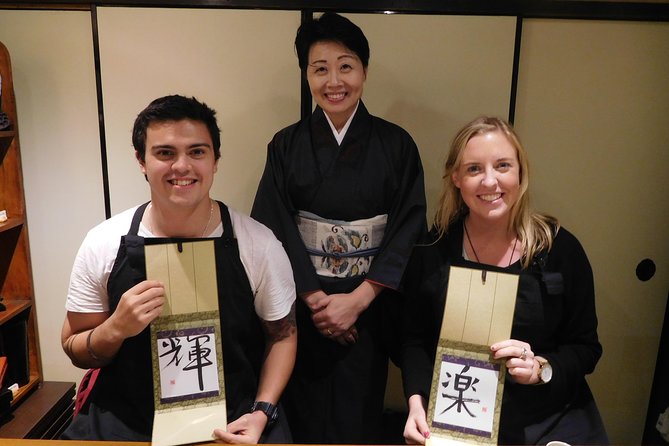
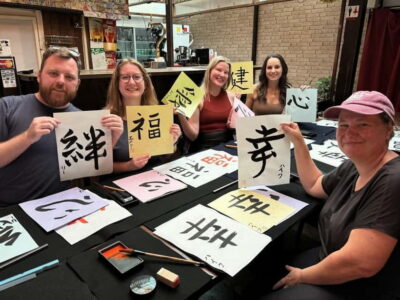
The finished work may not look like a professional master’s piece, and that is not the point. It is your own attempt, made in a traditional Kyoto setting and prepared to take home. A flat paper artwork is also easy to pack compared with a fragile ceramic or bulky craft item.
What makes the teaching effective for beginners
The strongest feature of this experience is not simply that you get to use a brush. It is the way the lesson lowers the barrier to trying something that can look intimidating.
You do not need to know how to write Japanese. You do not need artistic training. The instructor explains the background, shows you the techniques, and gives feedback as you work.
I would especially consider this class if you are hesitant about cultural workshops because you fear being the only beginner. The activity is built around first attempts. The explanation of kanji as pictographs gives you a useful mental entry point, and the instructor’s encouragement helps keep the mood relaxed.
A parent and teenager can also make a good pair here. Anyone under 18 must be accompanied by an adult. The adult does not have to take the class, but a viewing fee of 3,500 yen per person applies if the adult does not participate. That rule is worth checking when you plan the budget.
The lesson is also a good fit for people who prefer doing something rather than only looking. Kyoto offers many places where you admire traditional culture from behind a rope or gate. Here, you use the tools yourself and leave with a piece of work.
The quiet, meditative side of the activity
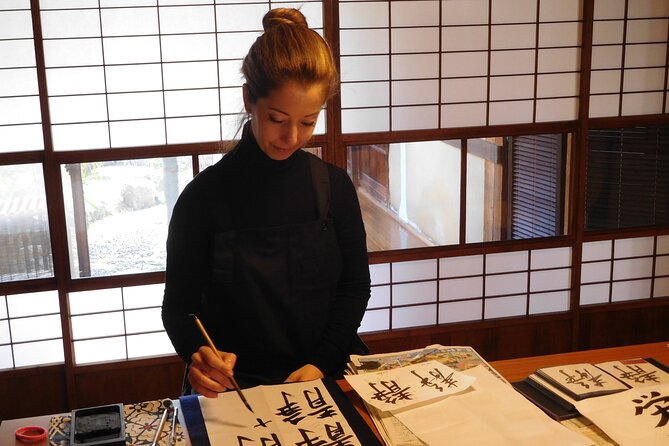
The calligraphy session is not presented as a loud or highly active attraction. Its pleasure comes from concentration. You watch the brush, manage the ink, and think about the shape of each character.
That slower pace can be a welcome break in a busy Kyoto schedule. After a morning of temples or crowded shopping streets, 90 minutes of focused work gives you a different way to experience the city.
The Zen connection adds meaning, but you should not expect a formal meditation session. This is a practical art workshop with historical and cultural explanation. The meditative quality comes from the process itself: repeated strokes, careful breathing, and attention to the page.
I like that balance. The experience does not require you to already have an interest in Zen or Japanese art. You can simply enjoy the calm setting and the satisfaction of improving over the course of the lesson.
The value of $58.64 per person
At $58.64, this is a midrange cultural activity rather than a casual drop-in craft. The value depends on what you want from your Kyoto visit.
The cost includes the materials, ink, paper, and rental of the calligraphy utensils. You also receive instruction in a group of up to five people and access to the traditional townhouse. There is no hotel pickup or drop-off, so you are paying for the workshop itself rather than transportation.
For me, the strongest value comes from the combination of three things:
- You receive direct instruction instead of only watching a performance.
- You work in a traditional home that is not normally open as a sightseeing stop.
- You take home an artwork made during the class.
If your main goal is the least expensive possible souvenir, you can find cheaper options in Kyoto. If you want a personal cultural activity with a finished object and a small class, the price is easier to justify.
The included supplies also make planning simple. You do not need to buy brushes or ink beforehand, and you do not need to worry about finding paper that can survive a beginner’s practice.
Getting to Ami Kyoto and planning your time
The meeting point is 605 Nishidacho, Shimogyo Ward, Kyoto, postal code 600-8397. The location is near public transportation, but hotel pickup and drop-off are not included.
Allow time to find the townhouse and arrive without rushing. Calligraphy is a poor activity to begin while you are still checking maps or hurrying from another appointment. A calm arrival will help you settle into the lesson from the first introduction.
The activity lasts about one hour and 30 minutes and ends back at the meeting point. That makes it easy to place between other Kyoto plans. You might schedule it before a meal, after a morning visit elsewhere, or during an afternoon when you want a change from sightseeing.
The experience is generally suitable for most participants. The small maximum of five keeps the class manageable, though the 90-minute format means this is a focused introduction, not a long course in Japanese calligraphy.
Who should book this calligraphy class
I would recommend it most to:
- First-time visitors who want a hands-on cultural activity
- Couples, friends, and small families looking for a quiet shared experience
- Parents with teenagers who are interested in Japanese culture
- Anyone who wants a lightweight, personal souvenir
- Visitors curious about traditional homes as well as calligraphy
- People who enjoy careful crafts and slow, focused activities
It may be less suitable if you want a broad tour of Kyoto, a language lesson, or a large social class. It is also not the right pick if you prefer a fast activity with many different stops.
The class has an intimate feel. One reported arrangement had just one student, another student, and the instructor, so you may get a very close lesson. Still, the official maximum is five, and group size can vary.
Booking, age rules, and cancellation
Confirmation is sent within 48 hours of booking, subject to availability. The activity is often booked about eight days ahead, so I would not leave it until the last moment if the townhouse setting and small group are important to you.
Participants under 18 must attend with an adult. If the accompanying adult only watches and does not join, the viewing fee is 3,500 yen per person. That can change the total cost for a family, so factor it in before paying.
You can cancel for a full refund up to 24 hours before the local start time. Cancellations or changes made inside that 24-hour window are not refunded or accepted. This is a reasonable policy, but keep it in mind if your Kyoto schedule is still shifting.
Should you book Ami Kyoto’s calligraphy experience?
Book it if you want a small, hands-on lesson in an authentic domestic setting, especially if you like the idea of bringing home something you made yourself. Toshiko’s careful instruction, the 80-year-old townhouse, and the chance to approach kanji as pictorial art give the experience more substance than a quick brush demonstration.
Think twice if $58.64 feels high for a 90-minute activity or if you are looking for a broad sightseeing tour. You will not visit several Kyoto sights, and you must arrange your own transportation to the meeting point.
For the right visitor, this is a fine way to trade a busy afternoon for a quiet brush, a white sheet of paper, and a little piece of Kyoto you created yourself.
FAQ
How long does the calligraphy experience last?
The activity lasts approximately one hour and 30 minutes.
Where does the class meet?
The meeting point is Ami Kyoto at 605 Nishidacho, Shimogyo Ward, Kyoto, 600-8397, Japan. The activity also ends at the meeting point.
Are calligraphy materials included?
Yes. Ink, paper, calligraphy utensils, and the utensil rental fee are included.
How many people can join the class?
The activity has a maximum of five travelers.
Can children or teenagers participate?
Participants under 18 must be accompanied by an adult. If the adult does not participate, a viewing fee of 3,500 yen per person is charged.
Can I cancel for a refund?
Yes. You can cancel at least 24 hours before the local start time for a full refund. Cancellations or changes made less than 24 hours before the start time are not refunded or accepted.
Recently added around Kyoto
- Higashiyama | Kyoto: Sakura Season Private Rickshaw Tour★ 5.0 · 3 reviews
- Kyoto Kimono Rental CHAMATSU|Kimono/Yukata Rental FamilyPlan★ 5.0 · 3 reviews
- Kyoto: Half-Day Private Guided Tour to the Old Town of Gion★ 4.4 · 3 reviews
- Nara Private Customizable Half Day Tour★ 5.0 · 3 reviews
- Kansai Region Hiking Adventure in Nara Kobe Kyoto and More★ 5.0 · 3 reviews
- Full Day Nara Deer, Temple, Shrine, Activities & Tea Ceremony★ 5.0 · 3 reviews
- Nara: Essential Private Tour with Deer Park and Temples★ 5.0 · 3 reviews
- Hiking Tour for Sacred Sites in Kyoto with a Guide★ 5.0 · 3 reviews
Kyoto Calligraphy Classes, compared.
Calligraphy class at Buddhist temple in city center
Read our review →
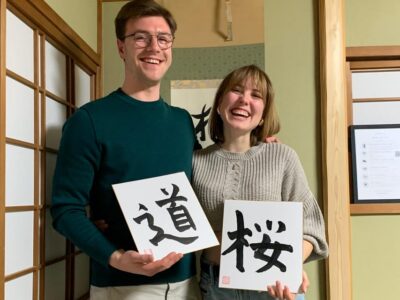
Kyoto Ninenzaka : Japanese Calligraphy Class in Townhouse
Read our review →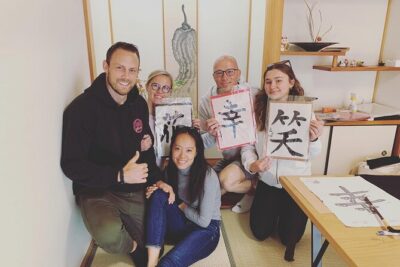
Private Japanese Calligraphy in Kyoto – Learn Shodō with a Master
Read our review →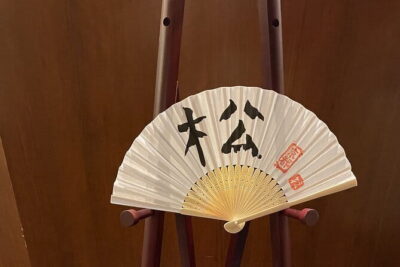
Japanese Calligraphy – Shodo – Lesson (near Kyoto Station)
Read our review →
Browse the lists this tour appears in