
REVIEW · KYOTO CALLIGRAPHY CLASSES
Japanese Calligraphy – Shodo – Lesson (near Kyoto Station)
Japanese calligraphy turns a short stop near Kyoto Station into something you can carry home. In this one-hour shodo lesson, you learn brush control, ink application, basic kanji, and a Japanese rendering of your own name, with an instructor helping explain each character.
I like the small maximum group of 10, which gives you room to ask for help. I also like that all brushes, ink, and washi paper are supplied, so you can focus on the writing rather than shopping for tools. The main consideration is time: one hour is enough for a friendly introduction, not a full study of calligraphy.
In This Review
- Key points to know before you book
- Why a one-hour shodo class works well in Kyoto
- Finding the MK Taxi meeting point by Kyoto Station
- The first lesson: brush, ink, and basic control
- Practicing kanji, including Kyoto
- Turning your name into Japanese characters
- What families and children can expect
- Souvenirs with more meaning than a shop purchase
- Price, value, and the limits of the class
- English support and the tone of the lesson
- Practical timing and cancellation details
- Is this Kyoto calligraphy class right for you?
- FAQ
- How long does the Japanese calligraphy lesson last?
- Where does the class meet?
- Where does the activity finish?
- What materials are included?
- Can children participate?
- How many people can join the class?
- Can I cancel for a full refund?
Key points to know before you book
- Write your own name in kanji: The instructor helps choose characters and explains their possible meanings.
- Practice before making souvenirs: You get several chances to work on brush handling and basic characters.
- Near Kyoto Station: The meeting point is at the MK Taxi VIP Station by the Hachijo Exit.
- Small, family-friendly class: The group can include up to 10 people, with activities suitable for children.
- Take home your work: Your calligraphy can become a scroll or another personal keepsake.
- English help is available: Haruko is described as patient, friendly, and very comfortable explaining the activity in English.
Why a one-hour shodo class works well in Kyoto
Kyoto offers endless temples, gardens, and museums, but much of sightseeing here is about looking. This activity gives you something to do with your hands. You sit down, hold a Japanese brush, control the ink, and produce a page that has a clear connection to your time in Japan.
That makes the class a useful change of pace during a busy trip. You do not need to commit half a day, and you do not need previous experience. The lesson is short enough to fit before a train, after breakfast, or between plans around Kyoto Station.
I would think of this as a beginner workshop rather than formal artistic training. You will learn the basic way to use the brush and apply ink, then practice a small set of characters. The goal is not perfect technique. It is to give you a pleasant introduction and a souvenir with personal meaning.
More calligraphy classes:
- Kyoto: Calligraphy class at Buddhist temple in city center
★ 5.0 · 167 reviews - Kyoto: Japanese Calligraphy Class
★ 4.8 · 89 reviews - Kyoto: Japanese Calligraphy Workshop
★ 4.7 · 84 reviews
Finding the MK Taxi meeting point by Kyoto Station
The class begins at the MK Taxi VIP Station Kyoto Station Hachijo Exit, at the taxi stand and Kyoto sightseeing reception beside the ibis Styles Kyoto Station. The address is in Minami Ward, close to the south side of Kyoto Station.
This location is convenient, but it can be easy to miss if you are searching only for a conventional tour office. Look for the MK taxi stand or the MK building diagonally across the street after leaving the station exit. One person found the activity a little difficult to locate at first, so allow a few extra minutes rather than arriving at the last second.
The meeting point is a practical choice for a short class. Kyoto Station is a major transport hub, so you can reach it by train and continue your day from the same area. The class also ends back at the meeting point, which keeps the logistics simple.
Your mobile ticket is confirmed at booking. Since the activity is near public transportation and lasts about an hour, it is easy to add to a Kyoto schedule without arranging a separate transfer.
The first lesson: brush, ink, and basic control
The instructor begins by showing you how to use the brush and how to apply ink. For a first-time student, this part matters more than it may sound. A calligraphy brush does not behave like a pencil. The amount of ink, the pressure on the tip, and the direction of each stroke all affect the finished character.
You will receive the needed materials, including brushes, ink, and washi paper. That is part of the value here. Buying calligraphy supplies on your own would take time, and you would still need someone to explain how to use them. In this class, the equipment is ready when you arrive.
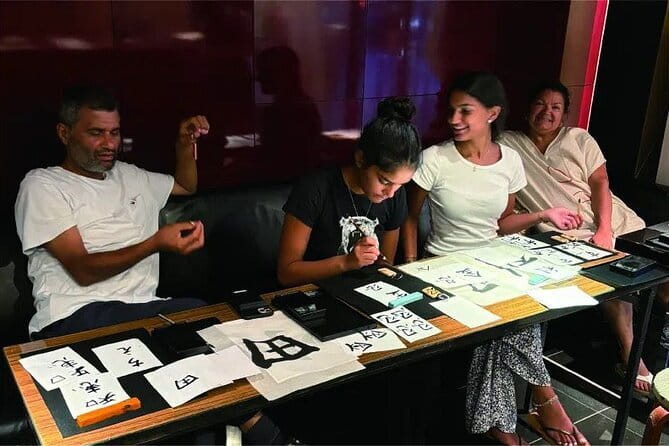
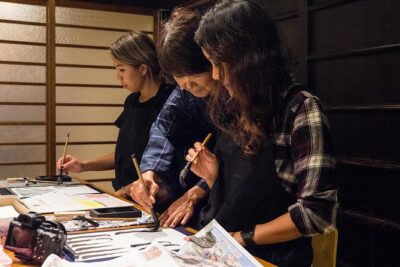
The teaching is hands-on. You are not simply watching an instructor write a beautiful character and then being sent away to copy it. You get time to try the strokes yourself, make adjustments, and ask for help. Haruko is specifically noted for being patient and friendly, which is helpful when your first attempt looks less balanced than the instructor’s example.
Do not expect every line to look polished immediately. That is normal. The point is to learn how the brush responds and to enjoy the process. A little unevenness may even make your finished piece feel more personal.
Practicing kanji, including Kyoto
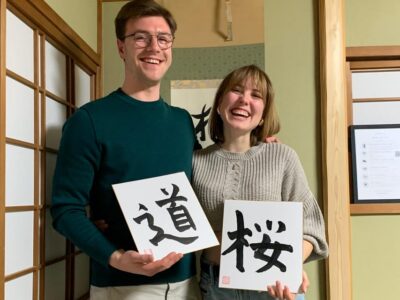
After the introduction, you work on basic characters. The planned examples include kanji for one, person or letter A, forever, and Kyoto. These give you a manageable starting point while showing how Japanese characters can carry both visual shape and meaning.
The character for Kyoto is a particularly fitting choice. You are not practicing a random symbol from a workbook. You are writing the name of the city you are visiting, using materials associated with Japanese writing. That connection gives the exercise more weight than a generic craft activity.
You can expect several chances to practice. The class is not designed around producing one perfect sheet on your first try. Repetition helps you get used to the brush, and it also lets children take part without feeling that an early mistake has ruined the activity.
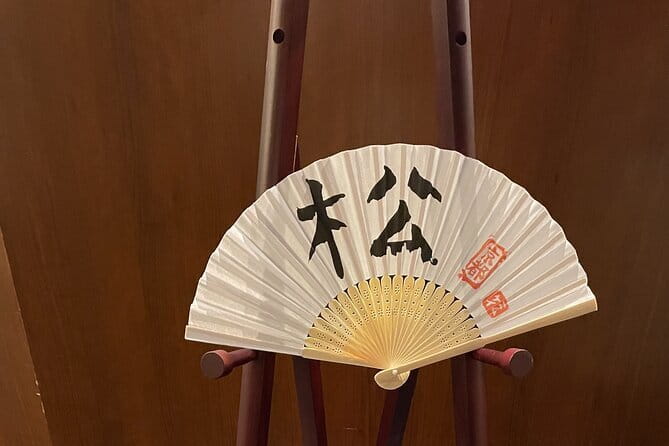
Some versions of the session include ways to decorate or display the writing, such as making a scroll, fan, or framed piece. The exact finished item can depend on the session and materials available, so I would treat the main promise as creating calligraphy to take home, not as one guaranteed format.
More workshops and classes in Kyoto:
- Kyoto: 45-Minute Tea Ceremony Lesson Experience
★ 4.3 · 2,378 reviews - Kyoto : Chopsticks Making Workshop in Gion with Engraving Option
★ 5.0 · 958 reviews - Kyoto: Samurai Sword Class by Experts in Traditional Arts
★ 4.9 · 657 reviews - Kyoto: Ramen Cooking Class at a Ramen Factory with Souvenir
★ 4.9 · 532 reviews
Turning your name into Japanese characters
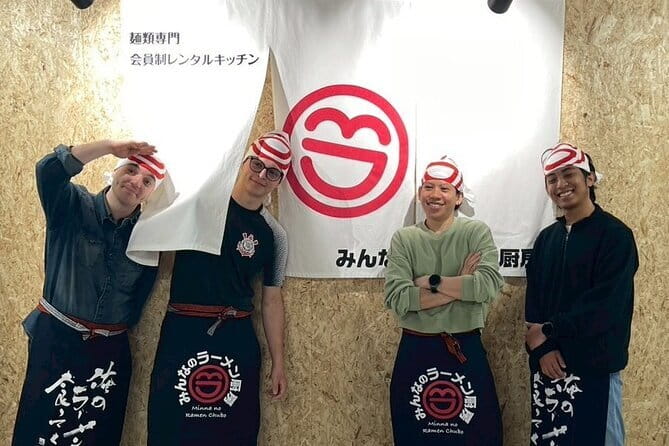
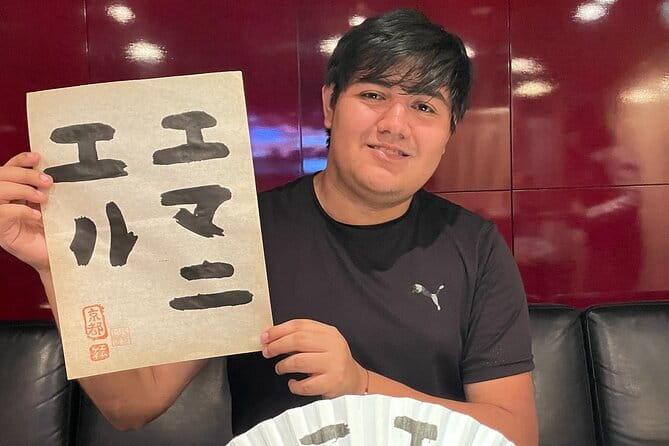
The most personal part of the class is writing your own name in kanji characters. Japanese names are not always translated directly into kanji, especially when they come from another language. Instead, the instructor helps suggest characters that approximate the sound and may also carry a chosen meaning.
For example, Brian can be represented with characters connected to bravery, courtesy, and peace. Liz may be given characters related to pear and painting. These examples show why the process is more than copying a name from a chart. The sound is considered, but the meaning of the selected characters matters too.
I like this part because it gives you a small connection to Japanese language and culture without pretending that there is always one exact translation. Ask the instructor what each character means and why it was selected. You may end up with a name that sounds close to your own, or with a playful combination of meanings that makes a good story when you show it at home.
The spelling is described as approximate, so keep that in mind. This is a creative souvenir, not an official Japanese name certificate. That is not a weakness, as long as you understand what you are receiving.
What families and children can expect
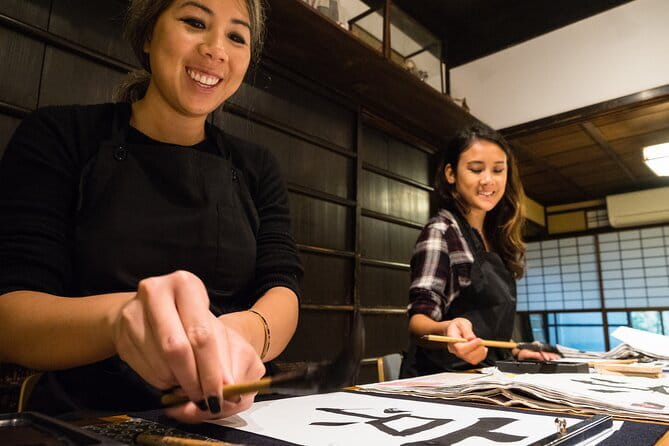
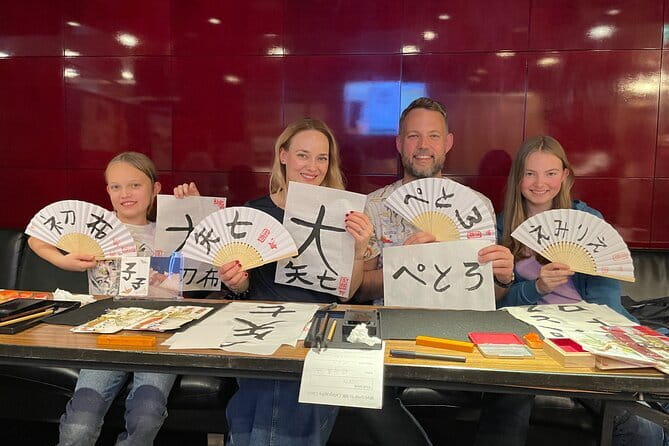
This is one of the better Kyoto activities for a family that wants something calm and hands-on. A nine-year-old child took part successfully, with plenty of chances to practice and decorate. The class has activities suitable for children, and the short duration helps prevent the session from feeling like a long school lesson.
Children can enjoy the visual side of the activity: black ink, large brushes, bold strokes, and the surprise of seeing a familiar name represented in a different writing system. Adults may appreciate the cultural context and the chance to bring home something more personal than a standard shop purchase.
Still, the experience requires some patience. Calligraphy involves sitting, listening, and repeating strokes. A child who wants a fast-moving activity may find the first instruction period slow. If your family joins, it helps to frame the class as making a keepsake rather than competing to produce perfect characters.
The group limit of 10 is useful here. It keeps the lesson from feeling like a large demonstration and gives the instructor a better chance to help each person. That matters most when children are learning how much ink to use or how to hold the brush.
Souvenirs with more meaning than a shop purchase
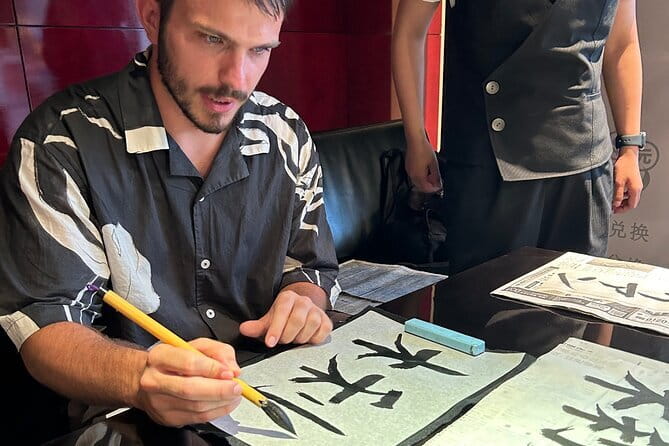
You can take your calligraphy home, and that is a strong reason to choose this workshop over a simple craft display. Your finished work records the city, the date of your trip, and your attempt to learn a traditional skill.
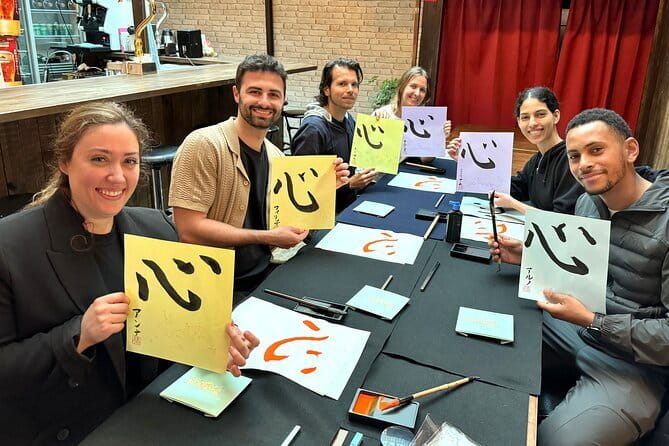
The writing may be made into a scroll, and some sessions include decorated fans or a photo frame. One class included custom fans and a photo of the participants, giving the finished set a playful family feel. Since the available formats can vary, ask at the start what you will be able to make during your session.
These are light souvenirs, too. A paper scroll or fan is easier to pack than pottery, and it costs less luggage space than many traditional crafts. Handle the inked paper carefully while it dries, then protect it during the rest of your trip.
The personal-name piece may be the most memorable item. A Kyoto character is attractive, but a Japanese rendering of your own name gives you something to explain when friends ask about your trip.
Price, value, and the limits of the class
The price is $50.40 per person. For a one-hour activity, that is not the cheapest way to pass time in Kyoto. You are paying for instruction, materials, a small group, and finished souvenirs, not simply admission to a room.
The value improves if you would otherwise buy brushes, ink, and washi paper separately. It also improves for families, since the activity gives children something active to do and produces a keepsake at the end. The convenience of being near Kyoto Station helps too, especially if you have limited time.
I would not book it if you want serious calligraphy training. One hour cannot cover advanced brushwork, many scripts, or sustained practice. It is best understood as an accessible cultural workshop with an artistic result.
At this price, I would want to leave with several pieces of writing or a clearly finished item, and the activity is designed to provide that. The staff also help you create your name and explain the character meanings, which adds value that you would not get from buying a blank calligraphy set.
English support and the tone of the lesson
The staff are described as engaging, helpful, and very comfortable speaking English. That matters because the lesson involves more than physical instructions. You may want to ask why a character was chosen, what it means, or how Japanese writing systems differ.
The session is friendly rather than formal. You get guidance, but the mood appears relaxed enough for beginners and children. If you are nervous about producing an unattractive first attempt, that is useful. The class gives you repeated practice before you make the piece you plan to keep.
Haruko is named as a particularly kind and patient instructor. Other staff may lead your session, so do not book solely on the assumption that one specific teacher will be present. The important point is that English assistance and personal help are part of the experience.
One review praised the chance to write names and favorite words in kanji, hiragana, and katakana. The central activity described here focuses on basic kanji and approximate names, but you may have opportunities to work with more than one Japanese writing style depending on the session.
Practical timing and cancellation details
The class lasts approximately one hour, and it returns you to the same MK Taxi meeting point. That makes it simple to combine with rail travel, though I would avoid scheduling it so close to a train departure that a small delay becomes stressful.
Confirmation arrives when you book, and the ticket is mobile. You do not need to source brushes, ink, or paper yourself. The activity is near public transportation, and most people can participate.
Free cancellation is available if you cancel at least 24 hours before the local start time. Cancellations or changes made inside that 24-hour window are not refunded or accepted. Keep that deadline in mind if your Kyoto plans are still shifting.
Is this Kyoto calligraphy class right for you?
Book this workshop if you want a short, personal Kyoto activity that works for adults and children, stays close to the station, and ends with something you can pack home. It is especially useful on a travel day when you have only an hour but still want to do more than take photographs.
I would also choose it for families, first-time visitors curious about Japanese writing, and anyone who likes souvenirs with a story. The name-in-kanji exercise gives the session a personal touch, while the small group and patient English help make it approachable.
Skip it if you are looking for advanced instruction, a long studio session, or a formal course in Japanese calligraphy. For most visitors, though, the price buys a pleasant introduction, supplied materials, direct guidance, and a keepsake tied to Kyoto. Find the MK taxi stand carefully, arrive with a little time to spare, and enjoy the imperfect strokes.
FAQ
How long does the Japanese calligraphy lesson last?
The activity lasts approximately one hour.
Where does the class meet?
It meets at the MK Taxi VIP Station Kyoto Station Hachijo Exit, at the taxi stand and Kyoto sightseeing reception near the ibis Styles Kyoto Station.
Where does the activity finish?
The class ends back at the meeting point.
What materials are included?
Brushes, ink, and washi paper are included.
Can children participate?
Yes. The activity is family-friendly and includes activities suitable for children.
How many people can join the class?
The maximum group size is 10 people.
Can I cancel for a full refund?
Yes, if you cancel at least 24 hours before the experience start time. Cancellations or changes made less than 24 hours before the start are not refunded or accepted.
Recently added around Kyoto
- Higashiyama | Kyoto: Sakura Season Private Rickshaw Tour★ 5.0 · 3 reviews
- Kyoto Kimono Rental CHAMATSU|Kimono/Yukata Rental FamilyPlan★ 5.0 · 3 reviews
- Kyoto: Half-Day Private Guided Tour to the Old Town of Gion★ 4.4 · 3 reviews
- Nara Private Customizable Half Day Tour★ 5.0 · 3 reviews
- Full Day Nara Deer, Temple, Shrine, Activities & Tea Ceremony★ 5.0 · 3 reviews
- Nara: Essential Private Tour with Deer Park and Temples★ 5.0 · 3 reviews
- Kansai Region Hiking Adventure in Nara Kobe Kyoto and More★ 5.0 · 3 reviews
- Hiking Tour for Sacred Sites in Kyoto with a Guide★ 5.0 · 3 reviews
Kyoto Calligraphy Classes, compared.
Calligraphy class at Buddhist temple in city center
Read our review →
Kyoto Ninenzaka : Japanese Calligraphy Class in Townhouse
Read our review →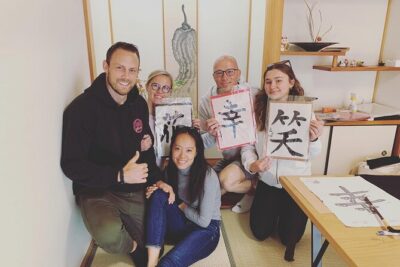
Private Japanese Calligraphy in Kyoto – Learn Shodō with a Master
Read our review →
Browse the lists this tour appears in