
REVIEW · KYOTO CALLIGRAPHY CLASSES
Private Japanese Calligraphy in Kyoto – Learn Shodō with a Master
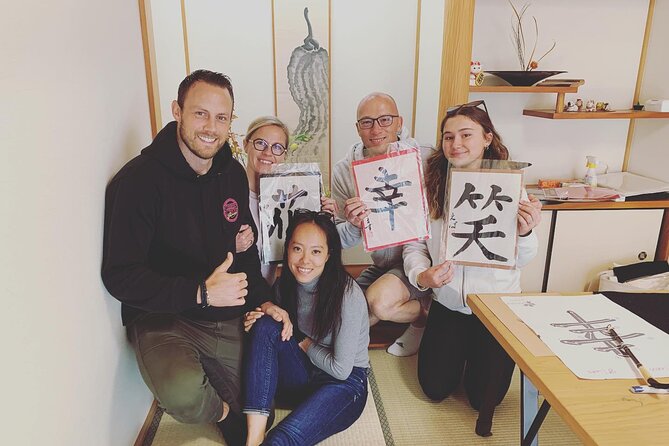
The special thing here is the setting: you learn Shodō, Japanese calligraphy, in a real Kyoto home about 200 meters west of Nijo Castle. Aya, who has practiced for more than 55 years, teaches in a calm tatami room rather than a busy studio. I like the private format, which gives your group her full attention, and I like that you leave with artwork you actually made. The one concern is time: one hour goes quickly, especially if you want to write both a kanji character and your full name in Japanese.
I also like the gentle, personal feel. Aya and her husband, Manabu, welcome participants with patience, conversation, and sometimes tea and traditional sweets. The class works best for adults and children aged 12 or older who want a cultural activity with some hands-on practice, not a long formal art course.
In This Review
- Key points to know before booking
- What the private Kyoto calligraphy class is really like
- The Nijo Castle location and finding the house
- Entering the tatami room
- Learning the first brush movements
- Choosing a kanji and writing your name
- What you take home
- Is one hour enough?
- Who will enjoy this most?
- How the $77.51 price measures up
- Planning the rest of your Kyoto day
- My call: book it if you want a personal souvenir
- FAQ
- Where does the calligraphy class take place?
- How long does the activity last?
- Who teaches the class?
- Are children allowed to participate?
- What should I wear or bring?
- Can I cancel for a refund?
Key points to know before booking
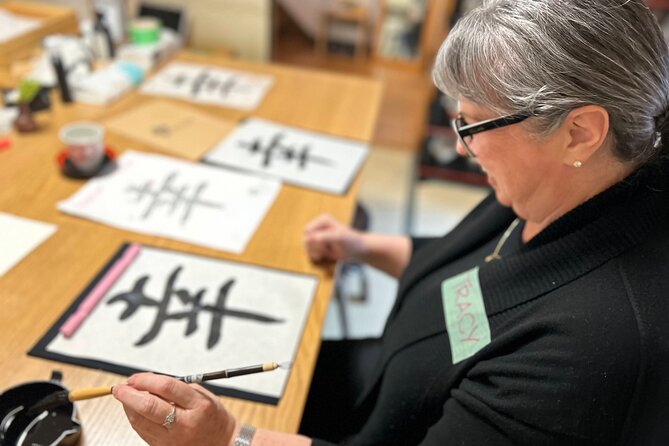
- Learn in Aya’s Kyoto home: The class takes place in a private residence near Nijo Castle, with a tatami room prepared for calligraphy.
- Get one-on-one instruction: Only your own group participates, so Aya can correct brush angle, pressure, and stroke order as you work.
- Study with a veteran practitioner: Aya has more than 55 years of calligraphy experience and teaches in English and Japanese.
- Choose your own kanji: You receive help selecting a character and can also work on writing your name in Japanese.
- Take home your creations: Paper, ink, brushes, and other tools are supplied, and your finished pieces become a Kyoto souvenir.
- Plan your arrival carefully: Bring clean socks, use the exact map pin, and do not arrive more than 15 minutes late.
What the private Kyoto calligraphy class is really like
Shodō means the way of writing, and the phrase hints at what makes this activity different from simply painting a Japanese character for a photograph. You are learning how a brush moves, how ink meets paper, and how a character is built from separate strokes.
I like that the lesson is designed for beginners. You do not need to know Japanese or have any previous brush experience. The aim is not to produce museum-quality work in 60 minutes. It is to learn enough of the method to understand why a simple-looking kanji can require careful timing and control.
Aya leads the class, and Manabu may also help welcome you and take photographs during the session. The atmosphere is home-based and informal. Several people have appreciated the chance to chat with the hosts about Kyoto and Japan as well as practice calligraphy.
The private arrangement matters. In a large class, you might copy a model while an instructor moves from table to table. Here, Aya can watch your hand and offer direct help. That is useful when you are learning the basic brush movements, since small changes in pressure can alter the width and character of a stroke.
More calligraphy classes:
- Kyoto: Calligraphy class at Buddhist temple in city center
★ 5.0 · 167 reviews - Kyoto: Japanese Calligraphy Class
★ 4.8 · 89 reviews - Kyoto: Japanese Calligraphy Workshop
★ 4.7 · 84 reviews
The Nijo Castle location and finding the house
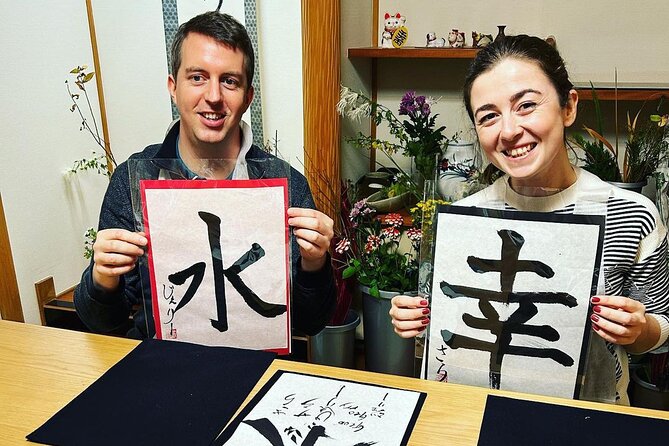
The meeting point is SAKURA Experience Japanese Culture Nijo Home in Izumicho, Nakagyo Ward. It is close to public transportation and just west of Nijo Castle, which makes this an easy activity to pair with sightseeing in central Kyoto.
The location is practical, but finding the entrance can require care. Some participants have had trouble because Google Street View appears to show a different place, even though the map pin itself is accurate. I would follow the exact map link sent by the operator, check the pin rather than relying on street-view photographs, and allow extra time.
Kyoto’s orderly streets can still look similar when you are in a hurry. I would not treat this as an activity to squeeze between two timed visits. Arrive early enough to identify the house and remove your shoes without rushing.
The class is held indoors, so it is also a useful choice on a rainy day. One family received help arranging a taxi afterward during bad weather, but private transportation is not included. You are responsible for reaching the meeting point and continuing on afterward.
Entering the tatami room
You will enter a traditional Japanese home and sit in a tatami room set up for the lesson. Clean socks are required. Bare feet on tatami are considered impolite, so bring socks if you are wearing sandals or shoes without them.
This small rule is worth taking seriously because it is part of the cultural setting, not a minor costume detail. The home environment gives the class much of its appeal, and respectful behavior helps preserve that feeling.
The room is described as welcoming and quiet. It is not a theatrical reconstruction of an old Kyoto house. You are being received in a lived-in home with a studio space prepared for visitors. That makes the activity feel more personal than a standard craft counter.
Tea and traditional Japanese sweets have been offered during some sessions, though they should not be treated as a guaranteed part of every booking. The same applies to photographs. Aya has taken pictures of participants practicing and later shared them, but photography arrangements can vary.
Learning the first brush movements
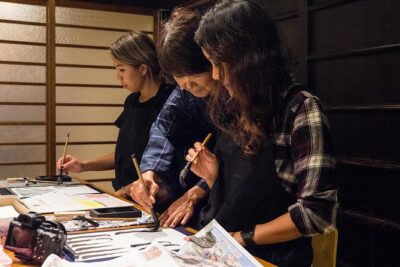
The lesson begins with an introduction to calligraphy and its background, followed by practice with ink, paper, and brushes. You learn how to hold the brush and how to make the basic movements needed for kanji.
The important lesson is control. A calligraphy brush is not handled like a ballpoint pen. The angle, pressure, speed, and lift at the end of a stroke all affect the result. Aya demonstrates the movements, then watches as you copy them.
This is where the private format earns its price. You can ask questions without waiting for a group, and Aya can adjust her guidance to your pace. Some people finish several pieces, while others need most of the hour to gain confidence with one character.
Calligraphy also asks for patience. Your first strokes may look uneven, and that is normal. The class is not a test of artistic talent. It is an introduction to a discipline in which repetition matters.
Aya’s long experience helps give the lesson context, but the class remains accessible rather than academic. You may learn about the history and meaning of calligraphy through spoken explanation and written material. One participant felt the historical explanation was too brief, so if that background interests you, ask questions directly instead of waiting for a long lecture.
A few more Kyoto experiences worth comparing
- Fushimi Inari Hidden Hiking Tour (Private Option Available)
★ 5.0 · 1,750 reviews - Private Kyoto Tour with a Local, Highlights & Hidden Gems, Personalised
★ 5.0 · 1,543 reviews - Kyoto 6hr Private Tour with Government-Licensed Guide
★ 5.0 · 1,369 reviews - 10 Must-see Spots in Kyoto One Day Private Tour (up to 7 people)
★ 5.0 · 1,108 reviews
Choosing a kanji and writing your name
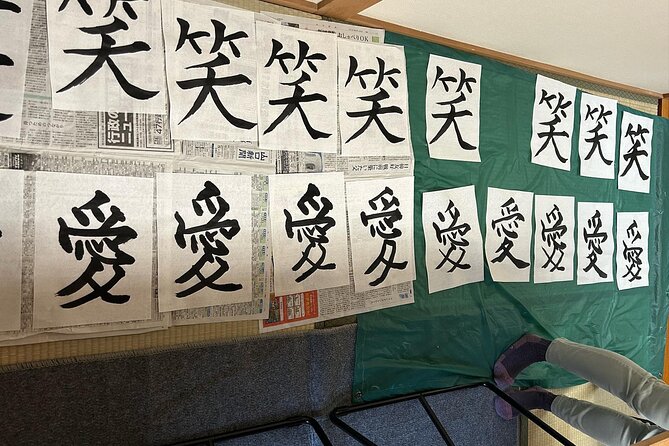
A central part of the session is choosing a favorite kanji character. Aya helps you select and write it, then guides you as you work toward a finished piece.
This choice gives the class a personal angle. You are not simply copying a character chosen by the instructor. You can select a symbol with meaning for you, though the time limit may make complex choices harder for a beginner.
You can also write your name in Japanese. This sounds simple, but names vary in length and can take more time than expected. One participant wanted to complete a longer name and found that an hour was not enough to do everything. If your name is a priority, say so at the beginning and manage the rest of the lesson around it.
I would also ask Aya about the meaning and suitability of your chosen character. Foreign visitors sometimes associate a phrase with an idea that does not match normal Japanese usage. A character that looks attractive on a wall may have a more specific meaning or may not traditionally be displayed in the way you imagine.
That conversation is part of the value. You are not just making decorative ink art. You are learning how writing, meaning, and presentation connect in Japanese culture.
What you take home
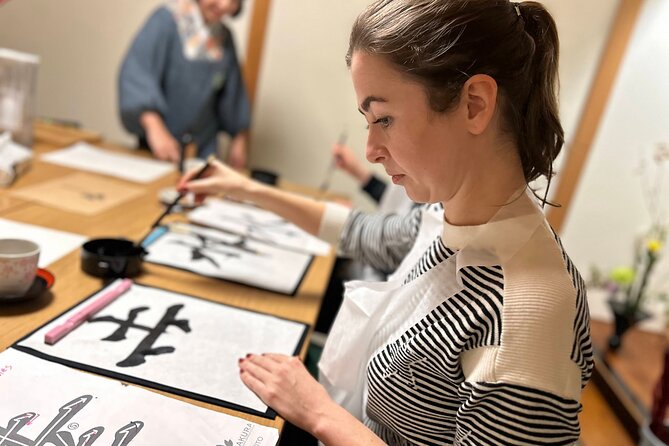
Your booking includes the calligraphy tools and paper used in class, along with your finished artwork. You may complete more than one example, depending on your pace and the time spent on instruction.
The souvenir is the strongest practical feature of the activity. You are not buying a mass-produced charm at a shop. You are taking home paper marked by your own brush, with all the small imperfections that show it was made during your time in Kyoto.
Several participants have framed their work or displayed it at home. One person completed pieces for grandchildren, and another bought calligraphy equipment from a recommended shop to continue practicing after returning home. The class can therefore be either a one-time memory or a first step toward a hobby.
Do not assume that every sample written by Aya is included as a free souvenir. Her own finished works may be available separately for purchase, while the pieces you create in class are yours to keep. If you want a particular example, ask before the session ends.
Is one hour enough?
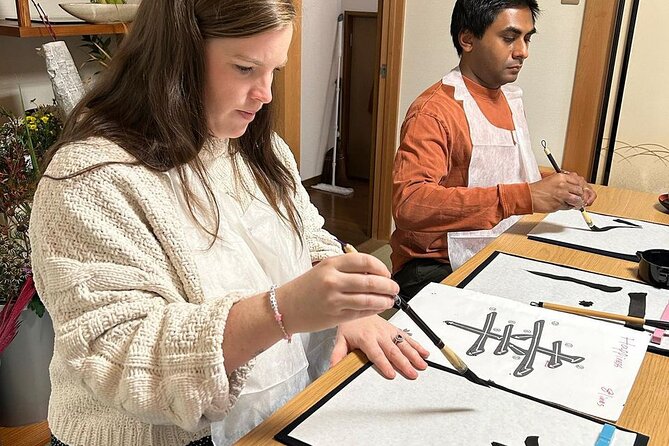
One hour is enough for an introduction, but it is not enough for a slow, advanced workshop. This is the most important expectation to set before booking.
You will have time to hear about calligraphy, watch demonstrations, practice brushwork, choose a character, and produce a keepsake. The amount of practice depends on your group. A confident beginner may finish several pieces, while someone who wants careful instruction and a full Japanese name may find the schedule tight.
One person felt the session became rushed and that the class might have ended quickly if they had stopped writing. That is a fair warning. The experience is best understood as a compact cultural lesson, not a full afternoon course.
I would arrive with one main goal. If you want the best finished kanji, focus on that. If writing your name matters most, tell Aya at the start. If you want both, keep your character choice simple and avoid spending too much time debating possibilities.
The private setup can make the hour feel fuller because there is no waiting for strangers. Still, the clock is firm. Arriving more than 15 minutes late means the class cannot begin, and a refund is not offered in that situation.
Who will enjoy this most?
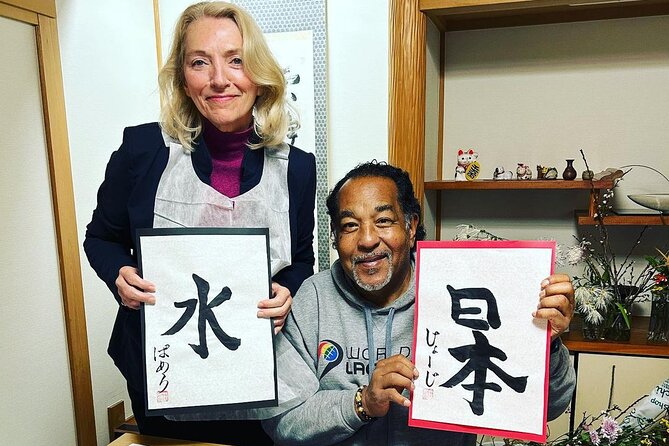
I would recommend this for adults, couples, friends, solo visitors, and families with children aged 12 or older. It suits anyone who wants a quiet cultural activity with a personal result.
It is particularly good for people who enjoy learning by doing. You receive information, but the main point is to pick up the brush and practice. You do not need to be artistic, and the teacher’s patient approach is helpful if you feel unsure.
Families should note the age rule carefully. Children under 12 cannot be accommodated under the stated policy, even though one older account described a family session with children aged 13 and 15. The quiet room and focused instruction are intended for older children and adults.
This may not suit you if you want a long lecture on Japanese art, a large professional studio, or a polished piece made entirely by the teacher. It is also not ideal for anyone who dislikes removing shoes, sitting in a home setting, or following a strict arrival time.
How the $77.51 price measures up
At $77.51 per person, this is not the cheapest one-hour activity in Kyoto. The value comes from what is included and from the private format.
You are paying for direct instruction from an experienced master, use of all the tools and paper, help selecting a character, and finished artwork to take home. You are also paying for access to a private home setting rather than a standard public workshop.
For a solo visitor, the price may feel high for only 60 minutes. For a couple or small group, the private attention makes more sense, especially if you share an interest in Japanese culture and want a keepsake with personal meaning. Group discounts may improve the cost for larger bookings.
I would compare this with the price of a generic craft activity, but not only on minutes. A short lesson that changes how you see Japanese writing can be more memorable than a longer activity where you simply follow instructions at a crowded table.
The 97 percent recommendation rate and 4.8 rating from 39 ratings suggest that the experience is consistently well received, but the less positive comments are useful. The main concerns are the short duration, occasional confusion about the location, and the risk of expecting more art instruction than the schedule allows.
Planning the rest of your Kyoto day
The class ends back at the meeting point, so it is easy to combine with Nijo Castle or other central Kyoto sights. I would not schedule it immediately after a distant appointment. Kyoto transport delays, confusing street views, and time spent locating the home can turn a relaxed class into a stressful dash.
The activity is offered in English and Japanese. That makes the basic instruction accessible to English-speaking visitors, while the private setting gives you room to ask for clarification.
Private transportation is not included. You need to make your own way to the Nijo Home and arrange your onward travel. If rain is forecast, allow extra time and have a backup plan for getting back to your hotel or the next attraction.
Cancellation is free up to 24 hours before the start time. Changes or cancellations inside that window are not accepted for a refund. I would book only after fixing your Kyoto schedule, since the strict timing matters.
My call: book it if you want a personal souvenir
I would book this class if you want a small, authentic Kyoto experience that lets you make something with your own hands. Aya’s patience, long practice, English instruction, and private home setting are the main reasons to choose it.
Go in with realistic expectations. You are getting a thoughtful one-hour introduction, not mastery of Shodō. Use the correct map pin, bring clean socks, arrive early, and decide whether your priority is a kanji character, your Japanese name, or both.
For adults and older children who enjoy quiet cultural activities, the class offers good value and a souvenir with a story behind it. If you prefer a longer, more technical art course, spend your money elsewhere. For most visitors seeking a meaningful break from temples and sightseeing, this is a worthwhile hour near Nijo Castle.
FAQ
Where does the calligraphy class take place?
The class takes place at SAKURA Experience Japanese Culture Nijo Home, at 660 Izumicho, Nakagyo Ward, Kyoto, near Nijo Castle. It ends back at the same meeting point.
How long does the activity last?
The class lasts approximately one hour. The time includes instruction, practice, choosing a kanji character, and creating your artwork.
Who teaches the class?
Aya teaches the calligraphy class. She has more than 55 years of experience and offers instruction in English and Japanese. Her husband, Manabu, may also help welcome participants.
Are children allowed to participate?
Children under 12 cannot be accommodated. Children aged 12 and older may participate, provided they can take part in the quiet learning environment.
What should I wear or bring?
You should wear or bring clean socks because the class takes place in a tatami room and entering barefoot is not permitted. All calligraphy tools and paper are provided.
Can I cancel for a refund?
You can cancel up to 24 hours before the experience start time for a full refund. Cancellations or changes made less than 24 hours in advance are not refunded or accepted.
Recently added around Kyoto
- Higashiyama | Kyoto: Sakura Season Private Rickshaw Tour★ 5.0 · 3 reviews
- Kyoto Kimono Rental CHAMATSU|Kimono/Yukata Rental FamilyPlan★ 5.0 · 3 reviews
- Kyoto: Half-Day Private Guided Tour to the Old Town of Gion★ 4.4 · 3 reviews
- Nara Private Customizable Half Day Tour★ 5.0 · 3 reviews
- Kansai Region Hiking Adventure in Nara Kobe Kyoto and More★ 5.0 · 3 reviews
- Full Day Nara Deer, Temple, Shrine, Activities & Tea Ceremony★ 5.0 · 3 reviews
- Nara: Essential Private Tour with Deer Park and Temples★ 5.0 · 3 reviews
- Hiking Tour for Sacred Sites in Kyoto with a Guide★ 5.0 · 3 reviews
Kyoto Calligraphy Classes, compared.
Calligraphy class at Buddhist temple in city center
Read our review →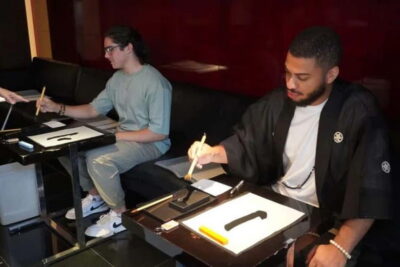
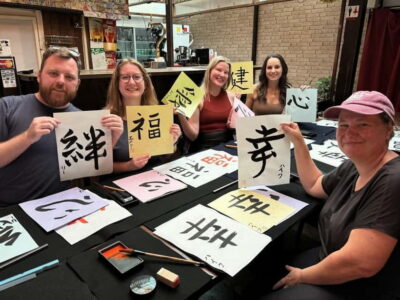
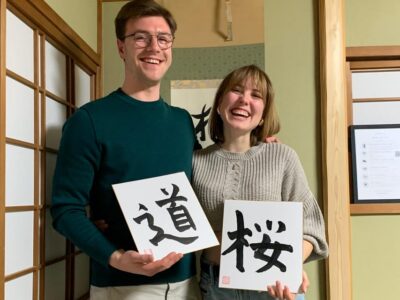
Kyoto Ninenzaka : Japanese Calligraphy Class in Townhouse
Read our review →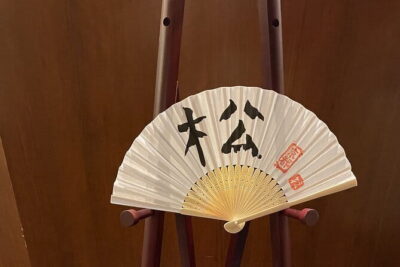
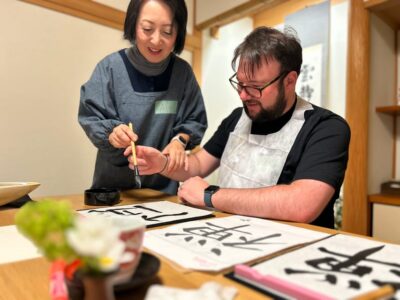
Japanese Calligraphy – Shodo – Lesson (near Kyoto Station)
Read our review →
Browse the lists this tour appears in