
REVIEW · KYOTO CALLIGRAPHY CLASSES
Calligraphy & Digital Art Workshop in Kyoto
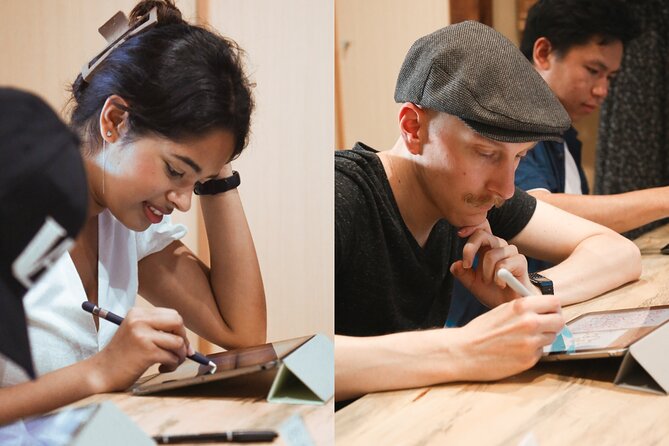
The clever idea here is simple: you learn Japanese brush art on paper, then recreate it on an iPad. At Studio Aya in Kyoto, Ami and her team introduce calligraphy, suibokuga ink painting, and etegami, Japanese picture letters, in a small private setting. The paper-to-screen switch makes this more than a standard craft class.
I like the gentle pace, with tea and snacks during the break, and I like that the digital session builds on what you just practiced by hand. The main consideration is the price: at $72 for about 90 minutes, it is not a bargain-basement activity, and the short session gives you only an introduction rather than a full art course.
In This Review
- Key Points at a Glance
- A Kyoto Art Class That Moves From Brush to Screen
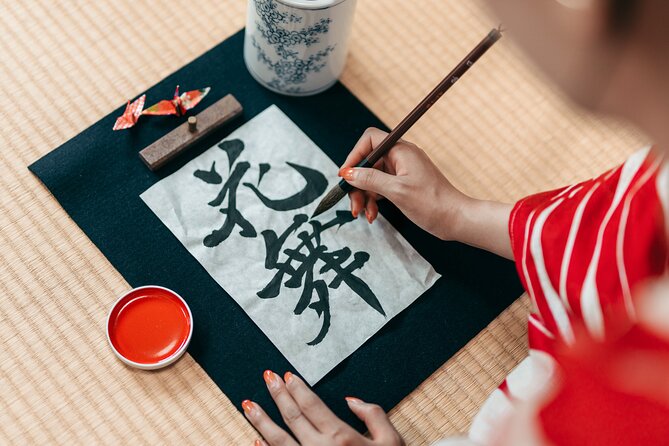
- The First 30 Minutes: Calligraphy or Suibokuga
- A Tea Break That Keeps the Class Relaxed
- The Next 30 Minutes: Japanese Art on an iPad
- Etegami Gives the Class a Personal Finish
- The Final 15 Minutes: Questions and Individual Help
- What the $72 Price Really Buys You
- Who Will Get the Most From Studio Aya
- Practical Timing and Meeting Details
- How This Fits Into a Kyoto Day
- Why the Traditional and Modern Mix Works
- Should You Book This Kyoto Workshop?
- FAQ
- Where does the workshop take place?
- What time does the activity start?
- How long does the workshop last?
- What art forms are included?
- Is an iPad provided?
- Are tea and snacks included?
- Is this a private activity?
- Is transportation included?
Key Points at a Glance
- Paper first, iPad second: Practice traditional brushwork before creating a digital version.
- Three Japanese art forms: The class covers calligraphy, suibokuga ink painting, and etegami picture letters.
- Ami’s creative studio: The workshop is led by Ami, a digital artist and founder of iPadmate kids, with her artist team.
- Tea and snacks included: A 15-minute break gives the class a calm, social rhythm.
- Private group format: Only your group takes part, which can make questions and hands-on help easier.
- Good for families: The class introduces kanji and Japanese culture in a way that children can take part in.
A Kyoto Art Class That Moves From Brush to Screen
Many Kyoto cultural activities ask you to copy a traditional form. This one adds a modern twist. You begin with brush, ink, and paper, then use an iPad to make your own digital calligraphy, ink painting, or etegami postcard.
That change matters. Traditional calligraphy can feel unfamiliar at first, especially if you cannot read Japanese characters. The iPad portion gives you another way to work with shape, line, and composition without worrying about wasting paper or ink. You still get the feel of the traditional art, but you also see how the same idea can be used in current creative work.
The workshop takes place at Studio Aya, connected with iPadmate kids at 47 Daikokuyacho in Kyoto’s Kamigyo Ward. The studio is run by Ami, who studied digital art in the United Kingdom and operates the YouTube channel amity_sensei. Her channel focuses on creative uses of the iPad and has more than 340,000 subscribers.
That background explains the unusual mix of old and new. This is not simply a calligraphy demonstration followed by a quick tablet game. The studio’s work centers on using digital tools to help children and adults develop art skills.
More calligraphy classes:
- Kyoto: Calligraphy class at Buddhist temple in city center
★ 5.0 · 167 reviews - Kyoto: Japanese Calligraphy Class
★ 4.8 · 89 reviews - Kyoto: Japanese Calligraphy Workshop
★ 4.7 · 84 reviews
The First 30 Minutes: Calligraphy or Suibokuga
The class begins at 3:00 p.m. with greetings and an introduction to traditional calligraphy or suibokuga, Japanese ink painting. The exact emphasis may depend on the class, but the structure gives you a useful first step before touching the iPad.
Calligraphy introduces you to the movement of the brush and the visual weight of each stroke. You are not only writing a character. You are also working with pressure, direction, spacing, and the balance of empty areas around the ink.
Suibokuga brings a different focus. Ink painting uses tonal changes and brush control to create an image with limited color. Even a short introduction can show you how much expression comes from the amount of water and ink on the brush.
A particularly appealing part of the class is the Zen approach to brushwork. You are guided to pay attention to the stroke itself instead of treating the character as something to reproduce perfectly. That makes the session friendlier for beginners. You do not need to read Japanese or arrive with drawing skills.
The first half is also the most traditional part of the experience. If you are looking for a formal lesson with a long history of technical practice, 30 minutes will feel brief. If you want a clear introduction that fits into a busy Kyoto afternoon, the compact format works well.
A Tea Break That Keeps the Class Relaxed
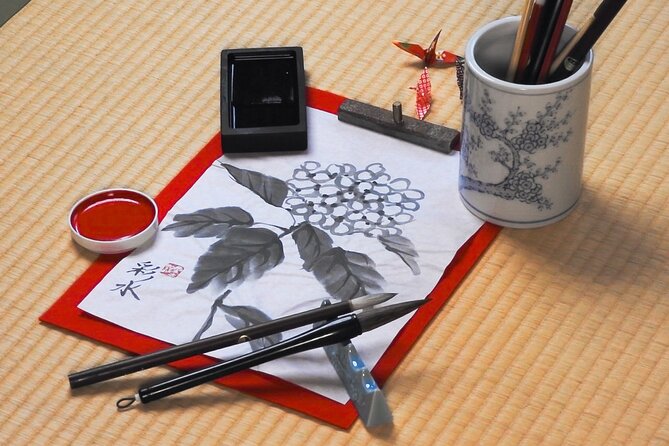
After about 30 minutes, you get a 15-minute break with free Japanese tea and snacks. This is a small feature, but it helps the class avoid feeling like a rushed tutorial.
Use the pause to look at your paper work and reset before the digital portion. You can also ask questions, compare your first strokes with later attempts, or simply enjoy a quiet drink in the studio.
The break is useful for families, too. Children get a natural pause before moving on to the iPad work. Couples and friends can treat it as part of the social experience rather than sitting through 90 minutes of continuous instruction.
The available information does not specify the type of tea, the snacks, or any dietary options. If food restrictions matter to you, ask Studio Aya before booking rather than assuming the snacks will suit you.
The Next 30 Minutes: Japanese Art on an iPad
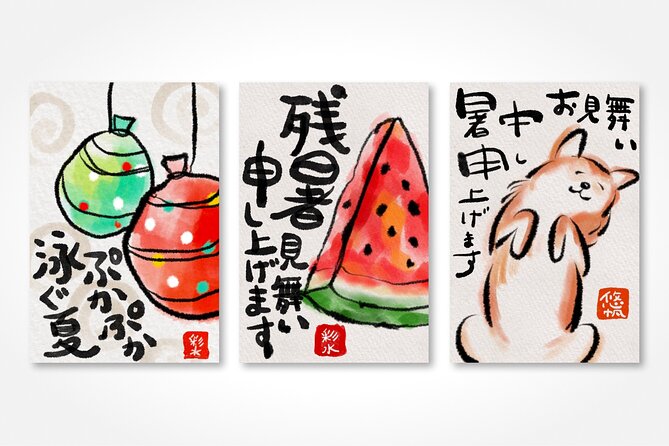
The second main session turns your brushwork into digital artwork. An iPad is provided, so you do not need to bring your own tablet for the lesson.
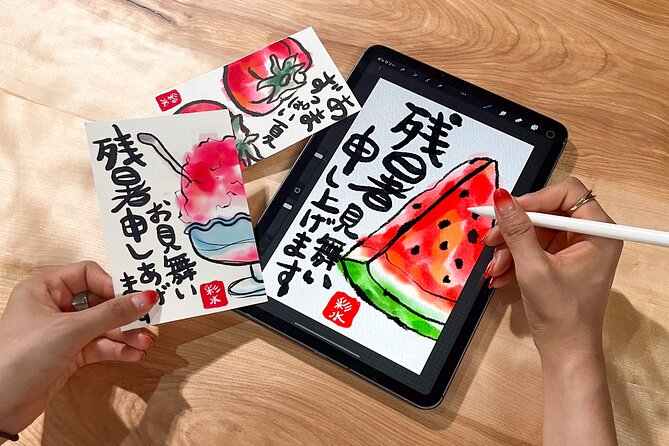
You may create digital calligraphy or suibokuga, then use the tools to make Japanese picture letters known as etegami. Etegami combines an image and a handwritten message, often in the form of a small postcard. The result is less about polished graphic design and more about personal expression.
This is where the workshop makes a strong case for its price. You are not paying only for a traditional craft lesson, and you are not paying only for an iPad demonstration. You get a guided comparison between physical materials and digital tools.
The iPad also makes the class approachable for someone who has never handled calligraphy ink. You can experiment with the shape and placement of your work without using additional paper. For children, the digital stage may hold their attention after the quieter brush practice.
Still, the session is short. You should expect to learn the basic process and make a piece of digital art, not master a professional drawing app. The workshop information does not name the specific iPad model or software, so you should not book it as a technical course for advanced digital artists.
More workshops and classes in Kyoto:
- Kyoto: 45-Minute Tea Ceremony Lesson Experience
★ 4.3 · 2,378 reviews - Kyoto : Chopsticks Making Workshop in Gion with Engraving Option
★ 5.0 · 958 reviews - Kyoto: Samurai Sword Class by Experts in Traditional Arts
★ 4.9 · 657 reviews - Kyoto: Ramen Cooking Class at a Ramen Factory with Souvenir
★ 4.9 · 532 reviews
Etegami Gives the Class a Personal Finish
The etegami portion is one of the most distinctive elements. A standard calligraphy lesson may leave you with a character on paper. Here, you have the chance to turn Japanese letters and images into a picture-letter design.
That gives you something with a clear personal use. You can create an image that feels connected to your Kyoto visit, or simply explore how a character and a drawing can work together. The class information does not promise that a physical postcard will be printed or mailed, so think of the finished work primarily as a digital creation unless the instructors explain otherwise.
The concept also helps explain Japanese picture letters to someone who does not know the form. Instead of treating kanji as mysterious symbols, you begin to see them as shapes with rhythm and visual character. You get an art lesson and a small cultural introduction at the same time.
Families may find this especially useful. Children can learn a few characters, write them on paper and an iPad, and then use them in a postcard-style artwork. The activity has a clear result without requiring a long attention span.
The Final 15 Minutes: Questions and Individual Help
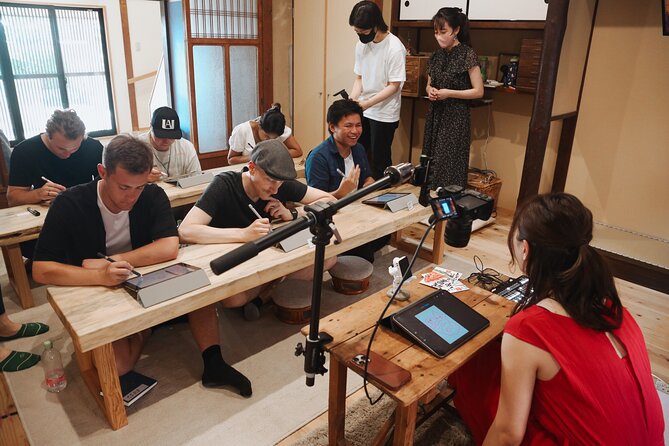
The workshop ends with about 15 minutes for questions and answers. That closing period gives you a chance to clarify brush technique, digital tools, or the ideas behind calligraphy and etegami.
Because this is a private activity for only your group, you do not have to compete with a large class for attention. That is an important value point. A beginner can ask basic questions without feeling out of place, while a family can address children’s questions as they come up.
The private format does not mean the class is customized in unlimited detail. The advertised timeline remains structured, and the workshop still lasts about an hour and a half. But the smaller setting should make the experience more personal than a large public demonstration.
The class finishes back at the meeting point. No private transportation is included, so you will need to make your own way to Studio Aya and back.
What the $72 Price Really Buys You
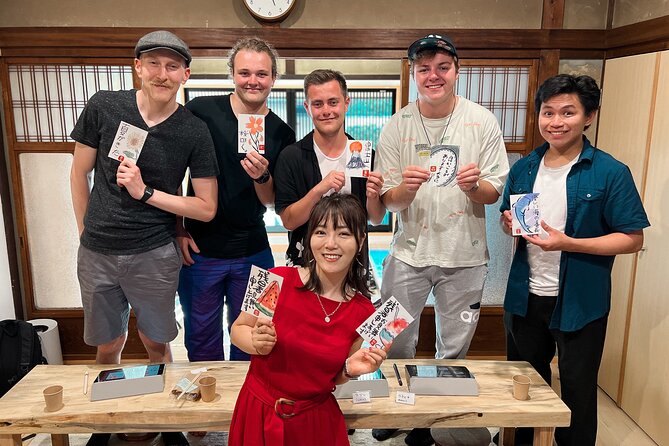
At $72, this workshop sits in the middle range for a short cultural activity. The value comes from the combination of instruction, equipment, and private participation.
Your fee includes:
- A 90-minute workshop
- Instruction in traditional calligraphy or suibokuga
- A digital calligraphy or ink painting session
- Etegami picture-letter practice
- Use of an iPad
- Japanese tea and snacks
- A private group format
If you already own an iPad and want only a basic calligraphy lesson, you may find the cost harder to justify. You are paying for the setting, the guided transition from brush to screen, the instructors’ creative teaching, and the fact that your group participates privately.
For a couple, family, or small group, the private structure adds more value than it would for someone seeking the lowest-cost solo activity. The class also fills a useful gap in a Kyoto itinerary. It takes only 90 minutes and begins at 3:00 p.m., so it can fit after sightseeing without using an entire morning or evening.
The free tea and snacks are a pleasant extra, but they should not be the reason you book. The real draw is the two-part art lesson.
Who Will Get the Most From Studio Aya
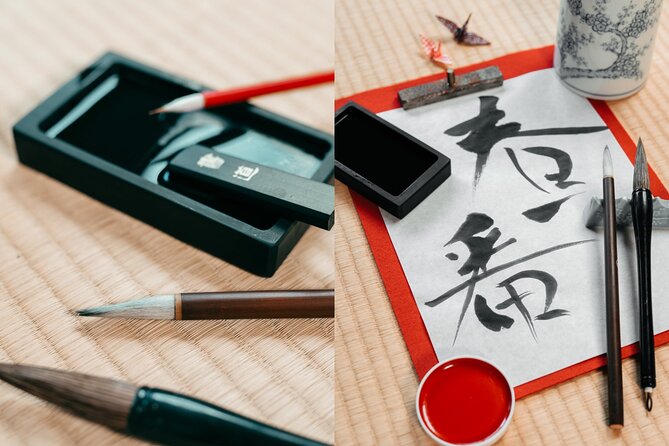
I would recommend this class most strongly to:
- Families looking for a hands-on Japanese culture activity
- Couples who want to make something together
- Solo visitors interested in both traditional and digital art
- Beginners who want instruction without a long course commitment
- People curious about iPad illustration and creative tools
- Anyone who likes the idea of making an etegami-style picture letter
The class suits children because it changes activities midway. Brushwork offers a tactile introduction, the tea break provides a pause, and the iPad portion adds a fresh challenge.
It may be less suitable if you want a long, formal study of Japanese calligraphy. It may also disappoint advanced digital artists who are hoping for detailed software training. The information provided does not list a minimum age, so families with very young children should confirm age suitability before reserving.
Most participants can take part, and service animals are allowed. The studio is near public transportation, though the activity does not include transport.
Practical Timing and Meeting Details
Plan to arrive at iPadmate kids47 Daikokuyacho, Kamigyo Ward, Kyoto, 602-8055, Japan, for the 3:00 p.m. start. The activity ends at that same meeting point.
The workshop lasts approximately 1.5 hours, including the break. Since the schedule is given as a rough estimate, allow a little flexibility rather than planning an immediate, tightly timed reservation afterward.
A mobile ticket is provided, and booking confirmation is received at the time of reservation. Free cancellation is available if you cancel at least 24 hours before the local start time. Cancellations or changes made within 24 hours are not accepted for a refund.
The location is near public transportation, but private transportation is not included. Check your route before the afternoon begins, especially if you are coming from another part of Kyoto.
How This Fits Into a Kyoto Day
The 3:00 p.m. start makes this a practical late-afternoon activity. You can place it after a morning temple visit, a museum, or a walk through central Kyoto, then spend the evening elsewhere.
Because the class finishes where it begins, you will not need to arrange a separate pickup. That also makes it easier to continue with dinner or another planned activity after the lesson.
I would avoid treating this as a major full-day cultural study. Think of it as a focused creative stop. You get enough time to understand the basic ideas, try the materials, and make a digital piece, but not enough time for extended practice.
Its strongest role is as a change of pace. Kyoto can involve a lot of walking, viewing, and listening. This class asks you to make something with your hands and gives you a personal connection to Japanese art.
Why the Traditional and Modern Mix Works
The best part of the workshop is not simply that it includes two art styles. It shows you how traditional marks can carry into a modern medium.
A brush stroke has texture, weight, and a sense of movement. On the iPad, you can consider the same qualities in a different way. The comparison gives you a better feel for what calligraphy is doing visually, even if you cannot read the characters.
The class also avoids placing tradition and technology in opposition. You are not told to choose between Japanese brush art and digital art. You get to see how the two can support each other.
Ami’s background helps give this idea shape. Her work in digital art, her large YouTube audience, and her founding of iPadmate kids point to a teaching style built around making digital creativity approachable. Her team of professional artists and creators adds support during the hands-on portions.
The strongest praise for the activity focuses on exactly this mix. The traditional lesson helps you improve brush strokes and introduces the Zen approach, while the digital session shows you how to create a Japanese painted postcard on the iPad. That balance is the reason I would choose this class over a basic souvenir-making workshop.
Should You Book This Kyoto Workshop?
Book it if you want a short, private, beginner-friendly art experience that connects Japanese calligraphy with modern tablet design. It is particularly well suited to families, couples, and curious beginners who want to make something rather than only watch a demonstration.
At $72, the class is worthwhile when you value personal instruction, an included iPad, tea and snacks, and a private group setting. It is less compelling if your only goal is inexpensive sightseeing or advanced calligraphy training.
The key question is whether the paper-to-iPad format appeals to you. If it does, Studio Aya offers a thoughtful way to try Japanese brush art, learn about etegami, and leave with a digital creation in about 90 minutes.
FAQ
Where does the workshop take place?
The meeting point is iPadmate kids47 Daikokuyacho, Kamigyo Ward, Kyoto, 602-8055, Japan.
What time does the activity start?
The workshop starts at 3:00 p.m.
How long does the workshop last?
The activity lasts approximately 1 hour and 30 minutes, including a break.
What art forms are included?
You are introduced to traditional Japanese calligraphy or suibokuga ink painting, digital calligraphy or ink painting on an iPad, and etegami Japanese picture letters.
Is an iPad provided?
Yes. An iPad is included in the activity.
Are tea and snacks included?
Yes. Japanese tea and snacks are provided during the break.
Is this a private activity?
Yes. Only your group participates in the activity.
Is transportation included?
No. Private transportation is not included. The studio is near public transportation, and the activity ends back at the meeting point.
Recently added around Kyoto
- Higashiyama | Kyoto: Sakura Season Private Rickshaw Tour★ 5.0 · 3 reviews
- Kyoto Kimono Rental CHAMATSU|Kimono/Yukata Rental FamilyPlan★ 5.0 · 3 reviews
- Kyoto: Half-Day Private Guided Tour to the Old Town of Gion★ 4.4 · 3 reviews
- Nara Private Customizable Half Day Tour★ 5.0 · 3 reviews
- Kansai Region Hiking Adventure in Nara Kobe Kyoto and More★ 5.0 · 3 reviews
- Full Day Nara Deer, Temple, Shrine, Activities & Tea Ceremony★ 5.0 · 3 reviews
- Nara: Essential Private Tour with Deer Park and Temples★ 5.0 · 3 reviews
- Hiking Tour for Sacred Sites in Kyoto with a Guide★ 5.0 · 3 reviews
Kyoto Calligraphy Classes, compared.
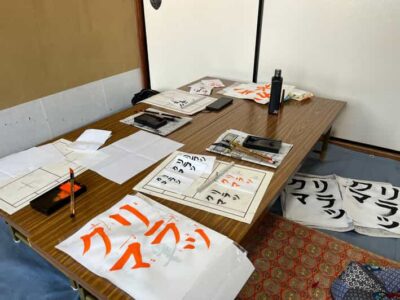
Calligraphy class at Buddhist temple in city center
Read our review →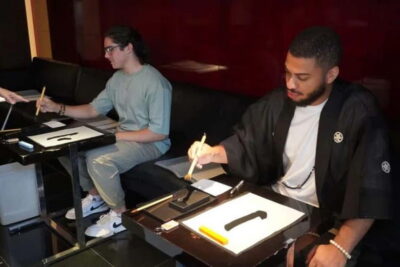
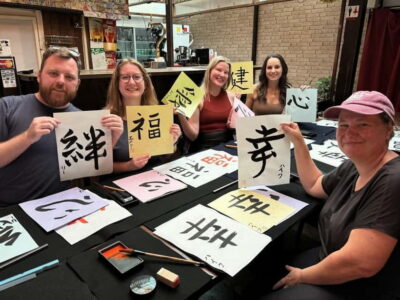
Kyoto Ninenzaka : Japanese Calligraphy Class in Townhouse
Read our review →
Private Japanese Calligraphy in Kyoto – Learn Shodō with a Master
Read our review →
Japanese Calligraphy – Shodo – Lesson (near Kyoto Station)
Read our review →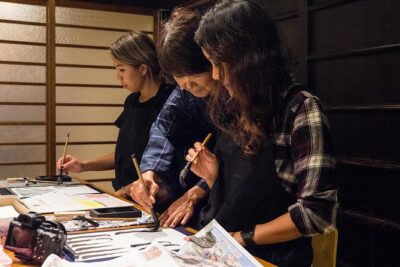
Browse the lists this tour appears in