
REVIEW · KYOTO CALLIGRAPHY CLASSES
Kyoto: Local Home Visit and Japanese Calligraphy Class
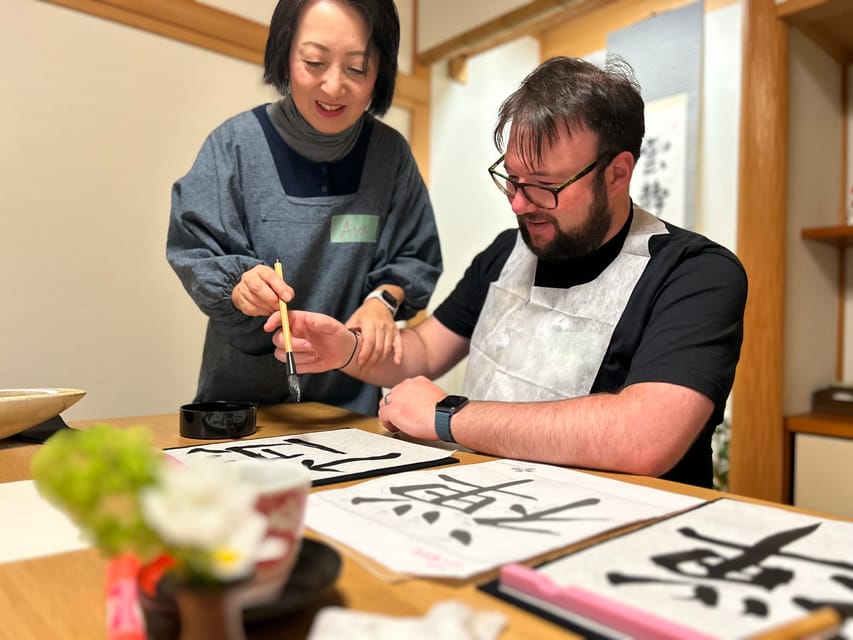
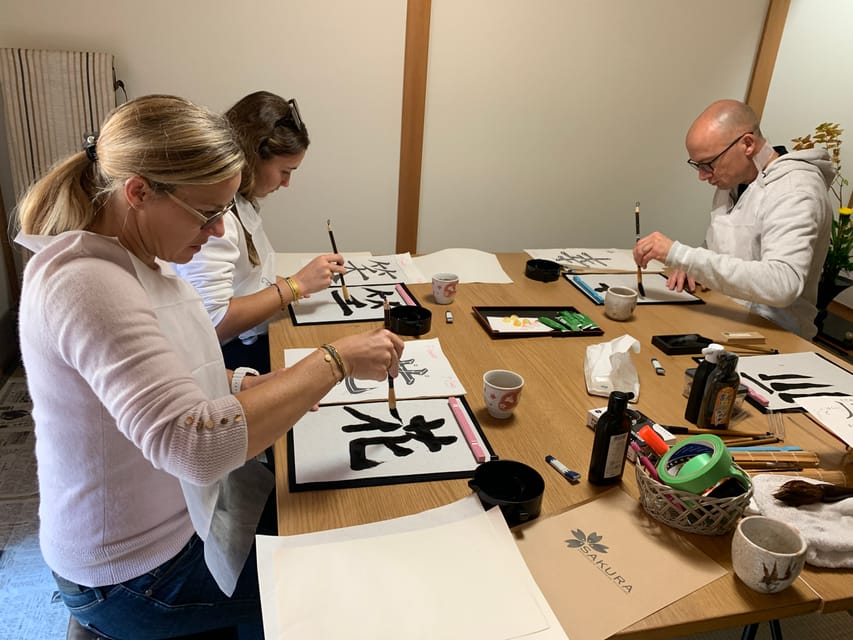
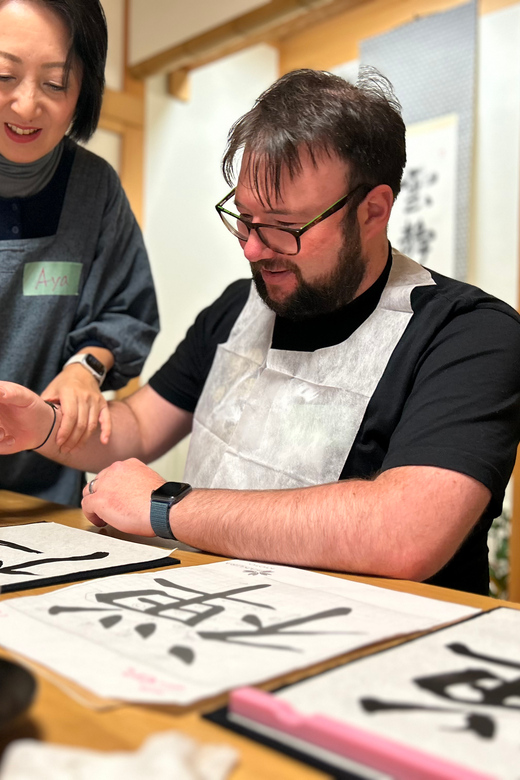
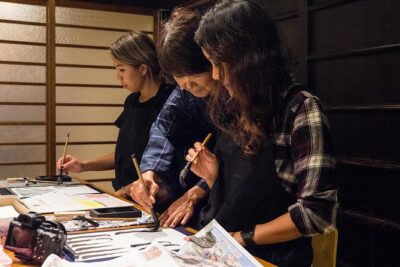
Japanese calligraphy here is not just a quick brush-and-ink craft. In a local home near Nijo Castle, Aya guides you through the order, rhythm, and pressure behind each stroke, then helps you create a kanji that has personal meaning. You leave with your own artwork on Japanese washi paper.
I like the private setting, which makes conversation easy and allows the instructor to give close attention. I also like that you choose a character such as love, peace, strength, or wisdom instead of copying a random design. The main drawback is time: one hour teaches the basics, not mastery.
If you arrive more than 15 minutes late, the class cannot be offered, and even a smaller delay cuts into your lesson. Bring socks, arrive five minutes early, and search for the venue by its name rather than relying on the address alone.
In This Review
- Key points at a glance
- A calligraphy lesson inside a Kyoto home
- What happens during the 60-minute class
- 1. Getting settled and learning the basics
- 2. Practicing several kanji
- 3. Choosing a character with meaning
- 4. Creating the final washi artwork
- Why Aya’s teaching matters for beginners
- The private-home setting near Nijo Castle
- Is $66 good value for one hour?
- Who should book this experience?
- Practical details that can make or break the lesson
- Pairing calligraphy with a Nijo Castle day
- What makes the finished souvenir special
- Should you book it?
- FAQ
- How long does the Japanese calligraphy class last?
- Where is the calligraphy class held?
- Who teaches the class?
- Is the class available in English?
- What is included in the price?
- Can I take my artwork home?
- What should I bring?
- Can children join the class?
Key points at a glance
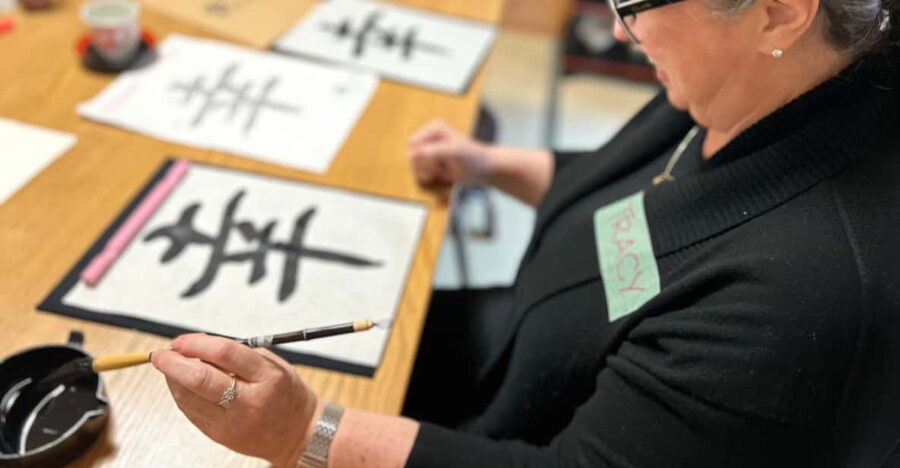
- Practice real brush technique: Learn stroke order, brush angle, pressure, and movement instead of simply tracing a finished character.
- Meet near Nijo Castle: The private home is about 200 meters west of this UNESCO World Heritage Site, making the activity easy to pair with sightseeing.
- Learn with Aya: Aya explains the art’s background and offers patient, hands-on corrections as you practice.
- Choose a meaningful kanji: Create a character connected to an idea such as peace, love, strength, or wisdom, then add your name in Japanese.
- Take home a finished keepsake: Ink, tools, and Japanese washi paper are provided, so your final work becomes a personal souvenir.
- Plan carefully for the one-hour limit: The session moves quickly, and late arrival reduces your practice time.
A calligraphy lesson inside a Kyoto home
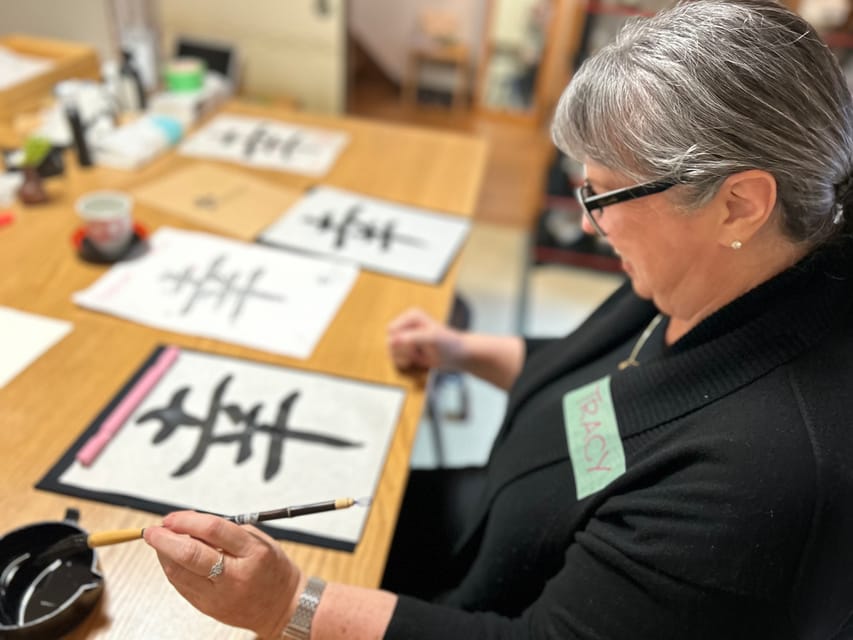
The unusual part of this activity begins before the first brushstroke. You are welcomed into a private home where people from Kyoto live, rather than being placed in a large workshop built only for sightseeing. That setting gives the lesson a more personal feel and leaves room for simple conversation with your hosts.
You do not need to know Japanese. Instruction is available in English and Japanese, and the lesson is designed for beginners. Aya explains what the characters mean, how the brush should move, and why each stroke has a set order.
Calligraphy can look effortless when an expert performs it. The brush glides, pauses, turns, and lifts with great control. Your first attempt will probably be less graceful. That is part of the point. You quickly see that a character is not a collection of decorative lines. It has balance, timing, and structure.
The class offers a useful introduction without pretending that an hour can make you an expert. Several people found the lesson relaxing because it required slow, careful attention. I can see why. Once the ink is on the paper, you cannot rub it out or start editing. You have to watch the brush and accept the result.
More calligraphy classes:
- Kyoto: Calligraphy class at Buddhist temple in city center
★ 5.0 · 167 reviews - Kyoto: Japanese Calligraphy Class
★ 4.8 · 89 reviews - Kyoto: Japanese Calligraphy Workshop
★ 4.7 · 84 reviews
What happens during the 60-minute class
The exact order can vary slightly, but you should expect a compact lesson built around explanation, practice, and a final piece of art.
1. Getting settled and learning the basics
You begin with an introduction to Japanese calligraphy and the tools in front of you. Ink, brushes, and washi paper are included, so you do not need to purchase supplies or carry anything special beyond socks.
Aya explains the background of the art and shares how she learned it herself. This personal element adds useful context. You are not just told to copy a model. You get a sense of the discipline behind the work and why the first stroke matters as much as the last.
The instructor then demonstrates the main brush movements. You learn to control the brush with changes in pressure and direction, and you see how a stroke ends. For a beginner, this is the most useful part of the lesson. It gives you a method rather than a decorative shortcut.
2. Practicing several kanji
You practice on paper before making your final artwork. The instructor watches your movements and offers corrections, often helping with the brush angle, the amount of ink, or the speed of a stroke.
This practice is where the class becomes more than a photo opportunity. You have time to make mistakes, adjust your hand, and try again. Some people have received nearly one-to-one instruction when the class was small, but the format is a private group, so the level of individual attention can depend on the size of your booking.
Do not expect a long, formal course. In one hour, you will get the basic structure of the art and a chance to produce something respectable with help. The pace suits visitors who want a meaningful cultural activity between larger Kyoto sights.
More workshops and classes in Kyoto:
- Kyoto: 45-Minute Tea Ceremony Lesson Experience
★ 4.3 · 2,378 reviews - Kyoto : Chopsticks Making Workshop in Gion with Engraving Option
★ 5.0 · 958 reviews - Kyoto: Samurai Sword Class by Experts in Traditional Arts
★ 4.9 · 657 reviews - Kyoto: Ramen Cooking Class at a Ramen Factory with Souvenir
★ 4.9 · 532 reviews
3. Choosing a character with meaning
The most personal step is selecting the kanji for your finished piece. You might choose a word linked to love, peace, strength, or wisdom, or select another character that speaks to you.
This choice changes the feel of the souvenir. Instead of taking home an attractive symbol whose meaning you barely remember, you create a piece connected to an idea, person, trip, or milestone. Adding your name in Japanese makes it more individual.
The class does not turn you into a calligraphy master. It does give you enough understanding to appreciate the final character. You know which strokes were difficult and why the finished work looks different from your first practice attempt.
4. Creating the final washi artwork
Once you have practiced, you use Japanese washi paper for the final piece. Washi has a distinct feel and gives the work a more authentic finish than ordinary printer paper.
This is the moment to slow down. Your instructor can guide you, but the brush movement is still yours. The finished result may not be perfectly uniform, and that is fine. A handmade character carries the memory of the process.
You can bring the artwork home as a souvenir. It is light, easy to pack, and more personal than another mass-produced trinket. Protect it carefully in your luggage, since paper and wet or poorly dried ink do not make ideal travel companions.
Why Aya’s teaching matters for beginners
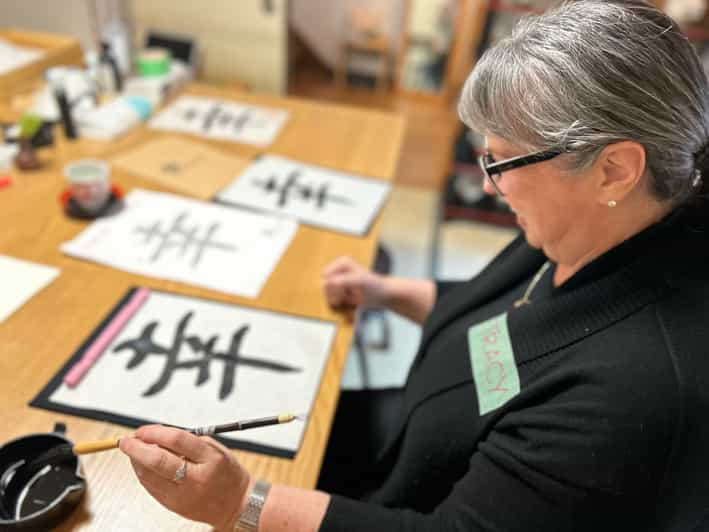
The strongest feature of the lesson is the teaching. Aya is described as patient, warm, and highly skilled, with a clear way of explaining both technique and background. She answers questions about calligraphy and other traditional Japanese arts, so you can use the time for conversation as well as practice.
That patience matters. Brushwork is unfamiliar to most visitors, and a small correction can change the whole character. The instructor may adjust how you hold the brush, show you a stroke again, or point out where the balance has shifted.
You should also expect a friendly tone rather than a stiff examination. The class has been described as fun, relaxing, and full of laughter. That makes it a good choice for couples, friends, and families with older teenagers who want an activity with a social side.
The age limit is important. Children under 13 cannot take part. The class is better suited to adults and young people who can follow careful instructions and handle the brush and ink responsibly.
The private-home setting near Nijo Castle
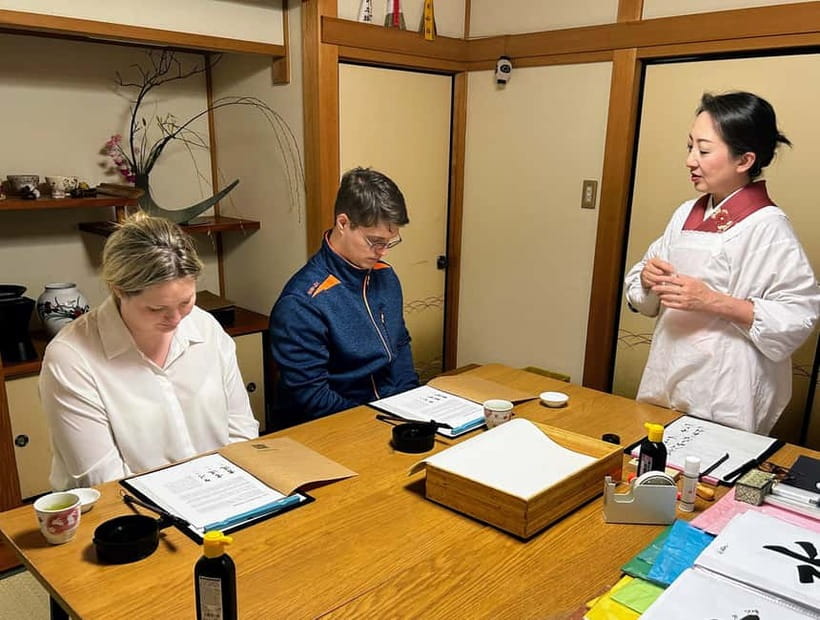
The location is practical for a day in central Kyoto. The home is 200 meters west of Nijo Castle, a UNESCO World Heritage Site. You can schedule the calligraphy before or after visiting the castle, though you should leave enough time to arrive without rushing.
The address instructions deserve close attention. Kyoto has multiple venues with similar names, so enter the venue name into your map application. If you use a taxi, give the driver the phone number. Entering only the street address may send you to the wrong place.
The venue is on the north side of Ebisugawa Street, just west of Nishinotoin Street. Across the road on the south side, you will see the Lions Mansion building. These landmarks are more useful than a vague search for the neighborhood.
Arrive five minutes before your starting time. There is no waiting space if you arrive far too early, so do not plan to reach the door half an hour ahead. Shoes are not allowed indoors, and bare feet are not acceptable. Wear socks or bring them with you. Socks may be available for purchase if you forget, but it is simpler to pack a pair.
The home setting also means you should respect a few house rules. Smoking, vaping, alcohol, drugs, and strong fragrances are not allowed. These are easy requirements to meet, but they matter in a private residence.
Is $66 good value for one hour?
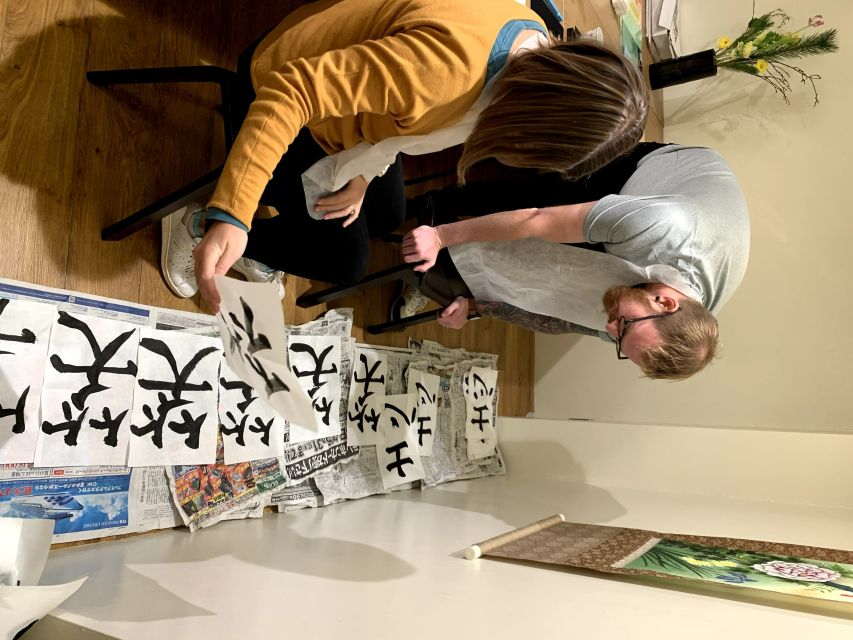
At $66 per person, this is not the cheapest cultural activity in Kyoto. The value depends on what you want from the hour.
You are paying for a private setting, an English or Japanese instructor, instruction from a skilled calligrapher, use of the tools and ink, and Japanese washi paper for your final work. You also get a souvenir you made yourself rather than one selected from a shop shelf.
The price makes more sense if you value personal attention. A short group demonstration can be cheaper, but it may leave you with little time to ask questions or correct your technique. Here, the instructor works directly with your brush movements, and small groups may receive especially close guidance.
It is less compelling if your main goal is to become good at calligraphy. That takes repeated practice over time. You are buying an introduction and a memory, not a complete course.
For a special occasion, the price can be reasonable. Honeymooners and couples have used the artwork as a lasting reminder of their time in Kyoto. The finished piece also gives the activity a clear endpoint, which is helpful when you are fitting it around sightseeing.
Who should book this experience?
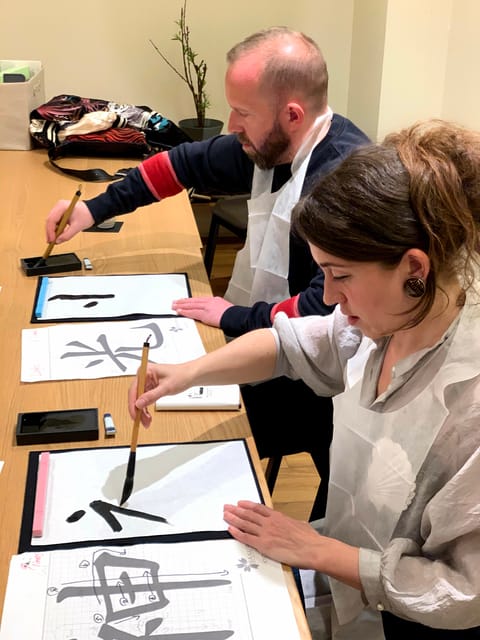
I would choose this class if you want a quiet break from temples, shopping, and crowded streets. The slow brushwork gives you a different way to experience Japan, one based on concentration rather than covering more ground.
It works especially well for:
- Couples who want a shared souvenir
- Adults interested in Japanese culture and traditional arts
- First-time visitors who want a beginner-friendly activity
- Small private groups looking for personal instruction
- People who enjoy hands-on crafts
- Visitors staying near central Kyoto or planning to visit Nijo Castle
It may not suit anyone hoping for a long workshop or a polished professional result. The lesson is short, and the class moves from explanation to practice to final artwork in 60 minutes.
It is also not suitable for children under 13. If anyone in your group dislikes sitting still, working carefully, or following detailed instructions, a more active Kyoto experience may be a better match.
Practical details that can make or break the lesson
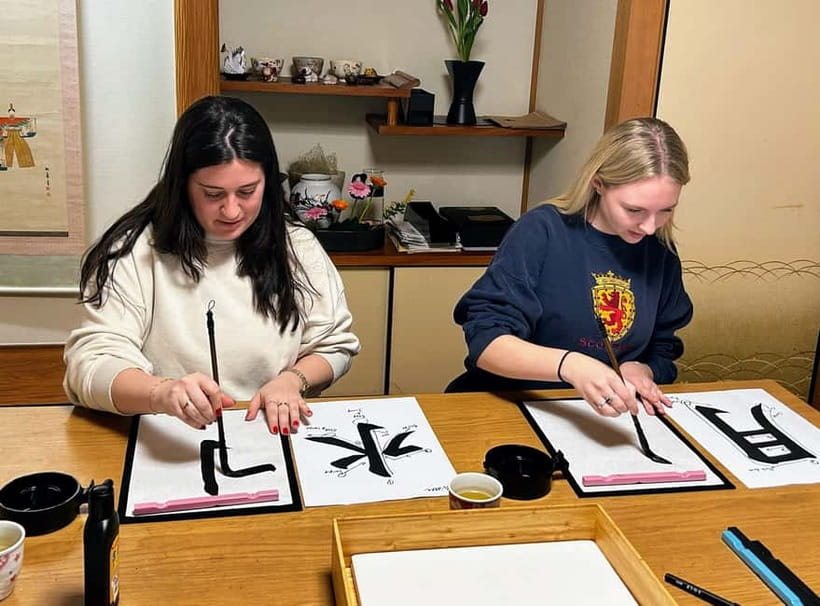
Treat the start time seriously. Arriving a few minutes late shortens the lesson, and arriving more than 15 minutes late means the class cannot be offered. Since the session is only one hour, losing ten minutes is a meaningful part of the experience.
Wear comfortable clothes that allow you to sit and work with your hands. The supplied information specifically requires socks, and shoes stay outside. Strong fragrances are also prohibited, which is worth remembering if you use perfume before heading out.
The activity is wheelchair accessible. It is offered as a private group experience, which gives you more control over who shares the session and can make the home setting feel less exposed.
Free cancellation is available up to 24 hours before the activity for a full refund. You can also reserve now and pay later, useful if your Kyoto plans are still shifting.
Pairing calligraphy with a Nijo Castle day
The nearby castle makes this easy to add to a central Kyoto itinerary. You might visit Nijo Castle first, then move west to the calligraphy lesson while the details of the castle’s architecture and history are still fresh in your mind.
You could also schedule the lesson before sightseeing. That gives you a calm start to the day and leaves you with a finished keepsake to carry through the rest of your plans. Just protect the paper from rain and avoid packing it where it can be crushed.
The class lasts one hour, so it will not take over your day. The important planning point is the appointment time. This is not a drop-in activity, and late arrival has a direct cost in lost instruction.
What makes the finished souvenir special
Many Kyoto souvenirs are beautiful but anonymous. A calligraphy piece has your own hand in it, even though Aya’s teaching helps you shape the result.
You choose the meaning, practice the strokes, and make the final attempt on washi. Your name in Japanese adds another layer of identity. Years later, the character can remind you not only of Kyoto but also of the quiet concentration required to create it.
The artwork may show small imperfections. I consider that a strength, as long as you understand what you are buying. This is an experience that teaches you to value the process, not a service that guarantees a flawless piece produced entirely by an expert.
Should you book it?
Book this experience if you want personal instruction, a local-home setting, and a useful souvenir from a short cultural activity. Aya’s calm teaching style, the chance to choose a meaningful kanji, and the central location near Nijo Castle make it a strong one-hour choice.
Skip it if you want a full calligraphy course, a very cheap craft session, or an activity for children under 13. For everyone else, the $66 price is fair when you value the teacher’s attention and the fact that you create the artwork yourself. Arrive on time, wear socks, and use the venue name in your map. That simple preparation lets you focus on the brush rather than the logistics.
FAQ
How long does the Japanese calligraphy class last?
The activity lasts one hour. The time includes explanations, brush practice, guidance from the instructor, and creation of your final artwork.
Where is the calligraphy class held?
It is held in a local private home about 200 meters west of Nijo Castle. The venue is on the north side of Ebisugawa Street, just west of Nishinotoin Street.
Who teaches the class?
Aya teaches the calligraphy class, with assistance from her team. She explains the background of Japanese calligraphy and demonstrates the brush movements.
Is the class available in English?
Yes. The instructors speak English and Japanese.
What is included in the price?
Instruction and explanations, rental calligraphy tools, ink, and Japanese washi paper are included.
Can I take my artwork home?
Yes. You create a finished calligraphy artwork and can bring it home as a souvenir.
What should I bring?
You must bring socks or arrive wearing socks. Shoes are not allowed indoors, and bare feet are not accepted.
Can children join the class?
Children under 13 are not suitable for this activity. The experience is offered for private groups and is wheelchair accessible.
Recently added around Kyoto
- Higashiyama | Kyoto: Sakura Season Private Rickshaw Tour★ 5.0 · 3 reviews
- Kyoto Kimono Rental CHAMATSU|Kimono/Yukata Rental FamilyPlan★ 5.0 · 3 reviews
- Kyoto: Half-Day Private Guided Tour to the Old Town of Gion★ 4.4 · 3 reviews
- Nara Private Customizable Half Day Tour★ 5.0 · 3 reviews
- Kansai Region Hiking Adventure in Nara Kobe Kyoto and More★ 5.0 · 3 reviews
- Full Day Nara Deer, Temple, Shrine, Activities & Tea Ceremony★ 5.0 · 3 reviews
- Nara: Essential Private Tour with Deer Park and Temples★ 5.0 · 3 reviews
- Hiking Tour for Sacred Sites in Kyoto with a Guide★ 5.0 · 3 reviews
Kyoto Calligraphy Classes, compared.
Calligraphy class at Buddhist temple in city center
Read our review →
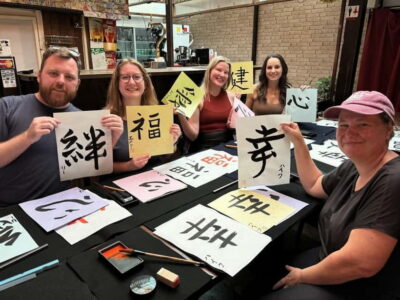
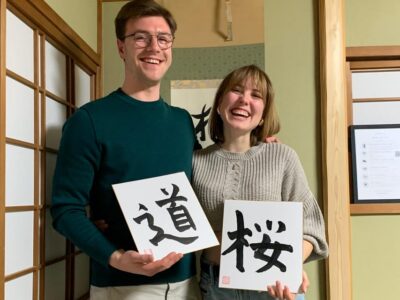
Kyoto Ninenzaka : Japanese Calligraphy Class in Townhouse
Read our review →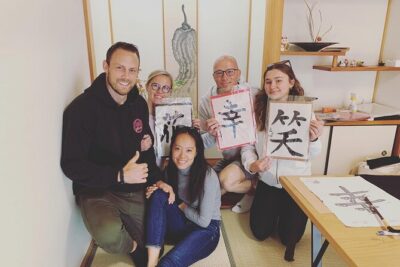
Private Japanese Calligraphy in Kyoto – Learn Shodō with a Master
Read our review →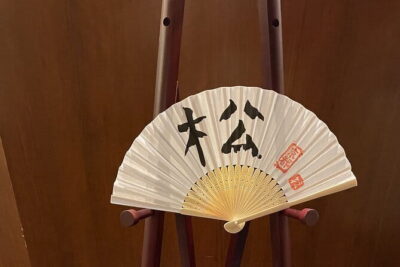
Japanese Calligraphy – Shodo – Lesson (near Kyoto Station)
Read our review →
Browse the lists this tour appears in