
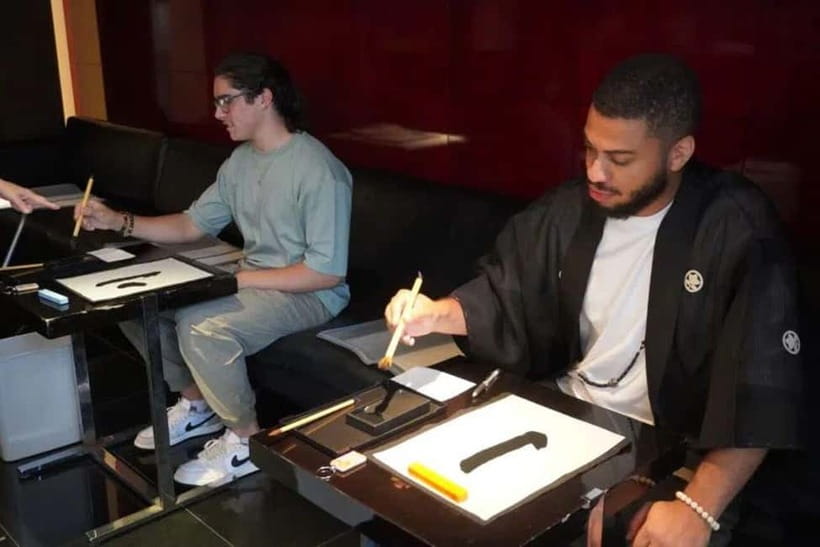
REVIEW · KYOTO CALLIGRAPHY CLASSES
Kyoto: Japanese Calligraphy Class
Japanese calligraphy becomes much more personal when you write your own name and choose a word that matters to you. This one-hour class near Kyoto Station takes you from brush basics to finished souvenirs, with English help throughout.
I like the way the staff explain the meaning behind the Kanji they suggest, and I like that your work does not stay on the practice sheet. You can turn it into a scroll, fan, card, stationery, or picture frame to take home.
The main thing to consider is the short schedule. One hour is enough for a pleasant introduction, but not for advanced calligraphy. Your meeting point can also vary by booking option, so check the details before setting off.
In This Review
- Key points at a glance
- A calm creative break near Kyoto Station
- Your first lesson with brush and ink
- Practicing basic Kanji on washi paper
- Turning practice into a personal scroll
- Creating your name in Japanese
- Patient teachers make the short class work
- What the $51 price includes
- Who will enjoy this Kyoto activity
- Practical details before you book
- Should you book the calligraphy class?
- FAQ
- Where does the Japanese calligraphy class take place?
- How long does the class last?
- Is English instruction included?
- What do I learn during the class?
- Can I write my name in Japanese?
- Are calligraphy materials included?
- Can I take my work home?
- Is this activity suitable for young children?
- Is the class private?
- Can I cancel the booking?
Key points at a glance
- Write your name in Kanji: Staff help create characters for names such as Brian and Liz, with an explanation of each character’s meaning.
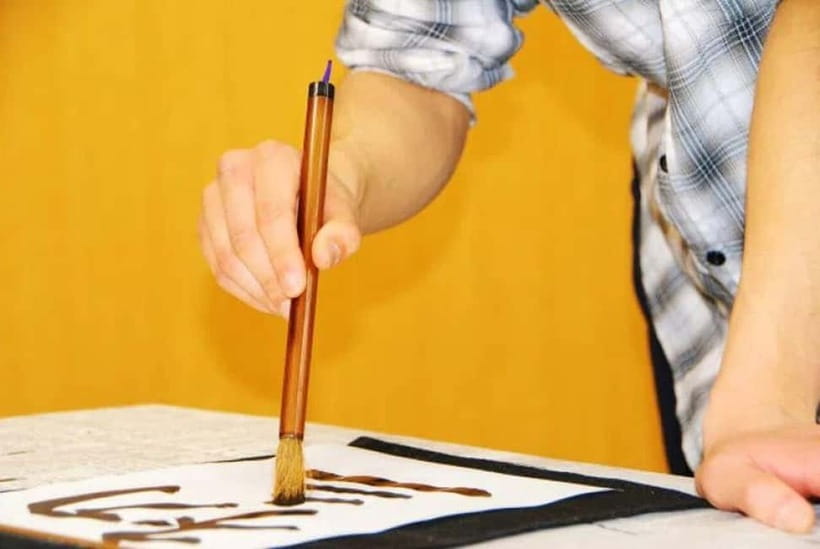
- Begin with the basics: You learn how to hold the brush and apply ink before writing simple characters.
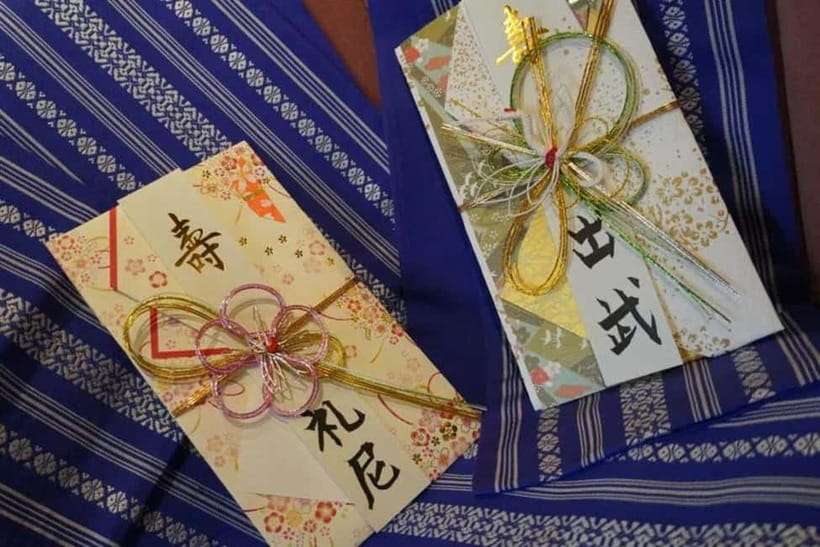
- Take home your work: Your calligraphy can become a scroll or another handmade souvenir.
- English instruction included: The class is designed for visitors without Japanese-language experience.
- Convenient Kyoto location: The activity takes place in front of Kyoto Station.
- Small-group or private format: A more personal lesson may be available depending on the option you book.
A calm creative break near Kyoto Station
Kyoto can fill your day with temples, buses, queues, and a great deal of walking. This calligraphy class offers a quieter hour without sending you far from the city’s main transport hub.
The location in front of Kyoto Station is useful if you are fitting the class between sightseeing stops. You can place it at the start of your day, before heading elsewhere in Kyoto, or later when you want a slower activity. Since the meeting point may vary with the option booked, I would check the confirmation carefully rather than relying only on the broad Kyoto Station description.
At $51 per person, this is not the cheapest one-hour activity in Kyoto. The price makes more sense if you value instruction, personal help, and physical souvenirs rather than simply watching a demonstration. You are paying for the materials, the teaching time, the chance to work at your own pace, and finished items you can carry home.
The format suits solo visitors, couples, families with older children, and small groups. Private and small-group options are available, which matters here because brush control is easier when someone can look closely at your strokes. Children under five are not suitable for the class.
More calligraphy classes:
- Kyoto: Calligraphy class at Buddhist temple in city center
★ 5.0 · 167 reviews - Kyoto: Japanese Calligraphy Workshop
★ 4.7 · 84 reviews - Kyoto: Local Home Visit and Japanese Calligraphy Class
★ 5.0 · 66 reviews
Your first lesson with brush and ink
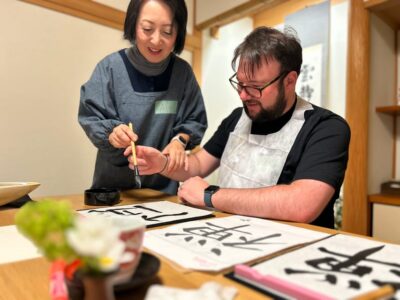
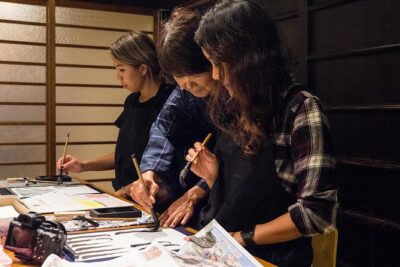
The class begins with a short explanation of how to use the brush and apply ink. This first step matters more than it sounds. A calligraphy brush does not behave like a ballpoint pen, and the amount of ink affects the look of every stroke.
You should expect the instructor to guide you through the basic handling before asking you to create finished characters. The supplied materials include brushes, ink, and washi paper, so you do not need to bring your own equipment.
The English-language instruction is a major advantage for visitors who cannot read Japanese. You can ask questions about writing and language culture as you work, instead of trying to copy shapes without understanding them.
The class appears suited to complete beginners. David, who had no previous knowledge, described the start as easy and found the individual explanations useful. That fits the structure of the activity: you are taught the tools first, then given time to practice before moving on to more personal writing.
Do not expect a long technical course. The session takes about one hour, although the exact length can vary depending on how quickly your group completes the activities. You will learn enough to make a meaningful first attempt, not enough to master Japanese calligraphy.
Practicing basic Kanji on washi paper
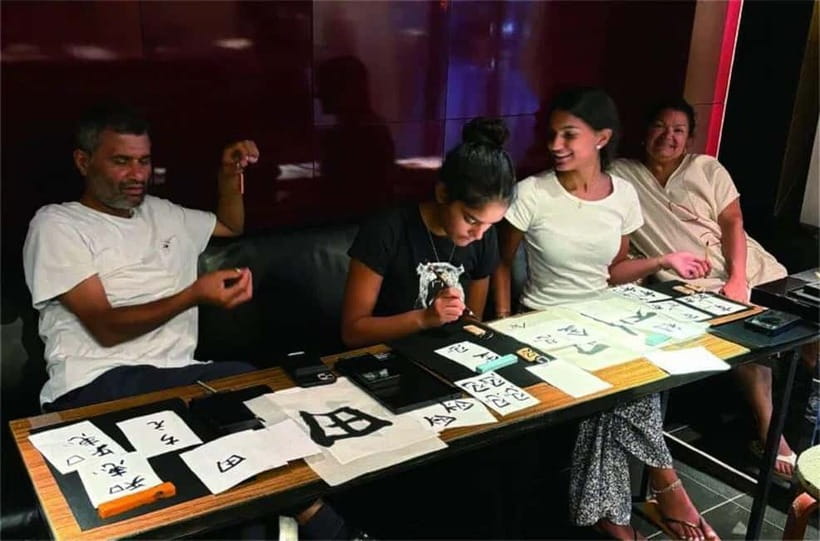
After the brush lesson, you write basic characters. This is where the class shifts from explanation to hands-on practice.
The teachers can help you correct the direction and placement of your strokes. David specifically valued the one-to-one support from Lana and Waka, while other participants praised the patient guidance from Rena and the friendly teaching style of Yoshia Kobayashi and Kou. Staff names may differ by session, but the useful point is clear: personal assistance is part of the experience, not an extra service you need to arrange.
You will probably produce several attempts before choosing work for a souvenir. That is part of the fun. Calligraphy has a pleasing contrast between careful control and small imperfections, and your final piece will show that you made it yourself.
The washi paper gives the activity a distinctly Japanese feel and is included in the price. I like that you are not handed a generic keepsake at the end. Your own brushwork becomes the souvenir.
The class also gives you a chance to slow down. David described the calm pace as a welcome change from the speed of a sightseeing day. That is a useful reason to book this activity even if you are not especially artistic. You get a focused task, a little quiet, and a break from checking maps and schedules.
Turning practice into a personal scroll
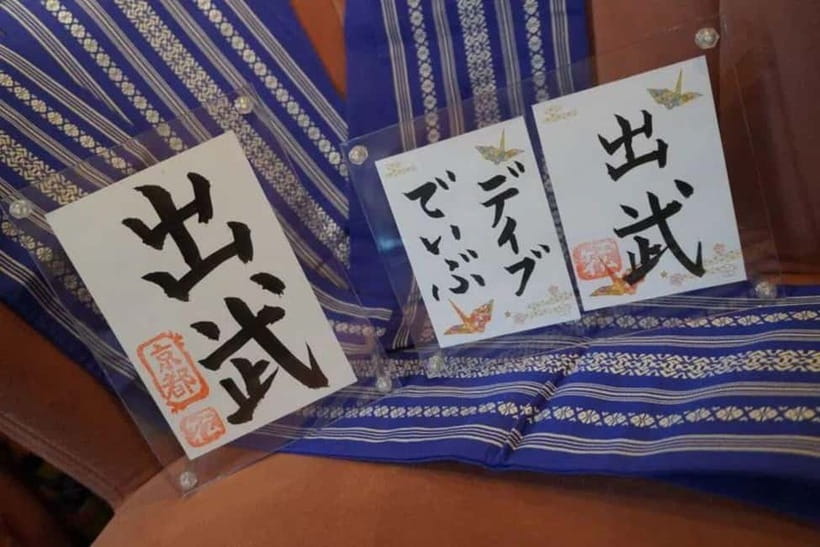
Once you have practiced basic characters, you can make a scroll from the Kanji you write. This is one of the strongest parts of the class because it gives your practice a finished form.
A scroll is also easier to display or store than a loose sheet of paper. If you are visiting Japan with limited luggage space, it is still a compact reminder of Kyoto and your own work.
The class does not promise that every participant will make the same item. The included souvenirs can vary and may include a Japanese fan, picture frame, or other paper products. The available choices may depend on the option you book and the progress of the session.
I would treat the souvenir choices as a pleasant part of the class rather than a reason to expect a particular item. Shannon made a fan, postcard, and stationery, while Sarah appreciated leaving with a souvenir made from her own effort. The exact combination is not guaranteed, but you should have something tangible to take home.
This makes the activity especially appealing for families. Nishani brought children who enjoyed having their writing to keep, and Vani’s family of four found the class easy to enjoy together. Younger children may need help with the brush and ink, and the experience is not suitable for children under five.
More workshops and classes in Kyoto:
- Kyoto: 45-Minute Tea Ceremony Lesson Experience
★ 4.3 · 2,378 reviews - Kyoto : Chopsticks Making Workshop in Gion with Engraving Option
★ 5.0 · 958 reviews - Kyoto: Samurai Sword Class by Experts in Traditional Arts
★ 4.9 · 657 reviews - Kyoto: Ramen Cooking Class at a Ramen Factory with Souvenir
★ 4.9 · 532 reviews
Creating your name in Japanese
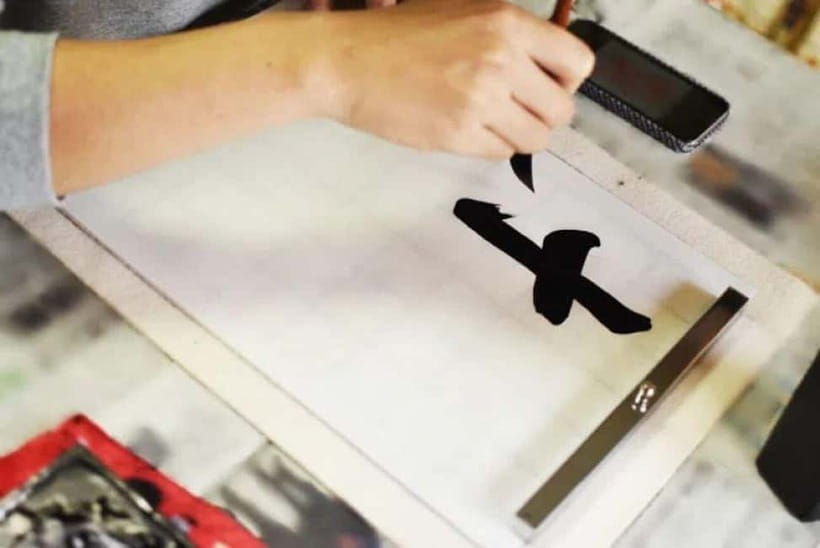
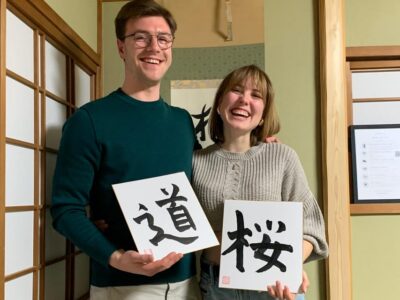
The most distinctive section is writing your name and a favorite word in Kanji and alphabets. The staff help suggest possible Kanji characters and explain their meanings.
This is not a direct letter-for-letter translation in the way you might translate a sentence. The examples show how names can be represented through characters chosen for sound and meaning. Brian is presented as 武礼安, with ideas connected to bravery or a military commander, politeness or gratitude, and peace. Liz is shown as 梨図, linked to pear and painting.
These examples give you a sense of what makes the activity interesting. Your name becomes a small language lesson, and you can ask why certain characters are being considered. The result may not be a simple dictionary translation, but the staff help you understand the character choices.
You can also choose a favorite word. That gives you more control over the finished piece and can make the souvenir feel less like a standard tourist product. If you already have a word in mind, it is worth arriving prepared with one or two possibilities. The information provided does not promise that every word will have a single direct Kanji equivalent, so let the instructors guide the final choice.
You also write in alphabets, which helps connect the familiar Roman alphabet with the Japanese characters. For someone who has never handled Kanji before, this makes the lesson more approachable.
Patient teachers make the short class work
The strongest pattern in the feedback is the quality of the instruction. Rena is described as warm, clear, and patient, with a way of explaining complex language without making the art feel difficult. Lana and Waka are praised for individual stroke guidance, and Yoshia Kobayashi and Kou helped make one session both friendly and engaging.
That matters because calligraphy can look simple from across a room. The finished characters may contain only a few strokes, but brush pressure, ink, and order all affect the result. A teacher who watches your hand can help far more than a printed guide.
The instruction is also encouraging rather than formal. Jannes found the staff caring and patient, while Liv Bru appreciated explanations about calligraphy and Japanese culture along with steady encouragement. You can ask questions during the process, and English is the listed language for the class.
Because the format is private or small group, you may receive more attention than in a large demonstration. The exact group size is not stated, so I would not assume a guaranteed one-to-one lesson. Still, the individual help described by several participants suggests that staff make an effort to work closely with each person.
What the $51 price includes
The $51 fee covers the use of brushes, ink, and washi paper, plus some items you can take home. Depending on the activity option, those items may include a Japanese fan, picture frame, scroll, postcard, or stationery.
I see the value in three parts:
- You receive guided instruction rather than only a short demonstration.
- You use proper class materials without buying them separately.
- You leave with personal work instead of a disposable activity sheet.
At the same time, this remains a short introductory class. If you are mainly interested in studying calligraphy in depth, $51 for one hour will not replace a longer course. If you want a cultural activity that is easy to fit into a Kyoto schedule and gives you a handmade reminder of Japan, the price is more reasonable.
The convenience of the location also affects the value. A class in front of Kyoto Station can save time and simplify your day, especially if you are changing trains or using the station as your base. Just confirm the precise meeting point for your selected option.
Who will enjoy this Kyoto activity
I would recommend this class to you if you want a creative activity with a clear result. It works well for first-time visitors, since English instruction and staff assistance are included.
Families with children over five are a good match. The class offers a task children can see and touch, and they can take their writing home. Adults who want a quiet break from sightseeing should also consider it, especially if temples and museums have filled the rest of the day.
It is a good choice for couples and friends who want to make different souvenirs side by side. You can choose your own name and word, so the finished pieces do not all need to look alike.
I would be more cautious if you want a long, traditional study session or a highly formal artistic lesson. The activity is designed as an accessible introduction. The one-hour schedule leaves limited time for repeated practice, detailed history, or advanced techniques.
Practical details before you book
The class lasts about one hour, but timing can vary with the completion of the activities. Check available starting times before booking so the session fits your Kyoto plans.
English is the listed instruction language. That is enough to ask about brush handling, Kanji choices, and meanings during the activity.
Private and small-group formats are available, though the exact arrangement depends on the option selected. If personal attention is important to you, choose the most suitable small-group or private option rather than assuming all bookings have the same setup.
Free cancellation is available up to 24 hours in advance for a full refund. You can also reserve now and pay later, which is useful if your Kyoto schedule is still shifting.
The meeting point may vary by option. Since the broad location is in front of Kyoto Station, allow time to match the booking instructions with the station area before the class begins.
Should you book the calligraphy class?
I would book it if you want a short, friendly introduction to Japanese writing and a souvenir with your own brushwork on it. The personal name exercise, English explanations, patient instruction, and central location give the class more substance than a simple craft stop.
The best reason to choose it is the balance of culture and participation. You do not just look at calligraphy. You learn how the brush and ink work, practice basic characters, explore the meaning of your name, and bring home something you made.
Skip it if you need a serious multi-hour course or want complete certainty about the exact souvenir before paying. Otherwise, $51 buys a manageable hour, useful guidance, materials, and a keepsake that connects directly to your time in Kyoto.
FAQ
Where does the Japanese calligraphy class take place?
The activity is located in front of Kyoto Station in Kyoto, Japan. The exact meeting point may vary depending on the option you book, so check your booking details.
How long does the class last?
The class takes about one hour. The timing may vary depending on how quickly the activities are completed.
Is English instruction included?
Yes. English is the listed instruction language, and the staff assist with brush use, writing, Kanji choices, and meanings.
What do I learn during the class?
You learn how to use a calligraphy brush, how to apply ink, and how to write basic characters. You also write your own name and a favorite word in Kanji and alphabets.
Can I write my name in Japanese?
Yes. The staff suggest possible Kanji characters for your name and explain their meanings. Examples include Brian written as 武礼安 and Liz written as 梨図.
Are calligraphy materials included?
Yes. The class includes the use of brushes, ink, and washi paper.
Can I take my work home?
Yes. You can make souvenirs and take them home. Depending on the option, these may include a scroll, Japanese fan, picture frame, postcard, or stationery.
Is this activity suitable for young children?
Children under five are not suitable for the class. Families with older children can take part, with staff assistance available during the activity.
Is the class private?
Private or small-group options are available. The exact group type depends on the option you select when booking.
Can I cancel the booking?
Yes. You can cancel up to 24 hours in advance for a full refund. A reserve-now-and-pay-later option is also available.
Recently added around Kyoto
- Higashiyama | Kyoto: Sakura Season Private Rickshaw Tour★ 5.0 · 3 reviews
- Kyoto Kimono Rental CHAMATSU|Kimono/Yukata Rental FamilyPlan★ 5.0 · 3 reviews
- Kyoto: Half-Day Private Guided Tour to the Old Town of Gion★ 4.4 · 3 reviews
- Nara Private Customizable Half Day Tour★ 5.0 · 3 reviews
- Kansai Region Hiking Adventure in Nara Kobe Kyoto and More★ 5.0 · 3 reviews
- Full Day Nara Deer, Temple, Shrine, Activities & Tea Ceremony★ 5.0 · 3 reviews
- Nara: Essential Private Tour with Deer Park and Temples★ 5.0 · 3 reviews
- Hiking Tour for Sacred Sites in Kyoto with a Guide★ 5.0 · 3 reviews
Kyoto Calligraphy Classes, compared.
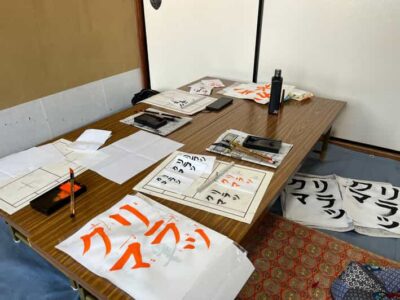
Calligraphy class at Buddhist temple in city center
Read our review →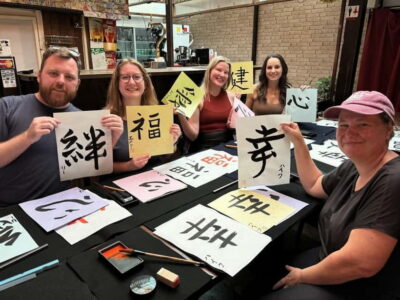
Kyoto Ninenzaka : Japanese Calligraphy Class in Townhouse
Read our review →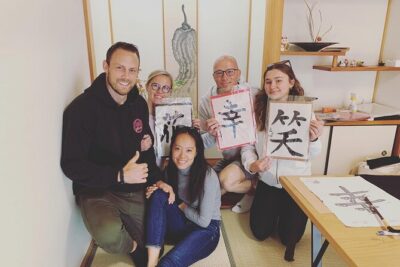
Private Japanese Calligraphy in Kyoto – Learn Shodō with a Master
Read our review →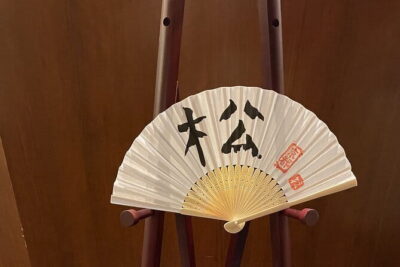
Japanese Calligraphy – Shodo – Lesson (near Kyoto Station)
Read our review →
Browse the lists this tour appears in