
REVIEW · FUSHIMI INARI SHRINE TOURS
Kyoto Morning Highlights Tour: Fushimi, Kiyomizu-dera & Gion
Kyoto is at its best before the tour buses arrive, and this early-morning walking tour makes that simple. You meet at Kyoto Station, ride public transportation, and visit Fushimi Inari, Kiyomizu-dera, and Gion while the day is still calm. Guide Ikki adds useful context about Shinto, Buddhism, prayer customs, and Japanese traditions.
I like the efficient route and the chance to see three major Kyoto sights in half a day. I also like the practical extras: professional photos, a sample of Kyoto sweets, and a guide who can help you understand what to do at a shrine instead of merely pointing at buildings.
The main tradeoff is the start time and the amount of walking. You must arrive on time, and late arrivals cannot join or receive a refund. The tour is not suitable for wheelchair users, and strollers and baby carriages are not allowed.
In This Review
- Key points at a glance
- Why an early start changes Fushimi Inari
- Kiyomizu-dera, views, and temple customs
- Gion makes a fitting final stop
- What Ikki adds beyond a standard sightseeing route
- Is $81 a fair price?
- Who should book this Kyoto morning tour?
- Meeting at Kyoto Station without stress
- Final call: a strong choice for an active half-day
- FAQ
- Where does the tour begin?
- Where does the tour end?
- What sights are included?
- Is transportation included?
- What is included in the price?
- Is the tour suitable for wheelchair users or strollers?
Key points at a glance
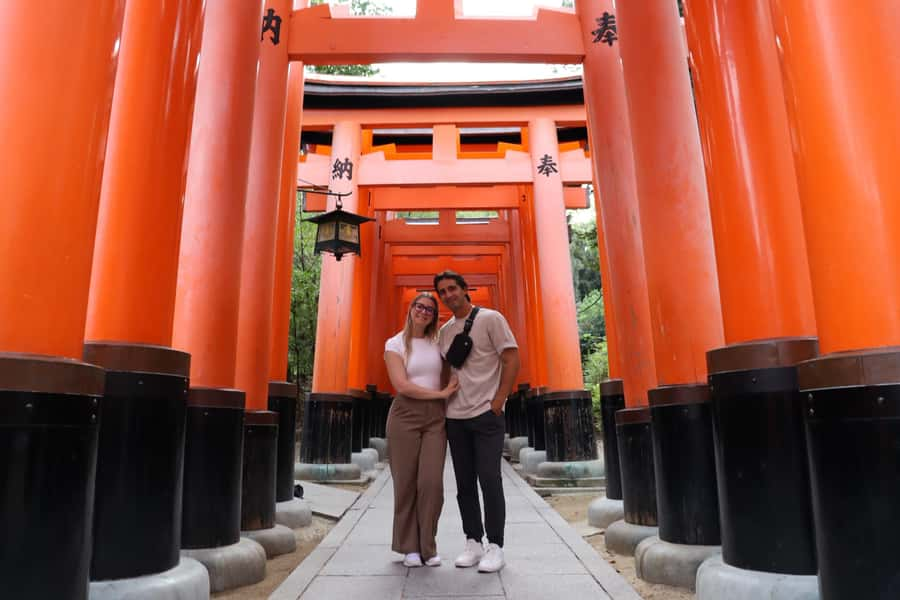
- Fushimi Inari before the crowds: Walk beneath thousands of vermilion torii gates in the softer morning light.
- Kiyomizu-dera city views: Visit one of Kyoto’s best-known temples and look across the city from its elevated setting.
- Gion on foot: Finish among traditional streets and Kyoto’s most famous geisha district.
- Guide Ikki’s cultural instruction: Learn how to behave and pray at Shinto shrines, along with background on Buddhist and Shinto customs.
- Photos and a Kyoto sweet included: You do not have to rely entirely on rushed self-timer shots.
- A useful half-day format: The route works well if your Kyoto schedule is tight, though the walking is moderate.
Why an early start changes Fushimi Inari
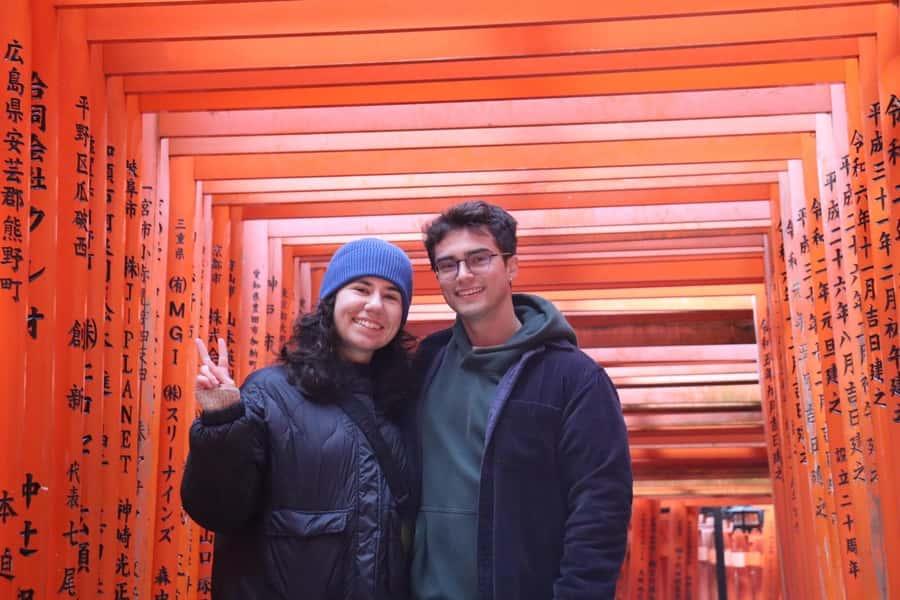
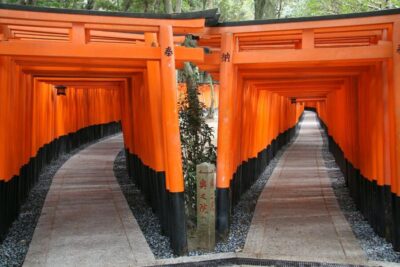
Fushimi Inari is one of Kyoto’s most recognizable sights, thanks to its long rows of orange-red torii gates climbing through the wooded grounds of Mount Inari. The gates are donated by individuals and businesses, and the repeated passageways create one of the city’s most memorable walks.
The timing matters here. Later in the day, the shrine can become crowded, especially around the lower gates and the main approach. An early visit gives you a better chance to enjoy the quiet rhythm of the path and take clear photos without constantly waiting for an opening.
You will not simply arrive, take one picture, and leave. The point is to walk through the gates and notice how the shrine changes as you move farther from the entrance. The morning light can make the vermilion gates glow, while the surrounding trees help soften the noise of the city.
This is still a walking experience, not a sightseeing bus tour. Wear shoes that can handle an uphill route and uneven ground. The tour information describes the walking as moderate, but the exact distance and pace are not specified, so you should be comfortable spending much of the morning on your feet.
A guide is especially useful at Fushimi Inari because the site can seem confusing at first. There are many gates, side paths, stone fox figures, and religious details that are easy to pass without understanding. Ikki explains how to act at Japanese shrines and teaches the proper way to pray, giving the visit more meaning than a quick photo stop.
More ways to walk Fushimi Inari:
- Kyoto: Fushimi Inari, Kinkakuji, Bamboo Grove 1 Day Bus Tour
★ 4.8 · 4,316 reviews - Fushimi Inari Hidden Hiking Tour (Private Option Available)
★ 5.0 · 1,750 reviews - Kyoto/Osaka: Nara, Fushimi Inari Taisha, Arashiyama Bus Tour
★ 4.7 · 1,275 reviews
Kiyomizu-dera, views, and temple customs
From Fushimi Inari, the group uses public transportation to continue toward Kiyomizu-dera. Transportation is not included in the tour price, but the estimated cost is modest, about 400 yen. You should carry some yen or be prepared to pay the fare as directed by your guide.
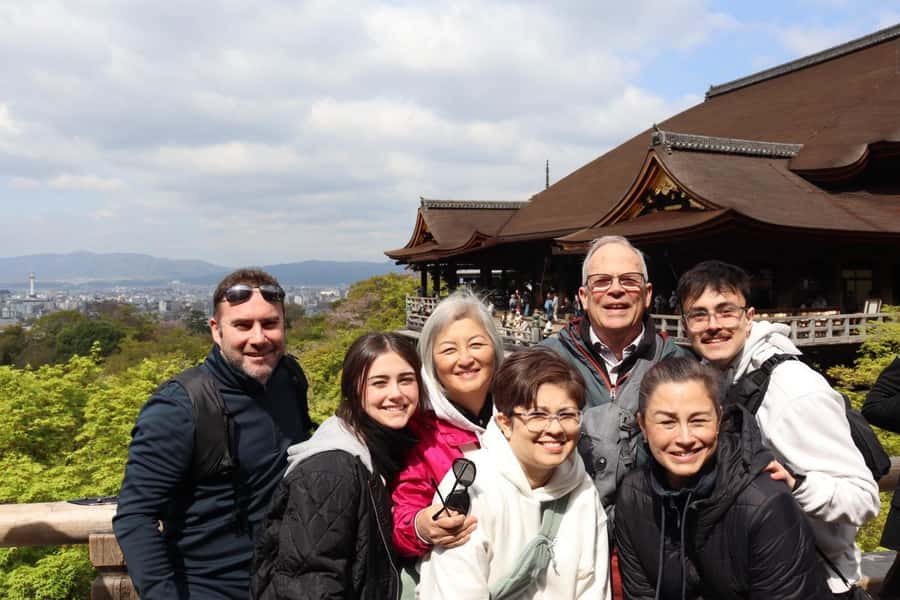
Kiyomizu-dera is famous for its wooden stage and broad views across Kyoto. Its position above the city makes this a good place to pause after the more enclosed torii-gate walk. You can look out over Kyoto while your guide explains the temple’s customs and the difference between Buddhist and Shinto sites.
The entrance fee to Kiyomizu-dera is included, listed as 500 yen. That helps make the $81 price easier to assess, though the larger value comes from the guide and the efficient route rather than from admission savings alone.
The most useful part of a guided temple visit is often the behavior lesson. Japanese religious sites have customs that can be easy to miss: how to approach a shrine, how to cleanse yourself, and how to pray. Ikki’s explanations give you a clear way to take part respectfully.
Kiyomizu-dera can also be busy, even in the morning. The early schedule improves your odds of a calmer visit, but it cannot guarantee an empty temple. You should expect other people, some walking, and time spent moving through a popular working religious site rather than a private monument.
The tour also includes a traditional Kyoto sweet. The exact sweet is not specified, so think of this as a small taste rather than a full food stop. It is a pleasant touch, especially if you have started early and have not yet eaten, but you should bring breakfast or plan a proper meal later because meals and drinks are not included.
Gion makes a fitting final stop

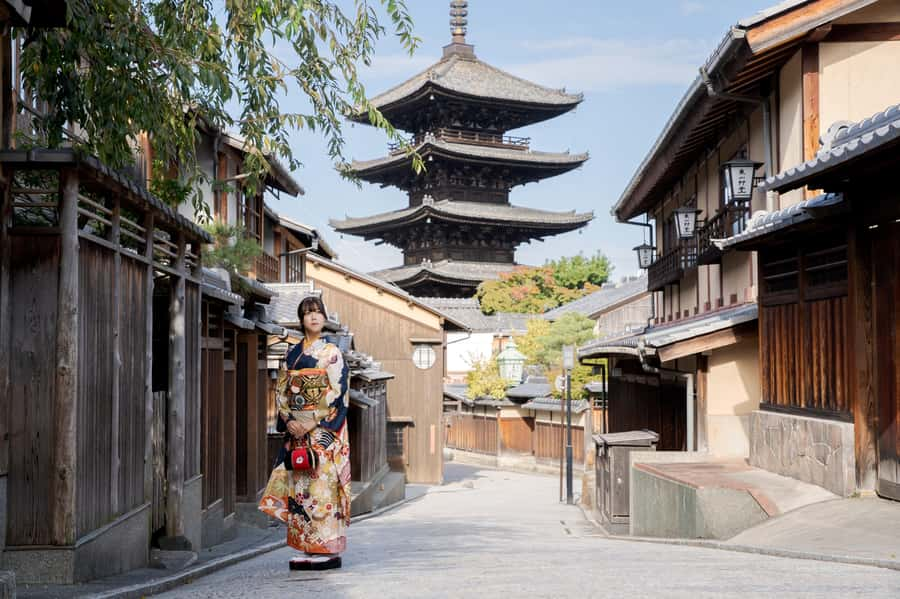
The route ends with a walk through Gion, Kyoto’s best-known historic district. Narrow streets, traditional wooden buildings, and old lanes give this part of the city a different feel from the shrine and temple grounds.
Gion is also associated with geisha culture, and a guide can help you understand the district without reducing it to a photo backdrop. Ikki’s background as a Kyoto-born guide, as described during the experience, adds a local point of view to questions about customs and daily life.
This is a walking tour, so you will see Gion from street level. Do not expect a formal geisha performance, a meal, or a reserved entrance to a private building. The value is in walking the district with context, noticing details, and learning how this old quarter fits into Kyoto today.
You should also behave carefully here. Keep voices low, do not block narrow lanes, and be respectful around residents and businesses. Your guide can explain local etiquette, but you remain responsible for following it.
The tour finishes back at the original meeting point near Kyoto Station. That is convenient if you need to collect luggage, catch a train, or continue to another part of the city. It also means you do not have to work out a separate return route after a morning of walking.
What Ikki adds beyond a standard sightseeing route
The strongest part of this experience is its human element. Ikki is repeatedly described as warm, professional, and easy to understand in English. He explains temple and shrine traditions, answers questions, and offers tips for the rest of your time in Japan.
That kind of help is valuable in Kyoto because the visual appeal can distract you from the meaning of what you are seeing. At Fushimi Inari, he can explain shrine manners. At Kiyomizu-dera, he can help separate Buddhist practice from Shinto practice. In Gion, he can connect the streets to Kyoto’s wider culture.
You also get a chance to ask broader questions about Japan. This is useful if you are visiting for the first time and want help with everyday customs that guidebooks often treat briefly. The experience is not only about moving from one famous site to the next.
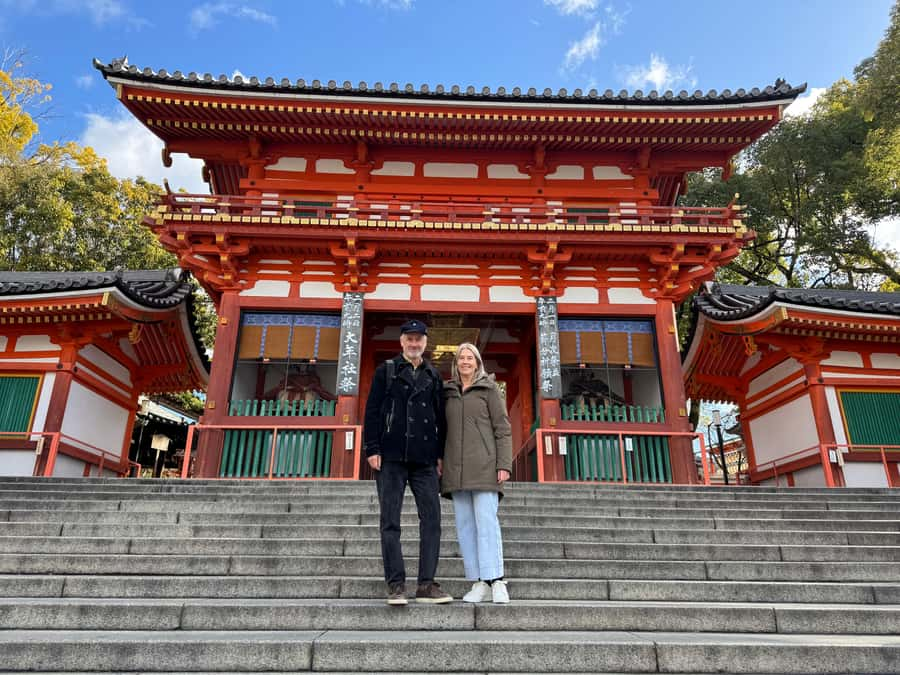
The photo service is another practical benefit. Professional photos are taken during the tour, and the guide is also described as knowing good photo spots. This can be particularly helpful for couples, families, and solo visitors who would otherwise have to ask strangers to take pictures.
Do keep your expectations reasonable. The information does not specify how many photos you receive, when they are delivered, or what camera equipment is used. Treat the photos as a valuable extra, not as a full professional portrait session.
The tour also includes free Wi-Fi. That can help with maps, translation, messaging, and checking your next stop. Public transportation, however, is still at your own expense, and personal spending is not covered.
More evenings in Gion:
- Kyoto Geisha Walking Tour: Gion District & Hidden Gems
★ 4.7 · 3,273 reviews - Kyoto: Gion Magical Night Walking Tour with Geisha Trivia
★ 4.9 · 2,393 reviews - Kyoto: Gion Geisha District Walking Tour – Stories of Geisha
★ 4.7 · 2,187 reviews - Best of Kyoto: Gion, Geisha, Pagodas & Cobblestones
★ 4.9 · 2,058 reviews
Is $81 a fair price?
At $81 per person, this is not the cheapest way to visit Kyoto’s major sights. You can reach Fushimi Inari, Kiyomizu-dera, and Gion on your own for much less, especially if you already understand the train and bus system and are comfortable reading signs.
The price makes more sense if you want a local English-speaking guide, organized transportation, cultural explanations, photos, and a route that fits into half a day. The Kiyomizu-dera admission fee and traditional sweet are included, but the roughly 400 yen transportation fare is extra.
The tour is also sold as private or small group. The exact group size is not stated, so you should confirm the format if personal attention is important to you. A small group usually makes it easier to hear the guide and ask questions, while a private outing may offer more flexibility.
I would compare the price with your own priorities. If you mainly want to reach the torii gates and take pictures, independent sightseeing will cost less. If you want to understand shrine etiquette, learn the difference between religious traditions, and have someone organize the morning, the extra cost can be worthwhile.
The early schedule is part of the value. You are paying not only for access to the sights, but also for a plan designed to reach them before the busiest part of the day. That advantage matters most during peak travel periods, when Kyoto’s famous areas can feel crowded and slow.
Who should book this Kyoto morning tour?
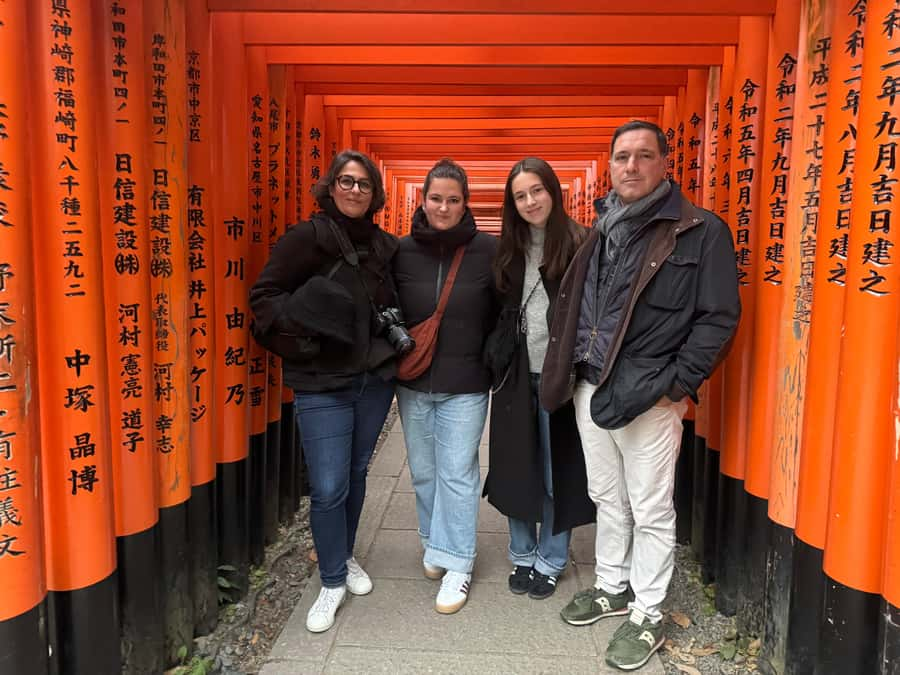
This tour is a good match for first-time visitors who want to see Kyoto’s essential sights without spending a full day planning routes. It also suits couples and families with older children who want shared photos and a guide who can answer questions as they go.
It works well for anyone interested in customs and culture, not just architecture. Ikki’s explanations about prayer, shrine behavior, Shinto, Buddhism, samurai, monks, emperors, and geisha culture add useful background to the places you see.
You will also benefit if you have limited time in Kyoto. The tour covers three major areas in one morning and returns you to Kyoto Station, leaving the afternoon open for lunch, shopping, another temple, or a rest.
This is less suitable if you dislike early starts or prefer a slow morning. It is also a poor fit if you want to spend hours at one site, since the route is designed to cover several landmarks efficiently.
People using wheelchairs should not book this tour, according to the stated restrictions. Strollers and baby carriages are also not allowed. Anyone joining should wear comfortable walking shoes and be ready for a moderate amount of walking.
One point needs clarification before you pay: the tour information names Kasuga Grand Shrine among its highlights, but the route description focuses on Fushimi Inari, Kiyomizu-dera, and Gion. Kasuga Grand Shrine is not explained in the schedule, so ask the provider if that sight is meant to be part of your particular departure.
Meeting at Kyoto Station without stress
The meeting point is at the central exit of Kyoto Station, with Kyoto Tower nearby. Look for the yellow map beside the 7-Eleven, where the guide will hold a sign with the OTAKU hopper logo.
Kyoto Station is large, so allow extra time to find the central exit. The provider sends more detailed meeting instructions and images after booking, which should help, but you should still avoid cutting it close.
The late-arrival rule is strict. If you miss the meeting time, you cannot join the tour and will not receive a refund. This is especially important because the group needs to catch public transportation and keep the early route moving.
The activity ends back at the same meeting point. That makes the tour easy to pair with plans near Kyoto Station, but remember that the morning is not door-to-door transportation from your hotel. You must reach the station yourself.
You can reserve now and pay later, which gives you some flexibility while arranging your Kyoto schedule. Cancellation is allowed up to 24 hours before the tour for a full refund.
Final call: a strong choice for an active half-day
Book this tour if you want an early, organized introduction to Kyoto and care about understanding what you are seeing. The best reasons are the before-the-crowds timing, Ikki’s clear cultural guidance, the three-stop route, and the included photos.
Skip it if you want to travel independently at the lowest possible cost, avoid morning exercise, or need wheelchair or stroller access. Also confirm the group size and the mention of Kasuga Grand Shrine before booking.
For most first-time visitors with only a short window in Kyoto, the tour offers a practical way to cover major sights without treating them as a checklist. Bring water, wear good shoes, arrive early, and let the morning carry you from torii gates to temple views and the old streets of Gion.
FAQ
Where does the tour begin?
It begins at the central exit of Kyoto Station, near Kyoto Tower. The guide waits by the yellow map next to the 7-Eleven and carries an OTAKU hopper logo sign.
Where does the tour end?
The activity ends back at the original meeting point near Kyoto Station.
What sights are included?
The route description includes Fushimi Inari Shrine, Kiyomizu-dera Temple, and the Gion district. The tour information also names Kasuga Grand Shrine among its highlights, so confirm whether it is included in your departure.
Is transportation included?
No. Public transportation is used during the walking tour, and the estimated fare is about 400 yen per person.
What is included in the price?
The price includes an English-speaking local guide, Kiyomizu-dera’s 500-yen entrance fee, a sample of traditional Kyoto sweets, professional photos, and free Wi-Fi. Meals, drinks, transportation, and personal expenses are not included.
Is the tour suitable for wheelchair users or strollers?
No. The tour is not suitable for wheelchair users, and baby strollers and baby carriages are not allowed. Comfortable walking shoes are recommended because the route involves a moderate amount of walking.
More Morning in Kyoto
- Kyoto Early Morning Tour with English-Speaking Guide
★ 5.0 · 1,427 reviews - Kyoto: Early Morning Tour with English-Speaking Guide
★ 4.9 · 1,128 reviews - Nara Early Morning Tour (Kyoto or Osaka Departure Available)
★ 5.0 · 676 reviews - From Kyoto: Nara Guided Morning Tour
★ 4.6 · 335 reviews
More Visits to Kiyomizu-dera
- Kyoto: Tea Ceremony in a Traditional Tea House in Kiyomizu
★ 4.9 · 3,519 reviews - Kyoto: Nijo Castle, Kiyomizu & Fushimi Inari Guided Tour
★ 4.7 · 700 reviews - Kyoto: Nijo, Kinkaku-ji, Arashiyama, Kiyomizu & Fushimi Inari
★ 5.0 · 699 reviews - Kyoto Tea Ceremony & Kiyomizu-dera Temple Walking Tour
★ 5.0 · 115 reviews
Recently added around Kyoto
- Higashiyama | Kyoto: Sakura Season Private Rickshaw Tour★ 5.0 · 3 reviews
- Kyoto Kimono Rental CHAMATSU|Kimono/Yukata Rental FamilyPlan★ 5.0 · 3 reviews
- Kyoto: Half-Day Private Guided Tour to the Old Town of Gion★ 4.4 · 3 reviews
- Nara Private Customizable Half Day Tour★ 5.0 · 3 reviews
- Nara: Essential Private Tour with Deer Park and Temples★ 5.0 · 3 reviews
- Kansai Region Hiking Adventure in Nara Kobe Kyoto and More★ 5.0 · 3 reviews
- Full Day Nara Deer, Temple, Shrine, Activities & Tea Ceremony★ 5.0 · 3 reviews
- Hiking Tour for Sacred Sites in Kyoto with a Guide★ 5.0 · 3 reviews
Fushimi Inari Shrine Tours, compared.
Fushimi Inari, Kinkakuji, Bamboo Grove 1 Day Bus Tour
Read our review →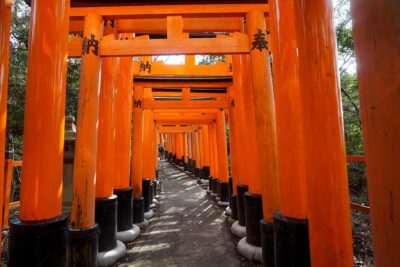
Fushimi Inari Hidden Hiking Tour (Private Option Available)
Read our review →
Kyoto/Osaka: Nara, Fushimi Inari Taisha, Arashiyama Bus Tour
Read our review →
Nijo, Kinkaku-ji, Arashiyama, Kiyomizu & Fushimi Inari
Read our review →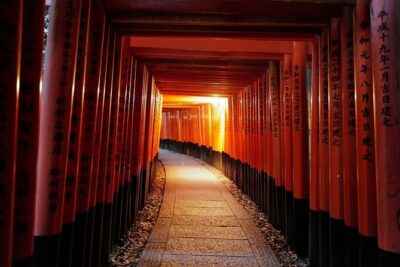
Kyoto Early Bird English Tour: Fushimi-Inari and Arashiyama
Read our review →
Fushimi, Arashiyama – Bamboo, Monkey, Torii & Secrets
Read our review →Browse the lists this tour appears in