
REVIEW · FUSHIMI INARI SHRINE TOURS
Kyoto Early Bird English Tour: Fushimi-Inari and Arashiyama
Kyoto’s famous sights are much easier to enjoy before the city wakes up. This tour takes you to Fushimi Inari Shrine and Arashiyama early, when the torii gates and bamboo paths are far less crowded and the summer heat has not yet settled in.
I like two things right away: the small group, limited to eight people according to the tour details, and the practical help with Kyoto’s trains. Guides such as Vincent, Hiro, Caleb, Eri, Haruka, Jem, and Cade are praised for clear explanations, good pacing, local context, and thoughtful photo stops.
The main drawback is cost. At $96.83 per person, this is not a cheap sightseeing outing, especially since train transportation costs an additional ¥390 per person. Tenryu-ji admission information is also inconsistent, so confirm what is covered before you book.
In This Review
- Kyoto’s best-known sights before the crowds arrive
- What makes this morning useful
- Meeting at Kyoto Station before 7 a.m.
- Fushimi Inari’s torii gates and Mount Inari paths
- Arashiyama Bamboo Forest in its quietest window
- Tenryu-ji Temple and its Zen garden
- Togetsukyo Bridge for a short river view
- The small-group format is the tour’s strongest feature
- Train travel is convenient, but not included
- What the $96.83 price buys you
- Who should book this early Kyoto route
- Should you book the Fushimi Inari and Arashiyama early tour?
- FAQ
- How long does the Kyoto early bird tour last?
- Where does the tour start?
- Where does the tour end?
- What sights are included in the route?
- Is transportation included in the tour price?
- Is Tenryu-ji admission included?
- How many people can join the tour?
- Can I cancel for a full refund?
Kyoto’s best-known sights before the crowds arrive
This four-to-five-hour outing links two of Kyoto’s most popular photo stops in one morning. Fushimi Inari lies south of central Kyoto, while Arashiyama sits on the western side of the city, so the route saves you from working out the order, transfers, and timing on your own.
The early start is the real product here. Fushimi Inari and the Arashiyama Bamboo Forest can feel packed later in the day, with people stopping beneath every gate and along every narrow path. Starting early gives you a better chance at clear photographs and a calmer walk.
I also like that this is more than a quick photo run. Your guide explains the religious and cultural setting, then keeps the group moving through four distinct stops. The result is a useful first look at Kyoto, though you should not expect long, independent visits at each site.
What makes this morning useful
- Early access to Fushimi Inari: Walk beneath rows of orange-red torii gates before the heaviest crowds.
- Small-group attention: The group is capped at eight in the additional information, allowing easier questions and less waiting.
- Four major stops: The route includes Fushimi Inari, the bamboo forest, Tenryu-ji Temple, and Togetsukyo Bridge.
- Train guidance included in practice: Your guide helps the group use public transportation, but the ¥390 transport cost is extra.
- Strong guide reports: Vincent, Hiro, Caleb, Eri, Jem, Haruka, Caleb, and Cade are singled out for clear explanations, humor, pacing, and help with photographs.
- A morning-friendly route: You finish back at the Kyoto Station meeting point after roughly four to five hours.
More ways to walk Fushimi Inari:
- Kyoto: Fushimi Inari, Kinkakuji, Bamboo Grove 1 Day Bus Tour
★ 4.8 · 4,316 reviews - Fushimi Inari Hidden Hiking Tour (Private Option Available)
★ 5.0 · 1,750 reviews - Kyoto/Osaka: Nara, Fushimi Inari Taisha, Arashiyama Bus Tour
★ 4.7 · 1,275 reviews
Meeting at Kyoto Station before 7 a.m.
The meeting point is the 7-Eleven Heart-In store at the central entrance of JR Kyoto Station, on Karasuma Street. This is a practical location for anyone staying near the station, but the station is large, so leave enough time to find the correct entrance and shop.
The early hour matters. One recurring strength of the experience is that the guide sends clear joining instructions and helps people get organized before boarding the train. One small group even had trouble assembling at first, which is a reminder to read the meeting directions carefully and arrive early.
This is not a hotel pickup tour. You make your own way to Kyoto Station, and the activity ends back at the same meeting point. That arrangement works well if you plan to spend the rest of the day near the station, but it gives you less flexibility if your hotel or next stop is elsewhere.
Fushimi Inari’s torii gates and Mount Inari paths
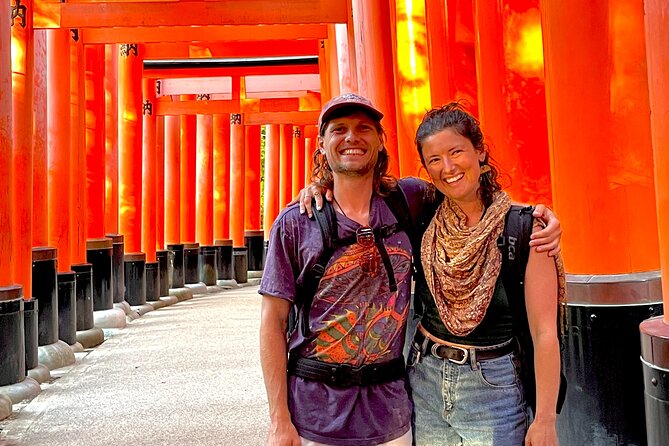
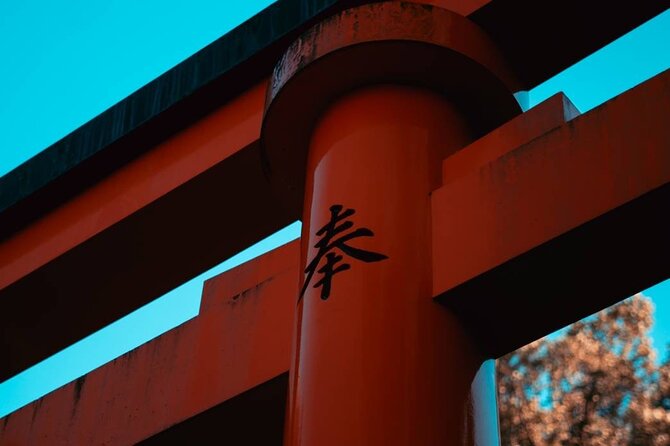
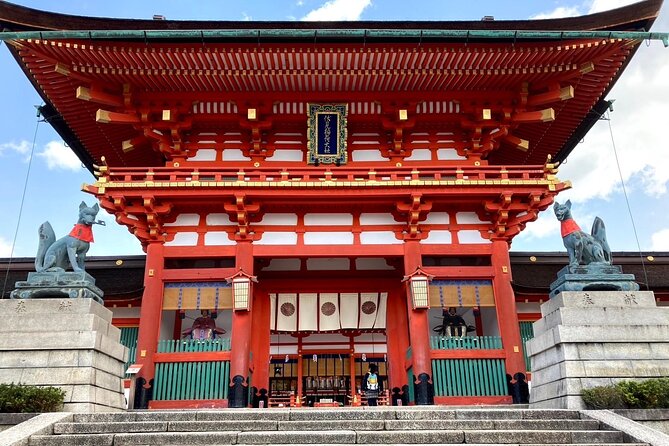
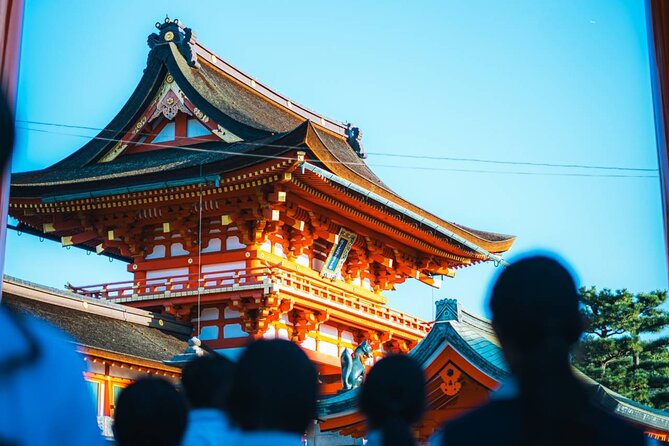
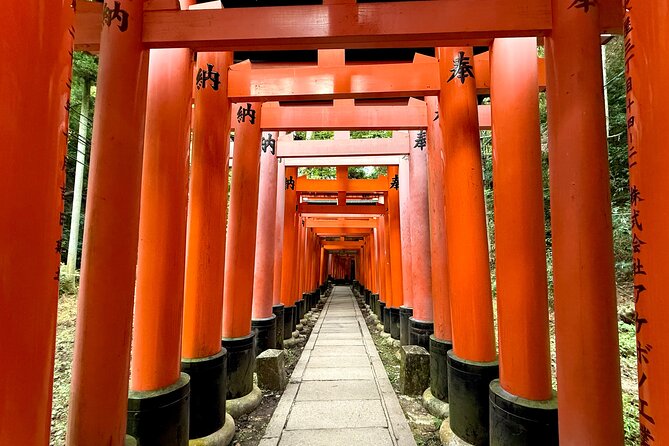
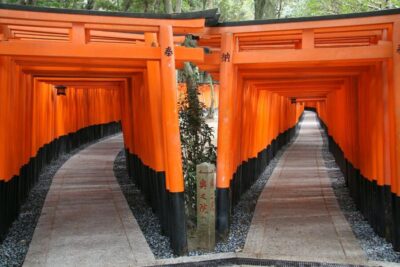
The first stop is Fushimi Inari-taisha, one of Kyoto’s defining sights. Its fame comes from the thousands of orange-red torii gates that line the paths up Mount Inari. The gates create a repeating corridor of color and shade, with the shrine’s religious purpose always present behind the famous photographs.
You get about 90 minutes here. That is enough time to enter the shrine grounds, hear the essential explanation, walk through a section of the torii paths, and take photographs. It is not enough for a long climb far up the mountain, so set your expectations accordingly.
I appreciate this stop most when the guide explains what you are seeing rather than treating it as a backdrop. The shrine is a place of worship, not just a scenic tunnel. A good guide can help you understand the role of the gates and the customs of the site while pointing out photo angles that do not put you in the middle of a crowd.
The early timing is especially valuable here. Fushimi Inari is open-air, and the walking paths become more difficult when large groups fill the narrow sections. Several people also found the morning start useful for avoiding heat, particularly during summer and cherry blossom season.
Admission to Fushimi Inari is listed as free. Wear shoes suited to walking, since the stop includes paths and a climb, even though the itinerary does not promise a full ascent of Mount Inari.
Arashiyama Bamboo Forest in its quietest window
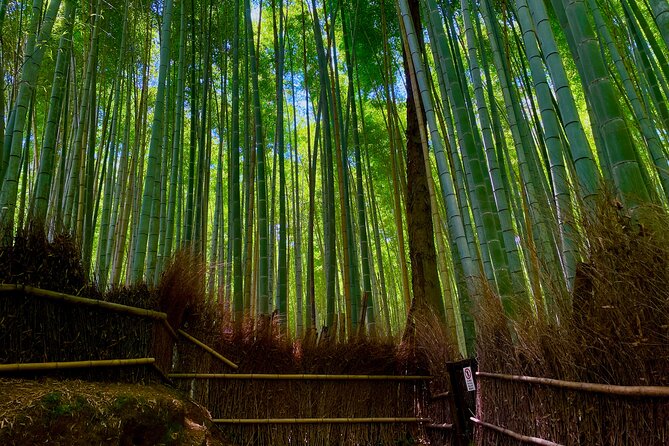
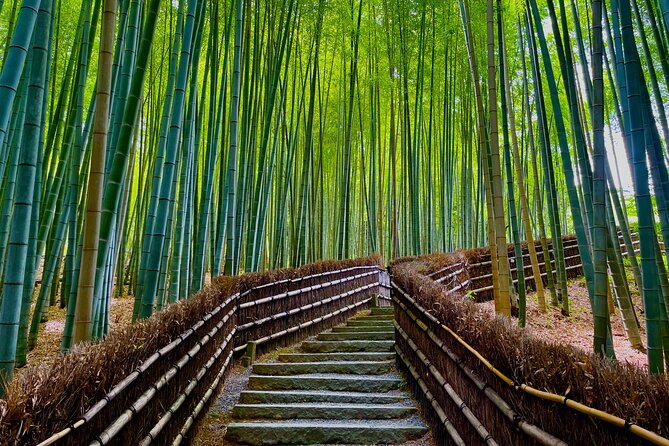
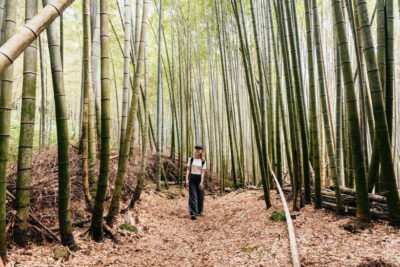
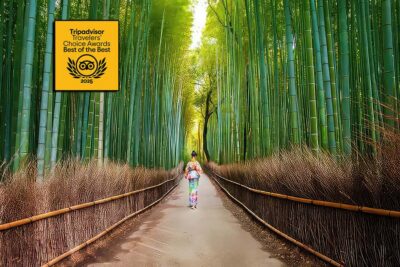
The bamboo forest is the second major stop, with about one hour to walk along Bamboo Forest Street. Tall bamboo rises on both sides of the path, creating one of Kyoto’s most recognizable scenes. The appeal is visual and atmospheric, but the path itself is not huge, so crowd levels have a major effect on the experience.
This is where the early schedule can make the biggest difference. Later in the day, people often stop every few steps for photographs. With fewer people around, you have a better chance to see the vertical walls of bamboo and take pictures without a constant stream of bodies behind you.
Your guide helps you keep the visit focused. You can walk, photograph the grove, and hear useful background without spending the whole morning trying to decide where to go next. Guides have also been praised for knowing good picture spots and for taking photographs of solo visitors and couples.
The tradeoff is time. One hour goes quickly, and this tour does not leave room for every Arashiyama attraction. If you want extended shopping, a longer bamboo walk, or a slow visit to several temples, you may prefer to return on your own later. One person used the tour as an introduction, then revisited the area the next day for more walking and shopping.
More of Arashiyama and the bamboo grove:
- Kyoto Arashiyama Walking Tour: Bamboo, Monkeys, Gardens & Secrets
★ 5.0 · 1,216 reviews - Arashiyama Bamboo, Temple, Monkeys, or Secret Sake Brewery
★ 4.8 · 886 reviews - Kyoto: Arashiyama Bamboo Forest, Monkeys, Matcha & Temple Tour
★ 5.0 · 759 reviews - Kyoto: Nijo, Kinkaku-ji, Arashiyama, Kiyomizu & Fushimi Inari
★ 5.0 · 699 reviews
Tenryu-ji Temple and its Zen garden
Tenryu-ji is a UNESCO World Heritage site in Arashiyama and gives the morning a quieter, more formal setting after the bamboo path. The temple is known for its Zen garden and views toward the surrounding mountains. You have about one hour here.
This stop adds depth to the route. Fushimi Inari is defined by gates and mountain paths, while Tenryu-ji shows Kyoto’s temple architecture and garden tradition. I like the contrast, since the morning does not become four versions of the same sightseeing stop.
The garden is the main reason to pay attention. Its design encourages you to slow down and look across the pond, trees, rocks, and temple buildings rather than simply walk through. Your guide can explain the setting and point out details that are easy to miss when you are moving quickly.
There is an important ticket detail to check. The stop description says the Tenryu-ji admission ticket is not included, while the included-features section lists the Tenryu-ji admission fee as included. Because these statements conflict, confirm the current arrangement at booking. The tour price should be judged differently depending on whether you pay this fee separately.
The temple may also not be fully open at the early hour. One person specifically wanted a temple stamp but had to return later because the relevant counter was not open during the morning visit. If collecting stamps is important to you, plan a return visit rather than assuming the tour timing will allow it.
Togetsukyo Bridge for a short river view
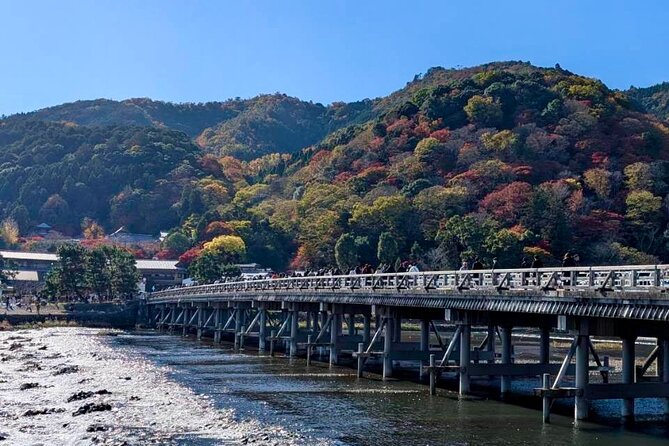
The final sightseeing stop is Togetsukyo Bridge, meaning Moon Crossing Bridge. The current structure dates to 1934 and crosses the Katsura River in Arashiyama. You have about 15 minutes here, so think of it as a scenic pause rather than a full bridge visit.
The short stop works well as a finish. After the enclosed bamboo paths and temple garden, the bridge opens the view toward the river and surrounding hills. It is a good place for a final group photograph and a quick look at one of Arashiyama’s signature views.
Do not expect time for a long riverside walk. Fifteen minutes is enough to see the bridge and take pictures, but not enough to linger, browse nearby shops, or explore the district at a relaxed pace. If you want that slower experience, return to Arashiyama after the tour.
The small-group format is the tour’s strongest feature
The tour is designed for a maximum of eight people, although the headline description refers to a maximum of nine. Either way, this is much smaller than a large coach excursion. A compact group makes it easier to hear the guide, ask questions, move through stations, and keep a steady pace.
The guide quality is central to the experience. Vincent is repeatedly singled out for friendly explanations, city navigation, and thoughtful photographs. Hiro is praised for humor, enthusiasm, strong site knowledge, and finding less crowded photo positions. Caleb receives credit for explaining cultural, historical, and political topics in clear English while keeping the day moving.
Cade is noted for managing train travel, photo breaks, and group timing. Eri, Haruka, and Jem are also described as engaging and attentive, with Haruka especially helpful for taking photographs. These details matter because the tour is not just a walk through the sights. Much of its value comes from having someone manage the transitions and explain what you are looking at.
Guide assignments can change, so you should not book expecting one particular person unless the provider confirms it. Still, the range of positive guide comments suggests that the experience depends on a real human host rather than a fixed audio script.
Train travel is convenient, but not included
The tour uses public transportation between Kyoto’s districts. That is useful for a first-time visitor because your guide handles the route and helps you stay on track. You still get a taste of how Kyoto works as a city, rather than sitting on a private bus from one attraction to the next.
The listed transportation charge is ¥390 per person, not included in the tour price. This is easy to overlook when comparing the $96.83 headline cost with self-guided sightseeing. Add it to your budget, along with any food or drinks you buy afterward.
There is no hotel pickup or drop-off. You meet and finish at Kyoto Station, and the guide does not provide meals. One guide was even praised for suggesting a sushi restaurant in Kyoto Tower after the tour, but that kind of recommendation is an extra courtesy, not part of the included service.
What the $96.83 price buys you
At $96.83 per person, the tour is expensive if you only want transportation to two free attractions. Fushimi Inari and the bamboo forest do not charge admission, and you can visit both independently with a little route planning.
The price makes more sense if you value time and guidance. In one morning, you cover two distant parts of Kyoto, use trains with a group, receive cultural explanations, get help with photographs, and avoid the worst crowd period. For a first day in Kyoto, or for someone with only one day in the city, that structure can be worth paying for.
The small group is also important to the value. A private tour would cost more, while a large group would likely feel less personal. Here, you pay for a middle ground: an organized route with room for questions and some individual attention.
I would not choose this tour if your priority is maximum independence. You will have limited time at each stop, and returning later to collect a temple stamp or shop in Arashiyama may be necessary. I would also compare the price carefully after confirming whether Tenryu-ji admission is included.
Who should book this early Kyoto route
I think this tour suits you best if you:
- Have only one or two days in Kyoto
- Want the major sights without handling the rail route yourself
- Prefer a small group to a large sightseeing bus
- Like a guide who explains culture and history in clear English
- Care about taking photographs before the crowds arrive
- Can manage a morning with walking, stairs, and public transportation
Families can also find it workable. A guide was praised for accommodating a family with a six-year-old and a baby, though the itinerary still involves walking and should be judged against your group’s pace.
You may prefer to go independently if you want to hike far up Mount Inari, spend hours in Arashiyama, collect temple stamps during the visit, or keep your schedule loose. The tour gives you a strong overview, not a full day in either district.
Free cancellation is available when you cancel at least 24 hours before the start time. Cancellations or changes made inside that window are not accepted for a refund.
Should you book the Fushimi Inari and Arashiyama early tour?
Book it if your top goals are beating crowds, seeing the essential sights in one morning, and having a guide manage Kyoto’s trains and explanations. The small group and strong guide track record add real value, especially for a first visit or a short stay.
Skip it if you are comfortable navigating alone and want to spend much longer at each place. At nearly $100 before the listed train fare, the tour asks you to pay for convenience, context, and timing rather than admission to the main sights.
My practical advice is simple: confirm the Tenryu-ji ticket, read the Kyoto Station meeting instructions closely, bring walking shoes, and accept that the early start is the point. If you can get out the door early, this is a smart way to see two crowded Kyoto icons before the day gets noisy.
FAQ
How long does the Kyoto early bird tour last?
The experience lasts approximately four to five hours.
Where does the tour start?
It starts at the 7-Eleven Heart-In store at the central entrance of JR Kyoto Station, on Karasuma Street in Kyoto.
Where does the tour end?
The activity ends back at the meeting point at Kyoto Station.
What sights are included in the route?
The route includes Fushimi Inari-taisha Shrine, Arashiyama Bamboo Forest, Tenryu-ji Temple, and Togetsukyo Bridge.
Is transportation included in the tour price?
No. The listed transportation cost is ¥390 per person, and hotel pickup and drop-off are not included.
Is Tenryu-ji admission included?
The supplied tour details conflict. One section says the admission fee is included, while the Tenryu-ji stop information says admission is not included. Confirm this before booking.
How many people can join the tour?
The additional information states that the activity has a maximum of eight travelers. The main description refers to a maximum of nine, so the exact group limit should be confirmed when booking.
Can I cancel for a full refund?
Yes, if you cancel at least 24 hours before the experience start time. Cancellations or changes made less than 24 hours before the start time are not refunded or accepted.
More Kyoto Early Morning Tours in Kyoto
- Kyoto Early Morning Tour with English-Speaking Guide
★ 5.0 · 1,427 reviews - Kyoto: Early Morning Tour with English-Speaking Guide
★ 4.9 · 1,128 reviews - Nara Early Morning Tour (Kyoto or Osaka Departure Available)
★ 5.0 · 676 reviews - Arashiyama Bamboo Forest & Hidden Gems Bike Tour (Early Bird)
★ 5.0 · 613 reviews
Recently added around Kyoto
- Higashiyama | Kyoto: Sakura Season Private Rickshaw Tour★ 5.0 · 3 reviews
- Kyoto Kimono Rental CHAMATSU|Kimono/Yukata Rental FamilyPlan★ 5.0 · 3 reviews
- Kyoto: Half-Day Private Guided Tour to the Old Town of Gion★ 4.4 · 3 reviews
- Nara Private Customizable Half Day Tour★ 5.0 · 3 reviews
- Kansai Region Hiking Adventure in Nara Kobe Kyoto and More★ 5.0 · 3 reviews
- Full Day Nara Deer, Temple, Shrine, Activities & Tea Ceremony★ 5.0 · 3 reviews
- Nara: Essential Private Tour with Deer Park and Temples★ 5.0 · 3 reviews
- Hiking Tour for Sacred Sites in Kyoto with a Guide★ 5.0 · 3 reviews
Fushimi Inari Shrine Tours, compared.
Fushimi Inari, Kinkakuji, Bamboo Grove 1 Day Bus Tour
Read our review →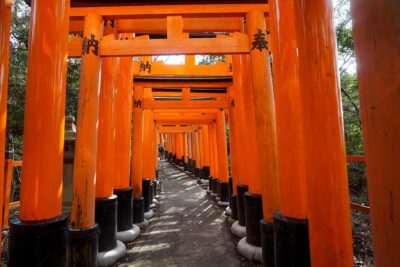
Fushimi Inari Hidden Hiking Tour (Private Option Available)
Read our review →
Kyoto/Osaka: Nara, Fushimi Inari Taisha, Arashiyama Bus Tour
Read our review →
Nijo, Kinkaku-ji, Arashiyama, Kiyomizu & Fushimi Inari
Read our review →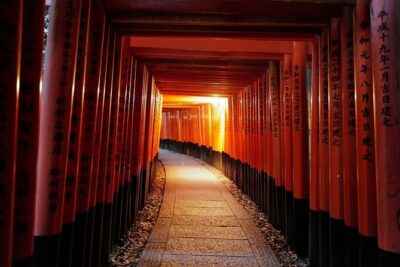
Fushimi, Arashiyama – Bamboo, Monkey, Torii & Secrets
Read our review →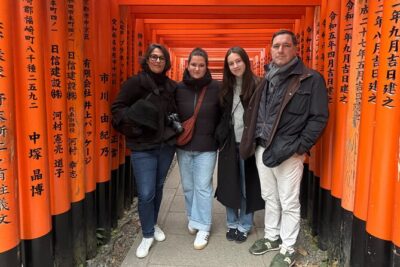
Kyoto Early Bird English Tour: Fushimi Inari & Gion(Private opt)
Read our review →Browse the lists this tour appears in