
REVIEW · FUSHIMI INARI SHRINE TOURS
Kyoto Fushimi-Inari Night Walking Tour
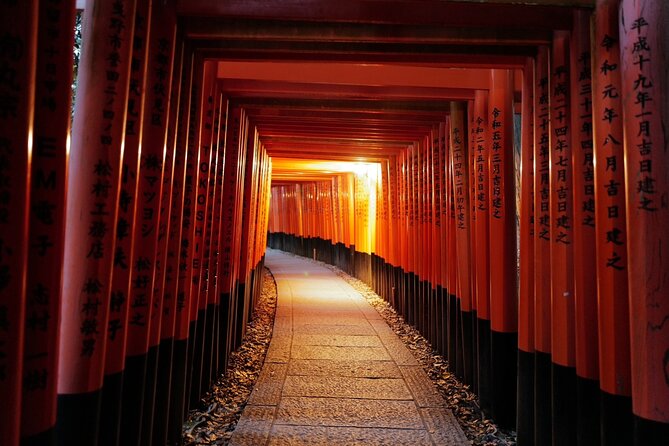
Fushimi Inari is famous for its endless rows of red torii gates, but the real treat comes after the daytime crowds thin out. This evening walk lets you see the shrine in cooler air, softer light, and a quieter mood, with the paths climbing into the wooded slopes of Mount Inari.
I like the small group of up to 12, which makes it easier to hear stories and ask questions. I also like the practical guidance: guides such as Jem, Tammy, Caleb, Hiro, and Masaki explain how to pray, point out details you might pass by, and help you keep your bearings.
The main consideration is darkness and uphill walking. Much of the tour takes place after sunset on mountain paths, so bring proper walking shoes and a layer. The shrine may still be busy when you start, though the crowds usually become thinner as the evening goes on.
In This Review
- Key points to know before you book
- Why Fushimi Inari works so well after sunset
- Meeting by the fox statue near Inari Station
- The entrance: learning what Inari means
- Walking beneath the torii gates
- What the guides add to the walk
- The scenery, lighting, and photo opportunities
- How much walking and darkness to expect
- Is $43.11 a fair price?
- Who should book this evening walk?
- Booking and cancellation details
- Should you book the Fushimi Inari night tour?
- FAQ
- How long does the Kyoto Fushimi Inari Night Walking Tour last?
- Where does the tour meet?
- Where does the tour end?
- How large is the group?
- Is admission to Fushimi Inari included?
- Are service animals allowed?
- Can I cancel for a full refund?
Key points to know before you book
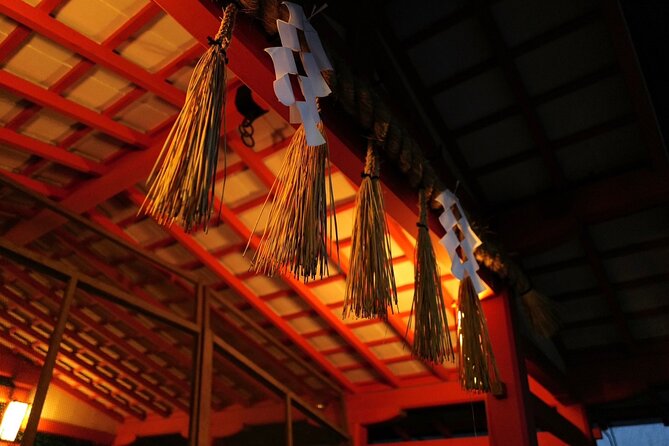
- The torii gates look different at night: Evening light and shadows give the shrine a quieter, more mysterious character than a daytime visit.
- Small-group format: The tour accepts no more than 12 people, leaving room for questions and a more personal pace.
- Guides add cultural context: Expect explanations about Inari, Shinto prayer, fox statues, shrine customs, and the meaning of the gates.
- The walk reaches Mount Inari’s paths: This is not just a short photo stop at the entrance. You will walk uphill through the shrine grounds.
- The meeting point is specific: Find the fox statue at the entrance to Fushimi Inari Taisha near Inari Station.
- Allow up to two hours: The advertised duration is about 90 minutes to two hours, with the route ending back at the meeting point.
Why Fushimi Inari works so well after sunset
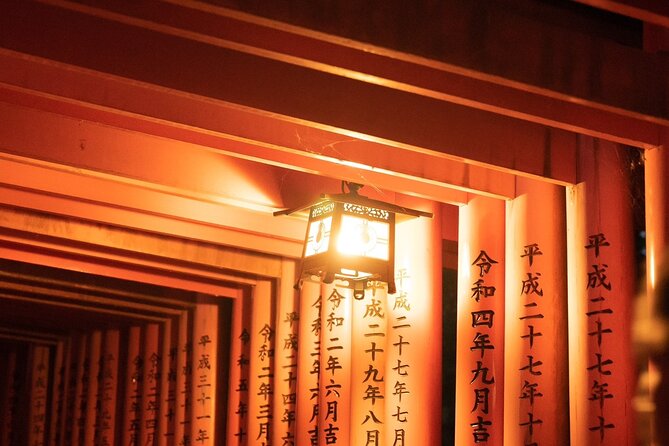
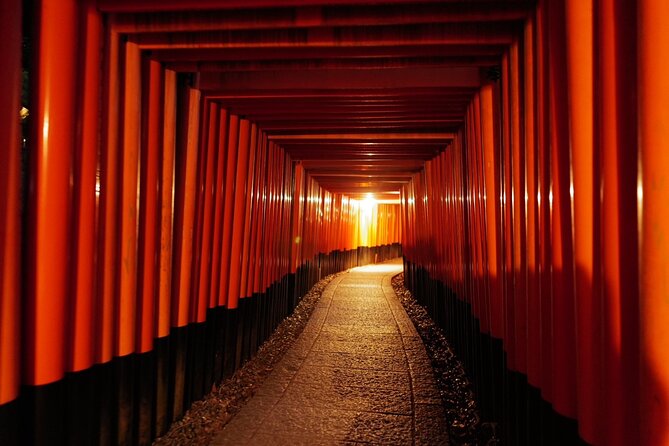
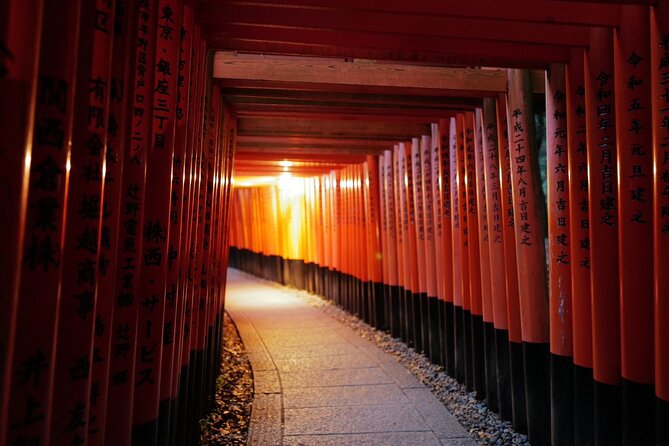
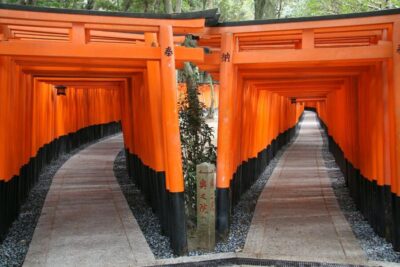
Fushimi Inari Taisha is one of Kyoto’s most recognizable sights. Its torii gates form long tunnels of orange-red color, rising from the shrine grounds toward Mount Inari. During the day, the paths can feel crowded, especially near the entrance and the most photographed gates.
At night, the mood changes. The bright rows of gates become a play of shadow and light, and the forested mountain feels more still. You will still encounter other people, especially early in the evening, but the number generally drops as the walk continues.
I like this timing for two practical reasons. First, Kyoto’s evening air can be much more comfortable than the heat of the afternoon, especially in August. Second, the shrine feels less like a famous checklist stop and more like a place of worship surrounded by nature.
Do not expect complete solitude. One tour began with plenty of people around, then grew quieter farther along the route. That is a fair picture of what you should plan for: less crowded, not empty.
More ways to walk Fushimi Inari:
- Kyoto: Fushimi Inari, Kinkakuji, Bamboo Grove 1 Day Bus Tour
★ 4.8 · 4,316 reviews - Fushimi Inari Hidden Hiking Tour (Private Option Available)
★ 5.0 · 1,750 reviews - Kyoto/Osaka: Nara, Fushimi Inari Taisha, Arashiyama Bus Tour
★ 4.7 · 1,275 reviews
Meeting by the fox statue near Inari Station
The tour begins at the fox statue at the entrance to Fushimi Inari Taisha, in the Fushimi Ward area near Inari Station. This detail matters because the shrine complex has several approaches and can be confusing if you arrive without checking the meeting instructions.
Give yourself enough time to locate the statue before the start. The activity ends back at the same meeting point, so you do not need to arrange a separate pickup or figure out a new part of Kyoto at the end of the walk.
The experience uses a mobile ticket, and booking confirmation is provided at the time of purchase. It is also near public transportation, which makes it a sensible evening addition to a Kyoto day.
One guide, Tammy, contacted a participant through WhatsApp to confirm the address and attendance. That kind of message can be useful around a large shrine entrance, though you should still rely on the exact booking details you receive.
The entrance: learning what Inari means
The first stop is Fushimi Inari Taisha itself. The shrine is dedicated to Inari, associated with rice, agriculture, and business. People come here to pray for success, health, and happiness, and the site reflects both religious practice and everyday hopes.
A good guide helps you see that the gates are not simply decorative backdrops. They are connected with offerings and gratitude, and the shrine includes many smaller places of worship beyond the main entrance route.
Guides have shown visitors how to pray at different sites and explained that the rituals are not always identical from one spot to another. This is one of the strongest reasons to book a guided walk. On your own, you can admire the color and design, but you may miss the small actions and symbols that give the shrine meaning.
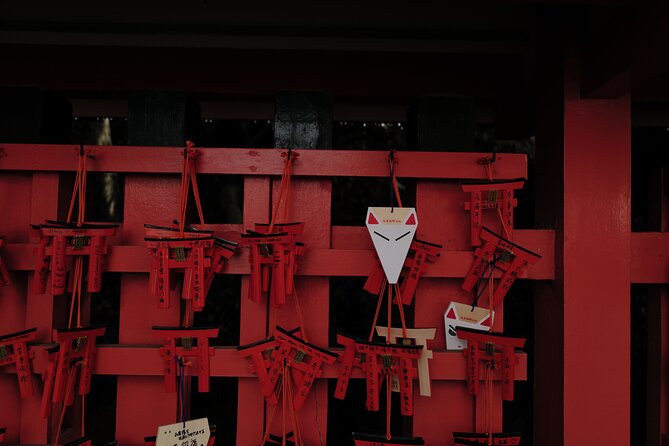
The stone fox statues are another feature to watch for. Foxes are closely linked with Inari, and you will see them in different forms around the grounds. Your guide can point out details you might otherwise pass without a second look.
Walking beneath the torii gates
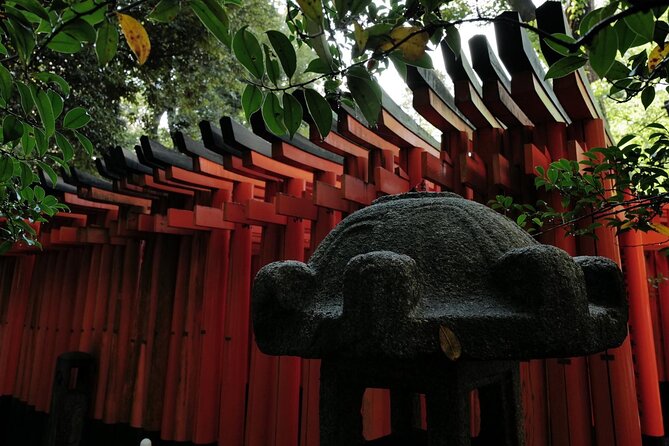
The central part of the experience is the walk through the torii gates. The route leads upward toward Mount Inari, passing smaller shrines, stone figures, and scenic points along the way.
The walk is described as a small hike, not a strenuous mountain excursion. Still, the incline and uneven mountain paths deserve attention. Wear walking shoes rather than smooth-soled casual footwear, and bring water if you tend to get thirsty while walking.
At dusk, the gates can catch the last daylight. Once full darkness arrives, the atmosphere becomes more dramatic. Some sections have lights, but one account makes clear that much of the route is taken in proper nighttime conditions. You should be comfortable walking in dim surroundings and staying with the group.
This is where the guide’s role becomes practical as well as educational. Fushimi Inari has many branching paths and can be easy to lose your way in, particularly at night. Hiro received special praise for helping with navigation while explaining the shrine’s customs and traditions.
More walking tours in Kyoto:
- Kyoto Geisha Walking Tour: Gion District & Hidden Gems
★ 4.7 · 3,273 reviews - Kyoto: Gion Magical Night Walking Tour with Geisha Trivia
★ 4.9 · 2,393 reviews - Kyoto: Gion Geisha District Walking Tour – Stories of Geisha
★ 4.7 · 2,187 reviews - Night Walk in Gion: Kyoto’s Geisha District
★ 4.5 · 2,003 reviews
What the guides add to the walk
The guide roster varies, so you may meet someone different from the people named here. Still, the feedback gives a useful sense of the guiding style.
Jem is described as organized, friendly, and good at keeping the group together. She has also been praised for using stories to explain the site’s importance rather than giving a dry list of dates.
Tammy is known for explaining the shrine in a patient, approachable way. Caleb has been praised for making information clear even for children, using an interactive style without letting explanations drag on.
Masaki combines shrine history with advice about nearby food and other Kyoto sights. He has also helped with photos and taken time to answer questions. Hiro is noted for his warm manner, strong explanations of tradition, and ability to make people feel welcome in Japan.
Other named guides include Vincent and Yessi. Vincent was patient with photo stops, while Yessi drew attention to small details and explained different prayer rituals. The important point is not one particular guide, since assignments can change. It is that the tour depends heavily on a guide who can connect the physical site with its religious purpose.
The scenery, lighting, and photo opportunities
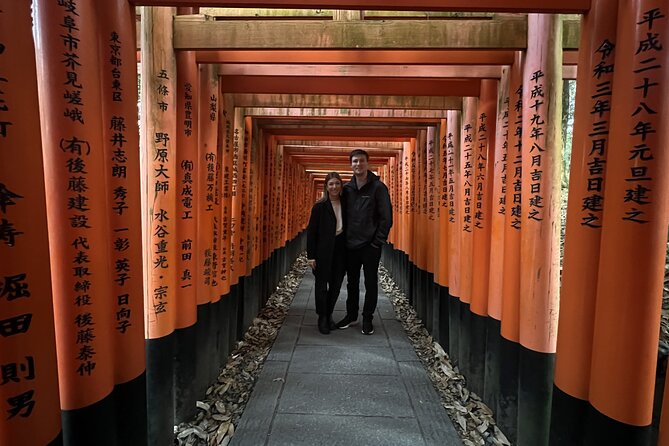
The red torii gates are the star, but night photography can be tricky. Low light, moving people, and narrow paths mean you may need patience. Late afternoon and early evening can offer a useful compromise: you may catch some daylight, then see the gates under evening lighting as the sun drops.
If your main goal is sharp, bright photographs, a daytime visit may be easier. If you want atmosphere, shadows, and fewer people in your images, the night tour has a clear advantage.
The route also includes stone foxes, smaller shrines, and viewpoints. These details break up the long corridors of gates and help you understand that Fushimi Inari is a broad religious site, not one single photo location.
Guides may help with pictures, and several have been praised for giving people time to stop. Even so, remember that this is a walking tour with a group. You will have opportunities for photos, but it is not a private photography session.
How much walking and darkness to expect
The listed duration ranges from 1 hour 30 minutes to two hours, with the itinerary describing a two-hour experience. Plan your evening around the longer estimate so you are not rushing to a dinner reservation or train afterward.
The route goes into the mountain paths beneath the gates. It is not limited to the flat area near the entrance. You might find the pace comfortable, but the uphill sections and darkness can make the walk feel more demanding than the duration suggests.
Most people can participate, and service animals are allowed. The available details do not provide a specific distance, stair count, or accessibility rating, so you should contact the operator if you need exact information about steps, slopes, or path conditions.
Bring comfortable shoes. In cooler months, add layers. One December participant specifically advised dressing warmly, while summer visitors appreciated the cooler evening timing. Rain is possible, and one tour continued in wet conditions, so a light rain layer is a sensible choice.
Is $43.11 a fair price?
At $43.11 per person, this is not the cheapest way to see Fushimi Inari. Admission to the shrine itself is free, so you are paying for the guide, the small-group setting, the planned route, and the explanations rather than for entry.
That can be good value if you want more than a quick walk under the gates. A guide can explain the connection between Inari and the shrine, show you how to approach different prayer sites, identify fox symbolism, and help you navigate the mountain paths after dark.
The value is strongest for a first visit, especially if you have limited time in Kyoto or feel unsure about Shinto customs. It is also useful if you want to visit in the cooler evening hours but do not want to work out the route alone.
The price may feel less worthwhile if you are happy simply taking photos at the entrance and first tunnel of gates. You can visit the shrine without paying for a tour, and independent visitors have more freedom to stop, turn around, or spend longer in one place.
With a maximum of 12 people, the group size is smaller than a standard bus tour. That does not guarantee a private experience, but it should make it easier to hear the guide and ask about details that interest you.
Who should book this evening walk?
I would recommend it to first-time Kyoto visitors who want cultural context, not just a famous backdrop. Families can also do well here, particularly with a guide such as Caleb, who has been praised for making explanations clear and engaging for children.
It suits people who prefer cooler temperatures, evening sightseeing, and a more relaxed pace. The night setting also gives repeat visitors a fresh way to see a shrine they may already know from daytime photographs.
You should think twice if you dislike walking uphill, feel uneasy on dark paths, or need a fully step-free route. The tour goes into the mountain, and the available information does not promise a fully accessible path.
It is also not ideal for anyone who wants a completely empty shrine. You may see plenty of people near the start, especially around dusk. The quieter atmosphere develops gradually.
Booking and cancellation details
The tour is operated by Tomodachi Tours and accepts a maximum of 12 participants. Confirmation arrives when you book, and the mobile ticket makes it easy to keep the reservation on your phone.
Free cancellation is available if you cancel at least 24 hours before the scheduled start time. Cancellations or changes made within 24 hours are not accepted for a refund, and the cut-off follows Kyoto local time.
Should you book the Fushimi Inari night tour?
Book it if you want the gates explained, not just photographed. The strongest parts are the evening atmosphere, the smaller group, and the chance to learn how the shrine is used, including prayer customs, fox symbolism, and the role of Inari.
I especially like this tour for someone visiting Fushimi Inari for the first time. You get help with navigation, a cooler walk, and a better sense of why the site matters. Just wear good shoes, allow two hours, and expect true darkness on parts of the mountain route.
If you are an independent sightseer who only wants the entrance gates and free admission, skip the tour and explore on your own. For most people seeking a more meaningful visit, though, $43.11 is a reasonable price for the guidance and evening setting.
FAQ
How long does the Kyoto Fushimi Inari Night Walking Tour last?
The tour lasts approximately 1 hour 30 minutes to two hours. The itinerary lists the walking experience as two hours, so plan for that full amount of time.
Where does the tour meet?
You meet at the fox statue at the entrance to Fushimi Inari Taisha Shrine, near Inari Station in Fushimi Ward, Kyoto.
Where does the tour end?
The activity ends back at the original meeting point.
How large is the group?
The tour has a maximum of 12 participants.
Is admission to Fushimi Inari included?
The shrine admission is listed as free. The tour price pays for the guided walking experience.
Are service animals allowed?
Yes. Service animals are allowed on the activity.
Can I cancel for a full refund?
Yes, if you cancel at least 24 hours before the experience start time. Cancellations or changes made less than 24 hours before the start are not accepted for a refund.
More Kyoto Evenings
- Kyoto Night Foodie Tour in Gion (9+ dishes + 6 Sake tastings)
★ 5.0 · 1,762 reviews - Kyoto Gion Night Walk & Geisha District Guided Tour
★ 5.0 · 786 reviews - Kyoto Ghost Tour: Dark Tales, Urban Legends, Bamboo Forest Night
★ 5.0 · 625 reviews - Kyoto Bar Hopping Night Tour
★ 5.0 · 613 reviews
Recently added around Kyoto
- Higashiyama | Kyoto: Sakura Season Private Rickshaw Tour★ 5.0 · 3 reviews
- Kyoto Kimono Rental CHAMATSU|Kimono/Yukata Rental FamilyPlan★ 5.0 · 3 reviews
- Kyoto: Half-Day Private Guided Tour to the Old Town of Gion★ 4.4 · 3 reviews
- Nara Private Customizable Half Day Tour★ 5.0 · 3 reviews
- Kansai Region Hiking Adventure in Nara Kobe Kyoto and More★ 5.0 · 3 reviews
- Full Day Nara Deer, Temple, Shrine, Activities & Tea Ceremony★ 5.0 · 3 reviews
- Nara: Essential Private Tour with Deer Park and Temples★ 5.0 · 3 reviews
- Hiking Tour for Sacred Sites in Kyoto with a Guide★ 5.0 · 3 reviews
Fushimi Inari Shrine Tours, compared.
Fushimi Inari, Kinkakuji, Bamboo Grove 1 Day Bus Tour
Read our review →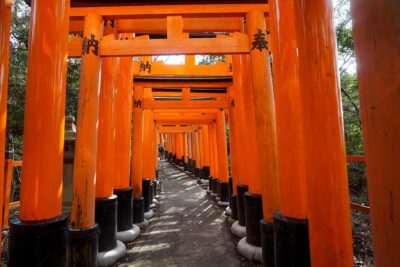
Fushimi Inari Hidden Hiking Tour (Private Option Available)
Read our review →
Kyoto/Osaka: Nara, Fushimi Inari Taisha, Arashiyama Bus Tour
Read our review →
Nijo, Kinkaku-ji, Arashiyama, Kiyomizu & Fushimi Inari
Read our review →
Kyoto Early Bird English Tour: Fushimi-Inari and Arashiyama
Read our review →
Fushimi, Arashiyama – Bamboo, Monkey, Torii & Secrets
Read our review →
Kyoto Early Bird English Tour: Fushimi Inari & Gion(Private opt)
Read our review →Browse the lists this tour appears in