
REVIEW · KYOTO EARLY MORNING TOURS
Kyoto: Early Morning Tour with English-Speaking Guide
Kyoto’s big three sights fit into one brisk morning here: the torii gates of Fushimi Inari, Arashiyama’s bamboo forest, and the Golden Pavilion at Kinkakuji. The smart move is the early start, since the first shrine is far more peaceful before the crowds arrive.
I like the small group of up to eight, which gives guides such as Aya, Haruki, Rin, Hina, and Genki room to answer questions and take photos. I also like that you use trains and buses rather than sit behind a coach window. You learn Kyoto’s transit system while seeing the city.
The trade-off is a demanding schedule. You will walk, climb, transfer between trains and buses, and keep an eye on the clock. Transportation costs about 1,240 yen, and Kinkakuji admission costs 500 yen, both extra.
In This Review
- Key points to know before booking
- Why the early start makes Kyoto easier
- Meeting at Kyoto Station without a morning scramble
- Fushimi Inari: torii gates before the crowds
- The train to Arashiyama and a change of scenery
- Kinkakuji: the Golden Pavilion at the busiest hour
- Public transport is useful, but it is not effortless
- How much value do you get for $101?
- Who will enjoy this tour most
- The guide can shape the whole morning
- Should you book this Kyoto morning tour?
- FAQ
- How long does the tour last?
- Where does the tour begin?
- Where does the tour finish?
- Is this a private tour?
- Is transportation included?
- Is Kinkakuji admission included?
- What languages are available?
- Is the tour wheelchair or stroller accessible?
- What happens if I arrive late?
Key points to know before booking
- The 6:45am-style start matters: Fushimi Inari is best before the main morning rush.
- Three major sights in about five hours: You cover a lot, but this is a highlights tour, not a slow temple day.
- Public transport is part of the experience: Bring an IC card such as ICOCA, SUICA, or PASMO, or a JR Pass.
- Guides add context and practical help: Past guide names include Aya, Haruki, Hina, Rin, Genki, Chihiro, and Hinano.
- The route requires steady walking: Comfortable shoes are essential, and the tour is not suitable for wheelchairs, strollers, or most cane users.
- You finish around lunchtime: Lunch is not included, but your guide may offer restaurant tips for Kyoto and Osaka.
Why the early start makes Kyoto easier
Kyoto is not short on famous sights. The problem is that everybody wants the same photograph at roughly the same time. Fushimi Inari, Arashiyama, and Kinkakuji can all feel crowded later in the day, especially on weekends, holidays, snowy days, and peak seasons.
This tour attacks that problem with an early meeting at Kyoto Station. The exact starting time varies, so check availability when you book, but the experience is designed to begin early and finish before lunch. That gives you a quieter first stop and leaves the afternoon open for another neighborhood, a meal, or a rest.
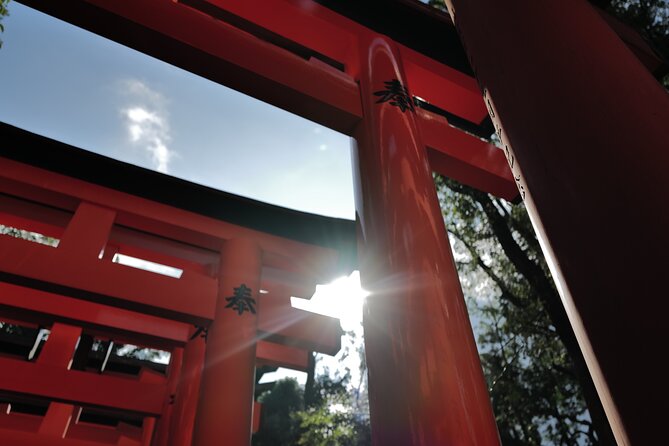
The timing is particularly useful at Fushimi Inari. The shrine is open around the clock, and the famous torii-lined paths are at their most atmospheric when foot traffic is light. You might still encounter other early visitors, but you have a much better chance of enjoying the first section without a solid stream of people in front of you.
There is also a practical benefit. An early start lets you use the most popular part of Kyoto as the day’s first task. Once the tour ends, you can decide what to do next instead of spending the whole afternoon trying to fit in sights that are already crowded.
More early starts before the crowds:
- Kyoto Early Morning Tour with English-Speaking Guide
★ 5.0 · 1,427 reviews - Nara Early Morning Tour (Kyoto or Osaka Departure Available)
★ 5.0 · 676 reviews - Arashiyama Bamboo Forest & Hidden Gems Bike Tour (Early Bird)
★ 5.0 · 613 reviews
Meeting at Kyoto Station without a morning scramble
The meeting point is Kyoto Station’s Central Ticket Gate, near Kyoto Tower and a 7-Eleven. Look for the large gate on the side where Kyoto Tower is visible outside. The guide holds a board marked GuideMe Japan.
This is a place where five extra minutes can save your morning. Kyoto Station is large, and finding the correct gate is easier if you arrive early rather than trying to message your guide while rushing through the station.
The guide contacts you through WhatsApp before the tour. Download it before the day of the activity, and provide a phone number that works in Japan and is connected to your WhatsApp account. If you are booking for someone else, use the actual participant’s number, not an agency number.
Arrive five to ten minutes early. The group cannot wait for late arrivals, and missing the meeting means you cannot join later or receive a refund. That strict rule may feel harsh, but it is necessary on a route with several timed transport connections.
Fushimi Inari: torii gates before the crowds
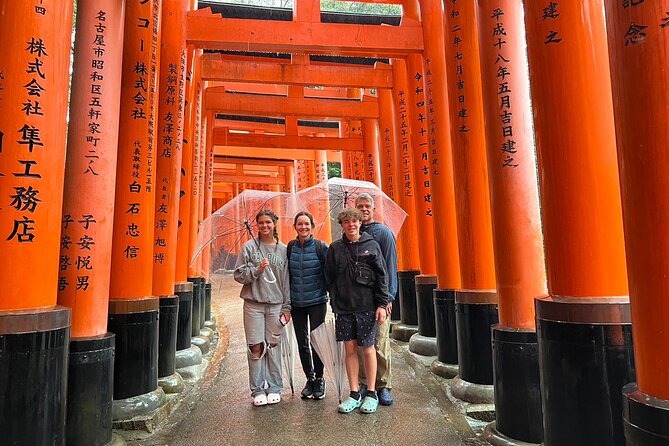
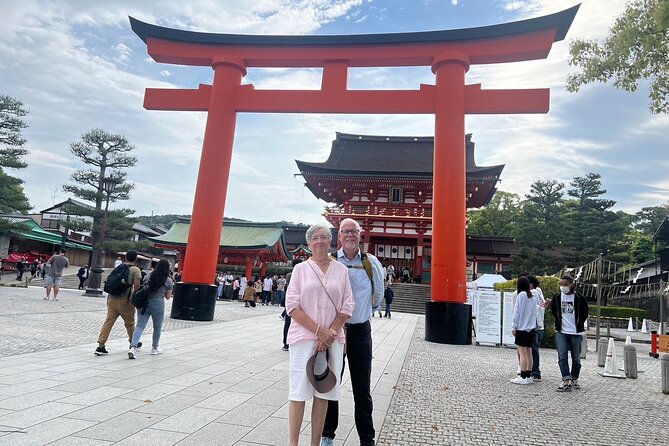
From Kyoto Station, the first train ride takes about ten minutes. Then you spend roughly 70 minutes at Fushimi Inari Taisha, the Shinto shrine famous for its seemingly endless rows of orange torii gates.
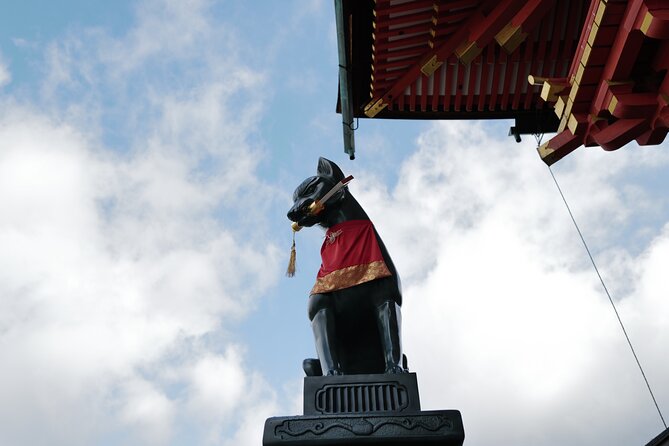
The shrine is dedicated to Inari, associated with rice, agriculture, business, and prosperity. Fox statues appear throughout the grounds because foxes are regarded as messengers of Inari. A guide can help you notice these details, explain shrine customs, and clarify the difference between a Shinto shrine and a Buddhist temple.
You will walk beneath the torii and along the shrine paths, but do not expect to hike all the way to the summit of Mount Inari in the time available. The route is designed to show you the celebrated lower sections and give you an introduction to the site without using up the entire morning.
This is one of the tour’s strongest choices. The 70-minute visit comes first, when the light is gentle and the paths are generally less crowded. You have time to pause, take photographs, and have a quiet moment at the shrine instead of treating it as a quick photo stop.
The ground is uneven in places, and the path includes steps. Wear shoes with good grip. If you have limited mobility or rely on a cane, this is not a comfortable match.
The train to Arashiyama and a change of scenery
After Fushimi Inari, the group takes a train for about 30 minutes to Arashiyama. This transfer is not dead time. It shows you how Kyoto’s districts fit together and gives your guide a chance to explain the next stop, answer questions, and help you understand the local transit system.
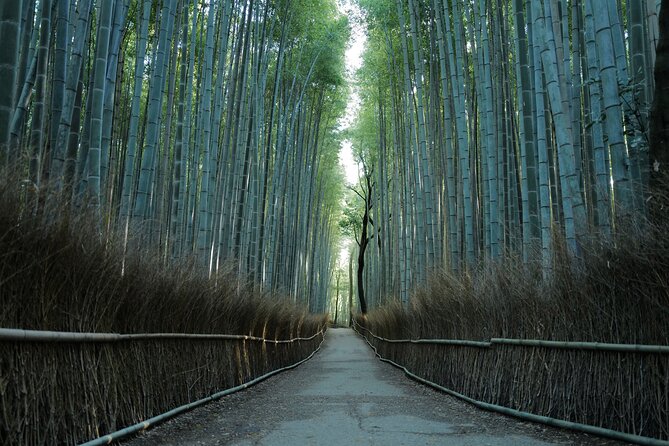
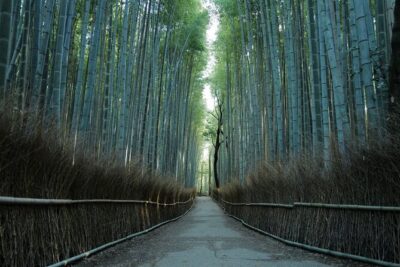
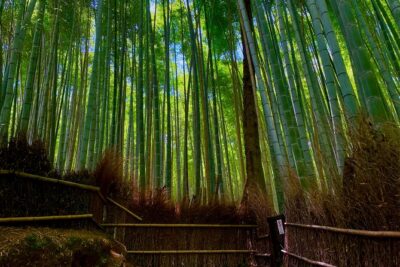
Arashiyama feels different from Fushimi Inari. Instead of a shrine path lined with gates, you get wooded paths, traditional temple grounds, and the famous bamboo grove. The bamboo is tall and striking, but the main path is not a secret. Later in the morning, it can become difficult to take a photograph without other people in the frame.
The tour allows about an hour in Arashiyama. That is enough to walk through the bamboo area and see the district’s main sights with guidance, but not enough for every corner of Arashiyama. You should not expect extended free time for shopping, a river walk, or a long temple visit.
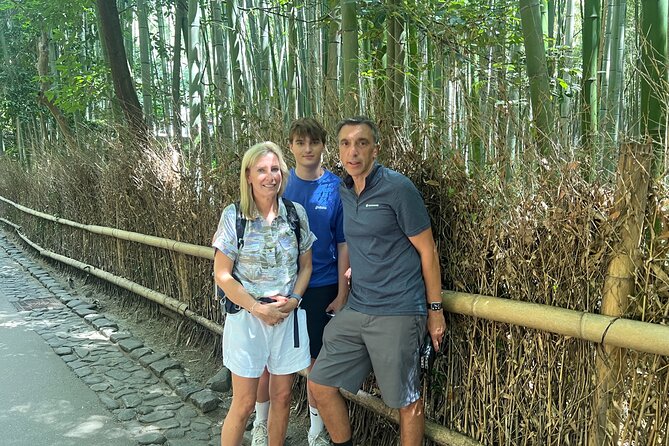
Your guide helps turn the bamboo forest from a quick picture into part of Kyoto’s cultural story. Several guides, including Aya, Haruki, and Chihiro, were praised for explaining the background of the sites and helping with photographs. That matters here because the grove itself is visually simple. The value comes from knowing where to walk, what to notice, and how the area fits into Kyoto’s wider traditions.
Weather can change the feel of Arashiyama. Snow has made the bamboo especially striking, while rain and cold can make the walking less pleasant. Bring suitable clothing for the season, since much of the tour takes place outdoors.
A few more Kyoto experiences worth comparing
- From Kyoto: Nara Guided Morning Tour
★ 4.6 · 335 reviews - Kyoto Morning Tour from Kyoto or Osaka
★ 4.0 · 281 reviews - Kyoto: Morning Japanese Bento Cooking Class
★ 5.0 · 149 reviews - Kyoto: Arashiyama Bamboo Forest Morning Tour by Bike
★ 5.0 · 115 reviews
Kinkakuji: the Golden Pavilion at the busiest hour
The route then moves by train for about 15 minutes, followed by a bus ride of roughly 20 minutes to Kinkakuji, formally called Rokuonji. Admission is 500 yen and is not included.
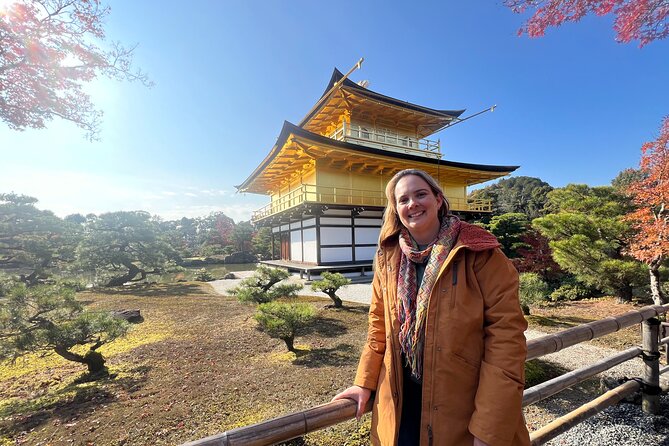
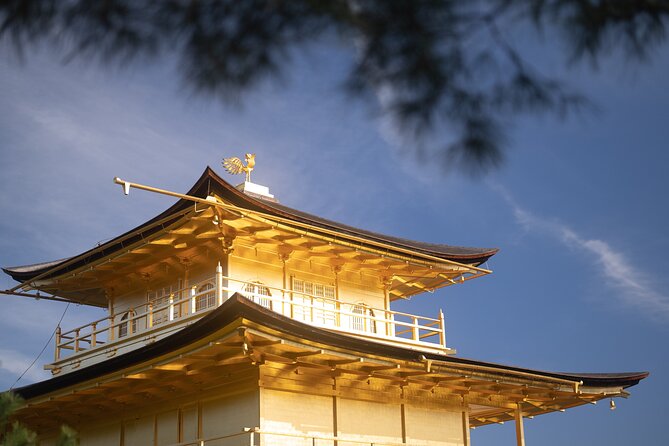
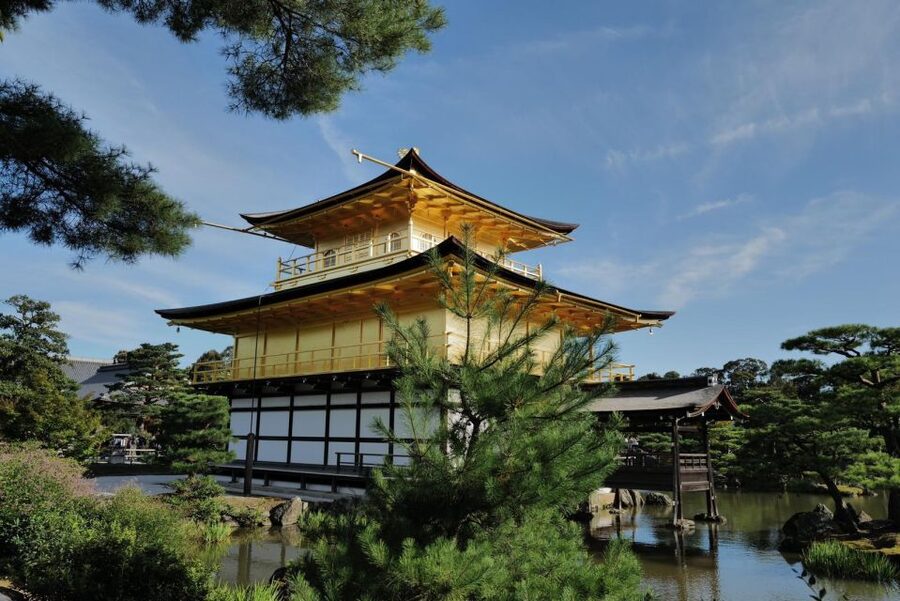
Kinkakuji is the gold-covered Buddhist temple reflected in a pond, one of Japan’s most recognizable views. The present structure is a reconstruction, but the site’s design remains one of Kyoto’s essential sights. The garden setting gives you a different experience from both the torii gates and the bamboo grove.
You have about an hour here. The visit is largely about following the established viewing route, taking in the pavilion from the pond, and hearing about the temple’s Buddhist setting and history. It is a visual finale, and the bright pavilion photographs well in changing weather.
The drawback is timing. By the time you reach Kinkakuji, the day is further along and the site may be busy. One winter visit encountered a large crowd drawn by snowfall. On Sundays, bus service can also be slower because many people are heading to the same attractions and fewer buses may be running.
That is where having a guide is useful. One guide handled a bus problem by arranging a taxi for the group, although you should not assume a taxi is included or guaranteed. The important point is that the tour leader is watching the clock and managing the route rather than leaving you to figure out Kyoto’s transport system alone.
Public transport is useful, but it is not effortless
This is a walking tour that uses public transportation. It is not a bus tour, and transportation is not included in the $101 price. The estimated transport cost is about 1,240 yen, so budget for that amount in addition to the 500 yen Kinkakuji entrance fee.
Bring an IC card such as ICOCA, SUICA, or PASMO if you have one, or bring a valid JR Pass where it applies. Also carry cash for the temple admission and transport needs. The exact fare can vary with the route and any change made during the tour.
The stated transport sequence is:
- About 10 minutes by train from Kyoto Station to Fushimi Inari
- About 30 minutes by train to Arashiyama
- About 15 minutes by train after Arashiyama
- About 20 minutes by bus to Kinkakuji
- Return to Kyoto Station after the final visit
These rides and transfers are part of the tour’s value. You see how Kyoto works beyond the tourist loop, and you gain confidence for the rest of your stay. Several guides, including Leo and Aya, have been especially helpful in showing people how to use trains and buses.
Still, you need to be comfortable walking through stations, boarding public transport, and staying with the group. The guide does the navigation, but you do the physical work.
How much value do you get for $101?
At $101 per person, this is not the cheapest way to see Kyoto’s highlights. You still pay roughly 1,240 yen for transportation and 500 yen for Kinkakuji. Lunch is also on your own.
The price makes more sense if you have only one or two days in Kyoto, or if this is your first visit to Japan. Seeing these three sites independently is possible, but it requires planning train routes, checking bus connections, buying admission, finding the correct entrances, and judging how long to stay at each place.
The guide adds the most value through explanation and pacing. Guides such as Rin, Hina, Haruki, Genki, and Hinano have been praised for clear English, historical stories, photo help, food suggestions, and friendly attention to children. One family found that Haruki kept an 11-year-old involved, while other guides offered restaurant recommendations for both Kyoto and Osaka.
You are paying for a tightly organized morning, not simply for transport. If you enjoy planning every train and temple visit yourself, the cost may feel high. If you value expert navigation and want the city’s top sights handled in one block, it is a fair splurge.
Who will enjoy this tour most
I would recommend it most strongly to first-time visitors with limited time. You see three major Kyoto sights in around 330 minutes and return to Kyoto Station with the afternoon still available.
It also suits couples, families with older children, and solo visitors who prefer company. A small group can feel more personal than a large coach tour, and guides have time to answer questions and take photographs.
The tour is less suitable if you want a slow, reflective day at one temple or if you dislike early mornings. It is also a poor choice for anyone who needs a wheelchair, stroller, or cane. Babies under one year are not accepted, and the activity is not suitable for people with heart problems or those over 95.
Wear comfortable walking shoes and dress for the weather. The tour runs in rain and cold conditions unless the operator makes a change, and much of your time is outside.
The guide can shape the whole morning
The route is fixed, but the human side varies by guide. Names that appear among the assigned guides include Natsuki, Hinano Yoshida, Ramu, Koi, Genki, Karin, Moto, Haruki, DK, Chihiro, Aya, Arisa, Kanami, Hina, Rin, Toshiya, Suzuka, Erisa, Ayame, Huambo, and Leo.
The strongest pattern is clear English, thoughtful pacing, and practical help. Guides have answered questions about Japanese history, Shinto, Buddhism, and local customs while also suggesting places to eat or visit later. Some have taken photos at the best viewpoints, which is a small service but valuable when you are traveling as a couple or alone.
Do not book this expecting a private guide. The group can include up to eight people. Occasionally, the group may be smaller, but you should plan on sharing the guide’s attention.
Should you book this Kyoto morning tour?
Book it if you want the main Kyoto photographs and landmarks handled efficiently, especially on a short visit. The early Fushimi Inari stop is the key advantage, and the public transport format gives you useful skills for the rest of your Japan trip.
Skip it if you prefer setting your own pace, dislike transfers, or want long stretches of free time. The route is busy, the costs are not fully included, and Kinkakuji may still be crowded by the time you arrive.
For most first-time visitors who can walk steadily and meet the early start, I think the tour earns its price. You get Fushimi Inari before the day gathers speed, Arashiyama’s bamboo grove, Kinkakuji, an English-speaking guide, and a practical lesson in getting around Kyoto. Bring cash, arrive early, install WhatsApp, and leave room for lunch after you return to the station.
FAQ
How long does the tour last?
The tour lasts approximately 330 minutes, or about five and a half hours. The actual finish can vary by around 30 minutes before or after the estimated time.
Where does the tour begin?
It begins at Kyoto Station’s Central Ticket Gate, near Kyoto Tower and a 7-Eleven. The guide holds a GuideMe Japan sign.
Where does the tour finish?
The tour returns to Kyoto Station after the visit to Kinkakuji.
Is this a private tour?
No. It is a small-group tour with up to eight participants.
Is transportation included?
No. The tour uses public trains and buses, and transportation costs about 1,240 yen. Bring an IC card such as ICOCA, SUICA, or PASMO, or a JR Pass.
Is Kinkakuji admission included?
No. The entrance fee is 500 yen.
What languages are available?
Live guiding is available in English and Korean.
Is the tour wheelchair or stroller accessible?
No. The tour is not wheelchair or stroller accessible and is not recommended for people who use a cane. Baby strollers are not allowed.
What happens if I arrive late?
The group leaves at the scheduled time. Late participants cannot join the tour and will not receive a refund, so arrive five to ten minutes early.
Recently added around Kyoto
- Higashiyama | Kyoto: Sakura Season Private Rickshaw Tour★ 5.0 · 3 reviews
- Kyoto Kimono Rental CHAMATSU|Kimono/Yukata Rental FamilyPlan★ 5.0 · 3 reviews
- Kyoto: Half-Day Private Guided Tour to the Old Town of Gion★ 4.4 · 3 reviews
- Nara Private Customizable Half Day Tour★ 5.0 · 3 reviews
- Kansai Region Hiking Adventure in Nara Kobe Kyoto and More★ 5.0 · 3 reviews
- Full Day Nara Deer, Temple, Shrine, Activities & Tea Ceremony★ 5.0 · 3 reviews
- Nara: Essential Private Tour with Deer Park and Temples★ 5.0 · 3 reviews
- Hiking Tour for Sacred Sites in Kyoto with a Guide★ 5.0 · 3 reviews
Kyoto Early Morning Tours, compared.
Kyoto Early Morning Tour with English-Speaking Guide
Read our review →
Nara Early Morning Tour (Kyoto or Osaka Departure Available)
Read our review →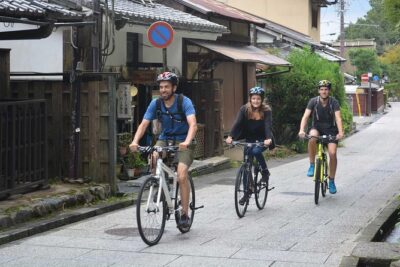
Arashiyama Bamboo Forest & Hidden Gems Bike Tour (Early Bird)
Read our review →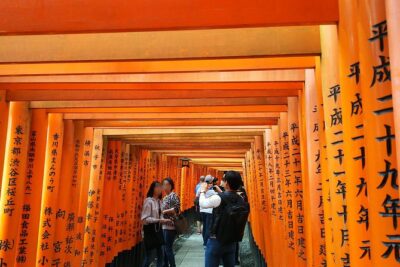
Kyoto Early Bird English Tour: Fushimi-Inari and Arashiyama
Read our review →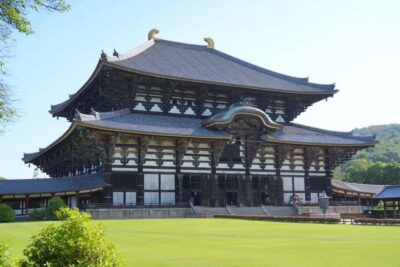
Nara Early Bird Tour (Kyoto Departure Option Available)
Read our review →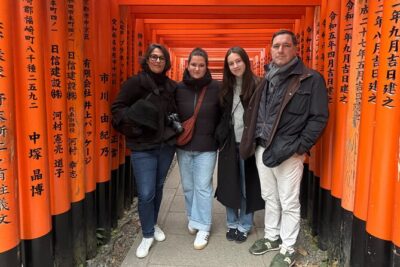
Kyoto Early Bird English Tour: Fushimi Inari & Gion(Private opt)
Read our review →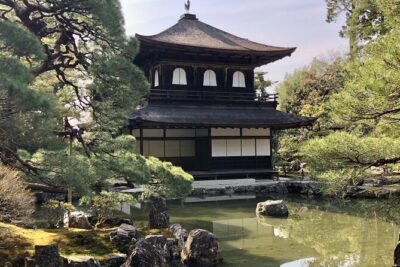
Browse the lists this tour appears in