
REVIEW · KIYOMIZU-DERA TEMPLE TOURS
Kyoto Tea Ceremony & Kiyomizu-dera Temple Walking Tour
Kiyomizu-dera and a traditional tea ceremony make a fine Kyoto pairing. In three hours, you get the city’s old hillside lanes, a major temple, Otowa Waterfall, matcha, and small food samples without having to puzzle over a map. Guides such as Hide add useful context on Shinto, Buddhism, and temple manners.
I like the small maximum of six, which gives you room to ask questions and keeps the walk from feeling like a flag-following exercise. I also like the gentle pace from Yasaka Shrine through Kiyomizu-zaka, followed by a calm ceremony that lets you focus on one of Japan’s most formal arts.
The main caution is practical: this is a walking tour on sloping, busy streets, and the meeting point at Yasaka Shrine can be easy to miss. Summer heat, limited food substitutions, and the fixed 9:00 a.m. start also deserve attention before you book.
In This Review
- Key points to know before booking
- Why this three-hour Kyoto combination works
- Starting at Yasaka Shrine in Gion
- Walking Kiyomizu-zaka, Sannenzaka, and Ninenzaka
- Entering Kiyomizu-dera and its wooden stage
- Choosing a stream at Otowa Waterfall
- The matcha ceremony and small food samples
- What the guides add to the morning
- Timing, heat, group size, and comfort
- Is $109.39 a fair price?
- Who should book this Kyoto walk?
- Should you book the Kiyomizu-dera tea ceremony tour?
- FAQ
- How long is the Kyoto tea ceremony and Kiyomizu-dera tour?
- Where does the tour begin?
- What time does the tour start?
- Where does the tour end?
- Is the Kiyomizu-dera entrance fee included?
- Is the tea ceremony included?
- Can children join the tour?
- How many people can join the group?
- Are food allergies and dietary restrictions accommodated?
- Can I cancel for a full refund?
Key points to know before booking
- A six-person limit: The small group makes it easier to hear explanations and ask about Japanese customs.
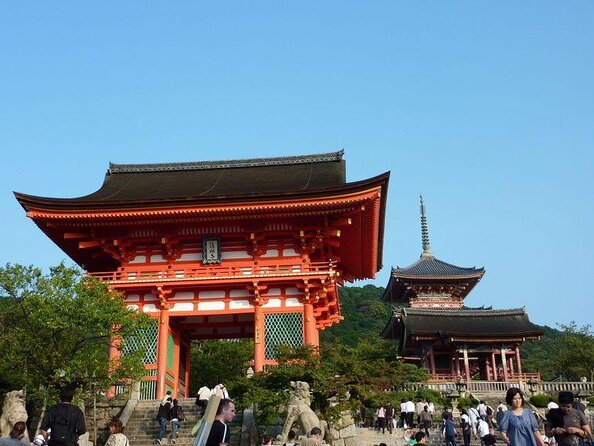
- Kiyomizu-dera included: Your admission covers one of Kyoto’s best-known temples and its famous wooden stage.
- Matcha and a formal ceremony: You do not just drink green tea. You watch and take part in a traditional tea ritual.
- Historic streets before the temple: Kiyomizu-zaka, Sannenzaka, and Ninenzaka provide old Kyoto scenery, shops, slopes, and photo stops.
- A useful first-day orientation: The route introduces several major sights in Higashiyama in one morning.
- Some limits to note: Extra food and drinks cost more, children under six cannot join, and dietary requests cannot be guaranteed.
Why this three-hour Kyoto combination works
Kyoto can feel like a city made of temples. That sounds ideal until you face a map filled with famous names and have only a few days. This tour solves part of that problem by linking a major sight with the streets that lead to it, then adding a tea ceremony for a more focused cultural experience.
The route begins at Yasaka Shrine and ends back at the same meeting point. That makes the tour easy to fit into a morning plan, though you need to allow time to find the correct gate before the 9:00 a.m. start. The meeting point is Yasaka Jinja Nishiromon Gate, also called the Western Tower Gate, at 625 Gionmachi Kitagawa in Kyoto’s Higashiyama Ward.
You receive a mobile ticket, and the activity includes a local guide for about three hours. The price is $109.39 per person. That is not a cheap walking tour, but it covers Kiyomizu-dera admission, the tea ceremony, matcha, snacks, photos taken during the walk, and the benefit of a very small group.
I see the value most clearly if you are new to Kyoto. Instead of paying only for entry to a temple, you are paying for a planned route, cultural explanation, help with temple customs, and a hands-on ceremony. If you already know Higashiyama well and only want to enter Kiyomizu-dera, the price may feel high.
More visits to Kiyomizu-dera:
- Kyoto: Tea Ceremony in a Traditional Tea House in Kiyomizu
★ 4.9 · 3,519 reviews - Kyoto: Nijo Castle, Kiyomizu & Fushimi Inari Guided Tour
★ 4.7 · 700 reviews - Kyoto: Nijo, Kinkaku-ji, Arashiyama, Kiyomizu & Fushimi Inari
★ 5.0 · 699 reviews
Starting at Yasaka Shrine in Gion
Yasaka Shrine is a sensible starting point because it places you near Gion and the historic Higashiyama district. From here, the tour moves toward the streets around Kiyomizu-dera, giving you a gradual shift from a major shrine setting to old commercial lanes and temple grounds.
The first photo stop is described as a photogenic spot, but the exact location is not fixed in the tour details. That means you should expect a planned picture opportunity rather than a guaranteed famous viewpoint. Your guide also takes photos during the activity, a useful touch if you want pictures of the experience without constantly holding up your phone.
The meeting point needs care. One person found the start confusing, even though the tour itself went very well after the group connected with the guide. Look for the Western Tower Gate, not just Yasaka Shrine in general, and arrive early enough to orient yourself.
A small group matters here. With no more than six people, you can ask why a shrine differs from a Buddhist temple, how to behave at a worship site, or what a particular gate means. Guides such as Hide have explained both Shinto and Buddhist practices in an informal way, with room for ordinary conversation as well as formal facts.
Walking Kiyomizu-zaka, Sannenzaka, and Ninenzaka
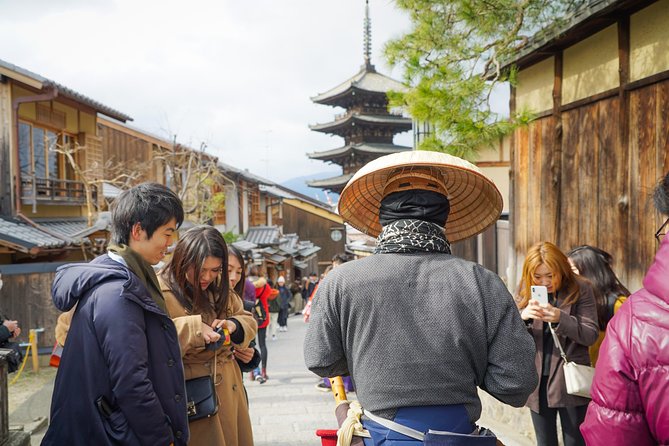
The streets leading to Kiyomizu-dera are part of the attraction, not just a way to reach the temple. Kiyomizu-zaka is lined with teahouses, Japanese sweets shops, souvenir stores, pickles, yatsuhashi, and traditional dried foods. The setting gives you a good sense of old Kyoto’s shop-lined approach to a temple.
You may also see people dressed in traditional clothing, including maiko and geisha, in the area. Treat any such sighting with respect and avoid blocking the narrow street for a photograph. The atmosphere can feel old-fashioned, but these are working streets with shops and heavy pedestrian use, not a preserved museum set.
The route includes Yasakakoshindo, known for its strong colors and distinctive appearance. It gives the walk some variety before the main temple visit. Your guide can point out details you might otherwise pass while concentrating on the slope and the crowds.
Kiyomizu-zaka is about one kilometer along the pilgrimage route toward Kiyomizu-dera. The lower part can be quieter, while the upper stretch has more souvenir shops and calls from shopkeepers inviting you inside. The route is uphill, so comfortable shoes are more important than fashionable ones.
Sannenzaka and Ninenzaka add another layer of old Kyoto character. Sannenzaka is a historic slope with several stories about the origin of its name. One famous warning says that falling there means you will die within three years, or lose three years from your life. The tale is best treated as folklore, but it does give you a memorable reason to watch your footing.
The practical truth is simpler: the stone-paved slopes can be uneven, and the area can become crowded. You will have more time to browse after the tour, so I would not try to shop seriously while keeping up with the group. Use the walk to notice the architecture, sample the atmosphere, and mark stores you want to revisit later.
Entering Kiyomizu-dera and its wooden stage
Kiyomizu-dera was built on the site of Otowa Waterfall about 1,200 years ago. Its name refers to the waterfall’s pure water, which connects the temple’s identity to the natural feature below.
The temple’s wooden stage is the major visual moment. It rises about 13 meters above the ground and looks over trees and the city of Kyoto in the distance. In spring, cherry trees add color. In autumn, maple leaves make the view especially appealing. The tour description highlights both seasons, so timing your Kyoto visit around them can make this stop even more rewarding, though seasonal scenery is never guaranteed.
Your guide’s role is especially useful inside a large temple complex. You can ask questions as you move between gates, buildings, views, and worship areas instead of reading a short sign and moving on. The guide also helps explain the difference between sightseeing and worship, which is valuable if you want to behave properly rather than simply copy the nearest person.
Kiyomizu-dera is one of Kyoto’s best-known sights, so this will not be a quiet private visit. The small group helps with communication, but it cannot remove other people from the temple or from the approach roads. Go in expecting a popular cultural site, not a secluded sanctuary.
The entrance fee is included, which simplifies the morning. You do not need to budget separately for admission, though additional food and drinks are not covered.
More tea ceremonies in Kyoto:
- Kyoto: Tea Ceremony Ju-An at Jotokuji Temple
★ 4.9 · 3,207 reviews - Kyoto: 45-Minute Tea Ceremony Lesson Experience
★ 4.3 · 2,378 reviews - Kyoto: Table-Style Tea Ceremony at a Kyo-Machiya
★ 4.9 · 1,211 reviews - Kimono Tea Ceremony at Kyoto Maikoya, NISHIKI
★ 5.0 · 911 reviews
Choosing a stream at Otowa Waterfall
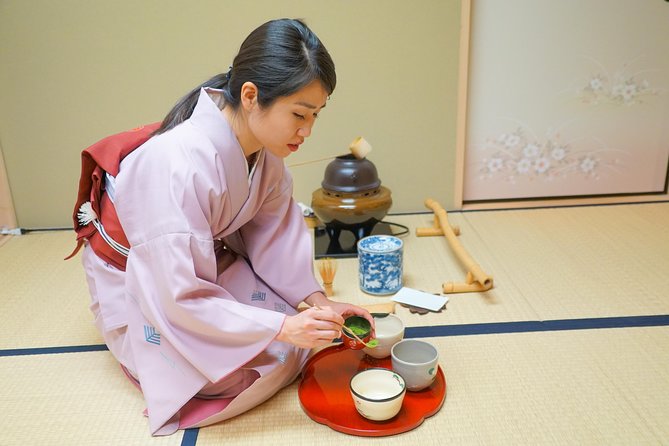
Otowa Waterfall gives the temple its name and adds a simple hands-on part to the visit. The water is divided into three streams, with each one linked to a different benefit. You choose one stream, use a cup attached to a long pole, and drink the water as part of the local worship practice.
This is more interesting with a guide because the action has meaning beyond taking a sip of water. You can learn how to approach it and why the three streams matter. The experience is brief, but it helps turn the temple visit from a series of views into participation in a Japanese custom.
Choose only one stream, as the tradition gives each a different benefit. The tour presents this as a good-fortune practice, not a claim that the water will solve every problem in your life. A little good humor is appropriate, but respect matters more.
The matcha ceremony and small food samples
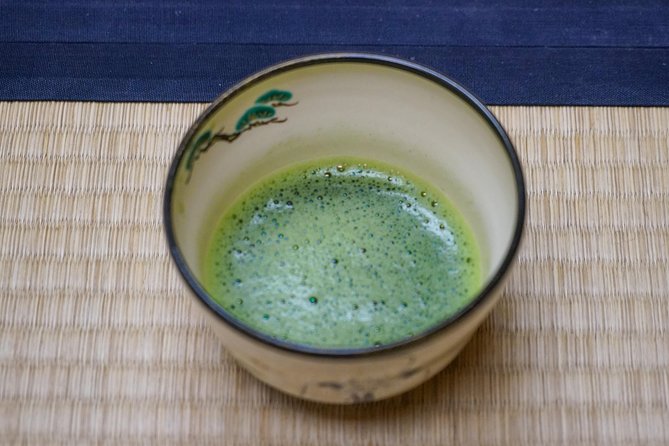
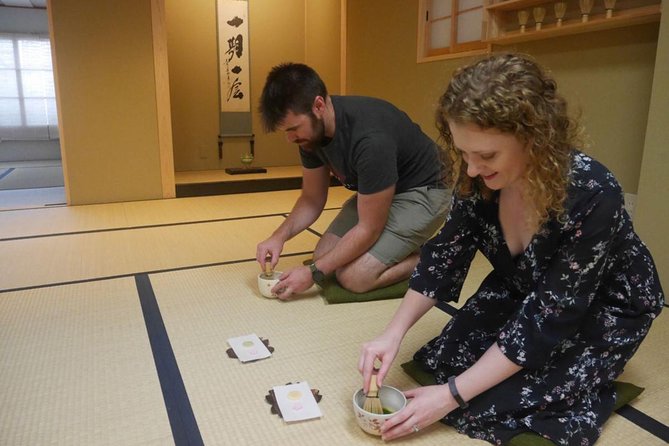
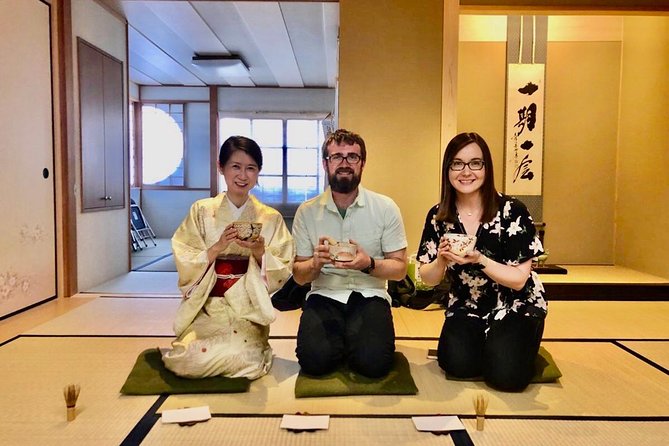
The tea ceremony is the tour’s most focused cultural experience. After the walking and temple explanations, you sit down for a traditional Japanese tea ritual and drink matcha. The pace changes here. Instead of moving through streets and stopping for photographs, you watch a careful sequence of movements and learn how the ceremony works.
The ceremony is not simply a demonstration of someone making a cup of tea. You are introduced to the formalities and the artistry behind the process. A tea host such as Haruki has been described as warm and entertaining, while another ceremony host was praised for explaining the ritual with care and interest in the people attending.
You should expect a genuine cultural lesson, but not necessarily a long classroom session. The activity has only about three hours for the entire route, temple, waterfall, snacks, and ceremony. The exact amount of time at each stop can vary with the group and conditions.
Matcha is included, along with a few food samplings. These snacks help connect the tea service to Japanese tastes, but they should not replace lunch. Extra food and drinks are your responsibility, so plan another meal after the tour.
Food restrictions require caution. The operator cannot guarantee allergy-free preparation or meet all dietary requirements because the food comes from kitchens it does not control. Substitutions may not be possible at every stop, though the operator says it will try to compensate at other stops. If you have a serious allergy or strict diet, contact the provider before booking and be ready to skip samples.
What the guides add to the morning
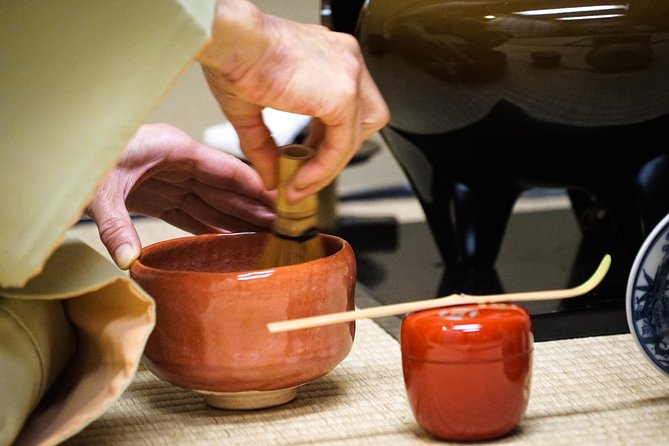
The route itself is easy to find on a map. The better question is what you gain by having a local guide walk it with you. I think the answer is context and confidence.
A guide can explain Shinto and Buddhism in plain language, point out the meaning of worship gestures, and answer questions while you are looking at the actual site. That is more useful than memorizing dates before your visit. It also keeps you moving through a busy district without repeatedly checking directions.
Hide is one guide associated with especially relaxed walks. His style includes temple customs, local history, photos, and light conversation, including baseball and the occasional dad joke. That mix matters because a three-hour cultural walk should inform you without feeling stiff.
The guide assigned to your date may be different. The quality of a particular person can shape the experience, so do not book solely on the hope that one named guide will lead your group. Still, the small-group structure gives any guide a good chance to respond to your questions.
Timing, heat, group size, and comfort
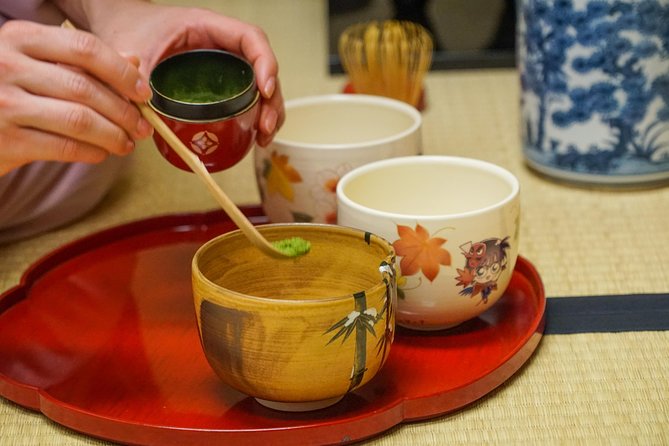
The 9:00 a.m. start is useful. You get the tour done before the hottest part of the day and keep the afternoon open for another Kyoto neighborhood, a meal, or a return to Sannenzaka for shopping.
The route includes slopes and several hours on foot. Japan’s summer can be very hot and humid, so bring water and wear a hat. Good walking shoes will help on the stone streets around Kiyomizu-dera. The tour is near public transportation, but no specific train or bus transfer is included in the experience.
Children under six are not allowed. The activity is otherwise open to most people, though anyone who finds uphill walking difficult should consider the route carefully. The small group has a maximum of six people, which is one of the strongest reasons to choose this over a large sightseeing outing.
The tour ends back at Yasaka Shrine. That is convenient if you want to continue in Gion, but you should not expect transport to your hotel or a drop-off at Kiyomizu-dera.
Is $109.39 a fair price?
At $109.39 per person, this tour costs more than entering Kiyomizu-dera on your own. The price makes more sense when you count the included temple ticket, a local guide, the tea ceremony, matcha, snacks, and photos.
I would call it good value for a first Kyoto visit if you want several experiences combined in one morning. You get orientation, history, temple customs, a famous view, a traditional ritual, and a small taste of local food. You also avoid spending time planning the route between Yasaka Shrine and Kiyomizu-dera.
It is less compelling for independent visitors who already understand the district, dislike organized activities, or want a long tea ceremony with extensive instruction. The tour gives you an introduction, not a full-day study of tea culture.
The fact that it is often booked about 30 days ahead suggests you should reserve early during popular travel periods. Free cancellation is available if you cancel at least 24 hours before the local start time. Cancellations or changes made inside that window are not refunded or accepted.
Who should book this Kyoto walk?
I would choose this tour for a first morning in Kyoto, especially if you want someone to explain the difference between shrine and temple customs as you see them. It is also a good match for couples, families with older children, and solo visitors who prefer a small group rather than exploring a major district alone.
You will get the most from it if you enjoy walking, photography, local food samples, and cultural demonstrations. The tea ceremony adds a quiet counterpoint to the busy temple streets, and the included photos are handy if you want to stay present during the walk.
I would think twice if you have severe food allergies, cannot manage slopes, need a late start, or want guaranteed privacy at Kiyomizu-dera. The meeting point also deserves extra attention because finding the exact Yasaka Shrine gate may take longer than expected.
Should you book the Kiyomizu-dera tea ceremony tour?
Book it if you want a well-planned introduction to Kyoto’s Higashiyama district rather than a simple temple admission. The combination of Kiyomizu-dera, Otowa Waterfall, historic streets, matcha, snacks, and a small tea ceremony gives you a lot in three hours.
Skip it if you prefer to set your own pace or already have a detailed plan for Kiyomizu-dera and the surrounding lanes. For most first-time visitors, though, the modest group size, practical guidance, and calm tea ritual make the $109.39 easier to justify. Arrive early at the correct Yasaka Shrine gate, wear comfortable shoes, and treat the ceremony and worship sites with respect.
FAQ
How long is the Kyoto tea ceremony and Kiyomizu-dera tour?
The tour lasts approximately three hours.
Where does the tour begin?
It begins at Yasaka Jinja Nishiromon Gate, also called the Western Tower Gate, at 625 Gionmachi Kitagawa in Kyoto’s Higashiyama Ward.
What time does the tour start?
The tour starts at 9:00 a.m.
Where does the tour end?
The activity ends back at the Yasaka Shrine meeting point.
Is the Kiyomizu-dera entrance fee included?
Yes. Admission to Kiyomizu-dera is included in the tour price.
Is the tea ceremony included?
Yes. The tour includes a traditional tea ceremony and matcha green tea.
Can children join the tour?
Children under six years old are not allowed to participate. Most other visitors can take part.
How many people can join the group?
The tour has a maximum of six participants.
Are food allergies and dietary restrictions accommodated?
Allergy-free preparation and dietary substitutions cannot be guaranteed. The food comes from kitchens outside the operator’s control, and substitutions may not be possible at every stop.
Can I cancel for a full refund?
Yes, if you cancel at least 24 hours before the experience’s start time. Cancellations or changes made less than 24 hours before the start are not refunded or accepted.
More Walking Tours in Kyoto
- Kyoto Geisha Walking Tour: Gion District & Hidden Gems
★ 4.7 · 3,273 reviews - Kyoto: Gion Magical Night Walking Tour with Geisha Trivia
★ 4.9 · 2,393 reviews - Kyoto: Gion Geisha District Walking Tour – Stories of Geisha
★ 4.7 · 2,187 reviews - Night Walk in Gion: Kyoto’s Geisha District
★ 4.5 · 2,003 reviews
More Temples in Kyoto
- Arashiyama Bamboo, Temple, Monkeys, or Secret Sake Brewery
★ 4.8 · 886 reviews - Kyoto: Arashiyama Bamboo Forest, Monkeys, Matcha & Temple Tour
★ 5.0 · 759 reviews - Kyoto: Ninnaji Temple Entry Ticket
★ 4.2 · 650 reviews - Kyoto Zen Meditation & Garden Tour at a Zen Temple with Lunch
★ 5.0 · 441 reviews
Recently added around Kyoto
- Higashiyama | Kyoto: Sakura Season Private Rickshaw Tour★ 5.0 · 3 reviews
- Kyoto Kimono Rental CHAMATSU|Kimono/Yukata Rental FamilyPlan★ 5.0 · 3 reviews
- Kyoto: Half-Day Private Guided Tour to the Old Town of Gion★ 4.4 · 3 reviews
- Nara Private Customizable Half Day Tour★ 5.0 · 3 reviews
- Kansai Region Hiking Adventure in Nara Kobe Kyoto and More★ 5.0 · 3 reviews
- Full Day Nara Deer, Temple, Shrine, Activities & Tea Ceremony★ 5.0 · 3 reviews
- Nara: Essential Private Tour with Deer Park and Temples★ 5.0 · 3 reviews
- Hiking Tour for Sacred Sites in Kyoto with a Guide★ 5.0 · 3 reviews
Kiyomizu-dera Temple Tours, compared.
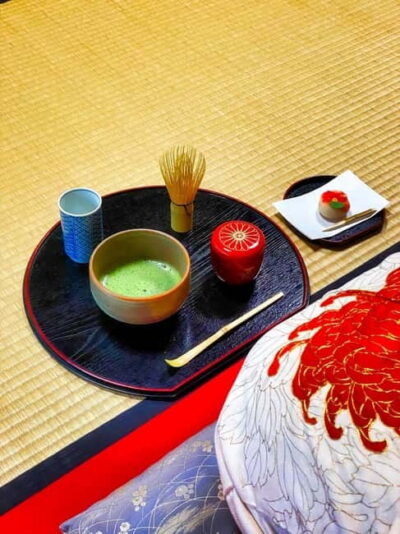
Tea Ceremony in a Traditional Tea House in Kiyomizu
Read our review →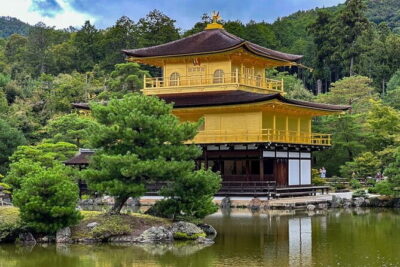
Nijo, Kinkaku-ji, Arashiyama, Kiyomizu & Fushimi Inari
Read our review →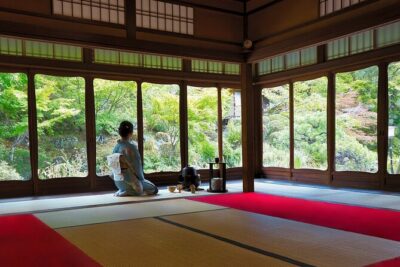
Kyoto Kiyomizu Tea Ceremony with Scenic Garden Views
Read our review →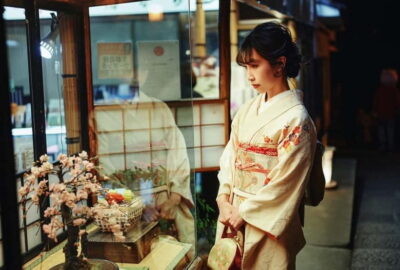
Kimono/Yukata Rental 5 Minute from Kiyomizu-dera
Read our review →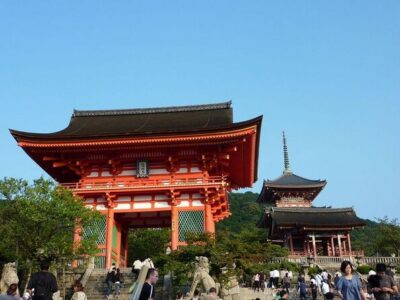
Kiyomizu Temple and Backstreets of Gion, Half Day Group Tour
Read our review →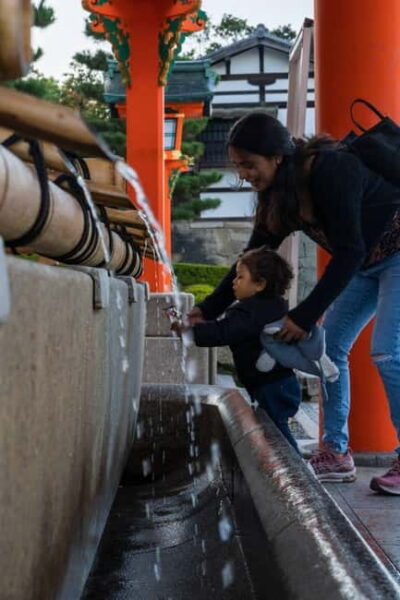
Best of Kyoto: Red Gates of Fushimi Inari & Kiyomizu Temple
Read our review →
Kyoto kiyomizu Temple : Maiko and Samurai Couple Photoshoot
Read our review →
Kiyomizu-dera, Fushimi Inari & Gion Geisha District
Read our review →Browse the lists this tour appears in