
REVIEW · KYOTO CALLIGRAPHY CLASSES
Kyoto : Japanese Calligraphy Workshop with a calligrapher
Japanese calligraphy turns a simple brush into a lesson in patience, balance, and control. In this Kyoto workshop, you begin with the tools and five basic strokes that form the bones of Kanji, then build toward a finished piece on a fan, shikishi board, or washi postcard. I like the hands-on format and the chance to learn your name in Japanese. I also like that the calligrapher creates a personal model for your chosen character rather than handing you a fixed worksheet.
The activity runs for about one hour to 90 minutes, so it fits neatly into a Kyoto sightseeing day and works well in rainy weather. The main consideration is time: one participant found one hour too short and wanted to continue. Also, the venue can be hard to find, so look carefully for the signboard in front of the entrance.
In This Review
- Key points to know
- Starting with brush, ink, and five basic strokes
- Choosing a Kanji with personal meaning
- Creating the final piece on a fan, board, or postcard
- Why the English-speaking instruction matters
- A compact Kyoto activity with a real souvenir
- Finding the entrance in Kyoto
- Who will enjoy this calligraphy class
- What makes the final artwork worth keeping
- Simple planning advice before you go
- Should you book this Kyoto calligraphy workshop?
- FAQ
- How long does the Japanese calligraphy workshop last?
- How much does the workshop cost?
- Is previous calligraphy experience required?
- What will I learn during the class?
- Can I choose my own Kanji character?
- Can I write my name in Japanese?
- What can I use for my finished artwork?
- Is the class taught in English?
- Are materials and transportation included?
Key points to know
- Five foundation strokes: Learn the basic brush movements used to build Kanji characters.
- Your choice of artwork: Finish on a folding fan, shikishi board, or washi postcard.
- Personal instruction: The calligrapher demonstrates each technique in front of you and prepares a model for your chosen character.
- Useful language touch: You can learn how to write your own name in Japanese.
- Good rainy-day plan: The indoor workshop offers a creative break from Kyoto temples and wet streets.
- English instruction: Private and small-group sessions are available, with an English-speaking instructor.
Starting with brush, ink, and five basic strokes
The workshop begins with the equipment. You learn how to handle the brush, work with ink, and understand the role each tool plays before trying a finished character. That early explanation matters because Japanese calligraphy is not simply drawing Kanji with a brush. Stroke order, pressure, direction, and the way you lift the brush all affect the result.
You then practice five representative strokes used in Kanji writing. This is a smart starting point for beginners. Instead of asking you to copy a complicated character at once, the instructor breaks the writing into small movements. You can watch the calligrapher demonstrate each stroke directly in front of you, then try it yourself.
I like this part because it gives you a useful foundation even if your final character is not perfect. You begin to see that a strong line can be thick or thin, fast or slow, depending on the pressure of the brush. The lesson also makes Kanji feel less mysterious. A character becomes a group of deliberate marks rather than a shape you simply hope to copy.
Do not expect a long formal course in Japanese writing. This is a short cultural workshop, not a complete calligraphy program. You receive enough instruction to understand the basics and make a personal piece, but the format does not leave much time for mastering every stroke.
More calligraphy classes:
- Kyoto: Calligraphy class at Buddhist temple in city center
★ 5.0 · 167 reviews - Kyoto: Japanese Calligraphy Class
★ 4.8 · 89 reviews - Kyoto: Japanese Calligraphy Workshop
★ 4.7 · 84 reviews
Choosing a Kanji with personal meaning
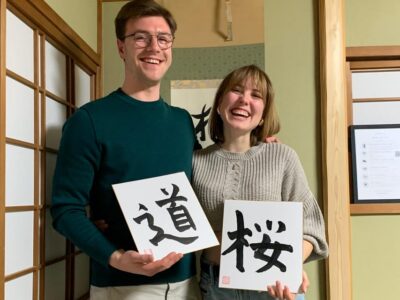
After the basic practice, you choose a word or character for your final work. Popular options include 愛, meaning love, 幸, meaning happiness, and 忍者, meaning ninja. You can also choose other Kanji, including characters such as tree or samurai, as long as the instructor can prepare the model for you.
This choice gives the activity more meaning than a generic craft project. Love and happiness are easy choices for a keepsake, while ninja offers a playful Kyoto souvenir. Tree or samurai can suit someone interested in Japanese culture, family names, nature, or traditional warrior imagery.
You do not need to arrive knowing which character you want. The instructor helps you understand the characters and provides a personalized model once you decide. That model gives you something clear to follow while you practice the correct structure and brush movement.
The option to write your name in Japanese is especially useful if you want a finished piece that feels personal. The available information does not specify the exact Japanese spelling method used for every name, so you should ask the instructor how your name will be represented during the session. Still, adding your name gives the final artwork a clear connection to your trip.
Creating the final piece on a fan, board, or postcard
The final stage is where the lesson becomes a souvenir. You choose from several surfaces, including a folding fan, a shikishi board, or a washi postcard. Each option has a different feel.
A folding fan makes a distinctive decorative keepsake and gives the calligraphy a traditional Japanese setting. A shikishi board is a firm square art board often used for signatures, messages, and calligraphy. It feels more like a display piece. The washi postcard is the easiest option to pack and take home, especially if you are traveling with limited luggage.
You first practice the character, then create the final version on your chosen item. The instructor continues to guide you through the important points, such as how to form the strokes and keep the character balanced. The goal is not flawless professional calligraphy. It is to produce something that shows what you learned and carries your own handwork.
Ink can stain clothing, so wear something comfortable that you do not mind getting marked. All materials are provided, including the brush and ink, which keeps the activity simple for anyone who did not pack art supplies.
At the end, you can have a commemorative photo taken with your completed artwork. That adds a nice closing moment, especially if you are making the piece as a couple, family, or small group.
Why the English-speaking instruction matters
The instructor teaches in English, which makes the class accessible if you do not speak Japanese. More important, the lesson depends on watching as much as listening. You see the brush move, copy the stroke, and receive corrections while you work.
The teaching style appears to be patient and encouraging. Miran is specifically praised for being helpful, and the instructor is described as kind, patient, and good at showing each stroke. That suits this activity because beginners often need several attempts before the brush behaves as expected.
Calligraphy can be frustrating for the first few minutes. The brush does not respond like a pencil, and the ink can make a line look heavier than planned. Patient instruction helps you keep trying instead of treating the first uneven character as a failure.
Private and small-group formats are available. A private class may be best if you want more individual attention, plan to spend extra time on your name, or care strongly about producing a neat final piece. A small group can make the activity more social, though the amount of individual practice time may depend on the group size.
More workshops and classes in Kyoto:
- Kyoto: 45-Minute Tea Ceremony Lesson Experience
★ 4.3 · 2,378 reviews - Kyoto : Chopsticks Making Workshop in Gion with Engraving Option
★ 5.0 · 958 reviews - Kyoto: Samurai Sword Class by Experts in Traditional Arts
★ 4.9 · 657 reviews - Kyoto: Ramen Cooking Class at a Ramen Factory with Souvenir
★ 4.9 · 532 reviews
A compact Kyoto activity with a real souvenir
At $51 per person, this is not the cheapest one-hour activity in Kyoto. The value comes from the combination of instruction, materials, a personalized model, and a finished item you take home. You are paying for a guided cultural activity, not just a brush and postcard.
I think the price makes the most sense for people who want a structured introduction and a souvenir they helped create. If you only want a quick photo with Japanese writing, the cost may feel high. If you value personal instruction and want to learn how Kanji is formed, the package is more convincing.
The duration is listed as one hour to 90 minutes. Check the available start times carefully, since the exact length can affect how much practice you receive. One hour is enough to learn the basics and make a final piece, but it can feel tight if you want to try several characters or refine your brushwork.
The short format is also a strength. Kyoto days fill quickly with temples, gardens, markets, and meals. You can place this workshop between sightseeing stops without losing half a day. It is also a useful backup when rain makes outdoor plans less appealing.
Finding the entrance in Kyoto
Transportation to the venue is not included, so you need to make your own way there. The meeting point has a signboard in front of the entrance, but the entrance can be difficult to locate. Allow a little extra time rather than arriving at the last minute.
This is the one practical weakness I would take seriously. A creative workshop begins badly if you are searching around the neighborhood with wet shoes and a ticking start time. Use the meeting information closely and look for the signboard outside the entrance.
The available details do not identify a nearby station, landmark, or exact walking route, so you should confirm the precise venue information when booking. That is especially important if you are not familiar with the Kyoto neighborhood where the session takes place.
Who will enjoy this calligraphy class
This workshop suits first-time visitors who want more than a passive cultural demonstration. You handle the tools, practice the strokes, choose the character, and make the final artwork. That gives you a clearer connection to the tradition than simply watching someone write.
Families with older children may also find it rewarding, provided everyone can follow the brush instructions and work carefully with ink. Couples can choose matching or complementary words, while solo visitors can create a name piece or a character tied to their trip.
It is a good choice for:
- First-time calligraphy students
- Visitors looking for a rainy-day activity
- People who want a light cultural experience between major sights
- Anyone interested in Kanji, Katakana, or Japanese names
- Couples and small groups wanting a shared keepsake
- Visitors who prefer an English-language activity
It may not suit you if you want a long, traditional lesson with extensive practice. The session is designed to give you a taste of the art and a finished souvenir, not to train you to professional level.
What makes the final artwork worth keeping
Souvenirs are better when you remember making them. A shop-bought fan may be more polished, but your calligraphy piece carries the memory of learning the strokes, choosing the character, and trying to control the ink.
The choice of surface also lets you match the souvenir to your trip. The postcard is practical and easy to pack. The board gives you a more formal display item. The fan has the strongest traditional feel, though you should protect it carefully in your luggage.
I would choose the character before the class only if you already have a word that matters to you. Otherwise, let the instructor guide you. Love, happiness, ninja, tree, and samurai each create a different mood, and the right choice depends on whether you want something sentimental, playful, or strongly tied to Japanese culture.
Simple planning advice before you go
Book with enough flexibility to reach the venue without rushing. Cancellation is free up to 24 hours in advance, and you can reserve now and pay later, which helps if your Kyoto schedule is still changing.
Wear comfortable clothing that can tolerate an ink mark. Bring your curiosity, not prior experience. Every material is supplied, and no calligraphy background is needed.
Think about the size and portability of your final piece before choosing it. A washi postcard takes almost no luggage space, while a fan or shikishi board needs more careful packing. If you want your name included, mention that early so the instructor can help you plan the design.
The overall rating is 4.8 from five bookings, and the strongest pattern in the feedback is clear: people value the friendly teaching, personal attention, encouragement, and attractive take-home pieces. The only repeated caution is practical rather than artistic: finding the entrance may take effort, and the shortest session may leave you wishing for more time.
Should you book this Kyoto calligraphy workshop?
Book it if you want a friendly, hands-on introduction to Japanese calligraphy and a souvenir made by your own brush. The English instruction, personal Kanji model, name-writing option, and choice of final artwork give the session more substance than a quick craft stop.
I would especially choose it on a rainy Kyoto day, for a first visit to Japan, or when you want an activity that does not require a full day. Just allow extra time to find the entrance, wear clothes that can handle ink, and understand that one hour may feel brief.
If your priority is a serious, extended calligraphy course, choose a longer class. For a compact cultural experience with a personal keepsake, this workshop offers good value at $51 per person.
FAQ
How long does the Japanese calligraphy workshop last?
The activity lasts from one hour to 90 minutes. Available starting times and the exact duration depend on the booking schedule.
How much does the workshop cost?
The price is $51 per person.
Is previous calligraphy experience required?
No. The workshop is designed for beginners, and no prior calligraphy experience is required.
What will I learn during the class?
You learn how to use the brush and ink, understand Japanese characters, and practice five basic strokes that form the foundation of Kanji writing. You can also explore Kanji and Katakana characters.
Can I choose my own Kanji character?
Yes. You choose a word or Kanji character for your artwork. Examples include love, happiness, ninja, tree, and samurai.
Can I write my name in Japanese?
Yes. You can learn how to write your name in Japanese and include it on your final piece.
What can I use for my finished artwork?
You can choose a folding fan, a shikishi board, or a washi postcard.
Is the class taught in English?
Yes. The instructor teaches in English.
Are materials and transportation included?
Brush and ink instruction and all workshop materials are included. Transportation to the venue, meals, and drinks are not included.
Recently added around Kyoto
- Higashiyama | Kyoto: Sakura Season Private Rickshaw Tour★ 5.0 · 3 reviews
- Kyoto Kimono Rental CHAMATSU|Kimono/Yukata Rental FamilyPlan★ 5.0 · 3 reviews
- Kyoto: Half-Day Private Guided Tour to the Old Town of Gion★ 4.4 · 3 reviews
- Nara Private Customizable Half Day Tour★ 5.0 · 3 reviews
- Kansai Region Hiking Adventure in Nara Kobe Kyoto and More★ 5.0 · 3 reviews
- Full Day Nara Deer, Temple, Shrine, Activities & Tea Ceremony★ 5.0 · 3 reviews
- Nara: Essential Private Tour with Deer Park and Temples★ 5.0 · 3 reviews
- Hiking Tour for Sacred Sites in Kyoto with a Guide★ 5.0 · 3 reviews
Kyoto Calligraphy Classes, compared.
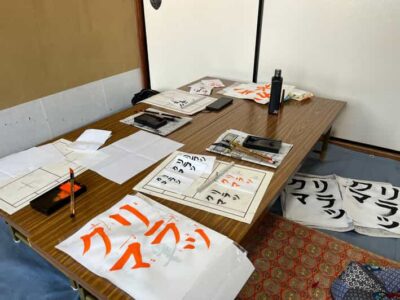
Calligraphy class at Buddhist temple in city center
Read our review →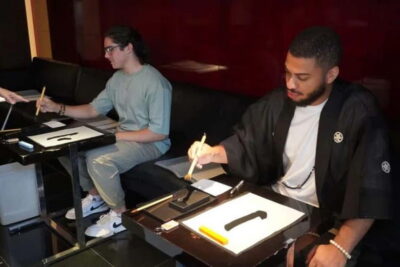
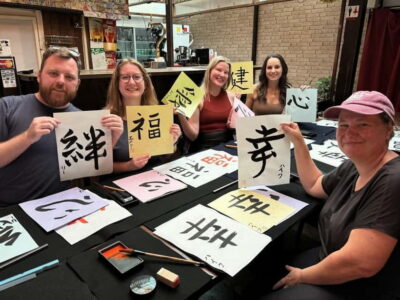
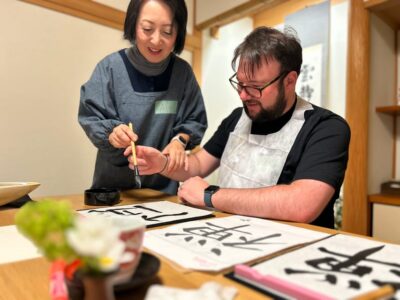
Kyoto Ninenzaka : Japanese Calligraphy Class in Townhouse
Read our review →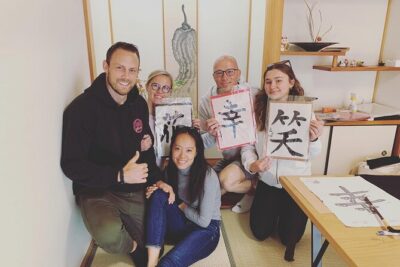
Private Japanese Calligraphy in Kyoto – Learn Shodō with a Master
Read our review →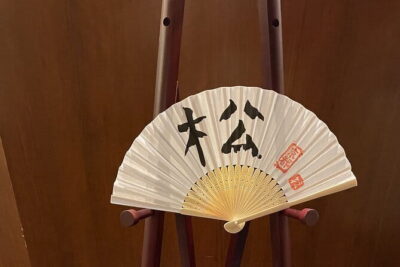
Japanese Calligraphy – Shodo – Lesson (near Kyoto Station)
Read our review →
Browse the lists this tour appears in