
REVIEW · GION GEISHA DISTRICT TOURS
Authentic Maiko Experience&Kyoto Dinner (Free drink) at Noh Stage
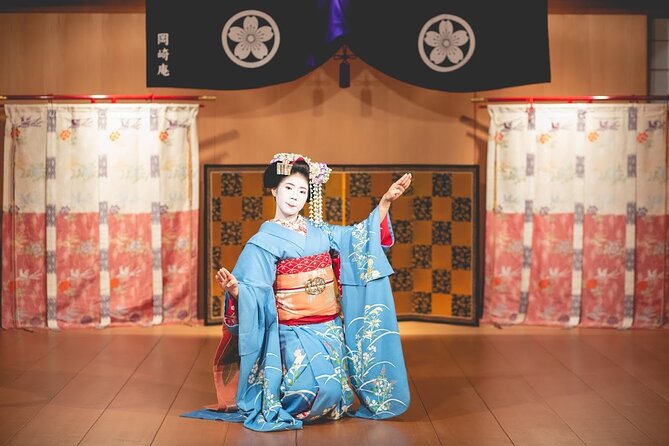
The most special part of this Kyoto evening is not simply watching a maiko dance. You sit close enough to notice the careful movements of her kimono and hair ornaments, then move into conversation, questions, photographs, and traditional games on a Noh stage. It feels far more personal than a large theater performance.
I like the small group format, limited to 20 people, and the fact that live shamisen music accompanies the dancing and games. I also like the useful cultural bridge provided by a Kyoto-certified interpreter guide, especially during the question period. The main consideration is the $150 price for about two hours, so you should book it for the personal contact and cultural setting, not simply for dinner.
In This Review
- Key details of the Kyoto maiko evening
- What makes this more than a standard maiko show
- Arriving at Okazaki-an for the 6 p.m. start
- Dinner, welcome toast, and Kyoto-style food
- Maiko dance with live shamisen music
- Introductions, kimono details, and a useful question period
- Your two-shot photo on the Noh stage
- Ozashiki games with music and conversation
- Is $150 good value for two hours?
- Who should book this Kyoto cultural experience?
- Timing, group size, and cancellation
- Should you book the maiko dinner at the Noh stage?
- FAQ
- Where does the maiko dinner experience take place?
- What time does the experience start and end?
- What is included in the $150 price?
- Are drinks included?
- Can I take photographs?
- How many people can join the experience?
- What happens if I need to cancel?
Key details of the Kyoto maiko evening
- A real Noh stage setting: You gather on the second floor of Okazaki-an, a historic house with a Noh stage used for the evening’s dance, photographs, and games.
- Two hours of food and culture: The program runs from 6:00 to 8:00 p.m., with dinner, drinks, dance, conversation, and activities packed into a neat evening.
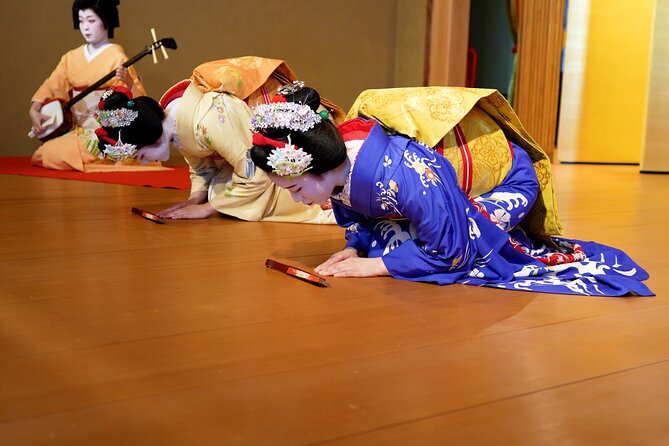
- Live shamisen accompaniment: A jikata musician performs with the maiko, giving the dances and ozashiki games their traditional sound.
- Direct conversation: You can introduce yourself, ask questions, learn about the kimono and kanzashi hair ornaments, and speak with the maiko.
- A personal photo opportunity: Each participant has a two-shot photograph with the maiko on the Noh stage.
- Useful practical limits: Socks or tabi are required on the stage, bare feet are not allowed, and oversize luggage is not accepted.
What makes this more than a standard maiko show
Kyoto has many performances built for quick viewing. You sit in rows, watch a few dances, and leave with a photograph. This experience follows a different pattern. The dance is only one part of the evening, and the program gives you time to ask questions and take part in the social customs associated with an ozashiki gathering.
That distinction matters. A maiko is not simply a performer in a costume. She is a young apprentice in Kyoto’s traditional entertainment districts, trained in dance, music, conversation, and formal hospitality. You will not learn every detail of that world in two hours, but the format gives you a more human connection than a stage show alone.
The evening is designed around intimacy. The maximum group size is 20, and the experience requires at least two participants. That is still a group activity, but it is small enough for the question period and games to feel like shared participation rather than a distant presentation.
The organizers also emphasize close ties with Kyoto’s hanamachi, the traditional flower districts associated with geiko and maiko culture. That background is important because small details matter here: how the maiko enters, how she presents herself, how the music supports the dance, and how the games are introduced. You are paying for the setting and personal exchange as much as for the meal.
More evenings in Gion:
- Kyoto Geisha Walking Tour: Gion District & Hidden Gems
★ 4.7 · 3,273 reviews - Kyoto: Gion Magical Night Walking Tour with Geisha Trivia
★ 4.9 · 2,393 reviews - Kyoto: Gion Geisha District Walking Tour – Stories of Geisha
★ 4.7 · 2,187 reviews
Arriving at Okazaki-an for the 6 p.m. start
The meeting point is Okazaki-an, at 9165 Okazaki Enshoji-cho in Sakyo Ward, Kyoto, postal code 606-8344. The venue is near public transportation, but you should allow time to find the entrance and get settled before the 6:00 p.m. start.
Doors open at 5:50 p.m. If you arrive early, you can wait in the first-floor café area. At 6:00 p.m., the group gathers upstairs on the second floor, where the Noh stage becomes the center of the evening.
There is an early photo period on the stage before the main program begins. This is a useful chance to take pictures of the setting while it is quiet. You must wear socks or tabi to step onto the stage, and eating and drinking are not allowed there during this period. Pack accordingly. Bare feet are specifically excluded, so do not count on going onto the stage in sandals without socks.
The stage itself gives the evening a sense of occasion. A Noh stage is not an ordinary dinner room, and its polished, formal design suits the restrained movements of maiko dance. You should expect a traditional setting rather than a casual restaurant atmosphere.
Dinner, welcome toast, and Kyoto-style food
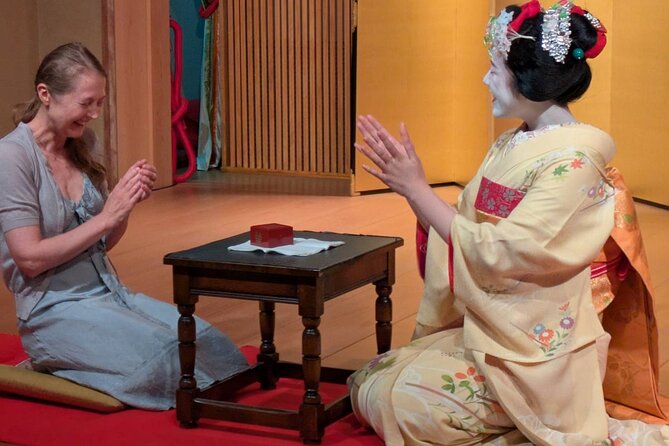
The evening begins with a welcome toast and dinner. The meal is described as Kyoto traditional food and kaiseki-style cuisine. Several accounts of the evening praise the presentation and flavor of the dinner, but the exact menu is not provided, so you should not book this expecting a particular dish.
The meal adds real value if you want more than a performance. Kyoto cuisine is known for careful presentation, seasonal attention, and small portions arranged with precision. Even without a published menu, the meal gives you a chance to experience the formal side of Japanese dining while the cultural program unfolds around it.
The included drinks are unlimited for the two-hour experience. The available choices are not specified, so check at booking if you need details about alcoholic or nonalcoholic options. The practical advantage is clear: you do not need to calculate the cost of each drink during dinner.
Dinner is served alongside the cultural program rather than as a separate restaurant course. That means the evening moves between food, performance, and conversation. If you prefer a quiet, slow meal with long pauses, this may feel busy. If you want several Kyoto experiences in one evening, the compact format works well.
Maiko dance with live shamisen music
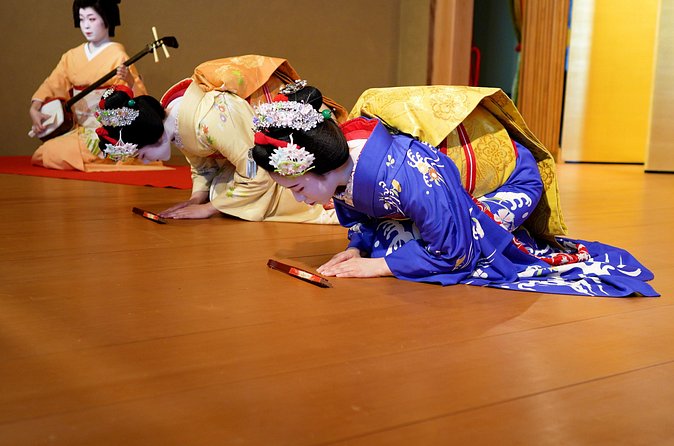
After the welcome and dinner begin, the maiko enters with the jikata, the musician who plays the shamisen. The dance takes place on the Noh stage and is accompanied live, not by a recording.
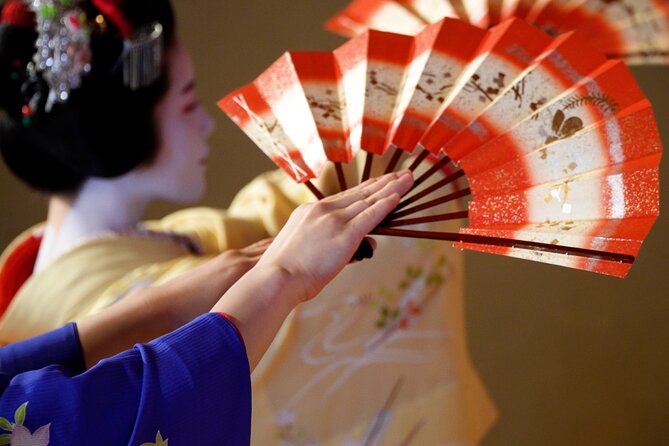
The live shamisen is one of the strongest features of the program. You hear the instrument respond to the dancer’s movements, and the music gives the performance a traditional character that a recorded soundtrack cannot match. The dance is not presented as a loud spectacle. Expect grace, control, and small gestures rather than fast choreography.
The schedule includes multiple maiko dance performances. That gives you more than one brief look at the art form and lets you notice how the movements, posture, sleeves, and music work together. The setting also puts you close to the action, although you should remember that this is still a formal performance. It is not a good time to speak, move around, or treat the stage like a casual photo backdrop.
One key benefit is context. You are not watching a dance and immediately leaving. The performance leads into introductions, questions, and conversation, so you can connect what you see with the maiko’s training and role.
A few more Kyoto experiences worth comparing
- Kyoto Gion Cultural Walk & Geisha Show with Dining Options
★ 5.0 · 518 reviews - Kyoto Gion Cultural Walk & Geisha Show with Dining Options
★ 5.0 · 483 reviews - Dinner with Maiko in a Traditional Kyoto Style Restaurant Tour
★ 5.0 · 175 reviews - Kyoto: Geisha Dinner & Gion Cultural Walk
★ 5.0 · 73 reviews
Introductions, kimono details, and a useful question period
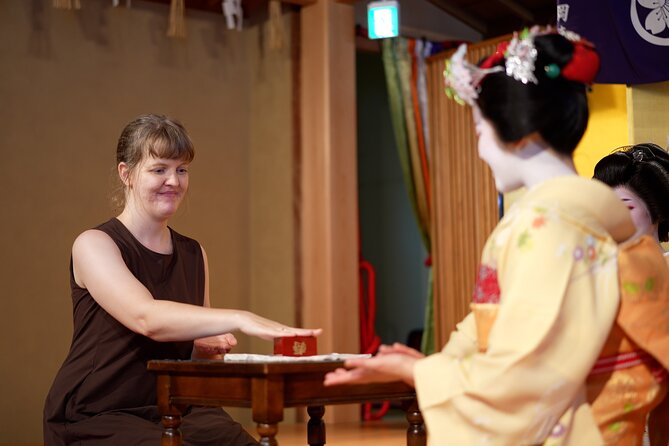
The maiko and participants introduce themselves after the dancing. This simple part of the program helps change the mood from formal viewing to personal exchange.
A Kyoto-certified interpreter guide supports the conversation. That is especially helpful because the subjects you may want to ask about, such as training, daily life, dance, music, kimono, and customs, can be difficult to discuss through basic translation. The guide also helps the entire group follow the conversation instead of leaving people to guess at what is being said.
The program includes an explanation of the maiko’s kimono and kanzashi. Kanzashi are the decorative hair ornaments worn with traditional hairstyles, and they can reveal details about season, age, and formal presentation. The supplied information does not promise a full lecture on every ornament, but this introduction gives you a closer look at items that are easy to miss during a dance.
This is likely the most educational section of the evening. You can ask questions directly, and the small capacity makes it more likely that the conversation will feel personal. Keep your questions respectful and focused on the cultural experience. The format invites curiosity, but it is not a license to demand private information.
Your two-shot photo on the Noh stage
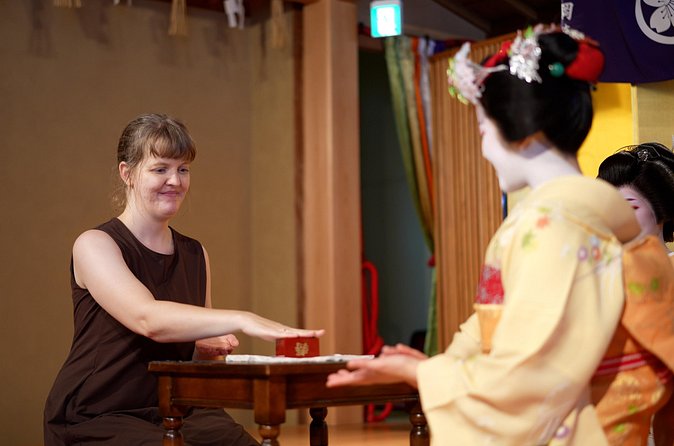
Each participant has time for a two-shot photograph with the maiko on the Noh stage. For many people, this is a major reason to choose this experience over a standard public dance.
The photo is more meaningful because it follows the dance and conversation. You have already seen the performance and learned about the clothing, so the picture records a cultural meeting rather than just a quick posed image.
You also have free photo time on the stage earlier in the evening. Remember the stage rules: socks or tabi are required, and food and drinks stay off the stage. The details of who takes the photograph and how many images you receive are not specified, so ask the staff if the photo arrangement matters to you.
Bring a camera or phone with enough storage and battery. That is ordinary advice, but it matters here because there are several natural photo moments, including the stage before the performance and the formal two-shot.
Ozashiki games with music and conversation
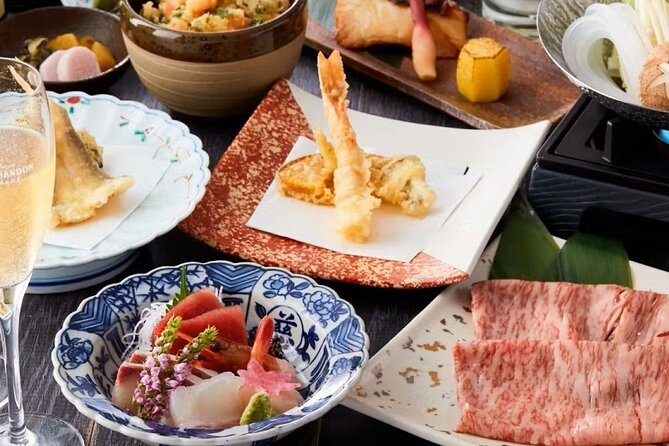
The ozashiki games are the most playful part of the evening. These traditional games are associated with entertainment in teahouse settings, where quick reactions, rhythm, and good humor matter more than winning.
You do not need to arrive with specialist knowledge. The program is guided, and the live shamisen helps set the pace. The games give you a chance to take part instead of simply watching the maiko perform.
This section also shows why the experience is not just a dinner theater show. In a conventional performance, the audience remains separate from the artist. Here, you may find yourself laughing, concentrating on a simple rule, and interacting directly with the maiko and other people at the table.
The games may feel unfamiliar at first. That is part of their appeal, but it can also make some people shy. If you dislike public participation, you may prefer a dance-only program. The group is limited to 20, though, so the activity should feel more manageable than a large audience event.
Is $150 good value for two hours?
At $150, this is not a bargain dinner. The value depends on what you want from your Kyoto evening.
If you price the elements separately, the package includes traditional Kyoto food, unlimited drinks for two hours, several dance performances, live shamisen music, a question period with a maiko, a two-shot photograph, and ozashiki games. It also provides the setting of a historic house and a Noh stage, plus interpreter support.
That is a strong bundle for someone who wants a close cultural encounter. You are not paying only for a meal or a 20-minute performance. You are paying for access to a carefully arranged evening that would be difficult to organize independently.
The price is harder to justify if your main goal is simply to see a maiko dance. Kyoto offers shorter and less personal performances, and you might prefer one of those if you are watching your budget or have limited interest in dinner and conversation.
I would think of this as a special-occasion experience. It suits a first trip to Kyoto, a birthday, an anniversary, or anyone with a serious interest in traditional Japanese performing arts. The dinner and drinks make it a complete evening, while the small group and direct contact provide the part you cannot get from a regular show.
Who should book this Kyoto cultural experience?
I would recommend it most strongly if you want to ask questions and participate. The chance to speak with the maiko, learn about her kimono and kanzashi, and play traditional games is the heart of the program.
It is also a good match for:
- First-time visitors who want a structured introduction to maiko culture
- Couples seeking a memorable evening rather than a standard restaurant meal
- Families with older children who can respect formal stage rules
- Photography enthusiasts who want a stage setting and a personal portrait
- People who appreciate live music and traditional dance
- Anyone who values an interpreter during cultural conversation
You may want to skip it if you dislike group activities, do not want to appear in photographs, or prefer a long, unhurried dinner. The two-hour schedule is full, and the evening asks you to shift between watching, eating, asking questions, posing, and playing.
The experience is suitable for most people, according to the supplied participation information. Oversize luggage is not included, and bare feet are not permitted. Plan to arrive with socks or tabi if you want to step onto the Noh stage.
Timing, group size, and cancellation
The program lasts approximately two hours, from 6:00 to 8:00 p.m. Doors open at 5:50 p.m., so arriving early gives you time to use the first-floor café area and avoid rushing upstairs.
The experience needs at least two participants and accepts a maximum of 20. That range makes it suitable for solo bookings only if another participant is also booked, so confirm availability if you are traveling alone.
Mobile tickets are available, and confirmation is provided at booking. The meeting point is also the end point, so you do not need to arrange a separate return transfer. Transportation from your accommodation to Okazaki-an is not included.
You can cancel up to 24 hours before the start time for a full refund. Cancellations or changes made within 24 hours are not accepted for a refund, and the cut-off uses Kyoto local time. Keep that rule in mind if your plans depend on weather, trains, or a late arrival.
Should you book the maiko dinner at the Noh stage?
Book it if you want personal contact with Kyoto’s traditional arts, not just a show. The strongest parts are the live shamisen, multiple dances, direct questions, kimono and kanzashi presentation, photograph, and ozashiki games.
The $150 cost is reasonable for that combination, especially with dinner and unlimited drinks included, but it is still a premium evening. I would choose it over a cheaper performance if the chance to speak with a maiko and take part matters to you. If you only want a short dance recital, save the money and choose a simpler program.
For the best experience, arrive before 6:00 p.m., wear socks or tabi, leave large luggage behind, and come prepared with a few thoughtful questions. That small amount of planning lets you focus on the music, the food, and the rare chance to meet a maiko in a quiet, carefully prepared setting.
FAQ
Where does the maiko dinner experience take place?
It takes place at Okazaki-an, located at 9165 Okazaki Enshoji-cho in Sakyo Ward, Kyoto, postal code 606-8344. The event is held on the second floor, where there is a Noh stage.
What time does the experience start and end?
Doors open at 5:50 p.m. The program starts at 6:00 p.m. and ends at approximately 8:00 p.m.
What is included in the $150 price?
The price includes the meal, free drinks for two hours, maiko dance performances, live shamisen music, conversation time, a two-shot photograph with the maiko, and ozashiki games.
Are drinks included?
Yes. Unlimited drinks are included for the two-hour experience. The specific drink choices are not provided in the available information.
Can I take photographs?
Yes. There is free photo time on the Noh stage and a scheduled two-shot photograph with the maiko. Socks or tabi are required on the stage, and eating and drinking are not allowed there.
How many people can join the experience?
The experience requires a minimum of two participants and has a maximum capacity of 20 people.
What happens if I need to cancel?
You can receive a full refund if you cancel at least 24 hours before the scheduled start time. Cancellations or changes made less than 24 hours before the start time are not accepted for a refund.
More Dining Experiences in Kyoto
- Private Dinner with a Geisha
★ 5.0 · 65 reviews - Kyoto Evening Gion Food Tour Including Kaiseki Dinner
★ 5.0 · 62 reviews - Kyoto: Maiko Dinner in Traditional Restaurant and Tour
★ 4.8 · 55 reviews - Kyoto: Lunch or Dinner with Maiko
★ 4.2 · 52 reviews
Recently added around Kyoto
- Higashiyama | Kyoto: Sakura Season Private Rickshaw Tour★ 5.0 · 3 reviews
- Kyoto Kimono Rental CHAMATSU|Kimono/Yukata Rental FamilyPlan★ 5.0 · 3 reviews
- Kyoto: Half-Day Private Guided Tour to the Old Town of Gion★ 4.4 · 3 reviews
- Nara Private Customizable Half Day Tour★ 5.0 · 3 reviews
- Kansai Region Hiking Adventure in Nara Kobe Kyoto and More★ 5.0 · 3 reviews
- Full Day Nara Deer, Temple, Shrine, Activities & Tea Ceremony★ 5.0 · 3 reviews
- Nara: Essential Private Tour with Deer Park and Temples★ 5.0 · 3 reviews
- Hiking Tour for Sacred Sites in Kyoto with a Guide★ 5.0 · 3 reviews
Gion Geisha District Tours, compared.
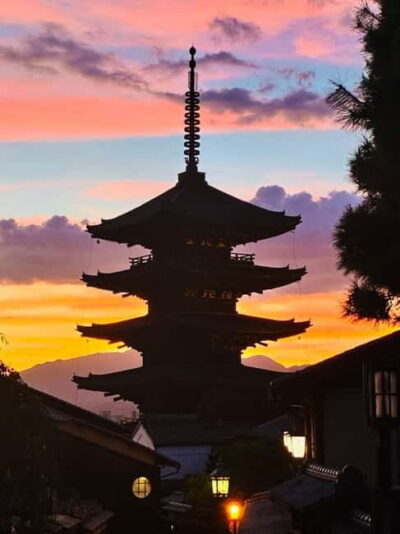
Kyoto Geisha Walking Tour: Gion District & Hidden Gems
Read our review →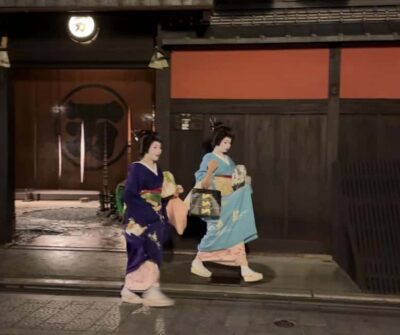
Gion Magical Night Walking Tour with Geisha Trivia
Read our review →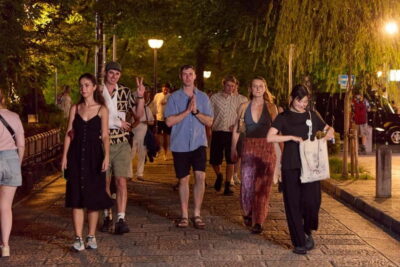
Gion Geisha District Walking Tour – Stories of Geisha
Read our review →
Best of Kyoto: Gion, Geisha, Pagodas & Cobblestones
Read our review →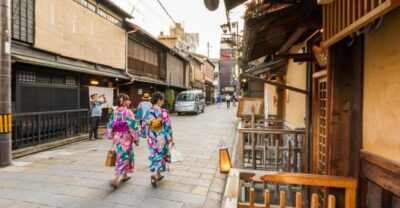

Kyoto Night Foodie Tour in Gion (9+ dishes + 6 Sake tastings)
Read our review →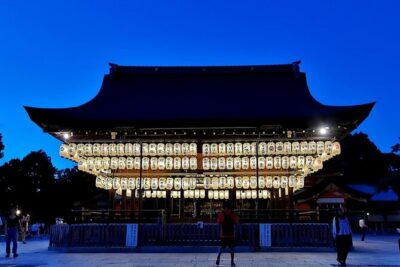
Kyoto Gion Geisha District Walking Tour – The Stories of Geisha
Read our review →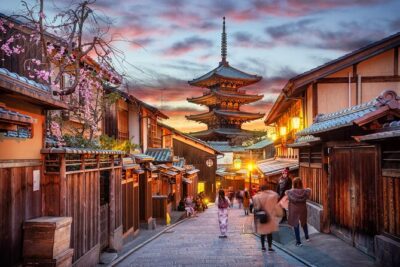
Kyoto Gion: 2-Hour Geisha Culture & History Walking Tour
Read our review →Browse the lists this tour appears in