
REVIEW · KYOTO SUSHI EXPERIENCES
Art Sushi Class At Local Home With Professional Instructor
The clever part of this Kyoto class is that you make flower-shaped sushi rolls that look far more elaborate than ordinary makizushi. The lesson takes place in an authentic Japanese-style home just 200 meters east of Nijo Castle, with a professional instructor guiding you through each pattern.
I like the useful recipe booklet and rental tools, since you can repeat the project at home instead of leaving with only a few photographs. I also like the calm, personal format, with English instruction available, tea or water, and time to wear a kimono before working with the rice and nori.
The main caution is the short one-hour schedule. You need to arrive at the correct house on time, and an older map app may send you to the wrong location. Video recording is not allowed, though photographs have helped capture the finished work.
In This Review
- Key points to know before booking
- Making sushi that looks like a flower
- A short lesson in sushi history
- Inside the Japanese-style home near Nijo Castle
- The one-hour rhythm
- Kimono, tea, and photographs
- What the $82 price gives you
- Who will enjoy this class most
- Planning the rest of your Kyoto day
- Should you book the flower sushi lesson?
- FAQ
- Where does the sushi class take place?
- How long does the activity last?
- Is the class taught in English?
- What is included in the price?
- Can I wear a kimono during the class?
- Is the building wheelchair and stroller accessible?
Key points to know before booking
- Flower-shaped sushi is the main event: You make decorative rolls with vegetables, sesame, ginger, nori, and rice colored with natural edible pigments.
- The class is held in a Kyoto home: The wooden gate and noren curtain mark the entrance, just east of Nijo Castle.
- Aya may be your instructor: The host named in the available comments is praised for patience, creativity, and friendly English.
- The lesson includes useful take-home material: Rental tools, tea or water, and an original recipe booklet are included.
- It fits neatly into a Kyoto sightseeing day: Nijojo-mae subway station and Nijo Castle are about a three-minute walk away.
- It is private and wheelchair accessible: The home accommodates wheelchairs and baby strollers, but children under four cannot join.
Making sushi that looks like a flower
This is not a standard sushi lunch where you watch someone slice fish and then eat a few pieces. It is a small food-craft lesson focused on the design inside the roll.
You work with sushi rice seasoned with rice vinegar and sugar, then add ingredients such as sesame, ginger, vegetables, and nori. Natural edible pigments color parts of the rice, allowing the finished roll to form an ornate pattern when sliced. The exact design is not something you usually see at a regular restaurant, which gives the class its special appeal.
The goal is precision, but the activity is still approachable. You build the roll in stages, following the instructor’s method so that the ingredients line up into a flower-like image. One useful detail from the available comments is that the finished sushi can come out very close to the sample image. That matters here, because decorative sushi is only satisfying if the inside pattern survives the cutting.
You should expect to do hands-on work rather than simply watch a demonstration. The supplied tools are included, so you do not need to bring sushi equipment from home. The class also provides an original recipe booklet, giving you a way to remember the order of ingredients and try the recipe again after your Japan trip.
The sushi is also meant to be eaten. The result combines the sweetness and acidity of seasoned rice with the texture of vegetables, sesame, ginger, and seaweed. This is not described as a raw-fish sushi class, so it may suit you if you prefer a decorative vegetable-based roll or want a break from restaurant meals.
More sushi counters and classes:
- Sushi Making in Kyoto! Same-day bookings welcome!
★ 5.0 · 713 reviews - The Original Small-Group Sushi Making Class in Kyoto
★ 5.0 · 436 reviews - Kyoto: Small-Group Authentic Sushi Making Workshop
★ 5.0 · 137 reviews
A short lesson in sushi history
The food has a useful story behind it, and the instructor explains the basics during the class. Japanese sushi rolls first appeared between 1750 and 1776, during the Edo period, a time when popular culture and food culture expanded in Japan.
Sushi made with sake and vinegar became more common during that period. By the early 1800s, quick-to-make sushi using vinegar had entered the mainstream. Later, during the Showa period, sushi rolls developed more complicated patterns.
That background helps explain why this lesson focuses on both food and appearance. Sushi is not only about fresh ingredients or speed. It can also be a form of visual craft, with the cut surface revealing the work that went into arranging each layer.
I appreciate that the history is tied to the activity instead of presented as a long lecture. You learn why rolls became practical, how vinegar played a role, and how decorative patterns grew more complex. In a one-hour class, this kind of context is enough to make the cooking feel connected to Japanese culture without taking over the session.
Inside the Japanese-style home near Nijo Castle
The meeting point is easy to place if you use the name Sakura Experience Japanese Culture, written in Japanese as さくら日本文化体験. The house is only about 200 meters east of Nijo Castle and roughly a three-minute walk from Nijo Castle and Nijojo-mae subway station.
Look for a small wooden gate with a noren curtain at the front. The house is described as an authentic Japanese-style home, which gives the class a more personal setting than a large cooking school or hotel kitchen. You also have space to park a bicycle, a useful touch if you are exploring Kyoto on two wheels.
Directions deserve extra care. Kyoto changed in several places during the COVID-19 period, and an old map app may show the wrong location. Update your map app before leaving, and allow enough time to find the wooden gate. One available comment describes arriving early but still losing about 20 minutes after receiving incorrect location details. The problem was not attributed to the host, but it shows why you should check the house location in advance.
From other parts of Kyoto, the class is also practical. It is about a 15-minute walk from Shijo Station on the Hankyu line, a three-minute walk from the Fuchomae Kyoto city bus stop, and about 10 minutes from Kyoto Station by taxi. These times make the class easy to pair with Nijo Castle, though you should not schedule it so tightly that a wrong turn ruins the start.
The one-hour rhythm
The class lasts one hour, so the pace is compact. You will likely move from a short introduction and history of sushi rolls into the preparation of rice and ingredients, then the careful construction and slicing of the decorative roll.
The exact order can depend on the instructor, but the supplied details point to a lesson built around making the pattern yourself. You learn how the rice is seasoned, how the fillings are placed, and how nori holds the roll together. The instructor then helps you create the ornate shape and explains how to repeat the recipe at home.
The available comments give useful clues about the teaching style. Aya is described as friendly, creative, and patient, while one English-speaking participant specifically appreciated detailed instruction and the chance to take photographs. English and Japanese are the listed languages, so you can book this even if you do not speak Japanese.
Do not expect a long meal or a broad cooking course. This is a focused project. The benefit is that you spend the whole session on one memorable skill. The tradeoff is that there is little room for a slow, casual pace if you arrive late or want lots of extra questions.
More workshops and classes in Kyoto:
- Kyoto: 45-Minute Tea Ceremony Lesson Experience
★ 4.3 · 2,378 reviews - Kyoto : Chopsticks Making Workshop in Gion with Engraving Option
★ 5.0 · 958 reviews - Kyoto: Samurai Sword Class by Experts in Traditional Arts
★ 4.9 · 657 reviews - Kyoto: Ramen Cooking Class at a Ramen Factory with Souvenir
★ 4.9 · 532 reviews
Kimono, tea, and photographs
You can wear a beautiful kimono during the class, adding a visual Japanese touch to the experience. The kimono is especially fitting for a lesson where presentation matters, since the sushi is designed to look attractive when cut.
Japanese tea or water is included. The drink is a small detail, but it makes the hour feel more complete and gives you a simple refreshment while working. The activity does not promise a full meal, so plan your other food stops separately.
Photographs are allowed, and the available comments note that many pictures were taken to capture the finished work. That is useful for this particular class because the result is visual. You can record the finished sushi and your own progress, even though video recording is not allowed.
The no-video rule is worth noting before you arrive. If you hoped to film every step for a cooking channel or a detailed home tutorial, this is not the right format. Instead, pay attention during the demonstration, take photographs where permitted, and use the recipe booklet afterward.
What the $82 price gives you
At $82 per person, this is not the cheapest way to eat sushi in Kyoto. You are paying for a private, instructor-led activity rather than a simple restaurant meal. The value depends on whether you want a skill and a cultural setting, not just food.
The price includes Japanese tea or water, rental tools, and the original recipe booklet. You also receive hands-on instruction, the chance to wear a kimono, and access to a private group format. Since the recipe is meant to be repeated at home, the cost has some lasting value if you actually make the rolls again.
I see the strongest value for couples, families with older children, and visitors who like crafts, food, and photographs. It also works well for someone who has already eaten plenty of conventional sushi and wants to understand a different side of the tradition.
The value is weaker if you want a large meal, several types of sushi, or a long cooking workshop. The session is only one hour, and the ingredients listed focus on seasoned rice, vegetables, ginger, sesame, and nori rather than a full spread of seafood. Think of it as a compact cultural activity with an edible result.
Who will enjoy this class most
This is a good match for you if you like making things with your hands and want a Japanese activity that produces something you can repeat at home. The flower pattern provides a clear goal, and the recipe booklet gives you a practical reminder once you return home.
It is also a strong choice for a private group. You can learn with your own party rather than joining a large class, which may make it easier to ask questions or work at your own speed. English instruction is available, and the available comments describe the instructor as patient and easy to understand.
Families should note the age limit. Children under four are not suitable for the activity, while the building itself is accessible to wheelchairs and baby strollers. That combination makes the venue practical for many families, though the short, detail-focused format may work best for children who can follow careful food-preparation steps.
This is less suitable if you dislike decorative cooking, have no interest in making sushi again, or want a spontaneous drop-in activity. The location needs attention, the video restriction is firm, and the one-hour schedule leaves little spare time.
Planning the rest of your Kyoto day
The location makes Nijo Castle the natural companion to this class. You can visit the castle before or after the lesson, since the house is only a few minutes away. The experience can also fit into a day based around central Kyoto, with Shijo Station within walking distance and a taxi ride from Kyoto Station taking about 10 minutes.
Give yourself a buffer before the start. Do not rely on an old map app, especially if your confirmation information looks unclear. Search for Sakura Experience Japanese Culture using the Japanese name as well, then match the map with the wooden gate and noren curtain.
If you are cycling, the house has space for your bike. If you are using public transport, Nijojo-mae subway station and Fuchomae bus stop are the easiest nearby options listed for the activity. Wheelchair and stroller access are available at the building, but you should still allow time to reach the correct entrance.
The booking terms are traveler-friendly: you can cancel up to 24 hours ahead for a full refund, and you can reserve now while paying later. Check the available start times because the experience is only one hour and availability can change.
Should you book the flower sushi lesson?
Book it if you want a small, personal Kyoto activity with a clear result. The strongest reasons are the unusual flower-shaped rolls, the take-home recipe, the private format, and the easy location near Nijo Castle. You get more than a snack, but less than a full cooking course.
I would especially choose this for a couple, a private family group with children over four, or anyone who enjoys food crafts and wants photographs in a kimono. The English-language option and patient teaching style described in the available comments make the class approachable.
Skip it if your main goal is eating premium raw fish, filming a complete tutorial, or spending several hours in the kitchen. Also, treat the meeting point seriously. Confirm the address with an updated map app and arrive early enough to find the wooden gate.
At $82, the class earns its price when you value the setting, instruction, and repeatable skill. It is a short, focused way to make a piece of Japanese food culture yourself, then carry the recipe home.
FAQ
Where does the sushi class take place?
The class takes place at Sakura Experience Japanese Culture, written in Japanese as さくら日本文化体験. The authentic Japanese-style house is about 200 meters east of Nijo Castle.
How long does the activity last?
The activity lasts one hour. Starting times depend on availability.
Is the class taught in English?
Yes. The listed instructor languages are English and Japanese.
What is included in the price?
Japanese tea or water, rental tools for sushi making, and an original recipe booklet are included.
Can I wear a kimono during the class?
Yes. The experience includes the opportunity to wear a beautiful kimono while making the sushi.
Is the building wheelchair and stroller accessible?
Yes. The building is accessible to wheelchairs and baby strollers. Children under four are not suitable for this activity.
Recently added around Kyoto
- Higashiyama | Kyoto: Sakura Season Private Rickshaw Tour★ 5.0 · 3 reviews
- Kyoto Kimono Rental CHAMATSU|Kimono/Yukata Rental FamilyPlan★ 5.0 · 3 reviews
- Kyoto: Half-Day Private Guided Tour to the Old Town of Gion★ 4.4 · 3 reviews
- Nara Private Customizable Half Day Tour★ 5.0 · 3 reviews
- Kansai Region Hiking Adventure in Nara Kobe Kyoto and More★ 5.0 · 3 reviews
- Full Day Nara Deer, Temple, Shrine, Activities & Tea Ceremony★ 5.0 · 3 reviews
- Nara: Essential Private Tour with Deer Park and Temples★ 5.0 · 3 reviews
- Hiking Tour for Sacred Sites in Kyoto with a Guide★ 5.0 · 3 reviews
Kyoto Sushi Experiences, compared.
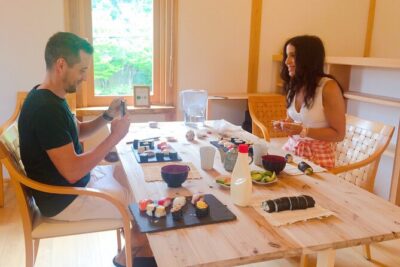
The Original Small-Group Sushi Making Class in Kyoto
Read our review →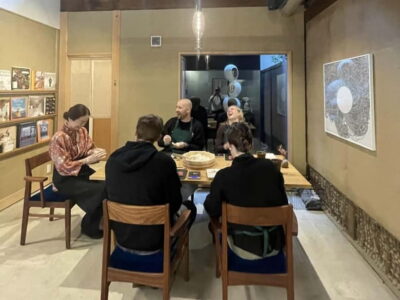
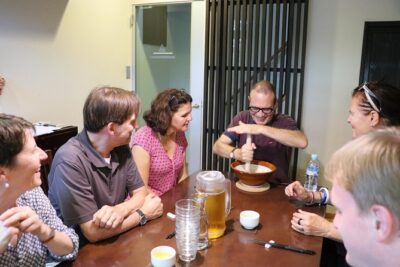
Sushi – Authentic Japanese Cooking Class – the best souvenir from Kyoto!
Read our review →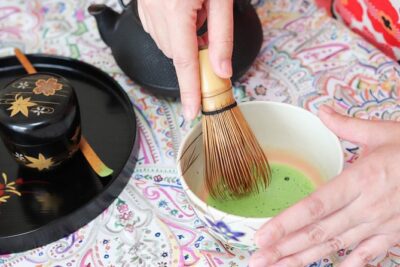
Private Kyoto Sushi Cooking Class & Tea Ceremony with Emika
Read our review →
Enjoy Sushi & Market Tour! Best for Family & Couple!
Read our review →
Sushi or Traditional Japanese Cuisine in a Kyoto Home with Emika
Read our review →Browse the lists this tour appears in