
REVIEW · KYOTO EARLY MORNING TOURS
Start from Kyoto Station: Early Morning E-Bike Tour with Kyotoite
Kyoto is at its best before the day gets noisy, and this early-morning e-bike tour uses that quiet window well. You leave from the Kyoto Station area, reach Fushimi Inari before the thickest crowds, then link temples, shrine grounds, old lanes, Gion, and the Kamogawa River without spending the morning underground on trains.
I like the small maximum of six people, which keeps the ride personal, and I like that the shop supplies the bike, helmet, water, raincoat, and liability insurance. The main thing to consider is the physical side: the ride is described as manageable, but there are some hills, and the three-and-a-half-hour schedule includes all riding time.
In This Review
- Key points at a glance
- Why an early e-bike ride works in Kyoto
- Starting near Kyoto Station with a small group
- Fushimi Inari before the torii-gate crowds
- Sanjusangendo and Kyoto’s Buddhist side
- Old lanes, the Shirakawa River, and Gion
- Nanzen-ji, a Zen temple with room to breathe
- Heian Shrine and the capital’s symbolic past
- Returning beside the Kamogawa River
- What the guides add to the ride
- Is the $84.92 price fair?
- Who should choose this Kyoto bike tour?
- Should you book it?
- FAQ
- Where does the Kyoto e-bike tour start?
- Where does the tour end?
- How long does the tour last?
- How many people can join the tour?
- What equipment is included?
- Are snacks included?
- What is the cancellation policy?
Key points at a glance
- Fushimi Inari comes first: Reach Kyoto’s famous torii gates early, when the approach is calmer.
- Six-person maximum: You can hear the guide and keep track of the group more easily than on a large tour.
- A broad Kyoto sampler: The route connects Fushimi Inari, Sanjusangendo, Gion, Nanzen-ji, Heian Shrine, and the Kamogawa River.
- Local guides add context: Aki, Sato, and Ryuto have led the ride, with explanations about Shinto, Buddhism, and Kyoto’s past.
- Useful gear is included: E-bike, helmet, bottled water, raincoat, and liability insurance are covered.
- Best for active mornings: You need to be comfortable cycling in a city and handling a few hills.
Why an early e-bike ride works in Kyoto
Kyoto’s major sights are spread across the city. On foot, you can spend much of a morning moving between them. By subway, you reach the general area, but you miss the quieter streets, riverside paths, and small transitions between neighborhoods.
A bicycle gives you a better sense of how Kyoto fits together. You ride from the southern side of the city toward Gion and the eastern temple district, then return along the Kamogawa River. The route is not just a series of isolated stops. You see how shrines, temples, traditional lanes, waterways, and newer city streets sit beside one another.
The e-bike matters most when the route tilts upward or when your legs are still waking up. This is not a racing excursion. The stated ride is not especially strenuous, but one detailed account points out that there are some hills. You should still be comfortable balancing, braking, and riding with others.
The early start also has practical value. From March through June, the tour begins at 7:30 a.m. and runs until about 11:00 a.m. During January and February, the listed start is 8:30 a.m., ending around noon. Exact seasonal hours matter because Kyoto’s famous places can feel very different early in the day than they do later.
More early starts before the crowds:
- Kyoto Early Morning Tour with English-Speaking Guide
★ 5.0 · 1,427 reviews - Kyoto: Early Morning Tour with English-Speaking Guide
★ 4.9 · 1,128 reviews - Nara Early Morning Tour (Kyoto or Osaka Departure Available)
★ 5.0 · 676 reviews
Starting near Kyoto Station with a small group
The meeting point is Rental Bicycle KYOTO ECO TRIP Flagship shop at 58 Higashikujo Muromachi, in Minami Ward. It is close to Kyoto Station, making the tour a handy first activity if you are staying near the station or arriving in Kyoto and want to begin sightseeing right away.
The group limit is six people. That is a useful size for a city ride. The guide can give directions without shouting across a crowd, and you are less likely to lose sight of the group at crossings or busy corners. If you like asking questions, a small group also gives you a better chance to do so.
The supplied equipment keeps the morning simple. You receive an e-bike, helmet, bottled water, raincoat, and liability insurance. Snacks are not included, so eat before you arrive or plan to find something afterward. The tour ends back at the same shop, which makes the rest of your day easy to plan.
The price is $84.92 per person. That is more than a basic bicycle rental, but you are paying for a guide, route planning, bike use, safety equipment, water, and a carefully linked morning of sightseeing. For a first visit, I find the value strongest if you want orientation and local explanation rather than simply a bike for independent riding.
Fushimi Inari before the torii-gate crowds
About 20 minutes after leaving the shop, you reach Fushimi Inari-taisha. This is Kyoto’s most recognizable Shinto shrine, famous for its long paths of orange torii gates climbing into the wooded hills.
The allotted stop is about 50 minutes, including time to reach the shrine and explore. That is enough for a strong introduction, but not enough to walk the entire mountain route. Keep your expectations in check. You will see the signature gates and the main shrine area, not complete every path on the hill.
The timing is the real advantage. Fushimi Inari is one of Kyoto’s busiest sights, and arriving early gives you more room to look around and take photographs. The guide also takes you to lesser-seen parts of the shrine area, according to the route description. That can make the stop feel less like a quick photo halt.
I would wear shoes suitable for walking, even though the tour is built around cycling. The shrine grounds involve walking and standing, and the stone surfaces may be damp if the weather turns wet. The included raincoat is useful, but it does not replace sensible clothing.
Sanjusangendo and Kyoto’s Buddhist side
After roughly 15 minutes of cycling from Fushimi Inari, the route passes through Sanjusangendo Temple. The temple is famous for its 1,001 statues of Kannon, the Buddhist goddess of mercy.
The supplied schedule does not state a separate stop length or admission arrangement for Sanjusangendo, so you should not assume you will have an extended indoor visit there. Its place on the route gives you an important contrast with Fushimi Inari: first a major Shinto shrine, then one of Kyoto’s best-known Buddhist temple interiors.
That contrast is one reason the tour works well for first-time visitors. Kyoto’s religious sites can look similar from the outside if you do not know what to notice. A guide can help explain the difference between Shinto and Buddhism, and one of the tour’s strongest themes is the chance to ask about both traditions during the ride.
If Sanjusangendo is a personal priority, check the timing with the provider before booking. The tour clearly passes through this area, but the published details do not promise a long temple visit or specify an admission fee.
More bike days around Kyoto:
- Hidden Kyoto E-Biking tour
★ 5.0 · 1,843 reviews - Bike Tour Exploring North Kyoto plus Lunch
★ 5.0 · 1,087 reviews - Arashiyama Bamboo Forest & Hidden Gems Bike Tour (Early Bird)
★ 5.0 · 613 reviews - 5 Top Highlights of Kyoto Full Day Bike Tour (E-bike option)
★ 5.0 · 511 reviews
Old lanes, the Shirakawa River, and Gion
From Sanjusangendo, you ride for about 10 minutes before following the Shirakawa River through older backstreets toward Miyagawa-cho and Tatsumi Bridge. This is one of the most appealing parts of the morning because the bicycle links the famous geisha district with the quieter streets around it.
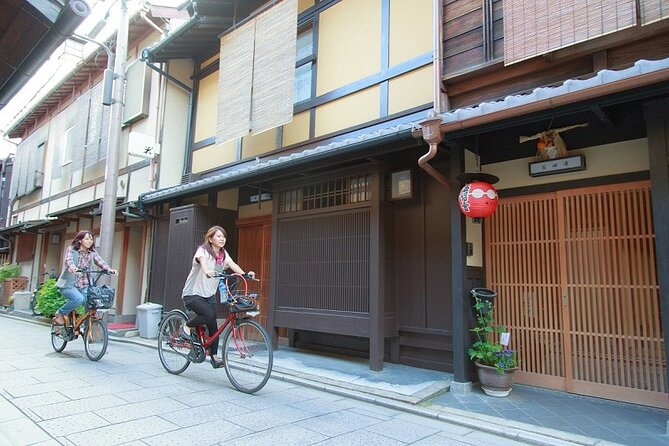
Gion is often presented as a postcard of wooden buildings and traditional lanes. The ride helps you see more than the main sightseeing paths. Miyagawa-cho and Tatsumi Bridge offer a slower look at the district, while the Shirakawa route adds water, narrow streets, and traditional architecture.
This is also where the guide’s route knowledge matters. The tour is planned to avoid as much pedestrian traffic as possible while still reaching well-known views. You should still expect some shared streets and people on foot. Kyoto is a real city, not a closed cycling park, so follow the guide’s pace and instructions.
The schedule suggests about 20 minutes of riding around this section. That leaves time for views and explanations, but not for a long, unstructured wander through every Gion lane. If your main goal is shopping, tea houses, or an evening look at Gion, save that for another part of your trip.
Nanzen-ji, a Zen temple with room to breathe
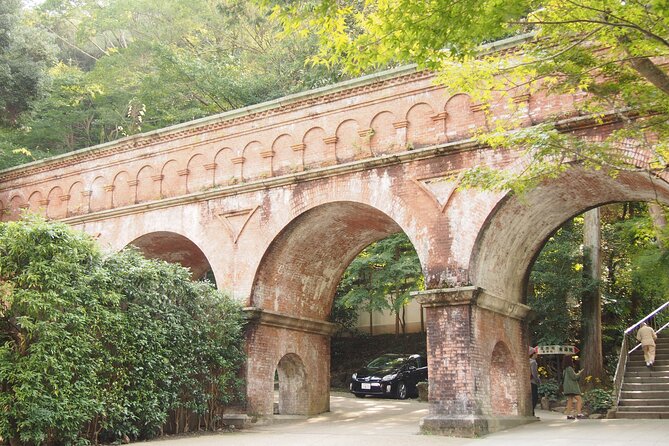
After about 15 minutes from Gion, you reach Nanzen-ji, one of Kyoto’s major Zen temples. The planned stop is 20 minutes, making this a focused visit rather than a full tour of every building and garden.
Nanzen-ji is a good place to slow the rhythm of the ride. The earlier stops bring you through a famous shrine, a Buddhist temple area, and Gion’s traditional streets. Here, the setting shifts toward Zen temple grounds and a calmer eastern Kyoto atmosphere.
Twenty minutes can go quickly, especially if you want to see temple details, take photographs, and listen to the guide. I would treat this as an introduction that helps you decide if Nanzen-ji deserves a longer return visit. The tour gives you a useful first look, but it cannot replace a leisurely independent visit.
The ride itself is part of the appeal. Rather than using a taxi or returning to a station, you continue through Kyoto under your own power, with the e-bike reducing the effort between stops. That makes the city feel more connected.
Heian Shrine and the capital’s symbolic past
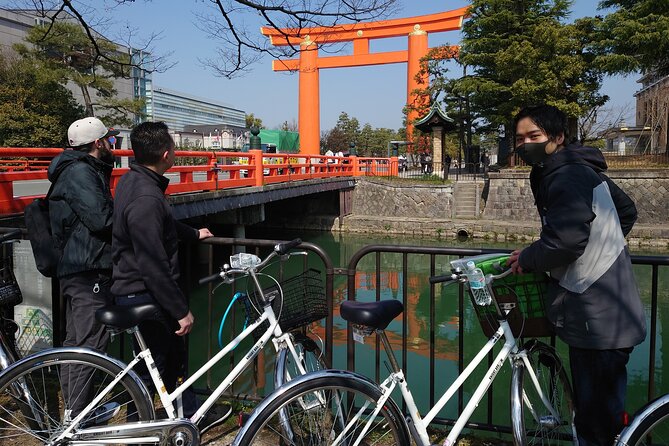
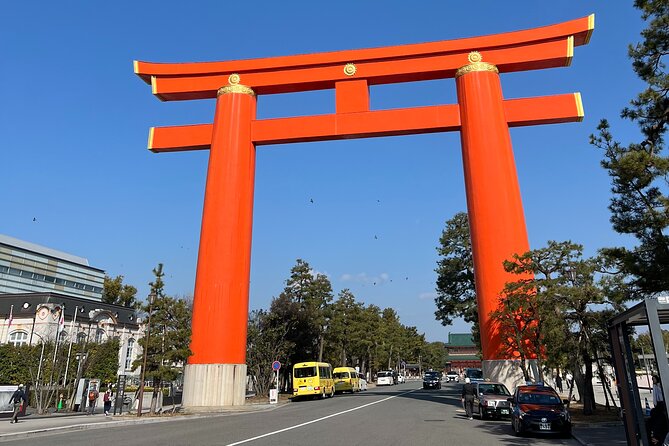
Ten minutes after Nanzen-ji, the route reaches Heian-jingu Shrine. The stop lasts about 20 minutes. Heian Shrine is associated with Kyoto’s role as Japan’s capital, and the tour presents it as a symbol of that past.
This is another useful change in scale. Fushimi Inari is known for its mountainside torii gates, while Heian Shrine is known for broad shrine grounds and an imposing approach. You get two very different Shinto settings in one morning.
The stop is short enough that you will want to focus. Listen to the guide’s explanation, take in the main view, and avoid trying to cover every corner. If you are especially interested in the shrine’s gardens, the published schedule does not indicate a separate garden visit, so plan a return on your own.
Guides such as Aki, Sato, and Ryuto have been praised for clear explanations, friendly help, and good navigation. Ryuto, also spelled Riuto in some tour material, has explained Shinto, Buddhism, and Kyoto’s history during the ride. Aki has also been noted for taking family photographs at several stops, which is a small but welcome touch for groups who want pictures together.
Returning beside the Kamogawa River
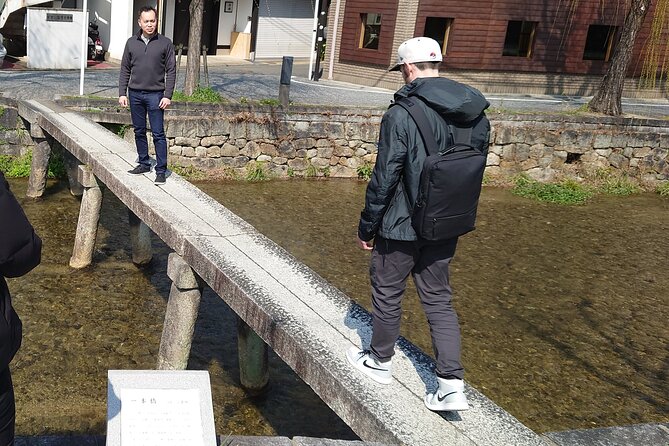
The final section takes about 10 minutes to begin after Heian Shrine, then follows the Kamogawa River back toward the shop. The ride from the Heian area to the starting point takes approximately 20 minutes.
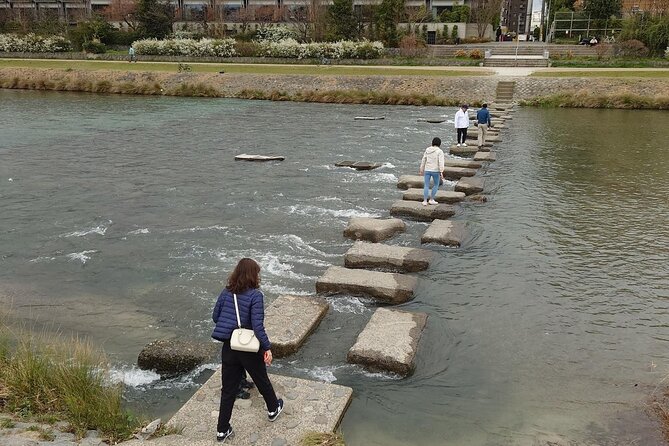
The Kamogawa is one of Kyoto’s best-known waterways, and the riverside return gives the tour a pleasant finish. After a morning of shrines, temples, lanes, and explanations, this stretch lets you ride with fewer formal stops and see another side of the city.
Because the route ends where it began, you do not need to arrange a pickup or work out a new station connection. You can continue sightseeing from Kyoto Station or stop for food nearby. Remember that snacks are not supplied, and the morning schedule may leave you ready for a substantial meal.
The tour lasts about three and a half hours in total, with travel time included. One group’s ride ran almost four and a half hours, so allow some flexibility if your guide spends extra time answering questions or taking photographs. Do not schedule a tight train departure immediately after the stated end time.
What the guides add to the ride
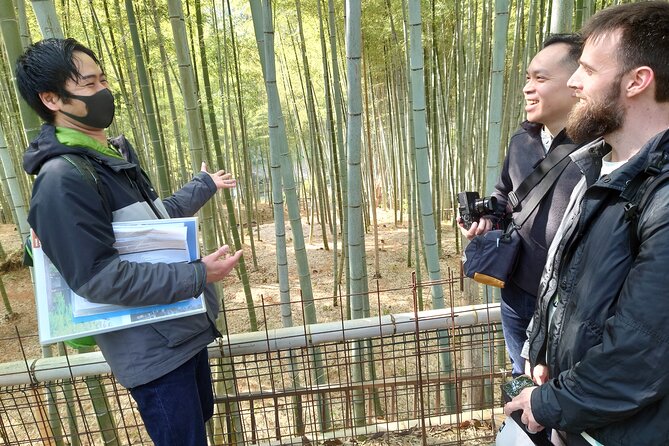
A city cycling tour succeeds or fails on navigation and explanation. Here, the guide is not just leading a line of bikes from one pin on a map to the next. The strongest feedback centers on friendly support, local knowledge, patience, and clear English.
Ryuto has been described as a Kyoto-born guide and an English student who handled many questions with care. Aki has been praised for local explanations and family photos. Sato has been noted for food suggestions after the ride, which is useful because the tour ends around lunchtime.
The guide lineup may change, so you should not book expecting one particular person unless the provider confirms it. Still, the repeated praise for Aki, Sato, and Ryuto points to the kind of service you can reasonably hope for: help with city riding, background on religious sites, and a personal feel rather than a scripted bus tour.
The group size supports that style. With no more than six participants, a question about a torii gate, a temple custom, or a neighborhood can become part of the morning instead of getting lost in a large crowd.
Is the $84.92 price fair?
At $84.92, this is not the cheapest way to see Kyoto. If you are happy renting a bicycle and navigating alone, you can spend less. The tour’s value comes from combining equipment, a local guide, a set route, and several major sights in one morning.
I think the price makes the most sense in the first days of a Kyoto visit. You get a broad view of the southern and eastern parts of the city, learn where key districts sit, and gather ideas for places to revisit later. The tour also saves you the work of comparing rental shops, plotting a route, and working out how to connect distant sights.
The price is less attractive if you want long visits inside temples or plenty of free time at each stop. The schedule is active, and several stops are introductions rather than full explorations. You are paying for range and guidance, not a slow temple day.
The tour is booked an average of 15 days ahead, which suggests you should reserve early if your Kyoto dates are fixed. Free cancellation is available until 24 hours before the start time. Changes or cancellations inside that window are not accepted for a refund.
Who should choose this Kyoto bike tour?
I would choose this ride if you want to see a lot of Kyoto in a short time and enjoy moving between sights outdoors. It suits couples, families with cycling teenagers, and small groups who like asking questions. A family of five with teenagers aged 13, 17, and 19 found the ride especially successful, and the tour’s six-person limit leaves room for a family group without adding strangers to a large crowd.
It also suits people who want a guide to explain Shinto, Buddhism, and Kyoto’s history in plain terms. The morning combines famous places with backstreets that many visitors pass by.
You should think twice if cycling makes you uneasy, if hills are a serious problem, or if you want a purely walking tour. The ride is described as not too strenuous, but it is still a bike tour through a city. You also need to accept that the schedule includes transit time and that some stops are brief.
Should you book it?
Book this tour if you want an efficient, active introduction to Kyoto before the crowds build. The strongest reasons are the early timing, small group, useful equipment, and route that joins Fushimi Inari, Gion, Nanzen-ji, Heian Shrine, and the Kamogawa River in one morning.
Skip it if your priority is extended temple visits, private transportation, or a slow pace with no hills. For everyone else, $84.92 is a reasonable price for a guided first look at Kyoto, especially if you value local explanation and want to start your trip with a clear sense of the city.
FAQ
Where does the Kyoto e-bike tour start?
It starts at Rental Bicycle KYOTO ECO TRIP Flagship shop, 58 Higashikujo Muromachi, Minami Ward, Kyoto, near Kyoto Station.
Where does the tour end?
The activity ends back at the same meeting point.
How long does the tour last?
The planned duration is approximately three hours and 30 minutes, including riding time between stops.
How many people can join the tour?
The maximum group size is six participants.
What equipment is included?
The tour includes use of an e-bike, a helmet, bottled water, a raincoat, and liability insurance.
Are snacks included?
No. Snacks are not included.
What is the cancellation policy?
You can cancel up to 24 hours before the local start time for a full refund. Cancellations or changes made less than 24 hours before the start time are not accepted for a refund.
More Morning in Kyoto
- From Kyoto: Nara Guided Morning Tour
★ 4.6 · 335 reviews - Kyoto Morning Tour from Kyoto or Osaka
★ 4.0 · 281 reviews - Kyoto: Morning Japanese Bento Cooking Class
★ 5.0 · 149 reviews - Kyoto: Arashiyama Bamboo Forest Morning Tour by Bike
★ 5.0 · 115 reviews
More E-Bikes in Kyoto
- E-Bike Tours of the highlights of Kyoto!!!
★ 5.0 · 291 reviews - Kyoto: City Secrets eBike Tour
★ 4.9 · 196 reviews - Pedal Adventure Kyoto’s iconic landmarks on an e-bike tour
★ 5.0 · 189 reviews - Kyoto: Hidden Gems E-Bike Tour with Local Japanese Guide
★ 4.9 · 189 reviews
Recently added around Kyoto
- Higashiyama | Kyoto: Sakura Season Private Rickshaw Tour★ 5.0 · 3 reviews
- Kyoto Kimono Rental CHAMATSU|Kimono/Yukata Rental FamilyPlan★ 5.0 · 3 reviews
- Kyoto: Half-Day Private Guided Tour to the Old Town of Gion★ 4.4 · 3 reviews
- Nara Private Customizable Half Day Tour★ 5.0 · 3 reviews
- Kansai Region Hiking Adventure in Nara Kobe Kyoto and More★ 5.0 · 3 reviews
- Full Day Nara Deer, Temple, Shrine, Activities & Tea Ceremony★ 5.0 · 3 reviews
- Nara: Essential Private Tour with Deer Park and Temples★ 5.0 · 3 reviews
- Hiking Tour for Sacred Sites in Kyoto with a Guide★ 5.0 · 3 reviews
Kyoto Early Morning Tours, compared.
Kyoto Early Morning Tour with English-Speaking Guide
Read our review →Early Morning Tour with English-Speaking Guide
Read our review →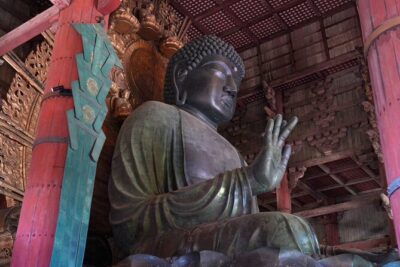
Nara Early Morning Tour (Kyoto or Osaka Departure Available)
Read our review →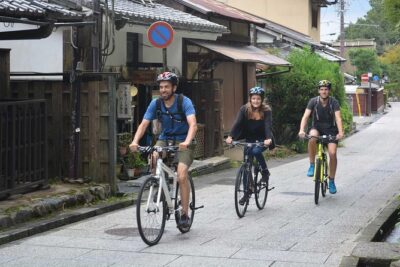
Arashiyama Bamboo Forest & Hidden Gems Bike Tour (Early Bird)
Read our review →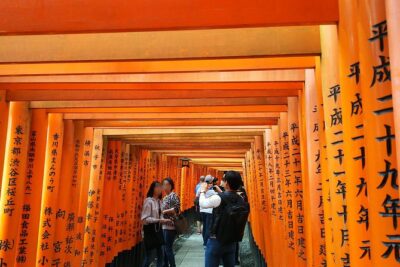
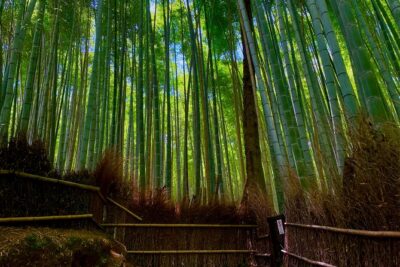
Kyoto Early Bird English Tour: Fushimi-Inari and Arashiyama
Read our review →
Nara Early Bird Tour (Kyoto Departure Option Available)
Read our review →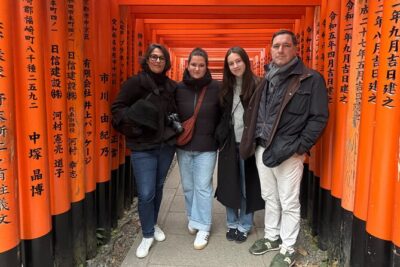
Kyoto Early Bird English Tour: Fushimi Inari & Gion(Private opt)
Read our review →Browse the lists this tour appears in