
REVIEW · CYCLING TOURS
Pedal Adventure Kyoto’s iconic landmarks on an e-bike tour
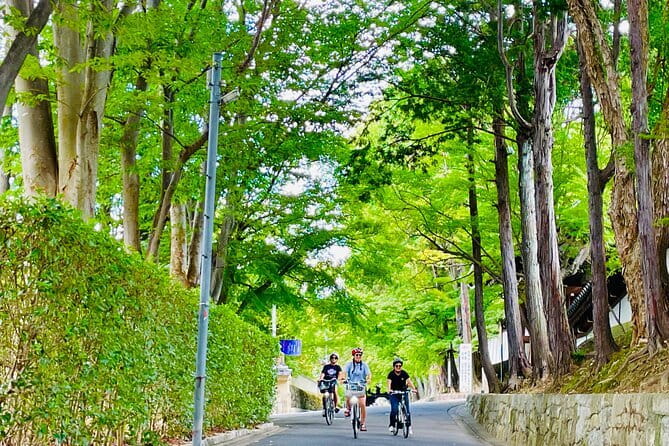
Kyoto is easier to understand from a bicycle seat. This four-hour ride links famous places such as Gion and Fushimi Inari with quiet lanes, residential streets, temple grounds, and the Kamogawa River. The e-bike does the hard work, so you cover more ground without turning the day into an athletic event.
I like the mix of major sights and calm local roads. I also like the personal guiding style associated with Maki, also identified as Mika in some tour details. She explains geisha customs, Buddhist and Shinto traditions, and everyday Japanese life in clear English, often adding family stories and small cultural details.
The main consideration is weather. Kyoto can be brutally hot in summer, and the tour runs outdoors for about four hours. Bring extra water and an electrolyte drink in hot weather, and remember that the ride may be changed or canceled if conditions are poor.
In This Review
- Key points at a glance
- Why an e-bike works so well in Kyoto
- Starting near Shōgoin and settling into the ride
- Gion and the world of geisha
- Higashiyama, a temple, and a quick snack
- Fushimi Inari and its famous gates
- Tōfuku-ji and the ride beside the Kamogawa
- A guide who teaches through stories
- What the $86.22 price buys you
- Heat, rain, and practical comfort
- Who should book this Kyoto ride?
- Should you book Pedal Adventure Kyoto?
- FAQ
- How long does the e-bike tour last?
- Where does the tour start and finish?
- What equipment and refreshments are included?
- How many people can join the tour?
- Do I need to pay admission at the stops?
- What happens if the weather is bad?
Key points at a glance
- A four-hour route with real variety: Gion, Higashiyama, Fushimi Inari, Tōfuku-ji, neighborhood lanes, and the Kamogawa River all fit into one outing.
- Comfortable e-bikes make the distance manageable: The ride is mostly easy, with few hills, baskets for small belongings, helmets, and water supplied.
- A small group keeps the pace personal: The maximum is eight people, allowing the guide to adjust stops and riding speed.
- You see more than the standard sightseeing circuit: Quiet alleys, residential streets, river paths, and less crowded temple areas add local texture.
- Culture is part of every stop: Expect discussion of geisha and maiko, Shinto and Buddhism, samurai, customs, and the meaning of objects seen around Kyoto.
- Weather matters: The activity requires good weather, while summer heat can make water and rest breaks especially important.
Why an e-bike works so well in Kyoto
Kyoto’s main sights are spread across a broad city grid. Walking between them can eat up much of a day, while public transport often leaves you with a walk at both ends. An e-bike offers a useful middle ground: you move quickly, but still see shopfronts, homes, gardens, temple walls, and narrow side streets along the way.
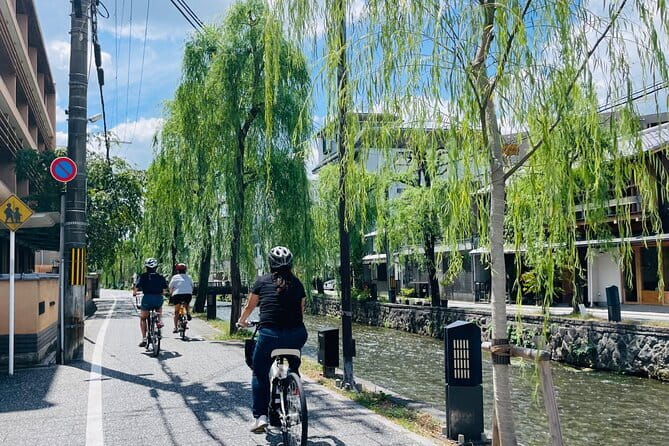
The route includes larger roads, small back streets, scenic paths, and a ride beside the river. That variety is important. You do not spend four hours simply pedaling from one famous gate to the next, and you do not spend the whole time fighting traffic either.
The electric assistance also changes the feel of the tour. The ride is described as mostly flat, with few hills, and the bikes are comfortable enough for a relaxed sightseeing pace. Several riders found the bikes easy to handle and appreciated the baskets, which are useful for a backpack, jacket, or other small items.
You still need basic cycling confidence. This is not a stationary sightseeing ride, and the route includes city streets. The guide uses hand signals and pays attention to group safety, but you should be comfortable steering, braking, and riding near other traffic.
More bike days around Kyoto:
- Hidden Kyoto E-Biking tour
★ 5.0 · 1,843 reviews - Bike Tour Exploring North Kyoto plus Lunch
★ 5.0 · 1,087 reviews - Arashiyama Bamboo Forest & Hidden Gems Bike Tour (Early Bird)
★ 5.0 · 613 reviews
Starting near Shōgoin and settling into the ride
The meeting point is at 19 Shōgoin Higashimachi in Sakyo Ward, Kyoto. The activity begins and ends at this same location, which makes the morning or afternoon easier to plan. The meeting point is near public transportation, though you should allow time to find it and arrive ready to ride.
You receive the bicycle, helmet, bottled water, and a snack before setting out. The group is limited to eight people, a useful size for a city cycling tour. A small group is easier to keep together at crossings and allows the guide to answer questions without holding up a large procession.
The first ride takes about ten minutes. That short opening stretch gives you time to get used to the e-bike and the guide’s signals before reaching the first main area.
Gion and the world of geisha
The Gion stop lasts about ten minutes, but it introduces one of Kyoto’s most recognizable cultural districts. Here, the focus is on scenery and geisha culture, including the distinction between geisha and maiko and the traditions surrounding their work.
A short stop means you should not expect a long walk through every lane or a detailed architectural tour of the entire district. Instead, Gion works as a first cultural lesson. The guide can point out what you might otherwise pass without noticing, from the appearance of traditional buildings to details connected with Kyoto’s performing arts.
This is also a good place to ask questions. The guide’s role is not limited to naming sights. The strongest part of this experience is the chance to ask why certain customs exist and how traditional practices relate to life in Japan today.
You may be tempted to linger in Gion, especially if this is your first visit. The tour does not offer unlimited free time here, so plan to return independently if you want more photographs or a slower look at the district.
Higashiyama, a temple, and a quick snack
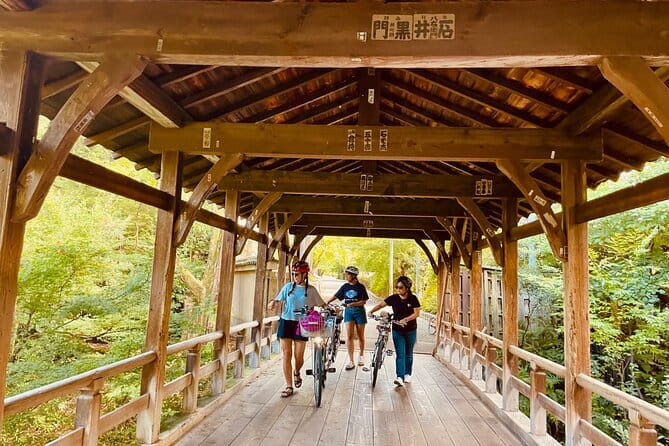
After Gion, you cycle for roughly fifteen minutes toward Higashiyama. The area is one of Kyoto’s best places for temples, traditional streets, and layered views of old and modern city life.
The guide takes you to a temple with lesser-known details and makes a quick snack stop. The exact temple is not specified, which has both an advantage and a drawback. You are not simply following a rigid checklist, and the guide can shape the stop around conditions and the group. But if you are booking because you want one particular famous temple, this tour may not offer the certainty you expect.
Allow about fifty minutes for this section. That is enough time for explanation and a look around, without making the whole tour feel like a temple marathon. The guide discusses Buddhism and Shinto, helping you understand the difference between the two traditions and how they appear in Japanese spaces.
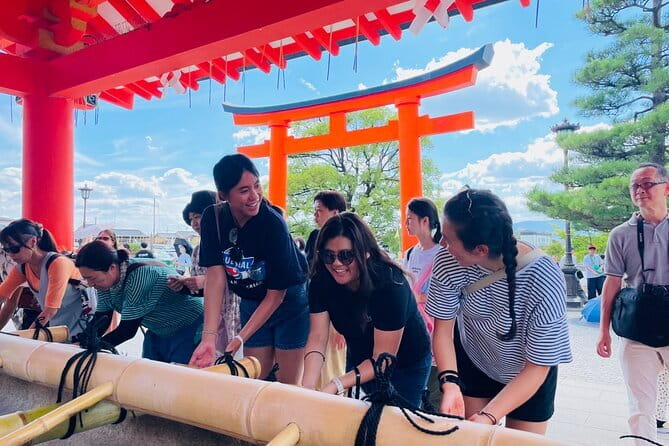
This cultural context is where the tour earns much of its value. A shrine gate, purification area, statue, offering, or household object can seem like decoration if you do not know what it means. With explanation, the same details become part of a living system of belief and custom.
The snack is modest rather than a meal, and lunch is not included. If you need a full breakfast or lunch, eat before the tour or plan food afterward.
More e-bike rides around Kyoto:
- 5 Top Highlights of Kyoto Full Day Bike Tour (E-bike option)
★ 5.0 · 511 reviews - E-Bike Tours of the highlights of Kyoto!!!
★ 5.0 · 291 reviews - Kyoto: City Secrets eBike Tour
★ 4.9 · 196 reviews - Kyoto: Hidden Gems E-Bike Tour with Local Japanese Guide
★ 4.9 · 189 reviews
Fushimi Inari and its famous gates
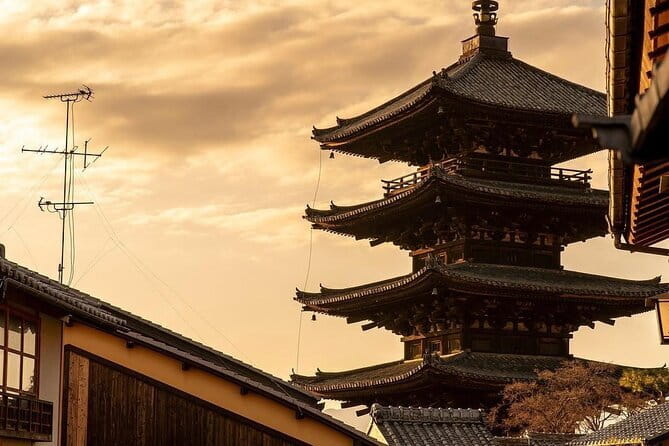
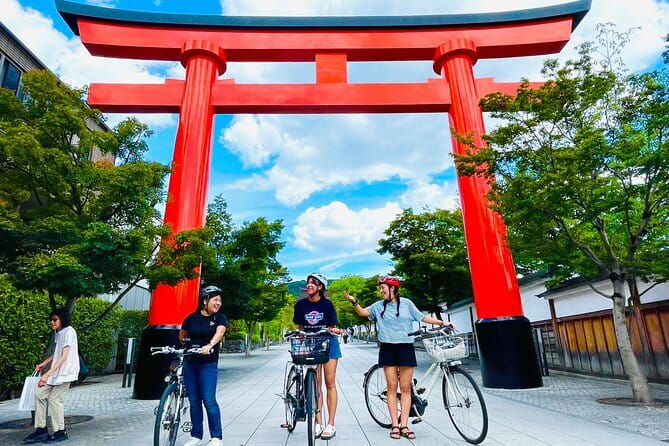
The route then reaches Fushimi Inari-taisha, one of Kyoto’s most familiar sights. Its rows of shrine gates create a powerful visual experience, but the short stop of about forty minutes means you should keep your expectations in check.
You will have time to see the shrine area and walk among the gates, but you may not reach every section of the mountain path. Fushimi Inari can become crowded, and a bicycle tour cannot offer the same slow, wandering pace as a dedicated visit on foot.
Even so, arriving by bike has a clear benefit. You have already seen parts of Kyoto that many visitors miss, and the shrine becomes one chapter in a larger route rather than the entire day’s focus. The guide can explain Shinto practices and help you read the shrine beyond its famous orange gates.
This is a good stop for questions about ritual, fortune telling, and the role of shrines in daily life. One family even had time for fortune telling during the outing. That sort of small, human moment can make the visit more memorable than a quick photograph and departure.
Wear shoes suitable for walking. You are cycling most of the time, but temple and shrine stops require you to leave the bike and move around on foot.
Tōfuku-ji and the ride beside the Kamogawa
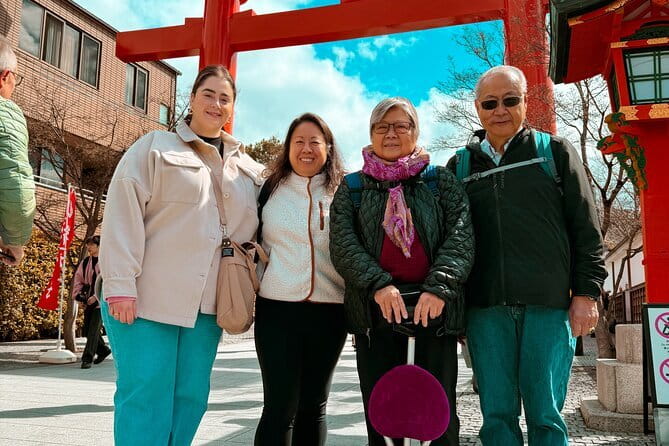
After Fushimi Inari, it is about ten minutes by bike to Tōfuku-ji Temple. The temple complex receives roughly twenty minutes, making it a compact stop rather than a full architectural study.
Tōfuku-ji adds another major religious site to the route and gives the guide another setting in which to explain Buddhist practice and temple design. If you want a long visit inside every hall, you will find the timing brief. If you want a broad introduction to several important places in one half-day, the shorter format works well.
The return journey is one of the most enjoyable parts of the ride. The route follows the Kamogawa River back toward the starting point, offering a change from temple grounds and city streets. The river section is scenic, calmer, and a welcome way to finish after several stops.
I especially like this part because it gives you a feel for how Kyoto residents use the city between tourist attractions. You are not simply transferring between monuments. You see the spaces that connect them.
A guide who teaches through stories
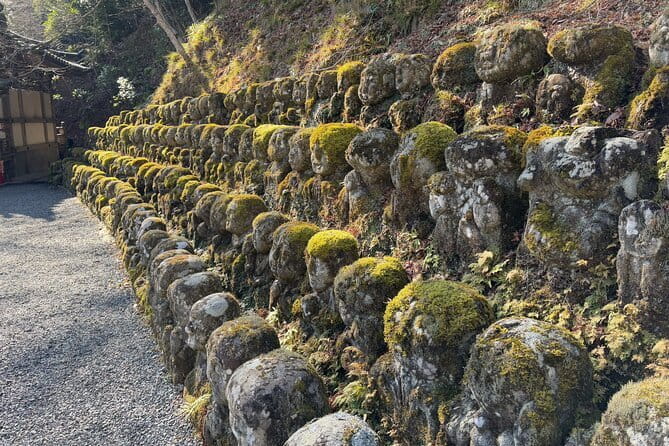
The guide is a major part of the experience. Maki is described as the owner and guide, while some tour information identifies the guide as Mika. The supplied details clearly point to a local woman leading the tours, speaking excellent English, and using personal stories to explain Kyoto and Japanese customs.
Expect a warm, conversational style rather than a memorized lecture. The guide discusses geisha and maiko, Buddhism, Shintoism, samurai, family traditions, and everyday etiquette. Explanations can include topics such as why passing food between chopsticks is taboo and what certain objects outside homes mean.
That range is valuable because Kyoto’s sights can otherwise feel disconnected. A temple is not just an old building. A shrine is not simply a bright gate. The guide links places, customs, beliefs, and ordinary life.
The pace can also be adjusted. The guide checks how the group is doing and can respond to comfort, weather, and interest. On rainy outings, she has sought shelter and adjusted the route to reduce exposure. In intense summer heat, she has provided extra water, rest stops, and cooling body spray.
These touches are useful, but you should not rely only on the supplied bottle of water in hot weather. One rider specifically recommended bringing more water and an electrolyte drink. Kyoto heat can make even an easy e-bike ride tiring.
What the $86.22 price buys you
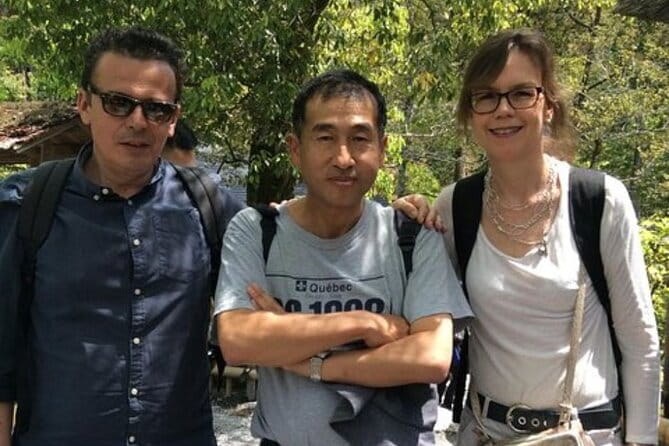
At $86.22 per person, this is not the cheapest way to see Kyoto. You are paying for a four-hour guided route, an e-bike, helmet, bottled water, snacks, an English-speaking route coordinator, and access to a small group capped at eight people.
The value depends on how you like to sightsee. If you are happy using buses and trains, reading about temples yourself, and walking at your own pace, you can spend less. But you may cover fewer neighborhoods and lose the local explanation that ties the stops together.
For a first visit, the price is easier to justify because the tour combines orientation with sightseeing. You see where Gion, Higashiyama, Fushimi Inari, and Tōfuku-ji sit in relation to one another. You also learn which areas deserve a return visit.
The tour is particularly good value for families and couples who want a private-feeling small-group outing without booking a fully private guide. The bikes and equipment are included, and the route covers a lot of ground without demanding strong fitness.
The free admission at the listed stops is worth noting, but it does not mean the activity is a ticketed attraction bundle. The main purchase is the guided cycling experience and the convenience of having equipment and route planning handled for you.
Heat, rain, and practical comfort
Good weather is required, and poor conditions can lead to a new date or a full refund. That policy matters because this is an outdoor activity with no easy indoor substitute.
Spring and autumn are likely to feel more comfortable for cycling, but the tour can run in summer as well. If you ride in August, begin well hydrated, use sun protection, and bring an electrolyte drink. The route is not described as strenuous, but heat can turn an easy ride into a draining one.
Rain is another factor. The guide has helped groups find shelter and keep riding when rain came and went, but you should still dress for changing conditions. The booking terms allow cancellation by the operator for poor weather.
You can cancel for a full refund if you do so at least 24 hours before the start time. Changes or cancellations inside that window are not accepted for a refund, and the activity may also be canceled if the minimum number of participants is not met.
Who should book this Kyoto ride?
I would choose this tour if you want a broad first look at Kyoto and enjoy learning while moving. It suits families, couples, and small groups who want famous sights mixed with ordinary streets and river views.
It is also a good choice if you are unsure about cycling in Kyoto but comfortable on a bicycle. The e-assist and mostly flat route reduce the physical demand, while the guide’s hand signals and small group help with organization.
You may prefer a walking tour or independent visit if your priority is spending hours inside one temple, climbing all of Fushimi Inari, or moving at a very slow photographic pace. The itinerary has several stops, so time at each one is limited.
The ride is less suitable for anyone who cannot comfortably cycle on city streets. The tour welcomes most participants, but the information does not specify adapted bicycles or special accessibility arrangements, so ask the operator before booking if that matters to you.
Should you book Pedal Adventure Kyoto?
Book it if you want to see Kyoto as a connected city, not just a string of isolated attractions. The route offers famous places, quiet lanes, neighborhood views, temple and shrine culture, and a pleasant river ride in one manageable half-day.
The best reason to go is the guide-led interpretation. Maki or Mika brings local experience, clear English, humor, and personal stories to places that can otherwise blur together. Add a comfortable e-bike and a group of no more than eight, and the $86.22 price becomes reasonable for many visitors.
Skip it if you dislike cycling, need long visits at individual sights, or are visiting during extreme heat without wanting an outdoor activity. For everyone else, this is a smart way to get your bearings, learn the cultural basics, and find parts of Kyoto worth exploring again on your own.
FAQ
How long does the e-bike tour last?
The tour lasts approximately four hours, including the cycling time and stops at Gion, Higashiyama, Fushimi Inari-taisha, and Tōfuku-ji Temple.
Where does the tour start and finish?
It starts at 19 Shōgoin Higashimachi, Sakyo Ward, Kyoto, 606-8325, Japan, and ends back at the same meeting point.
What equipment and refreshments are included?
The tour includes use of an e-bike, a helmet, bottled water, and snacks. Lunch is not included.
How many people can join the tour?
The maximum group size is eight participants.
Do I need to pay admission at the stops?
The listed stops show free admission. The experience does not include lunch.
What happens if the weather is bad?
The activity requires good weather. If the operator cancels because of poor weather, you will be offered a different date or a full refund.
Recently added around Kyoto
- Higashiyama | Kyoto: Sakura Season Private Rickshaw Tour★ 5.0 · 3 reviews
- Kyoto Kimono Rental CHAMATSU|Kimono/Yukata Rental FamilyPlan★ 5.0 · 3 reviews
- Kyoto: Half-Day Private Guided Tour to the Old Town of Gion★ 4.4 · 3 reviews
- Nara Private Customizable Half Day Tour★ 5.0 · 3 reviews
- Kansai Region Hiking Adventure in Nara Kobe Kyoto and More★ 5.0 · 3 reviews
- Full Day Nara Deer, Temple, Shrine, Activities & Tea Ceremony★ 5.0 · 3 reviews
- Nara: Essential Private Tour with Deer Park and Temples★ 5.0 · 3 reviews
- Hiking Tour for Sacred Sites in Kyoto with a Guide★ 5.0 · 3 reviews
Cycling Tours, compared.
Arashiyama Bamboo Forest & Hidden Gems Bike Tour (Early Bird)
Read our review →
5 Top Highlights of Kyoto Full Day Bike Tour (E-bike option)
Read our review →
Full Day Biking Tour Exploring the Best of Kyoto
Read our review →
Afternoon Kyoto Bike Tour: Bamboo Forest, Monkeys & Hidden Spots
Read our review →
South Kyoto in a Nutshell: Gentle Backstreet Bike Tour!
Read our review →Browse the lists this tour appears in