
REVIEW · NARA DAY TRIPS
Nara: Todai-ji y parque de Nara (Spanish Guide)
Nara’s famous deer are only part of the story. The real centerpiece is Todai-ji, where an immense bronze Buddha sits inside one of the world’s largest wooden buildings. This five-hour walk then links Nara’s major sights in a sensible order, from hilltop views to wooded shrines and a quiet pond.
I like two things in particular: the Spanish-speaking guide, which makes the history easier to follow, and the route’s variety. You get a major temple, a shrine lined with lanterns, open parkland, deer, and a five-story pagoda. The main consideration is the walking. The entire tour is on foot, and it is not suited to people with mobility impairments.
In This Review
- Key points to know before you book
- Why Todai-ji makes a strong starting point
- Nigatsu-do adds views after the main temple
- Tamukeyama connects temple grounds with wooded paths
- Kasuga Taisha brings lanterns and a forest mood
- Nara Park is more than a deer photo
- Ukimido offers the quietest pause
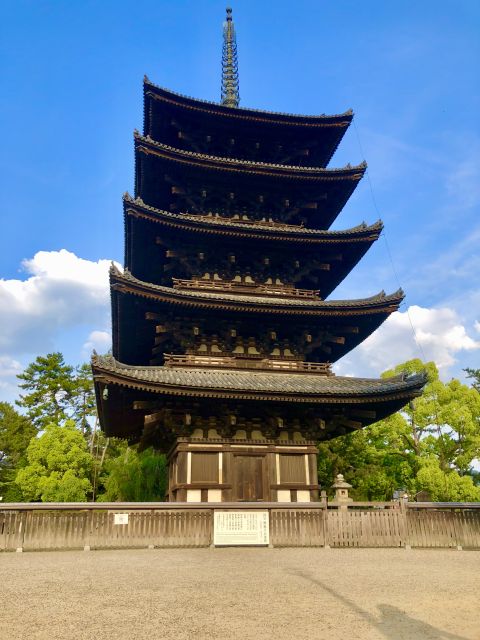
- Kofuku-ji closes the loop with a five-story pagoda
- What the Spanish guide adds
- Is $85 a fair price for five hours?
- The walking is the main practical issue
- Who should book this Nara walk?
- Should you book it?
- FAQ
- Where does the tour start?
- Where does the tour finish?
- How long does the experience last?
- Is the tour offered in Spanish?
- Is the Todai-ji entrance ticket included?
- Is the route suitable for people with mobility impairments?
Key points to know before you book
- Todai-ji admission is included, so the tour begins with Nara’s essential sight already covered.
- The Spanish guide is central to the experience, with Alex, Diego, and Federico among the guides praised for clear, engaging explanations.
- Nigatsu-do gives you a different view of Nara, with scenic views and especially attractive cherry blossoms in spring.
- Kasuga Taisha brings a quieter, more spiritual mood, with stone lanterns and a forest setting.
- Nara Park gives you time around the deer, considered divine messengers in Japanese culture.
- The full route lasts five hours and is entirely on foot, so comfortable shoes are a must.
Why Todai-ji makes a strong starting point
Meet your guide at exit 5 of Kintetsu-Nara Station. Starting here is useful because the station is an easy reference point, and you finish back at the same place instead of trying to find your way home after a long walk.
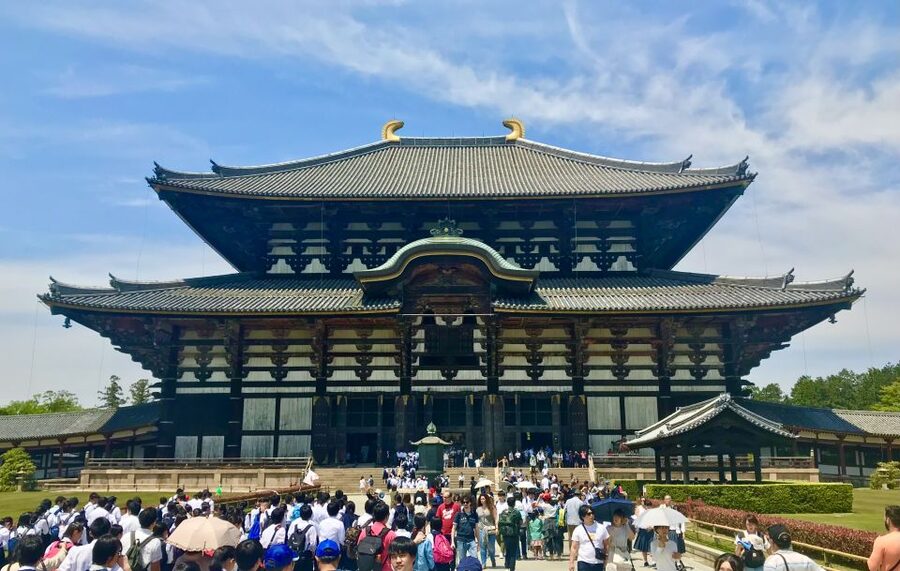
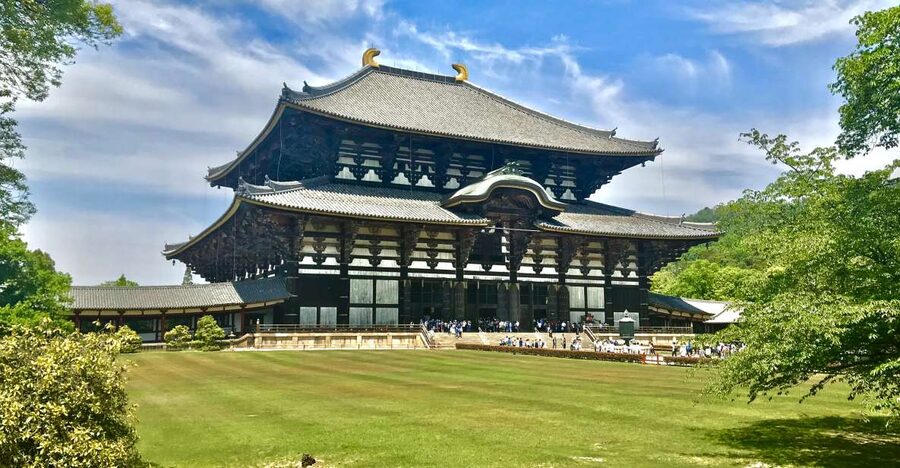
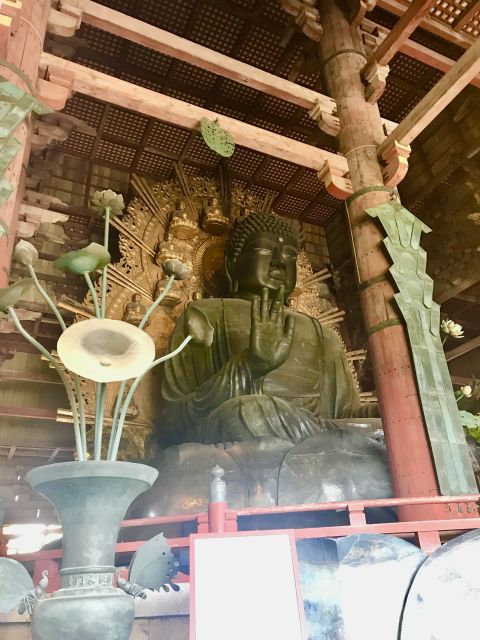
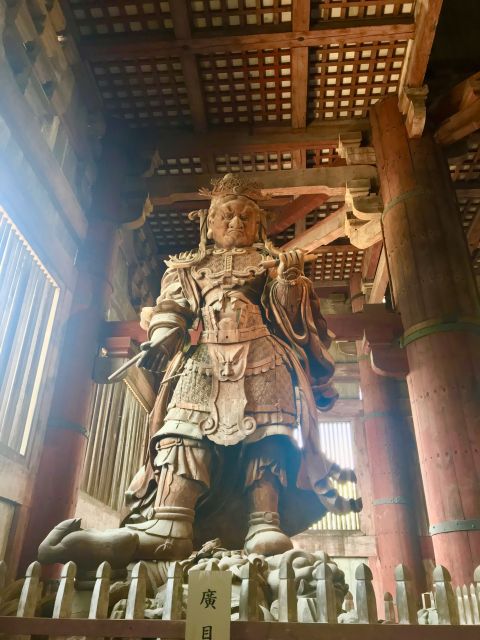
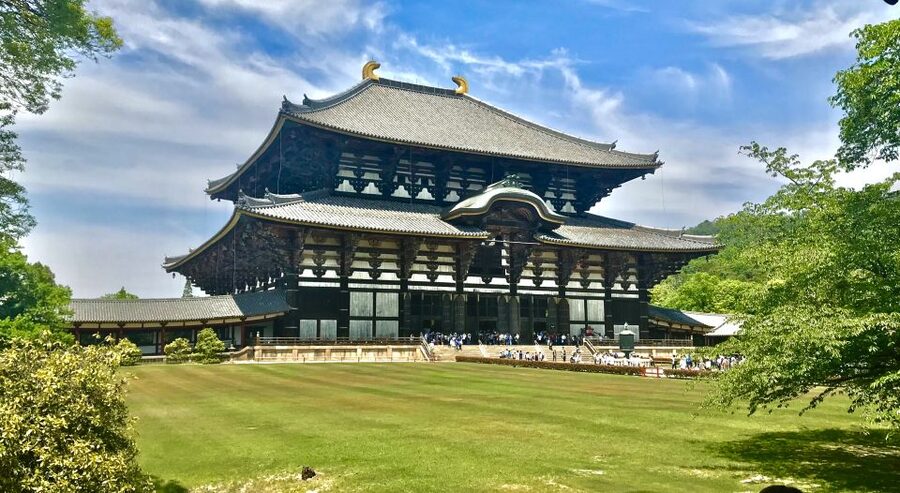
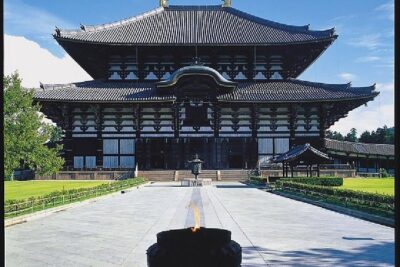
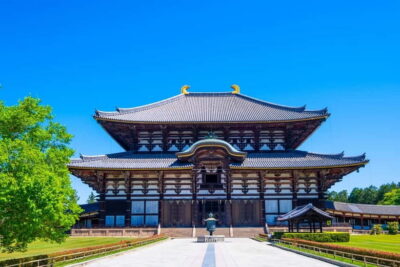
The first major stop is Todai-ji, Nara’s great Buddhist temple. The draw is the Great Buddha, a vast religious statue housed inside the temple’s enormous wooden hall. The scale can be hard to grasp from a description alone. Once you are inside, the statue turns a familiar sightseeing stop into a moment of real wonder.
Your guide’s job matters most here. Todai-ji is not simply a large building with a famous statue. It is a place where architecture, Buddhism, and Nara’s past meet. A Spanish explanation lets you ask questions and catch the meaning behind what you are seeing instead of relying on a quick translation or a guidebook paragraph.
You have about one hour for guided sightseeing, walking, scenic views, and wildlife viewing around Todai-ji. That hour gives the temple proper enough attention without making the entire day feel like one long indoor visit.
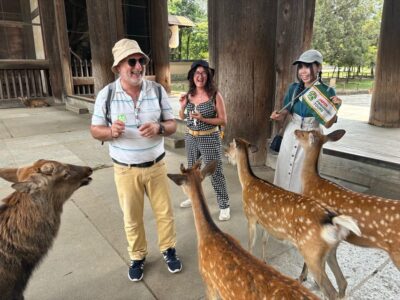
There is also a practical point to keep in mind. Todai-ji can feel busy, and the deer are present around the approach and nearby grounds. Keep your belongings secure and follow your guide’s instructions when you are close to the animals. The deer are accustomed to people, but they are still animals, not decorative statues.
More day trips to Nara:
- World Heritage Kyoto & Nara Uji Authentic Matcha Experience
★ 5.0 · 1,573 reviews - Nara Half Day Trip Walking Tour (Private Option Available)
★ 5.0 · 937 reviews - Nara Early Morning Tour (Kyoto or Osaka Departure Available)
★ 5.0 · 676 reviews
Nigatsu-do adds views after the main temple
From Todai-ji, the route continues to Nigatsu-do, also called February Hall. You get roughly 30 minutes here for a break, guided sightseeing, walking, and scenic views.
Nigatsu-do gives you a welcome change of pace. Todai-ji is about scale and interior drama. Nigatsu-do is more about position, atmosphere, and looking outward across Nara. The stop is particularly appealing in spring, when cherry blossoms add color to the view.
I like this part of the route because it prevents the temple visit from becoming a checklist. You have time to pause and look at the city from above, and the walk itself includes the chance to see deer along the way. The break is also useful in a tour that covers several major sites on foot.
The 30-minute allocation is enough for a guided stop and a short rest, but it is not a long, unhurried photography session. If you want to linger at every viewpoint, you may find the schedule brisk. That is the tradeoff for fitting so much of Nara into five hours.
Tamukeyama connects temple grounds with wooded paths
The next stop is Tamukeyama Hachimangu, visited for about 30 minutes. The schedule includes guided sightseeing, walking, passing by, scenic views, and wildlife viewing.
This stop works as a bridge between Todai-ji and Kasuga Taisha. Rather than rushing straight from one headline attraction to the next, you get a look at another sacred site within Nara’s temple and shrine district. The walking route also gives you a chance to notice how quickly the setting changes from city streets to tree-lined paths.
Do not expect Tamukeyama to have the same visual impact as the Great Buddha or Kofuku-ji’s pagoda. Its value is in the connection between places and in the guide’s explanation of what you are passing. On your own, it would be easy to walk through this part without understanding its place in the wider religious area.
The itinerary lists wildlife viewing here, too. Deer are a recurring part of the day, not a single brief stop at the park.
Kasuga Taisha brings lanterns and a forest mood
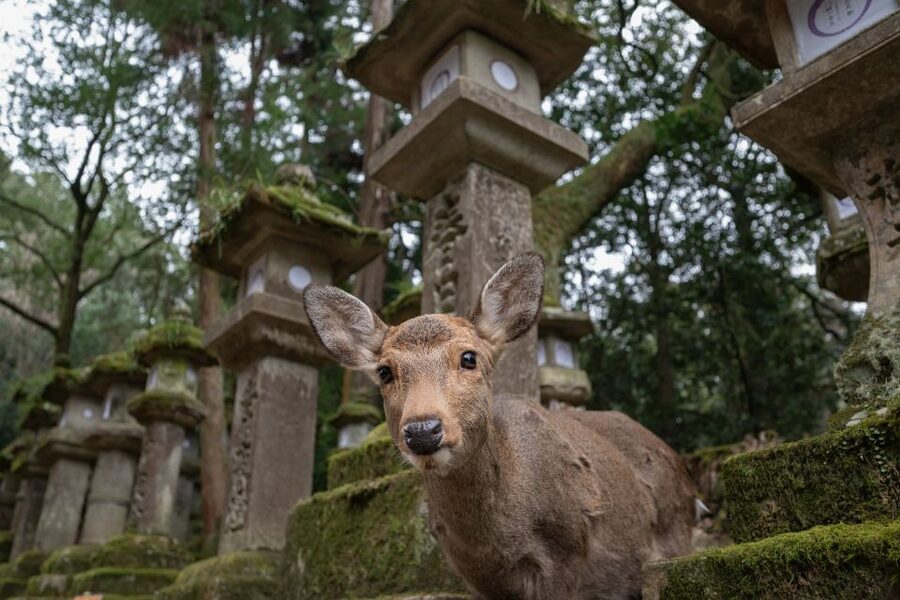
At Kasuga Taisha, the route spends another 30 minutes on guided sightseeing, walking, passing by, and wildlife viewing. This shrine is known for its many stone lanterns and wooded surroundings.
The mood changes again. Todai-ji feels monumental. Nigatsu-do opens the view. Kasuga Taisha feels more enclosed and atmospheric, with the trees and lanterns shaping the experience. The setting helps explain why Nara’s sacred sites are so memorable: the buildings are important, but so are the paths and natural surroundings around them.
This is one of the places where a Spanish-speaking guide adds real value. A guide can explain the difference between the Buddhist temple complex and the Shinto shrine, helping you understand that Nara’s religious sites are not all variations of the same thing.
The 30-minute stop is focused rather than exhaustive. You will see the principal character of Kasuga Taisha, but you should not expect to explore every corner or spend half a day studying individual lanterns. If your priority is a broad introduction to Nara, the timing works well. If you want a slow, detailed shrine visit, a separate return visit may suit you better.
A few more Nara experiences worth comparing
- Nara 6hr Private Tour with Government-Licensed Guide
★ 5.0 · 219 reviews - Nara: Private Tour with Private Guide
★ 4.8 · 66 reviews - Perfect Nara Park Half-Day Bus Tour with English Speaking Guide
★ 5.0 · 49 reviews - Nara: UNESCO Heritage Sites & Deer Park Tour with Pro guide
★ 4.5 · 10 reviews
Nara Park is more than a deer photo
The tour then continues through Nara Park, with about 30 minutes for walking, guided sightseeing, passing by, and wildlife viewing.
The deer are the obvious attraction. In Japanese culture, they are regarded as divine messengers, and their presence gives the park a character you will not find at an ordinary city green space. You can observe them as you walk between the historic sites, which makes the wildlife part of the route rather than a staged add-on.
I would treat this as an observation stop first. Enjoy the deer, take photographs, and watch how they move through the park. Keep your hands and belongings under control, and listen to the guide’s advice. The activity information does not promise a feeding session, so do not book expecting a formal animal interaction.
Thirty minutes is enough to see deer and enjoy the park’s open setting, but it passes quickly. The route has several more stops, so this is not designed as a long picnic or a lazy afternoon in the grass. You are getting a well-planned introduction to the park while moving toward the next landmark.
Ukimido offers the quietest pause
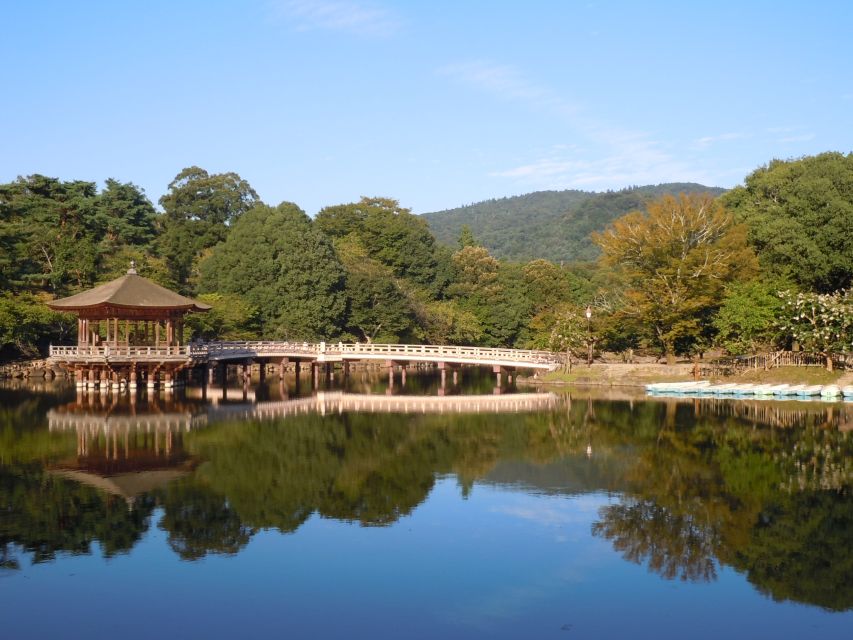
Ukimido is a small pavilion set in the middle of a pond. The tour gives you 30 minutes for a break, photography, sightseeing, passing by, and scenic views.
After the scale of Todai-ji and the activity around the deer, Ukimido supplies a calmer moment. The pavilion and pond create a simple composition for photographs, and the water gives you a place to slow down and take in the surroundings.
This stop may appeal most to people who like quieter scenes. It is not presented as another major temple interior or a long historical visit. Its value comes from the pause, the view, and the contrast with the larger monuments earlier in the day.
The wording of the route suggests that Ukimido is a short scenic stop rather than an extended exploration. That is useful to know if you are comparing this tour with a private photography walk. Here, you are covering several of Nara’s key areas, so the guide keeps the group moving.
Kofuku-ji closes the loop with a five-story pagoda
The final major sight is Kofuku-ji, where you have about 30 minutes for guided sightseeing, walking, passing by, and photography.
The temple is best known here for its impressive five-story pagoda. It provides a strong closing image because it is visually distinct from Todai-ji’s huge wooden hall and Kasuga Taisha’s forested shrine paths. You also get gardens and older structures that help complete the picture of Nara as a former center of Japanese religion and culture.
Kofuku-ji is a good final stop before returning to Kintetsu-Nara Station. By this stage, you have seen the city from several angles: inside a major temple, from a hillside, through a shrine district, across deer park paths, beside a pond, and under the profile of a pagoda.
Again, the half-hour timing keeps the route moving. You can photograph the pagoda and hear the guide’s explanation, but this is not the right tour if you want to sit for a long time at each site.
What the Spanish guide adds
The strongest feature of this experience is not just the list of places. It is the chance to understand them in Spanish, with a live guide accompanying you throughout the route.
Several guides connected with this experience have received especially warm praise. Alex is singled out for excellent work, Diego for making the day feel complete, and Federico for his enthusiasm for Japanese history and the amount he explained. Those names give you a useful sense of the guiding style to expect, though the guide assigned to your date may differ.
A good guide can turn a five-hour walk into a connected story. Todai-ji, Nigatsu-do, Tamukeyama, Kasuga Taisha, Nara Park, Ukimido, and Kofuku-ji are close enough to visit together, but they do not all serve the same religious or cultural purpose. Explanations in your own language help you notice those differences.
The available feedback is uniformly positive, with a perfect 5 rating from 16 reviews. That is a small sample, so I would not treat it as a guarantee. Still, the repeated praise for the guides and the clarity of the day is a strong sign for anyone who values explanation over simply being led from one photo stop to another.
Is $85 a fair price for five hours?
At $85 per person, the value depends on what you want from Nara.
The price includes a five-hour guided walking route in Spanish and the entrance ticket to Todai-ji. It also brings together seven named stops, including the city’s major temple, shrine, deer park, scenic pavilion, and pagoda. If you would otherwise need to research the route, navigate between sites, and arrange a Spanish guide separately, the package can make practical sense.
The tour does not include a vehicle, and the route is entirely on foot. That is not a weakness if you want to experience Nara at street level, but it does mean you are paying for guiding and organization rather than transport.
I see this as good value for a first visit, especially if you have one day for Nara and want a clear introduction. The value is less certain if you prefer to move slowly, spend hours at one temple, or explore without a fixed pace. In that case, the tour may feel full.
The walking is the main practical issue
You should arrive in comfortable shoes and comfortable clothes. Five hours on foot, with several temple and shrine areas, is a meaningful physical commitment even though the tour includes breaks.
The activity is not suitable for people with mobility impairments, and baby strollers are not allowed. Those points matter because the route includes walking between stops and is not built around vehicle transfers or stroller access.
I would also avoid scheduling this immediately before another demanding activity. The route covers a lot of ground and includes time standing, walking, sightseeing, and stopping for photographs. A relaxed meal or open evening afterward would fit better than another tightly scheduled tour.
The starting and ending point is convenient: Kintetsu-Nara Station. You meet at exit 5 and return to the station after Kofuku-ji, which makes onward planning easier.
Who should book this Nara walk?
I would recommend it most strongly to:
- Spanish-speaking visitors who want history and cultural context in their own language
- First-time visitors with one day to cover Nara’s main sights
- People who enjoy walking between attractions instead of taking a bus or private vehicle
- Anyone who wants Todai-ji, Kasuga Taisha, Nara Park, and Kofuku-ji in one organized route
- Families with older children who can manage five hours on foot, though not those relying on a stroller
I would be more cautious if you have limited mobility, dislike walking, or prefer long independent visits. The route is full, and each stop receives a set amount of time. You gain range, but you give up some freedom.
The deer also deserve realistic expectations. They are an important part of Nara’s character, but the tour promises wildlife viewing rather than a formal hands-on animal activity. You are there to observe them as part of the park and temple setting.
Should you book it?
Book this tour if you want a well-organized Spanish introduction to Nara, with Todai-ji admission included and a guide connecting the city’s major religious sites. The praise for Alex, Diego, and Federico points to the feature that matters most here: clear, engaging explanations that make the walk feel like more than sightseeing.
Skip it if your ideal Nara day means choosing one or two sites and lingering without a schedule. For everyone else, $85 is a reasonable price for five hours of walking, guiding, and landmark coverage, provided you arrive ready for a full day on your feet.
FAQ
Where does the tour start?
The meeting point is Kintetsu-Nara Station, at exit 5.
Where does the tour finish?
The route returns to Kintetsu-Nara Station after the visit to Kofuku-ji.
How long does the experience last?
The tour lasts five hours.
Is the tour offered in Spanish?
Yes. The experience includes a live Spanish-speaking guide.
Is the Todai-ji entrance ticket included?
Yes. Admission to Todai-ji is included in the tour price.
Is the route suitable for people with mobility impairments?
No. The route is completed entirely on foot and is not suitable for people with mobility impairments. Baby strollers are also not allowed.
Recently added around Nara
- Nara Private Customizable Half Day Tour★ 5.0 · 3 reviews
- Full Day Nara Deer, Temple, Shrine, Activities & Tea Ceremony★ 5.0 · 3 reviews
- Nara: Essential Private Tour with Deer Park and Temples★ 5.0 · 3 reviews
- Discover the Essence of Nara Ink Through Your Senses★ 5.0 · 3 reviews
- Private Journey in Nara’s Historical Wonder★ 5.0 · 3 reviews
- Nara:Private Tea Ceremony(Max 5 ppl) -Master Matcha Making-★ 5.0 · 3 reviews
- Nara Takayama Tea Whisk Craft and Tea Culture Experience★ 5.0 · 3 reviews
- Nara: Half-Day Private Tour of 4 Must-See Spots & Deer Park★ 5.0 · 3 reviews
Nara Day Trips, compared.
World Heritage Kyoto & Nara Uji Authentic Matcha Experience
Read our review →
Kyoto/Osaka: Nara, Fushimi Inari Taisha, Arashiyama Bus Tour
Read our review →
Nara Half Day Trip Walking Tour (Private Option Available)
Read our review →
Nara Early Morning Tour (Kyoto or Osaka Departure Available)
Read our review →
Kyoto/Osaka: Kinkakuji, Bamboo Forest, and Nara Deer Park
Read our review →Browse the lists this tour appears in