
REVIEW · NARA DAY TRIPS
Nara 6hr Private Tour with Government-Licensed Guide
Todaiji’s enormous wooden hall and Giant Buddha give this tour a powerful start, but the real strength is the freedom to shape the day around what interests you. You can focus on ancient temples and religion, or mix major sights with Naramachi, gardens, food, sake, and local crafts.
I like the private format because your guide can adjust the pace and explain how Shinto and Buddhism developed side by side. I also like the chance to request less-visited places such as Horyuji, Toshodaiji, or Isuien Garden. The drawback is simple: six hours on foot can be tiring, and admission, food, and transport costs are not included.
In This Review
- Key points at a glance
- Why a private Nara day works so well
- Building your four-site plan
- Todaiji and the Giant Buddha
- Nara Park and the deer
- Kasuga Taisha and Shinto tradition
- Wakakusayama Hill and the view
- Horyuji, Toshodaiji, and Yakushiji
- Naramachi, food, and local character
- Gardens and smaller stops
- The Heijo Palace Site
- What the six-hour format really means
- Price, extra costs, and value
- Who should book this Nara tour
- Should you book it?
- FAQ
- How long is the Nara private tour?
- How many sites can I choose?
- Where does the tour begin?
- Is transportation included?
- Are entrance fees included?
- Is this a private group tour?
- Can I cancel for a full refund?
Key points at a glance
- Choose three or four sites: Build your day from a prepared list rather than follow one fixed route.
- Meet at Nara Station: The tour begins on foot, with no private vehicle included.
- Expect strong historical guidance: Guides such as Junichi, Ken, Toshi, Rie, Yoshii, Hiro, and Haru are praised for clear English and personal attention.
- Mix famous and quieter sights: Pair Todaiji and Nara Park with Naramachi, Isuien Garden, or a temple farther from the center.
- Plan for serious walking: Deer Park, temple grounds, stairs, hills, buses, and long connections can fill the six hours.
- Pay extra for most major sights: Meals, transportation, and entrance fees are generally your responsibility.
Why a private Nara day works so well
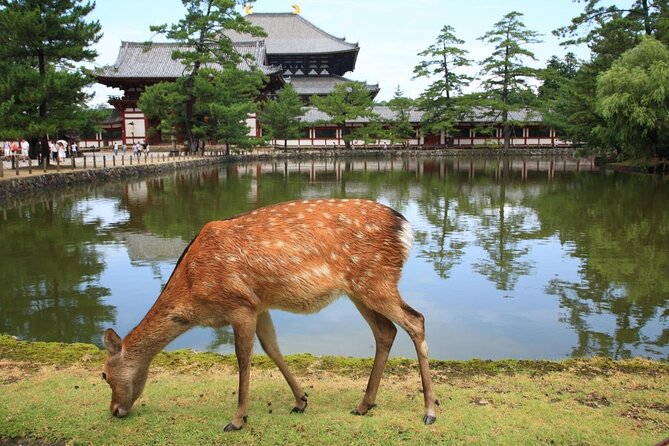
Nara is compact enough to visit in a day, but its important sights are spread across temples, wooded paths, gardens, historic neighborhoods, and former palace grounds. A private guide helps you connect these places instead of simply collecting photographs.
That context matters here. Nara was Japan’s capital during much of the Nara Period, from 710 to 794. It was also a key place in the development of Japanese Buddhism, government, art, and court culture. A good guide can explain why a Buddhist temple sits near a Shinto shrine, how Chinese influence reached Japan, and why Nara still preserves so much of the country’s early culture.
This is not a bus tour. You meet your guide at Nara Station or another agreed point within the designated area, then travel on foot and, if needed, by local transport at your own cost. The private setup suits families, couples, and small groups who would rather ask questions and set their own rhythm than follow a large group.
The guide roster includes several names with different strengths. Junichi is a former English professor and teacher who often receives praise for his clear English, humor, and ability to explain history and religion. Ken is noted for careful route planning and links between Japanese history and events elsewhere in Asia. Toshi, Rie, Yoshii, Hiro, and Haru are also praised for warmth, flexibility, and local insight.
You cannot combine separate tour groups, so the experience is genuinely limited to your party. That makes the $155.86 per-person price easier to justify for a family or group that values a private guide. For one or two people, it is a larger expense, so your decision depends on how much you want interpretation and help with routing.
More day trips to Nara:
- World Heritage Kyoto & Nara Uji Authentic Matcha Experience
★ 5.0 · 1,573 reviews - Nara Half Day Trip Walking Tour (Private Option Available)
★ 5.0 · 937 reviews - Nara Early Morning Tour (Kyoto or Osaka Departure Available)
★ 5.0 · 676 reviews
Building your four-site plan
The most important choice comes before the tour begins. You select three or four places from the prepared list, and that choice determines the character of your day.
A classic first visit might include Todaiji, Nara Park, Kasuga Taisha, and Naramachi. That combination gives you the giant temple, deer, Shinto tradition, and old merchant streets.
A history-heavy plan could use Todaiji, Horyuji, Toshodaiji, and the Heijo Palace Site Historical Park. This route covers major stages of Japanese history, but it also requires more transport and careful timing.
A slower day might pair Todaiji with Kasuga Taisha and one garden. You would see fewer sites, but you could spend more time listening to explanations, taking photographs, and enjoying the quiet parts of Nara.
The listed stop times are mostly 30 minutes, with 15 minutes at some outlying or garden sites. Treat these as planning markers, not a promise that every stop will receive exactly that amount of time. Six hours disappears quickly once you add walking, transport, queues, meals, and temple grounds.
Todaiji and the Giant Buddha
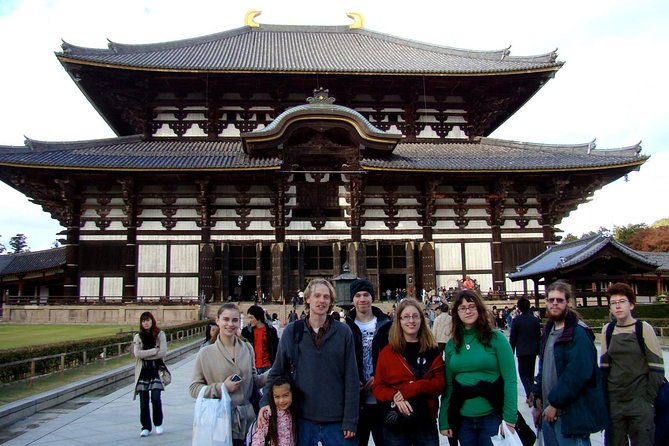
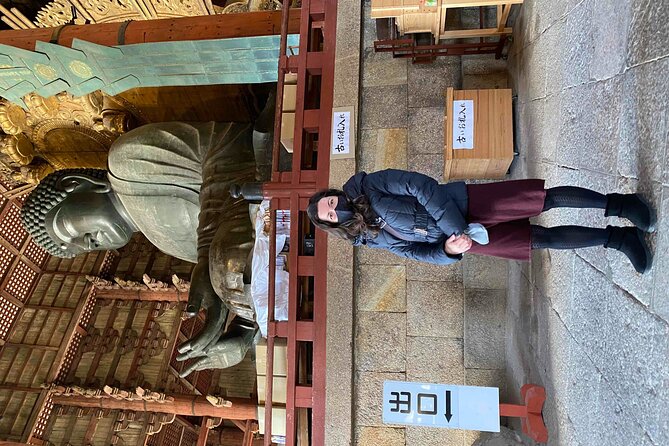
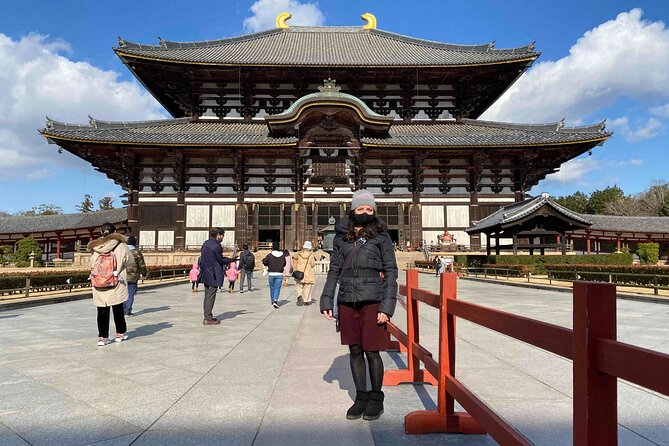
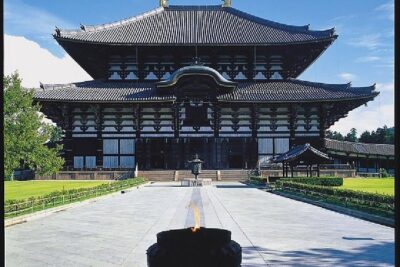
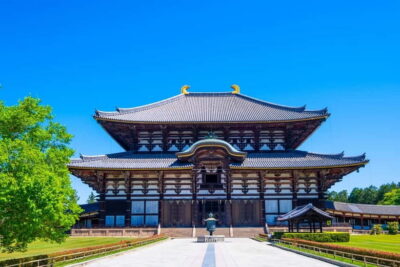
Todaiji is the essential anchor for most first-time visits. Founded in 752, it was once the head temple for provincial temples throughout Japan. Its Great Buddha Hall houses a huge bronze image of Vairocana Buddha, a figure linked with universal illumination.
The scale is the point. The wooden hall, the temple approach, and the Buddha create a sense of power that is difficult to get from a guidebook photograph. Your guide can explain the temple’s role in the Nara capital and the links between state power and Buddhism.
Admission is not included for you, though the guide’s entrance fee is covered for sights listed under the tour details. Check the current visitor charge when planning your budget. Thirty minutes may be enough for a quick visit and explanation, but you may want more time if architecture, sculpture, or religious practice matters to you.
Todaiji can also be crowded. A guide may help you choose a sensible route and explain what deserves your attention instead of leaving you to push through the hall without context.
Nara Park and the deer
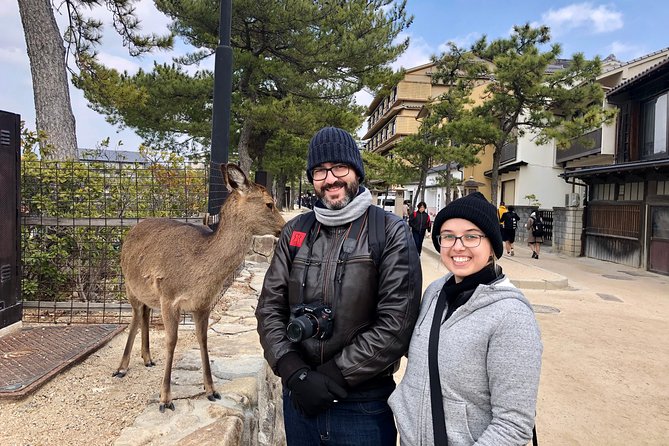
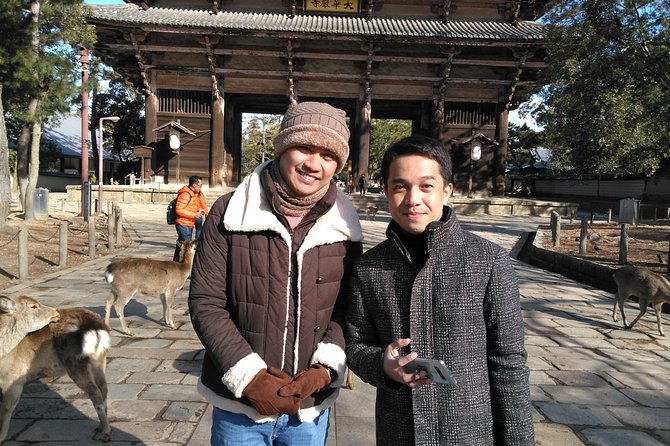
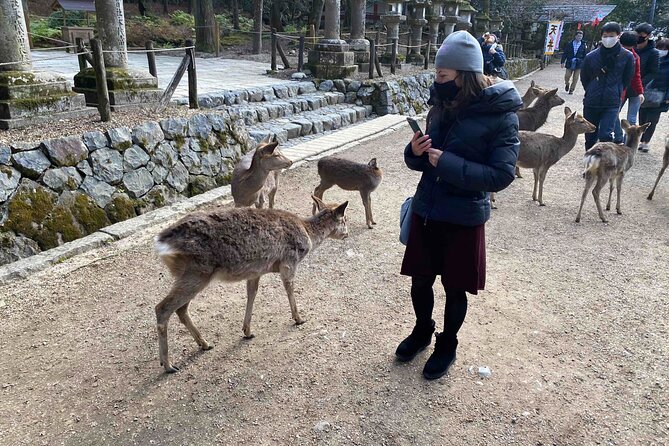
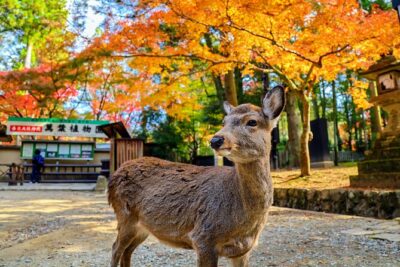
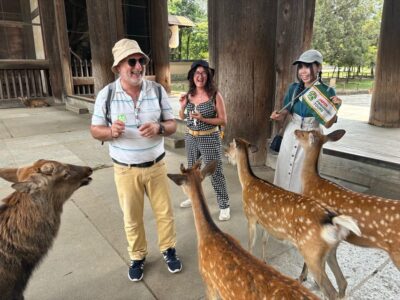
Nara Park is free to enter and contains many of the city’s major attractions. Its deer are the obvious draw, but the park is more than a feeding stop. Paths connect Todaiji, Kasuga Taisha, Kofukuji, and the Nara National Museum, so the park becomes the outdoor thread tying your day together.
The deer are accustomed to people and can be friendly, but they can also be pushy, especially around food. Keep your attention on them when feeding or approaching. Families often enjoy this part most, and one guide even helped a young child learn how to make a deer bow.
The park is beautiful in different weather, but your comfort depends on the season. Past tours have taken place in cold wind, hot weather, and spring conditions. Wear shoes suitable for long walks and bring water. If you have limited stamina, tell your guide early so the route can be adjusted.
A few more Nara experiences worth comparing
- Nara: Private Tour with Private Guide
★ 4.8 · 66 reviews - Private Nara Tour and Sake Tasting (Departing from Kyoto/Nara)
★ 5.0 · 40 reviews - Nara: Private Walking Tour with a Local
★ 4.3 · 36 reviews - Nara: City Highlights Shared Group or Private Bike Tour
★ 4.9 · 34 reviews
Kasuga Taisha and Shinto tradition
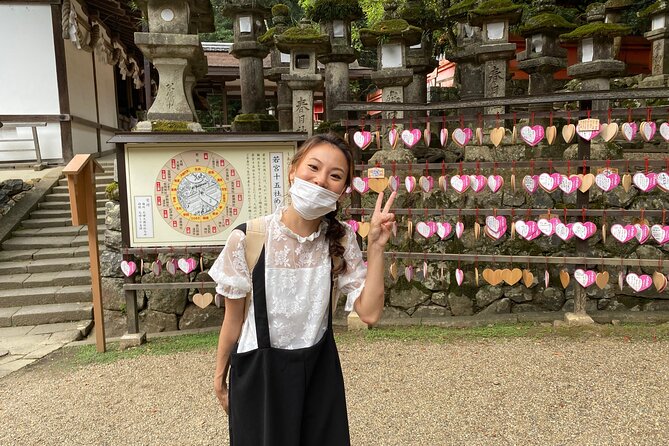
Kasuga Taisha is Nara’s best-known shrine. It was founded when the capital was established and is dedicated to the deity associated with protecting the city. Its approach through the trees, stone lanterns, and rows of hanging bronze lanterns offer a different mood from Todaiji.
This is one of the best places to ask about Shinto. Guides often use Kasuga Taisha to explain the Japanese idea of living alongside nature and the way Shinto practices continue beside Buddhist traditions. That comparison is one of the strongest reasons to hire a guide instead of simply walking from one landmark to the next.
Some areas may require an entrance fee, depending on which section you visit. The shrine grounds and approach can also add more walking than you expect. The route is rewarding, but not ideal if you want a short, flat sightseeing stop.
Wakakusayama Hill and the view
Wakakusayama is the grass-covered hill behind Nara Park, between Todaiji and Kasuga Taisha. At roughly 350 meters, it gives wide views over Nara.
The listing treats this as a 30-minute stop, but you should ask exactly how far you will climb. One past participant specifically advised getting ready for stairs and climbing. You may prefer the hill on a clear day, when the view is the main reward, but it is a poor choice for a group that wants to conserve energy for several temple interiors.
You will pay an entrance fee, and the hill adds physical effort. Pick it for the view and the walk, not as a quick substitute for a temple.
Horyuji, Toshodaiji, and Yakushiji
Horyuji is the major choice for serious history fans. Founded in 607 by Prince Shotoku, it is among Japan’s oldest temples and contains some of the world’s oldest surviving wooden structures. The site lies outside central Nara, so reaching it takes planning and local transport.
One carefully arranged day included Horyuji, Toshodaiji, the Heijo Palace Site, and Todaiji. The guide timed trains, buses, and walking connections so all four could fit. That is a good example of where private planning has real value, but you should discuss this route before the day begins. A distant temple can consume time that might otherwise go to Nara Park.
Toshodaiji was founded in 759 by Ganjin, a Chinese priest invited to Japan to train Buddhist priests and improve religious practice. It offers a useful view of Japan’s close ties with Tang Dynasty China during the Nara Period.
Yakushiji was built in the late seventh century for the recovery of Emperor Tenmu’s sick wife. Its symmetrical layout and main hall make it a strong choice for visitors interested in temple design and Buddhist history. It is also outside the central deer park area, so it belongs in a transport-based itinerary rather than a casual walking loop.
Shin-Yakushiji, founded during the Nara Period for an ailing emperor, is devoted to Yakushi Buddha, the patron of medicine in Japanese Buddhism. It is a more specialized choice, best suited to you if religious history matters more than checking off Nara’s most famous sights.
Naramachi, food, and local character
Naramachi is the former merchant district. Traditional homes and storehouses survive among boutiques, shops, and cafes. This is the part of the tour that can make Nara feel like a living town rather than an open-air museum.
The area works well after a morning of temples. You can ask your guide to point out how merchant houses were arranged, then use the streets for a meal or a short break. Food is not included, but several guides have chosen simple local restaurants, including udon and sushi places.
Some guides have also added interests such as sake tasting, a mochi shop, a katana or knife collection, and a historic merchant house when time and guest requests allowed. These additions are not guaranteed, and they should not replace your chosen sites without agreement. Be clear about your priorities at the start.
Gardens and smaller stops
Isuien Garden is a fine choice if you need a quieter interval. Its design uses borrowed scenery, including Todaiji’s Nandaimon Gate and Mount Wakakusayama. The garden gives you a slower way to see how Japanese landscape design frames distant buildings and hills.
Yoshikien is another central garden, named for the nearby Yoshikigawa River. It occupies the site of a former Kofukuji temple priest’s residence. Both gardens are listed as 15-minute stops, but a garden can feel rushed if you only walk through it while listening to a short explanation.
Kofukuji was the family temple of the Fujiwara clan, one of the most powerful aristocratic families during the Nara and Heian periods. Its location makes it an easy addition to a central Nara route, though some areas require an entrance fee.
The Nara National Museum focuses mainly on Japanese Buddhist art and was established in 1889. It is a good rainy-day or art-focused choice, but museum time changes the tone of the tour. You will spend less time outdoors with the deer and more time studying objects with your guide.
The Heijo Palace Site
Heijo Palace was the center of government when Nara was known as Heijo-kyo. The palace area covered about one kilometer by one kilometer, making this a broad historical site rather than a single compact building.
The stop is listed at 15 minutes, which is enough for orientation but not a full exploration. It works best when your guide uses the site to explain how the ancient capital was laid out and how Nara functioned as Japan’s political center.
Like Horyuji and Toshodaiji, the palace site makes more sense in a planned route. Do not add it casually at the end of a long walking day unless you are willing to use local transport and accept less time elsewhere.
What the six-hour format really means
Six hours sounds generous, but Nara’s distances and site choices matter. A central route can involve long walks between temple gates, shrine paths, deer areas, gardens, and old streets. An outer route adds buses or trains, with fares paid by you.
Tell your guide three things before setting out:
- The sites you care about most
- Your preferred walking pace
- How much time you want for lunch, shopping, gardens, or photographs
This prevents the main weakness that can affect a flexible private tour: too many changes during the day. One past experience felt hurried because the route included an unplanned stop, a bus connection, and a long final walk. The lesson is practical. Flexibility works best when both sides agree before the clock starts.
A private guide can also make the day easier for families. Guides have adapted plans for teenagers, young children, and mixed interests. They have helped with directions from Kyoto to Nara, explained local transport, and answered practical Japan questions about transit cards, taxi apps, and cash exchange.
Price, extra costs, and value
At $155.86 per person, this is not the cheapest way to see Nara. You also pay for your own admission, meals, transportation, and personal expenses. There is no private vehicle.
The value comes from time saved and understanding gained. A guide can arrange a route around your interests, explain religious customs, make connections between sites, and help you avoid losing an hour to poor transport choices. That matters most when you want Horyuji, Toshodaiji, Yakushiji, or the palace site, rather than only the central park.
For a group of five or six, the private structure may feel worthwhile because everyone follows one plan. For a couple on a tight budget, self-guided Nara is possible, especially if you only want Todaiji, Nara Park, Kasuga Taisha, and Naramachi.
The guide’s entrance fee is covered for sights listed in the supplied site list, but your own admission is not. Budget separately so the tour price does not surprise you.
Who should book this Nara tour
I would choose this experience if you want history explained in clear English, prefer a flexible private day, or have a family with different interests. It is especially useful for first-time visitors who want to understand how Buddhism, Shinto, court culture, and Chinese influence shaped Japan.
History and religion fans should ask for Ken or Junichi if available, based on their described strengths. Families may value Hiro’s ability to adapt to teenagers and Junichi’s easy way with mixed-age groups. Toshi, Rie, Yoshii, and Haru are also experienced licensed guides associated with thoughtful, personal tours. Specific guide requests are worth making, but availability is not guaranteed.
I would skip it if you dislike walking, want a fixed timetable with no route decisions, or plan to see only the central highlights at the lowest possible cost. In that case, a self-guided day with advance research may be enough.
Should you book it?
Book this tour if you want Nara to make sense, not just look beautiful. Choose three or four sites with care, keep the route realistic, and tell your guide how much walking and temple time suits you.
The strongest plan for most first visits is Todaiji, Nara Park, Kasuga Taisha, and Naramachi. Choose Horyuji, Toshodaiji, or the palace site instead if early Japanese history is your main goal. Add Isuien Garden when you want a calm break.
Free cancellation is available up to 24 hours before the start time. After that, the payment is not refunded and late changes are not accepted. Most people can take part, service animals are allowed, and the tour is near public transportation, but remember that pickup is on foot.
FAQ
How long is the Nara private tour?
The tour lasts approximately six hours.
How many sites can I choose?
You can select three or four sites from the prepared list of Nara highlights.
Where does the tour begin?
You meet the licensed guide at Nara Station or on foot within the designated Nara meeting area.
Is transportation included?
No. The tour does not include a private vehicle, and transportation fees are your responsibility.
Are entrance fees included?
No. Your entrance fees are not included. The guide’s entrance fees are covered only for sights listed in the tour details.
Is this a private group tour?
Yes. Only your own group participates, and separate tour groups cannot be combined.
Can I cancel for a full refund?
Yes, if you cancel at least 24 hours before the experience start time. Cancellations or changes made less than 24 hours in advance are not accepted for a refund.
Recently added around Nara
- Nara Private Customizable Half Day Tour★ 5.0 · 3 reviews
- Nara: Essential Private Tour with Deer Park and Temples★ 5.0 · 3 reviews
- Full Day Nara Deer, Temple, Shrine, Activities & Tea Ceremony★ 5.0 · 3 reviews
- Discover the Essence of Nara Ink Through Your Senses★ 5.0 · 3 reviews
- Private Journey in Nara’s Historical Wonder★ 5.0 · 3 reviews
- Nara:Private Tea Ceremony(Max 5 ppl) -Master Matcha Making-★ 5.0 · 3 reviews
- Nara Takayama Tea Whisk Craft and Tea Culture Experience★ 5.0 · 3 reviews
- Nara: Half-Day Private Tour of 4 Must-See Spots & Deer Park★ 5.0 · 3 reviews
Nara Day Trips, compared.
World Heritage Kyoto & Nara Uji Authentic Matcha Experience
Read our review →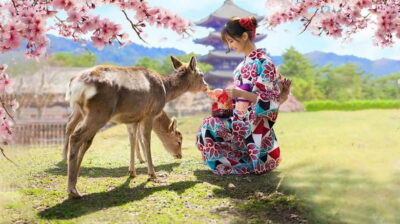
Kyoto/Osaka: Nara, Fushimi Inari Taisha, Arashiyama Bus Tour
Read our review →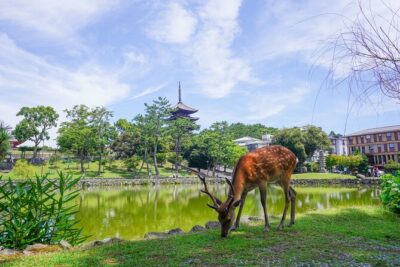
Nara Half Day Trip Walking Tour (Private Option Available)
Read our review →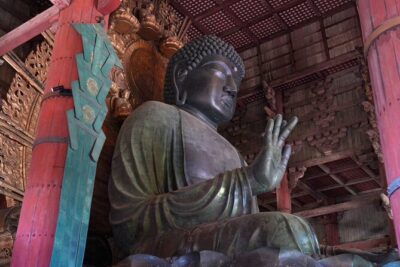
Nara Early Morning Tour (Kyoto or Osaka Departure Available)
Read our review →
Kyoto/Osaka: Kinkakuji, Bamboo Forest, and Nara Deer Park
Read our review →Browse the lists this tour appears in