
REVIEW · NARA DAY TRIPS
Perfect Nara Park Half-Day Bus Tour with English Speaking Guide
Nara’s biggest sights are packed into one well-planned half-day: the Great Buddha at Todaiji, the lantern-lined Kasuga Taisha Shrine, and the high view from Mt. Wakakusa. The tour also gives you deer crackers, a deer fortune, temple admission, and local bus travel, so you can focus on the experience rather than sorting out each ticket.
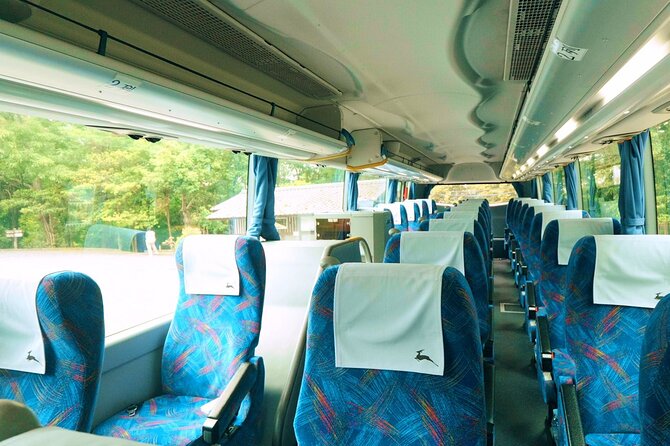
I like the small maximum group of 25 and the air-conditioned vehicle, especially when Nara’s paths and roads are busy. I also like having an English-speaking guide who can explain how to pray at the shrines, answer questions, take photos, and connect the sights instead of leaving you to read signs on your own.
The main tradeoff is time. Four hours moves quickly, and each stop has a fixed schedule. If you want long, quiet hours around the deer or a slow visit through every corner of Nara Park, an independent day may suit you better.
In This Review
- Key points at a glance
- Why this four-hour Nara tour works
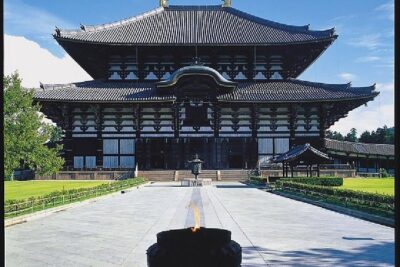
- Todaiji, from Nandaimon Gate to the Great Buddha
- Kasuga Taisha and the deer fortune
- The Nara Okuyama Driveway through the forest
- Mt. Wakakusa and the view over Nara
- Feeding the deer in Nara Park
- What the bus pass adds to the deal
- Timing, meeting instructions, and drop-off choices
- Who should book this Nara outing?
- Should you book the Perfect Nara Park Half-Day Bus Tour?
- FAQ
- How long does the tour last?
- What sites are included?
- Is admission included?
- Is lunch included?
- Is the tour conducted in English?
- Where does the tour finish?
- What happens if bad weather cancels the tour?
Key points at a glance
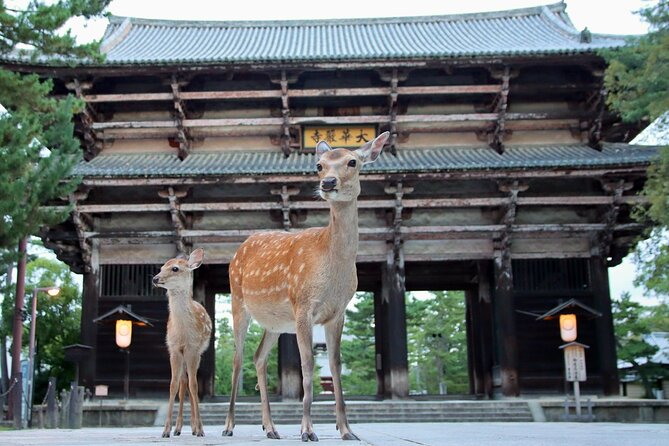
- Todaiji’s Great Buddha Hall: Visit Nandaimon Gate and one of Japan’s most famous Buddhist temple halls, with admission included.
- Kasuga Taisha visit: Enter the main shrine, learn the correct way to pray, and draw an English-language deer fortune.
- Mt. Wakakusa viewpoint: Ride along the Nara Okuyama Driveway and reach a summit with broad views over Nara city.
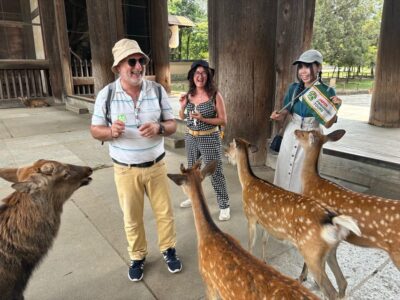
- Deer crackers included: Feed the famous Nara deer without buying a separate packet.
- Useful transport bonus: The Nara-Yamatoji 2-Day Pass offers unlimited local bus rides in its designated area.
- Simple half-day plan: An air-conditioned vehicle links the major sights, with drop-off near Kofukuji, Kintetsu Nara Station, and JR Nara Station.
Why this four-hour Nara tour works
Nara can look easy on a map. The main sights sit near one another, but the walking adds up, and the best order is not always obvious. This tour handles the movement between Todaiji, Kasuga Taisha, the Okuyama road, and Mt. Wakakusa in an air-conditioned vehicle.
That matters most if Nara is one stop in a packed Japan trip. You get a clear introduction to the city without giving it a full day. The guide also gives the places some shape. Instead of seeing a huge wooden gate, a giant Buddha, and a shrine full of lanterns as separate photo stops, you can ask questions and learn what to do at each site.
The group can include up to 25 people. That is not a private tour, but it is small enough to keep instructions manageable. The guide has to work with a mixed group, so anyone hoping for a quiet, highly personal outing should keep that limit in mind.
At $66.05 per person, the price is fair if you plan to visit the paid sights and want transportation between them. It covers the air-conditioned vehicle, English guide, temple entrance and viewing fees, the deer fortune, deer crackers, local consumption tax, and the two-day bus pass. You are paying for ease and structure as much as for admission.
Lunch is not included. Since the tour lasts about four hours, plan to eat before or after, or carry something suitable for the schedule. The drop-off points make it easy to continue exploring or find a meal in central Nara.
More day trips to Nara:
- World Heritage Kyoto & Nara Uji Authentic Matcha Experience
★ 5.0 · 1,573 reviews - Nara Half Day Trip Walking Tour (Private Option Available)
★ 5.0 · 937 reviews - Nara Early Morning Tour (Kyoto or Osaka Departure Available)
★ 5.0 · 676 reviews
Todaiji, from Nandaimon Gate to the Great Buddha
The first major stop is Todaiji Temple, with about 1 hour and 10 minutes set aside. That is enough time for the principal sights, though not for a slow wander through every part of the temple grounds.
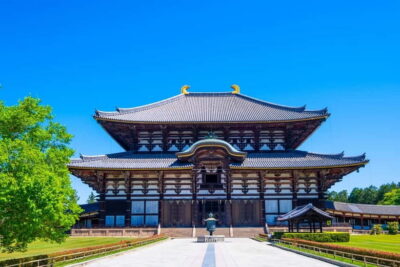
You begin with Nandaimon Gate, a powerful entrance guarded by large wooden figures. The gate prepares you for the scale of the Great Buddha Hall, but the hall itself is the real reason to come. Inside, the Great Buddha gives the visit its famous focal point, and the size of the building makes ordinary human proportions feel pleasantly out of place.
Admission is included, which keeps the group moving. You do not have to stop and work out payment at the entrance while the rest of the party waits. The guide can also explain the basic customs and point out details you might otherwise pass without noticing.
The allotted time requires sensible priorities. Focus on Nandaimon, the Great Buddha Hall, and the guide’s explanation first. If you stop at every souvenir display or take long photo breaks, you may feel rushed near the end.
Todaiji is an especially good first stop for a first visit to Nara. It gives you an immediate sense of the city’s religious importance and introduces the scale of its major monuments. The guide-led format helps if you are traveling with friends who have never been to Japan, since you can learn the setting together rather than trying to compare notes afterward.
Kasuga Taisha and the deer fortune
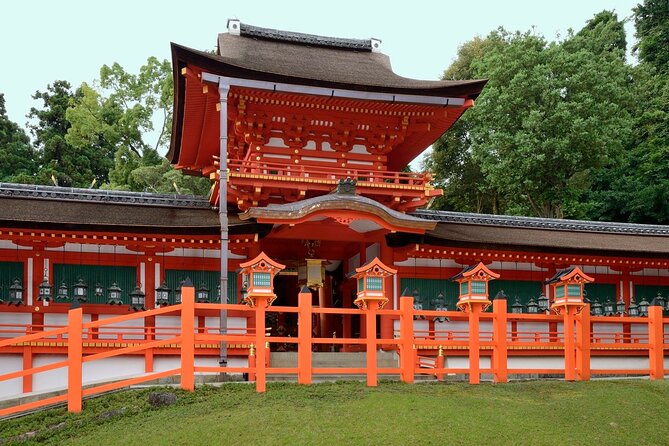
Next comes Kasuga Taisha, with about one hour at the main shrine. This is a different kind of visit from Todaiji. The temple feels monumental, while Kasuga Taisha offers a more ritual-focused experience, with shrine customs and a calmer setting connected to the surrounding forest.
The main shrine is included in the visit, and the guide shows you how to pray. That small lesson is useful. Japanese shrine etiquette can seem easy until you are standing in front of the offering box wondering what comes next. Having someone explain the steps removes that uncertainty and lets you take part respectfully.
You can also draw a deer fortune in English. Deer are closely linked with Nara, so this is more than a random souvenir. It ties the shrine visit to one of the city’s best-known symbols and gives you a small keepsake from the morning.
One hour is a reasonable amount of time for the main shrine, the fortune, and a little photography. It is not enough for a long, unhurried exploration of every approach and side path. If Kasuga Taisha is your favorite kind of place, you may wish you had extra time to linger.
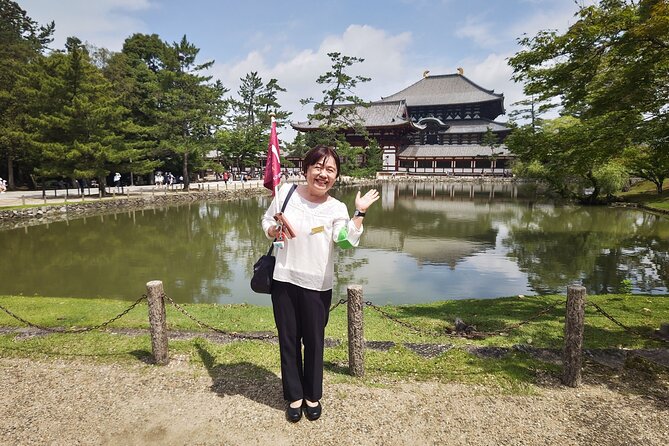
The guide’s role is particularly useful here. This is where the tour’s strongest personal touches appear: explanations of how to pray, help with questions, and assistance taking photos. You still have a schedule to follow, but the visit is not just a quick walk up to the entrance and back.
The Nara Okuyama Driveway through the forest
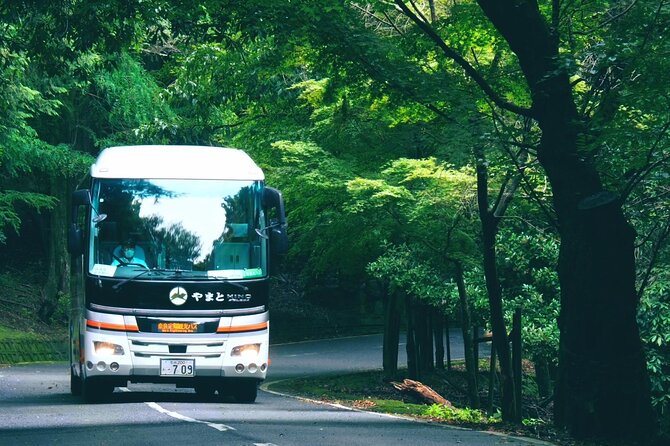
Between the shrine area and Mt. Wakakusa, the bus uses the Nara Okuyama Driveway. It runs through the Kasugayama Primeval Forest, a protected area recognized as a UNESCO World Heritage Site.
The road adds a sense of place that you would miss by treating Nara as a string of buildings. From the vehicle, you can see how the historic sites relate to the wooded hills behind them. Since transportation time is already counted in the four-hour duration, the drive is part of the tour rather than extra time added on.
Road conditions and traffic can affect the exact timing. The route may change if conditions make it unsafe, and the order of the stops can also change. That flexibility is worth accepting for a hill road and a weather-dependent viewpoint.
If you prefer to spend all your time walking among temples and deer, the drive may feel like a pause. I see it differently: it gives your feet a break and links the shrine to the high point of the outing. Just remember that every minute spent on the road comes from the same fixed half-day schedule.
A few more Nara experiences worth comparing
- Nara: Half-Day Private Tour of 4 Must-See Spots & Deer Park
★ 5.0 · 11 reviews - Nara: Half-Day Private Guided Tour
★ 4.6 · 6 reviews - Nara: Half-Day Private Tour of 4 Must-See Spots & Deer Park
★ 5.0 · 3 reviews - Kyoto Arashiyama Bamboo forest & Garden Half-Day Walking Tour
★ 5.0 · 413 reviews
Mt. Wakakusa and the view over Nara
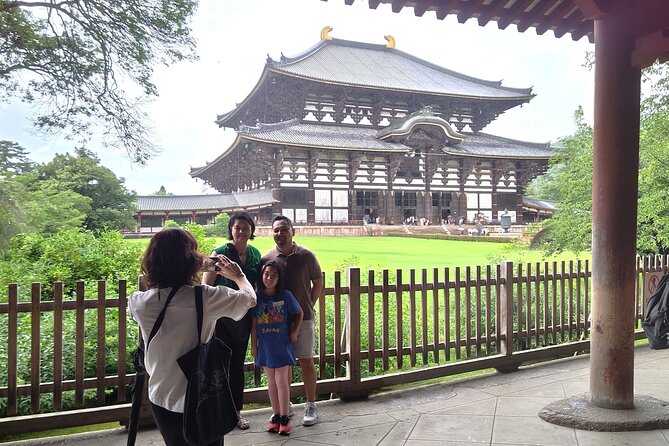
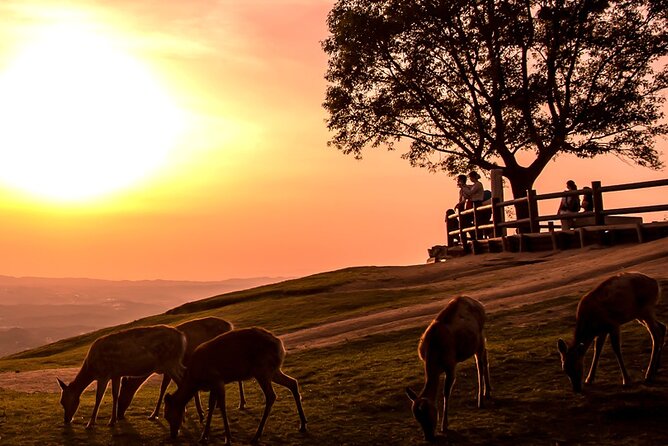
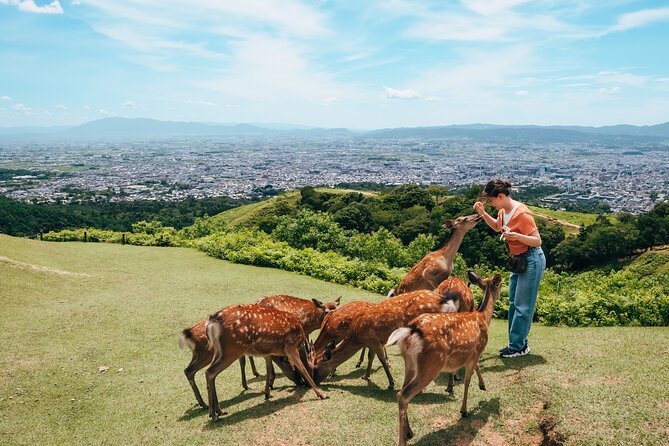
The summit of Mt. Wakakusa is the tour’s change of pace. After the enclosed grandeur of Todaiji and the shrine setting at Kasuga Taisha, you reach a grass-covered mountain with a broad view over Nara city.
About 40 minutes is scheduled here. That is enough to enjoy the panorama, take photos, and get a feel for the setting. It is not a mountain hike or a long nature walk. The tour is designed to bring you to the summit efficiently, then move on.
You should also expect some walking and uneven ground. The activity asks for moderate physical fitness, so it is not the best choice if hills, steps, or standing for extended periods are difficult for you. Wear practical shoes and keep your pace comfortable.
The viewpoint is valuable because it changes your understanding of Nara. From ground level, the city is a collection of famous places. From Mt. Wakakusa, you can see its wider setting, with the historic center below and the hills behind it.
The weather matters here. If conditions are unsafe or the weather prevents the tour from operating, the provider may offer a different date or a full refund. Even on a scheduled day, clouds or rain can reduce the quality of the view, so this part is the least predictable.
Feeding the deer in Nara Park
The deer encounter gives the tour its most playful moment. Deer crackers are included, so you do not need to budget for a separate purchase or wonder which food is suitable.
You feed the deer in Nara Park, an experience that is simple but memorable. The animals are a central part of the city’s identity, and the crackers give you a clear way to interact with them rather than simply photographing them from a distance.
Use a little common sense. Keep the crackers together until you are ready to feed them, and follow the guide’s instructions around the animals. The schedule does not promise a long, free-form session, so think of this as a well-timed encounter within a wider sightseeing tour.
For families, this may be the part children remember most. For adults, it offers a welcome break after the historical explanations and shrine etiquette. It also keeps the tour from becoming too solemn. Nara is a place of grand monuments, but it is also a place where a deer may politely demand your attention.
What the bus pass adds to the deal
The Nara-Yamatoji 2-Day Pass is one of the more useful extras. It allows unlimited rides on local buses within the designated area for two days, giving you transport value beyond the scheduled tour.
The pass does not mean every bus everywhere is covered, so check the designated area before relying on it for other plans. Still, it can help you continue sightseeing after the tour or return to a place you did not have time to explore during the guided visit.
The tour itself already includes transportation in an air-conditioned vehicle. The pass is therefore a bonus rather than a replacement for the day’s bus service. Its value depends on your plans. If you are staying in Nara or expect to make several local bus trips, it can be useful. If you leave immediately after the tour, it may matter less.
You also receive an original handkerchief. It is a small extra, but practical souvenirs are preferable to another disposable trinket.
Timing, meeting instructions, and drop-off choices
You should reach the bus stop 10 minutes early and show your boarding pass. The experience uses a mobile ticket, so keep it ready rather than relying on a last-minute internet connection.
The listed schedule includes arrival at Kofukuji at about 16:20, Kintetsu Nara Station at about 16:25, and JR Nara Station shortly afterward. You can choose to leave at Kofukuji if that suits your plans, rather than staying on to the station drop-off.
That choice is handy if you want to continue around Nara Park on foot. It also gives you a practical way to finish near either of Nara’s main railway stations. Exact arrival times can shift with traffic, and you should allow extra time during busy sightseeing seasons.
The four-hour estimate includes transport time. That point is easy to miss when planning. You are not getting four full hours at the monuments, so set your expectations accordingly. The benefit is a tidy route with less time spent navigating between sites.
Who should book this Nara outing?
I would choose this tour for a first visit to Nara, especially if you have only half a day. It covers the city’s defining sights and adds enough explanation to make the visit more meaningful than a quick photo stop.
It also suits friends or families who want to stay together. One person does not have to handle tickets, maps, bus routes, and shrine customs for everyone else. The guide can answer questions, explain how to pray, help with photos, and keep the group on schedule.
You may prefer independent sightseeing if you want to spend several hours with the deer, explore Kasuga Taisha at a slow pace, or linger inside Todaiji. A fixed itinerary is efficient, but it cannot adapt perfectly to every interest.
The moderate fitness requirement deserves attention. You should be comfortable with walking around temple and shrine grounds and with the climb or access route connected to Mt. Wakakusa. The vehicle reduces some effort, but this is not a no-walking tour.
Children under six can travel free if they do not need a seat. For a young child who needs a seat, confirm the booking conditions before paying. The tour also requires a minimum number of participants and may be suspended when weather or safety conditions are poor.
Should you book the Perfect Nara Park Half-Day Bus Tour?
Book it if you want Nara’s main sights in one organized half-day, with an English-speaking guide and the important entrance fees already covered. At $66.05, the package is strongest for first-time visitors who value a comfortable route, clear explanations, deer crackers, the fortune, and the two-day bus pass.
Skip it if your ideal Nara day means moving slowly, returning to favorite sites, or spending much longer with the deer. The schedule is compact, and the 40-minute Mt. Wakakusa stop plus transportation time leaves limited room for wandering.
For most first-time visitors with a tight Japan itinerary, I think the balance is good. You see Todaiji’s Great Buddha, learn the rituals at Kasuga Taisha, get a city view from Mt. Wakakusa, and finish with a classic deer encounter. Just arrive early, wear comfortable shoes, leave room for weather and traffic, and treat the four hours as a guided introduction rather than a full exploration of Nara.
FAQ
How long does the tour last?
The tour lasts approximately four hours, including transportation time between the sights.
What sites are included?
The tour visits Todaiji Temple, Kasuga Taisha Shrine, the Nara Okuyama Driveway, Mt. Wakakusa, and Nara Park for deer feeding.
Is admission included?
Yes. Temple entrance and viewing fees are included, along with the deer fortune fee and deer crackers.
Is lunch included?
No. Lunch is not included in the tour price.
Is the tour conducted in English?
Yes. An English-speaking guide accompanies the group.
Where does the tour finish?
The scheduled drop-offs include Kofukuji, Kintetsu Nara Station, and JR Nara Station. You can choose to leave at Kofukuji if you prefer.
What happens if bad weather cancels the tour?
If poor weather prevents the tour from operating, you will be offered a different date or a full refund.
Recently added around Nara
- Nara Private Customizable Half Day Tour★ 5.0 · 3 reviews
- Nara: Essential Private Tour with Deer Park and Temples★ 5.0 · 3 reviews
- Full Day Nara Deer, Temple, Shrine, Activities & Tea Ceremony★ 5.0 · 3 reviews
- Discover the Essence of Nara Ink Through Your Senses★ 5.0 · 3 reviews
- Private Journey in Nara’s Historical Wonder★ 5.0 · 3 reviews
- Nara:Private Tea Ceremony(Max 5 ppl) -Master Matcha Making-★ 5.0 · 3 reviews
- Nara Takayama Tea Whisk Craft and Tea Culture Experience★ 5.0 · 3 reviews
- Nara: Half-Day Private Tour of 4 Must-See Spots & Deer Park★ 5.0 · 3 reviews
Nara Day Trips, compared.
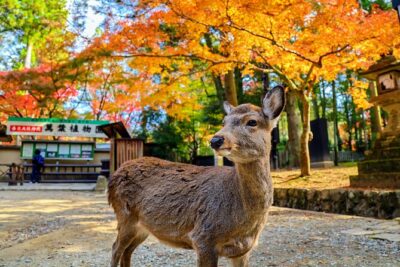
World Heritage Kyoto & Nara Uji Authentic Matcha Experience
Read our review →
Kyoto/Osaka: Nara, Fushimi Inari Taisha, Arashiyama Bus Tour
Read our review →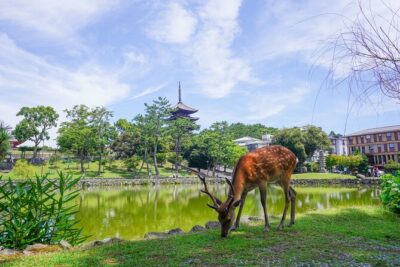
Nara Half Day Trip Walking Tour (Private Option Available)
Read our review →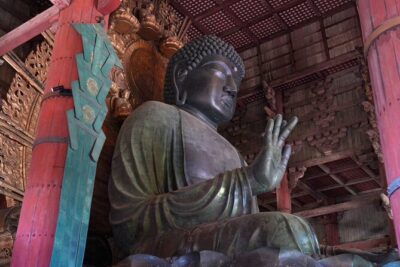
Nara Early Morning Tour (Kyoto or Osaka Departure Available)
Read our review →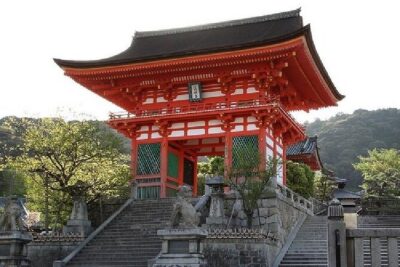
Kyoto/Osaka: Kinkakuji, Bamboo Forest, and Nara Deer Park
Read our review →Browse the lists this tour appears in