
REVIEW · KYOTO TEA CEREMONY EXPERIENCES
Kyoto: Tea Ceremony Meditation – Make Matcha with Tea Master
A quiet 100-year-old Kyoto townhouse is the setting for this hands-on introduction to matcha. You watch an English-speaking tea master prepare the tea, learn why the movements matter, then whisk your own bowl using traditional tools. It is a compact way to meet an important part of Japanese culture without committing to a long, formal ceremony.
I like the small groups of up to 10 and the relaxed teaching style. Hosts such as Miki, Aki, Yoko, Joko, and Kiyoka have been praised for clear English, patience, and welcoming questions. I also like that you work with handcrafted utensils and finish with a traditional sweet, not just a demonstration from a distance.
The main consideration is the short 45-minute length. You get a useful introduction and a chance to make one bowl, but not an in-depth tea-school lesson. Kimono rental, hair setting, hotel transfers, extra food, and parking are not included.
In This Review
- Key points to know before you book
- Entering a 100-year-old Kyoto townhouse
- Watching the tea master’s demonstration
- Making your own bowl of matcha
- Matcha, a Japanese sweet, and a quiet pause
- Why the small group size changes the experience
- What this ceremony teaches about Japanese culture
- Is $45 a fair price in Kyoto?
- Practical advice for a smoother visit
- Who will get the most from this activity?
- Should you book the Kyoto matcha ceremony?
- FAQ
- Where does the matcha ceremony take place?
- How do I find the meeting point from Karasuma-dori Street?
- How long does the experience last?
- How much does the activity cost?
- Is the tea ceremony conducted in English?
- How many people can join the session?
- Is the venue wheelchair accessible?
- Is kimono rental included?
- Can I bring food or drinks?
- Can I bring or park a bicycle at the venue?
- Can I cancel the booking?
- Do I have to pay when I book?
Key points to know before you book
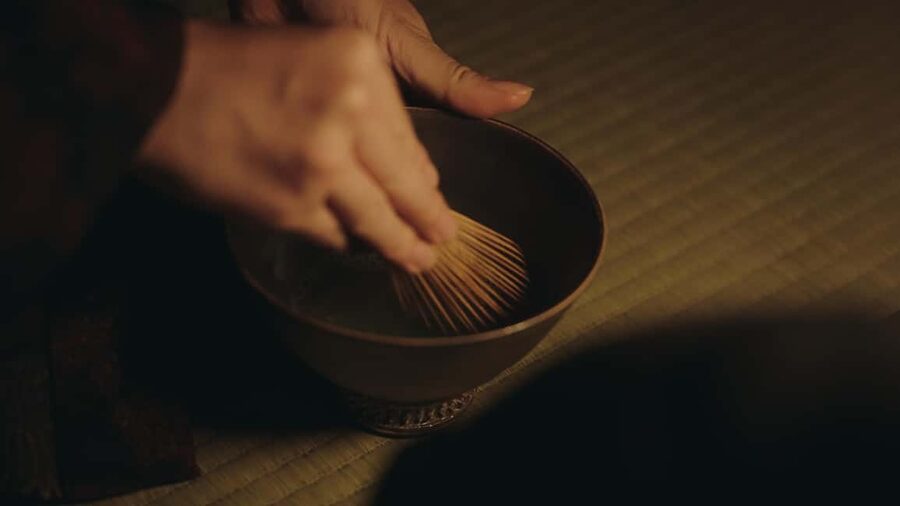
- A genuine townhouse setting: The session takes place in a traditional Kyoto machiya said to be about 100 years old, with tatami and a calm interior.
- Omotesenke instruction: Your host is trained in the Omotesenke tradition, one of Japan’s major schools of tea ceremony.
- You make the matcha yourself: After the demonstration, you prepare your own bowl with guidance from the tea master.
- English conversation is part of the experience: You can ask about tea, etiquette, Japanese customs, and the meaning behind the ritual.
- A good family introduction: Children aged 8 and 10 have been able to take part, and a host was patient with a restless toddler.
- Useful timing and value: At $45 per person for 45 minutes, this is a reasonably priced cultural activity, especially for first-time visitors.
Entering a 100-year-old Kyoto townhouse
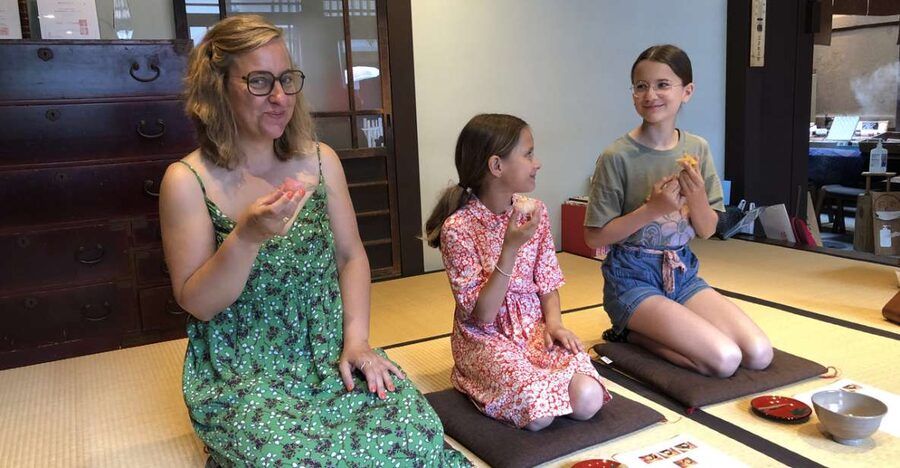
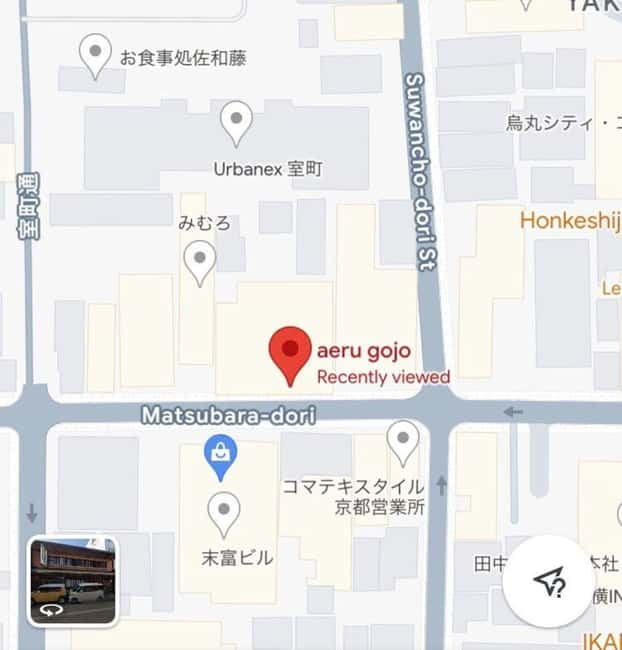
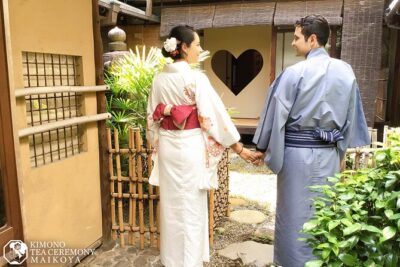
The experience begins at aeru gojo, a traditional townhouse in central Kyoto. If you are coming from Karasuma-dori Street, turn at the corner with the Family Mart convenience store, walk straight for one block, and look for the sign beside Only Corporation and across from Zen Kyoto.
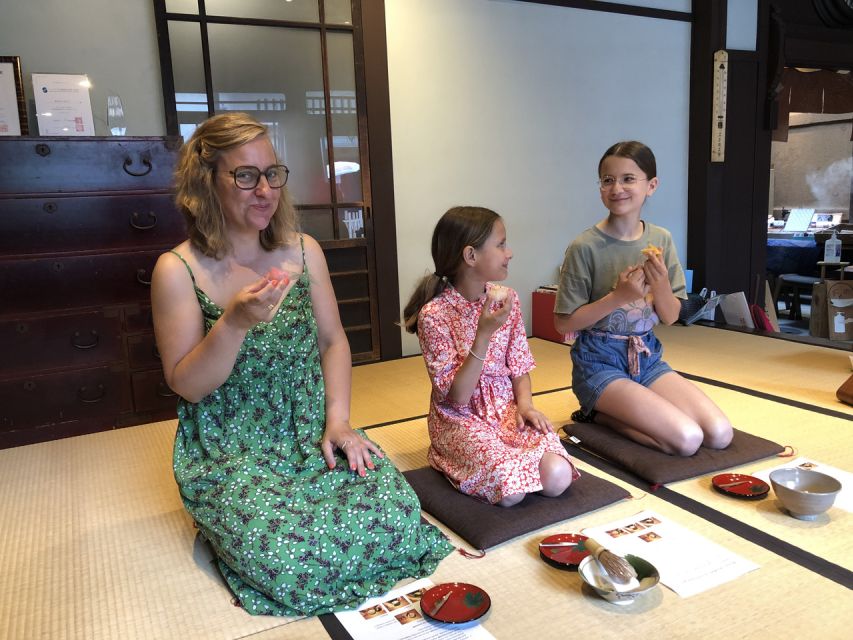
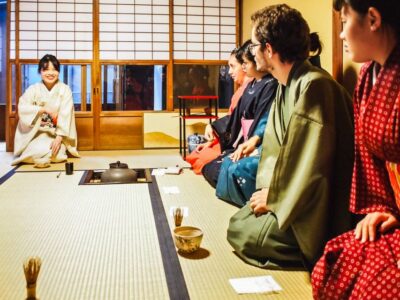
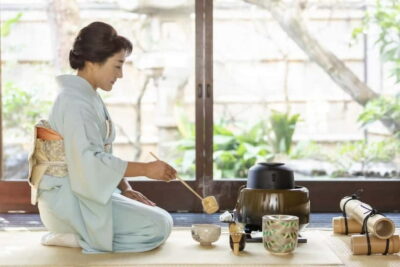
The setting does much of the work. Tatami, quiet rooms, and the scent of the townhouse help you shift gears after a day on Kyoto’s streets. You are not sitting in a large theater or watching a staged performance behind a barrier. The limited space makes the session feel personal, though it also means you should not arrive more than 10 minutes early.
The room is contemporary Japanese in feel while retaining traditional touches. That mix suits this activity well. You receive an introduction to an old practice, but the teaching is designed for international visitors who may know little about tea ceremony etiquette.
The venue is wheelchair accessible. There is no parking lot, so rental-car users should plan around that. Bikes are not allowed inside, and bicycle parking is available at public spaces nearby. If you are cycling around Kyoto, leave extra time to find a legal place for the bike rather than arriving at the last minute.
More tea ceremonies in Kyoto:
- Kyoto: Tea Ceremony in a Traditional Tea House in Kiyomizu
★ 4.9 · 3,519 reviews - Kyoto: Tea Ceremony Ju-An at Jotokuji Temple
★ 4.9 · 3,207 reviews - Kyoto: 45-Minute Tea Ceremony Lesson Experience
★ 4.3 · 2,378 reviews
Watching the tea master’s demonstration
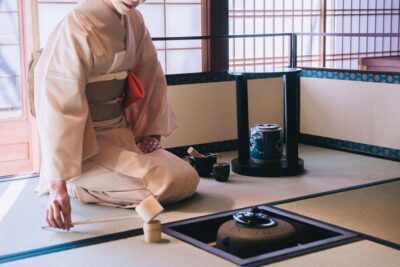
The first main part is a demonstration by an English-speaking tea master trained in the Omotesenke school. The ceremony is not presented as a string of mysterious gestures. Your host explains what is happening and gives you the cultural background needed to understand why the preparation is slow and deliberate.
That explanation is one of the strongest parts of the session. Hosts named in feedback include Miki, Aki, Yoko, Joko, and Kiyoka, and the teaching style is consistently described as patient, friendly, and clear. The exact person leading your session depends on the date, but the activity is conducted in English.
You can ask about matcha, tea ceremony customs, Japanese culture, and the objects used in the room. Several participants especially valued being able to ask questions beyond the basic preparation. That makes a difference. Without context, the ceremony can look like careful choreography. With context, you begin to see the attention given to the guest, the tools, the tea, and the shared moment.
The demonstration is also a chance to simply watch. One participant described the process as almost meditative, and that is a fair expectation. The pace gives you a short break from sightseeing and photography. Please avoid perfume or cologne, since the aroma of the matcha is part of the experience and strong scents can affect the room for everyone.
Making your own bowl of matcha
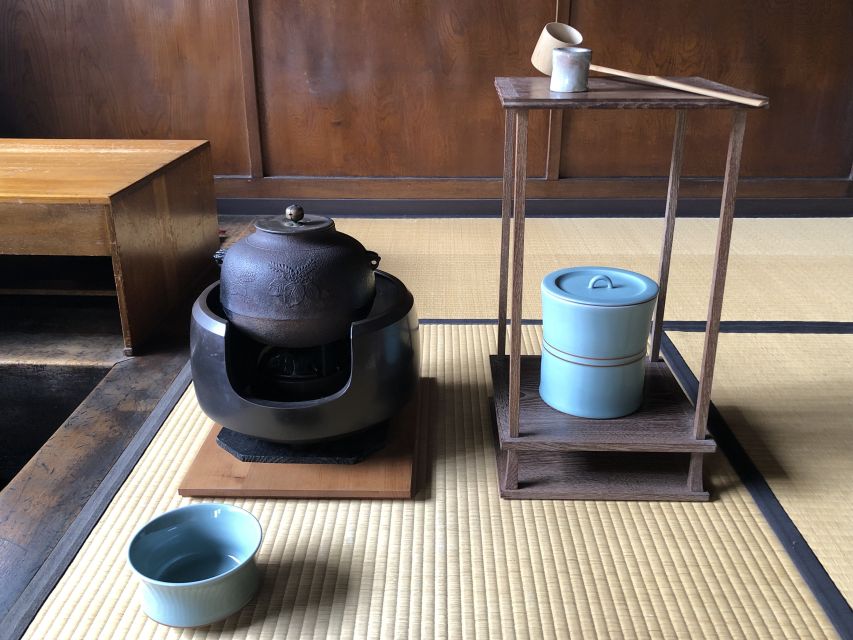
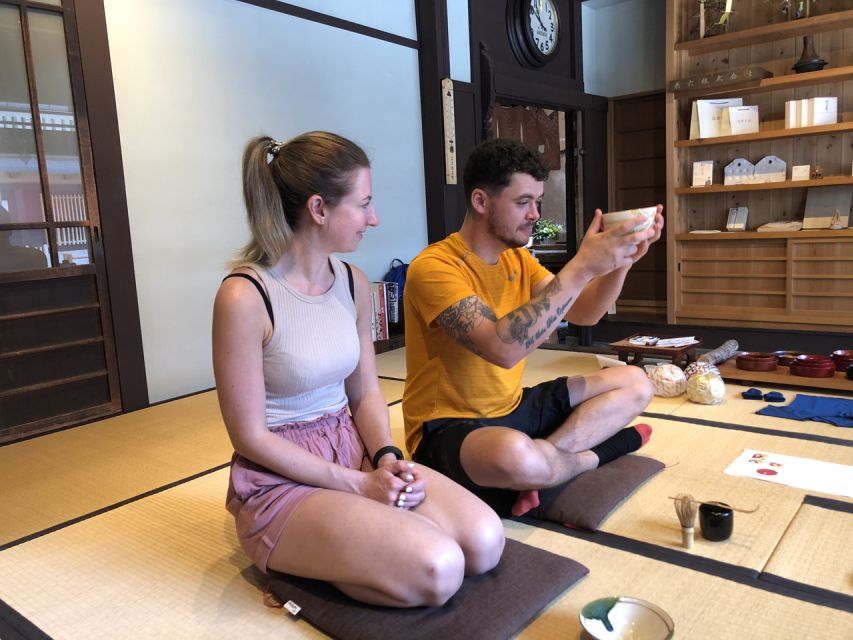
After watching the tea master, you make your own matcha. This is the point where the session becomes more than a cultural talk. You handle the utensils, follow the method shown by your host, and prepare a bowl you can drink yourself.
The instruction is gentle rather than strict. That matters if you have never touched a bamboo whisk or prepared matcha before. You do not need to arrive with any prior knowledge, and the hosts are used to explaining the process to people from many countries.
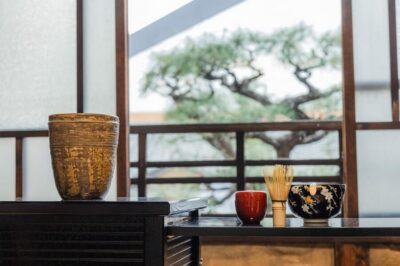
The tools are authentic, handcrafted items made by skilled artisans. You can see and handle the tea bowl and utensils rather than treating them as display pieces. The quality of these objects adds value to the lesson, since the tools are part of the visual and tactile character of tea ceremony.
Your host helps you individually as needed. This was especially useful for beginners who wanted to understand the technique instead of copying movements without knowing what they were doing. The small group format leaves room for corrections, questions, and a little conversation.
You should keep your expectations realistic. You will learn the beginnings of the skill, not become a tea master in 45 minutes. The value is in gaining a feel for the process and leaving with enough understanding to prepare matcha again at home.
Matcha, a Japanese sweet, and a quiet pause
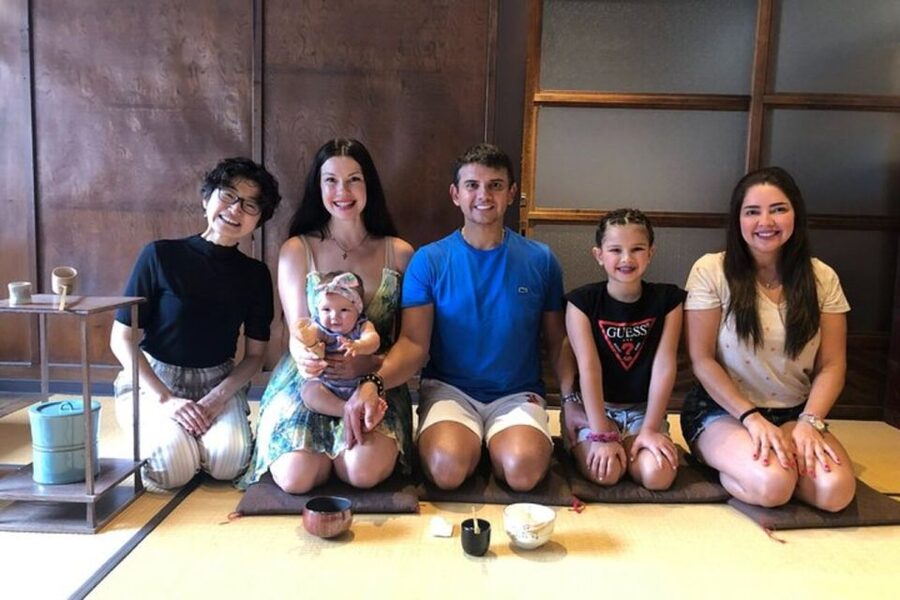
The activity includes one cup of matcha and a traditional Japanese sweet. The sweet is not just a snack on the side. It helps you understand the balance between the tea’s grassy, slightly bitter flavor and the gentle sweetness served with it.
The matcha and dessert have been described as good quality and tasty. Still, this is not a food tour, and the venue is not suited to eating a meal. Food and drinks are not allowed in the space apart from what is provided as part of the ceremony.
You receive one serving, with no free refills included. That small detail is worth knowing if you are expecting a larger tasting session. The focus is the ceremony and your own preparation, not quantity.
I like this ending because it gives the session a clear rhythm. You watch, practice, and then sit with the result. The final cup is a small reward, but the better souvenir is the understanding of why matcha preparation is treated as a ritual rather than a quick kitchen task.
More matcha tastings and workshops:
- World Heritage Kyoto & Nara Uji Authentic Matcha Experience
★ 5.0 · 1,573 reviews - Kyoto: Arashiyama Bamboo Forest, Monkeys, Matcha & Temple Tour
★ 5.0 · 759 reviews - Kyoto: Tea Museum Tickets and Matcha Grinding Experience
★ 4.9 · 739 reviews - Kyoto: Arashiyama Bamboo, Matcha, Monkeys & Temple Tour
★ 4.9 · 291 reviews
Why the small group size changes the experience
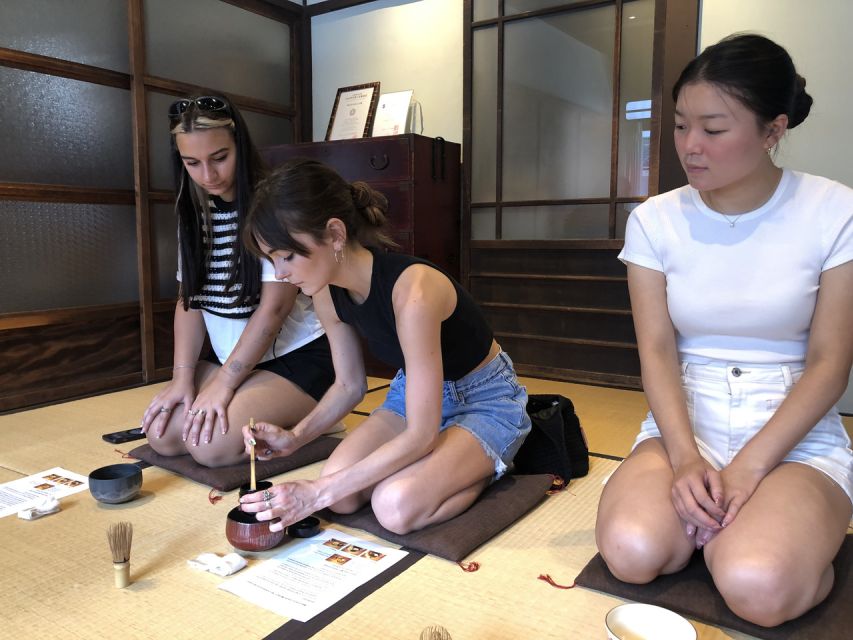
The maximum group size is 10, although some sessions may be smaller. A few participants have found themselves in a group of only two, while other sessions included families and solo visitors. You cannot assume a private lesson, but the format is intimate enough for direct contact with the host.
For me, this is a better fit than a large demonstration if you want to ask questions. You can hear the explanations, see the tools, and get a chance to prepare your own tea without feeling lost in a crowd.
The small group also creates a social side. Solo visitors can meet other people during a calm activity, and families can share a cultural experience that does not require a full day or advanced planning. Hosts have been especially accommodating with children, including an 8-year-old and a 10-year-old, as well as a toddler who needed extra patience.
There is one caution for families. The room is meant to feel peaceful, and one parent felt the activity was best suited to children who can settle into a quiet setting. If your child is eager to touch every object or cannot sit still, the relaxed atmosphere may be hard to maintain. The host may be kind and flexible, but this is still a tea ceremony rather than a children’s play session.
What this ceremony teaches about Japanese culture
A good tea ceremony introduction gives you more than instructions for whisking green tea. It shows how ordinary actions can be given care and structure. The host explains the meaning and etiquette behind the movements, helping you see the ceremony as a form of hospitality.
The Omotesenke connection adds useful context. You are not receiving a generic matcha-making class with a few decorative Japanese touches. You are being introduced to a recognized tea tradition, adapted into a format that international visitors can follow.
The activity also offers a modern view of an old custom. One participant described it as a contemporary perspective on tea ceremony, which is a useful way to think about the format. The session preserves the atmosphere and key ideas of the tradition, but it does not demand the formality or specialist preparation of a longer ceremony.
That balance is important. Some visitors want a strict, highly formal tea gathering with every rule observed. This activity is more accessible. Your host explains the steps, encourages questions, and gives you the chance to practice. You get the core experience without needing to know Japanese language or etiquette first.
Is $45 a fair price in Kyoto?
The price is $45 per person for 45 minutes. That works out to a higher hourly rate than a long museum visit, but the comparison is not quite fair. You are paying for a trained English-speaking instructor, a traditional setting, the use of artisan-made utensils, one bowl of matcha, and a Japanese sweet.
For a first tea ceremony experience, I consider the price reasonable. The hands-on part gives it more value than a performance you only watch, and the small group format makes personal questions possible. The American Express Award recognition for the company’s tea program also signals that the activity is part of a serious culture-focused program, though it should not replace your own judgment about what style of experience you want.
The price is less compelling if you want a full meal, a long ceremony, or a kimono photo session. Kimono rental and hair setting are not included, and there are no hotel transfers. You should also budget time and possibly local transport to reach the townhouse.
The reserve-now-and-pay-later option is useful if your Kyoto plans are still shifting. Free cancellation is available up to 24 hours before the scheduled time for a full refund. Check the starting times when booking, since the 45-minute duration does not mean the activity runs continuously throughout the day.
Practical advice for a smoother visit
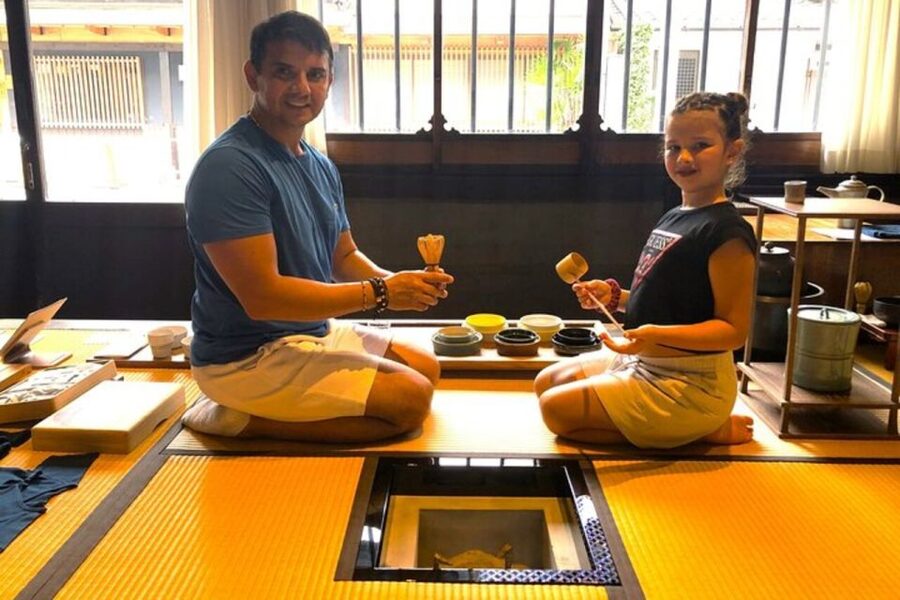
Arrive close to your scheduled time, but no earlier than 10 minutes before. The townhouse has limited room, and early arrival can create a problem for the group already inside.
Wear clothing that lets you sit comfortably in a traditional room. The supplied information does not state a required dress code, but a quiet, respectful approach fits the setting better than noisy clothing or strong fragrance. Leave perfume and cologne at your hotel.
Do not plan to eat before or during the session inside the venue. Food and drinks are not allowed, and the room is not suitable for a meal. Have anything substantial before arriving, then enjoy the matcha and sweet provided.
If you want to buy a physical reminder, allow a few minutes after the ceremony to browse Japanese crafts and utensils available at the venue. Purchases are not part of the $45 price, but the objects can have more meaning after you have learned how they are used.
The meeting point is in central Kyoto, but the directions depend on recognizable nearby businesses. Save the location details before leaving your hotel, especially if your phone connection may be unreliable. There is no venue parking, and bicycles must use public parking spaces.
Who will get the most from this activity?
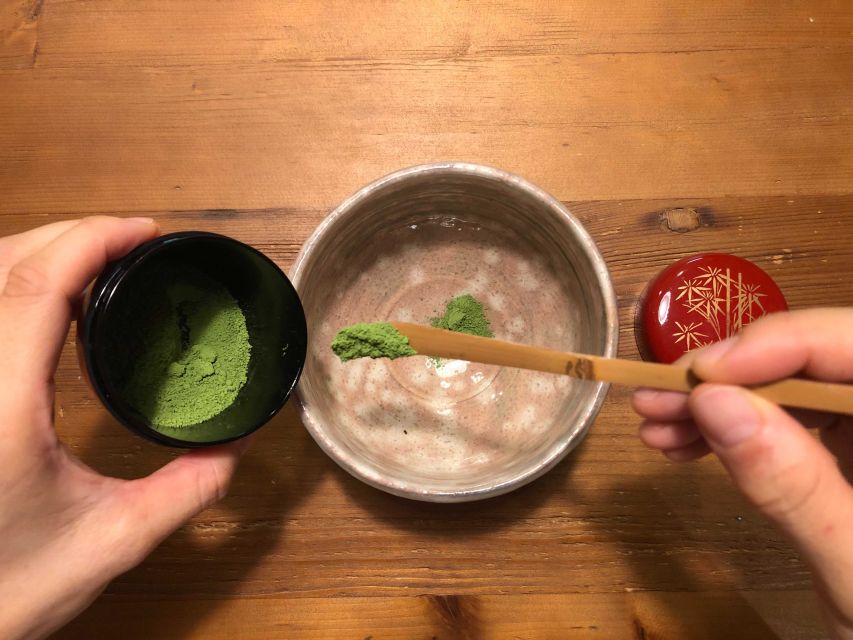
I would choose this for a first visit to Kyoto, especially if you want a cultural activity that fits between temples, shopping, and meals. The 45-minute length is easy to place in a busy day, and the English instruction removes the worry of missing the point.
It also suits solo visitors. The small group offers a natural way to meet others, while the host provides enough personal attention to keep you involved.
Families can consider it, too, particularly with older children who can listen and take part. The experience has worked well for children around eight to ten years old, and the hosts may be patient with younger children. Still, choose it only if your family can respect a quiet room.
You may want something else if your priority is dressing in a kimono, taking staged photographs, drinking several types of tea, or attending a long formal ceremony. Those extras are not included here. This is a focused lesson in matcha preparation and tea culture.
Should you book the Kyoto matcha ceremony?
I would book it if you want a short, hands-on cultural experience with strong English instruction and a traditional setting. The townhouse, artisan utensils, small groups, and chance to make your own tea give the activity substance beyond a quick demonstration.
The best reason to choose it is the teaching. Hosts such as Miki and Aki have been especially warm and patient, and the format leaves room for real questions. The main limit is simple: 45 minutes passes quickly, and one serving of matcha is all that is included.
Book this if you want an approachable introduction to an important Japanese custom. Skip it if you are seeking a full formal ceremony or a kimono package. For most first-time visitors, $45 is a fair price for a calm lesson that adds cultural meaning to your time in Kyoto.
FAQ
Where does the matcha ceremony take place?
It takes place at aeru gojo in a traditional Kyoto townhouse that is about 100 years old. The meeting point is next to Only Corporation and across from Zen Kyoto.
How do I find the meeting point from Karasuma-dori Street?
Turn at the corner with the Family Mart convenience store, walk straight for one block, and look for the aeru gojo sign.
How long does the experience last?
The tea ceremony and matcha-making activity lasts 45 minutes.
How much does the activity cost?
The price is $45 per person.
Is the tea ceremony conducted in English?
Yes. The instructor language is English, and the tea masters explain the ceremony and answer questions in English.
How many people can join the session?
It is a small-group activity with a maximum of 10 participants.
Is the venue wheelchair accessible?
Yes, the activity is listed as wheelchair accessible.
Is kimono rental included?
No. Kimono rental and hair setting are not included.
Can I bring food or drinks?
No. Food and drinks are not allowed, and the venue is not suitable for eating. The included matcha and traditional sweet are provided as part of the activity.
Can I bring or park a bicycle at the venue?
Bikes are not allowed at the venue, and there is no private parking lot. If you arrive by rental bicycle, use the public bicycle parking spaces nearby.
Can I cancel the booking?
Yes. You can cancel up to 24 hours in advance for a full refund.
Do I have to pay when I book?
The reserve-now-and-pay-later option lets you book your place without paying immediately.
More Kyoto Zen Meditation Experiences in Kyoto
- Kyoto Zen Meditation & Garden Tour at a Zen Temple with Lunch
★ 5.0 · 441 reviews - Kyoto: Zen Experience in a Hidden Temple
★ 5.0 · 437 reviews - Kyoto: Zen Meditation at a Private Temple with a Monk
★ 5.0 · 202 reviews - Kyoto: Zen Garden, Zen Mind (Private)
★ 5.0 · 126 reviews
Recently added around Kyoto
- Higashiyama | Kyoto: Sakura Season Private Rickshaw Tour★ 5.0 · 3 reviews
- Kyoto Kimono Rental CHAMATSU|Kimono/Yukata Rental FamilyPlan★ 5.0 · 3 reviews
- Kyoto: Half-Day Private Guided Tour to the Old Town of Gion★ 4.4 · 3 reviews
- Nara Private Customizable Half Day Tour★ 5.0 · 3 reviews
- Kansai Region Hiking Adventure in Nara Kobe Kyoto and More★ 5.0 · 3 reviews
- Full Day Nara Deer, Temple, Shrine, Activities & Tea Ceremony★ 5.0 · 3 reviews
- Nara: Essential Private Tour with Deer Park and Temples★ 5.0 · 3 reviews
- Hiking Tour for Sacred Sites in Kyoto with a Guide★ 5.0 · 3 reviews
Kyoto Tea Ceremony Experiences, compared.
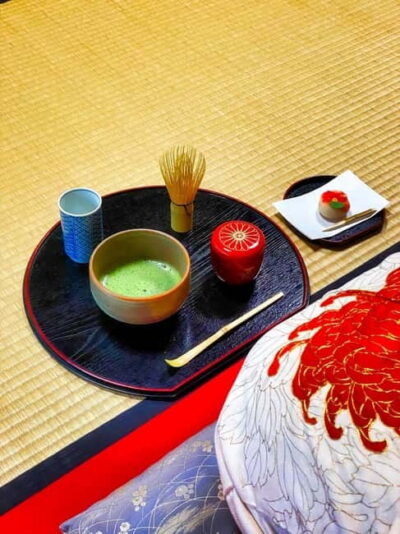
Tea Ceremony in a Traditional Tea House in Kiyomizu
Read our review →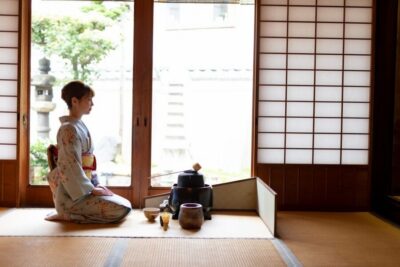
Tea Ceremony in 100-year-old Kyo-Machiya Townhouse
Read our review →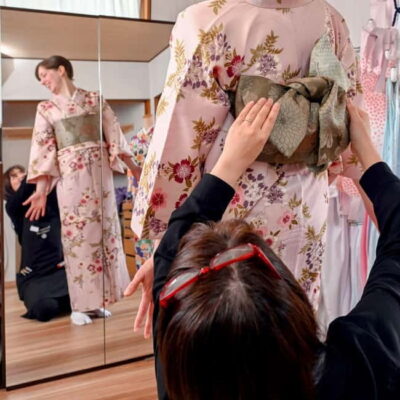
Browse the lists this tour appears in