
REVIEW · KYOTO ZEN MEDITATION EXPERIENCES
Kyoto: Zen Experience in a Hidden Temple
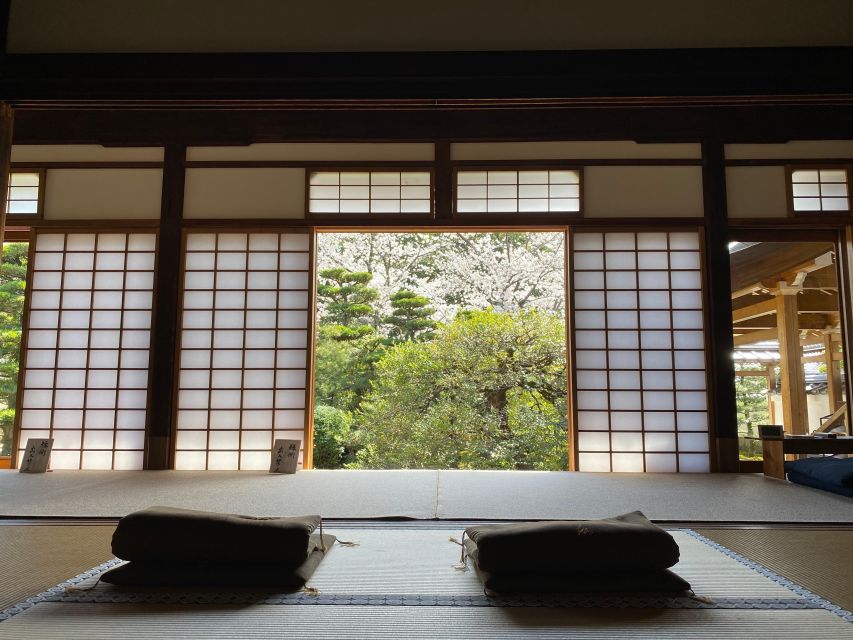
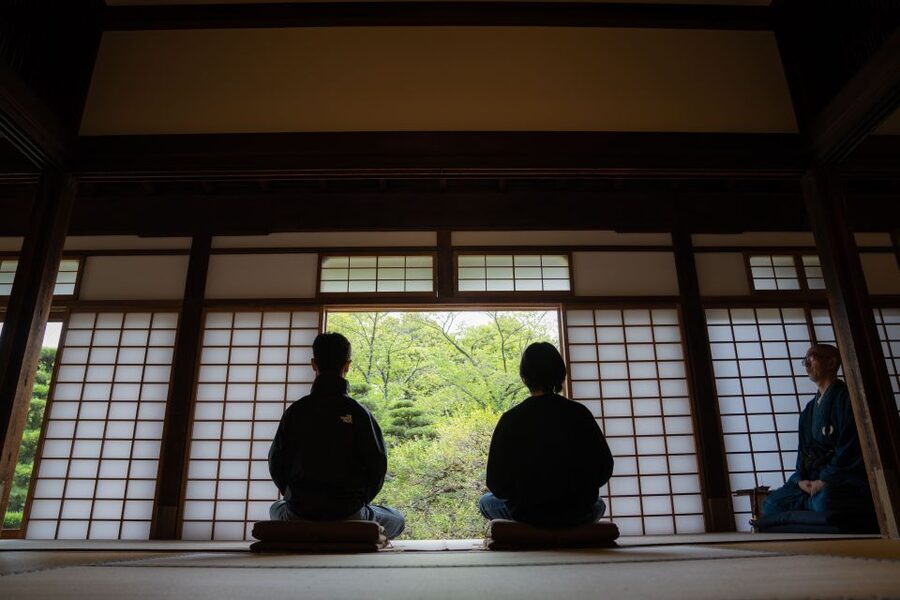
At Jusho-in Temple, the quiet is the main attraction. You sit before a 400-year-old garden and try two 20-minute sessions of zazen meditation with Eitetsu Nishida, the temple’s 16th-generation abbot. He explains Zen in a warm, often humorous way, so beginners do not feel as if they have wandered into an exam they forgot to study for. I especially like the small-group setting and the chance to ask questions directly after meditation.
The second pleasure is the carefully handled matcha and seasonal Japanese sweets, served while you look into the garden. The setting feels far removed from Kyoto’s crowded sightseeing routes. The main consideration is physical comfort: sitting upright for 20 minutes can be hard, rented kimono can make it worse, and the abbot’s English may be difficult for some listeners at times, although an English-speaking guide helps.
In This Review
- Key points to know before you book
- Entering Myoshin-ji and finding Jusho-in
- Two meditation sessions with Eitetsu Nishida
- What Rinzai Zen adds to the lesson
- Matcha, wagashi, and the Zen idea of attention
- A garden that changes without changing
- What the photographer adds
- Is $109 a fair price?
- Who will enjoy this most?
- How to plan the rest of your visit
- Should you book Jusho-in’s Zen experience?
- FAQ
- Where does the experience begin?
- How long does the activity last?
- Is the experience conducted in English?
- Do I need meditation experience?
- How long are the meditation sessions?
- Can I use a chair during meditation?
- Is the temple wheelchair accessible?
- What should I wear?
- Are tea and sweets included?
- Are photographs included?
- What is the cancellation policy?
Key points to know before you book
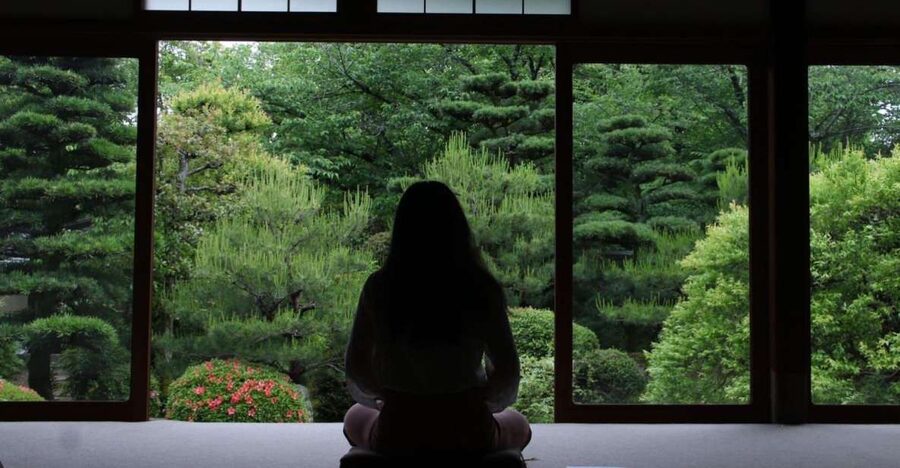
- Two 20-minute zazen sessions: You get real time to practice, with a break for stretching and questions between sessions.
- Led by Abbot Eitetsu Nishida: The 16th-generation priest explains Rinzai Zen and joins you in meditation.
- A garden with four centuries of continuity: Jusho-in’s garden is attributed to painter Eitoku Kano and changes with the seasons.
- Matcha with seasonal wagashi: Tea is not simply a drink here. You learn its etiquette and its link with Zen practice.
- A calm corner of Myoshin-ji: The meeting point is at the north gate of one of Japan’s largest Zen temple complexes.
- Photos included: A photographer takes pictures during the experience and sends the photo data within a few days.
Entering Myoshin-ji and finding Jusho-in
Your meeting point is the north gate of Myoshin-ji Temple, at 18 Taniguchisonomachi. The exact meeting arrangement can vary with the option you book, so check your confirmation carefully rather than assuming you can walk straight into Jusho-in.
From the gate, an English-speaking guide leads you through the Myoshin-ji grounds to Jusho-in. This short walk matters. Jusho-in is not a large public attraction with a big sign and a line out front. It is one of 46 sub-temples within Myoshin-ji, and the walk helps you shift gears from ordinary sightseeing to a quieter kind of visit.
Myoshin-ji was founded in 1337 and is one of Japan’s major Rinzai Zen centers. Jusho-in itself dates from 1599 and has about 420 years of history. The temple complex is large enough to reward extra time before or after your appointment, though this activity itself lasts about two hours and does not include hotel pickup or drop-off.
The guide’s role is useful from the start. You receive help with where to go, what will happen, and how to behave in the temple. Several guides have been singled out for their care, including Ursula, Nicolas, and Joondae, but the assigned guide can change.
More Zen sittings in Kyoto:
- Kyoto Zen Meditation & Garden Tour at a Zen Temple with Lunch
★ 5.0 · 441 reviews - Kyoto: Tea Ceremony Meditation – Make Matcha with Tea Master
★ 4.8 · 406 reviews - Kyoto: Zen Meditation at a Private Temple with a Monk
★ 5.0 · 202 reviews
Two meditation sessions with Eitetsu Nishida
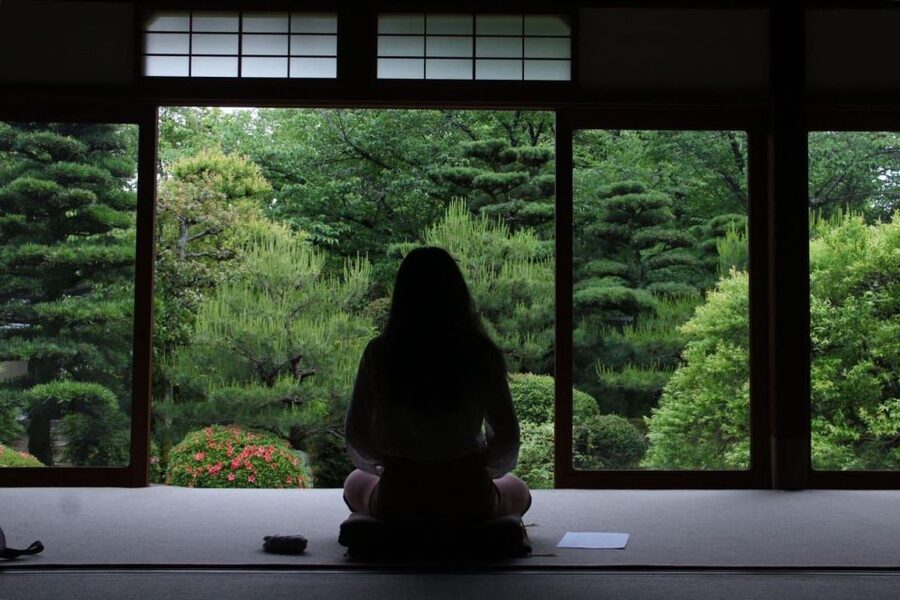
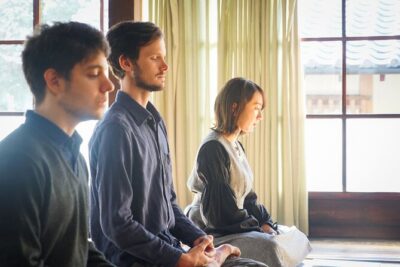
Inside Jusho-in, the central part of the experience is two 20-minute periods of zazen. The priest explains the basics first, including posture and the purpose of sitting meditation. You are not expected to arrive with meditation experience.
Zazen is often described simply as sitting meditation, but the hard part is not finding a peaceful room. It is keeping your attention from chasing every thought that wanders through your head. The experience gives you enough time to notice that for yourself, without turning the session into a test of spiritual talent.
The two-session format is a smart choice. Twenty minutes can feel long for a first attempt, especially if you are unused to sitting upright on the floor. The pause between sessions gives you time to stretch, ask questions, and reset before trying again. You are not pushed into one long block of silence.
Chairs are available if sitting on the floor is uncomfortable. That makes the activity more practical for older participants and anyone with limited flexibility, though the temple is not wheelchair accessible. Wear comfortable clothing. A rented kimono may look lovely in Kyoto, but it can make a cross-legged or upright sitting position awkward.
The doors may be open toward the garden, depending on the conditions. That can add cool air and natural sounds to the meditation, which some people find helpful. On a cold day, blankets may be offered, but you should still dress for comfort. The activity runs rain or shine.
What Rinzai Zen adds to the lesson
Eitetsu Nishida is not simply a ceremonial figure who appears for a quick greeting. He is the chief priest of Jusho-in and the 16th generation of his family to hold that role. Before becoming a monk, he worked as a national public servant for ten years, then completed three and a half years of rigorous training.
That background helps explain the balance of the session. You receive an introduction to Zen and Rinzai Buddhism, but the tone is approachable. Rinzai Zen places strong weight on zazen and direct experience, with sudden insight, or satori, as an important goal. You do not need to accept every religious idea to benefit from learning how this practice is approached.
The priest’s cheerful personality also helps. He is known for his love of animals and for using humor when teaching. That warmth is important because a formal temple setting can feel intimidating to first-time visitors.
One practical note: Eitetsu speaks English, but his strong accent may make some explanations hard to follow. The guide or interpreter helps bridge the gap, and you have time to ask questions. If a point is important to you, ask for clarification rather than quietly guessing.
Matcha, wagashi, and the Zen idea of attention
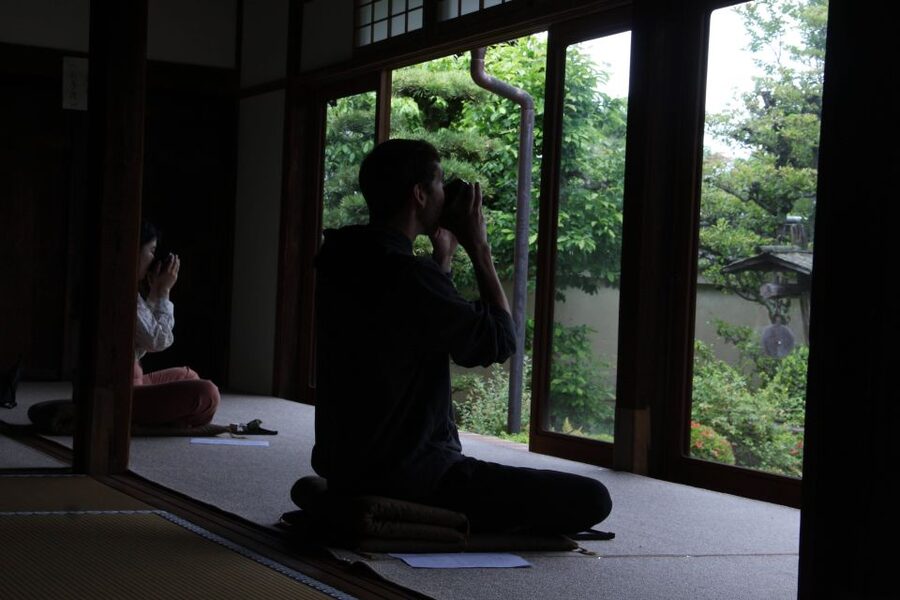
After meditation, the mood shifts from stillness to tea. Eitetsu explains matcha and its history, then a tea specialist prepares and serves powdered green tea with a traditional seasonal sweet, known as wagashi.
The tea portion is more than a snack break. You learn how to receive and drink matcha, and you see how careful movements can turn an ordinary act into a focused one. Zen and tea developed alongside each other in Japan, and both place value on being fully attentive to a simple moment.
The sweets are selected to suit the season and the tea. Their role is not just decoration. The sweetness balances matcha’s firm, grassy taste, and the pairing gives you a small lesson in Japanese food culture. Expect a refined traditional sweet rather than a large dessert.
This section also gives you a chance to talk. The priest, guides, and tea team make time for questions, and the conversation can become one of the most personal parts of the visit. You may discuss meditation, Zen practice, the temple, or everyday life as a monk.
More Kyoto temples worth a morning:
- Kyoto: Tea Ceremony Ju-An at Jotokuji Temple
★ 4.9 · 3,207 reviews - Arashiyama Bamboo, Temple, Monkeys, or Secret Sake Brewery
★ 4.8 · 886 reviews - Kyoto: Arashiyama Bamboo Forest, Monkeys, Matcha & Temple Tour
★ 5.0 · 759 reviews - Kyoto: Ninnaji Temple Entry Ticket
★ 4.2 · 650 reviews
A garden that changes without changing
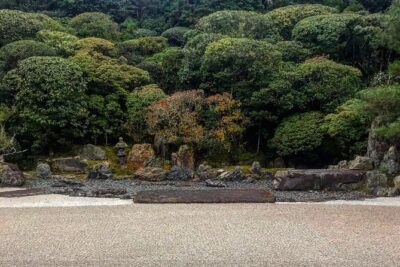
Jusho-in’s garden is attributed to Eitoku Kano, a renowned painter of the 16th century. Its design has remained unchanged since it was created, yet the view never stays quite the same.
In spring, cherry blossoms alter the scene. Summer brings fresh green growth. Autumn brings colored leaves, and winter can place snow over the garden’s restrained forms. Because the garden is viewed from the temple, you are not rushing along a path trying to see every angle. You sit and look.
I find this setting especially useful for visitors who want more than a photograph of a Japanese garden. The meditation gives you a reason to stay with the view for a while. You begin to notice small shifts in light, color, and sound instead of treating the garden as another quick stop.
The garden is also the backdrop for the tea experience and the final photographs. It gives the entire visit a clear sense of place. You are not practicing meditation in a generic studio with Japanese decorations. You are sitting inside a working Zen temple with a long connection to the practice.
What the photographer adds
A photographer using a single-lens reflex camera takes pictures during the activity, with the photo data sent within a few days. This is included in the $109 price.
I like this feature because it lets you put your phone away. You can concentrate on sitting, listening, and drinking tea instead of asking someone to document every stage. The photographs also preserve details that are hard to capture yourself, such as the temple room, the garden, and your group at the end.
Do not expect a full private photo session with unlimited portraits. The information describes a photographer recording moments of the experience and providing the data afterward. If the photographs matter to you, ask the guide about delivery details before you leave.
Is $109 a fair price?
At $109 per person for two hours, this is not a budget temple visit. You are paying more than the cost of simply entering a public site and looking around on your own.
The price makes more sense when you consider what is bundled in. You receive temple entry, an English-speaking guide, instruction from the chief priest, two meditation sessions, matcha and seasonal sweets, and professional photographs. The small-group or private format also offers more personal attention than a large cultural demonstration.
The strongest value is access. You are not only viewing a temple from a marked route. You are given a structured introduction to a living practice, led by the priest of the temple, with explanations in English and time for questions.
I would book it if you want a meaningful cultural activity and are willing to sit still. I would skip it if your priority is covering as many famous sights as possible for the lowest possible cost. The experience is about quality of time, not quantity of attractions.
Who will enjoy this most?
This is a good match for first-time meditators, people who already practice yoga or meditation, and anyone curious about Japanese Buddhism. You do not need a religious background or previous zazen experience.
It also suits couples, families with older children, and parents traveling with adult children. The experience is open to all ages, and one group included children and adults who all took part. Young children who cannot sit quietly for 20 minutes may find it difficult, but the supplied information does not set a minimum age.
I especially recommend it for a quiet morning away from Kyoto’s busiest sightseeing zones. It gives you a break from temples viewed at a fast pace, souvenir streets, and packed routes between major attractions.
The activity may not suit you if you dislike floor seating, though chairs are available. It is also not wheelchair accessible. Avoid alcohol and drugs before the session, and do not bring weapons or sharp objects.
How to plan the rest of your visit
Allow time to find the north gate and arrive ready to walk. Since the temple route and meeting point can vary by booking option, keep your confirmation handy.
After the experience, consider exploring more of Myoshin-ji. The complex contains many small Zen temples, and the grounds offer a fuller sense of the area than the two-hour visit alone. One additional attraction in the main temple is a dragon painted on the ceiling, where photography is not allowed. Entry to that interior area has been noted at 500 yen, but confirm the current fee locally.
The activity ends back near the north gate, at 18 Taniguchisonomachi, unless your booked option specifies another drop-off point. Hotel transportation is not included, so plan your route onward.
Book ahead if your Kyoto dates are fixed. Seating is assigned in reservation order, so early booking may help if you want a particular place in the room. Cancellations made at least 24 hours before the start receive a full refund, and you can reserve now and pay later.
Should you book Jusho-in’s Zen experience?
I would book this experience if you want to understand Kyoto through practice rather than sightseeing alone. The combination of two well-paced meditation sessions, a direct lesson from Eitetsu Nishida, matcha, seasonal wagashi, and the old garden gives the morning a clear shape and purpose.
The main cautions are simple: $109 is a premium price for two hours, floor seating can be tiring, and interpretation may sometimes be needed. If those points work for you, Jusho-in offers one of the more personal ways to meet Kyoto’s Zen culture, with enough quiet to carry the experience beyond the temple gate.
FAQ
Where does the experience begin?
You meet at the north gate of Myoshin-ji Temple, at 18 Taniguchisonomachi. The meeting point may vary depending on the option booked, so check your booking details.
How long does the activity last?
The experience lasts about two hours, including explanations of zazen, meditation, the tea lesson, and time in the garden.
Is the experience conducted in English?
Yes. An English-speaking live guide is provided. Eitetsu Nishida also speaks English, though some people may find his accent difficult to understand at times, so the guide or interpreter can help.
Do I need meditation experience?
No. The activity is open to beginners, and the priest explains the basic points of zazen before the sessions begin.
How long are the meditation sessions?
You take part in two zazen sessions, each lasting 20 minutes, with a break between them for stretching and questions.
Can I use a chair during meditation?
Yes. Chairs are available for anyone who needs assistance during zazen.
Is the temple wheelchair accessible?
No. The experience is not wheelchair accessible.
What should I wear?
There are no special clothing requirements, but comfortable clothing is best. A rented kimono may make it difficult to sit and meditate comfortably.
Are tea and sweets included?
Yes. Matcha and traditional Japanese seasonal sweets are included, along with the tea explanation and experience.
Are photographs included?
Yes. A photographer uses a single-lens reflex camera during the activity, and the photo data is sent within a few days after the experience.
What is the cancellation policy?
You can cancel up to 24 hours before the activity for a full refund. Cancellations made after that time are not refundable.
Recently added around Kyoto
- Higashiyama | Kyoto: Sakura Season Private Rickshaw Tour★ 5.0 · 3 reviews
- Kyoto Kimono Rental CHAMATSU|Kimono/Yukata Rental FamilyPlan★ 5.0 · 3 reviews
- Kyoto: Half-Day Private Guided Tour to the Old Town of Gion★ 4.4 · 3 reviews
- Nara Private Customizable Half Day Tour★ 5.0 · 3 reviews
- Kansai Region Hiking Adventure in Nara Kobe Kyoto and More★ 5.0 · 3 reviews
- Full Day Nara Deer, Temple, Shrine, Activities & Tea Ceremony★ 5.0 · 3 reviews
- Nara: Essential Private Tour with Deer Park and Temples★ 5.0 · 3 reviews
- Hiking Tour for Sacred Sites in Kyoto with a Guide★ 5.0 · 3 reviews
Kyoto Zen Meditation Experiences, compared.
Kyoto Zen Meditation & Garden Tour at a Zen Temple with Lunch
Read our review →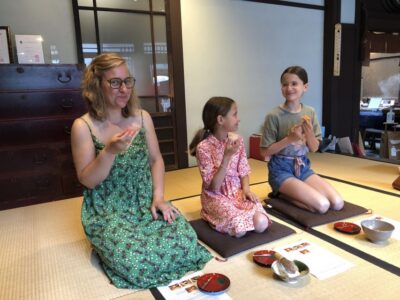
Tea Ceremony Meditation – Make Matcha with Tea Master
Read our review →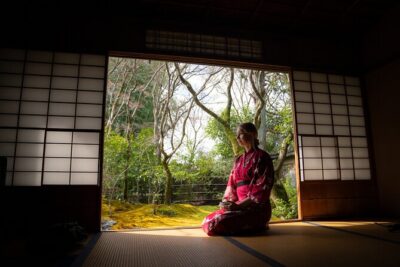
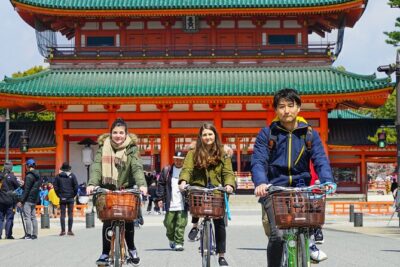
4.5-Hour Kyoto Bike Tour with Lunch and UNESCO Zen Temples
Read our review →
Zen Meditation and Garden Tour at a Temple with Lunch
Read our review →
Arashiyama Guided Tour, Bamboo, Monkey, Zen Temple
Read our review →Browse the lists this tour appears in