
REVIEW · KYOTO TEA CEREMONY EXPERIENCES
Kyoto: Tea Ceremony Experience
Kyoto’s tea ceremony is less about drinking a cup of green tea than noticing every small choice: the bowl, the whisk, the room’s decoration, and the careful movements of the host. In this 45-minute session at a traditional machiya tearoom, you watch a ceremony, taste a seasonal sweet, and make your own bowl of frothy matcha.
I like the clear English instruction and the chance to take part rather than only sit and watch. I also like the setting in Higashiyama, close to Kiyomizu-dera and Gion. The main consideration is comfort: much of the session involves sitting on the floor, though chairs and tables are available if needed.
In This Review
- Key points at a glance
- What this Kyoto tea ceremony actually teaches you
- Finding the machiya in Higashiyama
- The opening lesson: utensils, room design, and etiquette
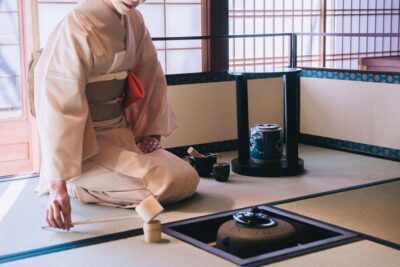
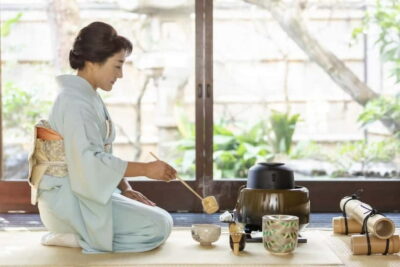
- Watching the ceremony, one measured movement at a time
- Making your own bowl of Kyoto matcha
- Sitting on the floor, comfort, and kimono plans
- Is $32 a fair price?
- The best time to place it in your Kyoto day
- Who will enjoy this most
- Should you book the Camellia Tea Ceremony?
- FAQ
- Where is the Kyoto Tea Ceremony Experience held?
- How long does the tea ceremony experience last?
- What language is the instruction provided in?
- Is matcha included in the price?
- Can I make my own matcha?
- Can I take photographs or record video?
- Is the experience suitable for someone who cannot sit on the floor?
Key points at a glance
- A short, focused introduction: In 45 minutes, you learn about matcha, utensils, room decoration, and the basic order of a tea ceremony.
- You make your own matcha: The host guides you as you whisk a bowl of Kyoto-grown tea and try to create the right foam.
- A seasonal sweet comes first: The sweet balances matcha’s strong, slightly bitter flavor and is part of the ceremony’s rhythm.
- A handy Higashiyama location: The tearoom is down an alley near the Park Hyatt, Studio Ghibli store, Ninenzaka, and major temples.
- English instruction with small-group options: The activity is offered in English, with private or small-group bookings available.
- Plan for floor sitting: The traditional setup may be uncomfortable for some people, but chairs can be arranged and the Garden Teahouse is wheelchair accessible.
What this Kyoto tea ceremony actually teaches you
Many visitors arrive in Kyoto expecting tea ceremony to mean a small cup of matcha and a quick photo. This experience gives you a better sense of what is happening around the tea.
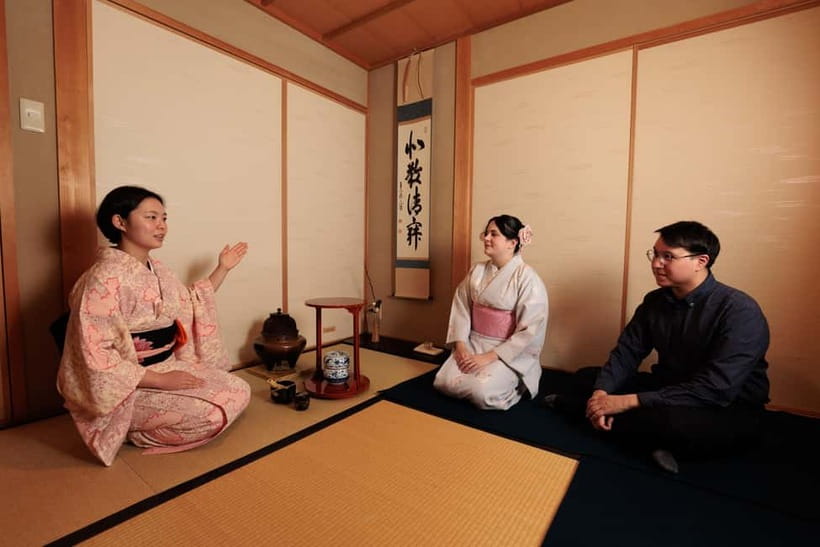
Your host begins with the setting itself. You learn why the room is arranged as it is, how decoration contributes to the mood, and why the utensils matter. This is useful because the ceremony can otherwise look like a series of mysterious, formal gestures. Once you know what to watch for, the movements make more sense.
The lesson also places matcha within Kyoto culture. You hear about the tea’s place in Japanese life and can ask about the three schools of tea ceremony or other customs. The information is kept to a manageable scale for a 45-minute activity. You will not become a tea master in one sitting, but you will leave able to recognize the care and order behind the ritual.
I find that this format works well for first-time visitors. It is cultural without becoming academic, and it gives you enough background to appreciate the demonstration that follows.
More tea ceremonies in Kyoto:
- Kyoto: Tea Ceremony in a Traditional Tea House in Kiyomizu
★ 4.9 · 3,519 reviews - Kyoto: Tea Ceremony Ju-An at Jotokuji Temple
★ 4.9 · 3,207 reviews - Kyoto: 45-Minute Tea Ceremony Lesson Experience
★ 4.3 · 2,378 reviews
Finding the machiya in Higashiyama
The tearoom is in Kyoto’s Higashiyama district, one of the city’s best areas for combining a booked activity with sightseeing. It sits down an alley branching from the main thoroughfare of Ninenzaka.
The easiest landmark is the Park Hyatt hotel. Across from the hotel, look for a Studio Ghibli store. The alley is just to the left of the store. This is not a place to wander toward while glancing at your phone five minutes before the start. The narrow entrance can be easy to miss, so allow a little extra time to locate it.
Once you find the alley, a sign and staff member help direct you inside. The upstairs tearooms have the traditional atmosphere you want for this sort of activity, while the Garden Teahouse provides the wheelchair-accessible option.
The location is especially useful if you are planning a full Higashiyama day. Kiyomizu-dera, Kodai-ji, Yasaka-jinja, Maruyama Park, Chion-in, and Gion are all within easy reach. You can visit Kiyomizu-dera and the Ninenzaka shopping streets before the ceremony, then walk toward Gion afterward. The city center is about 25 minutes away on foot through Gion, or you can connect with buses on Higashi Oji, about 10 minutes from the tearoom.
The opening lesson: utensils, room design, and etiquette
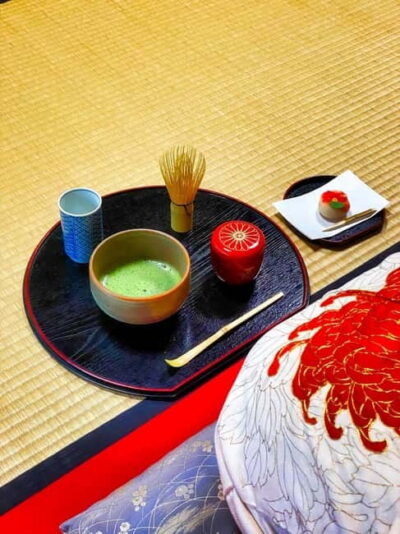
After settling in, the host introduces the basic parts of the ceremony. Expect an explanation of the matcha itself, the utensils used to prepare it, and the sequence of actions.
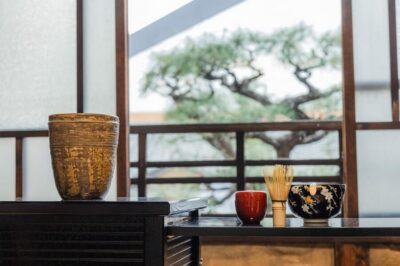
This beginning is one of the strongest parts of the experience because it gives you a viewing guide. You learn to notice the tea bowl, whisk, and other tools instead of treating them as stage props. The room’s decoration also receives attention. In tea ceremony, the space is not random, and small visual details help create the proper frame of mind.
The English instruction is a major practical benefit. Several sessions have been led by friendly English-speaking hosts, and Ikuko is specifically praised for explaining the ceremony clearly and patiently. The tone is informative but not stiff. You can ask questions, which makes the experience feel more like a conversation than a performance.
If you have a particular interest in Japanese culture, use this time well. Ask about the three schools of tea ceremony, how matcha fits into daily life, or why certain gestures are performed. A private booking is the better choice if you need an interpreter, since bringing one to a shared session could interrupt the experience for other people.
Watching the ceremony, one measured movement at a time
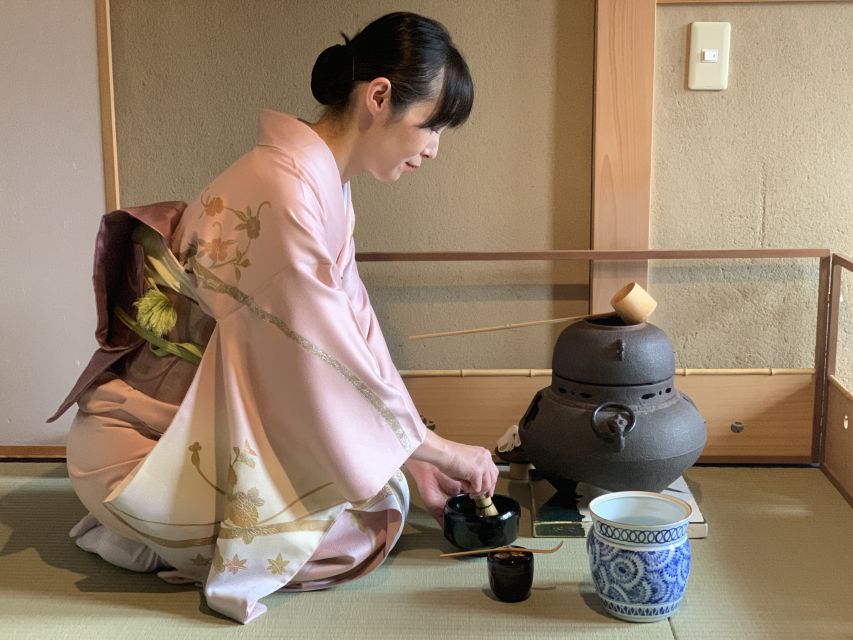
The host then performs the ceremony while you watch. The demonstration lasts about 10 minutes, according to one detailed account, and its quiet pace is part of the appeal.
Do not expect a theatrical show. The pleasure comes from precision, restraint, and the contrast with Kyoto’s crowded streets outside. The host handles each tool with care, and the order of the actions begins to feel purposeful once the opening explanation has prepared you.
You are served a seasonal sweet with the tea. This is not just a snack added to the booking. Its sweetness helps balance matcha’s earthy bitterness, and the pairing gives you a simple way to understand how the tea is meant to be enjoyed.
The mood is calm, but the activity does not demand perfect silence or strict expertise from you. You can talk with the host and ask questions. That informal element helps first-time participants relax, especially if you are worried about using the wrong hand, sitting incorrectly, or missing a point of etiquette.
Still, you should approach the demonstration with patience. If you want a fast, hands-on cooking-style class, this may feel slow. If you like seeing how a traditional practice works and why its details matter, the pace is just right.
A completely different side of Kyoto:
- PERFECT KYOTO 1-Day Bus Tour
★ 5.0 · 13,518 reviews - Kyoto: Fushimi Inari, Kinkakuji, Bamboo Grove 1 Day Bus Tour
★ 4.8 · 4,316 reviews - Kyoto Geisha Walking Tour: Gion District & Hidden Gems
★ 4.7 · 3,273 reviews - Kyoto: Gion Magical Night Walking Tour with Geisha Trivia
★ 4.9 · 2,393 reviews
Making your own bowl of Kyoto matcha
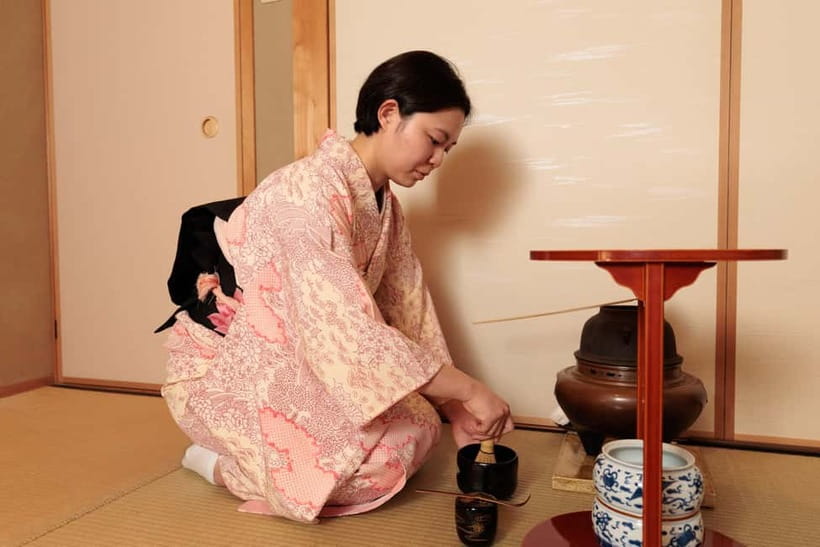
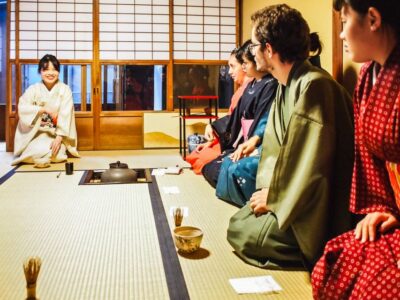
After watching the host, you get to prepare your own matcha. The instructor guides you through the process with the traditional utensils, helping you whisk the tea into a foamy drink.
This is the part that turns a pleasant cultural presentation into a useful experience. You discover quickly that making matcha is not simply a matter of stirring powder into hot water. The whisking motion affects the texture, and the host can correct your technique or help you produce a better foam.
The tea is made with matcha grown in Kyoto, so this is a good place to try it if you have never had matcha before. Expect a concentrated, slightly bitter taste rather than the sweetness of a café matcha latte. The seasonal sweet makes the flavor easier to appreciate.
I would not book this expecting to learn the entire formal ceremony yourself. One four-star assessment makes the useful distinction that you watch the full demonstration and learn the history and basics, but do not master all the complicated ceremonial movements. That is a fair description. The experience teaches you how to prepare and enjoy a bowl of matcha, while the host performs the more formal ritual.
For families and mixed-age groups, the hands-on step also keeps the session engaging. It gives everyone something to do after the quieter demonstration, and the instructor can offer help without making mistakes feel embarrassing.
Sitting on the floor, comfort, and kimono plans
Traditional tearooms often use floor seating, and this experience is no exception. One detailed account notes that sitting on the floor for roughly 40 minutes can be hard on the knees and backside. You do not have to force yourself into a formal kneeling position, though. The staff encourages you to make yourself comfortable.
Chairs and tables are available for anyone who finds floor sitting difficult. If mobility is a serious concern, choose the Garden Teahouse, which is wheelchair accessible. The upstairs tearooms may not suit every participant, so confirm the right venue when booking.
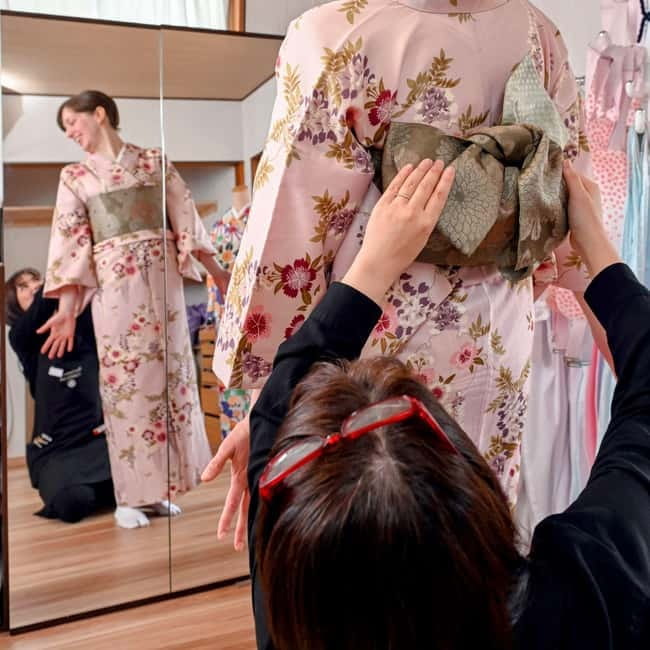
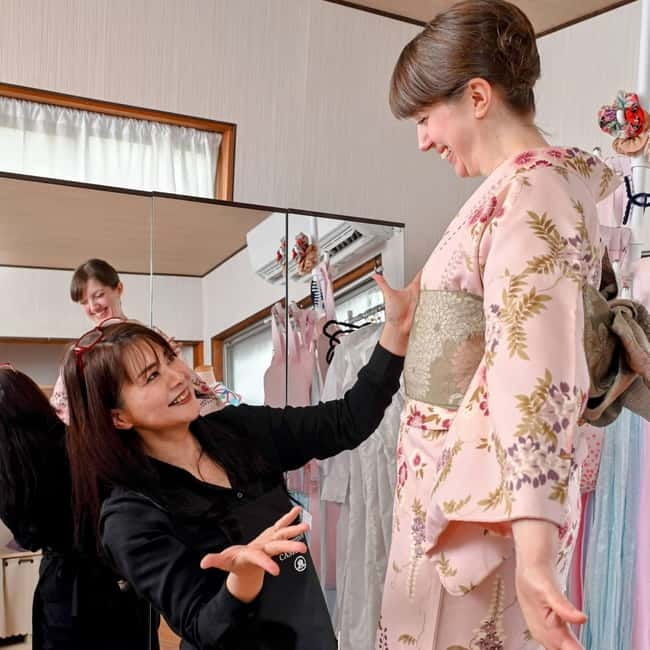
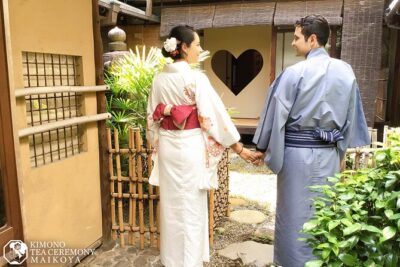
Kimono rental is not part of the $32 price. You can arrange one nearby, and several people pair the clothing rental with the ceremony. If you want photographs in a kimono, handle the rental before arriving rather than assuming you can organize it at the last moment. Staff at the nearby rental shop may also help take photos, which is useful if you are exploring alone.
Video recording is not allowed. Non-flash still photography is permitted during the workshop, so you can take a few respectful pictures, but keep your phone out of the way during the demonstration. Accompanying guides can wait in a waiting room with Wi-Fi and refreshments.
Is $32 a fair price?
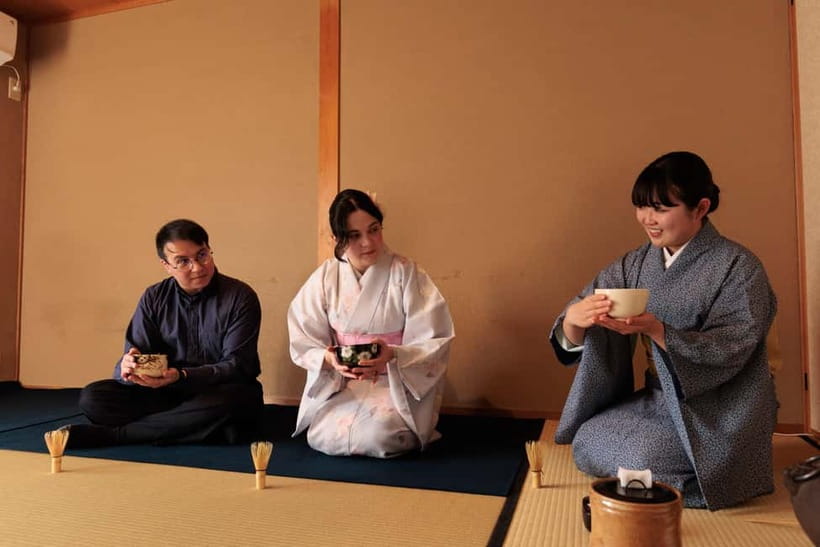
At $32 per person, this is a reasonable price for a short cultural activity in central Kyoto. The fee includes the matcha, seasonal sweets, tea utensils, and a personal instructor or host. You are paying for context and guidance as much as for the drink.
The value is strongest if you are new to Japanese tea ceremony. You receive an explanation, a demonstration, a tasting, and a hands-on lesson in less than an hour. That makes it easy to fit between temple visits without surrendering half a day.
A private booking or small group can make the price feel more worthwhile if you have many questions, are traveling with an interpreter, or want a more personal exchange. A standard shared session is likely enough if you mainly want an introduction and a chance to whisk matcha yourself.
The activity does not include meals, transportation, hotel pickup, or a kimono. Those omissions are not surprising at this price, but they matter when you compare it with longer cultural packages. Think of this as a focused tea lesson, not a full-day Japanese culture program.
The best time to place it in your Kyoto day
Because the tearoom is close to several major sights, I would schedule the ceremony as part of a Higashiyama itinerary. It pairs naturally with Kiyomizu-dera, Kodai-ji, and the lanes around Ninenzaka and Sannenzaka.
You can use the tea ceremony as a quiet pause after sightseeing. The contrast is useful: temples, shops, and steep lanes can make Higashiyama feel busy, while the tearoom gives you 45 minutes of calm and concentration.
If you are walking from central Kyoto, allow about 25 minutes through Gion. Buses operate along Higashi Oji, but the final approach still involves finding the alley near the Park Hyatt and Studio Ghibli store. If you are coming directly from another part of the city, leave enough time for Kyoto’s traffic and for locating the entrance.
The short duration is also helpful on arrival or departure days, as long as your schedule leaves room for the fixed start time. The activity has several starting times depending on availability, and you can cancel up to 24 hours ahead for a full refund.
Who will enjoy this most
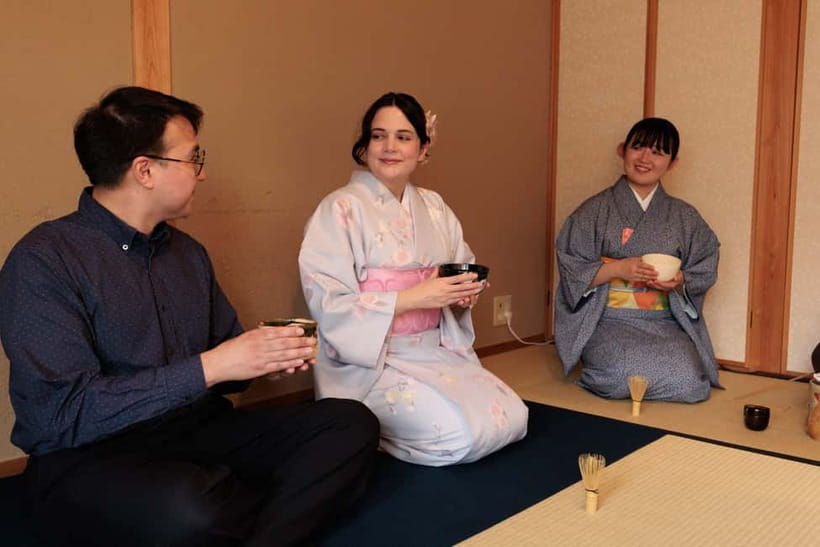
I would recommend this experience to first-time visitors who want a clear introduction to a famous Japanese tradition. It suits couples, families, solo visitors, and small groups, especially if you appreciate thoughtful instruction more than a large-scale attraction.
Tea drinkers will find plenty to enjoy, but you do not need to like strong green tea. The point is learning how matcha is prepared and why it is served with a sweet. Even if the bitterness surprises you, the demonstration and room setting remain worthwhile.
It is also a good choice for anyone interested in Japanese ideas of mindfulness, hospitality, and intentional action. The ceremony offers a compact lesson in paying attention to the present moment and treating a shared cup of tea with care.
I would be more cautious if you need a fully accessible upstairs venue, dislike floor seating, or want to perform every part of a formal tea ceremony yourself. In those cases, request the Garden Teahouse or a private session, and set your expectations correctly.
Should you book the Camellia Tea Ceremony?
Yes, if you want a well-priced, polished introduction to Kyoto tea culture that fits neatly into a sightseeing day. The strongest features are the clear English explanations, the peaceful demonstration, the seasonal sweet, and the chance to whisk your own matcha.
Book a private session if you need an interpreter, are bringing a baby under three, or want more time for questions. Arrange a kimono separately if that is part of your plan, and arrive with a few spare minutes to find the alley.
For $32, you get more than a cup of tea. You get a way to understand why the cup, the room, the movements, and the sweet all belong together.
FAQ
Where is the Kyoto Tea Ceremony Experience held?
It is held at a traditional machiya in Kyoto’s Higashiyama district, down an alley branching from Ninenzaka. The alley is just to the left of the Studio Ghibli store opposite the Park Hyatt hotel.
How long does the tea ceremony experience last?
The experience lasts 45 minutes.
What language is the instruction provided in?
The instructor provides the experience in English.
Is matcha included in the price?
Yes. Matcha, traditional seasonal sweets, tea-making utensils, and a personal instructor or host are included.
Can I make my own matcha?
Yes. After watching the host demonstrate the ceremony, you prepare and whisk your own bowl of matcha with guidance.
Can I take photographs or record video?
Non-flash still photography is permitted, but video recording is not allowed.
Is the experience suitable for someone who cannot sit on the floor?
Chairs and tables are available for people who find floor sitting difficult. The tearooms are upstairs, while the Garden Teahouse is wheelchair accessible. Families bringing a baby or infant under three are asked to book a private ceremony at the Garden Teahouse.
Recently added around Kyoto
- Higashiyama | Kyoto: Sakura Season Private Rickshaw Tour★ 5.0 · 3 reviews
- Kyoto Kimono Rental CHAMATSU|Kimono/Yukata Rental FamilyPlan★ 5.0 · 3 reviews
- Kyoto: Half-Day Private Guided Tour to the Old Town of Gion★ 4.4 · 3 reviews
- Nara Private Customizable Half Day Tour★ 5.0 · 3 reviews
- Kansai Region Hiking Adventure in Nara Kobe Kyoto and More★ 5.0 · 3 reviews
- Full Day Nara Deer, Temple, Shrine, Activities & Tea Ceremony★ 5.0 · 3 reviews
- Nara: Essential Private Tour with Deer Park and Temples★ 5.0 · 3 reviews
- Hiking Tour for Sacred Sites in Kyoto with a Guide★ 5.0 · 3 reviews
Kyoto Tea Ceremony Experiences, compared.
Tea Ceremony in a Traditional Tea House in Kiyomizu
Read our review →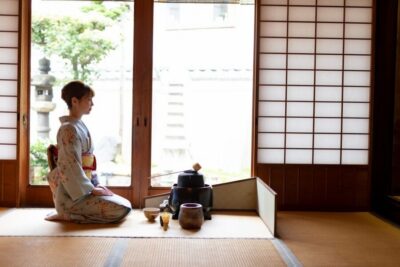
Tea Ceremony in 100-year-old Kyo-Machiya Townhouse
Read our review →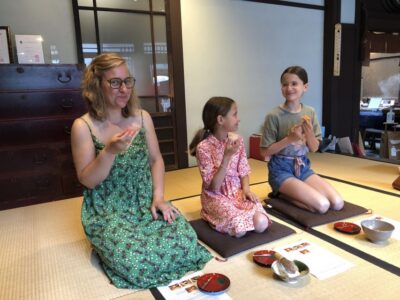
Tea Ceremony Meditation – Make Matcha with Tea Master
Read our review →Browse the lists this tour appears in