
REVIEW · GION GEISHA DISTRICT TOURS
Kiyomizu Temple and Backstreets of Gion, Half Day Group Tour
Kyoto’s best first look may be on foot, and this four-hour route links the city’s big sights with the lanes between them. You’ll climb toward Kiyomizu-dera, pass the old streets of Sannenzaka and Ninenzaka, then finish among Gion’s wooden machiya houses and teahouses.
I like two things here: the small maximum of eight makes it easier to hear your guide, and the route mixes major temples with quieter cultural stops such as Yasaka Koshindo and Kennin-ji. The main drawback is the walking itself, including an uphill approach and crowded lanes, so comfortable shoes are essential.
In This Review
- Key points at a glance
- Why this route works for a first Kyoto afternoon
- Starting at the Kyoto Ceramic Center
- Kiyomizu-dera, Kyoto’s big opening scene
- Sannenzaka and Ninenzaka, Kyoto’s old streets
- A Japanese garden and the Yasaka Pagoda area
- Yasaka Koshindo and its colorful charms
- Yasui-Konpiragu and the meaning of cutting ties
- Kennin-ji, a calm Zen finish to the temple visits
- Walking through Gion and Hanamikoji
- Guide quality and the small-group advantage
- Is $59.45 a fair price?
- Walking, weather, and practical planning
- Who should book this Kyoto walk?
- Should you book it?
- FAQ
- How long is the Kiyomizu Temple and Backstreets of Gion tour?
- What is the tour price?
- How large is the tour group?
- Where does the tour begin?
- Where does the tour end?
- Is admission to Kiyomizu-dera included?
- Is admission to Kennin-ji included?
- Is this a walking tour?
- Does the tour operate in bad weather?
- Can I cancel for a full refund?
Key points at a glance
- A strong four-hour introduction: The route covers Kiyomizu-dera, Higashiyama, Kennin-ji, and Gion without asking you to spend a full day.
- Small-group format: The tour has a maximum of eight people, a useful size in Kyoto’s narrow, busy streets.
- Several guides receive special praise: Mika, Takuma, Mitsuhiko, Toshi, and Kiyoto are noted for warm, flexible guiding.
- More than temple sightseeing: You’ll discuss Buddhism, Shinto, Kyoto culture, relationships, illness, misfortune, and everyday customs.
- A downhill finish: After walking uphill toward Kiyomizu-dera, the route continues through historic streets toward Gion.
- Good value at $59.45: Temple admissions are included where listed, and the guide helps you make sense of several important sites in one outing.
Why this route works for a first Kyoto afternoon
This is not a tour built around one monument. It is a connected walk through eastern Kyoto, where temples, shrines, shops, old homes, gardens, and narrow lanes sit close together.
That matters because Higashiyama can be confusing. Several roads climb toward Kiyomizu-dera, and the most attractive lanes are often crowded. A local guide helps you keep moving in the right direction while explaining why the places matter, rather than leaving you to read a string of signs on your own.
The route begins at the Kyoto Ceramic Center and ends in Gion. That point-to-point design is practical. You do not spend the last part of the tour retracing your steps to the starting place, and you finish in an area with plenty of onward options.
The experience is described as a private, customizable tour, while the booking information also gives a maximum group size of eight. In practical terms, you should expect a small walking group with some room for personal questions and adjustments. Guides have adapted the pace for children, solo visitors, and people with particular interests.
More evenings in Gion:
- Kyoto Geisha Walking Tour: Gion District & Hidden Gems
★ 4.7 · 3,273 reviews - Kyoto: Gion Magical Night Walking Tour with Geisha Trivia
★ 4.9 · 2,393 reviews - Kyoto: Gion Geisha District Walking Tour – Stories of Geisha
★ 4.7 · 2,187 reviews
Starting at the Kyoto Ceramic Center
The meeting point is in front of the Kyoto Ceramic Center, at the official Kyoto Ceramic Art Association shop and gallery. The stop itself lasts about 10 minutes and has no admission charge.
It is a sensible starting place for this part of the city. You meet in the Higashiyama area before heading toward the temples, and the guide can set the context for Kyoto’s traditional arts and local culture. The starting point is near public transportation, though the experience itself is a walking tour rather than a transport-based sightseeing trip.
Give yourself enough time to find the exact entrance. The listed address is 583-1 Yūgyōmaechō in Higashiyama Ward. A mobile ticket is provided, and booking confirmation arrives at the time of booking.
Kiyomizu-dera, Kyoto’s big opening scene
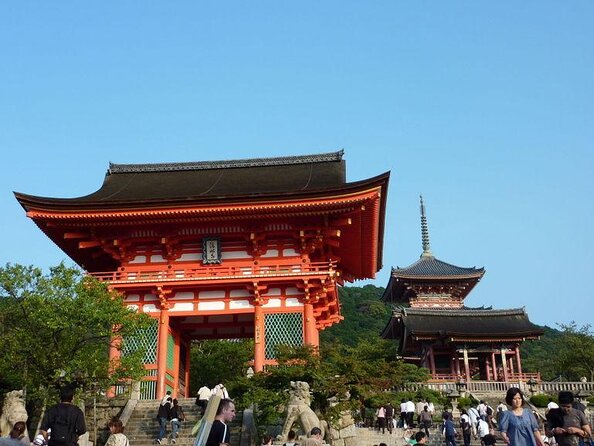
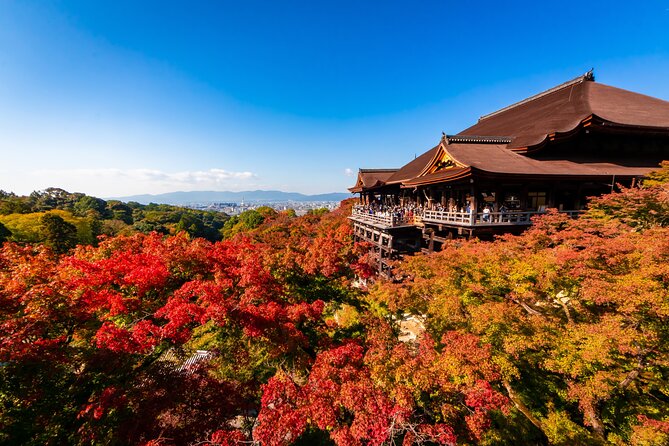
The first major stop is Kiyomizu-dera, with about one hour set aside and admission included. This is the centerpiece of the morning or afternoon, and the guide explains its religious role, cultural importance, and place in Kyoto’s past.
Kiyomizu-dera is a UNESCO World Heritage Site and one of Kyoto’s most visited temples. That brings two sides to the experience. You get one of the city’s essential sights, but you also encounter one of its most crowded areas.
This is where a guide earns the fee. The route toward the temple can be packed, and it is easy to lose time or miss the best order for seeing the area. Toshi was praised for handling the heavy crowds with local skill, while Mika was singled out for leading calmly through busy sites.
The uphill walk is part of the deal. It is not a severe hike, but you will be walking on streets that rise toward the temple, often among other people. Wear shoes with good support, and do not schedule a tight appointment immediately afterward.
The explanations also help you separate religious practice from tourist scenery. You will learn about Japanese Buddhism and the traditions connected with the temple, rather than simply stopping for photographs. Takuma, Mika, Mitsuhiko, and other guides are described as engaging and able to answer questions about Kyoto’s culture and history.
Sannenzaka and Ninenzaka, Kyoto’s old streets
After Kiyomizu-dera, the walk continues through Sannenzaka and Ninenzaka for roughly 30 minutes. These steep, historic lanes lead up toward the temple and are lined with traditional buildings, shops, snack stalls, and places to pause for a look.
The two slopes have names tied to their shape and position. Sannenzaka is the longer and steeper street, while Ninenzaka is a little gentler. The route gives you a chance to see the old Higashiyama atmosphere outside the temple grounds.
This is also one of the least relaxed parts of the walk when visitor numbers are high. You may need to move slowly and stay close to the group. The reward is that a guide can point out details you might otherwise pass without noticing, including older wooden buildings, shopping areas, and local customs.
One guide was also praised for including Japanese snacks along the way. That is not presented as a guaranteed part of every departure, but it shows how the tour can be adjusted around interests and available time.
More visits to Kiyomizu-dera:
- Kyoto: Tea Ceremony in a Traditional Tea House in Kiyomizu
★ 4.9 · 3,519 reviews - Kyoto: Nijo Castle, Kiyomizu & Fushimi Inari Guided Tour
★ 4.7 · 700 reviews - Kyoto: Nijo, Kinkaku-ji, Arashiyama, Kiyomizu & Fushimi Inari
★ 5.0 · 699 reviews - Kyoto Tea Ceremony & Kiyomizu-dera Temple Walking Tour
★ 5.0 · 115 reviews
A Japanese garden and the Yasaka Pagoda area
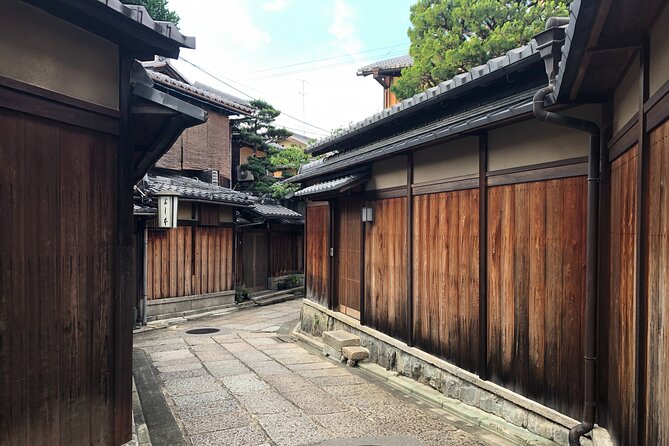
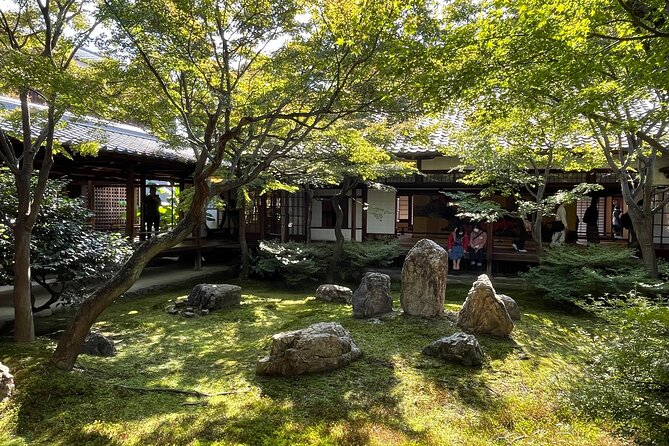
The route also includes a Japanese garden near Kiyomizu-dera, described as a peaceful place with ponds, traditional wooden bridges, and carefully arranged plants. No separate duration or admission detail is given for this stop, so treat it as a shorter part of the walking route rather than a full garden visit.
That change of mood is useful. Kiyomizu-dera and the shopping lanes can feel intense, while a garden offers a quieter pause and a chance to notice Japanese design through water, bridges, plants, and balance.
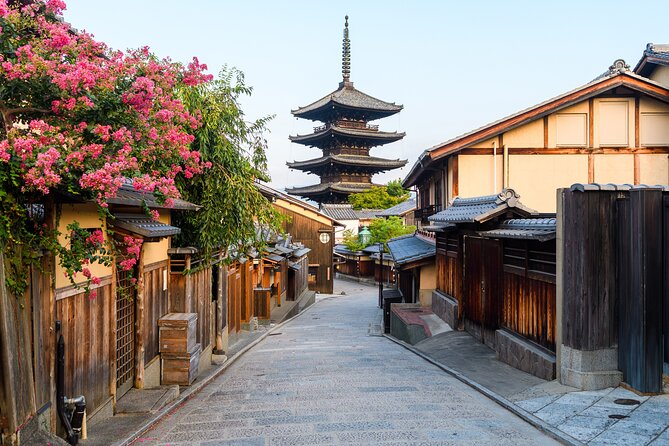
You also pass the Yasaka Pagoda, a five-story landmark closely linked with the surrounding Higashiyama streets. Its shape is one of the familiar views in this part of Kyoto, and it gives the walk a strong visual marker between the temple district and the smaller shrines ahead.
Since the itinerary does not list a separate admission or fixed duration for either the garden or pagoda, your guide may spend more or less time there depending on crowd levels and the group’s pace.
Yasaka Koshindo and its colorful charms
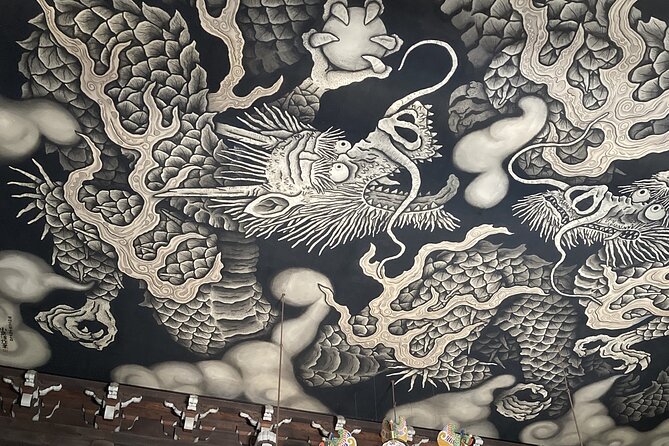
Yasaka Koshindo is a small traditional temple, with about 10 minutes planned. It is dedicated to Koshin, a guardian deity associated with protection from illness and misfortune.
The site is particularly known for its colorful kukurizaru charms. These hanging, rounded charms make the temple easy to recognize and offer a glimpse into the visual side of Japanese folk religion.
This stop is valuable because it is not another grand temple complex. It is compact, specific, and tied to beliefs about daily life. You get a better sense of how religious practice in Kyoto can appear in small neighborhood sites, not only in famous monuments.
Admission is free. Ten minutes is enough for an explanation and a look, but not for a long visit.
Yasui-Konpiragu and the meaning of cutting ties
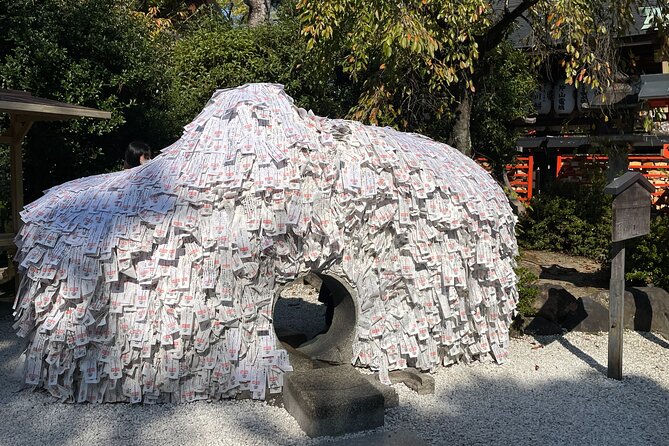
Next comes Yasui-Konpiragu, a Shinto shrine with about 10 minutes allotted. It is known as a place to cut negative relationships and form positive ones.
That idea makes the shrine different from the usual sightseeing stop. People visit with personal hopes involving relationships, change, and leaving harmful patterns behind. Your guide can explain the custom and place it within the wider mix of Shinto practice and everyday Japanese belief.
The shrine is especially popular, so there may be lines for its ritual. The short stop keeps the tour moving, but you should not expect a long period for quiet reflection if the area is crowded.
This is one of the route’s best cultural touches. It gives you a subject to think about beyond architecture and dates, and it shows how a shrine can serve an emotional and practical purpose for people today.
Kennin-ji, a calm Zen finish to the temple visits
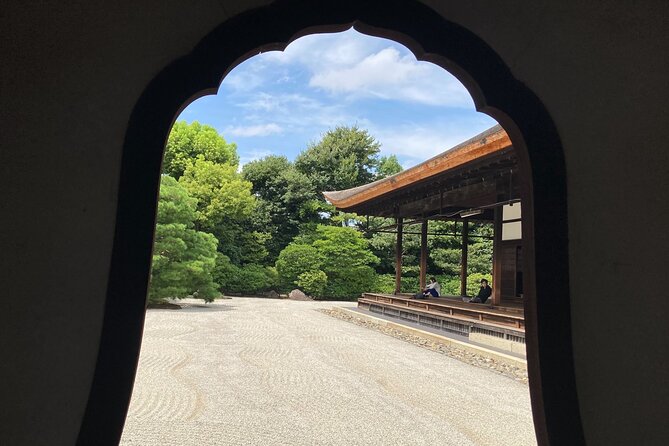
Kennin-ji receives about 50 minutes, with admission included. Founded in 1202, it is described as Kyoto’s oldest Zen temple.
After the crowded approach to Kiyomizu-dera and the busy Higashiyama lanes, Kennin-ji provides a slower setting. Its central location does not prevent the grounds from feeling spacious and calm. The Dharma Hall is one of the main features to look for.
This is where the tour’s focus on Zen Buddhism becomes most useful. The guide can help you understand the temple as a place of practice, not just an attractive collection of rooms and gardens. The quiet setting also gives you time to absorb the earlier explanations.
Takuma was praised for ending a well-organized walk at a fitting place of meditation, and Kennin-ji suits that role. Still, remember that the route has already involved a fair amount of walking. By this point, tired feet may affect how long you want to linger.
Walking through Gion and Hanamikoji
The final portion takes you through Gion, Japan’s largest geisha district, including Hanamikoji. The street is lined with traditional wooden machiya houses, teahouses, shops, and restaurants.
Gion is often treated as a photo backdrop, but a good guide helps you understand the district with proper respect. You are walking through a living neighborhood and working cultural area, not a theme park. Keep your camera manners in mind and follow any guidance about where photography is appropriate.
The tour ends at 571 Gionmachi Minamigawa. This makes the finish convenient if you want to continue exploring Gion on your own, find a meal, or return to your accommodation by public transport.
The ending can run late. The operator asks you to mention any appointment or fixed plan after the tour in advance. That warning is worth taking seriously, since narrow lanes, crowds, questions, and the group’s pace can all affect the final timing.
Guide quality and the small-group advantage
The strongest part of this experience is the human element. Mitsuhiko was praised for good organization, clear information, and a comfortable pace. Mika was described as informative, calm, and fun, especially in crowded areas.
Takuma is noted for warm energy and strong explanations of temple history and cultural meaning. Kiyoto is described as kind, enthusiastic, and willing to shape the walk around personal interests, answer questions about Japan, and offer recommendations.
Those details point to a useful benefit: you are not locked into a one-size-fits-all lecture. The tour can work for a family with children, a solo visitor trying to see Kyoto efficiently, or someone who wants more context about Buddhism, Shinto, food, or local customs.
The group limit of eight is important. In Gion and Higashiyama, a large group would be awkward and easy to lose. A small party lets you hear the guide, ask questions, and adjust the pace more easily.
Is $59.45 a fair price?
At $59.45 per person, the value depends on what you want from Kyoto. If you prefer wandering alone and reading about temples later, you can visit many of these areas independently for less. The tradeoff is time, navigation, and a thinner understanding of what you are seeing.
Here, the price covers about four hours with a guide, admission to Kiyomizu-dera and Kennin-ji where listed, and a route through several major districts and smaller religious sites. You also avoid spending part of your limited Kyoto time figuring out the order of stops.
For a first visit, I consider that a fair price, especially if you are in Kyoto for only a short stay. A solo visitor arriving from Tokyo for a day trip used the tour to cover the main sights in one day, which is exactly the sort of situation where this format makes sense.
It is less compelling if you already know Higashiyama well or want long, unhurried time inside each temple. Four hours is enough for a strong introduction, not a full study of every site.
Walking, weather, and practical planning
The tour takes place rain or shine. Bring suitable clothing for the forecast, since much of the experience is outdoors and the route includes exposed streets and uphill walking.
Comfortable shoes are not optional advice here. You will walk from the Kyoto Ceramic Center through Kiyomizu-dera, the historic slopes, small temples and shrines, Kennin-ji, and Gion. The route has a fair amount of walking, even though it fits into half a day.
Most people can participate, and the route is near public transportation. The start and end points are different, so check both addresses before setting out. The tour starts at the Kyoto Ceramic Center and ends in southern Gion, not back at the beginning.
Free cancellation is available until 24 hours before the start time. Changes or cancellations made later are not accepted for a refund.
Who should book this Kyoto walk?
I would choose this tour if you are visiting Kyoto for the first time, have only half a day, or want help making sense of temples and shrines. It is also a good fit for families, solo visitors, and anyone who prefers a local guide to a map and a phone screen.
The route suits people interested in both major sights and smaller cultural details. Yasaka Koshindo and Yasui-Konpiragu add variety, while Kennin-ji offers a quieter counterpoint to Kiyomizu-dera.
I would think twice if you have limited mobility, dislike hills, or need to arrive somewhere at an exact time. The operator warns of possible delays, and the walk can be crowded and tiring.
Should you book it?
Book this tour if you want a well-planned first pass through Kyoto’s Higashiyama and Gion districts, with clear cultural explanations and a small group. The combination of Kiyomizu-dera, old streets, small shrines, Kennin-ji, and Hanamikoji gives you a lot in four hours.
Skip it if you prefer complete independence or want to spend a full day at only one or two temples. For most first-time visitors, though, the $59.45 price buys useful orientation, included admissions at the main ticketed stops, and the help of guides such as Mika, Takuma, Mitsuhiko, Toshi, or Kiyoto.
FAQ
How long is the Kiyomizu Temple and Backstreets of Gion tour?
The tour lasts approximately four hours.
What is the tour price?
The listed price is $59.45 per person.
How large is the tour group?
The maximum group size is eight people.
Where does the tour begin?
The tour begins in front of the Kyoto Ceramic Center, at 583-1 Yūgyōmaechō in Kyoto’s Higashiyama Ward.
Where does the tour end?
The tour ends at 571 Gionmachi Minamigawa in the Gion area of Kyoto.
Is admission to Kiyomizu-dera included?
Yes. Admission to Kiyomizu-dera is included.
Is admission to Kennin-ji included?
Yes. Admission to Kennin-ji is included.
Is this a walking tour?
Yes. The experience is a walking tour, and comfortable walking shoes are recommended.
Does the tour operate in bad weather?
Yes. The tour takes place rain or shine.
Can I cancel for a full refund?
You can cancel at least 24 hours before the experience start time for a full refund. Cancellations or changes made less than 24 hours before the start time are not accepted.
More Temples in Kyoto
- Kyoto: Tea Ceremony Ju-An at Jotokuji Temple
★ 4.9 · 3,207 reviews - Arashiyama Bamboo, Temple, Monkeys, or Secret Sake Brewery
★ 4.8 · 886 reviews - Kyoto: Arashiyama Bamboo Forest, Monkeys, Matcha & Temple Tour
★ 5.0 · 759 reviews - Kyoto: Ninnaji Temple Entry Ticket
★ 4.2 · 650 reviews
Recently added around Kyoto
- Higashiyama | Kyoto: Sakura Season Private Rickshaw Tour★ 5.0 · 3 reviews
- Kyoto Kimono Rental CHAMATSU|Kimono/Yukata Rental FamilyPlan★ 5.0 · 3 reviews
- Kyoto: Half-Day Private Guided Tour to the Old Town of Gion★ 4.4 · 3 reviews
- Nara Private Customizable Half Day Tour★ 5.0 · 3 reviews
- Nara: Essential Private Tour with Deer Park and Temples★ 5.0 · 3 reviews
- Kansai Region Hiking Adventure in Nara Kobe Kyoto and More★ 5.0 · 3 reviews
- Full Day Nara Deer, Temple, Shrine, Activities & Tea Ceremony★ 5.0 · 3 reviews
- Hiking Tour for Sacred Sites in Kyoto with a Guide★ 5.0 · 3 reviews
Gion Geisha District Tours, compared.

Kyoto Geisha Walking Tour: Gion District & Hidden Gems
Read our review →
Gion Magical Night Walking Tour with Geisha Trivia
Read our review →
Gion Geisha District Walking Tour – Stories of Geisha
Read our review →
Best of Kyoto: Gion, Geisha, Pagodas & Cobblestones
Read our review →

Kyoto Night Foodie Tour in Gion (9+ dishes + 6 Sake tastings)
Read our review →
Kyoto Gion Geisha District Walking Tour – The Stories of Geisha
Read our review →
Kyoto Gion: 2-Hour Geisha Culture & History Walking Tour
Read our review →Browse the lists this tour appears in