
REVIEW · FUSHIMI INARI SHRINE TOURS
Kyoto: Kiyomizu-dera, Fushimi Inari & Gion Geisha District
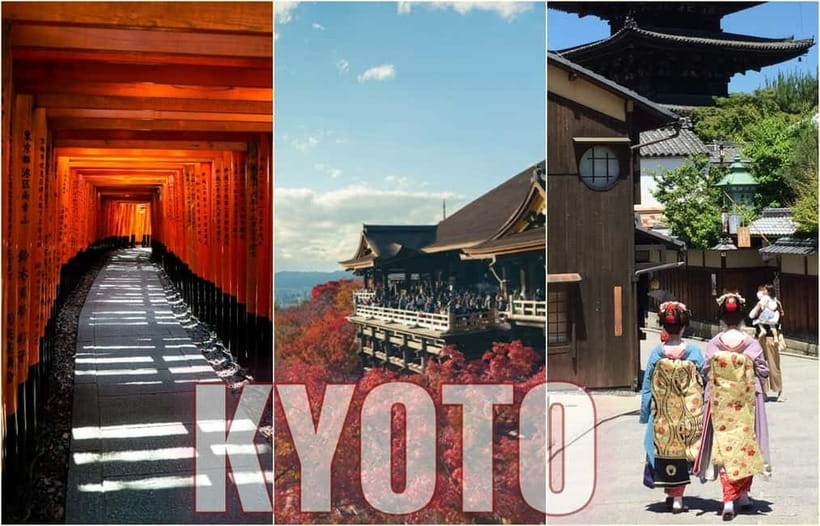
The magic of this Kyoto tour is its carefully chosen route: you begin beneath the red torii gates of Fushimi Inari, move to the hilltop views and sacred sites of Kiyomizu-dera, then walk through old merchant streets into Gion. Guide Roberto adds useful context about Shinto, Buddhism, geisha, and maiko instead of leaving you to guess what you are seeing.
I especially like the private format, which lets the pace and explanations fit your group, and the practical help with photos and getting around Kyoto. The main drawback is the amount of walking, stairs, and public transport packed into four hours, so this is not a good match for anyone with mobility limits or low stamina.
In This Review
- Key points before you book
- Starting at Kyoto Station and heading to Fushimi Inari
- Fushimi Inari’s red gate path
- Kiyomizu-dera and its sacred power spots
- Ninen-zaka and Sannen-zaka, Kyoto on foot
- Walking into Gion’s geisha district
- What Roberto adds to the four-hour route
- Is $90 good value?
- Timing, clothes, and practical preparation
- Who should book this Kyoto walk?
- Final verdict: a strong first look at eastern Kyoto
- FAQ
- How long is the Kyoto tour?
- Where does the tour begin?
- How will I recognize the guide?
- Which languages are available?
- Is the tour private?
- Are transportation and temple admission included?
- Where does the tour finish?
Key points before you book
- Fushimi Inari comes first: You get 75 minutes at Kyoto’s famous trail of vermilion torii gates, with explanations of the shrine’s Shinto origins.
- Kiyomizu-dera is more than a viewpoint: The visit focuses on sacred sites linked with love, longevity, and academic success.
- Old Kyoto arrives on foot: Ninen-zaka and Sannen-zaka connect the temple visit with Gion through traditional wooden streets and shops.
- Roberto handles the cultural detail: He uses images on an iPad and guides in English or Spanish.
- It is a private four-hour outing: That is good for questions and personal photos, but the route moves at a steady pace.
- Budget for extras: Public transport and the 500-yen Kiyomizu-dera admission are not included.
Starting at Kyoto Station and heading to Fushimi Inari
The meeting point is easy to identify if you use the directions carefully. Go to the Kyoto Station Building’s first floor, exit on the Kyoto Tower side, and look in front of the 7-Eleven Heart-In near the Central Entrance. Roberto holds an iPad and a red card marked RBRT.
From there, you take a train for about 10 minutes to Fushimi Inari Taisha. Starting here is smart. Fushimi Inari is one of Kyoto’s most visited sights, and seeing it early gives you a chance to reach the gates before the day becomes even busier. The exact start time varies, so check availability when booking.
You pay your own transport fare, and the tour uses public trains and city buses rather than a private vehicle. That keeps the price lower, but it also means you should be ready to move through stations and board ordinary public transport. Bring a little cash for fares, temple admission, and any small purchases.
More ways to walk Fushimi Inari:
- Kyoto: Fushimi Inari, Kinkakuji, Bamboo Grove 1 Day Bus Tour
★ 4.8 · 4,316 reviews - Fushimi Inari Hidden Hiking Tour (Private Option Available)
★ 5.0 · 1,750 reviews - Kyoto/Osaka: Nara, Fushimi Inari Taisha, Arashiyama Bus Tour
★ 4.7 · 1,275 reviews
Fushimi Inari’s red gate path
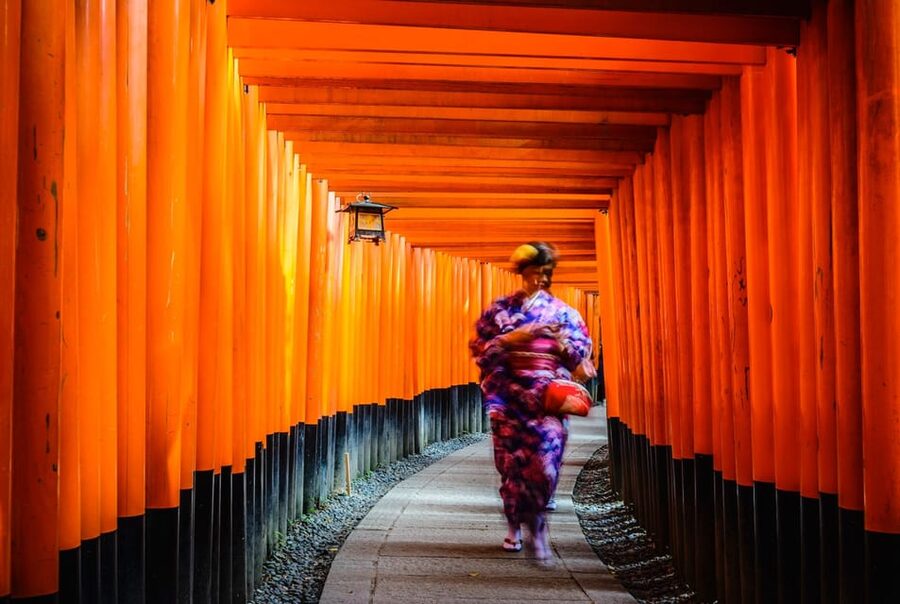
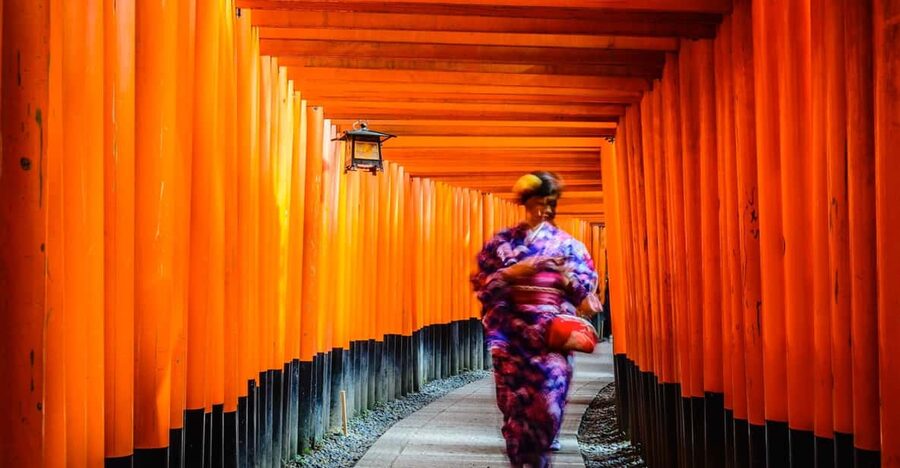
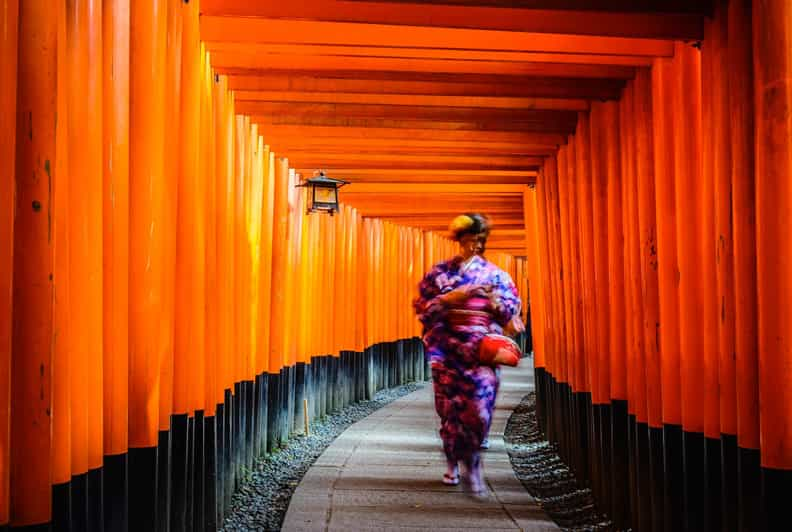
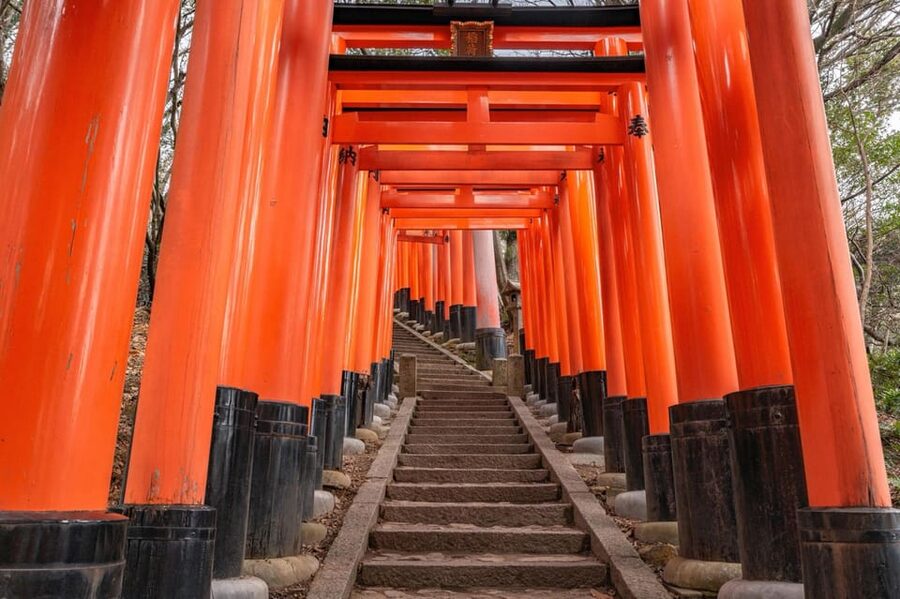
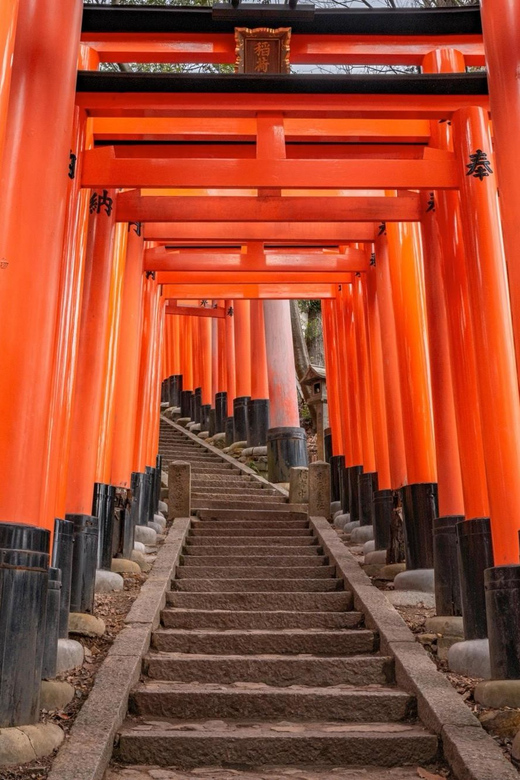
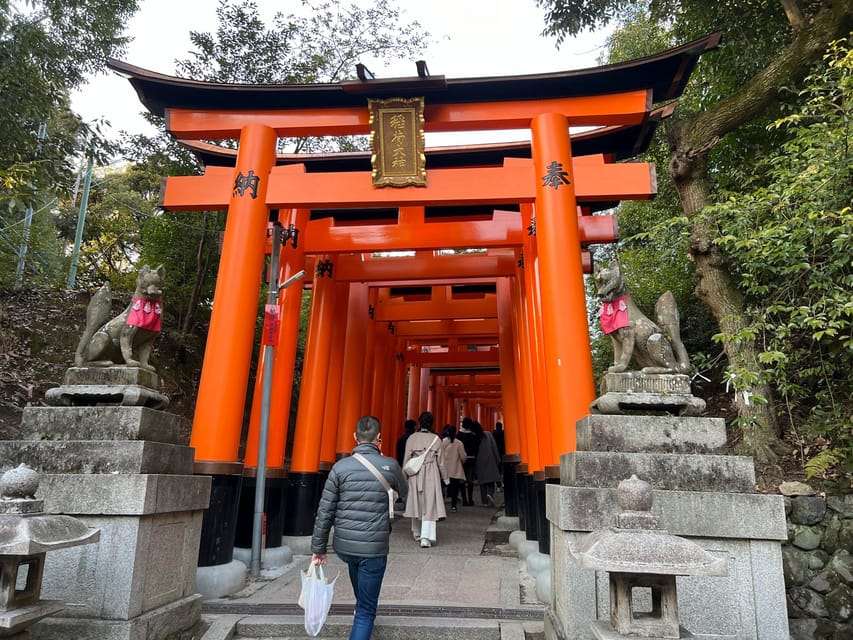
Fushimi Inari is dedicated to Inari, a Shinto deity associated with rice, agriculture, and prosperity. Its most famous feature is the long path lined with thousands of vermilion torii gates. The bright color and close-set gates create one of Kyoto’s most memorable walks.
You have about 75 minutes here. That is enough time for a guided look at the shrine and a meaningful stretch of the torii route, but it is not a promise of walking every gate up Mount Inari. The full shrine and mountain area extend much farther, so your guide will help you use the available time sensibly.
This is where an explanation adds real value. Without context, the gates can seem like a beautiful visual tunnel. With Roberto, you learn how torii mark the move from ordinary space into a Shinto sacred area, and why so many have been donated. He also explains the shrine’s ancient origins and basic Shinto practices, giving you a clearer sense of why the site matters beyond its famous photographs.
The walk is not flat. You can expect steps and an uphill route, though the exact distance covered depends on pace and conditions. Comfortable shoes are essential. Water and light clothing are also wise, especially in warm weather.
Kiyomizu-dera and its sacred power spots
After Fushimi Inari, the route continues by train for roughly 30 minutes toward Kiyomizu-dera. This transfer takes a noticeable part of a four-hour tour, but it connects two major Kyoto sights without wasting time on a long cross-city walk.
Kiyomizu-dera sits on the eastern hills of Kyoto and is known for its broad wooden stage and city views. The tour allows about 80 minutes for a guided visit. Admission is separate and costs 500 yen, approximately US$3.10 based on the supplied price.
The focus here is on Kiyomizu-dera’s sacred power spots. These are places where people pray for matters such as love, long life, and success in study. The value of this part of the tour is not simply being shown where to stand for a photograph. You get an explanation of the beliefs connected with each place and how they fit into Japanese religious life.
Kiyomizu-dera is a Buddhist temple, while Fushimi Inari is a Shinto shrine. Visiting both in one morning or afternoon gives you a useful comparison. You do not need to be religious to appreciate the difference. The two sites show how Japanese spiritual traditions appear in daily customs, architecture, prayer, and the way sacred space is marked.
The temple grounds include slopes and stairs. You should be comfortable walking uphill and standing for periods of time. The tour is not suitable for wheelchair users, people with mobility impairments, those with serious back problems, or anyone with a low level of fitness. It is also listed as unsuitable for people over 75 and for people with visual impairments, so consider those restrictions seriously before booking.
Ninen-zaka and Sannen-zaka, Kyoto on foot
After Kiyomizu-dera, you walk through Sannen-zaka for about 10 minutes and Ninen-zaka for another 10 minutes. These two historic lanes are among the best places to experience Kyoto’s old-town character without visiting another major temple.
The streets are lined with wooden buildings, traditional merchant shops, food sellers, and small businesses. Their appeal comes from the setting as much as from any one shop. The sloping lanes and old-style façades make this portion feel different from modern Kyoto Station and the wide temple grounds.
You should also expect crowds and uneven walking surfaces in this area. The streets are popular, and the short listed walking times do not include every stop you might want to make. Since the tour continues to Gion, this is more a guided passage through the district than a long shopping break.
I like this transition in the route. Fushimi Inari gives you a strong religious setting, Kiyomizu-dera adds sacred sites and views, and Ninen-zaka and Sannen-zaka show how historic Kyoto works at street level. You see temples and everyday commerce as part of the same old capital.
More evenings in Gion:
- Kyoto Geisha Walking Tour: Gion District & Hidden Gems
★ 4.7 · 3,273 reviews - Kyoto: Gion Magical Night Walking Tour with Geisha Trivia
★ 4.9 · 2,393 reviews - Kyoto: Gion Geisha District Walking Tour – Stories of Geisha
★ 4.7 · 2,187 reviews - Best of Kyoto: Gion, Geisha, Pagodas & Cobblestones
★ 4.9 · 2,058 reviews
Walking into Gion’s geisha district
From Ninen-zaka, the group walks for about 12 minutes before spending around 15 minutes walking through Gion. The tour ends here rather than returning you to Kyoto Station.
Gion is Kyoto’s best-known geisha district, with shops, restaurants, teahouses, and traditional machiya merchant houses. The guide explains the difference between geisha and maiko, including the role of apprentice geisha, and helps you understand how the district’s teahouses function as places of entertainment.
This subject needs a little care. A geisha district is not simply a stage set for photographs. Gion is a working neighborhood with businesses and residents, so you should follow local signs and respect privacy. The tour provides cultural facts rather than promising a performance or a guaranteed sighting of a geisha or maiko.
The short Gion walk is useful as an introduction, but it is not an evening food tour or a full exploration of every lane. Finishing here does give you options. You can continue on foot, take a city bus, or use a taxi back to your hotel, depending on where you are staying.
What Roberto adds to the four-hour route
Roberto is a Kyoto City Certified Tourist Guide, and the experience is offered in English or Spanish. His role matters most in places where the visual impression is easy to understand but the meaning is not.
He uses images on an iPad to make explanations easier to follow. That can help when discussing religious figures, shrine customs, or the differences between geisha and maiko. He also takes as many photos as you wish, an unusually practical inclusion for couples and small private groups who want more than quick phone snapshots.
The strongest praise centers on his punctuality, politeness, cultural explanations, photography, and useful advice for moving around Kyoto. One particularly helpful feature is the balance between detail and pace. The guide has been praised for explaining Buddhism, Shinto, and Japanese culture without making the experience feel heavy.
The private-group setup means you can ask questions freely and request photographs along the way. It may also allow some adjustment to the pace, but the four-hour schedule still has limits. You cannot expect a long temple visit, an extended shopping stop, and a complete Fushimi Inari mountain walk in the same outing.
Is $90 good value?
At $90 per person, this tour is not the cheapest way to see the four areas. You also pay your own transport costs and the 500-yen entrance fee at Kiyomizu-dera. Food and drinks are not included.
The value comes from the structure and the private guide. You are linking two major religious sites with three historic districts, and you do not need to work out the train and walking connections yourself. For a first visit to Kyoto, that can save time and prevent a half-day from being lost to navigation.
The price makes more sense for couples, families, or small groups who want personal explanations and help with photographs. If you are happy to read signs, use a map, and travel independently, you can visit Fushimi Inari and Kiyomizu-dera for much less. You are paying here for interpretation, organization, and a private pace rather than transport alone.
The 92 percent perfect score for transport is also worth noting in practical terms. The route uses public transport, but it appears to work well as a connected circuit. Still, add a small transport budget and do not arrive with a large suitcase. Luggage and large bags are not allowed on the tour.
Timing, clothes, and practical preparation
Wear shoes that can handle stairs, slopes, and several hours on foot. Comfortable clothing is recommended, and you should carry water. Bring cash for transport, temple admission, and personal purchases.
Smoking is not allowed. Large bags and luggage are also not suitable, so leave your main suitcase at your hotel or station storage if needed.
The meeting instructions are specific enough to avoid confusion, but Kyoto Station is large. Arrive early, use the Kyoto Tower side exit, and look for the 7-Eleven rather than wandering around the station. Roberto’s iPad and red RBRT card should make the final identification simple.
The four-hour duration is efficient, not leisurely. You spend about 75 minutes at Fushimi Inari, 80 minutes at Kiyomizu-dera, and shorter periods walking through the historic lanes and Gion. Train travel between the first two major stops takes about 30 minutes, so the route has little spare time for an unplanned meal or lengthy shopping.
Free cancellation is available up to 24 hours before the start for a full refund. You can also reserve and pay later, which is useful if your Kyoto plans are still shifting.
Who should book this Kyoto walk?
I would choose this tour if you are visiting Kyoto for the first time and want the city’s major eastern sights explained in one private outing. It suits people who value context, photography, and direct help with public transport more than a slow, unstructured day.
It is especially useful for couples and small groups. Roberto’s ability to take plenty of pictures, answer questions, and adapt explanations gives the outing a personal feel. English and Spanish speakers can both book.
I would skip it if you dislike stairs, cannot walk comfortably for several hours, or want a quiet temple visit with lots of time to sit and explore alone. I would also skip it if your main goal is a long hike through all of Fushimi Inari or an evening spent inside Gion’s restaurants and teahouses.
Final verdict: a strong first look at eastern Kyoto
Book this tour if you want a well-connected introduction to Fushimi Inari, Kiyomizu-dera, Kyoto’s old lanes, and Gion, with Roberto explaining what the sights mean. The best features are the private format, the clear religious and cultural background, and the practical photo help.
Just keep your expectations precise. This is a brisk four-hour walking tour, not a relaxed full-day exploration. Bring cash, wear good shoes, budget for transport and the temple ticket, and be ready to finish in Gion rather than back at Kyoto Station.
FAQ
How long is the Kyoto tour?
The tour lasts four hours. Starting times vary, so you need to check availability when booking.
Where does the tour begin?
It begins in front of the 7-Eleven Heart-In on the first floor of the JR Kyoto Station Building, near the Central Entrance. Use the Kyoto Tower side exit.
How will I recognize the guide?
Roberto will hold an iPad and a red card marked RBRT.
Which languages are available?
The tour is offered in English and Spanish.
Is the tour private?
Yes. It is arranged for a private group.
Are transportation and temple admission included?
No. You pay your own public transport fares, and Kiyomizu-dera admission costs 500 yen, approximately US$3.10. Food and drinks are also separate.
Where does the tour finish?
The tour finishes in Gion. From there, you can take a city bus or taxi to your hotel.
More Visits to Kiyomizu-dera
- Kyoto: Tea Ceremony in a Traditional Tea House in Kiyomizu
★ 4.9 · 3,519 reviews - Kyoto: Nijo Castle, Kiyomizu & Fushimi Inari Guided Tour
★ 4.7 · 700 reviews - Kyoto: Nijo, Kinkaku-ji, Arashiyama, Kiyomizu & Fushimi Inari
★ 5.0 · 699 reviews - Kyoto Tea Ceremony & Kiyomizu-dera Temple Walking Tour
★ 5.0 · 115 reviews
Recently added around Kyoto
- Higashiyama | Kyoto: Sakura Season Private Rickshaw Tour★ 5.0 · 3 reviews
- Kyoto Kimono Rental CHAMATSU|Kimono/Yukata Rental FamilyPlan★ 5.0 · 3 reviews
- Kyoto: Half-Day Private Guided Tour to the Old Town of Gion★ 4.4 · 3 reviews
- Nara Private Customizable Half Day Tour★ 5.0 · 3 reviews
- Kansai Region Hiking Adventure in Nara Kobe Kyoto and More★ 5.0 · 3 reviews
- Full Day Nara Deer, Temple, Shrine, Activities & Tea Ceremony★ 5.0 · 3 reviews
- Nara: Essential Private Tour with Deer Park and Temples★ 5.0 · 3 reviews
- Hiking Tour for Sacred Sites in Kyoto with a Guide★ 5.0 · 3 reviews
Fushimi Inari Shrine Tours, compared.
Fushimi Inari, Kinkakuji, Bamboo Grove 1 Day Bus Tour
Read our review →
Fushimi Inari Hidden Hiking Tour (Private Option Available)
Read our review →
Kyoto/Osaka: Nara, Fushimi Inari Taisha, Arashiyama Bus Tour
Read our review →
Nijo, Kinkaku-ji, Arashiyama, Kiyomizu & Fushimi Inari
Read our review →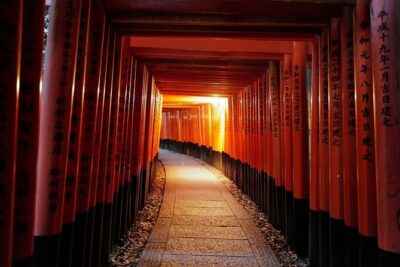
Kyoto Early Bird English Tour: Fushimi-Inari and Arashiyama
Read our review →
Fushimi, Arashiyama – Bamboo, Monkey, Torii & Secrets
Read our review →Browse the lists this tour appears in