
REVIEW · FUSHIMI INARI SHRINE TOURS
Best of Kyoto: Red Gates of Fushimi Inari & Kiyomizu Temple
Kyoto is at its best before the tour buses wake up. This early morning visit to Fushimi Inari and Kiyomizu Temple gives you quiet paths, cleaner photos, and room to hear your guide without a crowd pressing in. I especially like the included taxi ride and entrance fees, which remove two small but annoying bits of Kyoto planning.
I also like the useful finish near % ARABICA Kyoto Higashiyama, where you can turn an early start into coffee or breakfast. The tradeoff is real: you will climb many stairs and walk 10,000 or more steps, while some Higashiyama shops may still be closed.
In This Review
- Key points at a glance
- Why the early start matters at Fushimi Inari
- The ride from Fushimi Inari to Kiyomizu-dera
- Kiyomizu-dera and Kyoto from above
- Sannenzaka, Ninenzaka, and the old streets
- The final stop and local food advice
- What your guide adds to the morning
- Is $58 a fair price?
- Who should book this Kyoto tour?
- Practical details before you go
- Should you book Best of Kyoto?
- FAQ
- Where does the tour begin?
- How long does the tour last?
- What transportation is included?
- Are entrance fees included?
- Is the tour available in English?
- How much walking is involved?
Key points at a glance
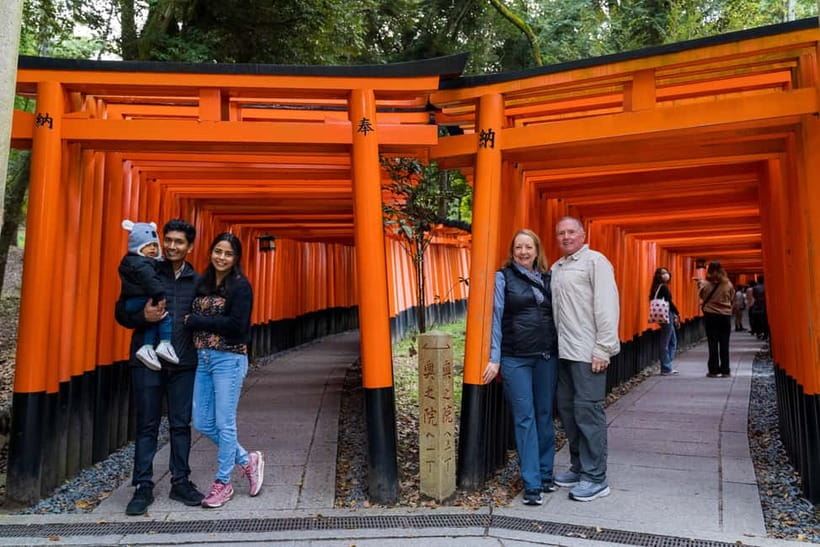
- Red torii before the crowds: Reach Fushimi Inari early, when the long rows of gates feel calmer and more photogenic.
- Two major Kyoto sights in three hours: See Fushimi Inari Taisha and Kiyomizu-dera without spending a full day on a large sightseeing circuit.
- Taxi transfer included: Travel from Fushimi Inari to Kiyomizu Temple by taxi, with train fares and admission covered as well.
- Guides who add personality: Shanda and Diana have led especially well-received tours, combining clear explanations with time for photos.
- Historic Higashiyama finish: Walk through Sannenzaka and Ninenzaka, then finish near a popular coffee stop.
- A serious walking workout: Expect stairs, uneven routes, and at least 10,000 steps, so comfortable shoes matter.
Why the early start matters at Fushimi Inari
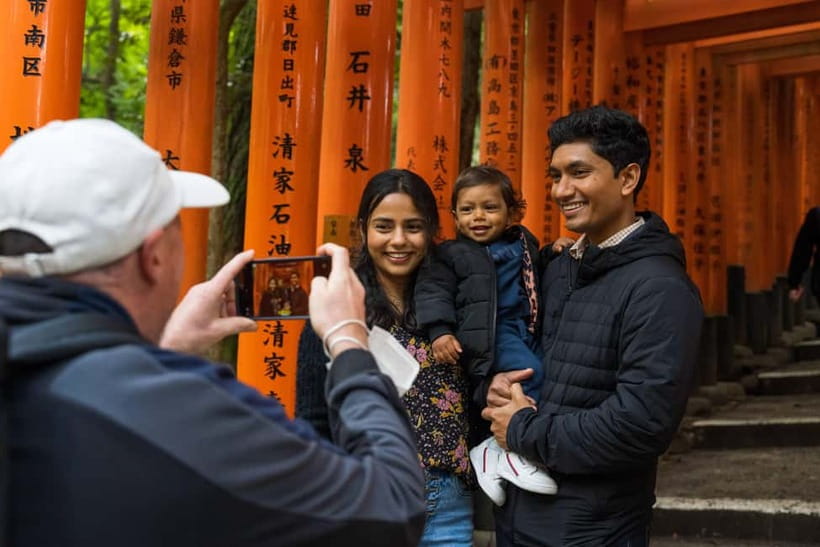
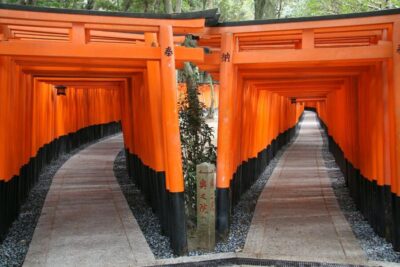
Fushimi Inari Taisha is Kyoto’s most recognizable shrine experience, with rows of red torii gates climbing into the wooded hills. The first gates are the stars of the show, creating a repeated frame of vermilion columns and dark shadows that looks striking in the soft morning light.
The timing is the main reason to book this tour rather than simply arrive later on your own. An early start gives you a better chance of walking through the first sections at a calmer pace. You can stop for photographs without feeling that you are blocking a steady stream of people.
Your guide leads about 50 minutes at Fushimi Inari. That is enough time to explain the shrine’s customs, the meaning of the gates, and the role of the site in Japanese religious life without trying to cover every path on the mountain. You will not complete the entire hiking route in that time, and that is useful to understand before booking.
Fushimi Inari is a Shinto shrine, while Kiyomizu-dera is a Buddhist temple. Seeing both on one morning lets your guide explain the difference between these traditions and show how Kyoto’s religious sites fit into the city’s long cultural story. The tour is not just a photo stop at red gates. It gives you a framework for understanding what you are seeing.
The early hour has one small cost. Cafes and shops around the route may not be open yet. If browsing little stores is a major reason you want to visit Fushimi Inari, you may prefer returning later on your own. If quiet paths and strong photos matter more, the timing is a smart bargain.
More ways to walk Fushimi Inari:
- Kyoto: Fushimi Inari, Kinkakuji, Bamboo Grove 1 Day Bus Tour
★ 4.8 · 4,316 reviews - Fushimi Inari Hidden Hiking Tour (Private Option Available)
★ 5.0 · 1,750 reviews - Kyoto/Osaka: Nara, Fushimi Inari Taisha, Arashiyama Bus Tour
★ 4.7 · 1,275 reviews
The ride from Fushimi Inari to Kiyomizu-dera
After Fushimi Inari, the tour uses a taxi to reach Kiyomizu Temple. That transfer is included, along with train fares and entrance fees, so you do not need to keep stopping to calculate fares or find the right ticket.
This is a useful feature in a three-hour tour. Kyoto’s two sights are not next door to each other, and a guided transfer keeps the morning moving. You still need to arrive at the starting point on time, but once the tour begins, the guide handles the transport details.
The tour starts at JR Inari Station, in front of the station entrance. Look for the small mailbox and public phone next to each other. That detail is worth saving before you leave your hotel, since the station area may be busy and you do not want to spend your precious early minutes searching.
There are two listed starting location options at Inari Station, so follow the exact meeting instructions on your voucher. Hotel pickup and drop-off are not included. You need to make your own way to JR Inari Station at the appointed time.
Kiyomizu-dera and Kyoto from above
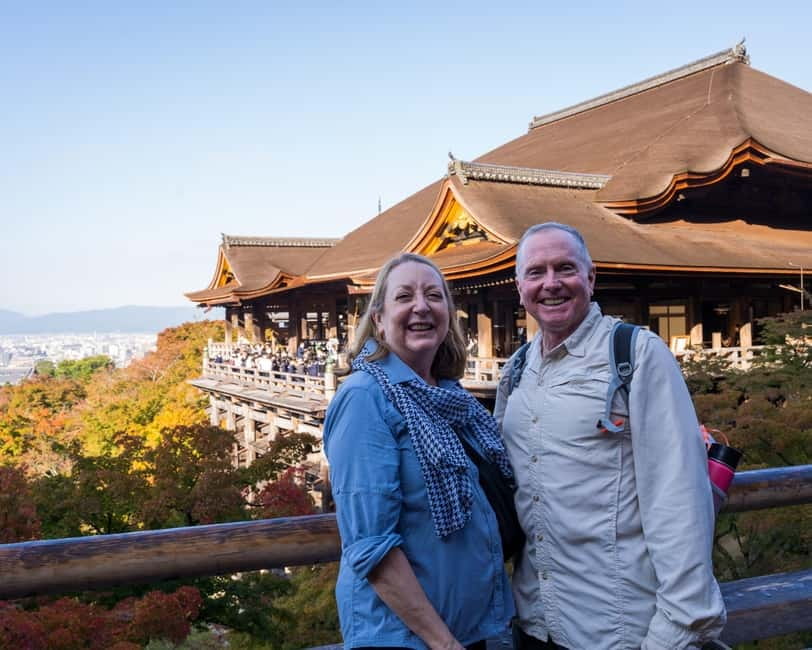
Kiyomizu-dera is the second major stop, with about an hour of guided time. The temple is one of Kyoto’s defining sights, known for its striking red structures and broad views over the city.
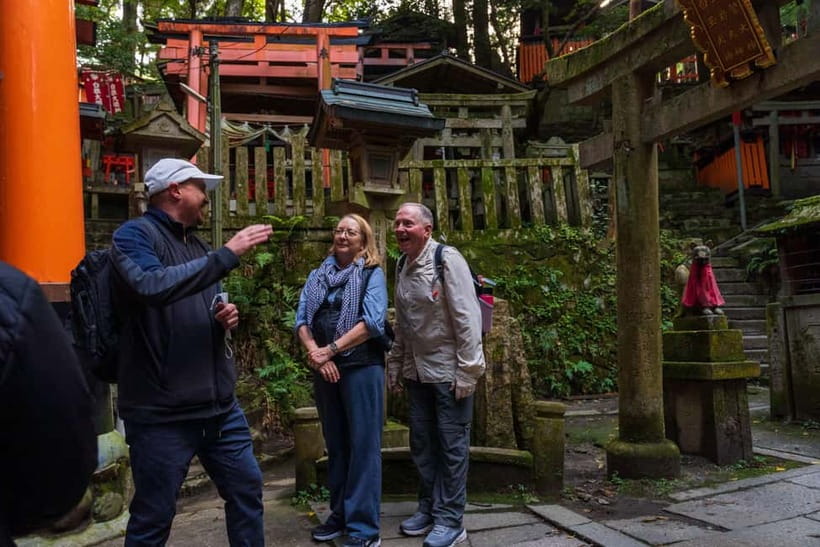
The guide’s role matters here. The temple grounds can feel like a series of beautiful buildings unless someone explains the Buddhist customs, design details, and stories connected to the place. Guides such as Shanda and Diana have been praised for giving clear explanations while allowing time to take photographs.
I like that balance. A guide who talks nonstop can turn a scenic place into a lecture, while a guide who only points at buildings leaves you to guess why they matter. The strongest part of this experience is the combination of context and breathing room. One German visitor specifically appreciated having time to take photos calmly, and that is exactly what you want at Kiyomizu-dera.
The temple stop includes stairs and walking on a route that is not suited to people with mobility impairments. You should expect a physical morning rather than a gentle stroll. Comfortable clothes and sturdy walking shoes are essential, especially if you are already carrying a daypack or traveling with young children.
The views are one of the tour’s rewards. From Kiyomizu-dera, you can look across Kyoto and see the city arranged below the temple. The outlook helps you understand Kyoto as a compact historic city, where religious sites, preserved streets, and modern neighborhoods sit close together.
Sannenzaka, Ninenzaka, and the old streets
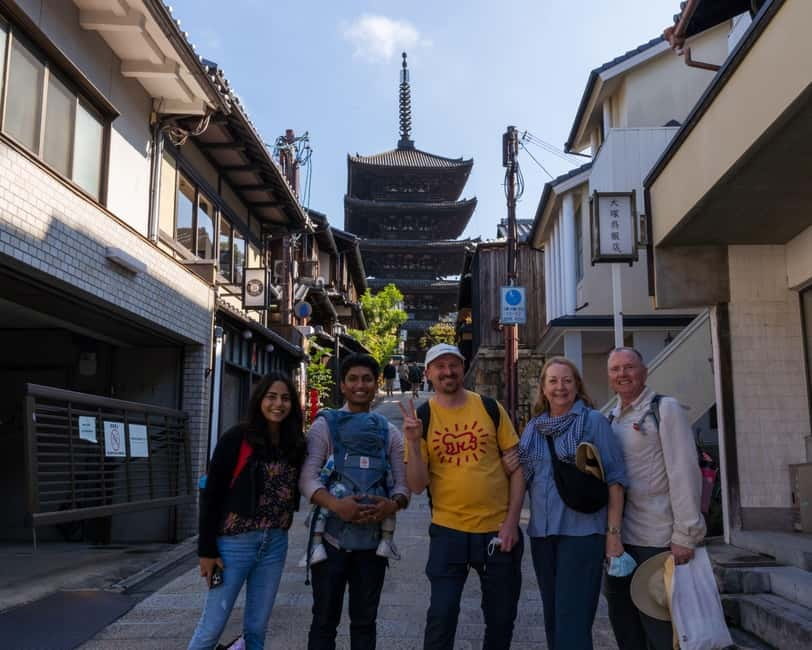
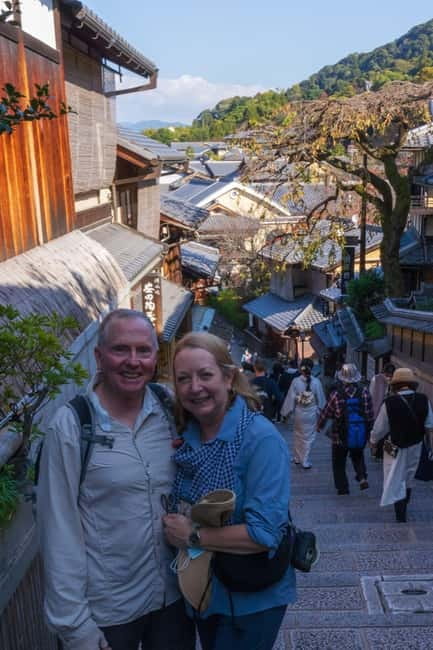
The route continues through the preserved districts of Higashiyama, including Sannenzaka and Ninenzaka. These narrow lanes are lined with traditional wooden houses, small shops, cafes, and details that are easy to miss when you are moving quickly between major attractions.
The 30-minute photo stop gives you a chance to enjoy this part of Kyoto at street level. The lanes are attractive because they connect the temple visit to ordinary city life. You see shopfronts, old buildings, and cafes rather than only grand religious structures.
The early timing has another tradeoff here. Some shops may not yet be open, as one visitor noted. You gain a quieter walk, but you lose some of the browsing and snack opportunities that make Higashiyama lively later in the day.
I would treat this section as a preview rather than your main shopping session. Pay attention to the streets and note places you might want to revisit after the tour. Since the tour finishes at % ARABICA Kyoto Higashiyama, you can continue exploring on your own once the guided portion ends.
More visits to Kiyomizu-dera:
- Kyoto: Tea Ceremony in a Traditional Tea House in Kiyomizu
★ 4.9 · 3,519 reviews - Kyoto: Nijo Castle, Kiyomizu & Fushimi Inari Guided Tour
★ 4.7 · 700 reviews - Kyoto: Nijo, Kinkaku-ji, Arashiyama, Kiyomizu & Fushimi Inari
★ 5.0 · 699 reviews - Kyoto Tea Ceremony & Kiyomizu-dera Temple Walking Tour
★ 5.0 · 115 reviews
The final stop and local food advice
The official finish is % ARABICA Kyoto Higashiyama. Food and drinks are not included, but the location works well for a post-tour coffee or breakfast.
The tour team also offers local guide tips for restaurants, cafes, and bars at the end. Do not rush away as soon as the walking portion ends. This is the moment to ask where to eat later, where to find a good coffee, or which nearby area suits your evening plans.
That informal advice can be more useful than a generic list of famous restaurants. Kyoto has many places competing for attention, and a guide who knows the city can help you decide what fits your schedule. The exact recommendations will depend on the guide and your interests, so ask specific questions rather than simply requesting the best restaurant.
The finish also makes practical sense. You can reward yourself for the early alarm with coffee, then keep exploring Higashiyama while you are already in the area. You are not sent back to the original station, which gives you more control over the rest of your day.
What your guide adds to the morning
This tour depends heavily on the quality of the guide. The route itself is easy to understand, but the religious customs and long history of Fushimi Inari and Kiyomizu-dera are much easier to appreciate with a good explanation.
Shanda has led tours praised for her positive manner, clear information, and willingness to pause for photographs. Diana has also been singled out for making the early visit interesting and explaining both Fushimi Inari and Kiyomizu-dera well. You cannot assume which guide you will receive, but these names give you a sense of the service the provider aims to offer.
The available languages are English and French. Private and small-group options are available, which can make it easier to ask questions and keep a comfortable pace. A private format may be especially useful if your group has different interests, such as photography, Buddhist culture, or food.
A small group does not remove the physical demands. You still climb stairs and cover a long distance. It simply gives you a more personal setting for the explanations and a better chance to stay together without the feel of a large bus tour.
Is $58 a fair price?
At $58 per person, this is not the cheapest way to see Fushimi Inari and Kiyomizu-dera. You can visit both places independently for less if you are comfortable planning the route, paying admission, arranging transport, and finding the relevant details yourself.
The price becomes easier to justify because it includes the guide, entry fees, train fares, and taxi fare from Fushimi Inari to Kiyomizu Temple. You are paying for structure and time management as much as for admission. In a city where a poorly planned route can eat up a morning, that has real value.
The tour lasts three hours, so it is not a full Kyoto orientation. It focuses on two major sights and a short walk through Higashiyama. That makes it a good first morning activity, especially if you want the rest of the day free for another district, a museum, or a food experience.
The value is strongest for first-time visitors who want explanation without spending an entire day with a guide. It is weaker for independent repeat visitors who already understand Kyoto’s religious sites and are happy to manage trains and taxis themselves.
Who should book this Kyoto tour?
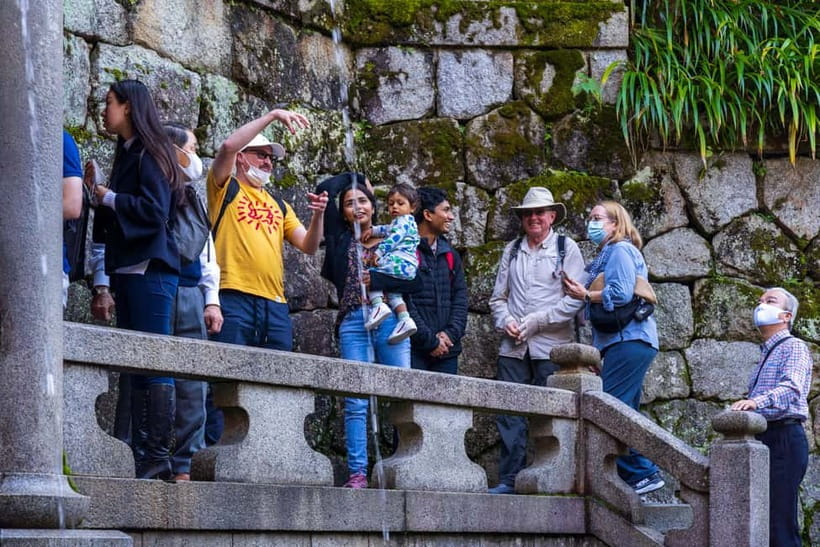
I would recommend it to you if you want to see Kyoto’s two most famous religious sights early, take better photos, and learn what you are looking at. It suits first-time visitors, couples, families with active older children, and anyone who prefers a small group over a large organized coach tour.
It also suits visitors who like to ask questions. The guide can explain Buddhism, local customs, and the meaning behind the buildings in a way that a self-guided walk may not. The local restaurant and cafe tips are another useful bonus.
Think twice if you have mobility limitations or dislike stairs. The tour is specifically not suitable for people with mobility impairments, and the 10,000-plus steps are not a minor footnote. You should also reconsider if shopping in Higashiyama is your priority, since the early hour may find some stores closed.
This is not the right choice if you want a slow, unstructured morning. The schedule moves from station to shrine to taxi to temple and then through historic streets. You get efficient coverage, not a long lingering visit at one site.
Practical details before you go
Wear comfortable shoes and comfortable clothes. The route includes many stairs and a high step count, so this is not the morning for new shoes, delicate footwear, or a heavy bag.
Bring only what you need. A camera, water, and a small bag will be easier to manage than bulky luggage, although the supplied information does not specify what storage is available.
Arrive at JR Inari Station before the time on your voucher. Find the mailbox and public phone near the station entrance, and allow enough time to confirm that you are at the correct starting point.
The tour has free cancellation up to 24 hours before departure for a full refund. You can also reserve now and pay later, which helps if your Kyoto plans are still shifting. Check the available starting times when booking, since the exact early start is not fixed in the supplied details.
Should you book Best of Kyoto?
Book this tour if you want an efficient, well-explained introduction to Fushimi Inari, Kiyomizu-dera, and Higashiyama. The early timing, included taxi, entry fees, and friendly guides such as Shanda and Diana give it strong practical value at $58.
Skip it if you want to sleep late, shop first thing, avoid stairs, or explore at your own pace. For an active visitor who can handle the walking, this is a smart way to cover two essential Kyoto sights before the city gets crowded, then use the guide’s food tips to shape the rest of the day.
FAQ
Where does the tour begin?
Meet your guide in front of the entrance to JR Inari Station at the time shown on your voucher. Look for a small mailbox and public phone next to each other.
How long does the tour last?
The experience lasts three hours. The guided visit at Fushimi Inari takes about 50 minutes, the guided visit at Kiyomizu-dera takes about one hour, and the photo stop lasts about 30 minutes.
What transportation is included?
Train fares and the taxi fare from Fushimi Inari to Kiyomizu Temple are included. Hotel pickup and drop-off are not included.
Are entrance fees included?
Yes. Entry fees for the included sights are covered in the tour price.
Is the tour available in English?
Yes. Live guides are available in English and French. Private and small-group options are also available.
How much walking is involved?
You should expect quite a few stairs and 10,000 or more steps during the tour. Comfortable shoes and clothes are recommended, and the experience is not suitable for people with mobility impairments.
More Temples in Kyoto
- Kyoto: Tea Ceremony Ju-An at Jotokuji Temple
★ 4.9 · 3,207 reviews - Arashiyama Bamboo, Temple, Monkeys, or Secret Sake Brewery
★ 4.8 · 886 reviews - Kyoto: Arashiyama Bamboo Forest, Monkeys, Matcha & Temple Tour
★ 5.0 · 759 reviews - Kyoto: Ninnaji Temple Entry Ticket
★ 4.2 · 650 reviews
Recently added around Kyoto
- Higashiyama | Kyoto: Sakura Season Private Rickshaw Tour★ 5.0 · 3 reviews
- Kyoto Kimono Rental CHAMATSU|Kimono/Yukata Rental FamilyPlan★ 5.0 · 3 reviews
- Kyoto: Half-Day Private Guided Tour to the Old Town of Gion★ 4.4 · 3 reviews
- Nara Private Customizable Half Day Tour★ 5.0 · 3 reviews
- Kansai Region Hiking Adventure in Nara Kobe Kyoto and More★ 5.0 · 3 reviews
- Full Day Nara Deer, Temple, Shrine, Activities & Tea Ceremony★ 5.0 · 3 reviews
- Nara: Essential Private Tour with Deer Park and Temples★ 5.0 · 3 reviews
- Photo Shoot with a Private Vacation Photographer in KYOTO, JAPAN★ 5.0 · 3 reviews
Fushimi Inari Shrine Tours, compared.
Fushimi Inari, Kinkakuji, Bamboo Grove 1 Day Bus Tour
Read our review →
Fushimi Inari Hidden Hiking Tour (Private Option Available)
Read our review →
Kyoto/Osaka: Nara, Fushimi Inari Taisha, Arashiyama Bus Tour
Read our review →
Nijo, Kinkaku-ji, Arashiyama, Kiyomizu & Fushimi Inari
Read our review →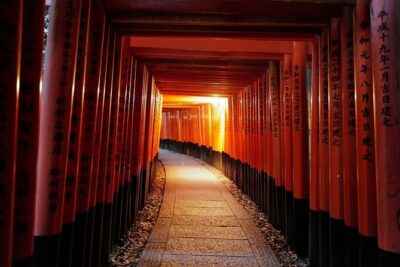
Kyoto Early Bird English Tour: Fushimi-Inari and Arashiyama
Read our review →
Fushimi, Arashiyama – Bamboo, Monkey, Torii & Secrets
Read our review →Browse the lists this tour appears in