
REVIEW · COOKING CLASSES
Kyoto Family Kitchen Cooking Class
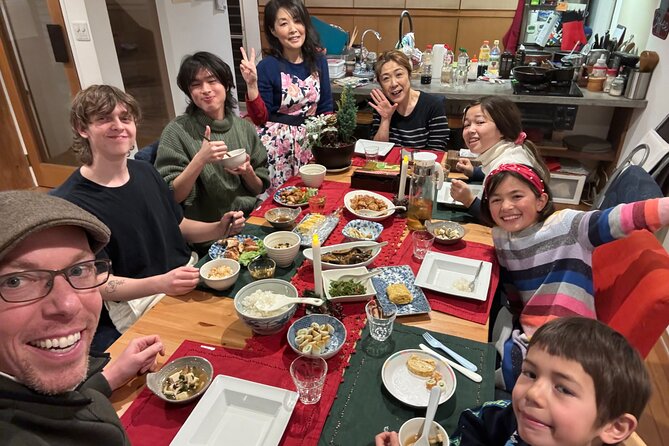
The best part of this Kyoto cooking class is not a flashy kitchen or a long list of recipes. It is the chance to sit in Anthony and Naomi’s suburban home, meet their children and pets, and cook an everyday Japanese dinner as a small private group. You begin with tea and conversation, then move to the counter to prepare food before eating together.
I like the relaxed family setting, especially for parents whose children need room to be themselves. I also like that the class explains practical staples such as dashi, soy sauce, mirin, and sake, rather than treating Japanese food as a mystery. The main consideration is simple: this is informal home cooking, not a polished professional lesson. One disappointed participant expected more formal instruction and felt they were helping the hosts more than taking a class.
In This Review
- Key points at a glance
- A Kyoto evening that begins with tea, not a timetable
- What you may cook at the counter
- The family setting is the real ingredient
- Dinner is more than the final course
- Why the location matters
- Is $96.84 a fair price?
- How the two and a half hours usually feel
- Who should book this experience?
- Booking and practical details
- My verdict: book it for connection, not culinary perfection
- FAQ
- Where does the Kyoto Family Kitchen Cooking Class take place?
- How long does the experience last?
- What food will I cook?
- Who hosts the cooking class?
- Is the class suitable for children?
- Is this a private activity?
- Is dinner included?
- Is transportation included?
- Can the hosts accommodate vegetarian food requirements?
- What is the cancellation policy?
Key points at a glance
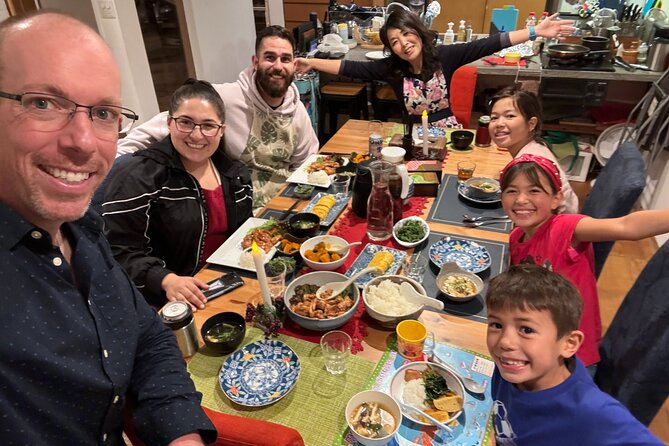
- Cook in a real Kyoto family home: Anthony and Naomi host you alongside their children, cat, and dog.
- Learn the building blocks of Japanese cooking: Dashi, soy sauce, mirin, and sake receive special attention.
- Prepare an everyday meal: Past menus and dishes have included gyoza, tamagoyaki, okonomiyaki, sautéed vegetables, and teriyaki chicken.
- Share dinner and conversation: The meal is part of the experience, not just a reward at the end.
- Good for mixed-age groups: Children, adults, older family members, couples, and small groups can take part.
- Plan for a suburban setting: The home is outside central Kyoto, with transportation to Kokusaikaikan subway station included.
A Kyoto evening that begins with tea, not a timetable
This experience feels closer to being invited to dinner than attending a restaurant demonstration. You arrive at the family home at 33-50 Kamitakano Saimyōjiyama in Sakyo Ward, a residential part of Kyoto outside the city center.
The evening begins with a chance to sit down, drink coffee or tea, and talk about your trip. That opening matters. It gives you time to settle in before cooking, and it sets the tone for the rest of the evening. You are not rushed from one station to another or handed a worksheet before anyone learns your name.
Anthony and Naomi then introduce the planned meal and talk about the ingredients used in ordinary Japanese kitchens. The focus is on useful basics. Dashi provides savory depth, soy sauce brings salt and umami, mirin adds sweetness, and sake helps round out sauces and dishes.
You will not simply watch someone prepare a perfect plate. You put on an apron, gather around the kitchen counter, and help slice, mix, and cook. The hosts guide the process, but the mood is intentionally easygoing. If you enjoy asking questions as you work, this format gives you room to do so.
More cooking classes in Kyoto:
- Kyoto: Ramen Cooking Class at a Ramen Factory with Souvenir
★ 4.9 · 532 reviews - Kyoto: Ramen, Gyoza, and Onigiri Cooking Class
★ 5.0 · 445 reviews - Kyoto: Japanese Washoku Bento Small Group Cooking Class
★ 5.0 · 380 reviews
What you may cook at the counter
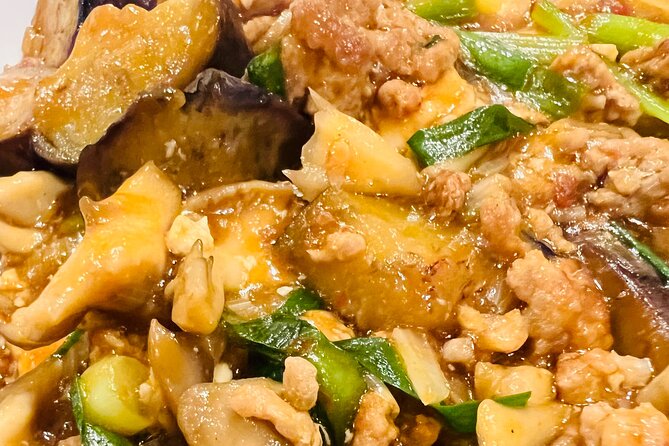
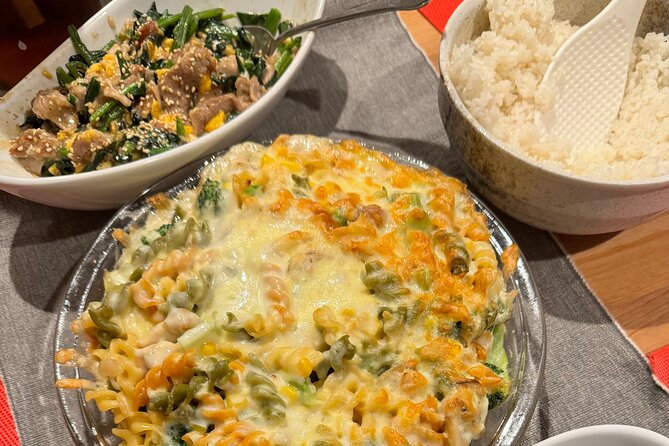
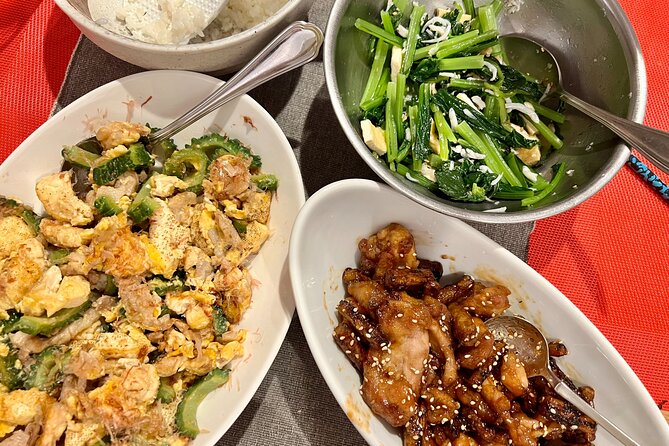
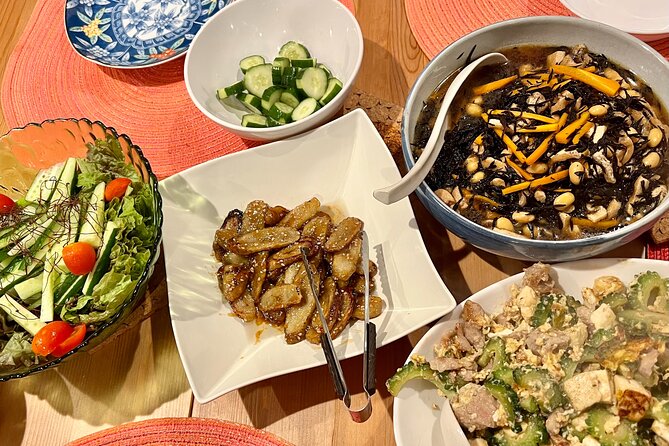
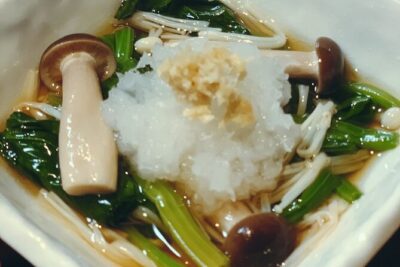
The exact menu is finalized after booking, so you should not reserve this expecting one fixed set of dishes. Past meals have included gyoza, tamagoyaki, okonomiyaki, sautéed vegetables, and teriyaki chicken.
That variety is useful because these foods show different sides of home cooking. Gyoza gives you a hands-on project, while tamagoyaki introduces the technique behind a Japanese rolled omelet. Okonomiyaki is social and forgiving, and teriyaki chicken shows how a few familiar seasonings can create a satisfying dinner.
The class also makes clear that Japanese home food is not limited to elaborate restaurant dishes. You learn how common pantry staples come together for a normal family meal. That is a better fit for you if you want ideas you can try at home after returning from Japan.
The hosts do much of the preparation needed to make dinner possible in two and a half hours. That is not a flaw. A family meal prepared entirely from scratch still needs planning, and the available time is short. You should think of your role as active participation, not a full professional kitchen shift.
This point is worth stressing because the word cooking class can mean different things. If you want detailed knife instruction, advanced techniques, recipe measurement, and a chef-led demonstration, you may find this too loose. If you want to cook beside a local family, ask questions, and share the work, the format should suit you well.
The family setting is the real ingredient
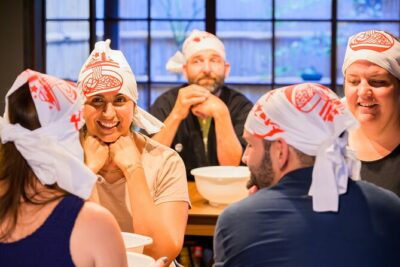
Anthony and Naomi open their home to the cooking group, along with their children, a dog, and a cat. The animals and children are not stage props. They are part of the household, which means the evening has the ordinary interruptions and warmth of family life.
That makes the class especially appealing for families with children. Young visitors can help with suitable tasks, then spend time with the host family’s children or pets. The experience has also worked for a group that included a 78-year-old grandmother and an 11-year-old girl, showing that it can accommodate several generations.
You should still be comfortable with a lived-in home atmosphere. This is not a quiet, adults-only dining room. Children may be active, pets may be nearby, and conversation may move in several directions. For many people, that is exactly the point. For someone seeking a controlled culinary lesson, it could feel distracting.
The hosts have also accommodated dietary needs. A group of six included a vegetarian participant who was provided plenty to eat. You should share food requirements when arranging the menu, rather than waiting until you arrive.
Dinner is more than the final course
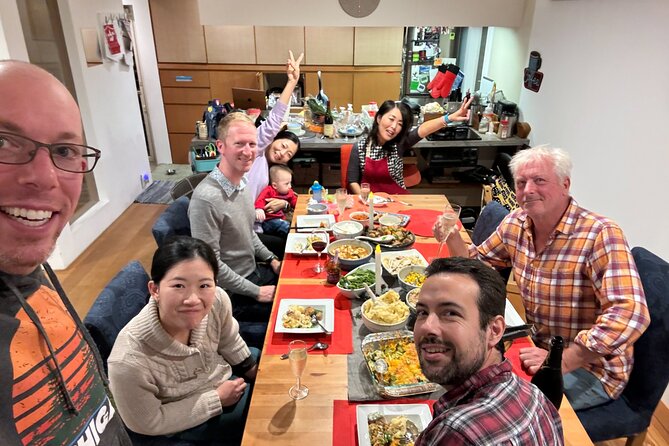
After the cooking, everyone sits down to eat. Dinner includes the food you helped prepare, plus conversation with the family. The hosts speak English, and the evening can include talk about Japanese culture, daily life, travel, and language.
One particularly nice touch is the practical exchange that can happen over the table. The hosts have taught basic Japanese phrases to help visitors during the rest of their trip. Those small lessons may prove more useful than a formal cultural lecture because they connect directly to your time in Kyoto.
The meal also lets you see how the dishes fit together. You are not tasting one isolated specialty in a market stall. You are sharing a spread of home-style food in the setting where such a meal makes sense.
Several aspects of the evening have received especially strong praise: the welcome from Anthony, Naomi, and their children; the food prepared from scratch; and the feeling of being treated like a temporary part of the family. Those strengths explain the 4.9 rating from 60 reviews and the 97 percent recommendation rate.
Still, keep your expectations in the right place. The hosts aim for connection and comfort, not a formal restaurant service. Dinner may feel generous and personal, but it is not designed around a professional tasting menu or a perfectly timed service.
More workshops and classes in Kyoto:
- Kyoto: 45-Minute Tea Ceremony Lesson Experience
★ 4.3 · 2,378 reviews - Kyoto : Chopsticks Making Workshop in Gion with Engraving Option
★ 5.0 · 958 reviews - Kyoto: Samurai Sword Class by Experts in Traditional Arts
★ 4.9 · 657 reviews - Ninja 1-hour Hands-on Lesson by Japanese master in Kyoto -Entry
★ 5.0 · 489 reviews
Why the location matters

The meeting point is in Sakyo Ward, outside central Kyoto. That gives you a view of residential life rather than another activity in the busiest tourist areas.
The address is at 33-50 Kamitakano Saimyōjiyama, and transportation to Kokusaikaikan subway station is included. Since the class runs from 6:00 to 8:30 PM on Monday through Friday, you should allow time to reach this part of the city and confirm the final directions and meeting arrangements after booking.
The suburban location is both a benefit and a practical consideration. You get away from the crowded core and enter a more ordinary home setting. On the other hand, this is not an activity you can casually join between Nishiki Market and Gion without planning your route.
The experience ends back at the meeting point. That is helpful when arranging your evening, but it also means you should not assume you will finish near Kyoto Station or another central attraction.
Is $96.84 a fair price?
At $96.84 per person, this is not the cheapest way to eat Japanese food. You can find an inexpensive dinner in Kyoto for far less.
The value comes from the package. Your price includes dinner, coffee or tea, ingredients, seasonings, an English-speaking instructor, all fees and taxes, and transportation to Kokusaikaikan subway station. You also receive several hours in a private home, with only your group participating.
For a family, the private format can be important. You are not trying to keep children quiet in a larger class, and the hosts can discuss food preferences with your group. For a couple, the cost is harder to compare with a normal meal, but the home visit and conversation provide something a restaurant cannot.
I would judge the price by the kind of evening you want. If your main goal is to eat cheaply, it is poor value. If you want a personal cultural experience with cooking, dinner, and time with a Kyoto family, the price is more reasonable.
Alcohol is not included, and gratuity is not included. Coffee and tea are provided, so you should not count on alcoholic drinks as part of the meal.
How the two and a half hours usually feel
The advertised duration is approximately two hours and 30 minutes. The schedule is long enough to include a welcome, food discussion, hands-on preparation, and dinner without turning the evening into a race.
A typical flow looks like this:
- You arrive and settle in with tea or coffee.
- You talk with the family about your trip and the planned food.
- The hosts explain key Japanese ingredients and cooking methods.
- Everyone puts on aprons and works around the kitchen counter.
- The food is cooked and brought to the table.
- You eat, talk, and exchange ideas with the family.
- You return to the meeting point at the end.
The informal pace is one of the experience’s strongest features. You can focus on the people and the meal rather than trying to copy every movement at high speed.
It also means the exact balance between cooking and conversation can vary. Some groups may spend more time preparing food, while others may linger over dinner. If you want maximum time at the counter, tell the hosts when you arrange the menu.
Who should book this experience?
I would recommend it most strongly to families, couples, and small groups who value personal contact over a formal lesson. It is a particularly good choice for parents because children can participate in cooking and interact with the host family’s children and pets.
It can also suit solo visitors, though the minimum booking requirement is two guests. Small groups have the advantage of a private setting and enough room for everyone to talk.
This is a good match for you if:
- You want to see ordinary family life in Kyoto.
- You enjoy cooking with guidance rather than watching a demonstration.
- You are happy to eat a menu arranged with the hosts.
- You have children or several generations in your group.
- You want an English-speaking host and a relaxed evening.
- You are willing to travel outside central Kyoto.
You may want a different activity if you need a formal chef-led course, a fixed menu, advanced culinary training, or a polished studio kitchen. The one two-star assessment makes that limitation clear. The participant felt the experience was more like helping the hosts cook than attending a traditional class.
That criticism does not necessarily mean the experience failed. It shows that the title can set the wrong expectation. Think of this as a family dinner with hands-on cooking, rather than a technical cooking school.
Booking and practical details
The experience is offered Monday through Friday from 6:00 to 8:30 PM during the stated operating period, which runs through June 7, 2026. The minimum is two guests, and the activity is private to your group.
Confirmation is provided at booking. Afterward, you arrange the meeting time, menu, and directions with the host. Use that exchange well. Tell Anthony and Naomi about allergies, vegetarian requirements, children, and any other food concerns before the evening.
A mobile ticket is available. Service animals are allowed, and the home is near public transportation. The included transportation is specifically to Kokusaikaikan subway station, so confirm how that applies to your arrival plans.
Free cancellation is available until 24 hours before the start time for a full refund. Cancellations or changes made less than 24 hours before the start time are not accepted for a refund, with cut-off times based on local Kyoto time.
My verdict: book it for connection, not culinary perfection
I would book the Kyoto Family Kitchen Cooking Class if I wanted one evening that felt personal and different from sightseeing. Anthony and Naomi offer something difficult to find on a standard Kyoto itinerary: a meal in a family home, prepared with local hosts and shared around their table.
The strongest reasons to choose it are the warm welcome, the children and pets, the practical look at Japanese pantry staples, and the chance to cook food such as gyoza or tamagoyaki before eating it together. The private format and willingness to accommodate a vegetarian participant add real value for families and small groups.
I would skip it if my priority were technical instruction or a predictable menu. Book this experience with the mindset of visiting a Kyoto family for dinner, with cooking as the way you get to know one another. That is where the experience earns its price.
FAQ
Where does the Kyoto Family Kitchen Cooking Class take place?
It takes place at 33-50 Kamitakano Saimyōjiyama, Sakyo Ward, Kyoto, 606-0064, Japan, in the hosts’ suburban home outside the city center.
How long does the experience last?
The experience lasts approximately 2 hours and 30 minutes, from 6:00 PM to 8:30 PM on the available Monday through Friday schedule.
What food will I cook?
The menu is finalized with the host after booking. Past dishes have included gyoza, tamagoyaki, okonomiyaki, sautéed vegetables, and teriyaki chicken.
Who hosts the cooking class?
The experience provider is Anthony. The cooking evening is hosted by Anthony and Naomi, with their children and household pets also part of the home setting.
Is the class suitable for children?
Yes. The experience is designed for families and all ages, and the host’s children may join the cooking and family activities.
Is this a private activity?
Yes. Only your group participates in the activity.
Is dinner included?
Yes. Dinner, coffee or tea, ingredients, seasonings, an English-speaking instructor, and all fees and taxes are included.
Is transportation included?
Transportation to Kokusaikaikan subway station is included. The activity begins and ends at the stated meeting point, so confirm the final directions with the host.
Can the hosts accommodate vegetarian food requirements?
The hosts have accommodated vegetarian needs for a group and provided plenty of food for the vegetarian participant. You should discuss dietary requirements when arranging the menu.
What is the cancellation policy?
You can cancel at least 24 hours before the local start time for a full refund. Cancellations or changes made less than 24 hours before the start time are not accepted for a refund.
Recently added around Kyoto
- Higashiyama | Kyoto: Sakura Season Private Rickshaw Tour★ 5.0 · 3 reviews
- Kyoto Kimono Rental CHAMATSU|Kimono/Yukata Rental FamilyPlan★ 5.0 · 3 reviews
- Kyoto: Half-Day Private Guided Tour to the Old Town of Gion★ 4.4 · 3 reviews
- Nara Private Customizable Half Day Tour★ 5.0 · 3 reviews
- Kansai Region Hiking Adventure in Nara Kobe Kyoto and More★ 5.0 · 3 reviews
- Full Day Nara Deer, Temple, Shrine, Activities & Tea Ceremony★ 5.0 · 3 reviews
- Nara: Essential Private Tour with Deer Park and Temples★ 5.0 · 3 reviews
- Photo Shoot with a Private Vacation Photographer in KYOTO, JAPAN★ 5.0 · 3 reviews
Cooking Classes, compared.
Ramen Cooking Class at a Ramen Factory with Souvenir
Read our review →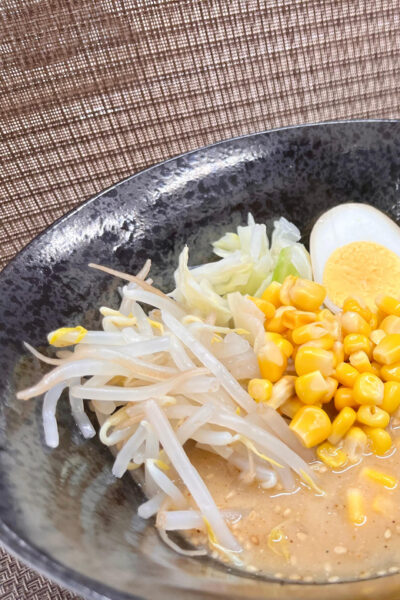
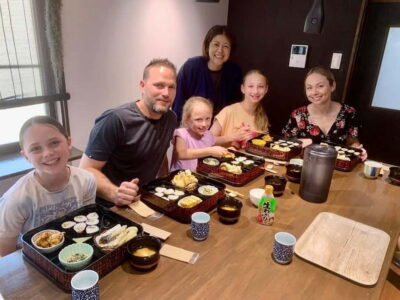
Japanese Washoku Bento Small Group Cooking Class
Read our review →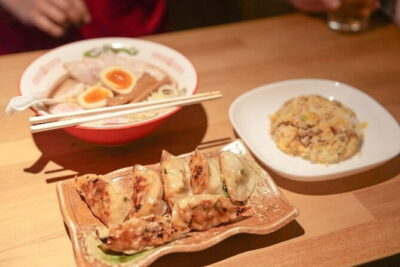
Kyoto Ramen and Gyoza Cooking Class with Professional Chefs
Read our review →
Gyoza Cooking Class in Kyoto: Traditional Japanese Dumplings
Read our review →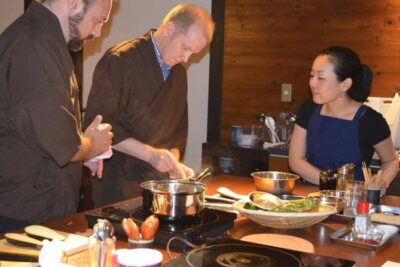
Browse the lists this tour appears in