
REVIEW · FUSHIMI INARI SHRINE TOURS
Kyoto: Early Morning Fushimi Inari Shrine – Beat the Crowds
Fushimi Inari is at its best before Kyoto fully wakes up. This early-morning visit gives you a quieter walk beneath thousands of orange torii gates, with a much better chance of taking a clean photo instead of photographing the backs of other people’s heads.
I like two things here: the local guide’s cultural explanations, and the built-in viewpoint and lesser-known stop beyond the main shrine buildings. Guides including Teppei, Akino, Hiro, and Yoshi have earned warm praise for their kindness and clear explanations. The trade-off is real, though: this is a mountain walk with stairs and slopes, not a flat shrine stroll.
In This Review
- Key points
- Why early morning is the right time for Fushimi Inari
- Finding your guide outside JR Inari Station
- The first 90 minutes among the orange torii gates
- The mountain route, stairs, and changing pace
- The 30-minute viewpoint above the shrine
- A lesser-known stop with local legend
- What the $70 price buys you
- The guides are a major part of the experience
- Who should book this Fushimi Inari walk?
- FAQ
- Where does the tour meet?
- How long does the experience last?
- What language is the tour offered in?
- Is this a private tour or a group tour?
- Does the tour include a walk up the mountain?
- What should I wear and bring?
- Is the tour suitable for children under 10?
- Is the route suitable for wheelchair users?
- Can I cancel for a refund?
- Do I have to pay when I book?
- Should you book the early Fushimi Inari tour?
Key points
- Early access to Fushimi Inari: Start when the paths are quieter and the heat is lower.
- A guided walk through the torii tunnels: Learn how to show respect at the shrine rather than simply passing through for photographs.
- A viewpoint above the main approach: The route adds a scenic reward beyond the famous orange gates.
- Local stories about fox deities and Inari worship: Your guide gives meaning to details that are easy to miss alone.
- A special Inari souvenir: Take home an item described as unique to the shrine and unavailable elsewhere.
- A demanding 150-minute outing: Comfortable shoes are essential, and the tour is not suitable for people with limited fitness or mobility.
Why early morning is the right time for Fushimi Inari
Fushimi Inari Taisha is one of Japan’s most famous sights, and its orange torii gates draw a steady stream of people during the day. The setting is photogenic, but popularity changes the mood. The lower paths can become packed, and the narrow gate tunnels are not much fun when everyone stops at once for the same photograph.
This tour tackles that problem with an early start. You meet at JR Inari Station and head into the shrine while the day is still cool and relatively calm. You will not have the mountain to yourself, but arriving early gives you breathing room and a better chance to notice the small shrines, fox figures, stone markers, and changing light beneath the gates.
I especially like the timing in warmer months. One participant who joined in July valued both the lower crowd levels and the cooler air. That matters in Kyoto, where a sunny climb can feel far harder by late morning.
The early hour also changes the experience from a quick photo stop into a quiet walk through an active place of worship. You are still seeing an internationally famous sight, but you have more room to listen, ask questions, and pause without blocking the path.
More ways to walk Fushimi Inari:
- Kyoto: Fushimi Inari, Kinkakuji, Bamboo Grove 1 Day Bus Tour
★ 4.8 · 4,316 reviews - Fushimi Inari Hidden Hiking Tour (Private Option Available)
★ 5.0 · 1,750 reviews - Kyoto/Osaka: Nara, Fushimi Inari Taisha, Arashiyama Bus Tour
★ 4.7 · 1,275 reviews
Finding your guide outside JR Inari Station
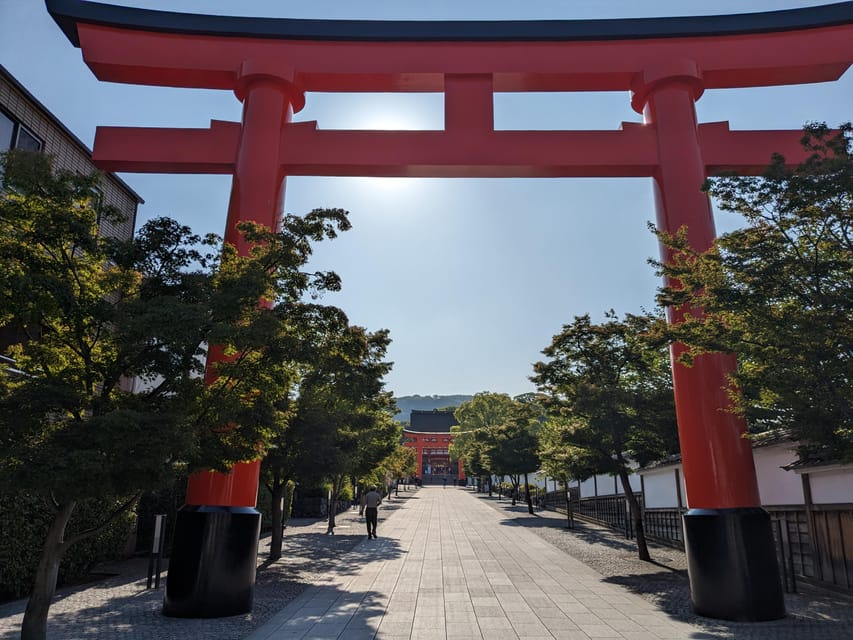
The meeting point is outside, across from the main entrance to JR Inari Station. Look for a bright yellow DeepExperience signboard held by your English-speaking guide.
This detail is worth taking seriously. Inari Station is easy to confuse with other nearby stations, and the train service can be less direct than expected. One party arrived late after taking a non-express train that stopped at several stations instead of using a faster service. The guide handled the delay kindly, but you should still check your route and allow extra time.
Meeting at JR Inari Station is convenient because the shrine begins right by the station. It also removes the need to search for a café, side street, or hotel entrance in the early morning. Bring only what you need. Large bags, luggage, baby strollers, and baby carriages are not allowed on the activity.
The advertised language is English, and private or small-group options are available. A small group should make it easier to hear explanations and ask questions. A private outing may suit you if you want a slower pace or more time for photographs, though the price and exact group arrangement should be checked when booking.
The first 90 minutes among the orange torii gates
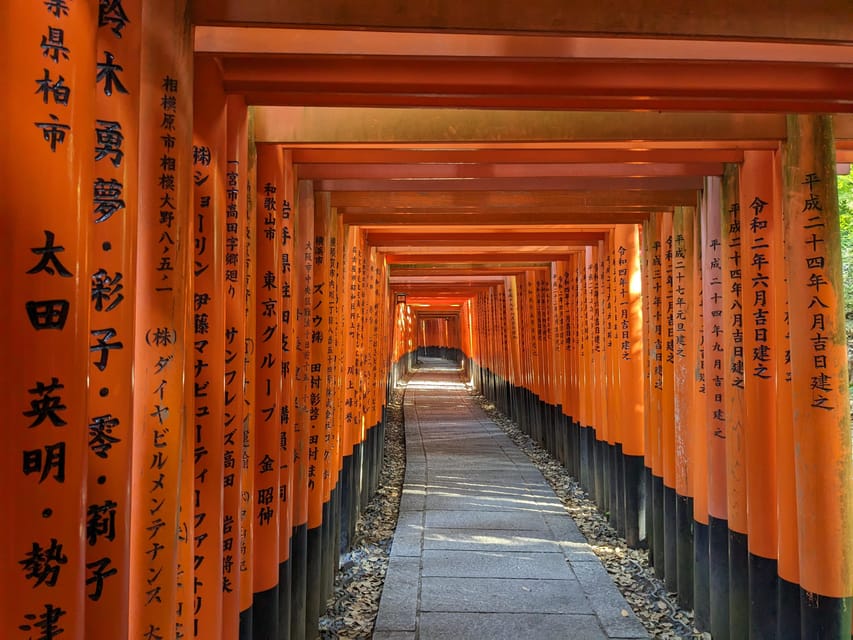
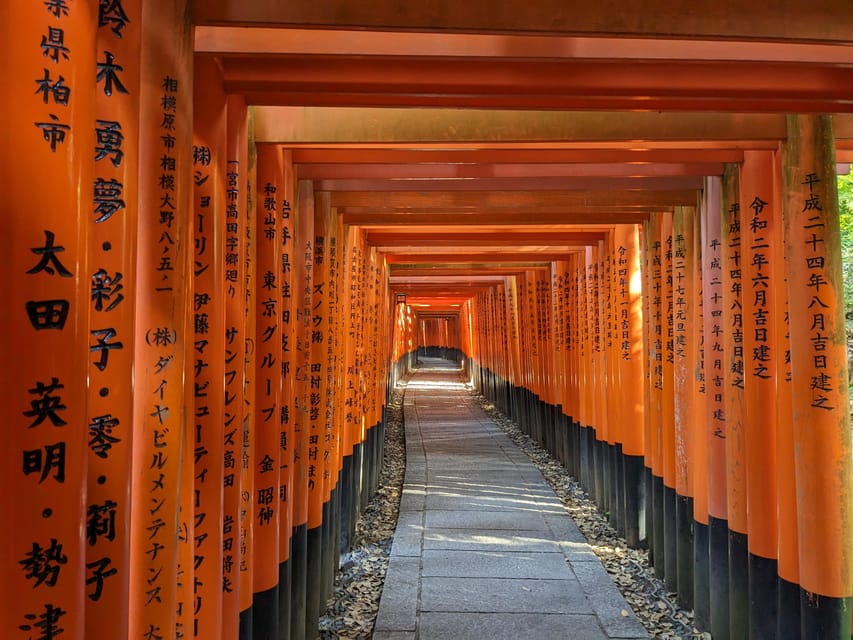
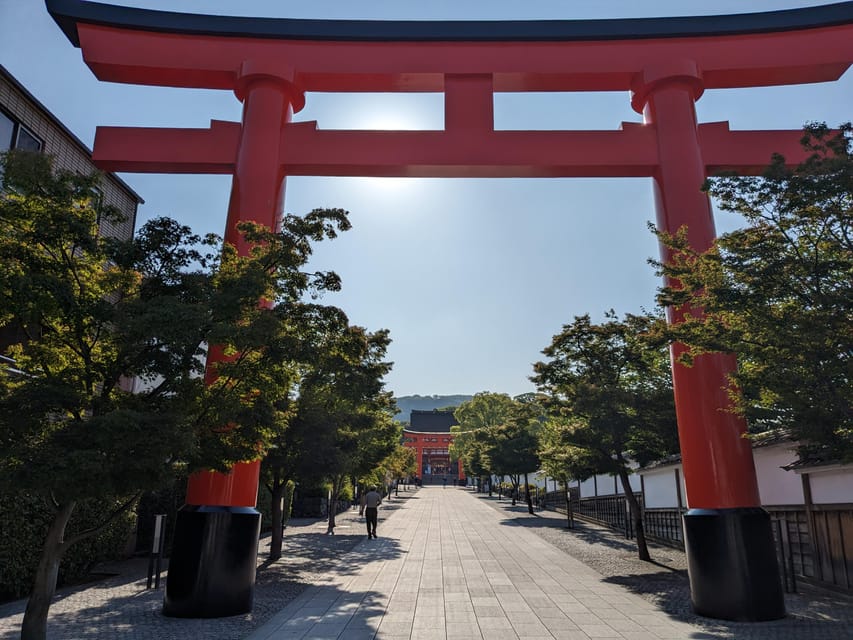
The main guided portion lasts about an hour and a half. You begin at Fushimi Inari Taisha, passing through the famous torii gates and learning why they cover the mountain paths in such dense rows.
The gates are not simply decorative. They represent offerings connected with Inari, the Shinto deity associated with rice, business, and prosperity. Your guide can help you understand the meaning behind the shrine’s layout and explain customs that are easy to miss when you are focused on getting a picture.
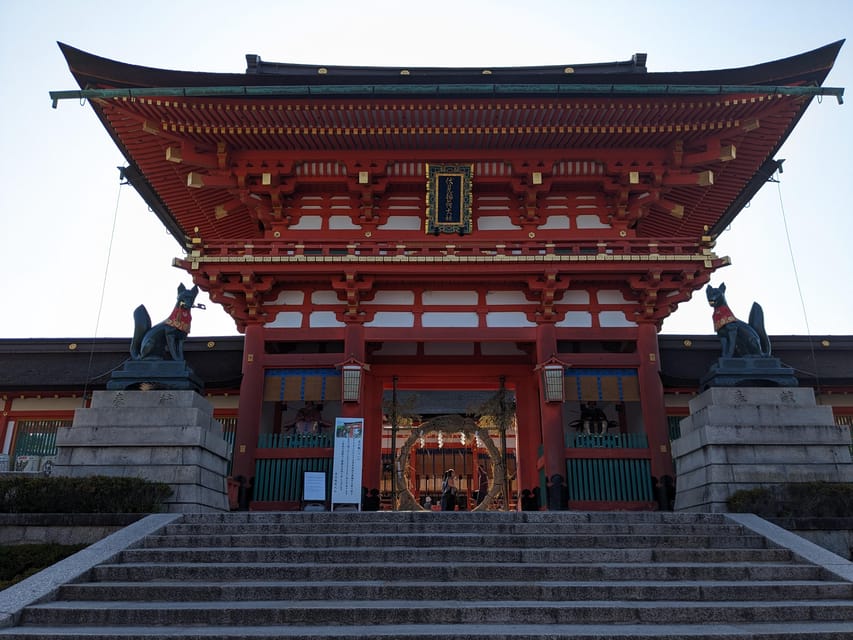
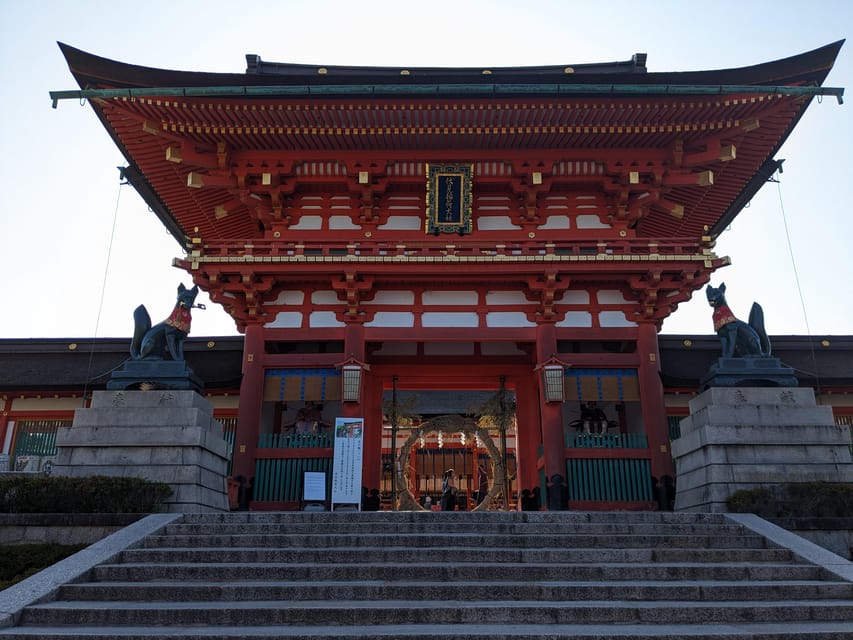
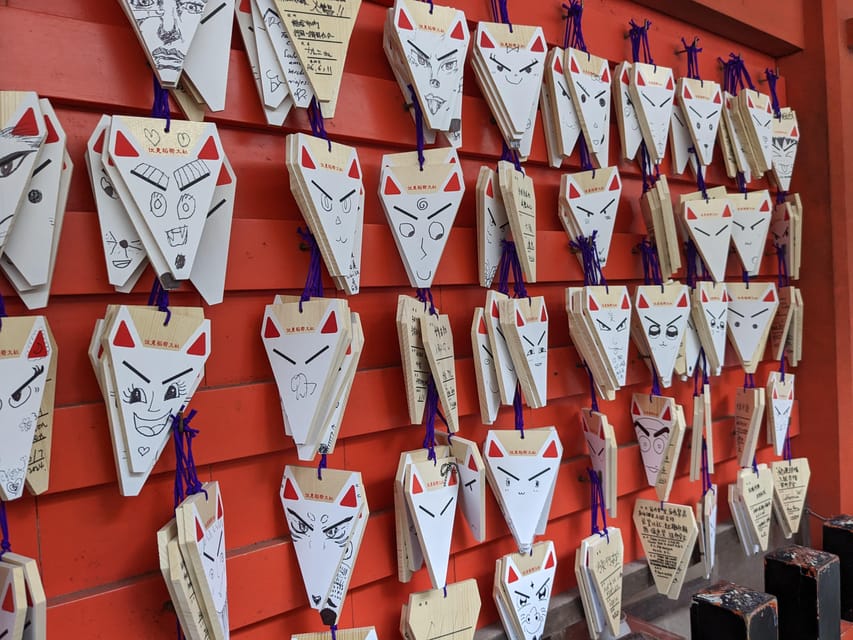
Fox figures appear throughout Fushimi Inari because foxes are linked with Inari worship. Look for these stone guardians and other small details along the route. A guide gives you a reason to stop at them instead of treating the shrine as one long orange corridor.
One particularly useful part of the walk is learning how to pay respect at the main torii and shrine areas. Hiro was praised for explaining these steps carefully, guiding the group through the site with a clear sense of respect for the place. That kind of help is valuable if this is your first visit to a Japanese shrine and you do not want to copy other people without understanding what you are doing.
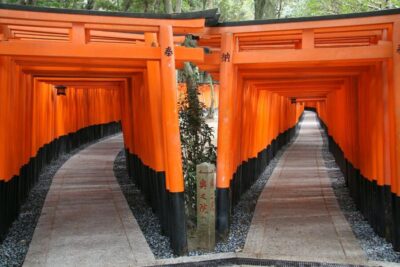
The torii tunnels are the visual star. Their repeated beams create strong lines, shadows, and bright patches of color. Early in the day, you can take photographs with fewer people in the frame, but do not expect every section to be empty. Fushimi Inari remains a major destination even at an early hour.
The walk is not only about the famous gates. Guides point out smaller structures and local details while explaining the shrine’s continuing importance to people in Kyoto. Several guides have been praised for sharing cultural information with warmth rather than delivering a dry lecture. Teppei, in particular, has been singled out for clear explanations, patience, and practical help during the walk.
The mountain route, stairs, and changing pace
Fushimi Inari extends up Mount Inari, so the route includes uphill walking and stairs. Some participants describe the experience as a climb to the top of the mountain, while the official description presents it as a scenic walk through the holy mountain with a viewpoint and an additional stop.
Either way, plan for exertion. The tour lasts 150 minutes, and the time includes more than a quick look at the shrine’s entrance. Comfortable shoes and comfortable clothes are required for good reason. You should be able to handle a sustained walk on uneven, sloped paths.
The climb is part of the value. As you move away from the busiest lower section, the atmosphere can become calmer and the gates feel less like a single famous image and more like a path through a sacred site. The physical effort also gives the visit a natural rhythm: walk, listen, pause, take in the view, then continue.
That same climb is the main limitation. This tour is not suitable for people with back, heart, respiratory, or mobility problems, wheelchair users, people with a low level of fitness, or anyone affected by altitude sickness. It is also not suitable for children under 10 or people over 70 according to the supplied conditions. If stairs are difficult for you, choose a shorter visit around the lower shrine instead.
Do not arrive intoxicated, and do not bring large luggage. These are simple rules, but they matter on a narrow mountain route where space is limited.
More Kyoto shrines:
- KYOTO Tea Ceremony with kimono near by Imamiya Jinjya Shrine
★ 5.0 · 343 reviews - Kyoto: 3-Hour Fushimi Inari Shrine Hidden Hiking Tour
★ 4.9 · 270 reviews - E-Bike Nara Highlights – Todaiji, Knives, Deer, Shrine
★ 4.8 · 186 reviews - Kyoto Magical Night English Tour: Gion & Fushimi Inari Shrine
★ 5.0 · 97 reviews
The 30-minute viewpoint above the shrine
After the main guided walk, the experience includes about 30 minutes for sightseeing at a viewpoint. This gives you a reason to keep going beyond the first torii tunnels, where many independent visits end.
The exact view can depend on the day’s weather and the guide’s route, but the point is clear: you get a wider look at the area rather than only close-up photographs of orange gates. Several participants valued the mountain views and the quiet early conditions, especially in warm weather.
Use this pause to slow down. The most memorable part of Fushimi Inari is not always the largest gate or most famous angle. Morning light, layers of torii, and the sense of being above the shrine can make this stop feel more personal than the crowded entrance area.
Your guide can also help with photographs. Maru was praised for taking several beautiful pictures, and other guides have been described as attentive to the group’s needs. Still, bring realistic expectations. The tour offers a better setting for photographs, not a guarantee that every image will be empty or that weather will cooperate.
A lesser-known stop with local legend
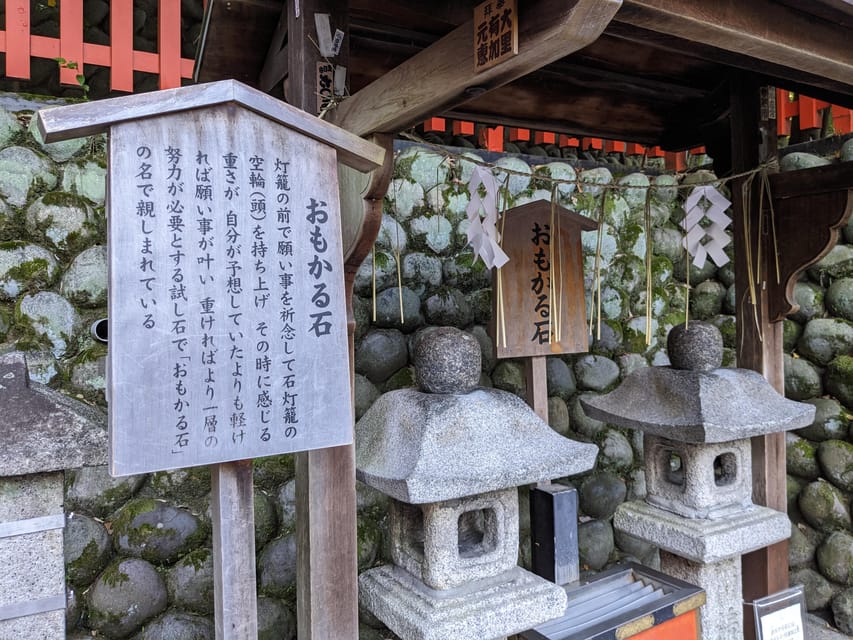
The final guided portion lasts about 30 minutes and visits a lesser-known spot connected with local belief. One account describes a small fountain said in legend to cure all illness. Treat that as a story and part of the shrine’s tradition, not as medical advice.
This is exactly the sort of detail that can disappear on a self-guided visit. You may walk past a fountain, small shrine, or stone marker without knowing why it matters. A local guide gives the place a human context and explains how stories, religious practice, and daily life overlap at Fushimi Inari.
The stop also breaks up the famous route. You get the postcard view, the mountain walk, and a quieter detail that is less likely to be on your standard Kyoto checklist. That combination makes the tour more useful than simply paying someone to lead you to the first row of gates.
After the final stop, you return to JR Inari Station. The full experience takes about two and a half hours, so it fits neatly into a morning before lunch or another Kyoto sight.
What the $70 price buys you
At $70 per person, this is not the cheapest way to see Fushimi Inari. You can enter the shrine without paying for admission, and an independent visit costs only your transportation and time.
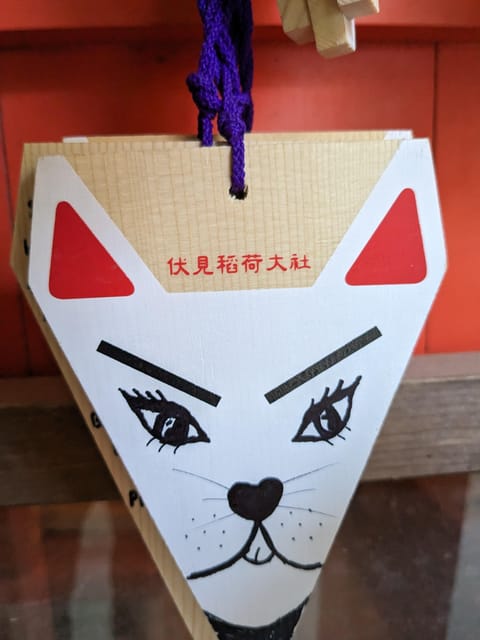
The value comes from three things. First, the early timing helps you avoid the worst crowds and heat. Second, an English-speaking local guide explains shrine customs, deities, torii gates, and local traditions. Third, the route includes a viewpoint, a lesser-known stop, and a special Inari souvenir that is not available elsewhere.
For a first visit to Kyoto, that added context can justify the price. Fushimi Inari is easy to photograph but harder to understand. A guide helps you recognize what you are seeing and gives you a more respectful way to move through the shrine.
The value is weaker if you already know Shinto customs, have visited Fushimi Inari before, or plan to spend only a short time at the lower gates. It is also less appealing if you dislike fixed walking routes or want to explore at your own pace.
Private and small-group formats are available, which may affect the final price and the feel of the morning. Check the available option before booking. Free cancellation up to 24 hours before the activity and reserve-now, pay-later booking make it easier to fit the tour into a changing Kyoto schedule.
The guides are a major part of the experience
The strongest pattern is the quality of the individual guides. Teppei has received especially strong praise for kindness, clear communication, patience, and a genuine love of sharing Kyoto. One family member who expected to dislike a two-and-a-half-hour mountain walk ended up calling it the highlight of the Japan trip, largely because of his approach.
Akino has also been praised for cultural insight and practical help. She even helped one group with later Kyoto and Hiroshima plans and accompanied them on the train afterward to make sure they reached their destination safely. That is beyond the basic job description, but it shows the sort of personal attention this experience can provide.
Hiro focuses on shrine etiquette and the meaning of the route, while Maru has been appreciated for his warmth and help with photographs. Yoshi has been described as friendly, generous, and exceptionally engaging. You cannot select a particular guide unless the booking system allows it, but these names give you a useful sense of the human element involved.
The tour rating is 4.9 from 48 ratings, and the praise is remarkably consistent around the guides’ warmth, cultural explanations, and care. No tour is perfect for every group, but here the guide is not a minor extra. The guide is the main reason to pay for the experience.
Who should book this Fushimi Inari walk?
I would choose this tour if you are visiting Kyoto for the first time and Fushimi Inari is high on your list. It is also a strong choice if you want good photographs without arriving in the middle of the day, or if you prefer to understand a shrine rather than simply pass through it.
It suits adults and older children who can manage uphill walking. People who enjoy local stories, religious customs, photography, and scenic walks will get the most from it. The early hour is especially useful during summer, when avoiding heat can change the whole mood of a climb.
You may prefer to visit alone if you are fit, comfortable with stairs, and happy to research shrine etiquette yourself. An independent visit also lets you turn around whenever you like. This paid tour makes more sense when you want structure, interpretation, and a guide who can answer questions as you go.
Book it if a quiet, informed morning sounds better than a late-morning crowd. Skip it if you have mobility limitations, want a flat route, dislike early starts, or only need a quick photograph at the entrance.
FAQ
Where does the tour meet?
Your guide waits outside, across from the main entrance to JR Inari Station, holding a bright yellow DeepExperience signboard.
How long does the experience last?
The tour lasts 150 minutes, or two and a half hours.
What language is the tour offered in?
The tour is conducted in English by a live local guide.
Is this a private tour or a group tour?
Private and small-group options are available. Check the booking choice for the date and time you want.
Does the tour include a walk up the mountain?
Yes. The experience includes a scenic walk through the holy mountain, a viewpoint, and additional guided stops. Participants should expect slopes and stairs.
What should I wear and bring?
Wear comfortable clothes and comfortable shoes. Large bags, luggage, baby strollers, and baby carriages are not allowed.
Is the tour suitable for children under 10?
No. The activity is listed as unsuitable for children under 10 years old.
Is the route suitable for wheelchair users?
No. The activity is not suitable for wheelchair users or people with mobility impairments.
Can I cancel for a refund?
Yes. You can cancel up to 24 hours in advance for a full refund.
Do I have to pay when I book?
No. Reserve-now, pay-later booking is available, so you can hold a place without paying immediately.
Should you book the early Fushimi Inari tour?
Book it if you want more than a quick look at Kyoto’s most famous torii gates. The early start, mountain viewpoint, local legends, shrine etiquette, and warm English-speaking guides add real value to a place that can otherwise feel like a crowded photo stop.
Just be honest about the physical side. This is a proper uphill walk, and the tour is best for people who can manage stairs comfortably. If that describes you, $70 buys a calmer morning and a far better understanding of why Fushimi Inari matters.
More Morning in Kyoto
- From Kyoto: Nara Guided Morning Tour
★ 4.6 · 335 reviews - Kyoto Morning Tour from Kyoto or Osaka
★ 4.0 · 281 reviews - Kyoto: Morning Japanese Bento Cooking Class
★ 5.0 · 149 reviews - Kyoto: Arashiyama Bamboo Forest Morning Tour by Bike
★ 5.0 · 115 reviews
More Kyoto Early Morning Tours in Kyoto
- Kyoto Early Morning Tour with English-Speaking Guide
★ 5.0 · 1,427 reviews - Kyoto: Early Morning Tour with English-Speaking Guide
★ 4.9 · 1,128 reviews - Nara Early Morning Tour (Kyoto or Osaka Departure Available)
★ 5.0 · 676 reviews - Arashiyama Bamboo Forest & Hidden Gems Bike Tour (Early Bird)
★ 5.0 · 613 reviews
Recently added around Kyoto
- Higashiyama | Kyoto: Sakura Season Private Rickshaw Tour★ 5.0 · 3 reviews
- Kyoto Kimono Rental CHAMATSU|Kimono/Yukata Rental FamilyPlan★ 5.0 · 3 reviews
- Kyoto: Half-Day Private Guided Tour to the Old Town of Gion★ 4.4 · 3 reviews
- Nara Private Customizable Half Day Tour★ 5.0 · 3 reviews
- Kansai Region Hiking Adventure in Nara Kobe Kyoto and More★ 5.0 · 3 reviews
- Full Day Nara Deer, Temple, Shrine, Activities & Tea Ceremony★ 5.0 · 3 reviews
- Nara: Essential Private Tour with Deer Park and Temples★ 5.0 · 3 reviews
- Hiking Tour for Sacred Sites in Kyoto with a Guide★ 5.0 · 3 reviews
Fushimi Inari Shrine Tours, compared.
Fushimi Inari, Kinkakuji, Bamboo Grove 1 Day Bus Tour
Read our review →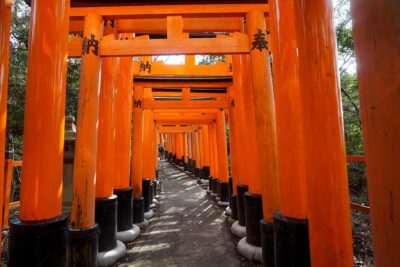
Fushimi Inari Hidden Hiking Tour (Private Option Available)
Read our review →
Kyoto/Osaka: Nara, Fushimi Inari Taisha, Arashiyama Bus Tour
Read our review →
Nijo, Kinkaku-ji, Arashiyama, Kiyomizu & Fushimi Inari
Read our review →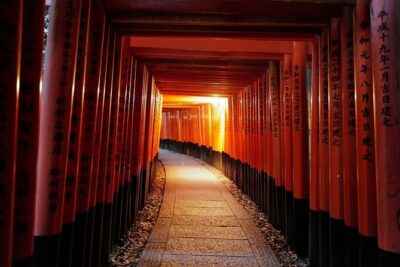
Kyoto Early Bird English Tour: Fushimi-Inari and Arashiyama
Read our review →
Fushimi, Arashiyama – Bamboo, Monkey, Torii & Secrets
Read our review →Browse the lists this tour appears in