
REVIEW · KYOTO SAMURAI EXPERIENCES
Kyoto 2 Hours Genuine Kendo / Samurai Experience In Japan
Kyoto’s kendo lesson gives you more than a quick samurai photo opportunity. In about two hours, you learn how to bow, move, hold a bamboo sword, wear protective armor, and put the basics together in practice. The lesson also explains the values behind kendo, including manners, discipline, and control.
I like the clear progression, from warm-up and footwork to striking a dummy and facing another student. I also like the practical setup: all equipment, bottled water, and a towel are provided. The main consideration is physical effort. The armor and warm dojo can make this a sweaty session, and you’ll want moderate fitness for the footwork and drills.
- Meet at Hanazono Station: Your instructor meets you at the station and walks you less than five minutes to the dojo.
- English-friendly teaching: Instructor Takahiro Hayashi has experience explaining kendo to international visitors.
- A real introduction to kendo: Learn etiquette, terminology, footwork, strikes, and the role of armor.
- Bamboo-sword practice: Work with a shinai, first on a practice target and later in a controlled match.
- Equipment included: Armor, kendo gear, water, and a towel are supplied.
- Small-group feel is possible: The maximum group size is 30, though some sessions may be much smaller.
In This Review
- A Samurai Lesson With Real Kendo Structure
- Meeting at Hanazono Station at 10:00
- Warm-Up, Bowing, and the Meaning of Kendo
- Footwork Before the Bamboo Sword
- Armor, Shinai, and Practice Targets
- The Most Exciting Part: A Controlled Match
- What Makes the Instructors Important
- How Much Value Do You Get for $118.89?
- Heat, Effort, and What to Bring
- Who Should Book This Kyoto Experience?
- Booking Details and Cancellation Flexibility
- Should You Book the Kendo Lesson?
- FAQ
- Where does the kendo experience start?
- What time does the activity begin?
- How long does the kendo lesson last?
- Is equipment included?
- Is the lesson taught in English?
- Do I need prior kendo experience?
- How physically demanding is the activity?
- Does the experience include hotel pickup?
- Can I cancel for a refund?
A Samurai Lesson With Real Kendo Structure
Kendo is often presented to visitors as a samurai-themed activity. This Kyoto experience goes further by teaching the framework of the martial art rather than simply handing you a sword and posing for pictures.
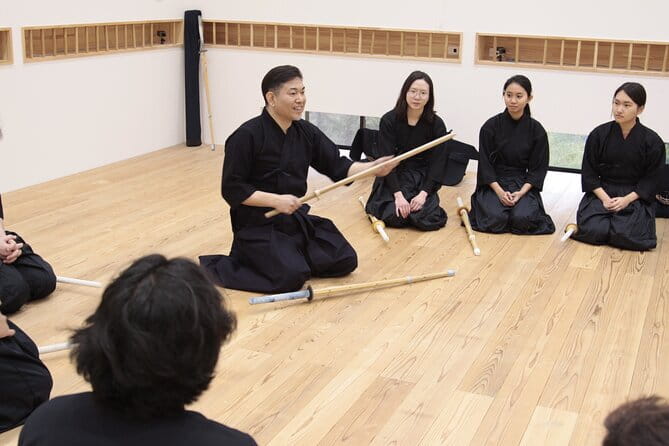
You begin with the ideas that guide kendo: spirit, manners, and lifelong practice. The lesson connects physical movements with etiquette, so bowing and disciplined conduct are part of the activity, not decoration around it. That makes the class useful for anyone who wants a clearer sense of how Japanese martial arts work.
You’ll also hear about kendo’s development and learn basic terms before moving into physical practice. The emphasis is not just on hitting an opponent. It is on posture, timing, focus, and controlled movement.
The session is led by experienced instructors, including seventh-dan master teachers. Takahiro Hayashi is specifically named as one of the instructors, and his role includes meeting participants at the station, guiding the class, and helping with photos and videos. English instruction is an important part of the experience, since many kendo teachers in Japan do not regularly teach in English.
Meeting at Hanazono Station at 10:00
The meeting point is Hanazono Station on the San-In line in western Kyoto. Your start time is 10:00 am, and the instructor meets you at the station before walking to the dojo, which is less than five minutes away.
That short walk matters. You do not need to search for an unfamiliar martial-arts hall on your own, and the station provides a simple place to get your bearings. One practical detail to remember is that the activity begins at the station, not at your hotel. Hotel pickup and drop-off are not included.
Hanazono is not Kyoto’s main sightseeing center, so check the train route before booking. The station is near public transportation, but you should allow enough time to arrive before 10:00. A late arrival could cut into a tightly scheduled two-hour lesson.
The activity ends back at the meeting point. That makes it easy to continue by train after class, though the supplied information does not give a precise finish time beyond the approximate two-hour duration.
More samurai and sword sessions:
- Kyoto Samurai Experience
★ 5.0 · 1,294 reviews - Kyoto: Kendo and Samurai Experience with Uniform and Gear
★ 4.9 · 815 reviews - Kyoto: Samurai Sword Class by Experts in Traditional Arts
★ 4.9 · 657 reviews
Warm-Up, Bowing, and the Meaning of Kendo
The class begins with a warm-up and an introduction to proper conduct. You’ll learn that kendo places real importance on manners, including how you enter practice, how you bow, and how you treat your training partner.
This opening may feel slower than a typical tourist activity, but it gives the class its character. You are not simply learning how to swing a bamboo sword. You are being shown why the movements are performed with restraint and why discipline is part of the sport.
For beginners, this is helpful. You do not need prior martial-arts experience, and the lesson builds from basic ideas. The instructors explain the rules and terminology in a way intended for English-speaking participants, then show how those ideas work in practice.
I would pay close attention during this part. The etiquette can seem formal at first, but it helps you understand that kendo is not a loose sword-fighting game. Respect and self-control shape the entire session.
Footwork Before the Bamboo Sword
After the introduction, you work on footwork and basic body movement. This is one of the most useful parts of the lesson because it shows how much kendo depends on balance and position.
You may expect the sword to be the main event, but beginners quickly see that the feet matter first. The class progresses from movement to weapon handling, so you have a chance to build confidence before taking on more complicated drills.
The pace is designed to be approachable. The instructor demonstrates each action, breaks it into smaller parts, and gives you time to copy it. That English-friendly teaching is especially valuable here because footwork is hard to understand from a quick demonstration alone.
You should still expect to work. The activity calls for a moderate level of physical fitness, and the repeated movements can make the lesson feel like a workout. Comfortable clothing and shoes suitable for movement are sensible choices, though the supplied information does not specify a dress code.
Armor, Shinai, and Practice Targets
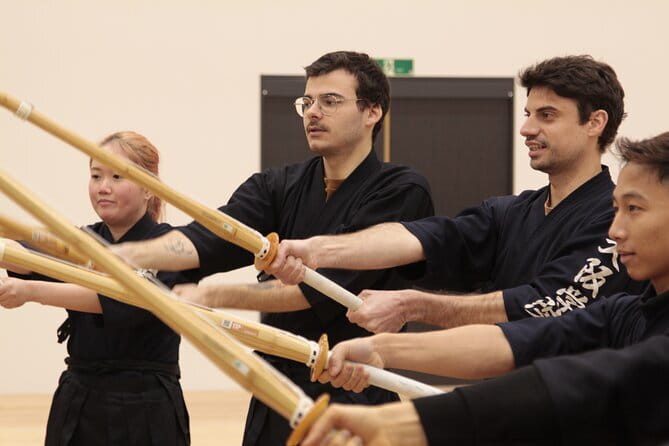
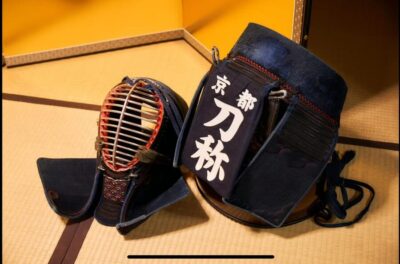
The equipment rental is included, so you do not need to arrange kendo armor or bring a bamboo sword. The class introduces you to the protective gear and explains how to use it.
Putting on armor is part of the experience, but it also changes how the session feels. Kendo equipment can be warm and restrictive compared with ordinary sightseeing clothes. That is why the towel and bottled water are useful additions rather than minor extras.
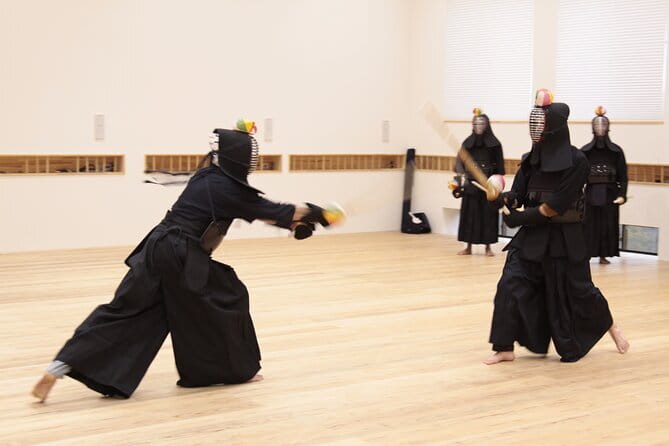
The class then moves toward basic strikes. A typical progression described for this experience starts with footwork, continues to practice with weapons on a dummy, and then moves toward partner work. This order gives you a safe way to learn the motion before trying it in a more active setting.
You should not expect to become a skilled kendoka in two hours. The value is in getting a careful first look at the sport, trying the movements yourself, and understanding how the armor, sword, rules, and etiquette fit together.
A few more Kyoto experiences worth comparing
- Kyoto Gion: 2-Hour Geisha Culture & History Walking Tour
★ 5.0 · 1,186 reviews - Ninja 2-hour Hands-on Lesson by Japanese master in Kyoto -Medium
★ 5.0 · 218 reviews - Kyoto: 2-Hour Maiko Makeover and Photo Studio Shoot
★ 4.7 · 122 reviews - 2 Hour Night Walking Tour Throughout Gion with snack
★ 4.0 · 13 reviews
The Most Exciting Part: A Controlled Match
The lesson may finish with a match between participants, and some sessions include the chance to face the instructor. This is the point where the earlier drills begin to make sense.
The match is not presented as a serious competition. It is a controlled way to use what you have learned, with the instructor keeping the activity safe and fun. For many people, this will be the most memorable part because it turns a lesson into a shared experience.
If your group is small, you may have more time for individual attention. One account describes a session with only a few participants and a chance to fight against the sensei. That possibility should not be treated as guaranteed, but it shows why group size can affect the feel of the class.
The listed maximum is 30 participants. That is a fairly large ceiling for a hands-on martial-arts lesson, so I would not assume every session will be intimate. The actual experience may vary by booking date and group makeup.
What Makes the Instructors Important
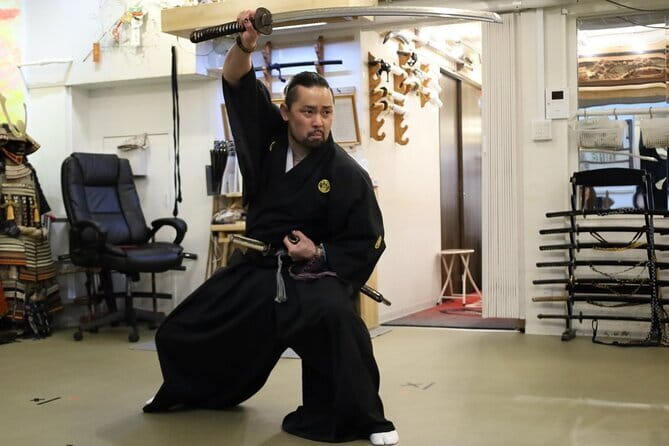
A good kendo lesson depends heavily on the teacher. The movements are unfamiliar, and a rushed explanation would leave you waving a sword without understanding what you are doing.
Takahiro Hayashi is named as an instructor for this experience. He is described as friendly, energetic, and patient, and he has helped participants take photos and videos during the visit. Those small touches matter if you want a keepsake without interrupting the lesson to manage your own camera.
The teaching style also appears suited to families and first-timers. The class breaks down the fundamentals, and the instructor gives participants room to become comfortable before progressing. You are not expected to arrive with a martial-arts background.
Still, English-friendly does not mean every technical term will feel instantly simple. Kendo has its own language and customs, and the class introduces both. You’ll get the most from it if you listen carefully and accept that the first few movements may feel awkward.
How Much Value Do You Get for $118.89?
At $118.89 per person, this is not the cheapest two-hour activity in Kyoto. The price makes more sense when you consider what is included: instruction, kendo equipment, armor, a bamboo sword for practice, bottled water, and a towel.
You are also paying for access to a guided activity that would be difficult to arrange independently, especially if you do not speak Japanese. Finding an English-speaking kendo teacher, obtaining armor, and locating a suitable dojo would take time and would likely not produce the same focused introduction.
The value is strongest for people who want an activity rather than another sightseeing stop. You spend the session learning a specific skill and taking part in a practice tradition. If you only want a quick samurai photo, the price may feel high. If you want a structured cultural lesson with real physical participation, the cost is easier to justify.
The experience is commonly booked well ahead, with an average lead time of 44 days. That suggests you should not wait until the last minute if the date and 10:00 start fit your Kyoto plans.
Heat, Effort, and What to Bring
The armor makes the class physically warmer than the two-hour duration might suggest. You should be prepared to sweat, especially during footwork, repeated strikes, and partner drills.
A towel and bottled water are provided, but bringing extra water is still a practical choice if you tend to get thirsty during exercise. One useful tip is to wear something comfortable and allow a little time afterward to cool down and change plans.
The moderate fitness requirement is worth taking seriously. You do not need to be an athlete, and the instruction is aimed at beginners, but this is active participation. Standing, stepping, swinging, and wearing protective equipment can be tiring.
The class may suit older children and families, but the supplied information does not give a minimum age. If you are booking for a child, confirm suitability before paying. The same applies if you have a health concern that could make physical activity or heat uncomfortable.
Who Should Book This Kyoto Experience?
I would recommend this class to you if you want a hands-on cultural activity and have an interest in Japanese martial arts. It works especially well for first-time kendo students because the lesson covers rules, history, etiquette, footwork, armor, and basic strikes in one compact session.
Families can also find it appealing. The instruction is described as friendly and positive, and the progression gives everyone a clear task at each stage. It can be a good way to break up temple visits and walking tours with something active.
The class is less suitable if you want a quiet morning, dislike structured instruction, or have limited mobility. The activity involves physical movement and protective gear, and the maximum group size of 30 means the amount of personal attention may vary.
I would also think about your schedule. Meeting at Hanazono Station takes you outside the central sightseeing circuit, though the station connection and short walk to the dojo keep the route manageable. Plan your morning around the 10:00 start rather than trying to fit this in between two tightly timed attractions.
Booking Details and Cancellation Flexibility
Confirmation is received at the time of booking, and the ticket is mobile, so you can keep the booking on your phone. Public transportation is nearby, but you are responsible for getting to Hanazono Station.
Free cancellation is available if you cancel at least 24 hours before the local start time. Cancellations made less than 24 hours before the experience, as well as late changes, are not accepted for a refund.
Should You Book the Kendo Lesson?
Book it if you want to understand kendo from the inside, not just see a staged samurai display. The combination of etiquette, footwork, armor, bamboo-sword practice, and a possible match gives you a clear introduction in a short amount of time.
The strongest reasons to choose it are the English-friendly instruction, the station pickup by the instructor, and the complete equipment package. Takahiro Hayashi’s friendly teaching style is another plus, especially for families and people who feel nervous about trying a martial art for the first time.
Skip it if you are looking for a low-effort activity or if $118.89 feels too high for a two-hour class. For the right person, though, this is a practical and memorable Kyoto experience, with enough real instruction to make the samurai theme feel grounded in an actual Japanese martial art.
FAQ
Where does the kendo experience start?
The meeting point is Hanazono Station at Hanazonoteranouchicho, Ukyo Ward, Kyoto, 616-8043, Japan.
What time does the activity begin?
The scheduled start time is 10:00 am.
How long does the kendo lesson last?
The experience lasts approximately two hours.
Is equipment included?
Yes. All kendo equipment is included, along with a free kendo towel and bottled water.
Is the lesson taught in English?
The instructor has experience teaching kendo in English and can explain the basic concepts to English-speaking participants.
Do I need prior kendo experience?
No prior experience is stated as a requirement. The class teaches basic rules, terminology, footwork, armor use, and fundamental techniques.
How physically demanding is the activity?
Participants should have a moderate level of physical fitness. The class includes movement, footwork, sword practice, and wearing protective armor.
Does the experience include hotel pickup?
No. Hotel pickup and drop-off are not included. You must make your own way to Hanazono Station.
Can I cancel for a refund?
Yes, you can cancel for a full refund up to 24 hours before the local start time. Cancellations or changes made less than 24 hours in advance are not accepted.
Recently added around Kyoto
- Higashiyama | Kyoto: Sakura Season Private Rickshaw Tour★ 5.0 · 3 reviews
- Kyoto Kimono Rental CHAMATSU|Kimono/Yukata Rental FamilyPlan★ 5.0 · 3 reviews
- Kyoto: Half-Day Private Guided Tour to the Old Town of Gion★ 4.4 · 3 reviews
- Nara Private Customizable Half Day Tour★ 5.0 · 3 reviews
- Nara: Essential Private Tour with Deer Park and Temples★ 5.0 · 3 reviews
- Kansai Region Hiking Adventure in Nara Kobe Kyoto and More★ 5.0 · 3 reviews
- Full Day Nara Deer, Temple, Shrine, Activities & Tea Ceremony★ 5.0 · 3 reviews
- Hiking Tour for Sacred Sites in Kyoto with a Guide★ 5.0 · 3 reviews
Kyoto Samurai Experiences, compared.
Kendo and Samurai Experience with Uniform and Gear
Read our review →
Samurai Sword Class by Experts in Traditional Arts
Read our review →
Skip the lines Basic Ticket at SAMURAI NINJA MUSEUM KYOTO
Read our review →
Samurai Training with Modern day Musashi in Kyoto
Read our review →
Private Tea Ceremony and Sake Tasting in Kyoto Samurai House
Read our review →Browse the lists this tour appears in