
REVIEW · GION GEISHA DISTRICT TOURS
2 Hour Night Walking Tour Throughout Gion with snack
Kyoto after dark makes the old city easier to read. Lantern-lit streets, the Kamo River, temple grounds, geisha culture, and modern restaurants all sit within a short walk of one another. This two-hour tour with Simon connects those pieces without asking you to spend an evening at a pricey dinner or formal cultural show.
I like the strong first-night value: you get local orientation, history, food suggestions, and a traditional snack for $32.58. I also like the route’s mix of famous places and quieter corners, especially around Gion and Kiyamachi Street. The main concern is crowd control. Several people found Simon hard to follow during busy periods, and one group lost him near the end.
In This Review
- Key points to know before booking
- Starting at Kyoto’s busy Shijo-Kawaramachi crossing
- Yasaka Shrine gives the walk its historical anchor
- Hanamikoji Street and the difference between geiko and maiko
- Kiyamachi Street reveals Kyoto’s modern evening side
- The Kamo River closes the evening quietly
- What Simon does best as a guide
- Is $32.58 a fair price?
- Who should take this Gion night walk?
- Should you book the Gion night tour?
- FAQ
- How long does the Gion night walking tour last?
- Where does the tour start?
- Where does the tour end?
- Is dinner included?
- How many people can join the tour?
- Can I cancel for a full refund?
Key points to know before booking
- Yasaka Shrine opens the evening with a 30-minute introduction to one of Kyoto’s major religious sites.
- Hanamikoji Street explains geiko and maiko culture in the historic Gion district.
- Kiyamachi Street shifts from old Kyoto to modern nightlife, with restaurant advice from Simon.
- The Kamo River gives you a calm final stop where local people and entertainers gather.
- A traditional snack and geisha chocolate are part of the experience, but dinner is not included.
- Busy periods can affect the walk, with reports of a fast pace and difficulty keeping the group together.
Starting at Kyoto’s busy Shijo-Kawaramachi crossing
The meeting point is the Disney Store at the northeast corner of Shijo and Kawaramachi, inside or beside the Kotocross Hankyu Kawaramachi building. This is a central Kyoto location near public transportation, but it is also a busy shopping intersection, so give yourself time to identify the correct corner.
Simon has generally been punctual and easy to locate at the meeting point. One important caution comes from a failed departure reported by a participant who booked only two hours before the start. The guide later explained that the time slot had already been canceled and a full refund was being arranged. I would avoid booking at the last possible moment, and I would check your confirmation carefully before setting out.
The group limit is 10 people, which should make a walking tour feel personal. In practice, seasonal demand has occasionally produced a larger group. That matters in Gion, where narrow lanes, bicycles, cars, and crowds can make it difficult to hear a guide or see a person leading from the front.
The tour returns to the same meeting point. The complete walk lasts about two hours, with roughly 30 minutes at Yasaka Shrine, 40 minutes around Hanamikoji Street, 40 minutes along Kiyamachi Street, and 10 minutes by the Kamo River.
More evenings in Gion:
- Kyoto Geisha Walking Tour: Gion District & Hidden Gems
★ 4.7 · 3,273 reviews - Kyoto: Gion Magical Night Walking Tour with Geisha Trivia
★ 4.9 · 2,393 reviews - Kyoto: Gion Geisha District Walking Tour – Stories of Geisha
★ 4.7 · 2,187 reviews
Yasaka Shrine gives the walk its historical anchor
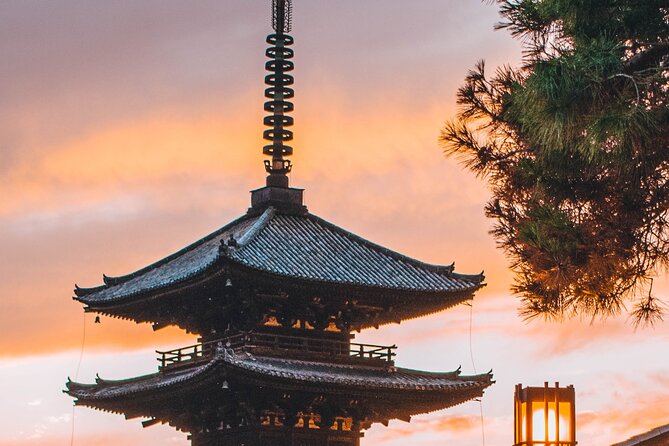
The first stop is Yasaka Shrine, one of the most important religious sites in Kyoto. You have time to walk around, take photographs, and hear Simon explain the shrine’s background.
This is a good opening because it places Gion within a broader picture of Kyoto. You are not simply looking at pretty gates and buildings. You are being shown how a major shrine connects with the surrounding district and its long-running social life.
The stop lasts about 30 minutes, long enough for a short explanation and a relaxed look around. It is not a detailed architectural tour, so you should not expect an expert lecture on every building or ritual. The benefit is orientation. Simon’s explanations help you understand what you are seeing before the walk moves into the smaller streets.
I especially like beginning here because the shrine provides a clear contrast with the entertainment areas later in the evening. Kyoto’s old religious spaces and its nightlife are not separate worlds. This route shows how close they are, both physically and culturally.
Hanamikoji Street and the difference between geiko and maiko
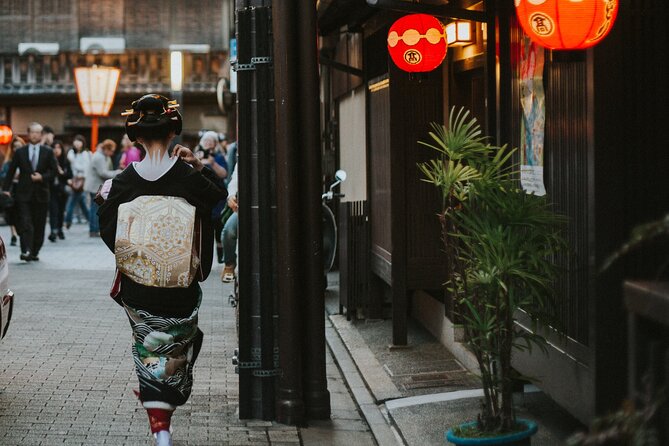
The heart of the tour is Hanamikoji Street, where you explore one of Kyoto’s oldest hanamachi districts. A hanamachi is an entertainment neighborhood associated with geiko, maiko, tea houses, and traditional performance.
Simon explains the difference between geiko and maiko, a distinction many first-time visitors miss. In simple terms, maiko are apprentices, while geiko are accomplished performers. The details of dress, age, training, and presentation are part of what makes the district more than a photogenic street.
The walk lasts about 40 minutes. You should expect explanations about the local community and the way traditional culture continues alongside everyday modern life. You might see a geiko or maiko moving through the area, but sightings are not guaranteed and should never be treated as the main purpose of the visit.
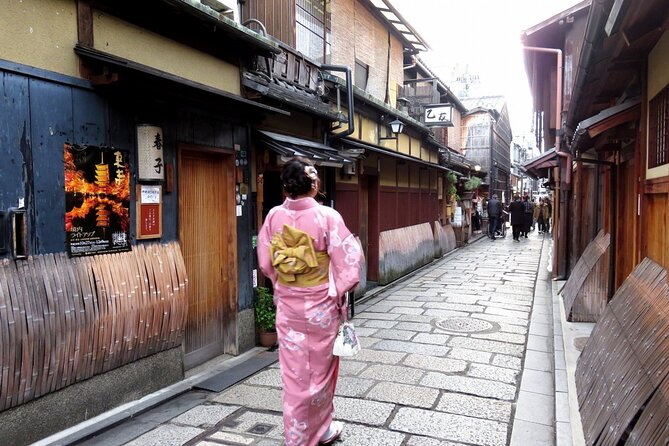
That point matters. Gion is a working neighborhood, not a stage set. People live and work here, and some visitors forget that when they see someone in traditional dress. The best use of this tour is learning how to look respectfully, stay out of the way, and appreciate the setting without turning local residents into photo subjects.
This section has earned especially strong praise for its cultural explanations and humor. Simon is described as clear, entertaining, and willing to answer questions. A few people also found that he spoke too much about his own experiences at times, so the tone may feel more personal than academic.
Hanamikoji can become crowded, particularly during high season. If you are in a group, stay close and keep the guide in sight. A participant had trouble keeping up and eventually lost the group for the final 20 minutes. The issue was blamed on the heavy crowds and a quick pace, but it is still useful advice for you.
Kiyamachi Street reveals Kyoto’s modern evening side
After Gion’s traditional atmosphere, the walk heads toward Kiyamachi Street, a modern entertainment district. The change is useful. You see that Kyoto is not only temples, formal gardens, and old wooden facades. It also has restaurants, bars, nightlife, and local hangouts.
This 40-minute section focuses on the feel of the area and on where to eat. Simon offers suggestions for restaurants that may not require reservations, which can be valuable if you are trying to plan the rest of your stay. Restaurant advice is one of the strongest practical benefits of taking the tour early in your visit.
I would treat these suggestions as starting points rather than guarantees. The tour does not include dinner, and no meal is provided as part of the price. You receive a traditional Japanese snack and a geisha chocolate, but you should plan a separate dinner if you want a full meal afterward.
The Kiyamachi portion also helps you get your bearings. After two hours, you should have a clearer sense of where Gion ends, where the entertainment district begins, and where you might return independently. That can save time later, particularly if you want an evening meal but do not have a reservation.
The tradeoff is pace. Forty minutes passes quickly when Simon is explaining several streets, recommending restaurants, and leading a group through crowded areas. If you prefer long photo stops or plenty of time inside individual buildings, this may feel rushed.
More walking tours in Kyoto:
- Night Walk in Gion: Kyoto’s Geisha District
★ 4.5 · 2,003 reviews - Kyoto Gion Geisha District Walking Tour – The Stories of Geisha
★ 5.0 · 1,441 reviews - Nishiki Market Brunch Walking Tour (7 Tastings + Brunch)
★ 5.0 · 1,355 reviews - Kyoto Arashiyama Walking Tour: Bamboo, Monkeys, Gardens & Secrets
★ 5.0 · 1,216 reviews
The Kamo River closes the evening quietly
The final stop is the Kamo River, where people gather and entertainers spend time. The stop lasts about 10 minutes, so you are not getting a long riverside stroll. Instead, it works as a short pause and a chance to hear the sounds of Kyoto at night.
This is a fitting finish. The river helps you understand the connection between the old districts and the city’s social life. After shrines and traditional streets, you end beside an open public space where people simply meet, sit, and pass through.
The river stop may be the least detailed part of the tour because of its short duration. Still, I like the change of pace. The walk begins with a major shrine, moves through Gion’s narrow lanes, crosses into modern nightlife, and ends in a more open setting.
You then return to the original meeting point. The route is not designed as a dinner tour, and it does not end at a restaurant, so plan your evening accordingly.
What Simon does best as a guide
Simon’s greatest strength is his ability to connect facts with personal experience. He explains Japanese culture, knows the Gion and Kyoto districts well, and adds humor to keep the walk from becoming a dry lecture. His English has been described as clear, which is helpful when the subject includes unfamiliar terms such as geiko, maiko, and hanamachi.
He also answers questions and offers ideas for the following days. That makes this a good first-night activity. You can use the restaurant tips and neighborhood orientation to shape the rest of your Kyoto visit.
The tone is informal. If you want a formal, tightly scripted presentation, Simon’s personal stories may occasionally feel like a distraction. If you prefer a guide who talks openly about local customs and his own experience, that same style may make the walk more engaging.
The biggest practical weakness is keeping the group together. Some participants found the pace too quick, particularly when streets were crowded. One person felt the group became too large, while another had trouble seeing the guide because he did not use a visible flag.
I would stay near Simon from the start, especially around Hanamikoji and Kiyamachi. If you have mobility concerns or prefer a slow pace, tell the guide at the beginning. Most people can participate, and service animals are allowed, but the route is a walking experience through busy city streets.
Is $32.58 a fair price?
At $32.58 per person, this is a reasonable price for a two-hour orientation walk in central Kyoto. You are paying for a guide, local context, a snack, geisha chocolate, and restaurant recommendations rather than admission to a major attraction. Yasaka Shrine and the other stops have no admission charge.
The value is highest if you are new to Kyoto, want help understanding Gion, or need dinner ideas for later in your trip. It is also useful if you enjoy asking questions and learning how a neighborhood works instead of simply taking photographs.
The value drops if you already know Gion well or want a slow photographic walk. You might also feel shortchanged if you expect dinner, extensive time at each stop, or a guaranteed geiko or maiko sighting. None of those are promised.
The group-size issue is worth weighing. A maximum of 10 sounds manageable, but seasonal crowds can make the walk feel less controlled. The tour has received both strong praise and serious criticism, including one no-show incident and one complaint about inaccurate or vague information. That mixed record suggests you should book for the route and the chance to talk with Simon, not for a flawless, highly formal production.
Who should take this Gion night walk?
I would recommend it to first-time Kyoto visitors, especially those arriving early in their stay. The tour gives you a basic map of Gion, introduces important cultural terms, and points you toward restaurants and nightlife areas.
It also suits you if you like a guide with humor and personal stories. The walk is likely to feel most useful to curious visitors who want to ask questions about local customs, traditional entertainment, and everyday life in Kyoto.
I would be more cautious if you are looking for a quiet, slow-paced outing. Crowds can make the guide hard to hear and follow. Families with younger children should consider the two-hour walking length and busy streets, although most participants can take part.
The tour requires good weather. If poor weather causes cancellation, you are offered another date or a full refund. You can cancel for a full refund up to 24 hours before the start time. Cancellations or changes within 24 hours are not accepted for a refund.
Should you book the Gion night tour?
Book this walk if you want a friendly introduction to Gion, practical food advice, and a clearer sense of how Kyoto’s old and modern districts fit together. The shrine, geisha culture, Kiyamachi nightlife, and Kamo River make a useful two-hour package, and the snack is a pleasant extra.
I would book it near the beginning of your stay and avoid a last-minute reservation. Keep close to Simon, expect crowds, and think of the restaurant recommendations as guidance rather than a dinner booking service. If you can accept those limits, $32.58 buys a worthwhile orientation to one of Kyoto’s most interesting evening neighborhoods.
FAQ
How long does the Gion night walking tour last?
The tour lasts approximately two hours.
Where does the tour start?
It starts at the Disney Store at the northeast corner of Shijo and Kawaramachi, at Kotocross Hankyu Kawaramachi in Kyoto’s Shimogyo Ward.
Where does the tour end?
The activity ends back at the original meeting point.
Is dinner included?
No. Dinner is not included. The experience includes a traditional Japanese snack and a geisha chocolate.
How many people can join the tour?
The stated maximum is 10 participants. During especially busy periods, the group may be larger.
Can I cancel for a full refund?
Yes. You can cancel at least 24 hours before the start time for a full refund. Cancellations made within 24 hours are not refunded. If poor weather causes the tour to be canceled, you are offered a different date or a full refund.
More 2-Hour Experiences in Kyoto
- Kyoto Gion: 2-Hour Geisha Culture & History Walking Tour
★ 5.0 · 1,186 reviews - Ninja 2-hour Hands-on Lesson by Japanese master in Kyoto -Medium
★ 5.0 · 218 reviews - Kyoto: 2-Hour Maiko Makeover and Photo Studio Shoot
★ 4.7 · 122 reviews - Kyoto 2 Hours Genuine Kendo / Samurai Experience In Japan
★ 5.0 · 57 reviews
More Kyoto Evenings
- Kyoto Night Foodie Tour in Gion (9+ dishes + 6 Sake tastings)
★ 5.0 · 1,762 reviews - Kyoto Gion Night Walk & Geisha District Guided Tour
★ 5.0 · 786 reviews - Kyoto Ghost Tour: Dark Tales, Urban Legends, Bamboo Forest Night
★ 5.0 · 625 reviews - Kyoto Bar Hopping Night Tour
★ 5.0 · 613 reviews
Recently added around Kyoto
- Higashiyama | Kyoto: Sakura Season Private Rickshaw Tour★ 5.0 · 3 reviews
- Kyoto Kimono Rental CHAMATSU|Kimono/Yukata Rental FamilyPlan★ 5.0 · 3 reviews
- Kyoto: Half-Day Private Guided Tour to the Old Town of Gion★ 4.4 · 3 reviews
- Nara Private Customizable Half Day Tour★ 5.0 · 3 reviews
- Kansai Region Hiking Adventure in Nara Kobe Kyoto and More★ 5.0 · 3 reviews
- Full Day Nara Deer, Temple, Shrine, Activities & Tea Ceremony★ 5.0 · 3 reviews
- Nara: Essential Private Tour with Deer Park and Temples★ 5.0 · 3 reviews
- Hiking Tour for Sacred Sites in Kyoto with a Guide★ 5.0 · 3 reviews
Gion Geisha District Tours, compared.

Kyoto Geisha Walking Tour: Gion District & Hidden Gems
Read our review →
Gion Magical Night Walking Tour with Geisha Trivia
Read our review →
Gion Geisha District Walking Tour – Stories of Geisha
Read our review →
Best of Kyoto: Gion, Geisha, Pagodas & Cobblestones
Read our review →

Kyoto Night Foodie Tour in Gion (9+ dishes + 6 Sake tastings)
Read our review →
Kyoto Gion Geisha District Walking Tour – The Stories of Geisha
Read our review →
Kyoto Gion: 2-Hour Geisha Culture & History Walking Tour
Read our review →Browse the lists this tour appears in