
REVIEW · GION GEISHA DISTRICT TOURS
Takashi’s local food adventure through Gion Kyoto tips of Ramen
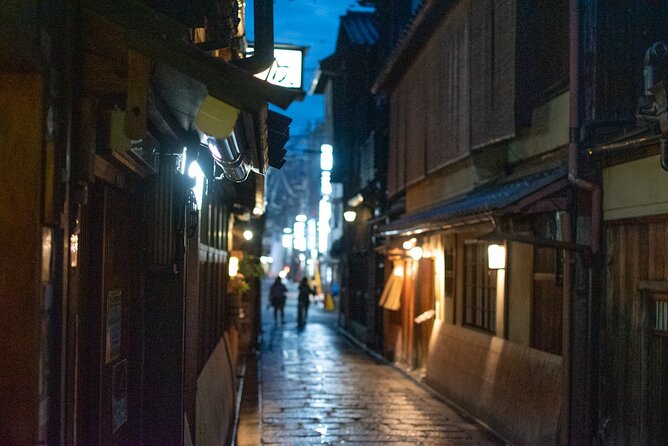
Gion after dark is the real draw here. You walk from Gion-Shijo Station through Kyoto’s old entertainment quarter, pass lantern-lit lanes and the grounds of Yasaka Shrine, then settle into a local restaurant that may be hard to find and harder to approach without Japanese. Takashi and Natsuki add context about geisha, maiko, shrines, pagodas, and Kyoto’s layout.
I like the private format, since your group can ask questions and adjust the pace. I also like the restaurant strategy: the destination changes, and the food may be ramen, katsu, or izakaya fare rather than one fixed tourist menu. The main catch is simple but important: your dinner is not included, and this is not necessarily a progressive tasting tour with many food samples.
In This Review
- Key points to know before booking
- What this Gion food adventure really offers
- Starting at Gion-Shijo Station at 7:30 pm
- Gion’s geisha and maiko traditions
- Yasaka Shrine and Gion’s cultural roots
- Canal lanes, lanterns, and the walk toward dinner
- The Kawaramachi restaurant stop
- What the price includes, and what it does not
- Who will get the most from this evening
- Practical details that affect the evening
- Should you book Takashi’s Gion food adventure?
- FAQ
- Where does the tour start?
- What time does the experience begin?
- How long does the tour last?
- Does the tour include dinner?
- Which restaurants will the tour visit?
- Is the tour private?
- Is Yasaka Shrine included?
- Can I cancel for a full refund?
Key points to know before booking
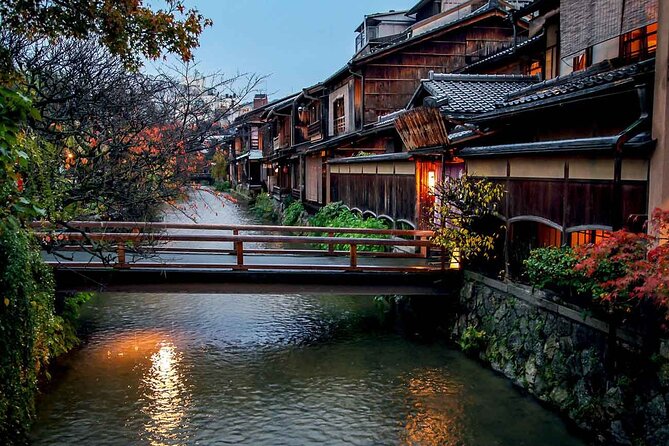
- Gion by night: Walk through Kyoto’s historic entertainment district when its lanterns and narrow lanes are at their most atmospheric.
- Yasaka Shrine: Spend about 30 minutes at one of Gion’s major cultural landmarks, with no admission charge.
- Private guidance: Only your own group takes part, making questions and pacing easier.
- Restaurant choice changes: The evening meal may center on ramen, katsu, izakaya dishes, or another local style.
- Food costs extra: You buy all food yourself, while the guide can pay for the guide’s own meal.
- Bring realistic expectations: The experience combines a night walk and one substantial restaurant stop, not a guaranteed series of tastings.
What this Gion food adventure really offers
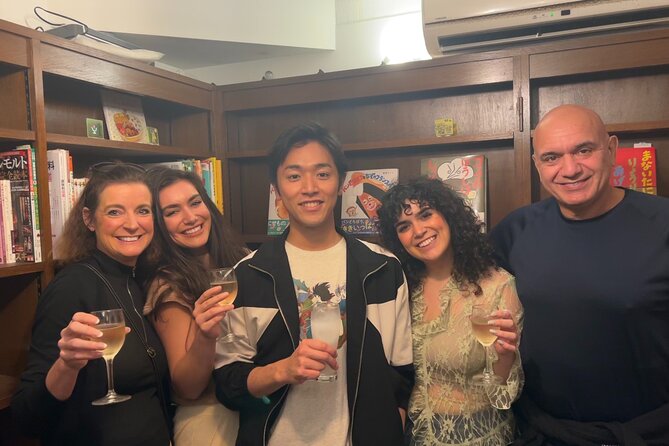
This is best understood as a private evening orientation to Gion with dinner, rather than a classic food crawl. You meet at Gion-Shijo Station at 7:30 pm and spend part of the evening walking through central Kyoto before heading to a restaurant in the Kawaramachi area.
The tour’s central idea is useful. Kyoto has plenty of restaurants, but finding a small local place can be difficult if you cannot read the signs or do not know how the ordering works. The guide helps you get there, choose dishes, and understand what you are eating.
That practical help matters more than it may first seem. A restaurant can look ordinary from the street and still serve excellent food, while a place with a polished sign may be aimed mainly at visitors. Takashi and Natsuki select different restaurants for different tours, so you do not receive a fixed dining experience every night.
The tradeoff is less certainty. You cannot book this expecting one specific ramen shop or a guaranteed menu. If you have your heart set on a particular dish, ask ahead of time whether the evening is likely to feature ramen, katsu, or izakaya food.
More evenings in Gion:
- Kyoto Geisha Walking Tour: Gion District & Hidden Gems
★ 4.7 · 3,273 reviews - Kyoto: Gion Magical Night Walking Tour with Geisha Trivia
★ 4.9 · 2,393 reviews - Kyoto: Gion Geisha District Walking Tour – Stories of Geisha
★ 4.7 · 2,187 reviews
Starting at Gion-Shijo Station at 7:30 pm
The meeting point is Gion-Shijo Station, at 1 Chome Miyagawasuji in Kyoto’s Higashiyama Ward. The start time is 7:30 pm, which gives you a useful change of pace after a day of temples and sightseeing.
You begin in Gion, an area that has served as a center of entertainment and culture for more than 500 years. The walk is not just about looking at old buildings. Your guide explains how the district developed, why entertainment traditions took root here, and how the streets connect with Kyoto’s wider city center.
I like this opening because it gives the meal a setting. You are not simply transported to a restaurant, fed, and sent back into the night. The food stop follows a walk through the part of Kyoto that helped shape the city’s performing arts and dining culture.
The exact walking pace depends on your group. The activity calls for moderate physical fitness, so expect to walk through streets and alleys for part of the evening. If you have spent the whole day on your feet, tell the guide early. One person who arrived tired chose to shorten the walking portion and go directly to the restaurant, which is a sensible option in a private tour.
Gion’s geisha and maiko traditions
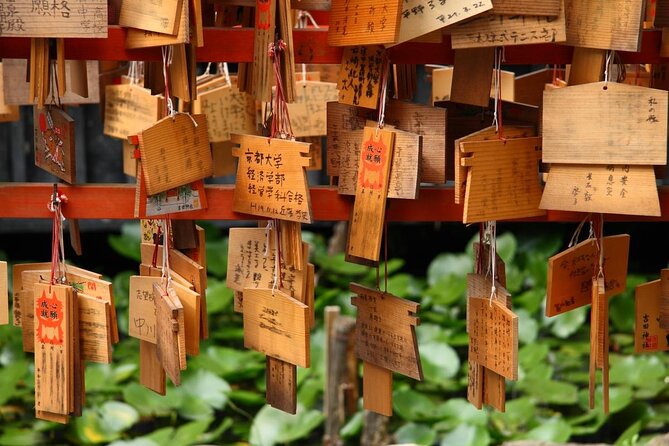
Gion is closely linked with geisha and maiko, the traditional female performers associated with music, dance, conversation, and formal hospitality. You may encounter a maiko or geisha during the walk, though there is no guarantee.
The important point is to treat any sighting as a brief part of the street scene, not as a performance arranged for your group. Your guide can explain who they are and how their roles differ. You also learn why Gion developed such strong ties to entertainment, including the influence of geisha and Kabuki culture.
This part of the experience is especially helpful if you have seen photographs of Kyoto’s white makeup and elaborate clothing but know little about the people behind the images. Takashi is described as a serious food enthusiast who also enjoys answering questions about geisha, pagodas, and Kyoto’s geography. Natsuki brings the same local connection and has been praised for making the evening feel comfortable and welcoming.
Keep your expectations in check. This is a walking explanation, not a geisha show, private meeting, or staged cultural presentation.
Yasaka Shrine and Gion’s cultural roots
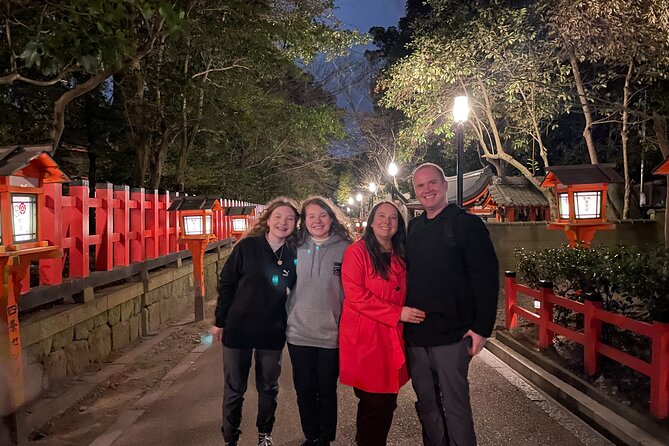
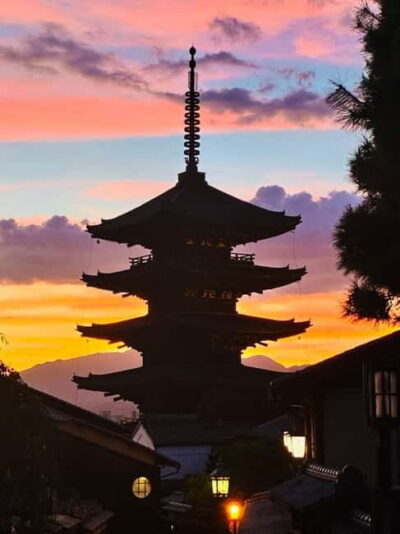
The tour spends about 30 minutes at Yasaka Shrine, with free admission. The shrine is important not only as a religious site but also because of its connection with Gion’s entertainment culture.
Yasaka Shrine helps explain why this district became such a major gathering place. As Gion grew around entertainment and hospitality, traditions connected with geisha and Kabuki developed nearby. Your guide points out traces of that past and places the shrine within the story of the neighborhood.
At night, the shrine offers a calmer pause before dinner. You can look around without paying an entrance fee, ask questions, and take in the contrast between the public shrine grounds and the more private-looking lanes that follow.
This stop is not a long temple visit. If you want detailed architecture, religious history, or extended photography time, you may find the 30-minute visit brief. Its value is the connection between the shrine and the surrounding district, not a full guided study of every building.
More Kyoto ramen crawls:
- Kyoto: Ramen Cooking Class at a Ramen Factory with Souvenir
★ 4.9 · 532 reviews - Kyoto: Ramen, Gyoza, and Onigiri Cooking Class
★ 5.0 · 445 reviews - Kyoto Ramen and Gyoza Cooking Class with Professional Chefs
★ 5.0 · 282 reviews - Home style Ramen and Homemade Gyoza in Kyoto
★ 5.0 · 152 reviews
Canal lanes, lanterns, and the walk toward dinner
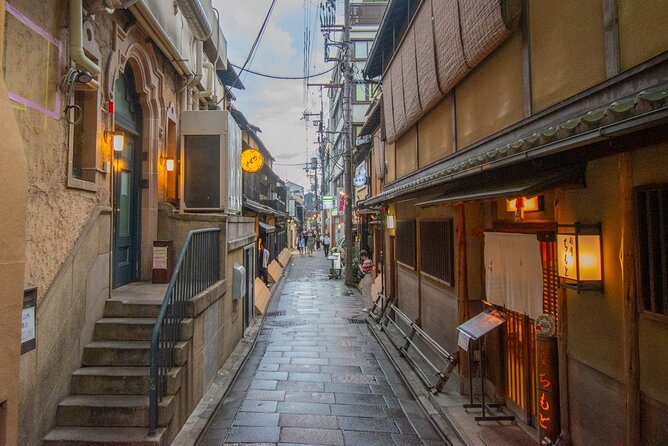
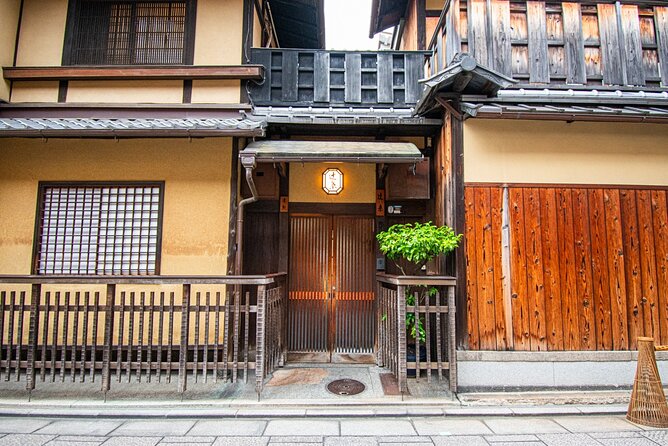
After Yasaka Shrine, the route moves through small alleys along a canal. These lanes are one of the most appealing parts of the evening. Lanterns, shops, and traditional settings give the walk a strong sense of place, especially after sunset.
The route then heads toward the restaurant in the Kawaramachi area. You are guided away from the most obvious tourist zones and into streets where local restaurants can be easy to miss. This is where the private format earns its keep. Your guide handles the navigation and helps you approach places that may not be set up for foreign diners.
Do not expect every alley to be quiet or every building to be old. Kawaramachi is part of central Kyoto, with plenty of activity and modern commercial streets. The charm comes from the contrast between the major downtown routes and the smaller side streets where neighborhood restaurants operate.
Arriving on time matters. The evening begins late, and some smaller shops or food stands close earlier than you might expect. A late arrival of about 40 minutes once meant that several possible stops were already closed. If you want the full walking portion, make the 7:30 pm meeting time a firm target.
The Kawaramachi restaurant stop
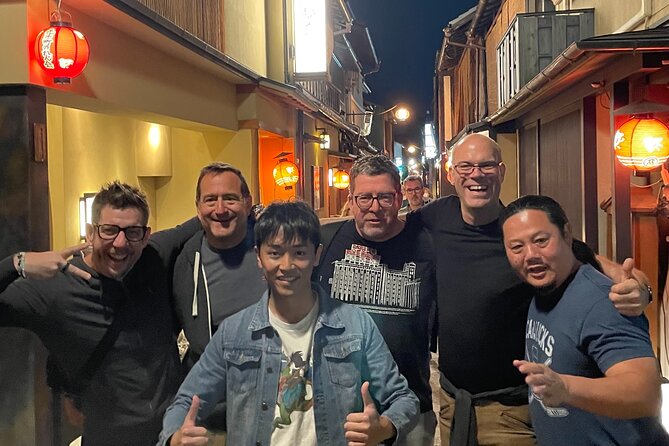
The restaurant portion takes about two hours, making it the main event of the evening. Rather than moving through several quick tastings, you sit down and eat a proper meal. The guide selects dishes at the chosen restaurant and helps you understand the local style.
Possible food themes include ramen, katsu, and izakaya. Ramen is the obvious match for Takashi’s food recommendations, but the tour does not promise one particular restaurant or dish. Katsu gives you a hearty fried cutlet meal, while izakaya dining usually means ordering several dishes to share in a relaxed setting.
Because the food changes from tour to tour, this experience suits people who enjoy some surprise. You may discover a style you would not have chosen on your own. It is less suitable if you need a fixed menu, strict dietary planning, or a guaranteed famous ramen counter.
The meal is also a chance to talk with your guide. Takashi and Natsuki are available to discuss Kyoto beyond the restaurant, including places to visit elsewhere in the city and questions about nearby destinations. Takashi also offers car tours in Kyoto, Nara, and Osaka, so he can be a useful source of broader trip advice.
What the price includes, and what it does not
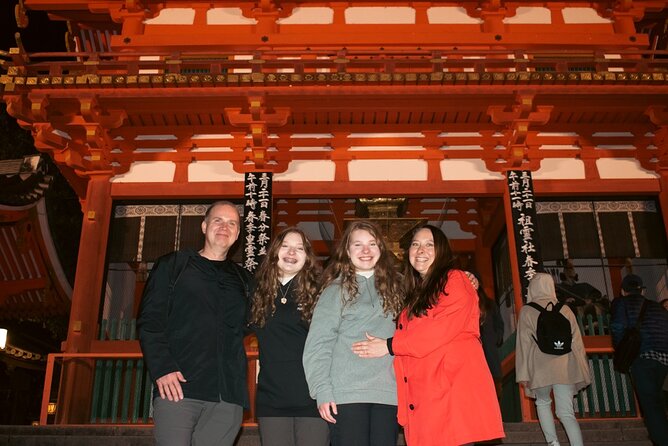
The listed price is $166.14 per person for about three hours. That is a serious price for a short evening, so you should understand what you are paying for.
The fee covers private, personalized navigation and guiding. It does not cover dinner. Every member of your group buys their own food, and the guide can pay for the guide’s own meal. Drinks and dishes are therefore an additional cost, and the final bill depends on the restaurant and what you order.
The price makes more sense for a small group that wants personal attention. If you are traveling with several people, group discounts may improve the value. You are paying for access to a guide who can handle the route, explain the neighborhood, and reduce the guesswork involved in finding a local restaurant.
For one person or a couple mainly seeking cheap food, it may feel expensive. You could walk through Gion independently and pay only for dinner. The added value is the private explanation, restaurant navigation, and conversation, not the meal itself.
Who will get the most from this evening
I would recommend this tour to you if you want three things in one outing: a night walk, an introduction to Gion, and a local-style meal. It works particularly well early in a Kyoto visit, when you still need help understanding the city’s districts and food customs.
It also suits you if restaurant signs and ordering procedures make you uneasy. The guides are there to make the process easier and to suggest dishes once you sit down. The small-group setting means you can ask direct questions instead of following a large crowd.
You may want something else if your main goal is a true food crawl. The published plan centers on one restaurant stop lasting about two hours. There may be extra food stops, such as a mochi shop or food stalls near the shrine, but these are not guaranteed and depend on timing and what remains open.
This is also not the best choice for someone who dislikes walking, needs a guaranteed accessible route, or expects dinner to be part of the ticket. Service animals are allowed, and public transportation is nearby, but the activity still calls for moderate physical fitness.
Practical details that affect the evening
The tour ends back at the meeting point, so you do not need to arrange a separate return transfer. Since you begin and finish near Gion-Shijo Station, public transportation is convenient, though the activity does not provide a private vehicle.
The tour is private, meaning only your own group participates. That lets you ask for more history, more food advice, or less walking. It also means the experience depends heavily on the guide assigned to you. Takashi and Natsuki are the named guides, and both are presented as local hosts who enjoy discussing Kyoto and food.
Free cancellation is available if you cancel at least 24 hours before the 7:30 pm start. Changes or cancellations made inside that window are not accepted for a refund. Confirmation arrives when you book.
Before you go, I would make three things clear:
- Tell the guide if you want ramen, katsu, or izakaya food.
- Explain your walking energy level at the start.
- Budget separately for dinner, since no food is included in the tour price.
Should you book Takashi’s Gion food adventure?
Book it if you value personal guidance over a fixed food package. The strongest parts are the evening setting, the connection between Gion’s entertainment traditions and Yasaka Shrine, and the chance to eat in a restaurant chosen for local appeal rather than a standard tourist route.
Do not book it expecting a three-hour parade of tastings. The plan is a walk followed by a long restaurant meal, and the food bill is yours. For a private Kyoto introduction with a flexible guide and useful dining advice, it can be a good fit. For a bargain meal or a tightly scripted culinary tour, choose something else.
FAQ
Where does the tour start?
It starts at Gion-Shijo Station, at 1 Chome Miyagawasuji in Kyoto’s Higashiyama Ward, Japan.
What time does the experience begin?
The scheduled start time is 7:30 pm.
How long does the tour last?
The experience lasts approximately three hours.
Does the tour include dinner?
No. All food is bought by you. The guide can pay for the guide’s own food.
Which restaurants will the tour visit?
The restaurant changes for each tour. Possible food styles include ramen, katsu, or izakaya, but one specific restaurant or cuisine is not guaranteed.
Is the tour private?
Yes. Only your own group participates in this private activity.
Is Yasaka Shrine included?
Yes. The tour includes about 30 minutes at Yasaka Shrine, and admission is free.
Can I cancel for a full refund?
Yes, if you cancel at least 24 hours before the experience start time. Cancellations or changes made less than 24 hours before the start are not refunded or accepted.
More Food Tours in Kyoto
- Kyoto Night Foodie Tour in Gion (9+ dishes + 6 Sake tastings)
★ 5.0 · 1,762 reviews - 3-Hour Kyoto Insider Sake Brewery Tour with Tastings & Pairings
★ 5.0 · 917 reviews - Arashiyama Bamboo, Temple, Monkeys, or Secret Sake Brewery
★ 4.8 · 886 reviews - Kyoto: Insider Sake Brewery Tour with Sake and Food Pairing
★ 5.0 · 704 reviews
Recently added around Kyoto
- Higashiyama | Kyoto: Sakura Season Private Rickshaw Tour★ 5.0 · 3 reviews
- Kyoto Kimono Rental CHAMATSU|Kimono/Yukata Rental FamilyPlan★ 5.0 · 3 reviews
- Kyoto: Half-Day Private Guided Tour to the Old Town of Gion★ 4.4 · 3 reviews
- Nara Private Customizable Half Day Tour★ 5.0 · 3 reviews
- Kansai Region Hiking Adventure in Nara Kobe Kyoto and More★ 5.0 · 3 reviews
- Full Day Nara Deer, Temple, Shrine, Activities & Tea Ceremony★ 5.0 · 3 reviews
- Nara: Essential Private Tour with Deer Park and Temples★ 5.0 · 3 reviews
- Hiking Tour for Sacred Sites in Kyoto with a Guide★ 5.0 · 3 reviews
Gion Geisha District Tours, compared.
Kyoto Geisha Walking Tour: Gion District & Hidden Gems
Read our review →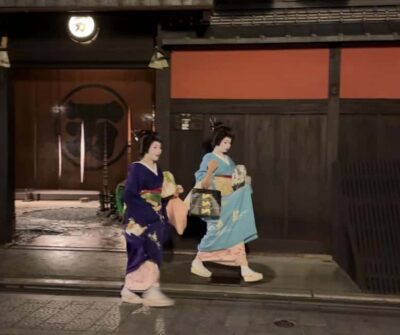
Gion Magical Night Walking Tour with Geisha Trivia
Read our review →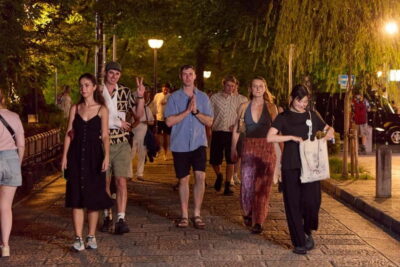
Gion Geisha District Walking Tour – Stories of Geisha
Read our review →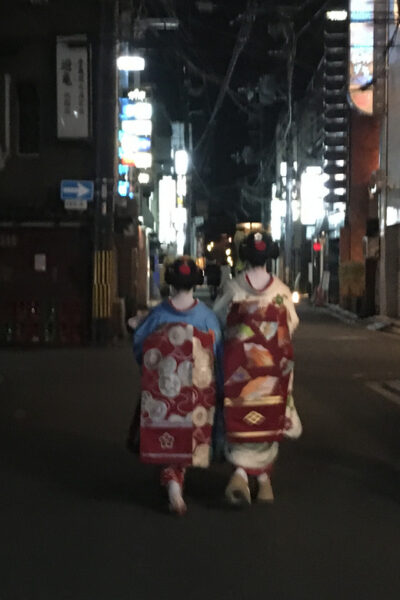
Best of Kyoto: Gion, Geisha, Pagodas & Cobblestones
Read our review →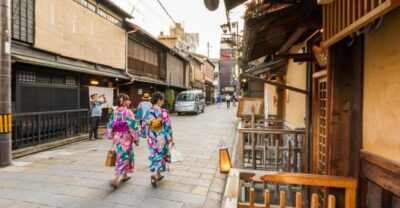

Kyoto Night Foodie Tour in Gion (9+ dishes + 6 Sake tastings)
Read our review →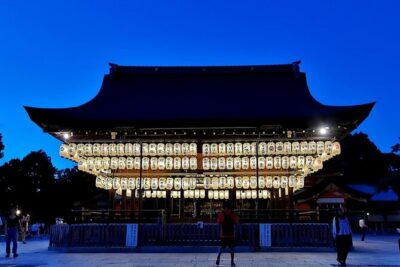
Kyoto Gion Geisha District Walking Tour – The Stories of Geisha
Read our review →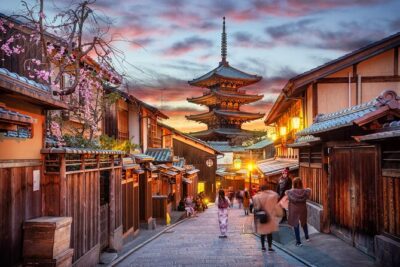
Kyoto Gion: 2-Hour Geisha Culture & History Walking Tour
Read our review →Browse the lists this tour appears in