
REVIEW · KYOTO CRAFT WORKSHOPS
Roketsu dyeing experience: M course Roketsu Dyeing Experience
Kyoto’s Roketsu workshop lets you draw your own design and dye the fabric yourself, using a traditional wax-resist method. You choose a shirt, tote bag, decorative banner, or similar fabric item, then work with local artisans to turn it into something you can use or hang at home. The finished piece is ready to take with you the same day.
I like two things right away: the result is personal rather than factory-made, and the workshop gives you a quiet break from temples and long walks. The owner and his mother, Yoko, guide you patiently, even when your art skills are modest. The main consideration is communication. English is limited, so the hands-on demonstrations do much of the explaining.
In This Review
- Key points to know before you book
- Why this craft makes a good Kyoto break
- Arriving at Roketsu73 in western Kyoto
- Choosing your fabric and pattern
- Practicing before the real fabric
- Applying wax to your shirt, bag, or banner
- The dyeing stage and same-day result
- How much time to allow
- Is $25.77 a fair price?
- Who will enjoy this most
- Booking, cancellation, and access
- Should you book the Roketsu M course?
- FAQ
- Where does the Roketsu dyeing experience take place?
- How long does the workshop last?
- What can I make during the activity?
- Can I choose my own design?
- Do I need artistic experience?
- Can I take my finished item home the same day?
- Is the activity conducted in English?
- What is the cancellation policy?
- What happens if bad weather cancels the experience?
Key points to know before you book
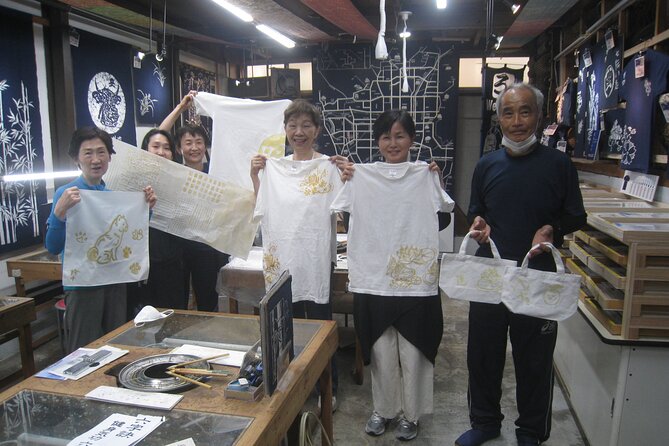
- You make the design yourself: Choose from a large selection of stencils or bring your own sketch for a more personal piece.
- You apply the wax by hand: The workshop gives you a practice run before you work on your chosen fabric.
- You take the finished item home that day: The usual session lasts about 90 to 120 minutes, though detailed designs can take three hours.
- The setting is a small family-run studio: The owner and his mother, Yoko, provide patient, personal help.
- It suits all skill levels: You do not need to be artistic, and children, teens, solo visitors, and families can take part.
- It costs about $25.77 per person: That is strong value when the price includes a hands-on craft session and a one-of-a-kind souvenir.
Why this craft makes a good Kyoto break
Roketsu is a wax-resist dyeing craft. You first place a design on the fabric and apply wax to the areas you want to protect. The fabric is then dyed, leaving the wax-covered sections in a contrasting color. Once the wax is removed, your pattern appears.
The appeal is not just the finished shirt or bag. You get to take part in the stages that usually happen behind the scenes. You draw, practice, apply the wax, and watch the artisans handle the dyeing process. That gives the souvenir a personal story, not just a Kyoto label.
I also like the pace. Kyoto sightseeing can become a steady march from one famous gate to another. This workshop asks you to sit down, focus on small movements, and spend time making something with your hands. It is a useful change of rhythm for families, couples, and solo visitors.
The studio is outside Kyoto’s main sightseeing zone, at Roketsu73 in Nishikyogoku, Ukyo Ward. That means it is not the easiest choice if you want an activity beside Kiyomizu-dera or Gion, but it also gives you a chance to visit a working craft business away from the busiest tourist streets.
More Kyoto craft workshops:
- Authentic knife making experience at a blacksmith in Kyoto
★ 4.8 · 350 reviews - Kyoto: Replica food making experience
★ 4.8 · 70 reviews - Kyoto: Traditional Yuzen Dyeing Experience
★ 4.8 · 61 reviews
Arriving at Roketsu73 in western Kyoto
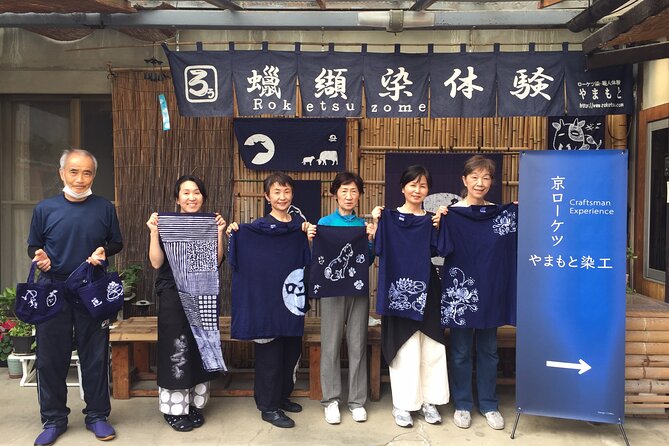
The meeting point is Roketsu73, Nishikyogoku Umazukacho, Ukyo Ward, Kyoto, postal code 615-0885. The activity begins and ends at the same place, so you do not need to arrange a separate return transfer.
The workshop is near public transportation, but the supplied details do not specify a particular train station, bus route, or walking time. Check the route from your hotel before booking and leave extra time for finding the studio. A mobile ticket is provided, which is convenient if you are moving around Kyoto with your phone.
The studio itself has been described as comfortable, clean, spacious, and interesting. It is a working craft space rather than a polished attraction built only for sightseeing. That matters if you want to see a more ordinary side of Kyoto’s handmade arts.
The maximum group size is 30 people. That is large enough for a busy session, though the family-run nature of the studio suggests that the feel may be more personal than a large commercial class. If you want a particular time, book ahead. The activity had been booked more than 10 times in the previous week, and popular time slots may fill.
Choosing your fabric and pattern
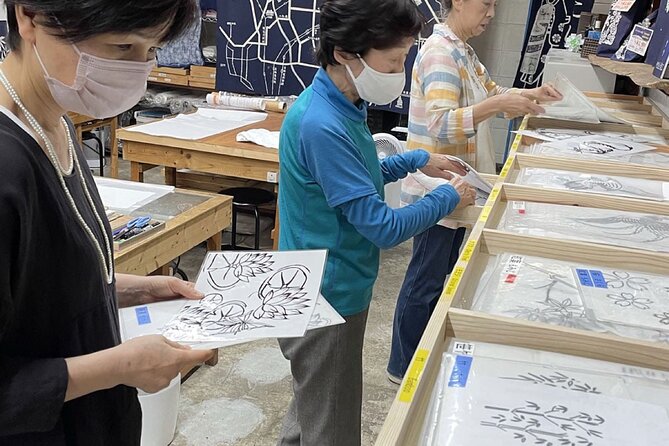
Once you settle in, you choose what to decorate. Options described by participants include T-shirts, tote bags, and hanging banners. The exact selection can vary, so you should confirm the available items when you arrive.
The design choice is where the activity becomes flexible. You can select from a large collection of stencils, with some participants describing hundreds of patterns. These designs let you produce a polished result without having to draw everything freehand.
You can also combine designs or bring your own sketch. If you have a favorite symbol, animal, plant, or graphic in mind, carrying a simple paper sketch may help. The workshop can turn an original idea into a more personal piece, but detailed designs take longer.
Do not feel pressure to choose the most complicated pattern. A simple design can look striking once the wax and dye create contrast. If you are making several items as a family, choosing different levels of detail can keep the session moving at a comfortable pace.
Practicing before the real fabric
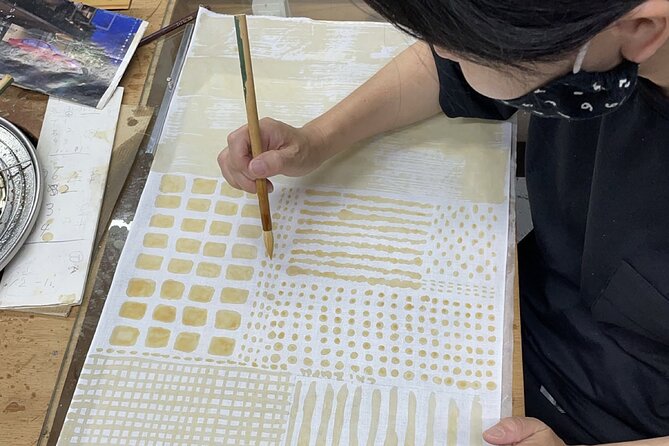
Before applying wax to your selected item, you get a small practice run on a piece of cloth. This is an important step, especially if you have never handled a wax-resist technique.
The practice lets you understand how the tool moves and how much wax to apply. You can see why a steady hand matters. Too little control may leave uneven lines, while an overly intricate pattern can stretch the session well beyond the advertised time.
The owner and Yoko guide you through the process. Their help is practical rather than formal. You watch what they do, try it yourself, and receive corrections as needed. People with little craft experience can produce a good result because the instructors step in when a design needs adjustment.
English is limited, and this is the clearest weakness of the activity. Explanations may not cover every fine point, and a complicated design can be harder to discuss. Still, the process is visual and hands-on, so basic instructions, demonstrations, and gestures carry much of the lesson.
A completely different side of Kyoto:
- PERFECT KYOTO 1-Day Bus Tour
★ 5.0 · 13,518 reviews - Kyoto: Fushimi Inari, Kinkakuji, Bamboo Grove 1 Day Bus Tour
★ 4.8 · 4,316 reviews - Kyoto: Tea Ceremony in a Traditional Tea House in Kiyomizu
★ 4.9 · 3,519 reviews - Kyoto Geisha Walking Tour: Gion District & Hidden Gems
★ 4.7 · 3,273 reviews
Applying wax to your shirt, bag, or banner
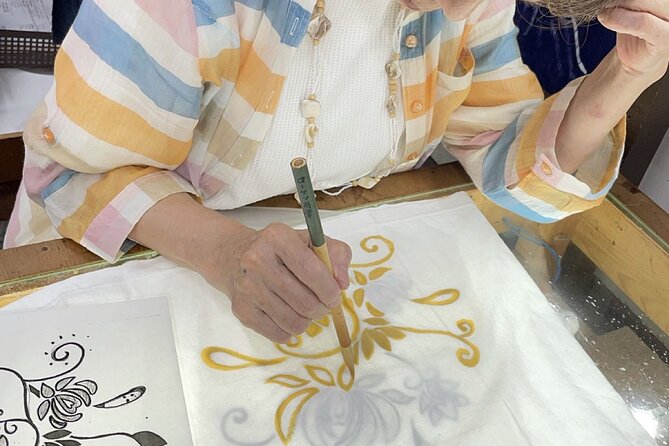
This is the most creative part of the session. You apply melted wax to the areas that should resist the dye. Your pattern takes shape slowly, line by line.
The work rewards patience more than artistic talent. You do not need to produce a perfect drawing. In fact, part of the charm is that handmade designs contain small variations. The craft does not promise identical results, even if two people use the same rough sketch.
The artisans remain available while you work. They can show you how to improve the design and help keep the process on track. Several families have taken longer than expected because they chose complex patterns, but the instructors did not rush them.
For this reason, I would avoid scheduling a major attraction immediately after the class. The standard estimate is 90 to 120 minutes, but a careful design can bring the total closer to three hours. If you need to finish quickly, choose a simple stencil and limit the number of items.
This hands-on stage is also why the activity works well for children and teenagers. A six-year-old has taken part, and a family of six, including four teens, spent several hours creating shirts and a banner. The craft gives everyone a task, and phones tend to stay out of the way while the designs develop.
The dyeing stage and same-day result
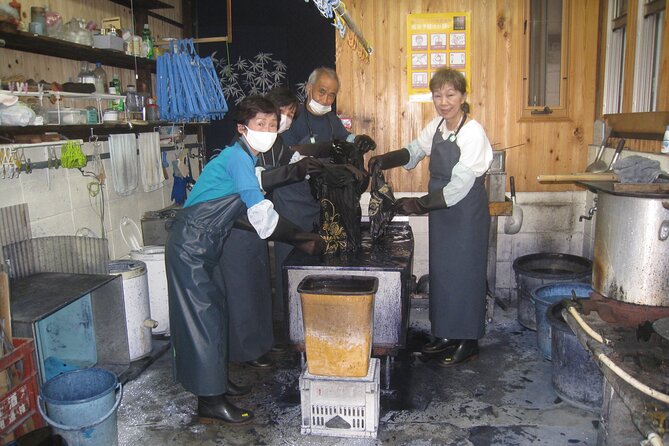
After the wax work is complete, the fabric is dyed. The information provided does not spell out every technical step or the exact colors available, so you should think of this portion as a guided workshop process rather than a full lecture on textile chemistry.
The important practical point is that you can take the finished item with you on the day. That is a major advantage over craft activities that mail the result later or require a second visit. You leave with something that can fit into your luggage, depending on the item you choose.
The final result can surprise you. A design may look ordinary while the wax is being applied, then become much clearer once the dye and resist pattern are complete. Since the conditions and handwork vary, your piece will be different from another made with the same basic sketch.
You can wear a shirt, use a tote, or display a banner at home. The best choice depends on your trip. A tote is practical and easy to pack, while a hanging may work better if you want a decorative reminder of Kyoto rather than clothing.
How much time to allow
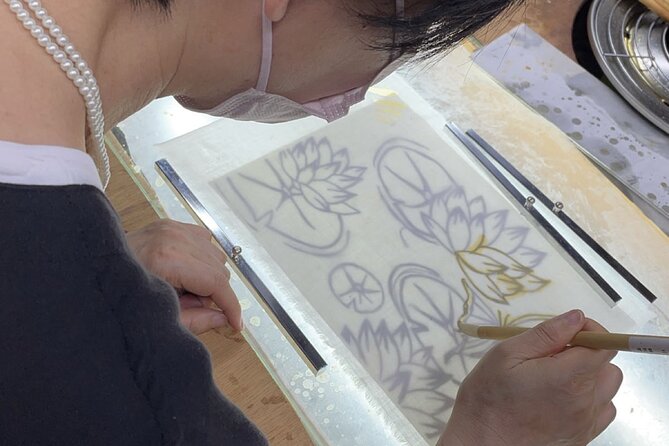
The published duration is about two hours, with an expected range of 90 to 120 minutes. Treat that as a guide, not a hard finish time.
Simple patterns may fit the shorter estimate. Detailed work, freehand drawing, or several items can take three hours. One family spent extra time because of the number and complexity of its designs, while other participants finished sooner.
I would allow at least half a day around the activity if you want a relaxed schedule. The workshop itself may take two hours, and you also need time to reach western Kyoto and continue to your next stop. A tight booking can turn a calm craft session into a race, which defeats much of its purpose.
The experience requires good weather, according to the booking terms. If poor weather causes cancellation, you can receive a different date or a full refund. The activity ends back at the studio, so your onward plans should begin from the meeting point.
Is $25.77 a fair price?
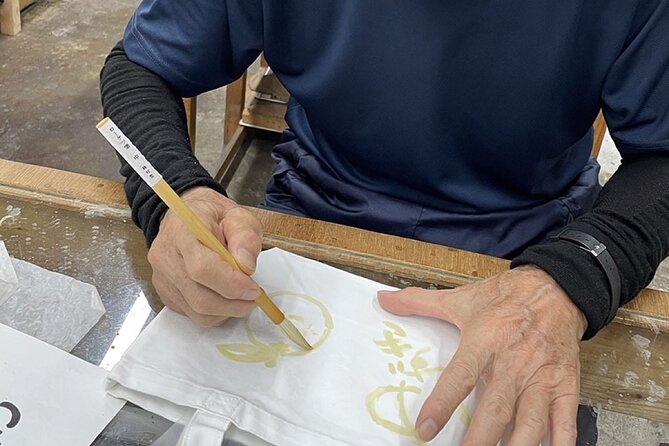
At about $25.77 per person, this is one of the more affordable ways to make a personalized Kyoto souvenir. You are not simply watching an artisan work. You receive instruction, materials, access to the design collection, and a finished item to take home.
The value improves if you compare it with buying a mass-produced shirt or bag in a souvenir shop. The object may not be flawless, but you made it yourself and can explain how the wax pattern was created. That personal connection is what gives the price weight.
The cost may feel less attractive if you want a long formal lesson in Japanese textile history or advanced technical training. The workshop focuses on doing the craft. English explanations are limited, and the class is not presented as a detailed academic course.
Still, the combination of guidance, flexibility, and same-day pickup makes it a strong choice for the price. The perfect audience is someone who wants an authentic local activity, a useful souvenir, and a few calm hours away from crowded sightseeing routes.
Who will enjoy this most
You will probably enjoy Roketsu if you like crafts, drawing, or cultural activities where you make something with your own hands. You can choose a stencil and follow guidance, so you do not need confidence with art.
Families get a lot from the format. Everyone can choose a different design and work at an individual level. Children may need help with some steps, but the activity gives them real control instead of reducing them to observers.
It also suits solo visitors. One person took the class alone and found the setting comfortable and welcoming. You do not need to arrive with a group to feel involved.
Couples can create matching pieces or choose separate designs. If you are taking a break from temples and walking tours, the quiet pace can be exactly what you need.
You may want to skip it if you dislike hands-on work, have no spare time, or need detailed English instruction at every stage. The language gap is manageable for many people, but it remains a real consideration.
Booking, cancellation, and access
Confirmation is sent within 48 hours of booking, subject to availability. You can cancel for a full refund up to 24 hours before the start time. Changes or cancellations inside that 24-hour window are not accepted, and the amount paid is not refunded.
The activity allows service animals and is near public transportation. Most people can participate, but the supplied information does not give detailed mobility notes, seating specifications, or equipment details. Contact the provider if you need a specific accommodation.
The experience is operated by 京ローケツ やまもと染工. The small family-run character is part of its appeal, but it also explains why communication and timing may feel less standardized than at a large tourist school.
Should you book the Roketsu M course?
I would book this if you want to slow down, make a genuine souvenir, and try a Kyoto craft without paying for a luxury workshop. The combination of personal guidance from the owner and Yoko, a large stencil collection, freehand options, and same-day pickup is hard to beat at this price.
Book it with two expectations: English help is limited, and two hours may become three if you choose a complex design. Arrive with a simple idea, allow plenty of time, and treat the finished piece as handmade rather than machine-perfect.
For families, solo visitors, and anyone ready for a quiet creative break, this is a strong choice. If your Kyoto schedule is already packed minute by minute, save it for another trip.
FAQ
Where does the Roketsu dyeing experience take place?
It takes place at Roketsu73, Nishikyogoku Umazukacho, Ukyo Ward, Kyoto, Japan, postal code 615-0885.
How long does the workshop last?
The usual duration is about 90 to 120 minutes, or approximately two hours. Detailed designs or multiple items can take around three hours.
What can I make during the activity?
Available choices described in the activity information and participant accounts include T-shirts, tote bags, and decorative hanging banners.
Can I choose my own design?
Yes. You can select from the studio’s stencil collection, combine designs, draw freehand, or bring your own sketch for an original work.
Do I need artistic experience?
No. The workshop is suitable for all experience levels, and the owner and his mother provide guidance through the steps.
Can I take my finished item home the same day?
Yes. The finished work can be taken home on the day of the experience.
Is the activity conducted in English?
English is limited. The process is demonstrated by the instructors, and the hands-on format helps you follow along, but detailed verbal explanations may be difficult.
What is the cancellation policy?
You can cancel at least 24 hours before the local start time for a full refund. Cancellations or changes made less than 24 hours before the start time are not accepted and are not refunded.
What happens if bad weather cancels the experience?
If the activity is canceled because of poor weather, you are offered another date or a full refund.
Recently added around Kyoto
- Higashiyama | Kyoto: Sakura Season Private Rickshaw Tour★ 5.0 · 3 reviews
- Kyoto Kimono Rental CHAMATSU|Kimono/Yukata Rental FamilyPlan★ 5.0 · 3 reviews
- Kyoto: Half-Day Private Guided Tour to the Old Town of Gion★ 4.4 · 3 reviews
- Nara Private Customizable Half Day Tour★ 5.0 · 3 reviews
- Kansai Region Hiking Adventure in Nara Kobe Kyoto and More★ 5.0 · 3 reviews
- Full Day Nara Deer, Temple, Shrine, Activities & Tea Ceremony★ 5.0 · 3 reviews
- Nara: Essential Private Tour with Deer Park and Temples★ 5.0 · 3 reviews
- Hiking Tour for Sacred Sites in Kyoto with a Guide★ 5.0 · 3 reviews
Kyoto Craft Workshops, compared.
Authentic knife making experience at a blacksmith in Kyoto
Read our review →
Authentic Knife Making Experience at a Blacksmith in Kyoto
Read our review →
Let’s make only one original onigawara in the world
Read our review →
Bamboo LED Lantern Making Experience in Kyoto Arashiyama
Read our review →Let’s make only one original onigawara in the world!!
Read our review →
Natural Indigo Dyeing with Local Masters (Private Atelier)
Read our review →Browse the lists this tour appears in