
REVIEW · ARASHIYAMA BAMBOO GROVE TOURS
Bamboo LED Lantern Making Experience in Kyoto Arashiyama
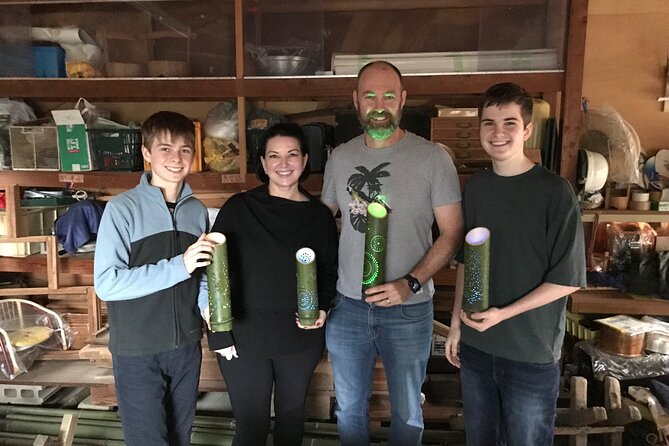
Arashiyama’s bamboo grove is lovely, but simply walking through it can feel brief and crowded. This experience gives you a better reason to linger: Noriko leads you through the grove, explains the plant and the area, then brings you to her family workshop to make a bamboo lantern by hand. I especially like the small class size and the fact that you leave with something useful, not just another photograph.
I also like the choice of projects. You may make an LED lantern, sake cup, sake bottle, teacup, or smartphone holder, depending on what is available. Noriko and her husband provide the materials, patterns, tools, and instruction, and families receive careful help with the drilling equipment.
The main caution is that the lanterns are made from fresh green bamboo, which can retain moisture. One person reported mold after the lamp was wrapped for transport, though the workshop acknowledged the problem and said it was improving its wrapping and adding heated, dried bamboo as an option. Pack the finished piece carefully and let it breathe when you get home.
In This Review
- Key points to know before booking
- Why this Arashiyama activity is more than a bamboo-forest walk
- Walking from Saga-Arashiyama Station to the bamboo grove
- Entering Noriko’s family workshop
- Choosing your bamboo and lantern design
- Drilling the bamboo lantern yourself
- What makes the souvenir worth carrying home
- Family appeal and age considerations
- The $79.26 price and what it includes
- Practical details for a smooth afternoon
- Who should book the bamboo lantern class
- FAQ
- Where does the bamboo lantern experience begin?
- Where does the activity end?
- How long does the experience last?
- Is the bamboo forest walk included?
- What can I make during the workshop?
- Are tools and materials included?
- Is lunch included?
- Can I cancel for a full refund?
- Should you book it?
Key points to know before booking
- Meet at 2:00 pm at Saga-Arashiyama Station: The walk and workshop both begin and end at the station meeting point.
- Walk through part of the famous bamboo forest: Noriko adds useful explanations about bamboo, local culture, shrines, and the surrounding area.
- Make a real handmade souvenir: You choose bamboo and a design, then drill the pattern yourself with guidance.
- Small, family-run setting: The activity is capped at a small number, with the additional information listing a maximum of six participants.
- Good for children and adults: Children as young as seven have taken part, with close supervision around the machinery.
- Plan on about three hours: Materials and tools are included, but lunch is not.
Why this Arashiyama activity is more than a bamboo-forest walk
The appeal here is the change of pace. Arashiyama’s famous grove can be a quick stop on a packed Kyoto day. You walk beneath the tall bamboo, take the expected photos, and move on to the next temple or river view.
This activity slows things down. You meet Noriko at Saga-Arashiyama Station at 2:00 pm and walk toward the forest together. Along the way, she explains bamboo as a plant and as a working material. She also talks about the area, local shrines, Japanese culture, and the history connected with Arashiyama.
That extra context gives the grove more meaning. You are not only looking at bamboo trunks. You are learning why the plant matters and how it becomes a practical craft. Noriko’s English is described as excellent, and her teaching style is patient and clear.
The group size matters, too. The tour information describes a maximum of eight people in one place and a maximum of six participants in the additional details. Either way, this is a much smaller setting than a standard sightseeing group. You can ask questions, get help at the workbench, and choose a design without being rushed along.
More of Arashiyama and the bamboo grove:
- Kyoto: Fushimi Inari, Kinkakuji, Bamboo Grove 1 Day Bus Tour
★ 4.8 · 4,316 reviews - Kyoto/Osaka: Nara, Fushimi Inari Taisha, Arashiyama Bus Tour
★ 4.7 · 1,275 reviews - Kyoto Arashiyama Walking Tour: Bamboo, Monkeys, Gardens & Secrets
★ 5.0 · 1,216 reviews
Walking from Saga-Arashiyama Station to the bamboo grove
Start at Saga-Arashiyama Station, at 11-1 Sagatenryuji Kurumamichicho in Kyoto’s Ukyo Ward. The station meeting point is practical if you are already using public transportation in western Kyoto, and the activity returns you to this same point at the end.
The first stop is the Bamboo Forest Trail. Noriko leads the group through part of the grove rather than sending you there alone. This is helpful if you want more than the usual path and photograph routine. She points out details about bamboo and explains the local setting as you walk.
The route also includes neighborhood streets and, according to the descriptions of the walk, a shrine or temple area. That is a nice touch. You get a small sense of Arashiyama beyond its most famous path, without giving up the main attraction.
Keep your expectations sensible. This is not a long nature hike or a full sightseeing tour of every major Arashiyama temple. The forest walk is one part of a three-hour craft experience. The goal is to connect the grove with the workshop, not to cover the whole district.
A steady walk is involved, so comfortable shoes make sense. One participant with a leg injury skipped the forest portion and still joined the workshop after Noriko arranged transportation to the house. That accommodation is encouraging, but you should contact the provider in advance if you need a modified route or transport.
Entering Noriko’s family workshop
After the forest, you walk through a quieter neighborhood to Noriko’s home workshop. The setting is part of the charm. This is not a large commercial craft center with rows of identical benches. It is a family-run space where Noriko and her husband guide you through the work.
The workshop is described as clean, bright, comfortable, and well organized. You take a short break during the craft, and tea and snacks may be offered. Those small pauses help, especially after walking through Arashiyama or after a full morning of sightseeing.
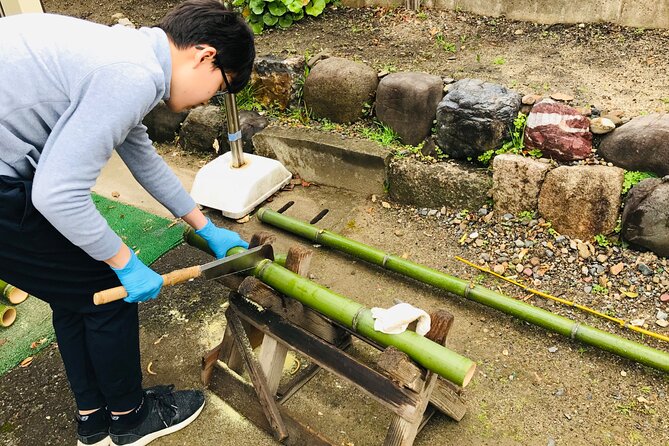
Noriko handles the explanations while her husband helps with cutting and machinery. Their support is especially useful for families. Children have been allowed to saw or operate equipment after instruction, but an adult stays close to make sure the work is safe.
This is still a hands-on class, not a demonstration. You should expect to make choices and do some of the work yourself. The hosts show you how to use the tools, and you get a chance to practice before working on the final piece.
Choosing your bamboo and lantern design
One of the best parts comes before the drilling begins. You choose a piece of bamboo and select a pattern. Paper templates are available, but you can alter one or create a more personal design if you have an idea in mind.
I would think about a simple design before arriving. You do not need to be an artist. A few planned shapes, initials, stars, leaves, or other basic marks can make the lantern feel more personal. The prepared patterns are useful if you would rather start quickly.
The choice of bamboo also gives the souvenir a handmade character. Each piece has its own shape and coloring. You are not buying a finished object from a shop. You are deciding what the material will become.
The activity may offer crafts besides the lantern, including a sake cup, sake bottle, teacup, or smartphone holder. The supplied details do not explain the exact project choices or any price difference on the day, so ask about current options when you book.
More Kyoto craft workshops:
- Authentic knife making experience at a blacksmith in Kyoto
★ 4.8 · 350 reviews - Roketsu dyeing experience: M course Roketsu Dyeing Experience
★ 5.0 · 163 reviews - Kyoto: Replica food making experience
★ 4.8 · 70 reviews - Kyoto: Traditional Yuzen Dyeing Experience
★ 4.8 · 61 reviews
Drilling the bamboo lantern yourself
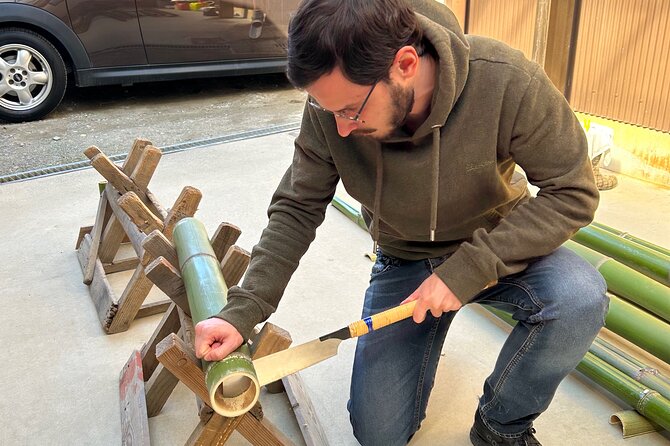
Once you select the pattern, you attach it to the bamboo. The design becomes a guide for the holes you drill. The drill press is easier to use after a brief lesson, and the instruction is designed for beginners.
This part requires attention. You are working with real tools and machinery, not a soft craft kit. The hosts provide safety guidance and stay nearby, which makes the activity suitable for many families, but children need close supervision. The additional information says most people can participate, and service animals are allowed.
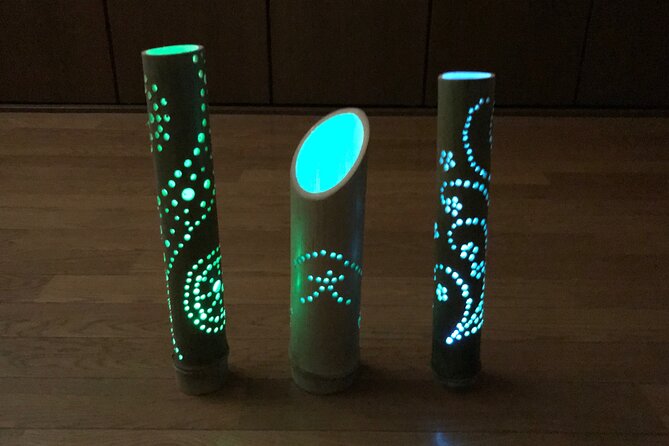
As the holes appear, the bamboo changes from a plain section of plant into a light shade. Add the small LED light, and the pattern becomes visible as a warm glow. The finished piece works well as mood lighting at home and serves as a practical reminder of Kyoto.
You do not need advanced craft skills. Patience matters more than precision. A slightly uneven handmade design is part of the point, and Noriko’s help keeps the project moving if you get stuck.
What makes the souvenir worth carrying home
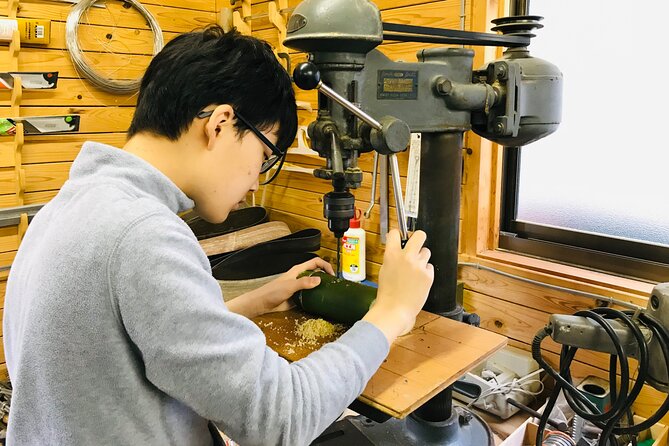
Kyoto has no shortage of souvenirs. You can buy sweets, ceramics, fans, textiles, and bamboo goods all over town. The difference here is that you know the object’s story because you made it.
You walked through the grove where the material is part of the local identity. You heard how bamboo is used. Then you selected the piece, chose the design, drilled the holes, and finished the lantern with help from a local family.
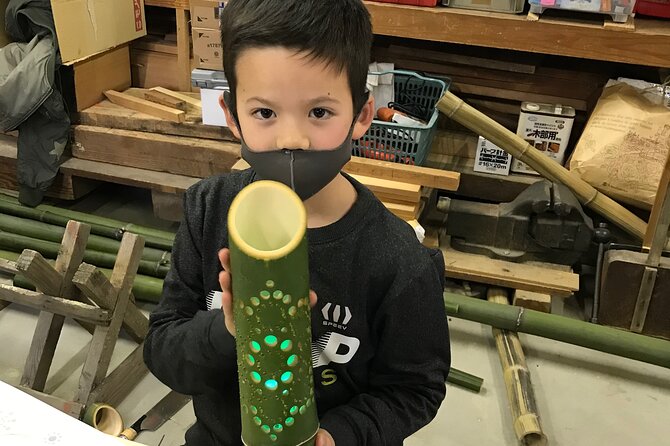
That connection gives the souvenir more staying power. A shop-bought item may be prettier or easier to pack, but this one recalls a particular afternoon in Arashiyama. The activity also gives children a clear result at the end of a trip. One seven-year-old reportedly preferred making the lantern to several major attractions visited earlier, which says something about the satisfaction of producing a real object.
The finished lantern is not completely trouble-free. Fresh green bamboo contains moisture, and one participant found serious mold after the lamp was wrapped in bubble wrap. The workshop apologized, explained that it was using fresh bamboo, and said it would improve the wrapping method and introduce heated, dried bamboo for a more stable result.
You can reduce the risk by asking which bamboo is being used, how the lamp should be stored, and whether you should remove or loosen the wrapping during your journey. Let the piece dry in a well-ventilated place once you reach your accommodation or home. Do not seal damp bamboo in a suitcase for days.
Family appeal and age considerations
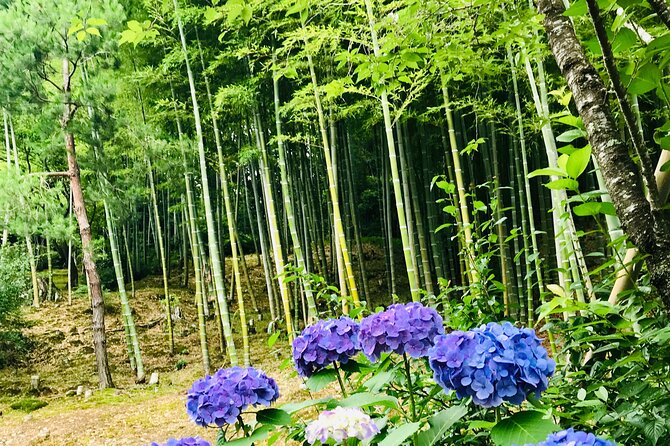
This is one of the better Arashiyama activities for a family that wants to make something together. The walk gives children a reason to pay attention to the bamboo grove, and the workshop offers a clear project with an attractive result.
Noriko has worked patiently with children around seven to thirteen years old. The instruction is available in English, and children can take part in the cutting and drilling with direct help. Still, this is not a drop-in craft table. The machinery means adults should stay engaged.
The class also works for couples, friends, and solo participants. You can make a lantern together while choosing different designs, or focus on your own piece. The small setting leaves room for conversation, and Noriko is happy to answer questions about Japanese culture and the local area.
If your group includes someone who cannot manage the forest walk, the workshop may still be possible. The details support participation for most people, and one person with an injured leg joined after skipping the walk. Treat that as an example of flexibility, not a guarantee. Ask ahead about your exact needs.
The $79.26 price and what it includes
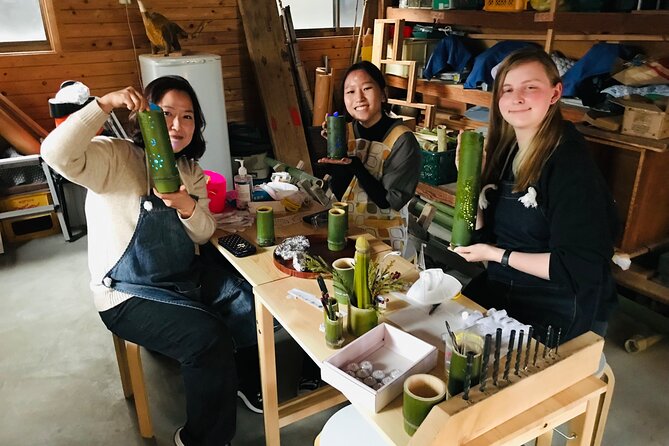
At $79.26 per person, this is not the cheapest way to see Arashiyama. You can walk through the bamboo forest for free, and simple souvenirs cost less than a guided craft session.
The value comes from the combination. You receive a guided walk, local explanation, a small-group lesson, materials, use of tools and machines, and a handmade object to take home. You are paying for time with an instructor and for access to a family workshop, not just admission to a sight.
I think the price makes the most sense if you already planned to visit Arashiyama and want a more personal afternoon. It is less compelling if you only want a quick forest visit or if you dislike making things. The three-hour duration is long enough to feel substantial, but it also takes up a good portion of your day.
Lunch is not included. Since the activity starts at 2:00 pm, eat beforehand or plan a meal afterward in Arashiyama. The afternoon timing can work well after a morning at another Kyoto sight, but leave enough time to reach Saga-Arashiyama Station without rushing.
Practical details for a smooth afternoon
The experience is booked by mobile ticket, and confirmation is provided when you reserve. It is commonly booked about 16 days ahead, so reserve early if you have a fixed Kyoto schedule or a particular afternoon in mind.
The class is recommended by 97 percent of participants and has a 4.9 rating from 38 reviews. The strongest praise centers on Noriko’s patient instruction, her explanations during the walk, the welcoming family setting, and the satisfaction of taking home a handmade lantern.
Free cancellation is available up to 24 hours before the start time for a full refund. Cancellations or changes made less than 24 hours before 2:00 pm are not accepted for a refund. The activity also requires a minimum number of participants. If that minimum is not met and the class is canceled, you are offered another date or experience, or a full refund.
Who should book the bamboo lantern class
I would choose this for you if you want a quieter, hands-on side of Kyoto. It fits families, couples, solo visitors who enjoy making things, and anyone who feels that sightseeing is better when you participate instead of only looking.
It is also a strong choice for a return visit to Arashiyama. If you have already seen the grove, the craft session gives the district a fresh purpose.
I would think twice if your schedule is packed, if you want a full temple tour, or if you need a completely effortless activity. The walk and workshop together take about three hours, and the tools require attention. You should also be comfortable asking about bamboo drying and transport before you leave.
FAQ
Where does the bamboo lantern experience begin?
It begins at Saga-Arashiyama Station at 2:00 pm. The address given is 11-1 Sagatenryuji Kurumamicho, Ukyo Ward, Kyoto, 616-8373, Japan.
Where does the activity end?
The activity ends back at the meeting point at Saga-Arashiyama Station.
How long does the experience last?
The experience lasts approximately three hours.
Is the bamboo forest walk included?
Yes. The experience includes a walk through the Bamboo Forest Trail, with explanations about bamboo and the Arashiyama area.
What can I make during the workshop?
The available choices may include an LED lantern, sake cup, sake bottle, teacup, or smartphone holder. The exact choice can depend on what is offered during the session.
Are tools and materials included?
Yes. The materials and use of the tools and machines are included.
Is lunch included?
No. Lunch is not included.
Can I cancel for a full refund?
Yes, if you cancel at least 24 hours before the experience start time. Cancellations or changes made less than 24 hours before the start time are not refunded or accepted.
Should you book it?
Book this if you want to take home a Kyoto souvenir that carries your own fingerprints. The forest walk, Noriko’s local explanations, and the family workshop create a fuller afternoon than a quick visit to the bamboo grove.
The best reason to go is not the lantern alone. It is the chance to connect Arashiyama’s bamboo with a traditional craft, work at your own pace, and share the process with a child, partner, or friend. Ask about dried bamboo and packing before you leave, then give your finished piece air once you reach home. With that small precaution, this is a thoughtful and memorable addition to a Kyoto itinerary.
Recently added around Kyoto
- Higashiyama | Kyoto: Sakura Season Private Rickshaw Tour★ 5.0 · 3 reviews
- Kyoto Kimono Rental CHAMATSU|Kimono/Yukata Rental FamilyPlan★ 5.0 · 3 reviews
- Kyoto: Half-Day Private Guided Tour to the Old Town of Gion★ 4.4 · 3 reviews
- Nara Private Customizable Half Day Tour★ 5.0 · 3 reviews
- Kansai Region Hiking Adventure in Nara Kobe Kyoto and More★ 5.0 · 3 reviews
- Full Day Nara Deer, Temple, Shrine, Activities & Tea Ceremony★ 5.0 · 3 reviews
- Nara: Essential Private Tour with Deer Park and Temples★ 5.0 · 3 reviews
- Hiking Tour for Sacred Sites in Kyoto with a Guide★ 5.0 · 3 reviews
Arashiyama Bamboo Grove Tours, compared.
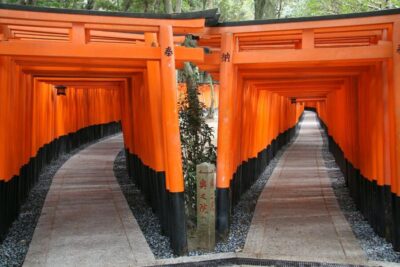
Fushimi Inari, Kinkakuji, Bamboo Grove 1 Day Bus Tour
Read our review →
Kyoto/Osaka: Nara, Fushimi Inari Taisha, Arashiyama Bus Tour
Read our review →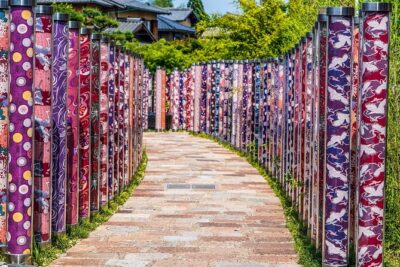
Kyoto Arashiyama Walking Tour: Bamboo, Monkeys, Gardens & Secrets
Read our review →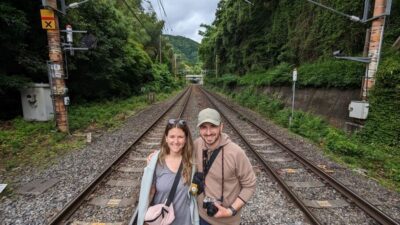
Arashiyama Bamboo, Temple, Monkeys, or Secret Sake Brewery
Read our review →
Arashiyama Bamboo Forest, Monkeys, Matcha & Temple Tour
Read our review →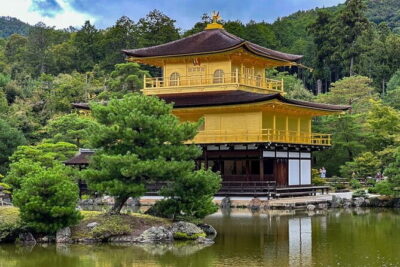
Nijo, Kinkaku-ji, Arashiyama, Kiyomizu & Fushimi Inari
Read our review →
Kyoto Ghost Tour: Dark Tales, Urban Legends, Bamboo Forest Night
Read our review →
Arashiyama Bamboo Forest & Hidden Gems Bike Tour (Early Bird)
Read our review →Browse the lists this tour appears in