
REVIEW · KYOTO CRAFT WORKSHOPS
Let’s make only one original onigawara in the world!!
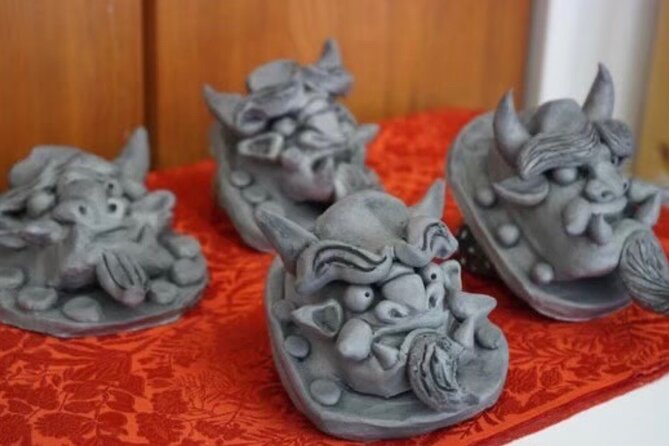
The best part of this two-hour workshop is that a plain lump of clay becomes your own onigawara, a fierce little demon tile traditionally placed at the end of a roof ridge. Yuya’s careful, step-by-step method makes the craft approachable, even if your hands are better at holding a camera than sculpting.
I like two things in particular: you get a useful look at a 1,400-year-old Japanese tradition, and the finished tile is fired and sent to your home once it reaches its traditional silver color. The small group, limited to five people, also gives the class a calm, personal feel.
The main consideration is timing. You do not take the completed tile home that day. It needs about one to two months for drying and firing, and shipping is an extra charge paid separately at the workshop. You should also wear clothes that can handle clay.
In This Review
- Key Points Before You Book
- Turning a Lump of Soil into an Onigawara
- Why the Demon Face Guards Japanese Roofs
- Yuya’s Step-by-Step Teaching Style
- A Calm Two-Hour Break from Sightseeing
- What Happens After You Finish
- Price, Group Size, and Practical Value
- Finding Kawarakoubouyouya
- Who Will Enjoy This Workshop Most
- Should You Book This Onigawara Experience?
- FAQ
- How much does the onigawara workshop cost?
- How long does the workshop last?
- Where does the workshop meet?
- Is the Google Maps location accurate?
- Who teaches the workshop?
- How many people can join?
- Do I need sculpting experience?
- Can children take part?
- When do I receive the finished onigawara?
- What should I wear?
Key Points Before You Book
- Make a demon-faced roof tile by hand: Yuya breaks the process into manageable steps, so you do not need to be an experienced sculptor.
- Learn why onigawara exist: These roof ornaments have protected Japanese buildings from evil and rainwater for roughly 1,400 years.
- Small group of up to five: The limited size leaves room for personal guidance and a relaxed pace.
- Your piece is kiln-fired later: After drying and firing, the tile changes to a traditional silver color and is shipped to your home.
- A good family activity: Children can take part, and the procedure is designed for different ages and skill levels.
- Bring the right clothes and budget for postage: Clay can make a mess, and shipping is not included in the $90 price.
Turning a Lump of Soil into an Onigawara
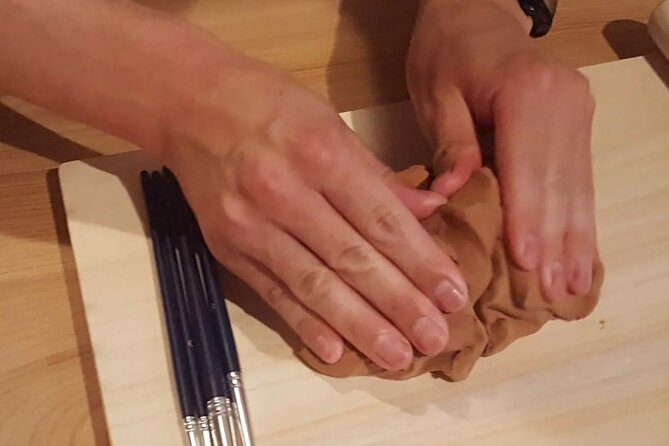
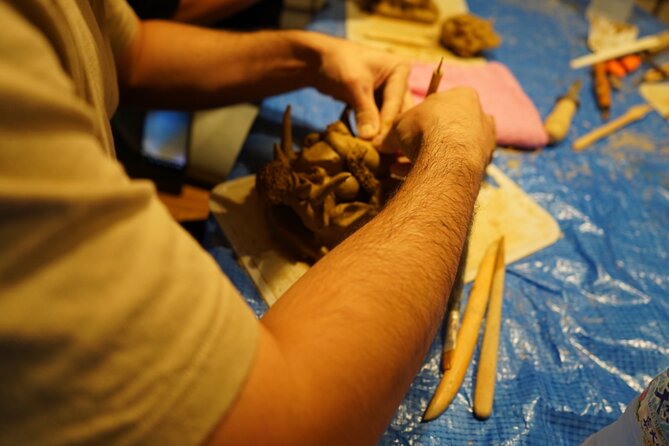
This is not a quick souvenir-painting session. You begin with clay and gradually build a small onigawara by hand, piece by piece. The work has a pleasing rhythm: listen, shape, attach, adjust, then move on to the next feature.
Yuya teaches the process in a set order. That matters because an onigawara can look complicated, with its bold face, raised details, and protective expression. His method was developed so children and people who consider themselves clumsy can still make one.
You should expect to focus. One participant described the class as a series of many steps, with the instructor showing how to manipulate the clay and craft each part before putting everything together. That kind of guided work is more satisfying than being handed a finished mold, but it also means this is a hands-on class rather than a passive cultural talk.
Your finished piece will be small and simple. It is not a full-size roof ornament, and the goal is not to reproduce every detail of a temple roof. Instead, you create a personal version of the demon face, with enough structure to show how the traditional object is made.
More Kyoto craft workshops:
- Authentic knife making experience at a blacksmith in Kyoto
★ 4.8 · 350 reviews - Roketsu dyeing experience: M course Roketsu Dyeing Experience
★ 5.0 · 163 reviews - Kyoto: Replica food making experience
★ 4.8 · 70 reviews
Why the Demon Face Guards Japanese Roofs
Onigawara are traditional kawara, or Japanese roof tiles, designed with fierce ogre or gargoyle-like faces. They are placed at the ends of the main roof ridge, where they serve both a practical and symbolic purpose.
The tile helps protect the roof from rainwater, while the demon face is meant to ward off evil. That combination of useful building material and protective image is what gives the workshop its weight. You are not simply making a clay ornament. You are handling a small piece of a building tradition that has lasted for about 1,400 years.
I like that the class connects the object to the wider story of Japanese architecture without turning the session into a long lecture. The historical meaning gives your work a clear purpose. Once the tile is finished, the expression on its face is no longer just decoration. It is a little guardian made by you.
The activity also lets you take part in a living craft rather than only looking at old examples. Japan’s tile production has modernized, but this workshop gives you a way to try an older style of hand-making. You get a better sense of the patience and control behind the roof details you might otherwise pass without noticing.
Yuya’s Step-by-Step Teaching Style
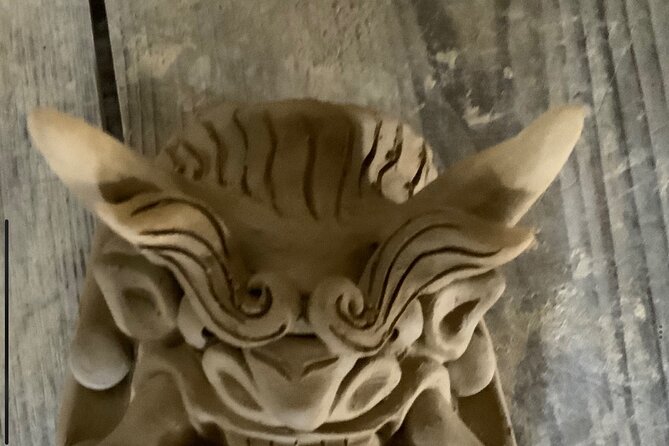
The instructor, Yuya, is the key to the experience. The class is offered in English and Japanese, and the teaching style is built around demonstration and patient guidance. You are shown how to shape the clay, then given time to work before moving to the next part.
That pace suits beginners. You can concentrate on one feature at a time rather than trying to understand the whole demon face at once. If a piece is too thick, too thin, or not sitting correctly, Yuya can help you adjust it.
The available feedback repeatedly highlights his gentle and patient manner. One participant described the workshop as especially friendly and inspiring, while another praised the way he guided each step and explained the meaning behind the tile. That combination is important. You get practical help with your hands and cultural context for what you are making.
The tone also appears to work well for different ages. Children have enjoyed the process, and the class has been described as suitable for all ages. Still, younger children may need an adult to help with delicate pieces or to stay focused through the full sequence. The official group limit of five means you are not lost in a large classroom.
A Calm Two-Hour Break from Sightseeing
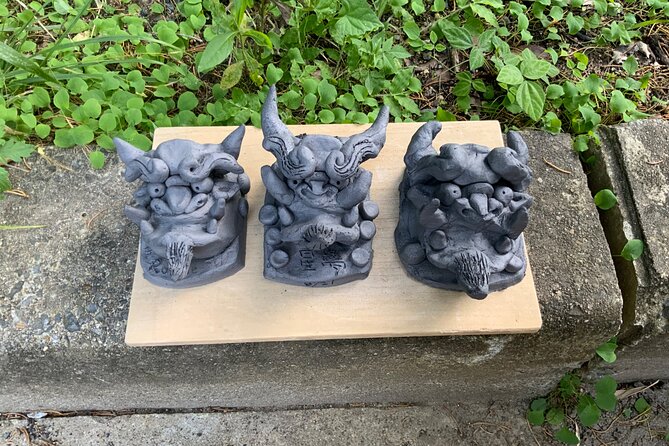
The scheduled duration is two hours. That gives you enough time to settle in, hear the basic background, shape the parts, and assemble your onigawara without rushing through the final stage.
I see this as a good change of pace during a packed Japan itinerary. Sightseeing often means walking from one major place to the next, taking photos, and keeping an eye on the clock. Here, your attention narrows to the clay in front of you. The work is tactile and quiet, with conversation shared naturally as everyone builds a different face.
One participant felt that several hours passed almost instantly. The official schedule remains two hours, so you should use that as your planning figure, but allow a little flexibility if the group takes its time. The class is meant to be careful rather than hurried.
The small scale makes the experience feel more like a private workshop than a standard group attraction. The maximum is five people, and the group may be smaller. One class had only two participants, which allowed plenty of shared conversation and individual help.
A completely different side of Kyoto:
- PERFECT KYOTO 1-Day Bus Tour
★ 5.0 · 13,518 reviews - Kyoto: Fushimi Inari, Kinkakuji, Bamboo Grove 1 Day Bus Tour
★ 4.8 · 4,316 reviews - Kyoto: Tea Ceremony in a Traditional Tea House in Kiyomizu
★ 4.9 · 3,519 reviews - Kyoto Geisha Walking Tour: Gion District & Hidden Gems
★ 4.7 · 3,273 reviews
What Happens After You Finish
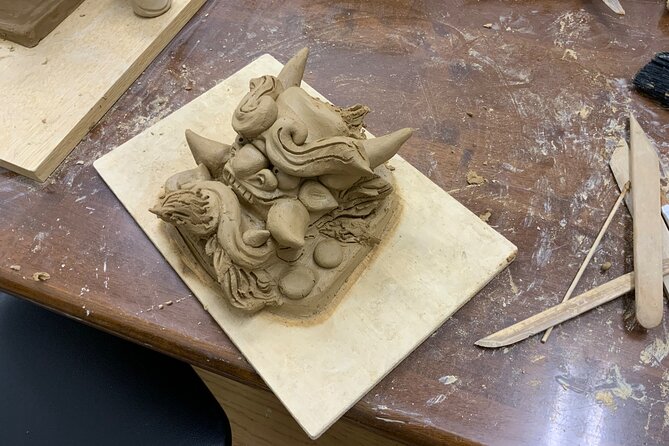
Your onigawara does not go straight into a parcel at the end of class. First, it must dry and then be fired in a kiln at the factory. The full process takes about one to two months.
After firing, the clay changes to the traditional silver color. That delayed finish is part of the appeal. You leave with the memory of making it, then later receive the completed object at home.
The wait is also the biggest practical limitation. If you are moving from Japan to another destination, make sure you provide a reliable home shipping address. The activity information says the fired tile will be sent to your home, but shipping is not included in the $90 price.
You pay the shipping fee separately on the day of the workshop. The amount is not specified, so ask the host about the postage cost when you arrive or before booking if your budget is tight. The base price covers the class, but the final delivered cost will be higher.
Once it arrives, the tile can serve as a personal reminder of Japan and of the old protective role of onigawara. It is not described as a full roof installation piece, so think of it as a handmade keepsake rather than a construction component.
Price, Group Size, and Practical Value
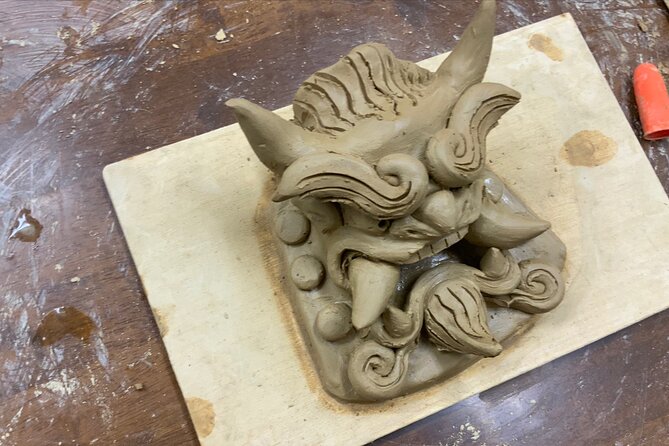
The workshop costs $90 per person for two hours, before shipping. That is more than you would pay for a small mass-produced souvenir, but the comparison is not quite fair. You are paying for instruction, materials, kiln firing, and a one-of-a-kind object made by your own hands.
The value is strongest if you care about process. You are not just buying an onigawara. You are learning how its parts are shaped and assembled, hearing why the face appears on Japanese roofs, and taking part in a craft with a very long history.
The price also makes more sense for families or couples who want a shared activity rather than another sightseeing stop. Each person makes an individual piece, so the result is personal. If you only want a finished decorative item and do not enjoy hands-on work, the cost may feel high.
The five-person limit is a real advantage. A large class could make a clay activity noisy and impersonal. Here, the instructor has room to watch your work and correct small problems. If you book as a pair or family, you should have a more direct experience than at a crowded craft center.
The activity offers free cancellation up to 24 hours before the start time, and you can reserve now and pay later. Those terms help if your schedule in Japan is still moving around. The starting times depend on availability, so check the date carefully before arranging other plans.
Finding Kawarakoubouyouya
The meeting point is Kawarakoubouyouya, the host’s shop. You are told to search for it on Google Maps, but one participant reported that the map pin was about 40 meters off and advised walking roughly 40 meters east.
That is a small distance, but it can matter when you are standing in an unfamiliar area and looking for a workshop entrance. I would save the shop name, check the map before leaving, and allow a few extra minutes to locate the correct spot. If the pin seems to place you just short of the shop, look slightly farther east rather than assuming you have reached the wrong area.
The available details identify the location as being on Honshu, Japan, and connect the activity with Kyoto visits. Exact transport directions are not provided, so you should not assume a particular train station, bus stop, or walking time. Use the shop name and Google Maps as your main guide.
Who Will Enjoy This Workshop Most
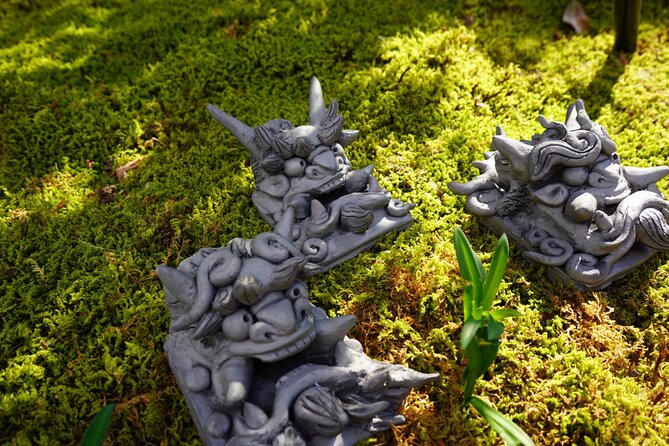
I would recommend this for you if you like making things, small-group activities, and cultural experiences with a clear final product. It suits people who want a quieter afternoon and families looking for something that works across age groups.
You do not need formal art training. Yuya’s procedure is meant to help people who are not confident with their hands, and the class breaks the work into small tasks. Patience matters more than skill.
It is also a good choice if you want a souvenir that carries a story. A shop-bought ornament may look attractive, but this one will remind you of the clay, the careful assembly, the demon face, and the wait for the silver finish.
I would think twice if your schedule is tight or if you need to take every souvenir home immediately. The piece is shipped only after drying and firing, and postage costs extra. You should also skip your finest travel clothes. The activity uses soil, so wear something that may get dirty.
The workshop is wheelchair accessible, which makes it more practical for some visitors than craft sessions in older, less adapted spaces. No further access details are provided, so contact the host if you need specific information about seating or movement within the shop.
Should You Book This Onigawara Experience?
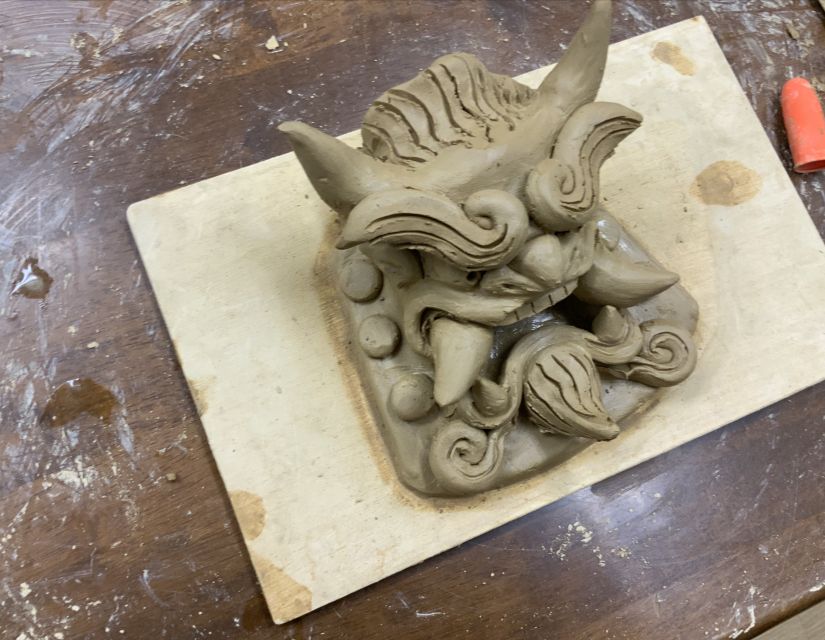
I would book it if you want an authentic, personal activity rather than a quick photo stop. The strongest reasons are the patient instruction from Yuya, the small group size, and the chance to make a protective Japanese roof figure connected to 1,400 years of tradition.
The $90 price is reasonable for a two-hour lesson that includes the finished piece and kiln firing, though you must add shipping. The delayed arrival is a feature for some people and a nuisance for others.
Book this workshop when you have room for a slower afternoon, clothes suitable for clay, and a dependable home address for delivery. If that fits your plans, you will leave with more than a souvenir. You will have helped create a small new piece of an old Japanese craft.
FAQ
How much does the onigawara workshop cost?
The activity costs $90 per person. Shipping for the fired tile is not included and must be paid separately on the day.
How long does the workshop last?
The scheduled duration is two hours. Starting times depend on availability.
Where does the workshop meet?
You meet at Kawarakoubouyouya, the host’s shop. Search for KAWARAKOUBOUYOUYA on Google Maps.
Is the Google Maps location accurate?
One participant reported that the GPS point was about 40 meters off and advised walking around 40 meters east. Allow extra time to find the shop.
Who teaches the workshop?
The instructor is Yuya. The activity is offered in English and Japanese.
How many people can join?
The workshop is a small-group activity limited to five participants.
Do I need sculpting experience?
No. The host developed a step-by-step procedure intended to help children and people who consider themselves clumsy make an onigawara.
Can children take part?
Yes. The activity is described as suitable for all ages, and children have enjoyed making the tiles.
When do I receive the finished onigawara?
After the tile dries and is fired in a kiln, it is sent to your home. The process takes about one to two months.
What should I wear?
Wear clothes that may get dirty because the workshop uses soil and clay.
Recently added around Kyoto
- Higashiyama | Kyoto: Sakura Season Private Rickshaw Tour★ 5.0 · 3 reviews
- Kyoto Kimono Rental CHAMATSU|Kimono/Yukata Rental FamilyPlan★ 5.0 · 3 reviews
- Kyoto: Half-Day Private Guided Tour to the Old Town of Gion★ 4.4 · 3 reviews
- Nara Private Customizable Half Day Tour★ 5.0 · 3 reviews
- Kansai Region Hiking Adventure in Nara Kobe Kyoto and More★ 5.0 · 3 reviews
- Full Day Nara Deer, Temple, Shrine, Activities & Tea Ceremony★ 5.0 · 3 reviews
- Nara: Essential Private Tour with Deer Park and Temples★ 5.0 · 3 reviews
- Hiking Tour for Sacred Sites in Kyoto with a Guide★ 5.0 · 3 reviews
Kyoto Craft Workshops, compared.
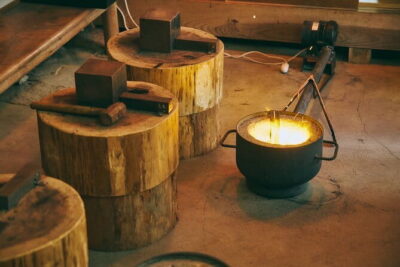
Authentic knife making experience at a blacksmith in Kyoto
Read our review →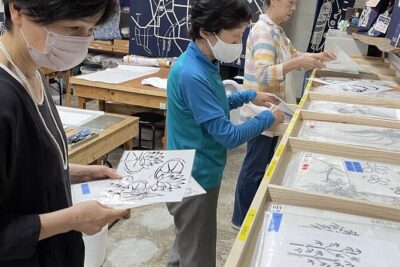
Roketsu dyeing experience: M course Roketsu Dyeing Experience
Read our review →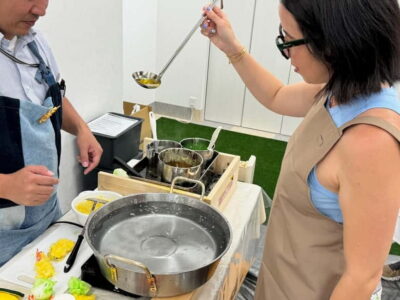
Authentic Knife Making Experience at a Blacksmith in Kyoto
Read our review →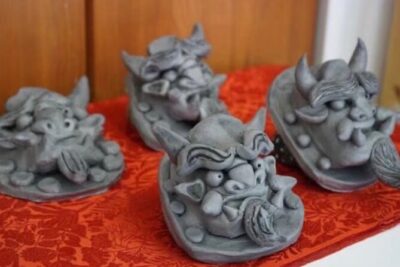
Let’s make only one original onigawara in the world
Read our review →
Bamboo LED Lantern Making Experience in Kyoto Arashiyama
Read our review →
Natural Indigo Dyeing with Local Masters (Private Atelier)
Read our review →Browse the lists this tour appears in