
REVIEW · KYOTO CRAFT WORKSHOPS
Authentic Knife Making Experience at a Blacksmith in Kyoto
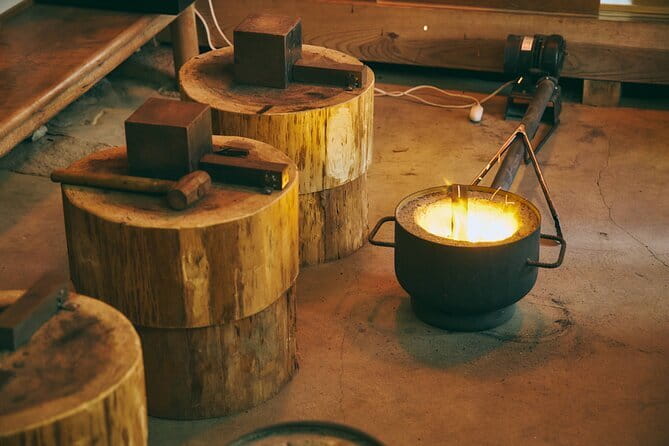
A glowing steel billet, a heavy hammer, and three hours to turn raw metal into a working Japanese knife: this is far more hands-on than a standard craft demonstration. At Atelier NIN, you do the forging, grinding, sharpening, and polishing yourself, with an English-speaking instructor nearby to correct your technique.
I like the small maximum group of six, since blacksmithing goes badly when help is hard to get. I also like that the uniform and tools are provided, so you can arrive ready to work. The main caution is that this is physical work, and the finishing stage can be tricky, especially when you are learning how to hold the blade at the right angle.
In This Review
- Key points to know before you book
- Turning a steel billet into a Kyoto souvenir
- Why the forging stage matters
- Grinding is where beginners need patience
- A small class makes a real difference
- Reaching studio NIN in the Yase area
- What the $158.52 price really buys
- Who will enjoy this most
- What to expect at the end
- Should you book the Atelier NIN knife class?
- FAQ
- Where does the knife-making experience take place?
- How long does the experience last?
- How many people can join the class?
- Is an English guide included?
- Are clothing and tools provided?
- How large is the finished knife?
- Can I cancel for a full refund?
Key points to know before you book
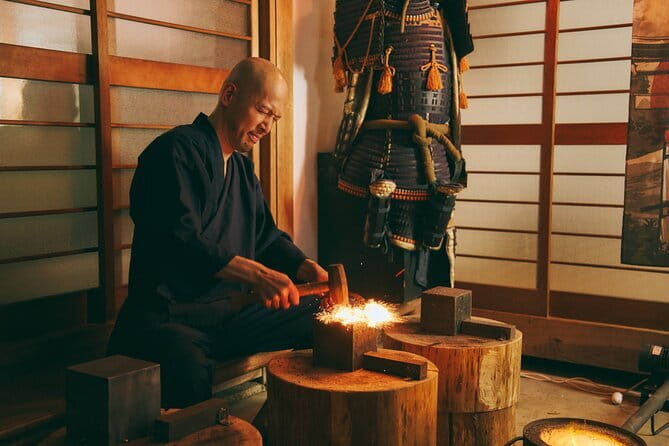
- You hammer the hot steel yourself: This is a working blacksmith class, not a demonstration from the sidelines.
- Your finished knife is about 13 to 15 centimeters: Size varies with your work, and the base version uses a simple iron handle.
- Forging takes about an hour: Expect repeated hammering, concentration, and some arm fatigue.
- Grinding and sharpening require care: This stage shapes the edge, but too much pressure or the wrong angle can spoil the finish.
- Atelier NIN provides the basics: Your uniform, English guide, and knife-making tools are included.
- The class costs $158.52 per person: For a small-group craft session that includes a functional handmade souvenir, I consider it fair value, though extra handle options may cost more.
Turning a steel billet into a Kyoto souvenir
The appeal here is simple: you leave with an object that carries evidence of your own effort. It will not be a factory-perfect kitchen knife, and that is part of the point. The small variations in the blade show where you learned, adjusted, and sometimes had to be rescued by the instructor.
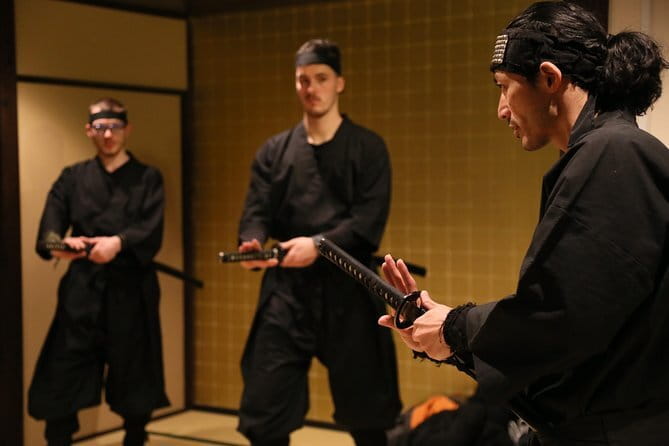
The experience follows the core stages of Japanese kitchen-knife production in a compact format. You begin by changing into the provided traditional goldsmith outfit. That clothing adds a bit of ceremony, but it also means you do not need to find protective work clothes before arriving.
You then learn how to handle the tools. The class is designed for beginners, so you do not need previous blacksmithing experience. The instructors demonstrate safe use, then let you work while stepping in when needed.
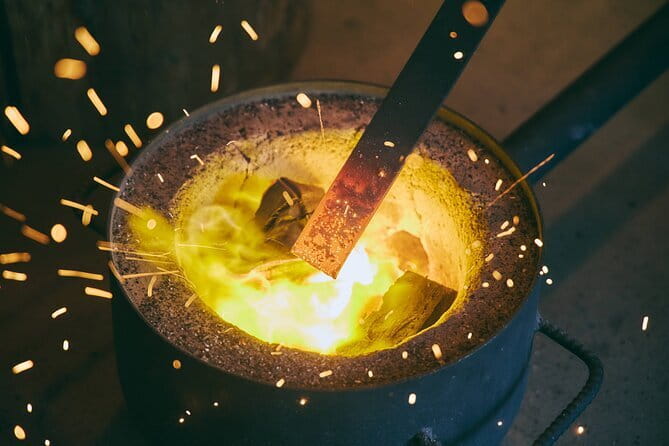
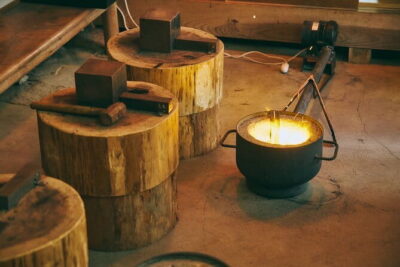
The hot-metal section is the heart of the class. You hammer the steel to flatten and shape it, gradually turning a short metal billet into the starting form of a blade. This is not a token tap or two for a photograph. Plan on roughly an hour of repeated hammering, with enough effort to make the class feel like a modest workout.
The staff then cuts the general knife shape you have requested, after which you take over again for grinding and finishing. You work on the blade with sanding equipment, clean up the surface, and begin to form the edge. The final sharpening and finishing may receive more expert attention, but your work has already shaped the result.
More Kyoto craft workshops:
- Authentic knife making experience at a blacksmith in Kyoto
★ 4.8 · 350 reviews - Roketsu dyeing experience: M course Roketsu Dyeing Experience
★ 5.0 · 163 reviews - Kyoto: Replica food making experience
★ 4.8 · 70 reviews
Why the forging stage matters
Forging gives you a useful sense of why Japanese knives are respected. The finished blade may look neat and simple, but getting the metal flat, straight, and properly shaped takes control. A few minutes with a hammer does not make the process look easy. It shows how much skill is built into every professional blade.
You will also feel the difference between making something and merely buying it. The knife becomes a souvenir with a story attached to it. You can explain where the steel was shaped, how the edge was ground, and why the blade is not exactly like anyone else’s.
The workshop uses white paper grade steel for the knife, according to the detailed experience information provided by the studio. That gives you a genuine material associated with Japanese kitchen knives while keeping the class within a manageable time and price.
There is a tradeoff. A full-size cooking knife usually takes more than five hours and costs more than $400 in this setting. This class is about two and a half to three hours and costs $158.52, so the knife is smaller and simpler. The shorter format lets more people try forging without committing to a full professional-style course.
Grinding is where beginners need patience
Hammering is dramatic, but grinding is where your careful attention matters most. You use a sanding belt or similar equipment to smooth the blade and work toward an edge. This part can feel less exciting than the forge, yet it has a major effect on the final knife.
Ask for a clear demonstration of the correct angle before you begin. The supplied experience details make clear that the instructors help when needed, but one account points out that more guidance during the grinding stage would have made the process easier. That is useful advice for you: do not rush simply because the class clock is moving.
The blade is sharp by the end, so treat it as a real tool. A report from the workshop described a knife being dropped during the process and raised concerns about footwear. I would pay close attention to the safety briefing, keep both hands under control, and ask about the safest way to set the knife down. The provided uniform is helpful, but do not assume it replaces every form of protective equipment.
The finished knife is approximately 13 to 15 centimeters long. Since it is handmade, the size can vary from person to person. The basic knife has an iron handle rather than a wooden one, matching the straightforward traditional method used for this shorter class.
A wooden handle may be available as an optional addition for about ¥5,000, based on the supplied experience details. Because the standard description says there is no wooden handle, confirm the current option and whether the handle is attached at the studio or supplied for later work.
A small class makes a real difference
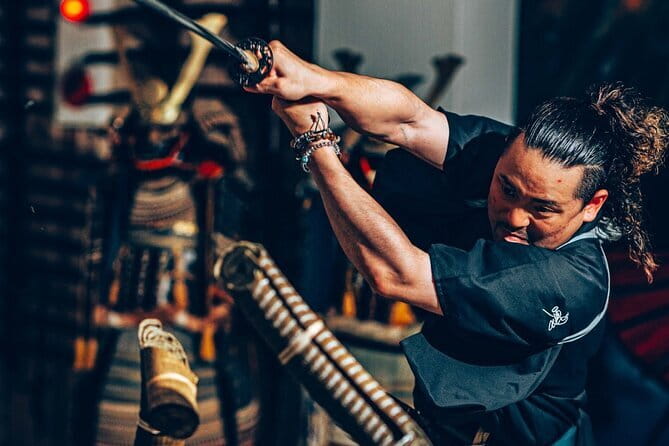
The maximum group size is six. That number matters more here than it would on a walking tour. When you are holding hot metal or working beside a sanding belt, you want an instructor to notice what you are doing.
The best part of the teaching style is its balance. You get enough room to make the knife yourself, but the staff can quietly step in before a small error becomes a serious one. Daiki is specifically praised for engaging instruction and for helping at the right moment without taking over the whole project.
That balance also suits families and couples. A 13-year-old has completed the activity successfully, and the class can work well for adults who want a shared project rather than another passive sightseeing stop. Still, it is not effortless entertainment. You need moderate physical fitness, steady attention, and a willingness to follow safety directions.
English guidance is included. The instructors are described as friendly and able to explain the process well in English, though the class remains a practical workshop rather than a long technical lecture. You will learn by watching, trying, and being corrected.
A completely different side of Kyoto:
- PERFECT KYOTO 1-Day Bus Tour
★ 5.0 · 13,518 reviews - Kyoto: Fushimi Inari, Kinkakuji, Bamboo Grove 1 Day Bus Tour
★ 4.8 · 4,316 reviews - Kyoto: Tea Ceremony in a Traditional Tea House in Kiyomizu
★ 4.9 · 3,519 reviews - Kyoto Geisha Walking Tour: Gion District & Hidden Gems
★ 4.7 · 3,273 reviews
Reaching studio NIN in the Yase area
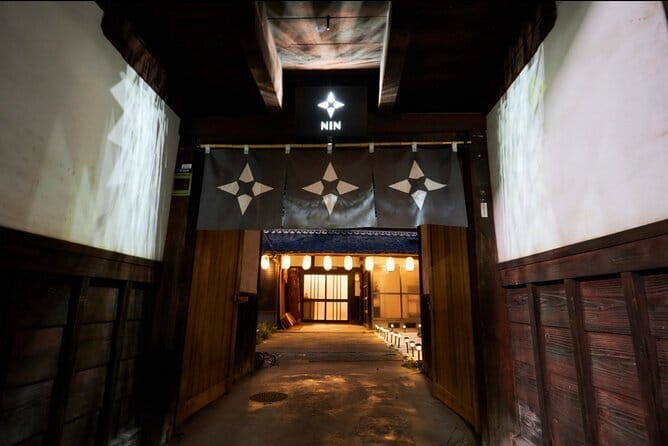
The meeting point is studio NIN at 168-1 Yasenosechō, Sakyo Ward, Kyoto, postal code 601-1254. The activity starts and ends at this location, and private transportation is not included.
The area is served by public transportation, but allow extra time for the final approach. The studio is in a residential area, and the walk from the station can feel longer than expected. A small one-carriage train serves the area, which is an enjoyable part of the outing, but the location can be difficult to find once you leave the station.
Phone reception may be weak near the station. Save the address and directions before you set out, rather than relying entirely on a live map. This is the kind of place where get your bearings fast is better advice than wandering around in work clothes.
Rurikoin is named as a stop connected with the experience, but the practical start and finish are at studio NIN. Do not assume you are signing up for a full temple visit or a guided sightseeing tour there. Treat the studio address as the essential destination and check the day’s exact meeting instructions before leaving central Kyoto.
The workshop provides water and toilets, but snacks are not included. If you are combining this with sightseeing, eat beforehand or carry something small for afterward.
What the $158.52 price really buys

At $158.52 per person, this is not a cheap souvenir activity. The price makes more sense when you count what is included: an English guide, a uniform, a set of working tools, instruction across several stages, and a knife you made yourself.
You are also paying for a small class rather than a crowded production line. With no more than six people, the instructors can watch your hammering and help with the blade angle. That personal attention is a key part of the value.
The comparison with a regular cooking knife is useful. A larger blade can take more than five hours and cost more than $400. This class deliberately keeps the knife smaller, the time shorter, and the price lower. I would choose it for the experience of forging, not if your only goal is to buy the finest Japanese chef’s knife available.
The final object is functional, but it is also a handmade keepsake. Some completed knives are polished and sharpened to a very high standard by the staff, while beginner work can show uneven shaping. That is not a flaw in the concept, but you should keep your expectations realistic. You are learning a demanding craft in a short session.
Who will enjoy this most
I would recommend the class to you if you like tools, food culture, metalwork, or practical crafts. It is especially good for a couple, parent and teenager, or solo visitor who wants an activity with a clear physical result.
It also suits cooks. You gain a better sense of the work behind a Japanese kitchen knife, and the finished blade gives you a memorable connection to the craft. The activity can be a strong choice during a short Kyoto stay because it offers something you cannot get from simply visiting a shop.
You may want to skip it if you dislike heat, noise, repetitive work, or close attention to safety. It is not a relaxed sit-down class. Hammering the metal takes effort, and the grinding stage demands patience.
You should also think about the journey home. A knife in the 13 to 15 centimeter range may not be allowed in carry-on luggage, especially on an international flight. Plan to place it in checked baggage and pack it securely. One account specifically advises checking a bag for the return flight.
What to expect at the end
Once your blade has been forged, ground, sharpened, and polished, it is wrapped and presented as a finished souvenir. The workshop may also provide a small photo as a memento at no additional cost.
Your knife will have an iron handle in the standard format. If you choose an optional wooden handle, ask for the current price and fitting details before you begin, particularly if you expect to complete the handle at home.
The result should be treated as a proper sharp knife, not a blunt craft object. That makes it a satisfying souvenir, but it also means you need to pack and transport it responsibly.
Atelier NIN received a 4.8 rating from 53 reviews, with 94 percent recommending the activity. Those numbers fit the strengths of the class: warm instruction, plenty of real work, and a useful object to take home. The weaker points are practical rather than dramatic, including the hard-to-find location, limited shoe protection concerns, and the need for clearer grinding guidance for some beginners.
Should you book the Atelier NIN knife class?
Book it if you want to make something in Kyoto rather than simply look at something. The most highly praised features are the friendly instruction, the chance to do genuine hammering and grinding, and the pride that comes with taking home a working knife.
I would book early if the date matters to you, since the class is limited to six people and has been booked more than 20 times in a recent week. Leave time for the journey to Yase, download your directions, wear or bring sensible clothing under the provided uniform, and plan checked baggage for the flight home.
Skip it if you want a polished professional chef’s knife with no visible beginner marks, or if three hours of physical craft work sounds tiring. For everyone else, this is one of Kyoto’s more memorable hands-on activities, with a fair price for the instruction, materials, and lasting souvenir.
FAQ
Where does the knife-making experience take place?
The meeting point is studio NIN, at 168-1 Yasenosechō, Sakyo Ward, Kyoto, 601-1254, Japan. The activity ends back at the same meeting point.
How long does the experience last?
The experience lasts approximately three hours. The studio describes the active forging format as about two and a half hours, with the full experience listed at roughly three hours.
How many people can join the class?
The maximum group size is six people. This allows for more direct help while you work with the tools and blade.
Is an English guide included?
Yes. An English guide is included, and English-speaking instructors provide guidance during the knife-making process.
Are clothing and tools provided?
Yes. A uniform and a set of tools used to make knives are included. All materials needed for the experience are also provided.
How large is the finished knife?
The handmade knife is approximately 13 to 15 centimeters long. The final size can vary because each knife is made by hand.
Can I cancel for a full refund?
You can cancel for a full refund up to 24 hours before the experience start time. Cancellations or changes made less than 24 hours before the start time are not accepted for a refund.
Recently added around Kyoto
- Higashiyama | Kyoto: Sakura Season Private Rickshaw Tour★ 5.0 · 3 reviews
- Kyoto Kimono Rental CHAMATSU|Kimono/Yukata Rental FamilyPlan★ 5.0 · 3 reviews
- Kyoto: Half-Day Private Guided Tour to the Old Town of Gion★ 4.4 · 3 reviews
- Nara Private Customizable Half Day Tour★ 5.0 · 3 reviews
- Kansai Region Hiking Adventure in Nara Kobe Kyoto and More★ 5.0 · 3 reviews
- Full Day Nara Deer, Temple, Shrine, Activities & Tea Ceremony★ 5.0 · 3 reviews
- Nara: Essential Private Tour with Deer Park and Temples★ 5.0 · 3 reviews
- Hiking Tour for Sacred Sites in Kyoto with a Guide★ 5.0 · 3 reviews
Kyoto Craft Workshops, compared.
Authentic knife making experience at a blacksmith in Kyoto
Read our review →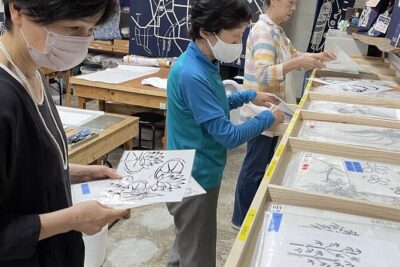
Roketsu dyeing experience: M course Roketsu Dyeing Experience
Read our review →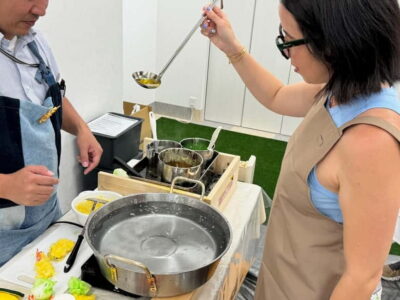
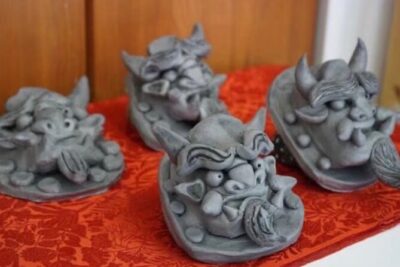
Let’s make only one original onigawara in the world
Read our review →
Bamboo LED Lantern Making Experience in Kyoto Arashiyama
Read our review →Let’s make only one original onigawara in the world!!
Read our review →
Natural Indigo Dyeing with Local Masters (Private Atelier)
Read our review →Browse the lists this tour appears in