
REVIEW · KYOTO CRAFT WORKSHOPS
Let’s make only one original onigawara in the world
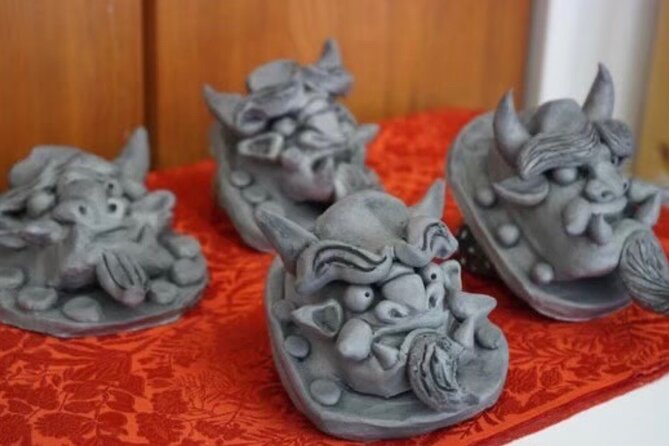
Kyoto has plenty of souvenirs, but few that you make from a lump of clay and later receive by mail. At this small workshop, artisan Yuya teaches you to shape an onigawara, the fierce demon-faced roof ornament used to guard Japanese buildings from evil and rainwater. Your finished piece goes into a kiln, then travels home after firing.
I like the clear, beginner-friendly method and the fact that every finished oni takes on a different face. I also like the quiet change of pace from temple visits and long walks. The main catch is that shipping costs extra, and you will wait several weeks, sometimes around two months, to see the fired result.
In This Review
- Key points to know before booking
- Why an onigawara makes a better souvenir than another trinket
- Reaching the workshop in Higashiyama
- The clay lesson, broken into manageable steps
- Yuya’s teaching style makes the class work for beginners
- What the kiln adds to the experience
- How much value do you get for $89.17?
- Who will enjoy this most?
- Booking, cancellation, and timing tips
- Should you book the onigawara workshop?
- FAQ
- Where does the onigawara workshop take place?
- How long does the experience last?
- How many people can join the regular workshop?
- Is shipping included in the price?
- When will the finished onigawara arrive?
- What should I wear and bring?
Key points to know before booking
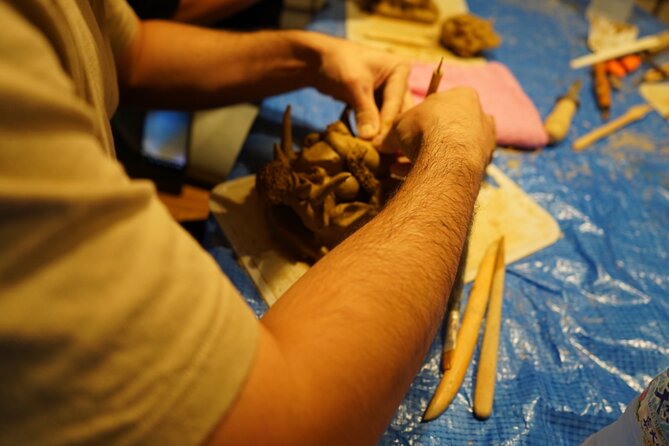
- Make a real Japanese roof guardian: Shape a small onigawara from clay rather than buying a ready-made souvenir.
- Yuya teaches by simple stages: His instructions suit first-time clay workers, children, and people who do not consider themselves artistic.
- Small classes mean personal help: The standard maximum is five people, though larger groups can be arranged at a different location.
- Your piece is fired later: The clay needs time to dry and is kiln-fired at the workshop’s factory after class.
- Plan for separate postage: Shipping is not included, and you should bring cash because the charge is paid separately.
- Wear clothes that can get dirty: You will work directly with soil and clay. An apron is not included.
Why an onigawara makes a better souvenir than another trinket
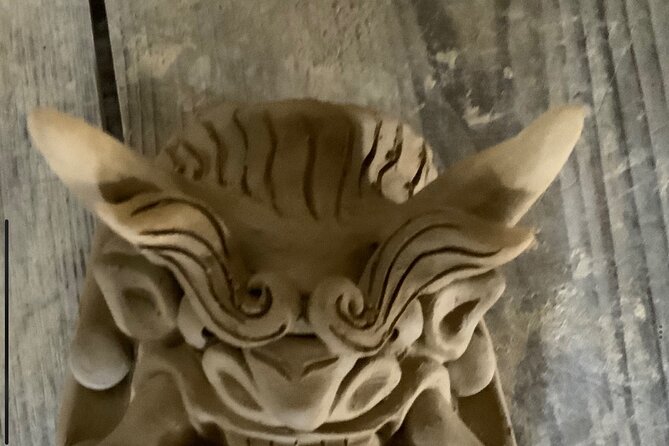
An onigawara is not simply a decorative monster. These carved roof tiles sit at the ends of the main roof ridge, where their grimacing faces have long served as guardians. They are connected with protection, and they also help shield roof edges from rainwater.
You will notice this kind of ornamentation around Japanese temples and traditional buildings in Kyoto. Once you know what to look for, rooflines become more interesting. The workshop gives you a reason to study those faces during the rest of your time in the city.
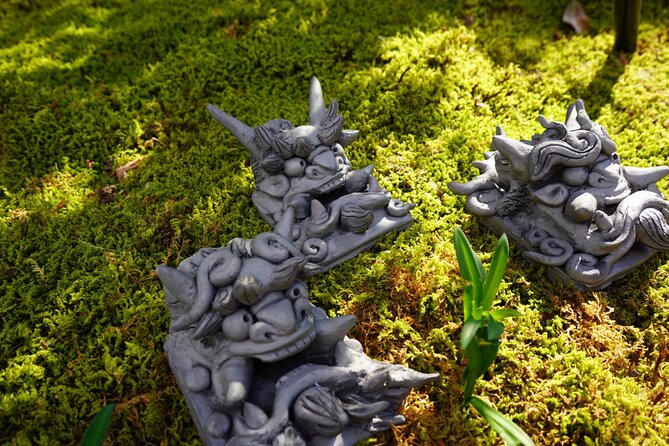
The finished object is small and personal. You do not select one from a shelf. You build it yourself, with the marks, proportions, and odd little decisions that make it yours. One person may produce a snarling guardian, while another creates something softer, stranger, or slightly lopsided. That difference is part of the point.
This is also a useful choice if you want a Kyoto memory that does not disappear into a suitcase. After firing, the onigawara is sent to your home. You will not carry a fragile ceramic sculpture through the rest of your Japan trip, but you will need patience before it arrives.
More Kyoto craft workshops:
- Authentic knife making experience at a blacksmith in Kyoto
★ 4.8 · 350 reviews - Roketsu dyeing experience: M course Roketsu Dyeing Experience
★ 5.0 · 163 reviews - Kyoto: Replica food making experience
★ 4.8 · 70 reviews
Reaching the workshop in Higashiyama
The meeting point is 瓦工房 瓦工房you家, also written as Kawarakoubou Youya, at 373-2 Yamazakicho in Kyoto’s Higashiyama Ward. The activity begins and ends at this location, and it is near public transportation.
The workshop is part of the experience’s appeal. You are not being ushered through a large attraction with a fixed display and a crowded production line. The setting is an intimate working space connected with the instructor’s family tile business. That gives the class a more direct connection to Kyoto’s craft traditions.
Allow a little time to locate the meeting point. The supplied details do not give a precise station, walking route, or pickup service, so check the confirmed booking information before setting out. The organizer meets you as scheduled, but you should not assume that transportation from your hotel is included.
A small practical bonus: luggage storage was available during at least some classes. Since this is not listed as a formal inclusion, ask before relying on it. Bottled water is included, which is modest but welcome during a hands-on session.
The clay lesson, broken into manageable steps
The class begins with an explanation of kawara, Japan’s traditional roof tiles, and the role of onigawara. Yuya then guides you through the construction of a small, simple demon face.
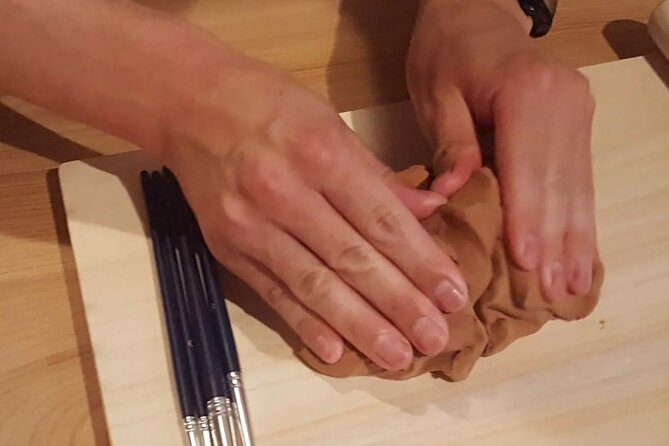
You start with clay and build the form piece by piece. The method was developed to make onigawara approachable, since traditional construction can be difficult. Rather than expecting you to sculpt the whole face at once, Yuya breaks the work into a set sequence.
That approach matters. Beginners often look at a finished roof guardian and assume it requires years of training. Here, you work through manageable stages. The process still asks for concentration, but you are not left to guess what comes next.
You can expect the class to be fairly active. One group found the pace quick and needed close attention to keep up, while other sessions took about three hours despite the advertised duration of roughly two hours. The official duration is approximately two hours, but the actual time can stretch depending on group size and how quickly everyone works.
Do not panic if your clay looks wrong halfway through. That is a normal part of the process. Several finished pieces that seemed misshapen during construction came together well by the end. Yuya offers suggestions and hands-on help when needed, but he does not simply take over and make the object for you.
The result follows a common basic recipe, yet no two pieces need to look alike. You can shape your own expression and add personal touches within the time and materials provided. This balance makes the activity work for mixed groups, including people with no pottery experience and those who already enjoy sculpture.
Yuya’s teaching style makes the class work for beginners
The instructor, Yuya, is the heart of the workshop. He explains each technique in clear, simple English. Casual conversation may be less effortless than the practical instructions, but the important information is easy to follow, and he welcomes questions.
His teaching style is patient without being fussy. He demonstrates the next step, checks that you understand it, and encourages you to continue. If you are worried about your artistic ability, you will get useful guidance rather than vague reassurance.
That makes this a strong pick for families. Children can take part, and teenagers who enjoy art have enough room to make the piece their own. The class is also suitable for adults who have never touched clay. You do not need to arrive with a design, special talent, or previous experience.
Yuya’s family connection to the tile business adds another layer. You are learning from someone who works with the craft, not simply following a generic souvenir activity. The workshop also gives you a chance to ask about the family business and the way Japanese tile production has changed over time.
Language is worth considering honestly. English instructions are clear enough for the craft, but the experience is not presented as a long, formal lecture in English. If you want a detailed academic talk on Japanese architecture, this may feel light. If you want to learn through making, it fits much better.
A completely different side of Kyoto:
- PERFECT KYOTO 1-Day Bus Tour
★ 5.0 · 13,518 reviews - Kyoto: Fushimi Inari, Kinkakuji, Bamboo Grove 1 Day Bus Tour
★ 4.8 · 4,316 reviews - Kyoto: Tea Ceremony in a Traditional Tea House in Kiyomizu
★ 4.9 · 3,519 reviews - Kyoto Geisha Walking Tour: Gion District & Hidden Gems
★ 4.7 · 3,273 reviews
What the kiln adds to the experience
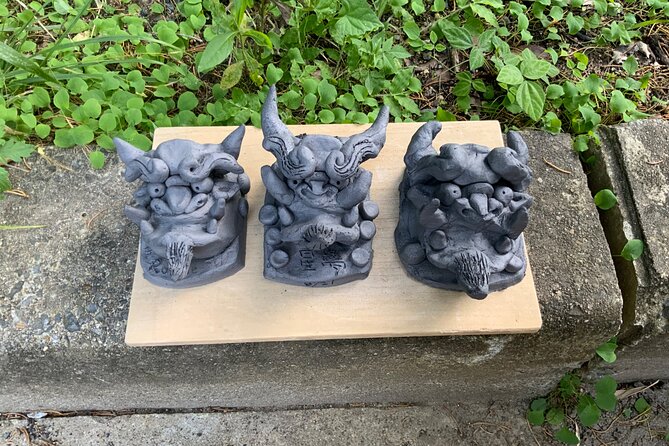
You do not take home a finished ceramic on the day. After you complete the clay sculpture, Yuya fires it in a kiln at the factory. The piece must first dry, and the entire process takes time.
The wait changes how you think about the souvenir. You leave with the memory of making it, but the physical object remains unfinished. Later, the fired onigawara arrives at your home, allowing the trip to resurface after you have returned to ordinary life.
The timing requires a little realism. One account describes about a month for the clay to dry, and other deliveries arrived after a few weeks or around two months. The exact schedule can vary. If you need the piece before a particular date, ask the workshop directly.
Shipping is separate from the $89.17 activity price. The charge depends on the shipment, and it is paid at the end of class. Bring cash, since this was specifically noted as a useful precaution. The postage is easy to overlook when comparing prices, but it is an unavoidable part of receiving your fired work.
The delayed delivery is a drawback for some people. You cannot inspect the final fired color or finish before leaving Japan, and international shipping adds another expense. Still, the process is practical. A fired clay object is fragile, and sending it directly home is safer than packing it in your luggage.
How much value do you get for $89.17?
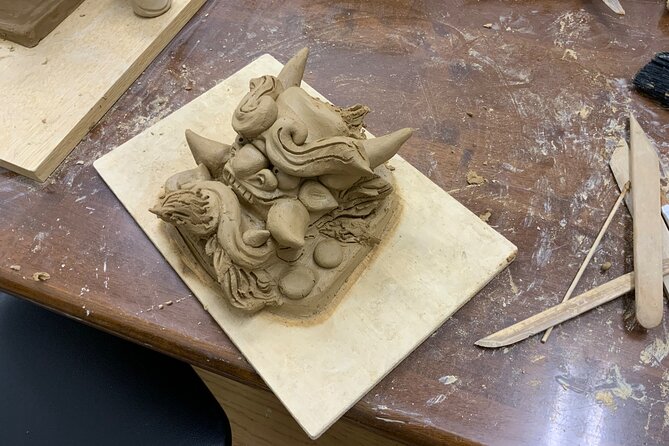
At $89.17 per person, this is not the cheapest Kyoto activity. You are paying for instruction, clay, kiln firing, and a personal object rather than for a short demonstration. Bottled water is included, but an apron and shipping are not.
I think the value is strongest if you care about the making process. A mass-produced roof tile or ceramic mascot costs less, but it cannot carry the same connection to your own time in Kyoto. You also get a cultural explanation of kawara and onigawara, plus direct instruction from an artisan.
The price works less well if you want a guaranteed polished sculpture, a fast souvenir, or a fully packaged experience with no extra costs. Your piece will be handmade, which means it may be uneven or unconventional. The shipping charge should be included in your trip budget from the start.
Group discounts are available, and the organizer accepts groups of five or more. Larger groups of up to 40 people can be accommodated, but the location changes for those arrangements. The regular format is limited to five people, which is better for personal instruction. If you are booking a large party, confirm the venue and class setup before paying.
Who will enjoy this most?
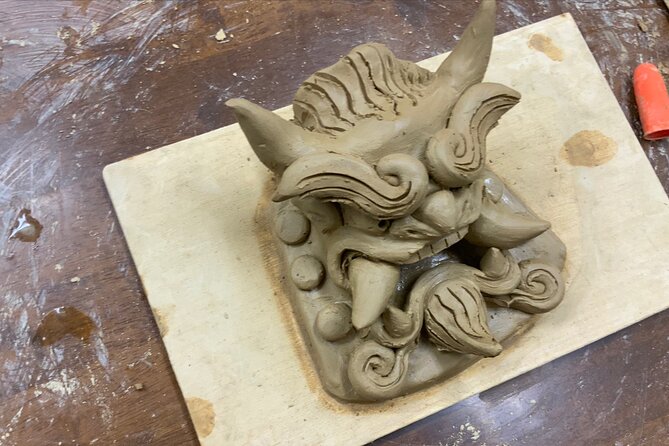
I would choose this workshop for families, creative couples, teenagers, and anyone who wants a rest from sightseeing. It gives you several seated hours with a clear goal, which can feel refreshing after Kyoto’s temple-heavy days.
It is also a good fit for people who collect meaningful objects rather than standard souvenirs. Your oni will not be perfect, and that is exactly why it will remind you of the trip.
You should think twice if you dislike getting dirty, have a tight schedule, or cannot wait for an overseas delivery. Wear clothing that can handle clay and soil. An apron is not provided, so bring suitable clothing rather than your favorite Kyoto outfit.
People with service animals can participate, and the activity is near public transportation. Most people can take part, but the practical details of the space are limited in the supplied information. If you have a specific mobility need, contact the provider before booking.
Booking, cancellation, and timing tips
Confirmation is provided when you book. Free cancellation is available if you cancel at least 24 hours before the local start time. Changes or cancellations inside that 24-hour window are not accepted for a refund.
I would schedule the class earlier in your Kyoto stay if you want time to compare your work with onigawara on temple roofs afterward. You can also book it midway through a busy sightseeing plan as a calmer change of rhythm.
Leave room in your day. Although the listed duration is about two hours, some sessions lasted close to three hours. The pace depends on the class, and Yuya may allow slower makers enough time to finish rather than rushing everyone out.
Before arriving, remember three things: wear washable clothes, bring money for postage, and prepare your home address for shipping. The last point is especially important because the finished piece will be sent after firing, not handed over at the workshop.
Should you book the onigawara workshop?
Book it if you want a hands-on Kyoto experience with a souvenir that carries your fingerprints, mistakes, and choices. Yuya’s step-by-step teaching makes the craft approachable, and the small standard class size gives you a good chance to receive personal help.
Skip it if your schedule cannot absorb a longer-than-expected class or if the separate shipping fee is a deal breaker. The wait for delivery is also part of the bargain.
For most families, first-time clay workers, and visitors seeking something beyond sightseeing, I think the $89.17 price is fair. You make a traditional Japanese roof guardian, learn why those fierce faces appear on buildings, and receive the finished piece at home later. That is a souvenir with a story, not just a logo.
FAQ
Where does the onigawara workshop take place?
The standard meeting point is 瓦工房you家, Kawarakoubou Youya, at 373-2 Yamazakicho, Higashiyama Ward, Kyoto, 605-0841, Japan. The activity ends back at the meeting point.
How long does the experience last?
The advertised duration is approximately two hours. Some sessions can take closer to three hours, depending on the group and the pace of the work.
How many people can join the regular workshop?
The regular activity has a maximum of five participants. Groups of five or more can be accepted, and arrangements for up to 40 people are available at a different location.
Is shipping included in the price?
No. Shipping costs are separate from the activity fee and are paid at the end of the class. Bring cash for this additional charge.
When will the finished onigawara arrive?
The piece is dried and kiln-fired after the workshop, then shipped to your home. The drying and delivery period can take several weeks, and some accounts indicate it may be around two months.
What should I wear and bring?
Wear clothes that can get dirty because the activity uses soil and clay. An apron is not included. Bottled water is provided, and you should bring cash for the separate shipping fee.
Recently added around Kyoto
- Higashiyama | Kyoto: Sakura Season Private Rickshaw Tour★ 5.0 · 3 reviews
- Kyoto Kimono Rental CHAMATSU|Kimono/Yukata Rental FamilyPlan★ 5.0 · 3 reviews
- Kyoto: Half-Day Private Guided Tour to the Old Town of Gion★ 4.4 · 3 reviews
- Nara Private Customizable Half Day Tour★ 5.0 · 3 reviews
- Kansai Region Hiking Adventure in Nara Kobe Kyoto and More★ 5.0 · 3 reviews
- Full Day Nara Deer, Temple, Shrine, Activities & Tea Ceremony★ 5.0 · 3 reviews
- Nara: Essential Private Tour with Deer Park and Temples★ 5.0 · 3 reviews
- Hiking Tour for Sacred Sites in Kyoto with a Guide★ 5.0 · 3 reviews
Kyoto Craft Workshops, compared.
Authentic knife making experience at a blacksmith in Kyoto
Read our review →
Roketsu dyeing experience: M course Roketsu Dyeing Experience
Read our review →
Authentic Knife Making Experience at a Blacksmith in Kyoto
Read our review →
Bamboo LED Lantern Making Experience in Kyoto Arashiyama
Read our review →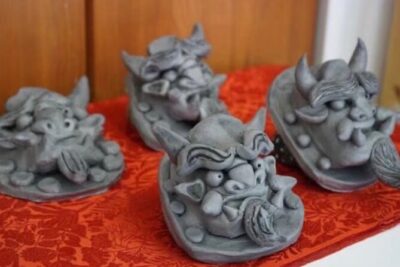
Let’s make only one original onigawara in the world!!
Read our review →
Natural Indigo Dyeing with Local Masters (Private Atelier)
Read our review →Browse the lists this tour appears in