
REVIEW · KYOTO CRAFT WORKSHOPS
Kyoto: Traditional Yuzen Dyeing Experience
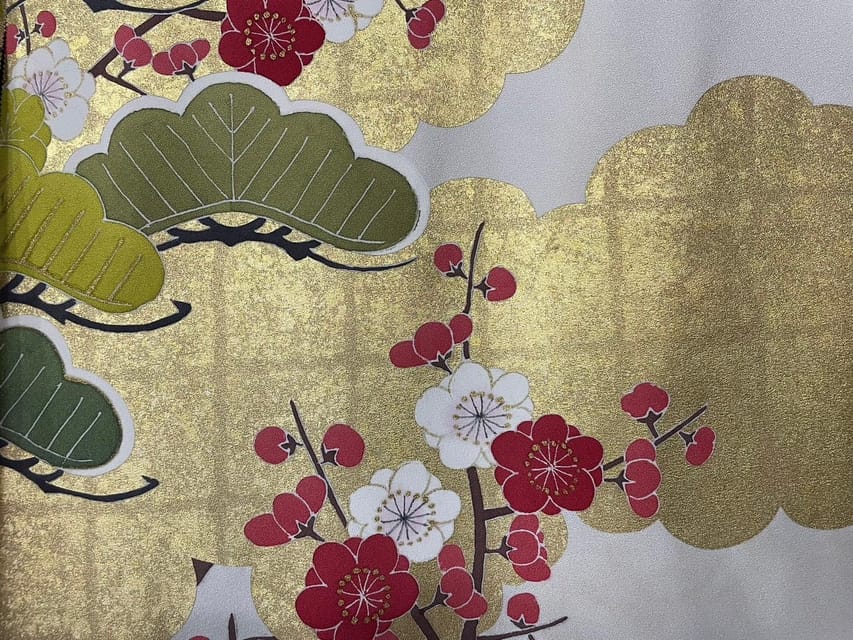
Kyoto’s Yuzen dyeing experience puts you at a low work table inside a real Nishijin machiya, not in a large craft classroom. An artisan guides you through painting a prepared silk design, mixing colors to suit your choices, and creating a finished piece to take home.
I like the one-to-one attention from the artisan and interpreter, especially when choosing a color palette. I also like the quiet setting, the display of finished Yuzen works, and the chance to support a working local craftsperson. The main consideration is that you may sit on the floor for two hours, and the design selection appears limited at some sessions.
In This Review
- Key points at a glance
- Why this Kyoto craft class feels different
- Meeting the artisan and choosing your design
- Painting inside the gold outlines
- The machiya, studio, and Yuzen display
- A close look at the instruction and interpretation
- What you take home
- Price, timing, and practical value
- Who should book this experience
- Booking flexibility and accessibility
- Should you book the Kyoto Yuzen dyeing class?
- FAQ
- How long does the Kyoto Yuzen dyeing experience last?
- How much does the experience cost?
- What languages are available?
- What age is this activity suitable for?
- Is transportation included?
- What should I wear and bring?
Key points at a glance
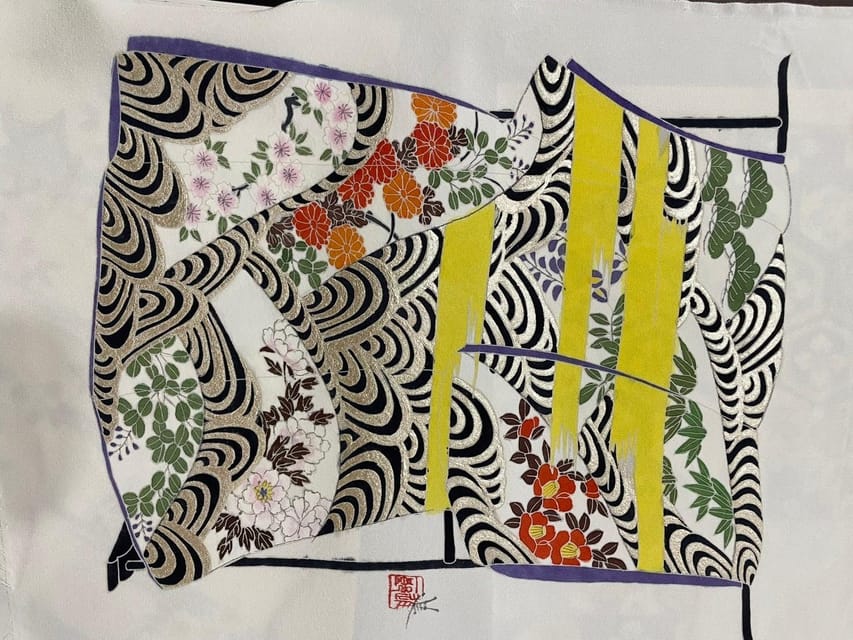
- Paint silk with an artisan’s guidance: Master Shin’ichiro helps mix the right color and water balance, then guides you through the painting.
- Work inside a traditional Nishijin home: The machiya and its garden-facing studio add a sense of place that a standard workshop cannot match.
- Choose from prepared Japanese designs: Phoenixes, cranes, and fans have already been outlined on the silk, so you can focus on color and brush control.
- Small groups keep the class personal: The maximum group size is six, and some sessions may feel almost private.
- Take home a finished keepsake: Your silk artwork reflects your color choices while also showing the master’s influence.
- Plan for a calm, careful pace: Wear clothes that can handle dye and tell the provider about allergies or sensitivities before arrival.
Why this Kyoto craft class feels different
Many Kyoto craft activities give you a quick souvenir and a short explanation. This one asks you to slow down and work in the same setting where the artisan practices his craft. The result is less like a simple tourist project and more like a small apprenticeship.
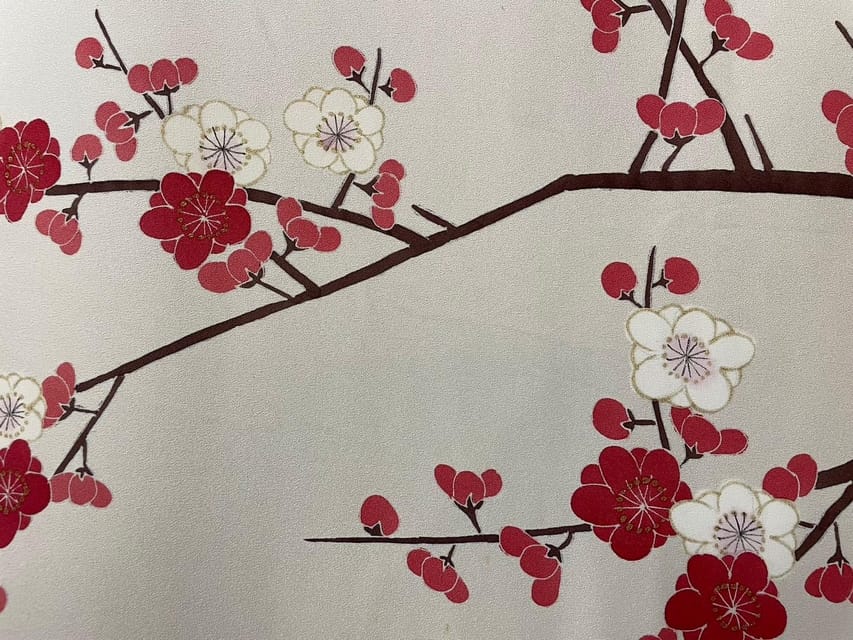
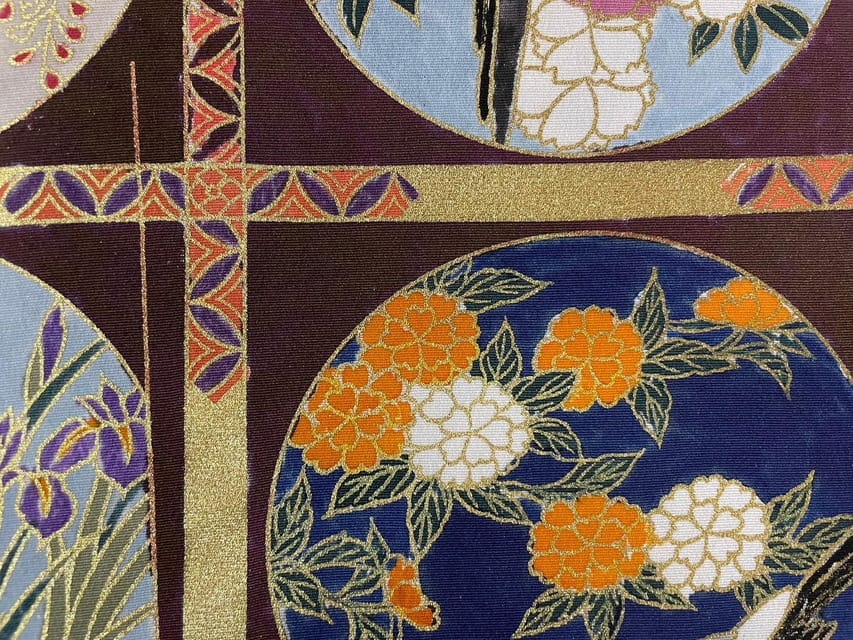
You do not begin with a blank piece of silk. The fabric already carries the golden outlines of a chosen image, usually prepared from the artisan’s own designs. This removes the pressure of drawing and lets you concentrate on the parts that make Yuzen special: color, brush movement, water control, and patience.
The activity takes place in a traditional machiya in Kyoto’s historic Nishijin district. Nishijin is strongly associated with textile work, so the location fits the subject rather than feeling like a random venue. Inside, you can view the artisan’s Yuzen pieces and see the difference between a master’s finished work and your own developing artwork.
I would choose this activity for the setting as much as for the craft. Sitting in a traditional home, looking at finished silk art, and watching colors appear slowly on fabric gives the two hours a peaceful rhythm.
More Kyoto craft workshops:
- Authentic knife making experience at a blacksmith in Kyoto
★ 4.8 · 350 reviews - Roketsu dyeing experience: M course Roketsu Dyeing Experience
★ 5.0 · 163 reviews - Kyoto: Replica food making experience
★ 4.8 · 70 reviews
Meeting the artisan and choosing your design
The class begins with an introduction to Yuzen dyeing, its place in Japanese culture, and the tools and materials used. The English or Chinese interpreter helps explain the process and gives you a chance to ask questions as the artisan demonstrates the work.
The exact design selection can vary, but available examples have included phoenixes, cranes, and fans. One particularly popular choice is a phoenix in front of a crescent moon. At some sessions, the selection may be limited to about three designs, so do not expect a large catalog of patterns.
That limited choice has a practical upside. You spend less time trying to find the perfect image and more time painting. Still, if you want complete artistic freedom, this is not that kind of class. You are collaborating with the artisan within a prepared format.
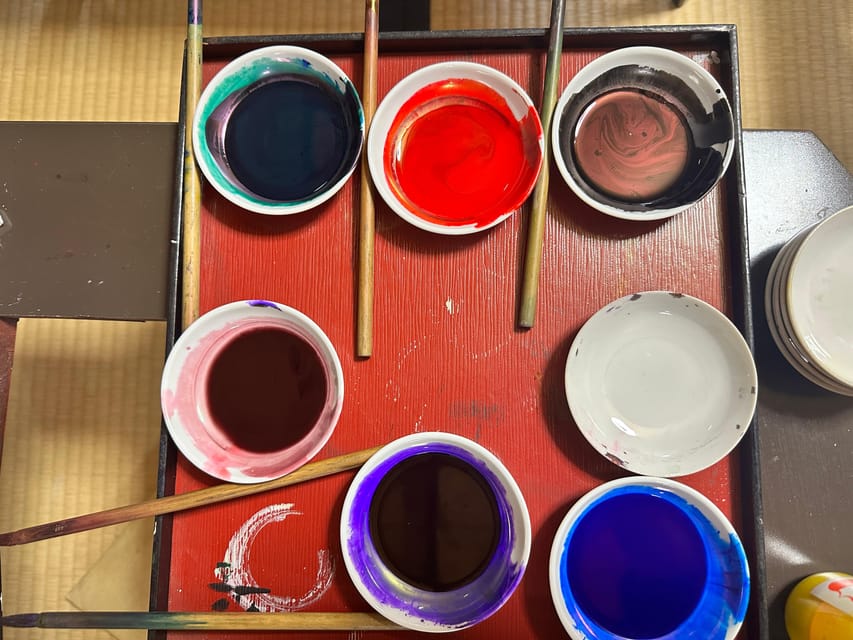
Once you select a design, you choose one or two colors that appeal to you. The artisan then helps build the rest of the palette so the finished image remains balanced. This is one of the strongest parts of the experience because color decisions can be surprisingly hard when you are looking at small pots of dye rather than a finished piece.
The artisan may show you an example of how a certain shade will look on silk. He also mixes the dye for you, adjusting the amount of water and pigment. That small technical step matters. A color that looks soft in a dish can spread or darken on fabric if the mixture is wrong.
Painting inside the gold outlines
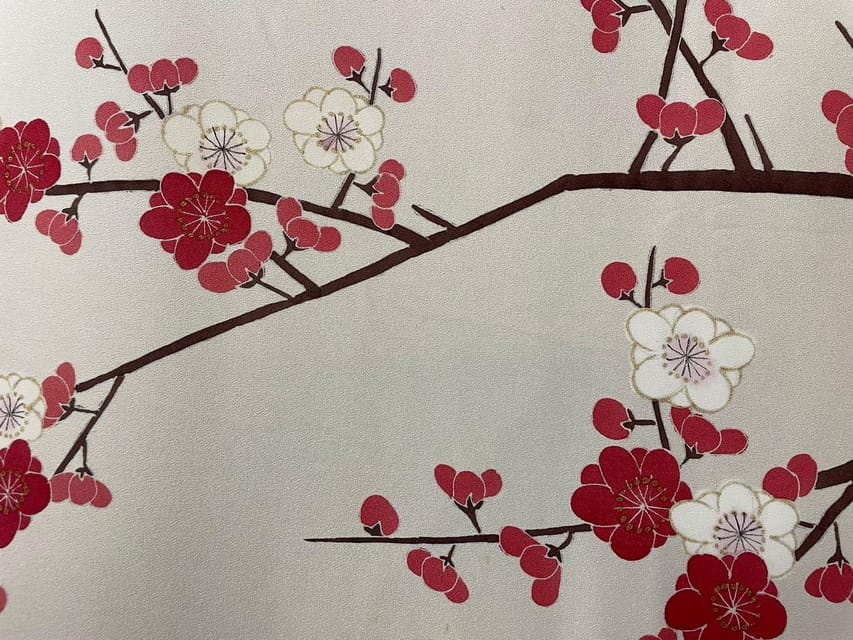
The hands-on part is closer to painting with dye than to the tie-dye projects common in many craft classes. You use a brush to fill the prepared sections of the silk design, working carefully inside the golden lines.
You do not need advanced art skills. The outline gives you a clear path, and the artisan guides you through the amount of dye to place on the brush. Still, careful hands help. Too much dye can bleed beyond the lines, so I would resist the urge to load the brush heavily.
The process rewards a patient pace. You may begin by choosing a background color, then add tones to the central figure and smaller details. The master can suggest which shades will work well together, but you still make meaningful decisions about the look of your piece.
This balance is important. You are not simply copying a sample, yet you are not left alone with a complex traditional technique. The design and outlines come from the artisan, while the colors and much of the application come from you.
The experience is also forgiving in the right way. Handmade art will not be perfectly uniform, and the finished silk will show your hand. If you are a perfectionist, the best approach is to treat small variations as part of the object’s story rather than as mistakes.
The activity is described as two hours, but the painting can take longer if you work slowly or if the group needs extra time. At least one session ran about 30 minutes over, with the hosts allowing participants to finish. I would not count on extra time, especially if you have another booking afterward, but the flexible pace is welcome.
The machiya, studio, and Yuzen display
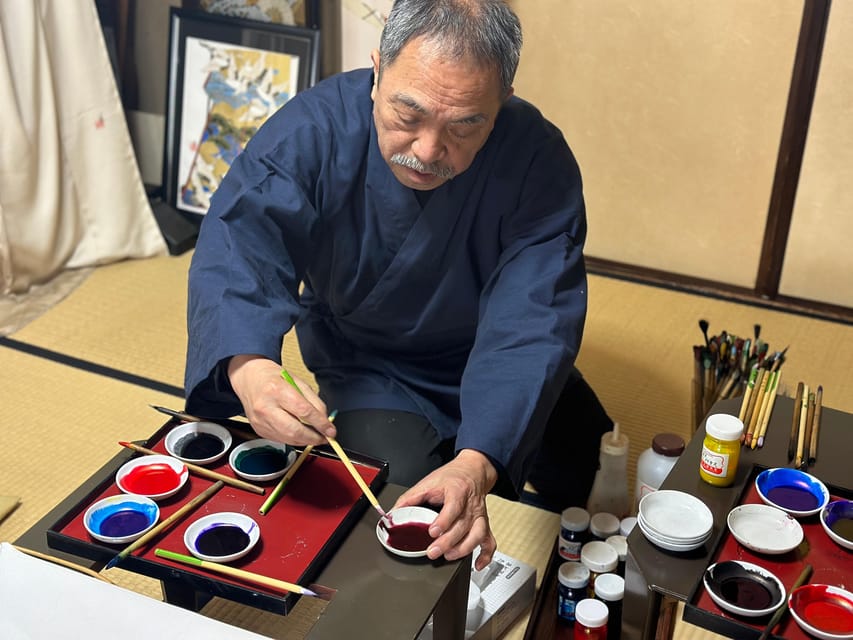
The traditional home is not just a backdrop. It changes the feel of the class. A machiya has a more intimate scale than a modern studio, and the calm interior helps you focus on a craft that depends on precision.
You can also view the artisan’s own Yuzen artwork. This gives useful context before you begin. A finished silk piece can make the technique look effortless, but seeing the careful color work up close helps you understand what goes into it.
The studio has been described as overlooking a small Zen garden. Details may vary depending on your position and the day’s setup, but the garden-facing view adds to the quiet mood. I would schedule this for a morning or an afternoon when you want a break from Kyoto’s crowded sightseeing routes.
The home setting does come with a few practical limits. You may sit on the floor for the full session, and the experience is not a good fit if that would be uncomfortable. The activity is listed as wheelchair accessible, so mention any access needs when booking, particularly because a traditional home can have a different layout from a modern public facility.
A completely different side of Kyoto:
- PERFECT KYOTO 1-Day Bus Tour
★ 5.0 · 13,518 reviews - Kyoto: Fushimi Inari, Kinkakuji, Bamboo Grove 1 Day Bus Tour
★ 4.8 · 4,316 reviews - Kyoto: Tea Ceremony in a Traditional Tea House in Kiyomizu
★ 4.9 · 3,519 reviews - Kyoto Geisha Walking Tour: Gion District & Hidden Gems
★ 4.7 · 3,273 reviews
A close look at the instruction and interpretation
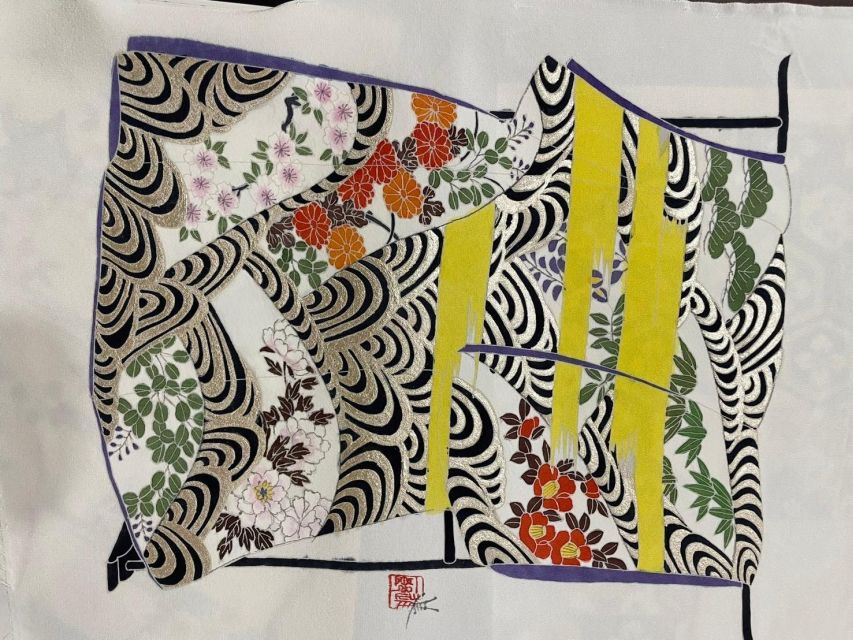
The artisan’s role is central. Master Shin’ichiro is described as a retired kimono artisan with long experience in dyeing, and his value is clearest when he handles the technical details. He can judge how much pigment and water to mix and can predict how a shade will appear on the silk.
The interpreter makes the class workable for international participants. English and Chinese interpretation are available, and individual sessions have included an interpreter named Ha. Do not expect the artisan to conduct a full class in English himself. Instead, the interpreter carries the explanations while the artisan demonstrates and works directly with you.
This arrangement has a nice advantage: you watch the technique rather than only hearing about it. The artisan can point, mix, demonstrate, and correct your brushwork while the interpreter explains why. The class is therefore fairly accessible even if you have no background in Japanese textiles.
The small group limit of six also matters. With fewer people, the artisan can look at your brush, check the color, and offer specific advice. If your session has only two people, the class may feel almost like a private appointment. Larger groups should still be manageable, but personal attention will naturally be shared.
What you take home
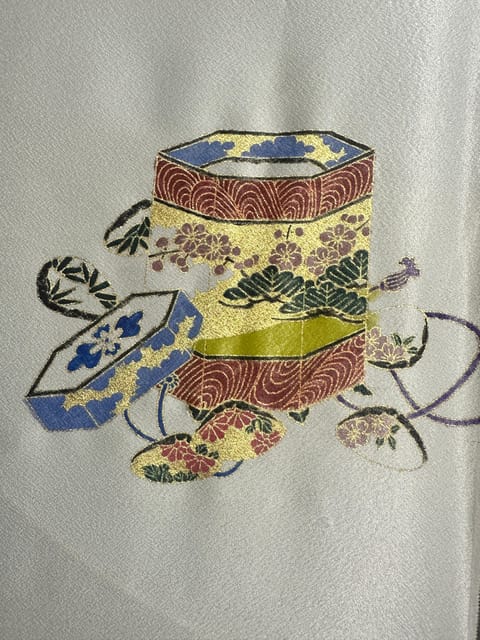
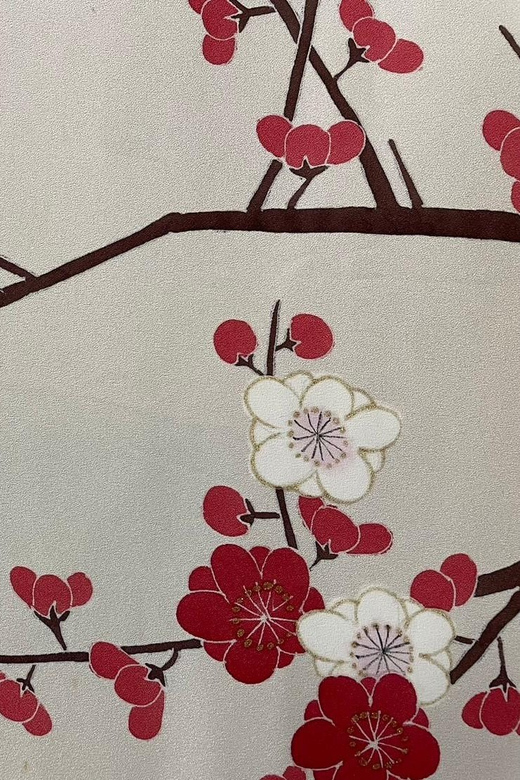
You finish the painting during the class and take the silk artwork with you. The artisan may iron it so the piece is dry before you leave, giving you a ready-to-carry souvenir rather than an unfinished project.
The final object has more meaning than a mass-produced Kyoto keepsake because it records several decisions made during your visit. You selected the design from the available options, chose the main colors, and applied the dye with help from the master.
It is worth keeping expectations realistic. You are producing a small silk artwork, not a finished kimono or a museum-quality textile. The design framework and professional color guidance do much of the technical work, while your brush control determines the personal touch.
I think this makes the piece particularly good as a gift. A phoenix, crane, or fan painted in your own palette is easier to explain and display than a generic souvenir. It also gives you a physical reminder of a quiet morning in Kyoto rather than only another photograph.
Additional works by the artisan may be available for purchase, but these cost extra and may require cash. If you are interested in buying something, bring enough cash and ask about the arrangements before you begin.
Price, timing, and practical value
The price is $161 per person for two hours. That is a serious cost for a short activity, so I would not book it simply because you want an inexpensive craft project.
The value comes from the combination of elements: direct instruction from an artisan, a small group, an interpreter, access to a traditional home studio, a view of professional Yuzen work, and a finished silk piece. You are paying for personal guidance and cultural access as much as for the materials.
For someone who only wants to paint a souvenir, the price may feel high. Kyoto has cheaper hands-on activities. For someone interested in Japanese textiles, traditional homes, or carefully made crafts, the price is easier to justify because the setting and instruction are unusually personal.
The two-hour length works well in a Kyoto itinerary. It is long enough to learn the basic method and finish a piece without taking over an entire day. Leave extra room around the appointment if you dislike rushing, since painting times can stretch beyond the scheduled end.
Transportation to and from the meeting point is not included. You will need to arrange your own way there, and the provided details do not specify a hotel pickup service. Allow time to find the meeting point and arrive in clothes suitable for a working studio.
Wear something comfortable that you do not mind getting dye on. Although the activity is controlled and careful, dye is part of the process. Also tell the provider in advance about allergies or chemical sensitivities, since the work may involve chemicals.
Alcohol, drugs, fireworks, and party groups are not allowed. The tone is quiet and craft-focused, so this is a poor match for a loud celebration or a group looking for a casual drinking activity.
Who should book this experience
I would recommend it most strongly to adults and older children who enjoy making things with their hands. The minimum age is 10, and the activity can suit a mixed-age family. One family group ranged from age 12 to 55 and completed wall-worthy pieces together.
Art lovers will get the most from the artisan’s explanations and the chance to see professional work at close range. You do not need painting experience, but you should enjoy slow, careful tasks and accept that handmade results will have small differences.
This is also a good choice for couples. A two-person session can feel private, and the finished pieces make a more personal souvenir than matching store-bought items. Solo participants may also appreciate the calm setting and the focused instruction.
I would think twice if you dislike sitting on the floor, have limited time between reservations, or want to choose from dozens of designs. It is also not suitable for children under 10 or babies under 1.
Booking flexibility and accessibility
Free cancellation is available up to three days before the experience for a full refund. That gives you some room to adjust a Kyoto schedule, but the cutoff is firm enough that you should decide before the final few days of your trip.
The activity is listed as wheelchair accessible. Because it takes place in a traditional machiya rather than a purpose-built classroom, contact the provider ahead of time with specific mobility questions.
English and Chinese live tour guidance are available. The small-group format is limited to six participants, and the experience provider is the Cultural Edu-tourism Council.
Should you book the Kyoto Yuzen dyeing class?
Book this if you want a hands-on cultural experience with a real artisan, a traditional home setting, and a finished silk keepsake. It is especially worthwhile for people who care about Japanese textiles and prefer a quiet workshop to another crowded sightseeing stop.
Skip it if you want a low-cost activity, a large choice of designs, or a quick project with no sitting on the floor. At $161, the class needs to feel special to justify the price, but the artisan’s color guidance, interpreter, small group, and machiya setting give it a strong case.
My practical advice is to wear old comfortable clothes, choose your design promptly, avoid overloading the brush, and leave a little time after the two-hour slot. If those conditions suit you, this is a thoughtful way to bring home a piece of Kyoto that you helped make.
FAQ
How long does the Kyoto Yuzen dyeing experience last?
The activity is scheduled for two hours. It may run longer if participants need extra time to finish their silk pieces, so avoid booking another activity immediately afterward.
How much does the experience cost?
The listed price is $161 per person.
What languages are available?
Live guidance is available in English and Chinese. An interpreter assists with communication while the artisan demonstrates and teaches the dyeing process.
What age is this activity suitable for?
Children must be at least 10 years old. Babies under 1 year are not suitable for the activity.
Is transportation included?
No. Transportation to and from the meeting point is not included.
What should I wear and bring?
Wear comfortable clothes that you do not mind getting dye on. Tell the provider in advance about any allergies or sensitivities because chemicals may be used during the process.
Recently added around Kyoto
- Higashiyama | Kyoto: Sakura Season Private Rickshaw Tour★ 5.0 · 3 reviews
- Kyoto Kimono Rental CHAMATSU|Kimono/Yukata Rental FamilyPlan★ 5.0 · 3 reviews
- Nara Private Customizable Half Day Tour★ 5.0 · 3 reviews
- Kyoto: Half-Day Private Guided Tour to the Old Town of Gion★ 4.4 · 3 reviews
- Kansai Region Hiking Adventure in Nara Kobe Kyoto and More★ 5.0 · 3 reviews
- Full Day Nara Deer, Temple, Shrine, Activities & Tea Ceremony★ 5.0 · 3 reviews
- Nara: Essential Private Tour with Deer Park and Temples★ 5.0 · 3 reviews
- Hiking Tour for Sacred Sites in Kyoto with a Guide★ 5.0 · 3 reviews
Kyoto Craft Workshops, compared.
Authentic knife making experience at a blacksmith in Kyoto
Read our review →
Roketsu dyeing experience: M course Roketsu Dyeing Experience
Read our review →
Authentic Knife Making Experience at a Blacksmith in Kyoto
Read our review →
Let’s make only one original onigawara in the world
Read our review →
Bamboo LED Lantern Making Experience in Kyoto Arashiyama
Read our review →Let’s make only one original onigawara in the world!!
Read our review →
Natural Indigo Dyeing with Local Masters (Private Atelier)
Read our review →Browse the lists this tour appears in